Ferrari 250 GT Coupé Series II: The Ferrari Once Cut Up to Fake Others
1960 Ferrari 250 GT Coupé Series II by Pinin Farina





Images: Remi Dargegen / RM Sotheby's
Enzo Ferrari never much cared for road cars, and the Ferrari 250 GT Coupé that Pinin Farina began building at its new factory outside Turin in 1958 makes that indifference oddly legible in sheet metal. This was not a car conceived to win anything. It existed to be ordered, built, and delivered in numbers a small racing concern could not otherwise dream of, and to do so quietly enough that its buyers would come back for another one. That it succeeded at exactly this unglamorous brief, while wearing a body most contemporary critics found genuinely handsome, is a large part of why the 250 GT Coupé matters more than its reputation for much of the twentieth century suggested.
The “Series II” tag attached to this car is worth unpacking before anything else, because Ferrari itself never used it this way in period. Unlike the closely related Cabriolet, whose factory-recognised first and second series are separated by a fairly clean production break, the Pinin Farina-bodied Coupé’s “Series II” label is a retrospective, unofficial shorthand coined by collectors and specialists. It refers to the definitive late-production cars built through 1960, fitted with the final “outside-plug” engine, factory disc brakes, and overdrive transmission, as distinct from the earlier inside-plug, drum-braked cars of 1958 and 1959. Even specialist publications describing these late cars are careful to flag the label as unofficial. The distinction matters for anyone trying to understand this model, because “Series II” promises a materially different, more usable car than an early example, even though no chassis plate or factory brochure ever used the term.
Pinin Farina had been bodying Ferraris in small numbers since 1952, and became the marque’s default coachbuilder once the 250 Europa and Europa GT arrived in 1954, bodying the great majority of that short run. But Ferrari’s ambitions for volume outgrew Pinin Farina’s Turin premises well before the carrozzeria could build a bigger one. The interim solution, from around 1956, was to subcontract the 250 GT Coupé’s construction, first to Carrozzeria Boano and then, after Mario Boano left to run Fiat’s styling studio, to his son-in-law’s renamed Carrozzeria Ellena. These Boano and Ellena cars refined rather than reinvented the preceding Europa GT and remained essentially hand-finished, low-volume propositions. Only once Pinin Farina’s purpose-built Grugliasco factory was ready, in 1958, could the carrozzeria take the Coupé back in-house and build it on something closer to a production line, alongside contracts for other marques including Alfa Romeo’s Giulietta Spider.
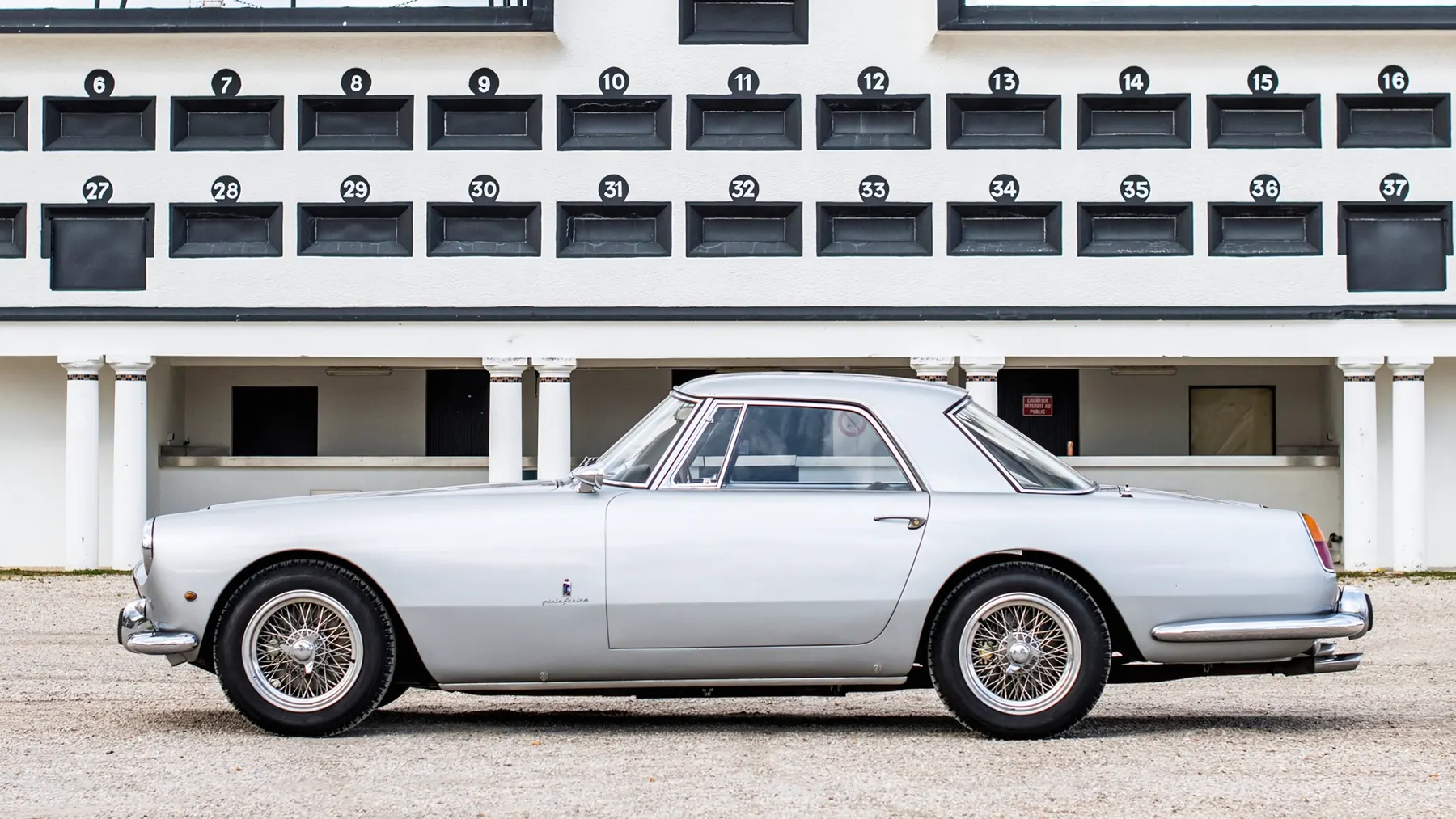
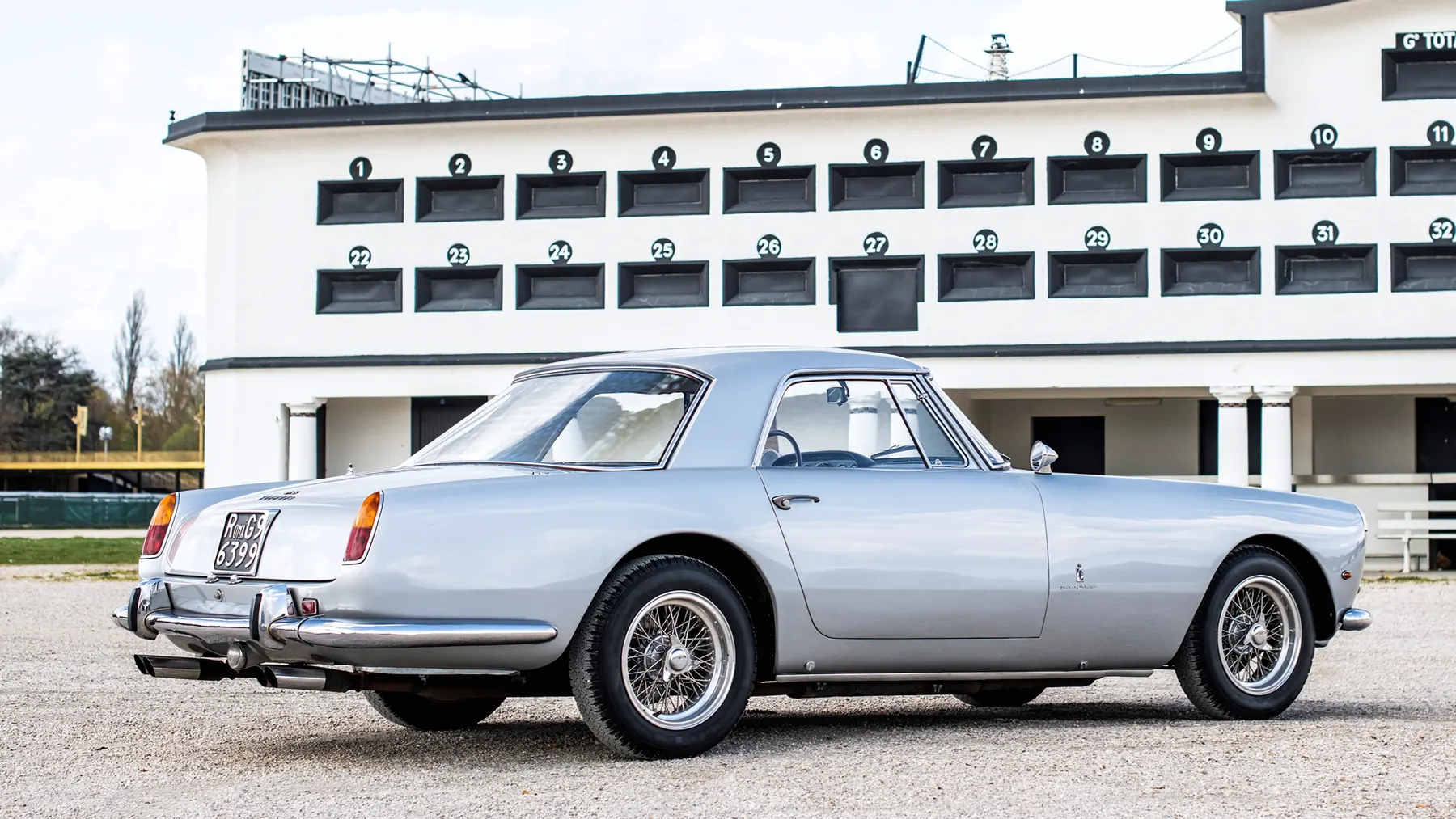
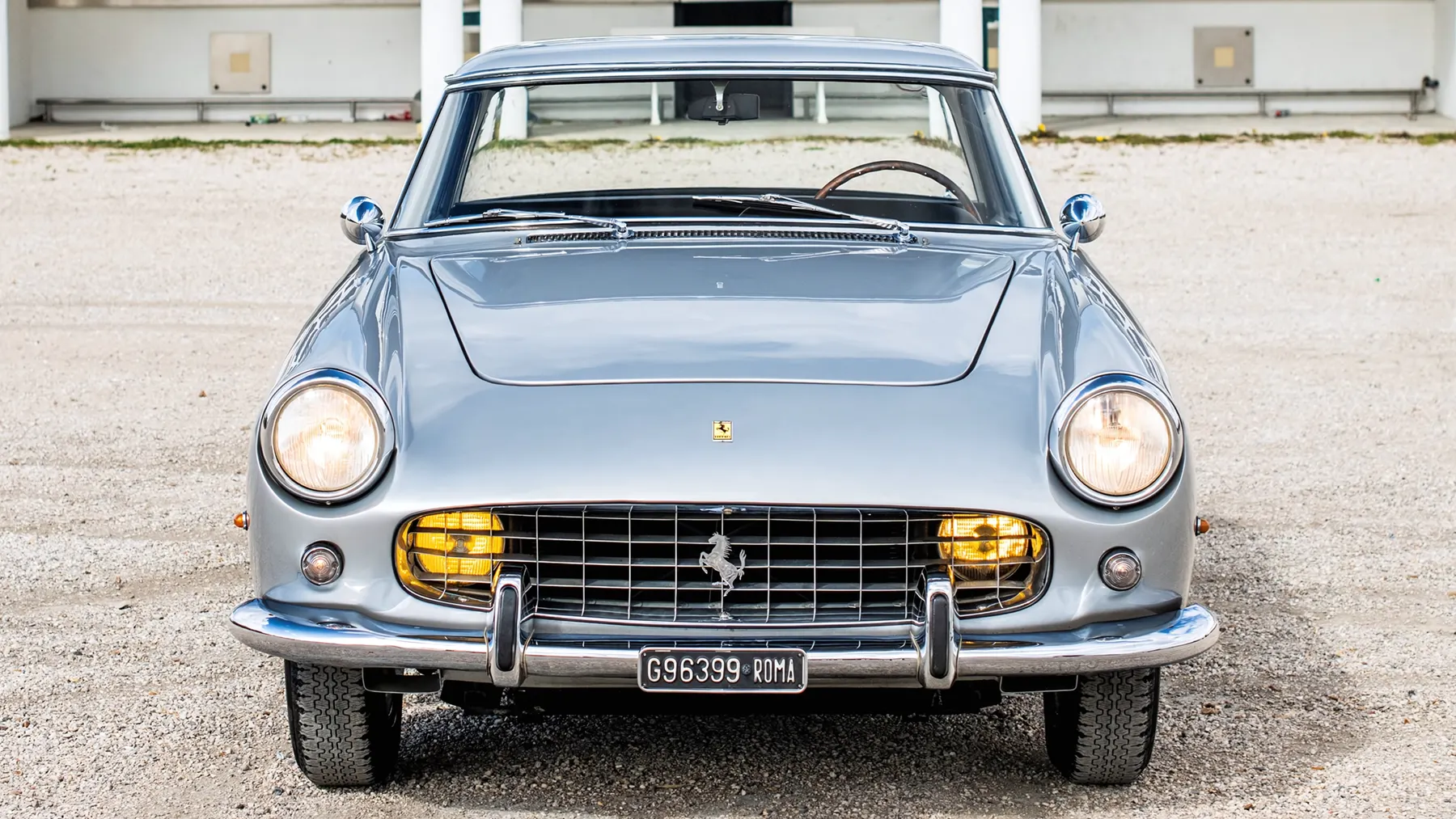
What emerged from Grugliasco was a clean break from the fastback, panoramic-window Boano and Ellena cars that preceded it. Pinin Farina replaced the curved rear glass with a trapezoidal side window and a conventional notchback tail, flattened and lowered the nose, and shrank the dominant egg-crate grille of the Europa-era cars into a wider, lower opening. At roughly 1,650mm wide and 4,400mm long, riding on the 2,600mm wheelbase shared with the contemporary 250 GT Tour de France Berlinetta, it was a big car for its era, and Pinin Farina’s restraint was deliberate: flat, largely undecorated flanks divided only by a single crisp shoulder line. Enzo Ferrari, not a man given to design commentary, reportedly described the result in his memoirs as “a high fashion statement,” and contemporary road testers agreed the proportions were exceptionally well judged, even if the shape lacked the drama of the California Spyder or Tour de France Berlinetta sitting alongside it in Ferrari’s catalogue. A handful of individually bodied Speciale examples also emerged from the same production run, culminating in a final car with a Superfast-style tail; exactly how many were built remains, by specialist accounts, a matter of ongoing debate.
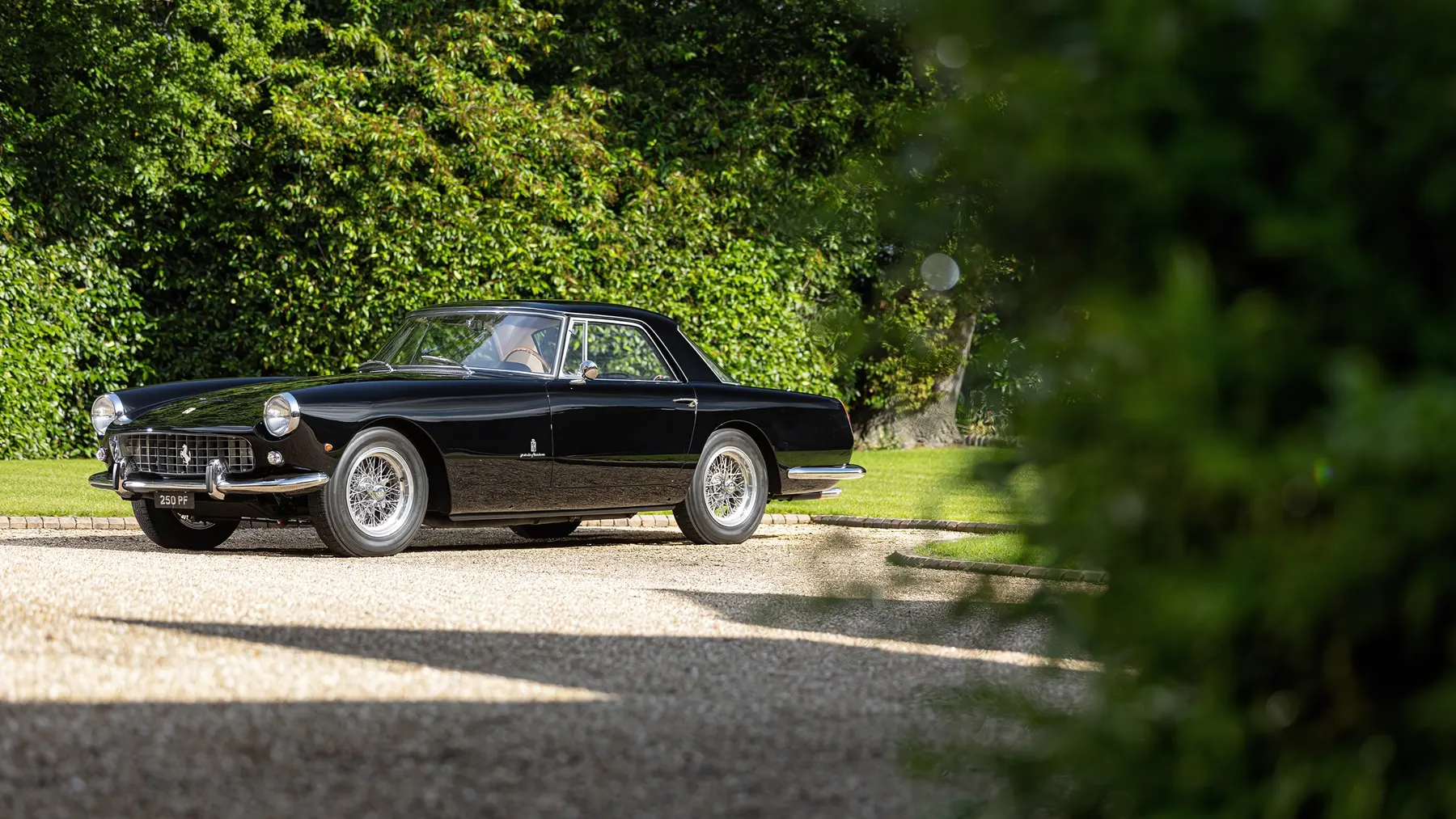
Mechanically the Coupé leaned entirely on Gioacchino Colombo’s short-block V12, a 2,953cc unit with a single overhead camshaft per bank and three Weber carburettors, fed by twin coils and initially a single distributor. Across the production run this engine went through two significant revisions: the original Tipo 128C gave way to the twin-distributor 128D, and then, for the final cars built through 1960, to the 128F, in which the spark plugs moved from inside the vee to the outside, sitting above the exhaust manifolds, with six separate inlet ports replacing the earlier siamese arrangement. It sounds like a footnote, but relocating the plugs to where a mechanic could actually reach them - a change proven on the competition 250 Testa Rossa - made routine servicing meaningfully less miserable, a detail that mattered enormously to owners running these cars as everyday transport rather than trailer queens. Output held essentially steady across all three iterations at around 240bhp at 7,000rpm, with roughly 181lb-ft of torque arriving at 5,500rpm; what changed generation to generation was usability, not power.
The chassis told a similar story of gradual civilising rather than dramatic reinvention. Front suspension used double wishbones and coil springs, the rear a live axle on semi-elliptic leaf springs, largely unchanged from the Boano and Ellena cars beneath the new skin. The genuinely significant update arrived late in 1959, when Dunlop-supplied four-wheel disc brakes, with Bendix servo assistance, replaced the drums that had served every 250 GT road car until that point; an optional Laycock de Normanville overdrive followed onto the 1960 options list, paired with a central gear lever in place of the earlier offset shift. Sources disagree on one further detail: some accounts describe telescopic dampers replacing the older lever-arm units on these final cars, though a period road test of a genuine late “second-series” example found it still riding on the original Houdaille lever-arm dampers, and criticised the resulting stiffness. Whichever is correct for any individual chassis, it is this bundle of updates - outside-plug engine, disc brakes, overdrive, central shift - that collectors mean when they informally call a car a Series II.
None of this reads as particularly exciting on paper, and that is rather the point. Climb in and the driving position puts you in front of an unobstructed dashboard with proper aft seat adjustment, something not every 250-series cockpit offers. Thumb the fuel pump, wait for the clicking to settle, and the V12 fires with a bark that period testers, and plenty since, have struggled to describe without resorting to cliché. What actually surprises newcomers is how docile it is once running: tractable at low revs, pulling cleanly from a trickle in top gear without hesitation, the four-speed all-synchromesh gearbox resisting a hurried hand without ever feeling sloppy, the clutch light enough for town use. Worm-and-roller steering, unassisted as was universal for the class in 1958, is precise and well-weighted once moving. None of this happened weightlessly: at around 1,370kg kerb, the Coupé was a genuinely substantial car, closer in bulk to a contemporary luxury saloon than to the short-wheelbase competition Berlinettas wearing the same badge. Independently verified period tests recorded 0–60mph in around 7.1 seconds, plausible enough against Ferrari’s own claim of under seven seconds, and it was the mid-range shove rather than outright peak power that testers consistently singled out as the car’s real party trick.
Set against that is a genuine, and often overlooked, gap between what Ferrari claimed for the 250 GT Coupé and what independent testers actually measured. The factory advertised a 150mph top speed; when Road & Track borrowed a customer’s car in 1960, with a young Phil Hill driving, it recorded 126mph, and Britain’s The Motor managed a still-respectable but far more modest 135mph. That discrepancy was not unique to Ferrari in this era, but it is a useful corrective against treating any 1950s manufacturer performance claim as settled fact. The ride, too, is a genuine compromise rather than mere old-car charm: those carryover lever-arm dampers left even a well-sorted example firm-riding by the standards of a supposed grand tourer, and the four-wheel discs, however effective in isolation, were not immune to fade under the kind of repeated hard use a determined driver might ask of them on a mountain pass. The 250-series as a whole also carried, and largely deserved, a reputation for nose-heavy handling, thanks to that long iron-block V12 sitting ahead of the front axle; the PF Coupé is better balanced than the reputation suggests, but it was never built to be flicked about, and buyers expecting SWB-style agility were shopping the wrong model. Practicality inside was similarly limited: the area behind the front seats is trimmed like a seat but amounts to a shelf for a soft bag rather than usable accommodation, so anyone needing a genuine four-seat Ferrari of this era had to wait for the 250 GTE that replaced this Coupé in 1960. And the model’s own mechanical commonality eventually became a liability for its survival: because it shared so many components with far more valuable siblings while wearing a comparatively restrained, less coveted body, a meaningful number of original PF Coupés were later cut up and rebodied as replica GTOs, SWBs, and California Spyders, permanently reducing the population of cars that survive today in their original form.
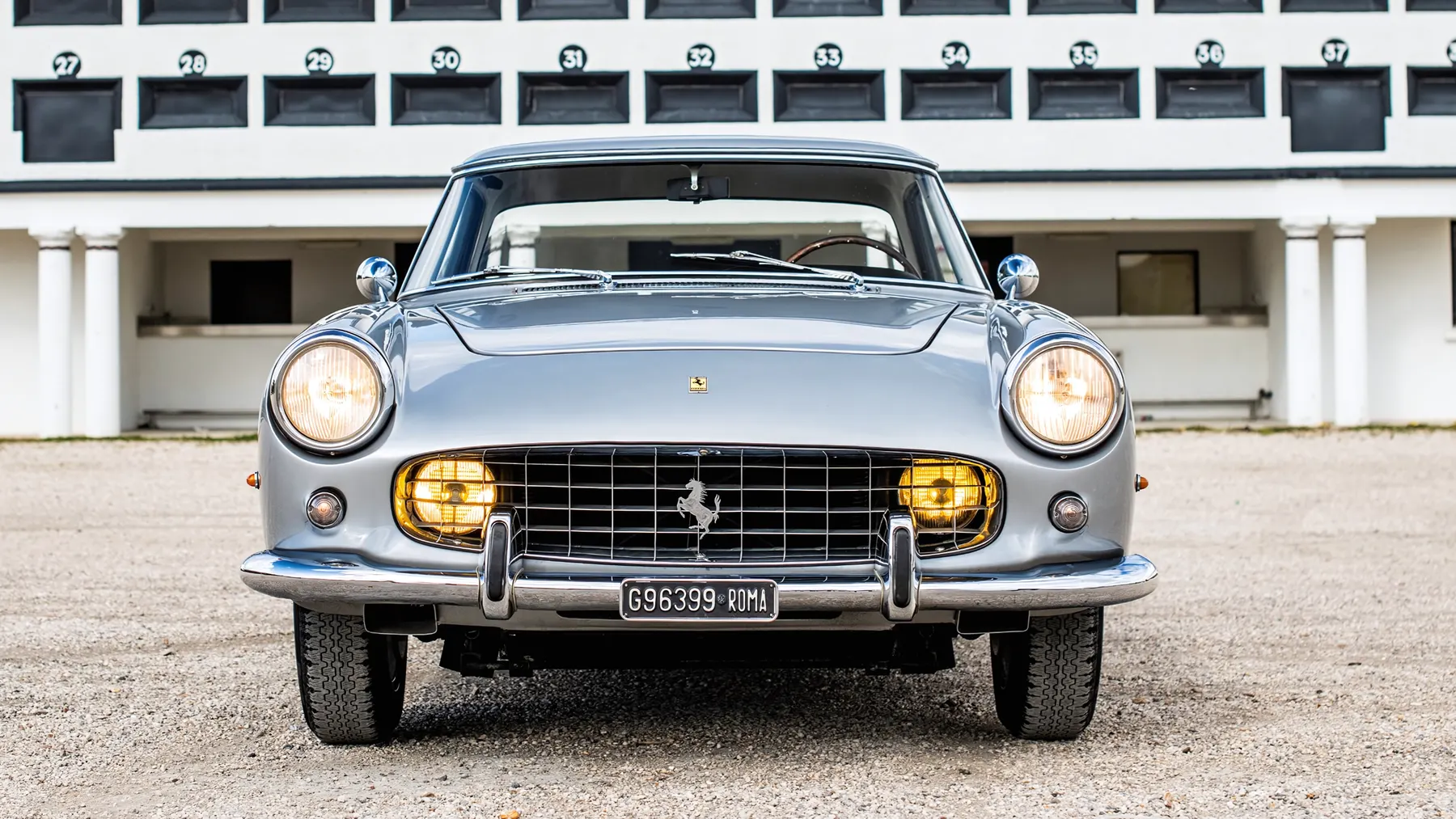
In period, the Coupé occupied a specific, deliberately unsporting slot in Ferrari’s range. Priced at around $12,600 in the United States - in the same bracket as an alloy-bodied 250 GT Tour de France Berlinetta, and pricier than a long-wheelbase California Spyder - it was aimed at buyers who wanted comfort, presence, and the prancing horse on the nose rather than outright competition pedigree, leaving the SWB Berlinetta and California to serve Ferrari’s sportier clientele. Demand, at least initially, outran expectations badly enough that reports from the car’s 1958 unveiling describe the first planned production batch selling out well in advance. The press that eventually got to drive it were largely unreserved: Autosport praised its silence and smoothness, Road & Track’s testers marvelled at how tractable the engine was at low speed, and Sports Car Graphic named it its Sports Car of the Year for 1960. Exactly how many were built remains, unusually for a Ferrari this well documented, a genuinely open question: 353 is the figure most commonly cited, including by Ferrari specialists and valuation services, though other reputable sources put the total nearer 335. Both numbers describe a low-volume car by any ordinary standard, but by the standard of a company that had, only a few years earlier, built cars essentially one at a time, either figure represented a real step towards Ferrari becoming a manufacturer rather than a racing team that happened to sell road cars on the side.

For a long stretch of the twentieth century, none of this counted for much in the market. The PF Coupé’s very completeness worked against it: mechanically close enough to the SWB, the California, and eventually the GTO to serve as a parts donor or a replica base, and visually restrained enough that owners felt fewer qualms about cutting one up than they might have with something flashier, it became an unloved car that for years mainly existed to become something else. That practice has only recently reversed, as the collector world has caught up with what contemporary road testers understood in 1958 and 1960: that this was a genuinely accomplished, usable, and important car in its own right, not merely a cheaper way into a more famous one. Its real significance was never going to be measured on a stopwatch or a race results sheet. It was measured in a Grugliasco factory that could, for the first time, build a Ferrari in something approaching volume, and in a company that used the proceeds to keep building the cars Enzo Ferrari actually wanted to build.
Technical data
Performance Specifications
| Specification | Detail |
|---|---|
| Engine | 2,953cc Colombo V12, SOHC per bank, three Weber carburettors |
| Engine type (late “Series II”) | Tipo 128F, “outside-plug,” six separate inlet ports |
| Power | approx. 240bhp @ 7,000rpm |
| Torque | approx. 181lb-ft @ 5,500rpm |
| Transmission | 4-speed manual; optional overdrive from 1960 |
| Brakes | Drums (1958–59 cars); four-wheel Dunlop discs, Bendix servo (from late 1959) |
| Wheelbase | 2,600mm |
| Length | approx. 4,400mm |
| Width | approx. 1,650mm |
| Kerb weight | approx. 1,370kg |
| 0–60mph | approx. 7.1 sec (period test); Ferrari claimed under 7 sec |
| Top speed | 126–135mph (period tests); 150mph (factory claim) |
| Production | 1958–1960; 353 built (widely cited figure), though some sources state 335 |
Sources
- Octane Magazine: “Ferrari 250 Pinin Farina Coupé – V12 masterpiece”
- Wikipedia: Ferrari 250 GT Coupé
- RM Sotheby’s: 1960 Ferrari 250 GT Coupe Series II by Pinin Farina (Monterey 2023 lot description)
- K500: Ferrari 250 GT Pininfarina Coupé Classic Cars Index
- Hagerty Valuation Tools: 1958 Ferrari 250 GT
- Hagerty UK: 1961 Ferrari 250 GT 2953 Coupe valuation and background
- Sports Car Market: 1960 Ferrari 250 GT Pinin Farina Coupe profile
- Bonhams Cars: 1960 Ferrari 250 GT Series II Pininfarina Coupé (general historical background)
Join the discussion
Comments
Loading comments…
Leave a comment
Share a detail, memory, or perspective. Every comment is reviewed before publication.