Mercedes-Benz 300 SEL 6.3 (W109): The Limo V8 That Made the Super Saloon
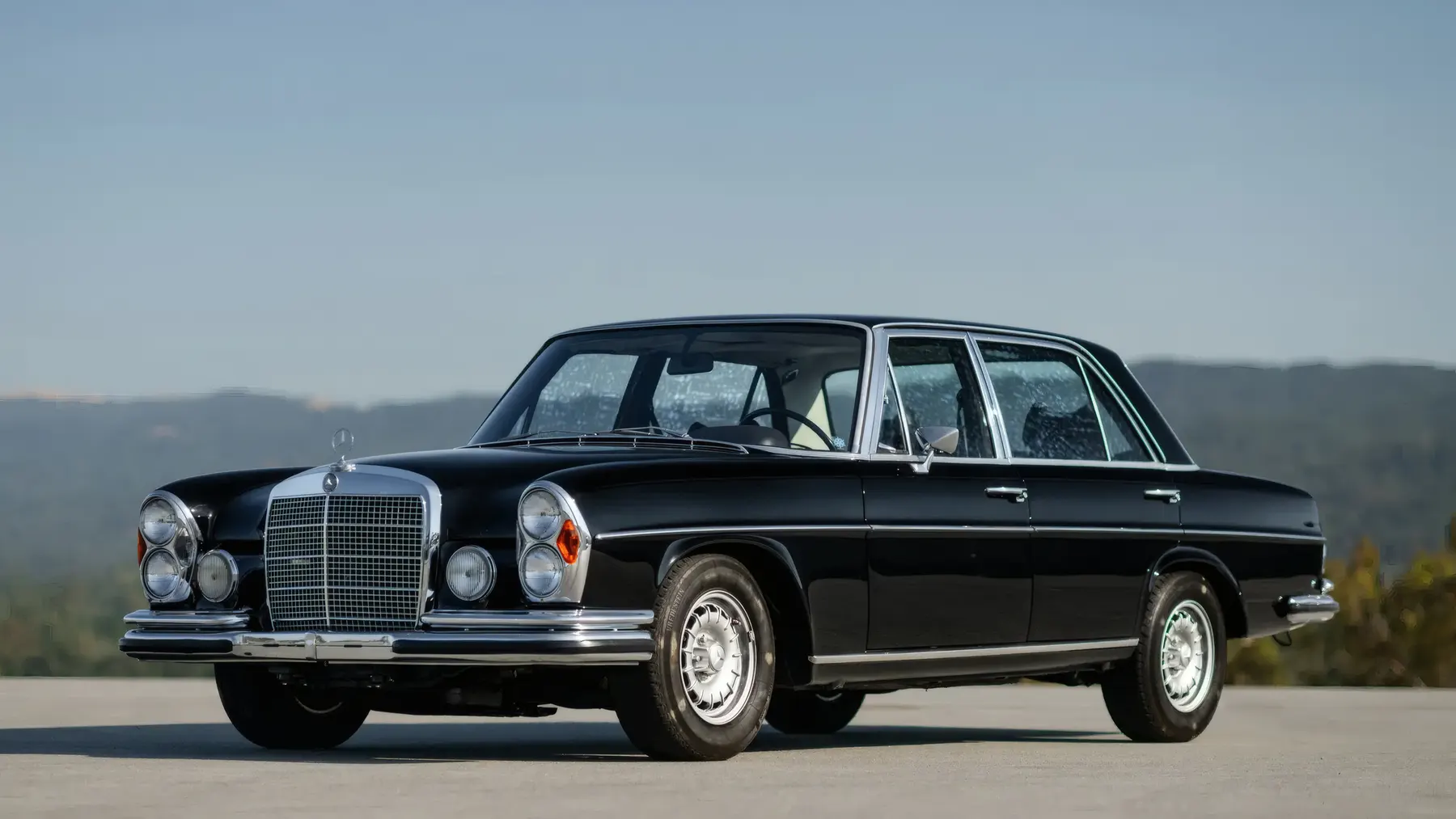
1972 Mercedes-Benz 300 SEL 6.3




Images: Courtney Frisk / RM Sotheby's
A friend in the motoring press telling an engineer that his employer builds nothing but slow cars is not, on paper, how a landmark begins. Yet that jibe sits at the root of the Mercedes-Benz 300 SEL 6.3 in most retellings. Auto Bild credits the chief editor of auto motor und sport, while Curbside Classic has it as a dig about granny cars and taxis. Either way, Erich Waxenberger, a test engineer in Rudolf Uhlenhaut’s department, took it personally. In 1966 he fitted the 6.3-litre M100 V8 from the 600 Grosser limousine into a W109 saloon, a car that had until then made do with a fuel-injected three-litre straight-six. Accounts disagree on which body he started with. Auto Bild says a 300 SE Coupé shell, while another account says a rejected W109 shell from Sindelfingen. Auto Bild also says the prototype ran a five-speed manual gearbox with a truck-grade clutch. What nobody disputes is what the result proved.
The legend of a sceptical board won over by a test drive makes a good story, but the commercial logic was at least as persuasive. The 600 had been launched in 1963 as the technical summit of the range, and it was selling worse than planned. Germany had also slipped into its first postwar economic downturn in 1966 and 1967, and the plant that built the M100 was short of work. Auto Bild reports that the board put the likely number of buyers at no more than 50 and approved the car anyway. Mercedes-Benz’s own history has Uhlenhaut hearing the prototype’s subdued growl as it passed his office. He summoned Waxenberger for an explanation and then consented to development. Production began in December 1967, and the car appeared at the Geneva Motor Show in March 1968 with no advance announcement. By the time it ended in September 1972, 6,526 had been built. Mercedes itself describes that as a large volume for the era and as its entry into the power-saloon class.
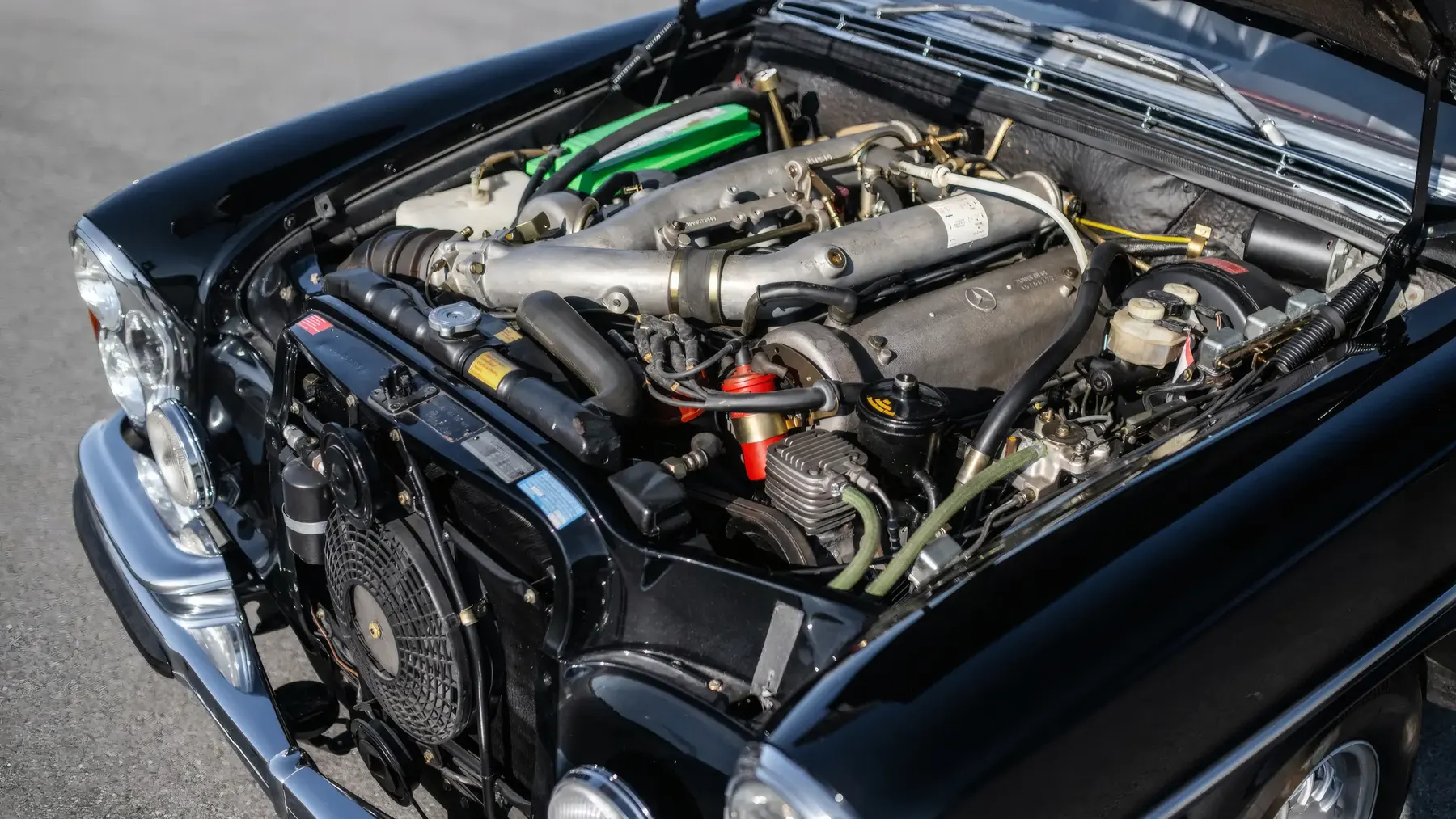
The engine is the reason the car exists, and on paper it was not exotic. It was a 90-degree V8 of 6,332 cc, with a 103 mm bore, a 95 mm stroke, one chain-driven overhead camshaft per bank and a 9.0:1 compression ratio. A Bosch eight-plunger pump fed mechanical manifold injection. Mercedes rated it at roughly 247 bhp at 4,000 rpm and 369 lb-ft at 2,800 rpm on the German DIN basis, while American-market material used a gross SAE figure of 300 bhp. The output looks restrained against what the car did, and it was the low-down torque, more than the peak power, that shaped its character. Fitting the engine was no bolt-in job. Mercedes’ own account says the front frame section, transmission tunnel and floor assembly all had to be modified. Auto Bild describes a finished engine bay in which the V8 is so tightly walled in that a finger will not fit between bulkhead and crankcase. It also reached the W109 range before the smaller 3.5- and 4.5-litre V8s the line was waiting for, which Curbside Classic says were not due before the 1970 model year. The most extreme W109 therefore arrived ahead of the sensible V8 ones.
Around the V8 sat the hardware of a 1960s Mercedes pushed to its limit. The 600’s four-speed automatic was standard, and the car used the self-levelling air suspension the W109 line already employed. That meant air-spring bellows with supplementary rubber springs at all four corners, hung from double wishbones at the front and a single-joint swing axle at the rear. Steering was recirculating-ball with power assistance. The brakes were discs all round, on a dual-circuit hydraulic system with a vacuum servo. Power windows, pneumatic central locking and a locking differential were standard, and the car ran on 195 VR 14 tyres on 6½J steel wheels, with light-alloy wheels optional from August 1970. Air conditioning and a power sunroof were available at extra cost.
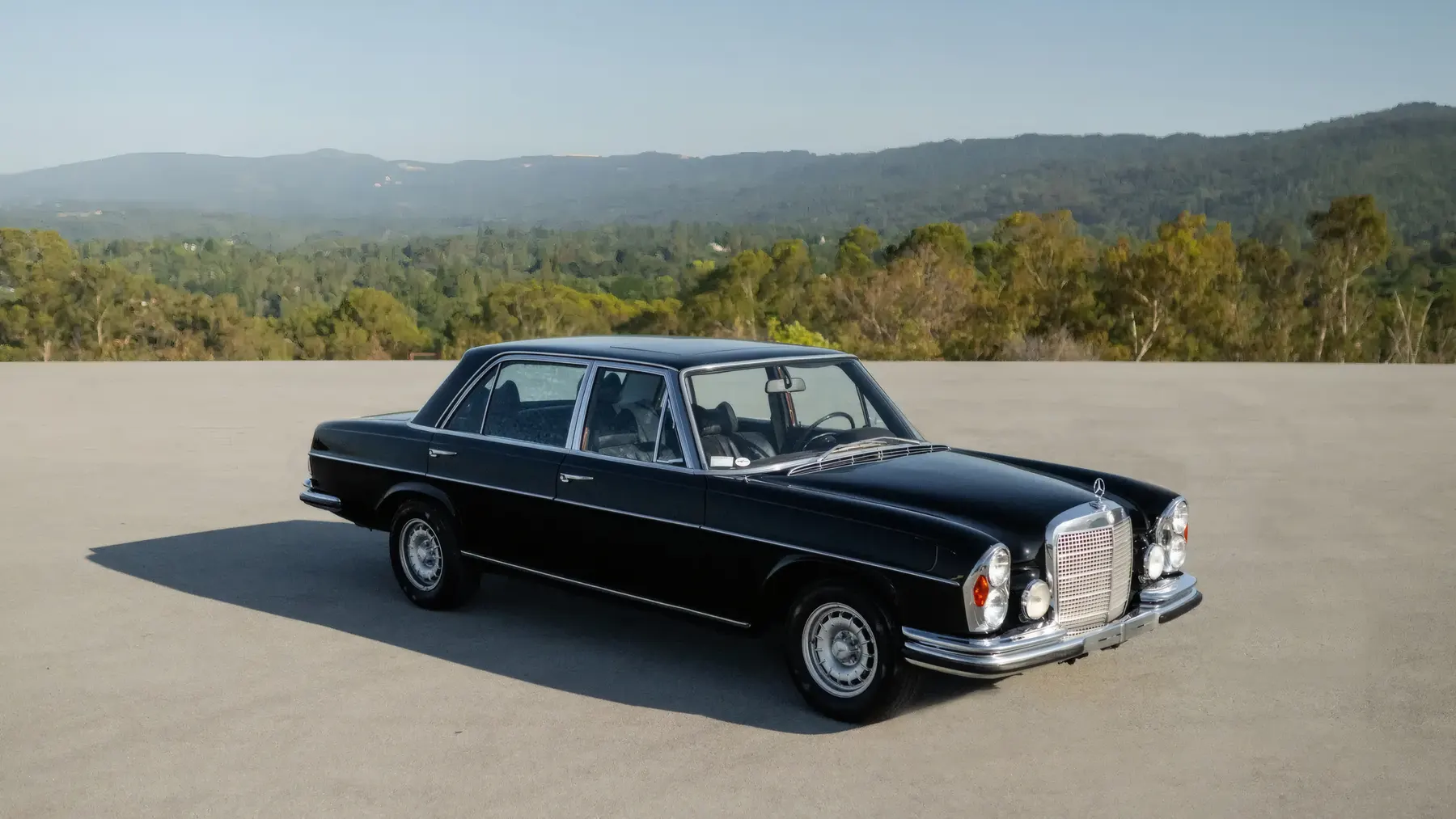
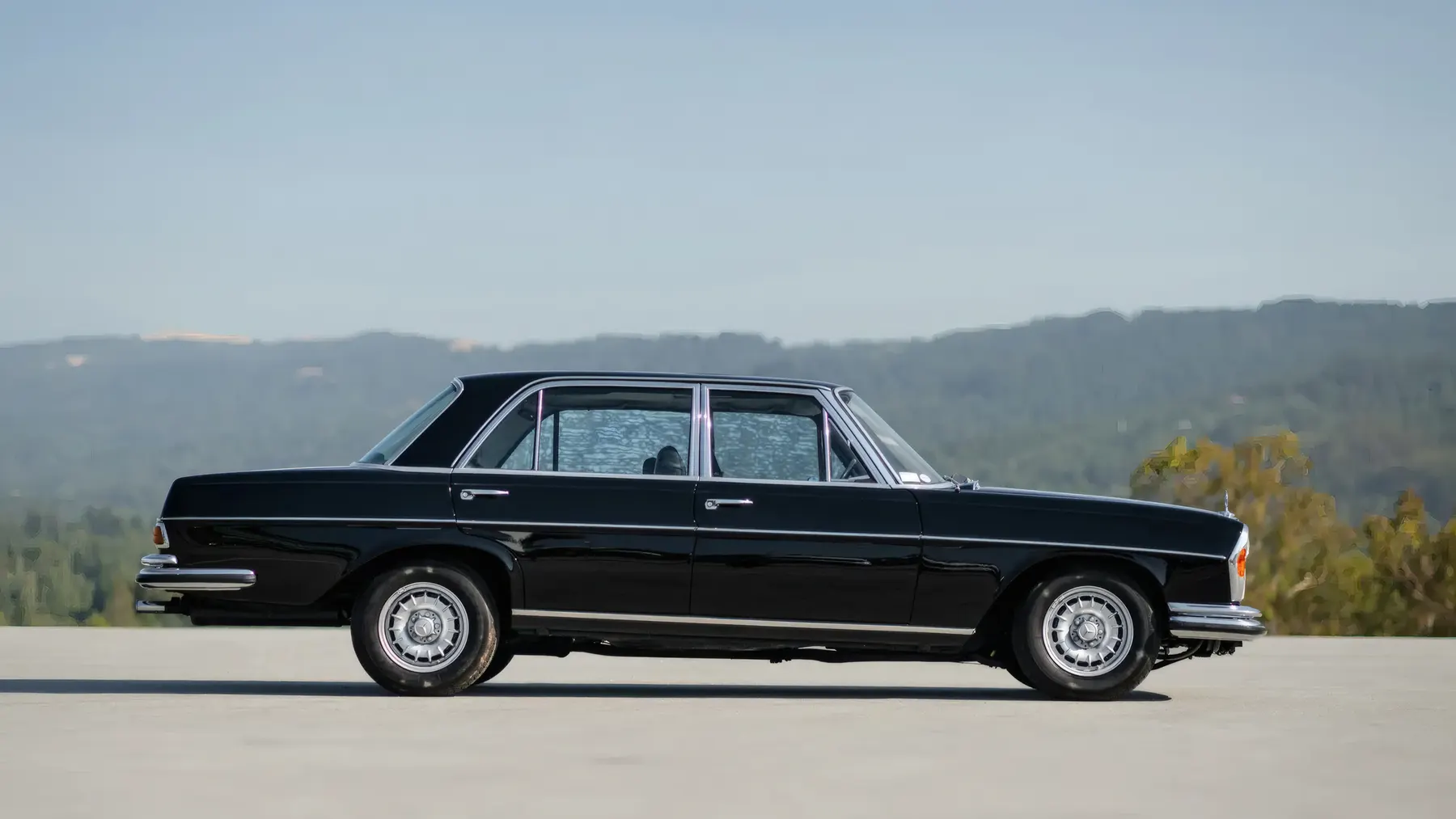
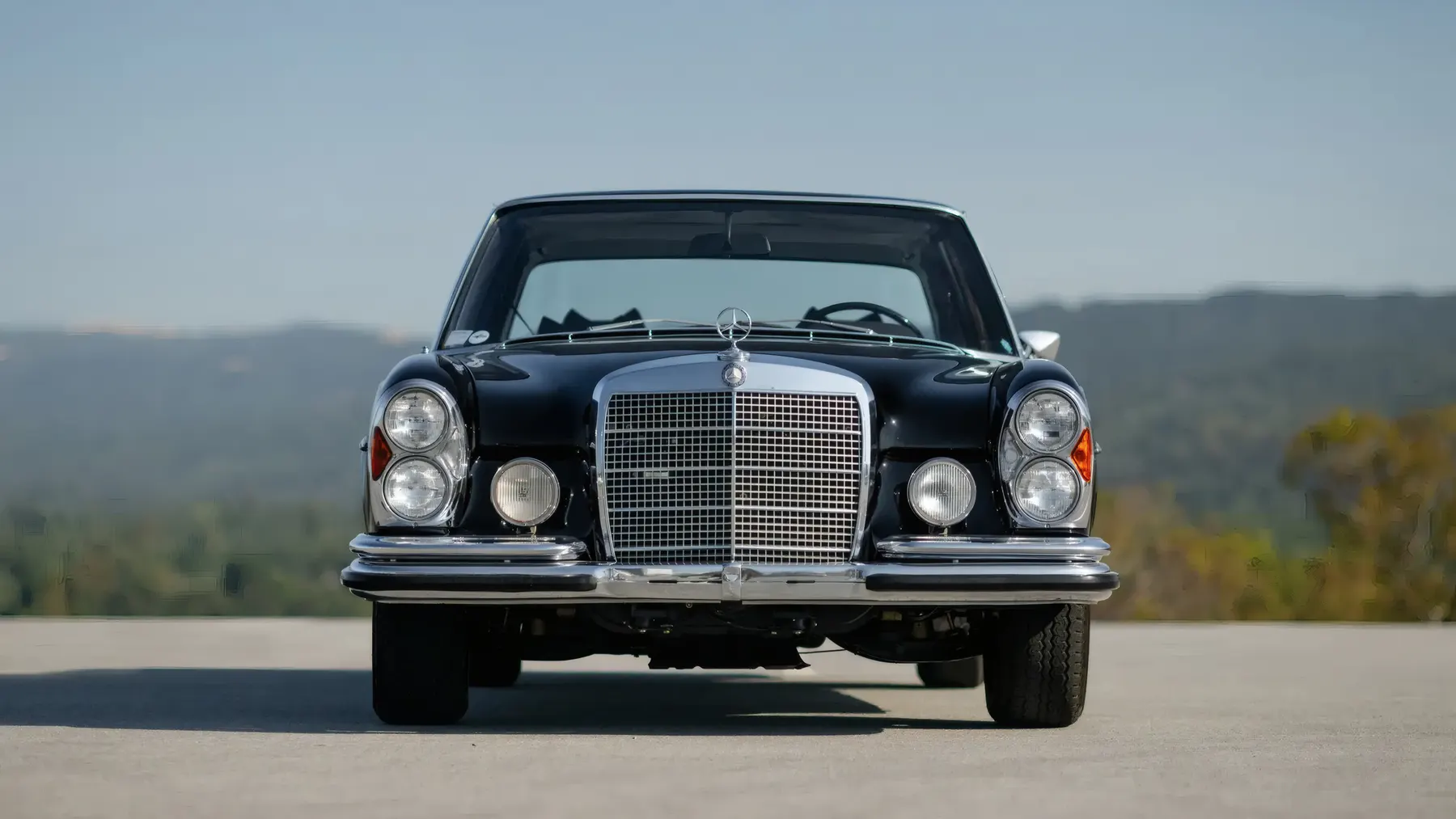
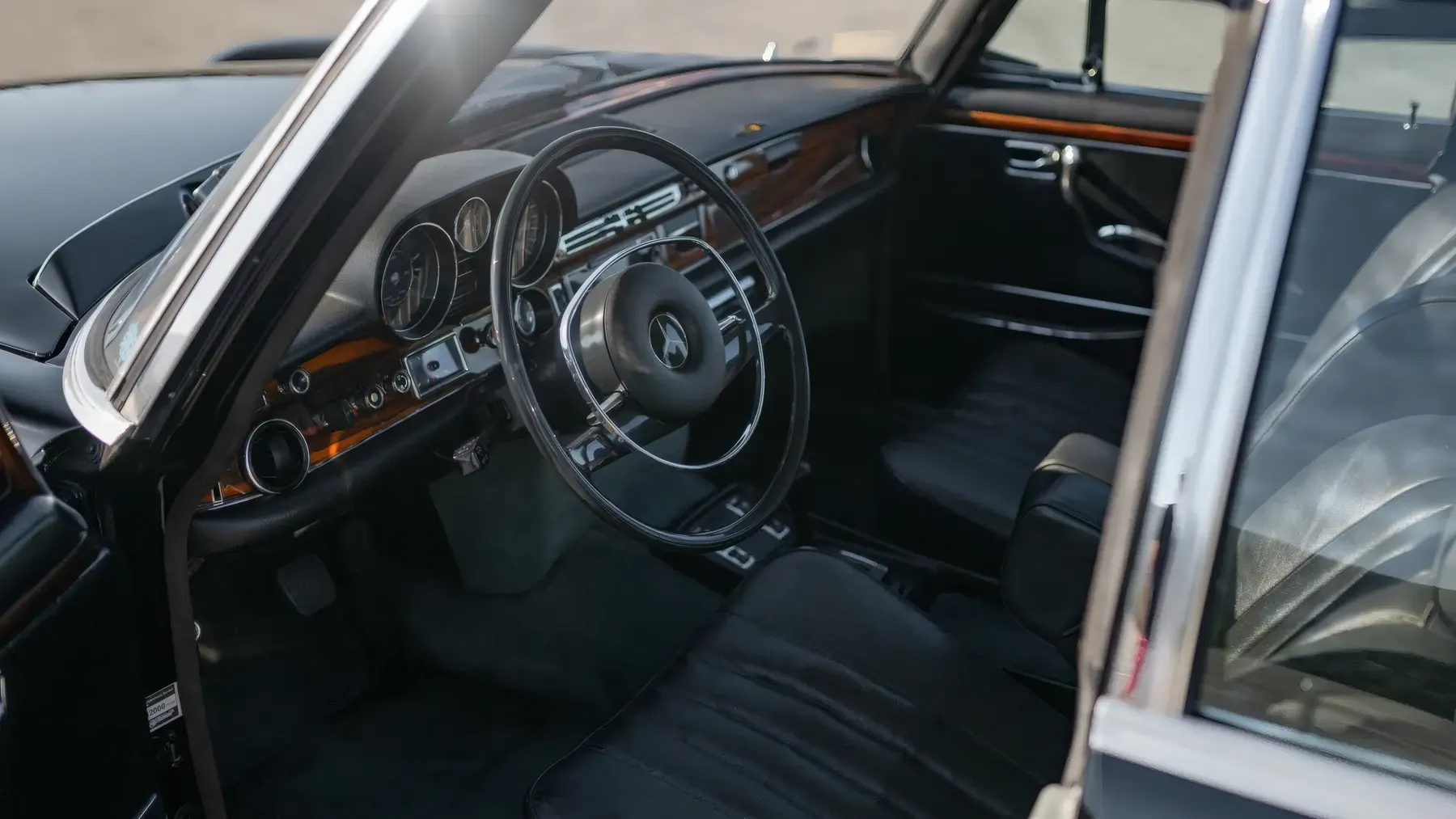
Paul Bracq’s W108/W109 bodywork, which Curbside Classic calls the definitive Mercedes-Benz shape, was left almost alone. The 6.3 measured 5,000 mm long, 1,810 mm wide and 1,420 mm high. Mercedes quotes a kerb weight of 1,780 kg, though Auto Bild gives about 1,830 kg. The giveaways were wider tyres, twin halogen headlamps with an extra pair of high-beam lamps, and a 6.3 badge on the boot lid. Inside, a larger speedometer, a rev counter and a relocated clock separated it from an ordinary 300 SEL. The restraint was part of the appeal. Auto Bild records that executives who bought a 280 SE sometimes had the flagship’s double headlamps fitted, to unsettle Porsche drivers in the fast lane. It also dwells on the contrasts inside: wooden trim around the windows, a stick-type handbrake that would not have looked out of place in the 1950s, and a thin Bakelite steering wheel with a chrome horn ring.
Performance figures depend on whom you ask. Mercedes-Benz’s archive lists 0–62 mph in 6.5 seconds and a top speed of 137 mph, while Auto Bild’s data panel gives 7.4 seconds for the sprint. Road & Track, testing a 1969 car, recorded 6.9 seconds to 60 mph, a 15.1-second quarter-mile and 131 mph. That fell short of the factory claim, but the magazine stressed that it got there with complete calm and composure. It judged the ride and handling superlative, the steering quick and precise with real feel despite the power assistance, and the four-wheel disc brakes excellent. After Uhlenhaut and Waxenberger demonstrated the car to the American press at Laguna Seca, the magazine called it “merely the greatest sedan in the world”. The manner is what descriptions keep returning to. A tester quoted by Auto Bild wrote of gliding past quick cars as if pushed by invisible hands, and of learning only from the speedometer that he was travelling at somewhere between 110 and 125 mph. The car is quiet. At a standstill it is no louder than the dashboard clock, and at speed it is quieter than wind noise and the roll of its 14-inch tyres. Fourth gear can stay engaged almost all the time. It makes no attempt to answer the shriek of contemporary supercars, and it is the better for that.
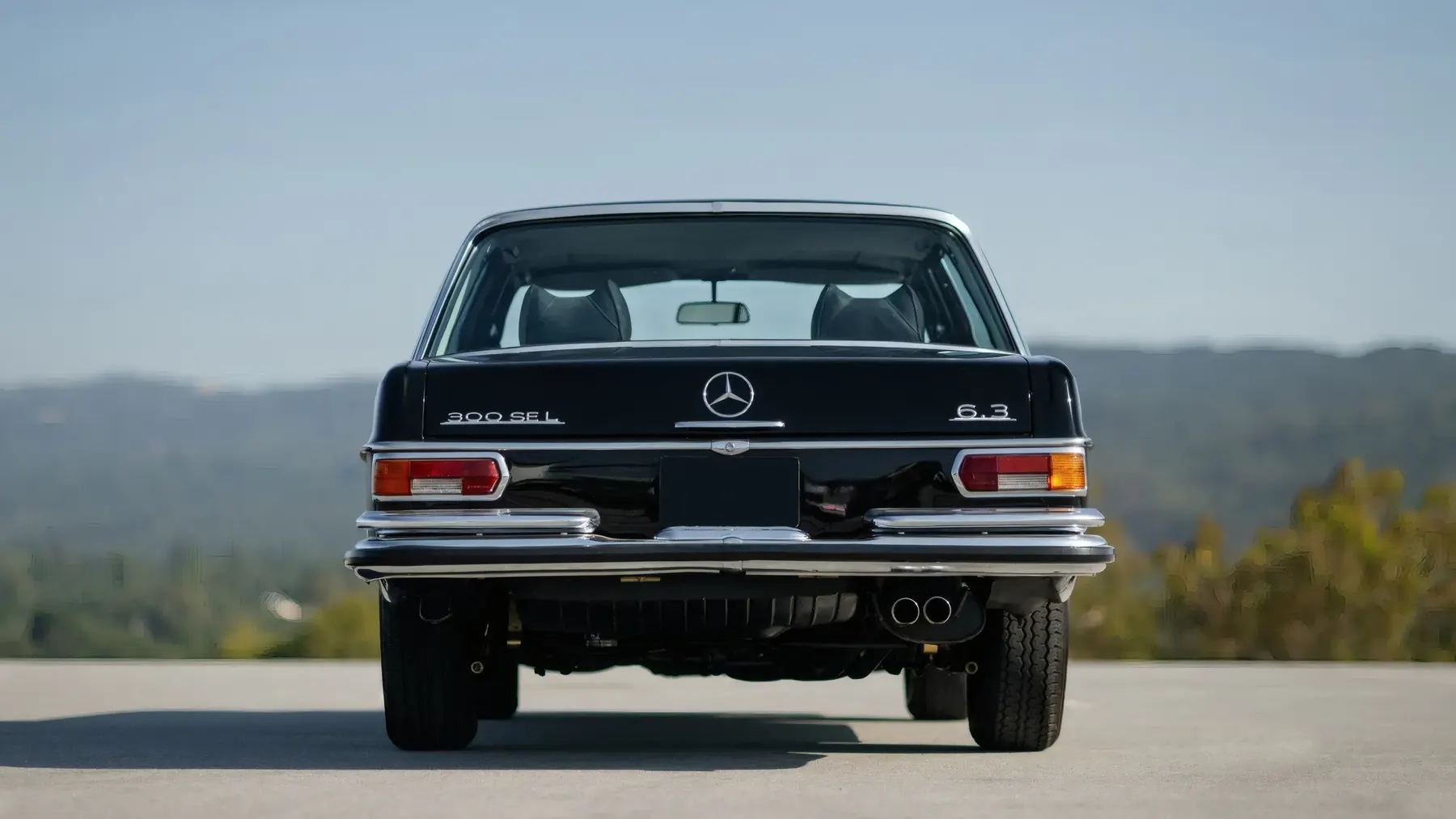
The 6.3 also had real faults, and several of them mattered in period as well as now. Thirst was the most obvious. Mercedes’ own consumption figure was taken at three-quarters of top speed, capped at roughly 68 mph, with ten per cent added, and it works out at about 18 mpg. Auto Bild’s data panel puts the car nearer 13 to 14 mpg. One author on the W108/W109 family says testers commonly saw closer to 9 or 10 mpg. Auto Bild reckons a full 105-litre tank barely covers Stuttgart to Düsseldorf at a brisk pace, which is a modest range for an autobahn express. The chassis was the next compromise. The rear swing axle was a carried-over layout under a car of about 1,780 kg, and Auto Bild’s buying advice calls the running gear too frail for committed driving. It cites steering boxes pulled from their mountings and broken wishbones. Ownership is the bigger problem. Auto Bild describes the V8 as near-indestructible but its injection system as anything but, with an overhaul costing a small fortune, and it warns that a failing air suspension leaves the car sitting on its belly. Corrosion can be worse. A rotten front crossmember can mean stripping the entire front end, and a rusted heater water box can mean pulling the whole dashboard. Factory cavity preservation arrived only from autumn 1970, and Auto Bild says it helps only in theory. With no official guide times for repair work, the magazine likened every garage visit to roulette. Nor was the car ever cheap. The list price rose from DM 39,160 in May 1968 to DM 47,397 by January 1972, and Mercedes’ own history puts the premium at more than DM 10,000 over the 300 SEL and more than double the price of a 280 SE. For that money the cabin stayed businesslike, and Curbside Classic reckons the Rolls-Royce Silver Shadow offered a warmer atmosphere and a stronger sense of exclusivity.
Waxenberger also saw the car’s potential on a circuit. According to Mercedes-AMG’s own history, a private entry for the Macau six-hour race, a stock car with its bumpers removed, won with co-driver Poon. Its power and air suspension humbled Porsche 911s around the tight Guia circuit. The works then prepared three silver 300 SEL 6.3s for the Spa 24 Hours, where the relentless speed of the old circuit proved too much for tyres carrying that much weight and power. A replacement supplier did not cure it, and Uhlenhaut withdrew the cars before practice ended. The team dates this to July 1968, while other retellings place it in 1969. Waxenberger pressed on. The racing SEL gained flared arches, wide alloy wheels from the C 111 record cars and an enlarged 6,834 cc engine. He set lap records in private testing at European Touring Car Championship venues in early 1970, but management refused to sanction a works entry. Two former Mercedes engineers, Hans Werner Aufrecht and Erhard Melcher, whose firm AMG was based in Großaspach, picked up the project. Their Group 2 car made 428 bhp, but even with aluminium doors and Perspex glass it weighed 1,600 kg, some 700 kg more than its rivals. It remained a handful despite Bilstein gas dampers. Painted cardinal red and nicknamed the Rote Sau, or Red Pig, by a paddock that thought it ungainly, it qualified fifth for the Spa 24 Hours on 24 July 1971. It started behind a Camaro on pole and Niki Lauda’s BMW 2800 CS, and it finished second, its weight forcing more frequent pit stops than lighter rivals needed. Rule changes made it unraceable in 1972. AMG sold it to Matra, which used it for suspension and tyre testing for Mirage fighters. AMG was also selling tuned road-going 6.3s from 1970, with roughly 286 and 316 bhp and top speeds up to about 147 mph.
The 6.3 had no direct successor for almost three years. The W116 S-Class arrived with a 4.5-litre V8, and it was May 1975 before the 450 SEL 6.9 revived the formula. It used a 6,834 cc stretch of the same M100, which stayed in production until 1981. Mercedes-Benz now calls the 6.3 the progenitor of all its high-performance saloons, and the claim is hard to dispute. AMG’s first racing car was built on it, and Curbside Classic counts the 450 SEL 6.9 and the Porsche-built W124 500 E among the later attempts to recapture it. Collectors were slow to notice. MercedesBlog says the car was ignored by them for years, and Auto Bild, writing in 2011, tied the modest prices of the day partly to owners’ fear of restoration bills, which also thinned the survivors. The formula it set was a quiet, long-legged, dignified saloon whose only vulgarity sits under the bonnet. Mercedes has refined that formula for half a century. The original had to be built from 1960s hydraulics, pneumatics and sheet steel, and it shows in the fuel bill and the rust. Mercedes created it to give an engine line some customers, and it ended up with a performance identity it has been selling ever since.
Technical data
Production Mercedes-Benz 300 SEL 6.3 (W 109 E 63, type 109.018)
| Specification | Figure |
|---|---|
| Production | December 1967 – September 1972 (shown at Geneva, March 1968) |
| Units built | 6,526 |
| Engine | M100 E 63, 90° V8, front-mounted longitudinally |
| Displacement | 6,332 cc (103 × 95 mm bore and stroke) |
| Compression ratio | 9.0:1 |
| Valvetrain | One chain-driven overhead camshaft per bank |
| Fuel system | Bosch eight-plunger pump, mechanical manifold injection |
| Power | About 247 bhp at 4,000 rpm (DIN); 300 bhp gross SAE in US-market material* |
| Torque | About 369 lb-ft at 2,800 rpm |
| Transmission | Four-speed automatic, rear-wheel drive |
| Gear ratios | 3.98 / 2.46 / 1.58 / 1.00; reverse 4.15 |
| Final drive | 2.82:1 |
| Front suspension | Double wishbones, air-spring bellows with supplementary rubber springs, anti-roll bar |
| Rear suspension | Single-joint swing axle, air-spring bellows with level control, anti-roll bar |
| Steering | Recirculating-ball, power-assisted |
| Brakes | Four-wheel discs, dual-circuit hydraulic, vacuum servo |
| Wheels and tyres | 195 VR 14 on 6½J steel wheels (alloys optional from August 1970) |
| Length / width / height | 5,000 / 1,810 / 1,420 mm |
| Wheelbase | 2,850–2,860 mm* |
| Track, front / rear | 1,490 / 1,485 mm |
| Kerb weight | 1,780 kg (Mercedes-Benz); about 1,830 kg (Auto Bild)* |
| Gross weight | 2,280 kg |
| Fuel tank | 105 litres |
| 0–62 mph | 6.5 s (Mercedes-Benz); 7.4 s (Auto Bild)* |
| 0–60 mph | 6.9 s (Road & Track, 1969 car) |
| Quarter-mile | 15.1 s (Road & Track) |
| Top speed | 137 mph (Mercedes-Benz claim); 131 mph (Road & Track, as tested)* |
| Fuel consumption | About 18 mpg (Mercedes-Benz, DIN 70030 basis); about 13.5 mpg (Auto Bild); 9–10 mpg reported in hard driving† |
| German list price | DM 39,160 (May 1968), rising to DM 47,397 (January 1972) |
Technical data
Related variants and derivatives (not directly comparable with the table above)
| Model | Engine | Power | Weight | Notes |
|---|---|---|---|---|
| 300 SEL 6.3 (production) | 6,332 cc V8 | About 247 bhp | 1,780 kg | 1968–72 |
| AMG-tuned 6.3 road cars | 6,332 cc V8 | About 286 and 316 bhp† | — | Top speed up to about 147 mph; surcharge up to DM 8,600†; offered from 1970 |
| AMG 300 SEL 6.8 “Rote Sau” (Group 2 racer) | 6,834 cc V8 | 428 bhp (Mercedes-AMG team); about 414 bhp (Auto Bild)* | 1,600 kg | Second at the Spa 24 Hours, 24 July 1971 |
| 450 SEL 6.9 (successor) | 6,834 cc V8 | About 282 bhp | — | From May 1975 |
Sources
- Mercedes-Benz Public Archive – 300 SEL 6.3 / W 109 E 63, 1967–1972
- Mercedes-AMG PETRONAS F1 Team – 55 Years of the Rote Sau
- Auto Bild Klassik – Mercedes 300 SEL 6.3 (Die große Sause)
- Curbside Classic – 1971 Mercedes-Benz 300SEL (W109) 6.3
- Curbside Classic – Vintage R&T Road Test: 1969 Mercedes 300SEL 6.3
- MercedesBlog – Mercedes-Benz 300 SEL 6.3: The car that changed the world half a century ago
- Automotive World – Mercedes-Benz press release: World premiere of the 300 SEL 6.3 in 1968
- MiClásico – 1968, estreno del Mercedes-Benz 300 SEL 6.3
- Supercars.net – 1968 Mercedes-Benz 300 SEL 6.3
- Benz-Books – Mercedes 300SEL 6.3, the 1960s V8 powerhouse
- Motor1 Italia – M100: il primo motore Mercedes V8
- Motor1 Italia – Mercedes 300 SEL 6.3, la prima berlina supersportiva
- AOL Lifestyle – This ‘Red Pig’ Is The Racer That Placed AMG On The Map
Join the discussion
Comments
Loading comments…
Leave a comment
Share a detail, memory, or perspective. Every comment is reviewed before publication.