BMW M5 (E28): The Q-Car That Smuggled M1 Power Into a 5 Series
1985 BMW M5




Images: Botker / RM Sotheby's
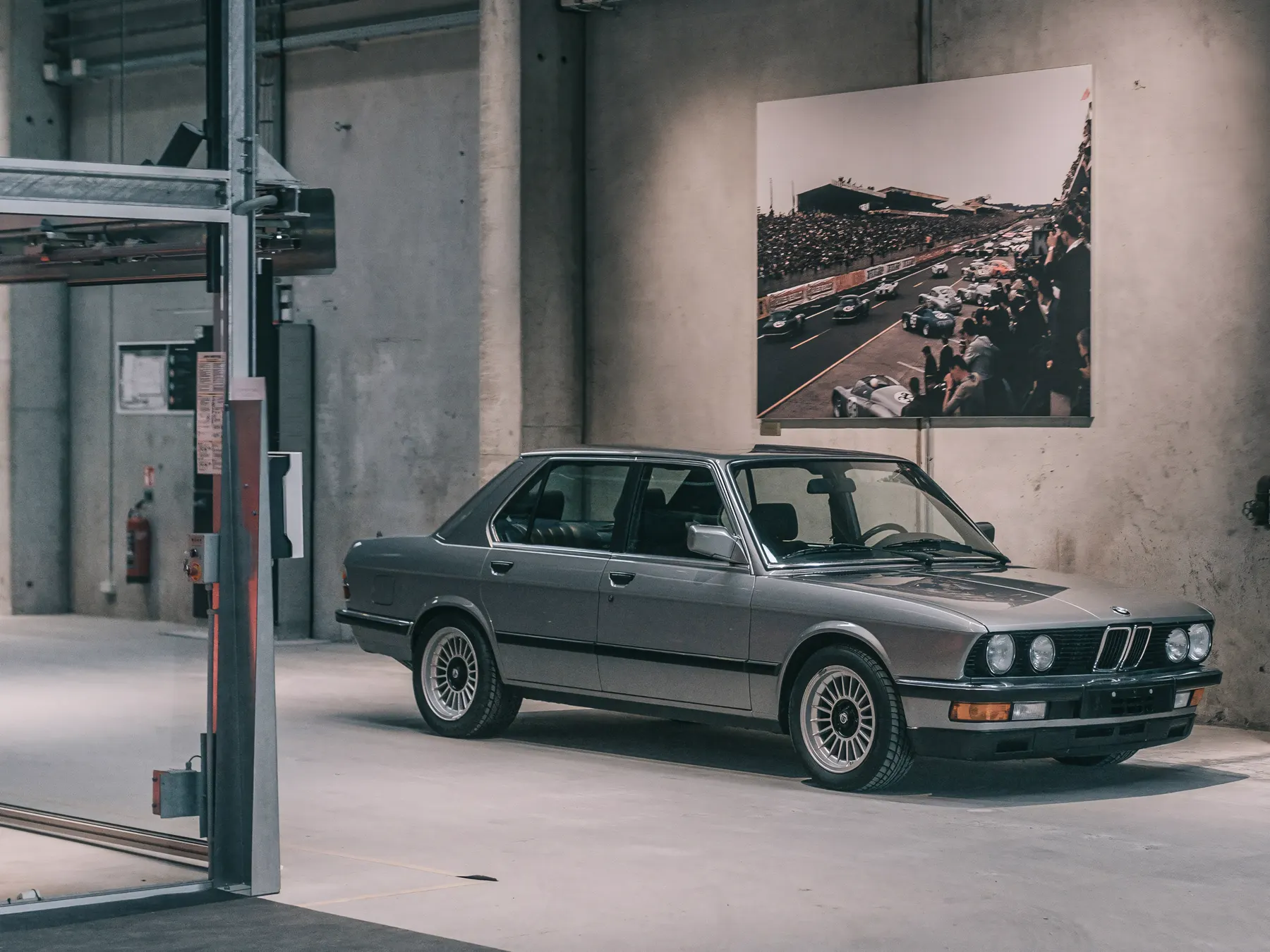
The first time BMW Motorsport put its badge on an E28 5 Series, the result was mostly a matter of wheels and spoilers. The M535i was a good-looking, slightly more purposeful 535i whose engine and power were left exactly as they were, and for all its decoration it left a pointed question hanging in the air: what would a 5 Series become if the people who had built the M1 were allowed to finish the job? The M5 was the answer, and the strangest thing about it is how little effort went into announcing itself.
The raw material was the M88, the twin-cam, 24-valve, 3.5-litre straight-six that Motorsport had developed for the M1 supercar and that needed a second career once the M1 left production. The 6 Series coupe got it first, in the M635 CSi of 1983, and evo’s retrospective on the M5 recalls Motorsport chief Jochen Neerspasch predicting that the pairing would give Porsche’s 911 Carrera a hard time. Because the 6 Series and 5 Series shared a platform, the next transplant was an easy one to justify, and the engine became the M88/3. It was not simply an M1 unit in a new home. Motorsport swapped the supercar’s Kugelfischer injection for Bosch Motronic electronics, kept the six individual throttle bodies and the aluminium crossflow head, and ended up with fractionally more output than the mid-engined car had managed: roughly 282 bhp at 6,500 rpm and 251 lb-ft at 4,500 rpm, against 277 bhp for the M1’s engine. For a four-door of the mid-1980s that was a startling figure: Car magazine notes that it more than tripled the output of an entry-level 518 and edged ahead of Ferrari’s new 328.
Even the dates are slightly slippery. The M5 was a hand-built Motorsport project, produced away from BMW’s main lines, and BMW’s own heritage pages give it two different production windows: one running from October 1984 to June 1988, the other from February 1985 to December 1987. The public debut at the Amsterdam show is placed in 1984 by evo and in February 1985 by BMW and Motor1, which may simply reflect how quietly the car appeared. evo points out that, without much of a marketing campaign, the wider public barely noticed it, and that this was how BMW wanted it at the start. BMW Classic puts the total at 2,241 cars, a small number spread across an unusually wide range of regional specifications.
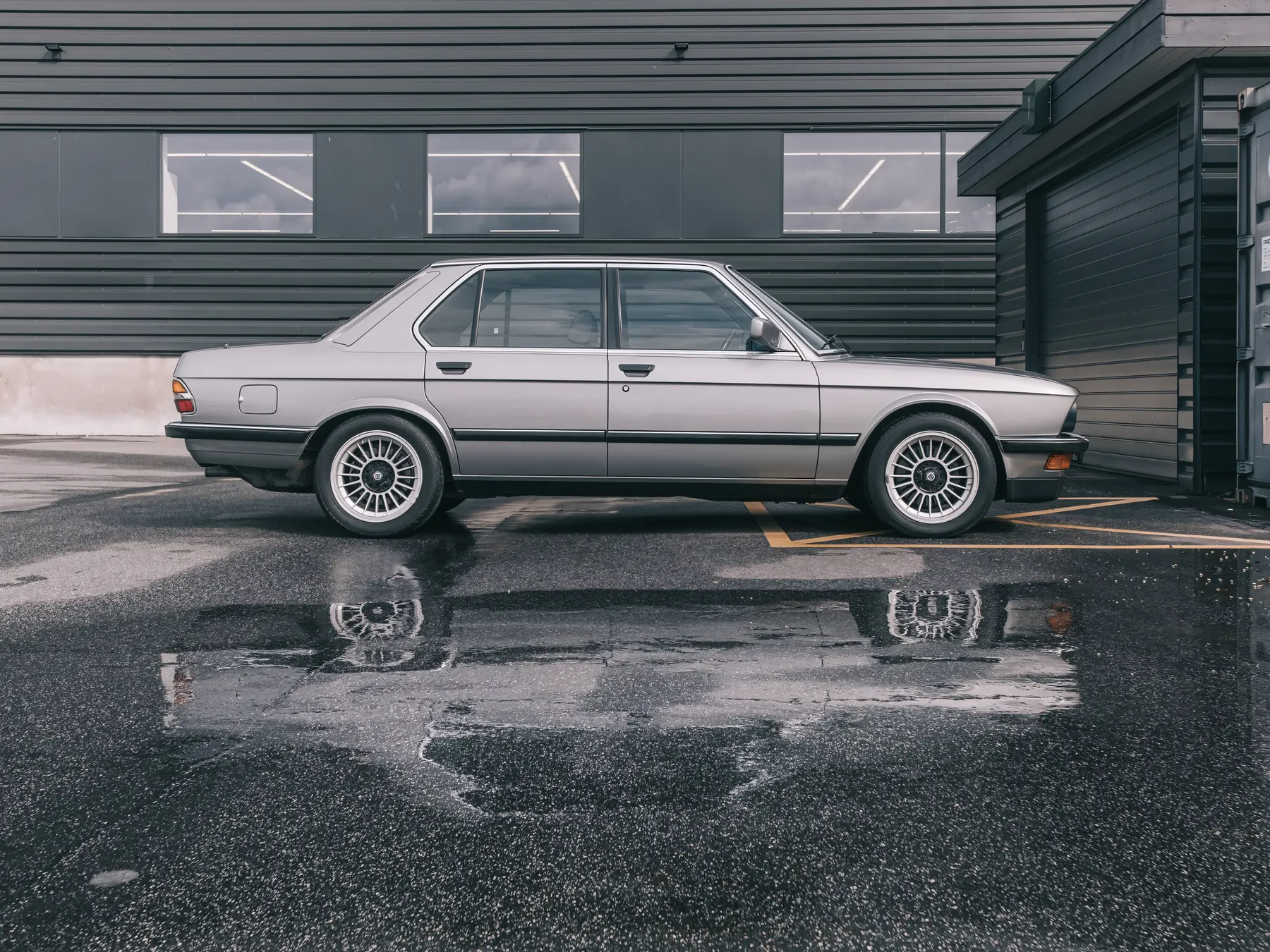
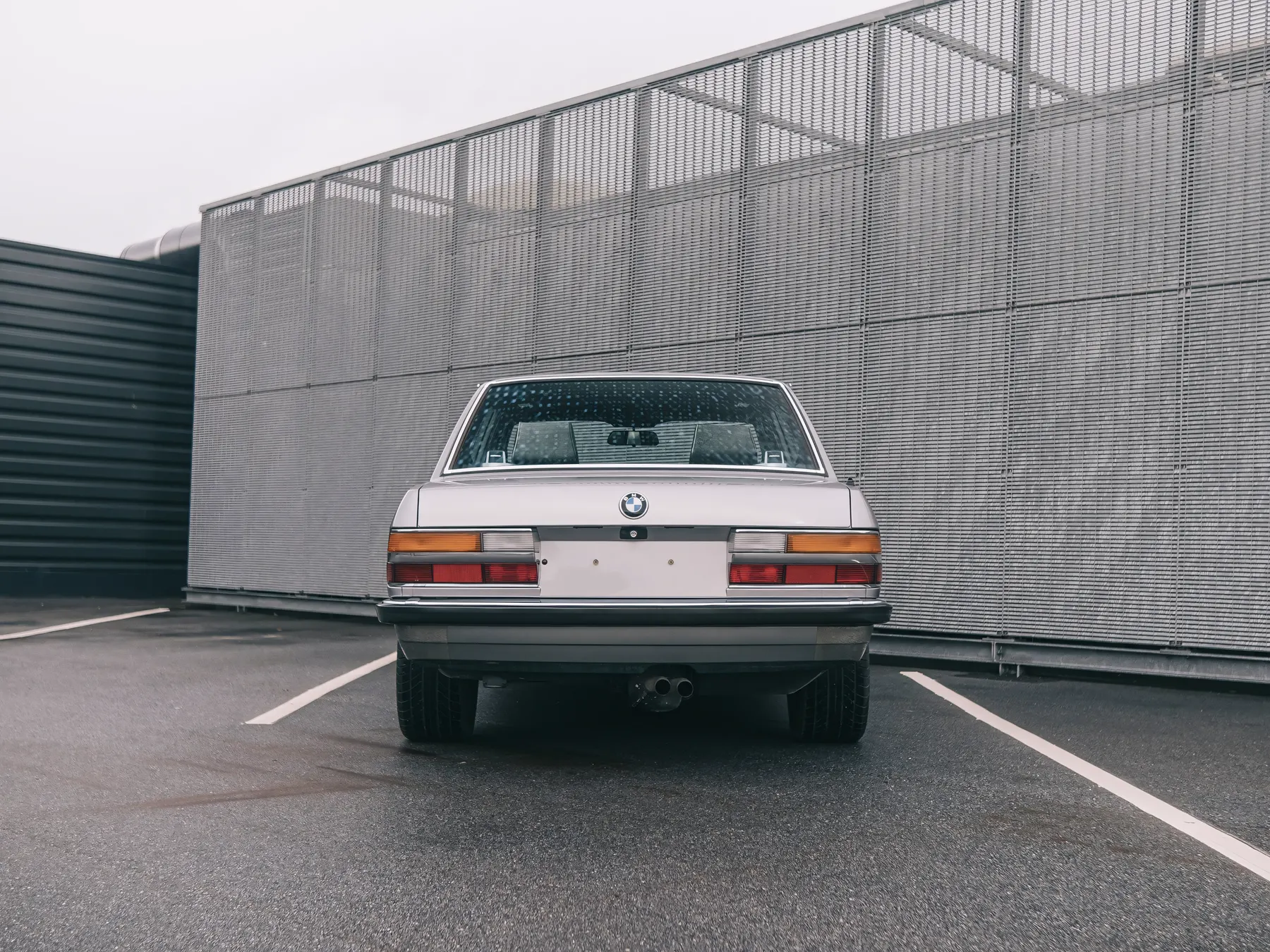
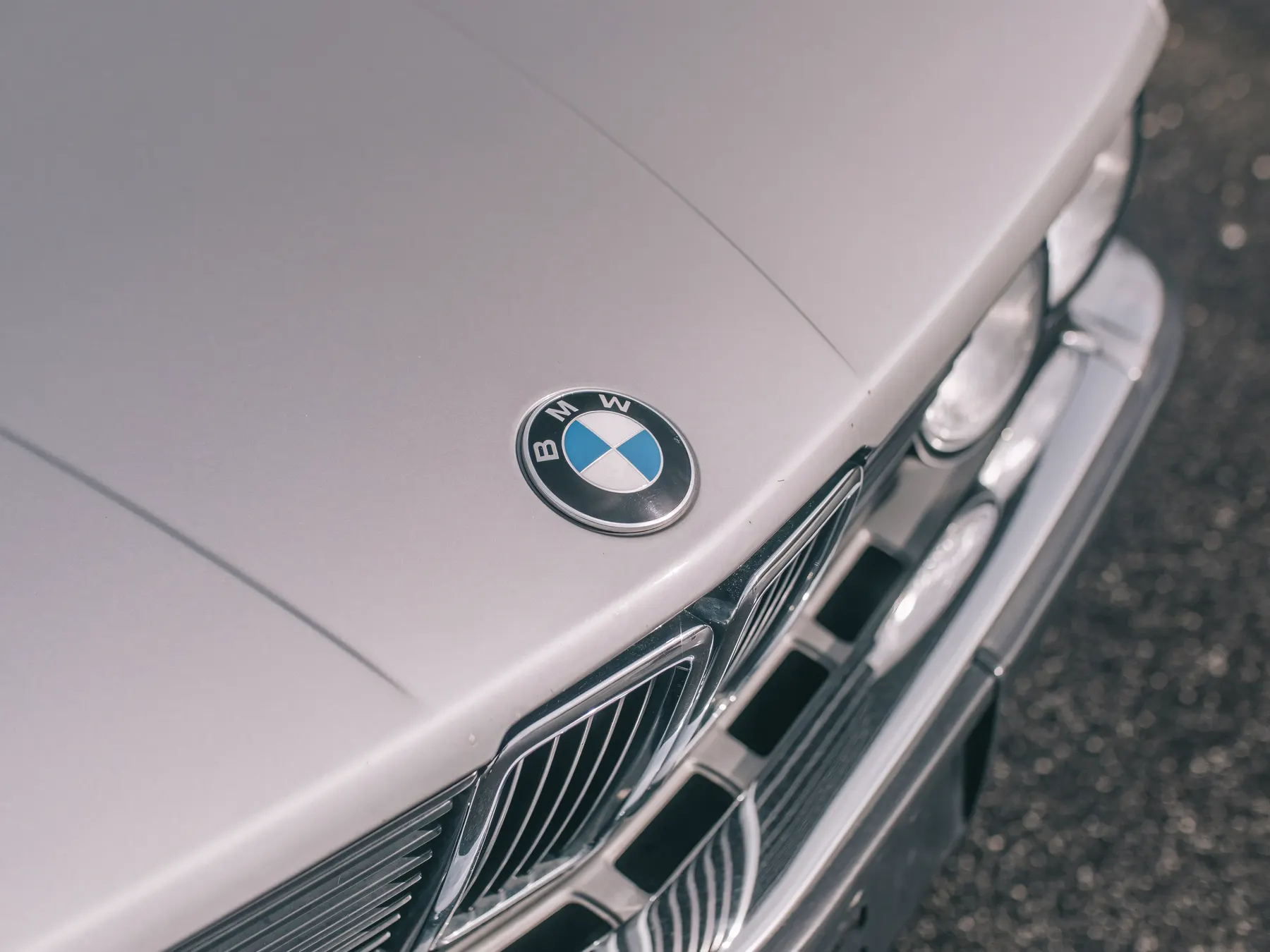
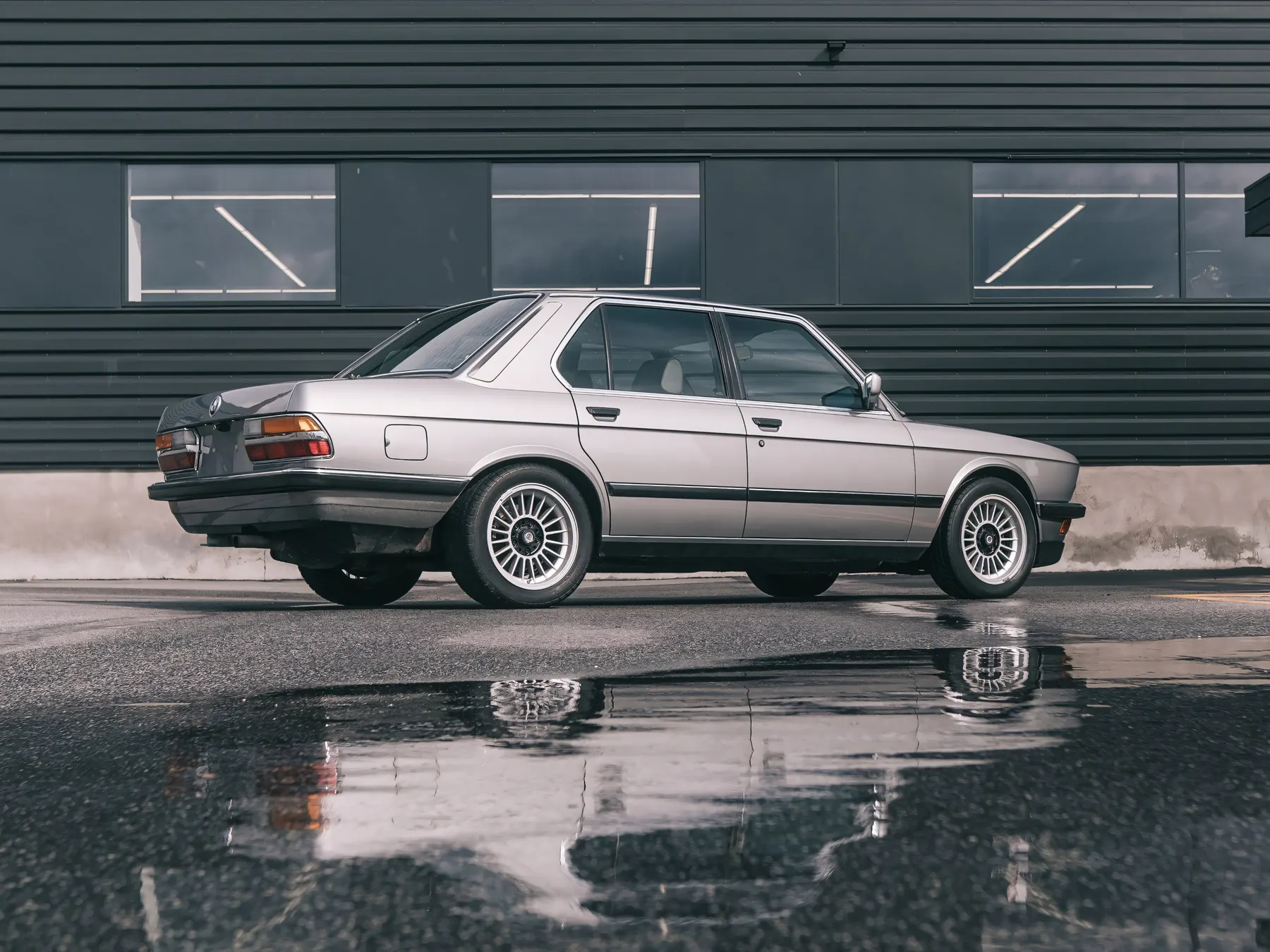
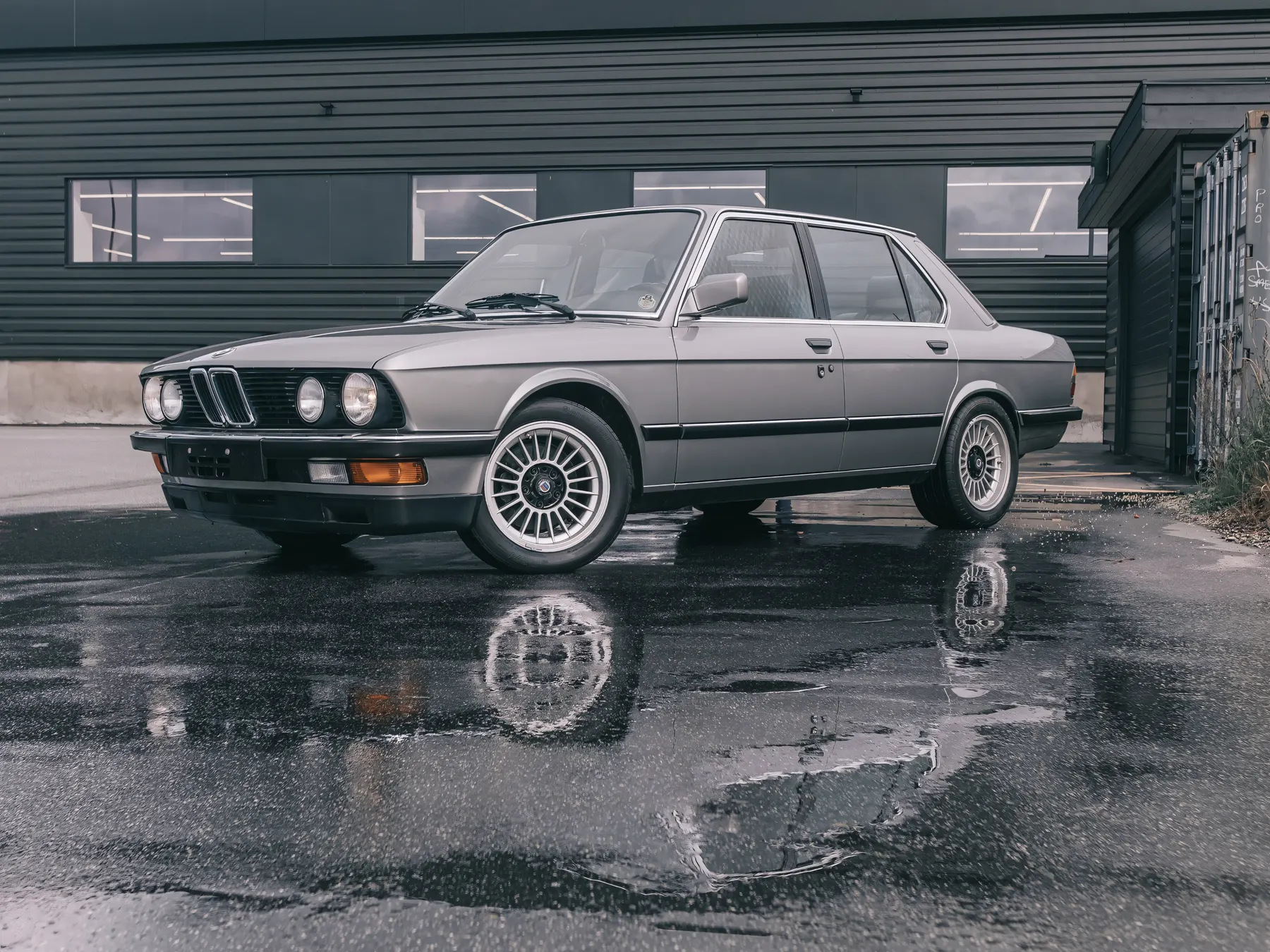
The car that carried the engine was deliberately plain. Motorsport added a reinforced five-speed Getrag manual gearbox, a limited-slip differential with a 25 per cent locking factor, firmer suspension and a brake package shared with the M635 CSi, and then did almost nothing to the shape. The front gained a deeper apron with an air dam, the wheels became 16-inch alloys, the twin tailpipes poked out to one side, and discreet M5 badges went on the nose and tail. Otherwise this was the E28 as launched in 1981, shark-nose front and all. Motor1 notes that the 5 Series was criticised at launch for looking too much like the car it replaced, a complaint that became an asset for a car trying to avoid attention. The wheelbase was about 2,625 mm and the weight about 1,430 kg, and that mass combined with the M88/3’s output was enough for BMW to claim 6.1 seconds to 62 mph and 152 mph, which made it the world’s fastest production saloon at the time. Independent figures were a little more modest: Car and Driver’s 1987 test timed 6.3 seconds to 60 mph, and Car magazine’s retrospective lists 6.5 seconds to 62 mph and 153 mph.
What reached customers depended on where they lived. European cars carried the full M88/3 and started out in left-hand drive; right-hand drive followed in 1986, and just 187 were built, a figure that Supercar Nostalgia’s production breakdown and Car magazine both give. North America received a different car. Emissions rules meant the American M5 used the catalysed S38B35 version of the engine, rated at around 256 bhp and 243 lb-ft, although sources quote anything from 254 to 256 bhp. It came only in black and wore the 5 mph bumpers that Autoblog’s reviewer calls unfortunate. BMW planned to sell about 500 of them and built nearly three times as many, roughly 1,340 according to Supercar Nostalgia, and Autoblog reports that early buyers sued over the loss of the exclusivity they had been promised. Smaller numbers went to Japan and South Africa, the latter assembled from kits. An M-Technic body kit later became available for owners who wanted the car to look the part, which says something about how effectively the standard car hid its abilities. Car magazine notes that the kit can warp with age, and that the stealthy look is the cooler one anyway.
Inside, the changes were similarly modest. The M tricolour appeared on the thin-rimmed three-spoke steering wheel, gear knob and seats, the rev counter was marked to 6,500 rpm, and the speedometer read to 170 mph. evo judged in 2010 that the two large, clear main dials and simple switchgear had yet to be bettered in a 5 Series. The tall glasshouse and slim pillars give a visibility and airiness that both Jalopnik and Autoblog single out, and that few modern performance saloons can match. Autoblog’s reviewer also says the steering wheel sits at an angle more suited to a bus than a sports saloon, a reminder that this was an executive car first.
On the road the M5 does not behave like a supercar in disguise, at least not at first. Car magazine found the engine flexible rather than fast below about 3,000 rpm, taking on a harder mechanical edge above that and turning urgent from around 4,500 rpm, with the final run beyond 6,000 rpm a rasping blur. Motor1’s drive notes that it will pull from around 1,500 rpm without fuss, and that dropping two gears is the way to find the performance. The sound is mechanical rather than musical. evo describes a baritone howl with the clicking of the valvetrain and the whine of the gearbox in counterpoint, and a pin-sharp throttle response that sits oddly with the slow, long-throw gearchange. Torque is hardly extravagant, and Motor1 jokes that a modern Passat diesel estate has more of it, so the pleasure lies in revs and response rather than shove. Autoblog’s reviewer, driving a US car, also found the ratios beyond first on the long side, which is part of why the engine rewards a driver who stays high in the rev range rather than one who leans on its mid-range.
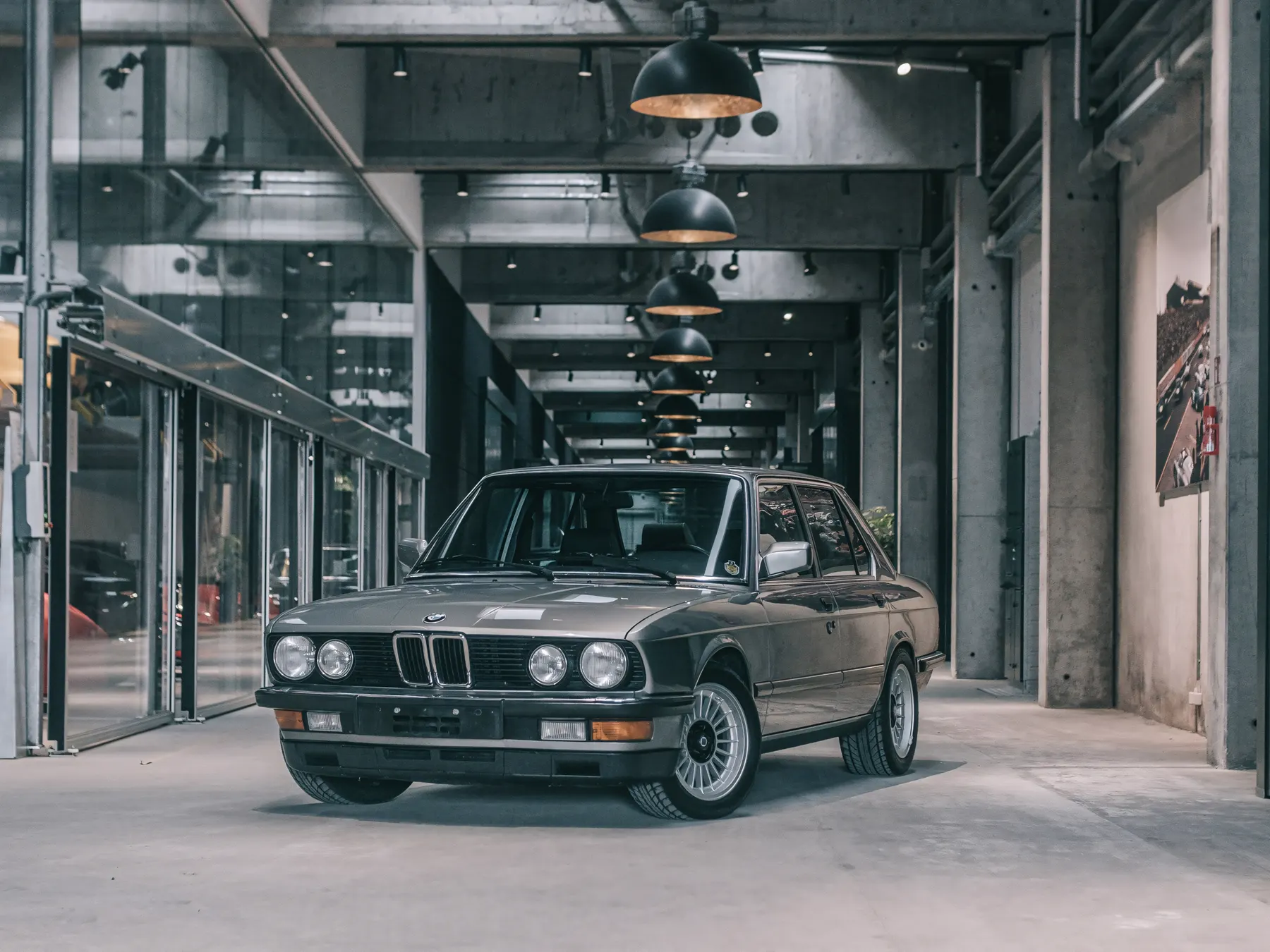
The chassis is softer than the badge implies, and that is both its appeal and its limit. evo found that tall tyres and soft springs gave the car a flowing, cushioned feel, with a benign slide that is most satisfying at about eight-tenths, and Car magazine felt the soft suspension and modest tyres let it slide far more fluidly than an E30 M3. Jalopnik, driving a US-specification car, praised the ride and found the car predictable near the limit. Those day-to-day manners, a ride that copes with motorways and a gearbox that never demands attention, set the template for every M5 that followed. Motor1 reports that BMW Motorsport’s guiding principle at the time was that the chassis should always be quicker than the engine, and it is worth holding the E28 M5 up against that claim. The engine is plainly the star here, while the suspension was tuned for progressiveness and comfort rather than precision, so by the standards of later M cars this is a car in which the powertrain outruns the rest of the package.
None of that softness comes free. Car magazine reports a dead spot at the top of the steering that grows as the pace rises, front-end body roll that increases with it, and a brake pedal that feels leaden and does little. evo found the brakes rather fade-prone and advised staying within the tyres’ limits to spare them, and cautioned that big armfuls of correction are needed when the rear steps out. The semi-trailing-arm rear suspension is also unforgiving of a mid-corner lift, as Jalopnik’s driver warned, so the benign slides described in the magazines reward care rather than bravado. Opinions on the brakes and steering are not unanimous, because Jalopnik found the pedal firm and the steering communicative, which probably says as much about the condition of individual cars as about the design. The American car’s engine was the weaker proposition: Jalopnik found it slower to build and shed revs than the European unit, and with around 256 bhp against 282 it lacked the edge that made the original case. Price was another problem. BMW Classic lists DM 80,750 and attributes it to the hand-built production, while Motor1 cites about DM 86,000, almost DM 10,000 more than a 911 Carrera, for a saloon that looked like a 5 Series. Motor1 argues that this understatement is one reason the car stayed rare.
Age has added its own caveats. Because the M5 appealed to business users covering large distances, Car magazine warns that most examples have very high mileages, suggesting buyers should expect something like 190,000 to 210,000 km. Car also advises that the M88’s timing chain should have been replaced at around 160,000 km, or inspected before purchase if nobody knows. Autoblog, summarising Hemmings, adds that crank hub and timing-chain components have been known to fail, that the self-levelling suspension on the US car is prone to failure, and that M5-specific parts are expensive and difficult to source.
Contemporary reaction was admiring if surprised. Hagerty quotes Car and Driver’s Larry Griffin writing in 1987 that “now is the time to go ape”, and the car’s reputation has grown steadily since, with Hagerty crediting it as the model that built the mystique of BMW’s M division. Values climbed from around 2015 onwards. Autoblog’s 2022 review cited Hagerty’s figure of about $55,000 for a car in good condition, while Car magazine had put values at £35,000 to £75,000 in 2017.
The E34 M5 arrived at Frankfurt in September 1988 with an S38 engine derived from the M88, and it was considerably heavier. Car puts the weight gain at 240 kg, in return for body roll that is checked much more quickly than in the E28. The straight-six itself grew to 3.6 litres and later 3.8 litres, evolving rather than being replaced, which suggests how much room the original M88 layout had left. That is perhaps the most telling comparison. Every later M5 solved something the first car left unfinished, whether steering precision, brake feel or body control, and each paid for it in size, weight or complexity. The E28 is not the sharpest, quickest or best-braked M5, and few of its admirers would claim otherwise. What it established was the idea itself: an executive saloon that could be a quiet motorway companion on Monday and, with two gears dropped and the revs past 4,500, something much more serious on Tuesday, with the engine doing most of the talking. Its soft chassis, vague steering, tiring brakes and demanding maintenance are the measure of how much that idea still needed refining, and the cars that refined it mostly did so by getting heavier.
Technical data
Performance Specifications
| Specification | European M88/3 | North American S38B35 |
|---|---|---|
| Production window | Oct 1984 to Jun 1988, or Feb 1985 to Dec 1987 (BMW Classic gives both) | Later years of the run (from late 1986*) |
| Engine | 3,453 cc twin-cam 24-valve inline-six, six individual throttle bodies, Bosch Motronic | 3,453 cc twin-cam 24-valve inline-six, catalysed |
| Power | 282 bhp at 6,500 rpm | c. 256 bhp (sources 254 to 256) |
| Torque | 251 lb-ft at 4,500 rpm | 243 lb-ft |
| Transmission | Getrag five-speed manual, 25% limited-slip differential | Five-speed manual |
| Kerb weight | c. 1,430 kg | c. 1,430 kg |
| Wheelbase | c. 2,625 mm | c. 2,625 mm |
| Suspension | MacPherson struts front, semi-trailing arms rear | MacPherson struts front, semi-trailing arms rear |
| 0-62 mph | 6.1 s (BMW); 6.3 to 6.5 s (independent) | Not separately corroborated |
| Top speed | 152 to 153 mph | Not separately corroborated |
| Fuel economy | c. 25 mpg (Car magazine) | Not corroborated |
| Launch price | DM 80,750 (BMW Classic); c. DM 86,000 (Motor1) | Not corroborated |
| Production | 2,241 all variants (BMW Classic); 187 right-hand drive | c. 1,340* |
Sources
- BMW Group Classic: BMW M5 (E28)
- BMW Group Classic: BMW M5 (E28), model history page
- Supercar Nostalgia: Guide: BMW E28 M5 - a Historical & Technical Appraisal
- Motor1: BMW M5 (E28, 1984-1987): The first super five
- evo: Five Star - 25 years of the BMW M5
- Car magazine: Past meisters: driving all of the first five BMW M5 generations
- Autoblog: 1988 BMW M5 Retro Review
- Jalopnik: BMW’s First M5 Might Still Be The Best Of Them All
- Hagerty: A pair of M5s: The original E28 theme found grace in the E39
Join the discussion
Comments
Loading comments…
Leave a comment
Share a detail, memory, or perspective. Every comment is reviewed before publication.