BMW M3 Cecotto Edition: An E30 Special BMW Made Obsolete in Months
1989 BMW M3 Cecotto Edition




Images: Nathan Leach-Proffer / RM Sotheby's
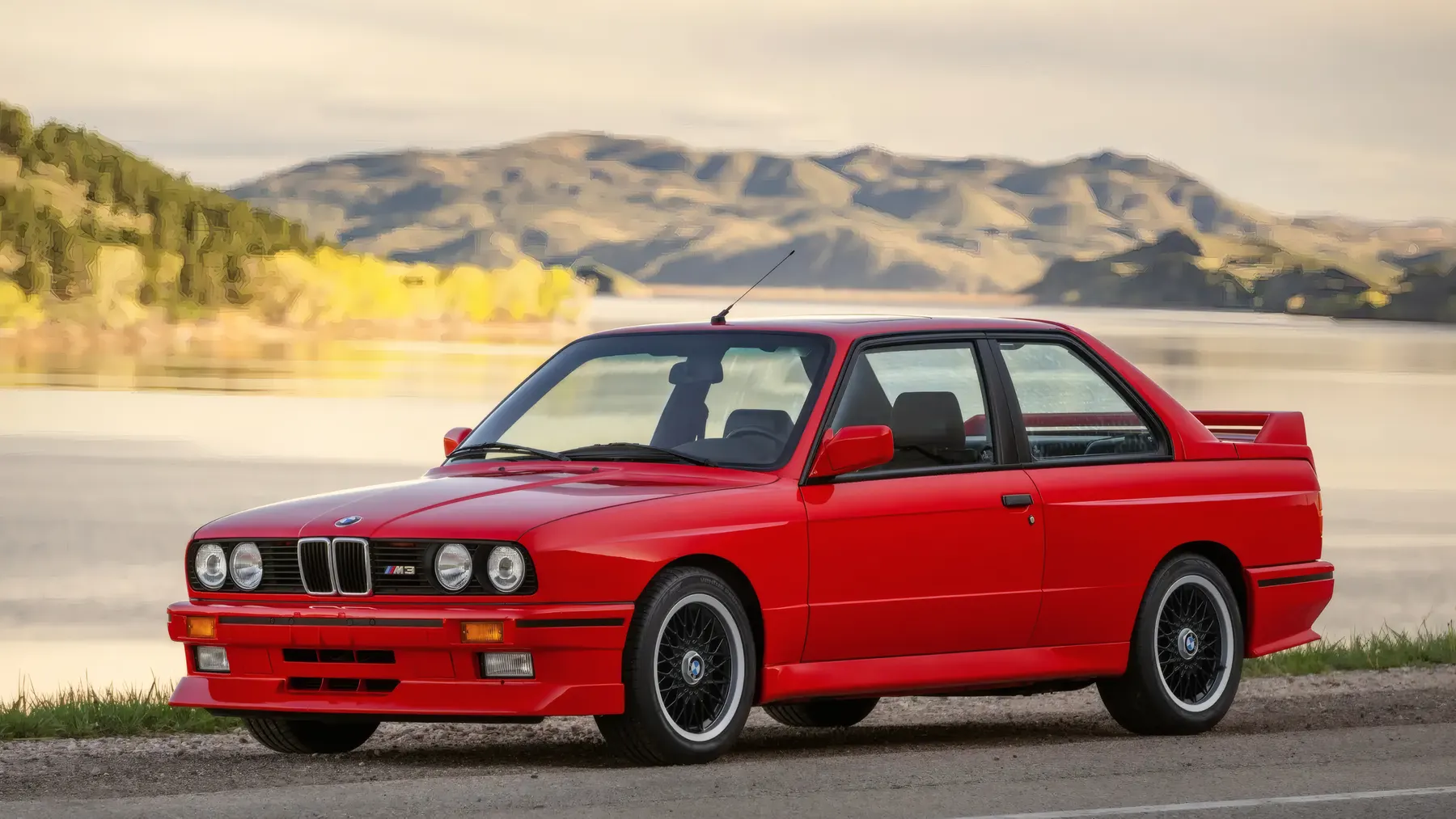
BMW built the Johnny Cecotto Edition to celebrate one of its touring-car stars, gave it a genuinely stronger engine, numbered every example, and then, within the same calendar year, fitted that same upgraded engine to every catalytic-converter-equipped E30 M3 coming off the Regensburg line. For a few months in 1989, owning a Cecotto meant owning the most powerful catalyst-equipped M3 BMW made. By that September, it just meant owning an M3 with a plaque on the centre console. That contradiction - a commemorative special whose headline mechanical advantage had a built-in expiry date - sits at the heart of understanding what the Cecotto Edition actually was, and why it still divides opinion among E30 M3 obsessives today.
The E30 M3 itself existed for one reason: to make BMW’s touring-car racing legal. Group A regulations for the Deutsche Tourenwagen Meisterschaft and the European and World Touring Car Championships required five thousand roadgoing examples of the base car, with any further homologated “evolution” needing a minimum run of five hundred more. BMW unveiled the M3 at the 1985 Frankfurt Motor Show and began production in March 1986, built around the S14 engine - a high-revving, twin-cam four-cylinder with a cylinder head closely derived from the six-cylinder S38 and a block borrowed from the humble M10, spinning to a 7,250rpm redline. Over the next five years BMW kept the racing version legal and competitive by periodically homologating new roadgoing specials: the Evolution of 1987, the Evolution II of 1988 with a revised camshaft and raised compression that pushed output to 217bhp, and finally the 2.5-litre Sport Evolution of 1990, which brought 235bhp, a 154mph top speed and a production run capped at 600 cars. The Cecotto Edition sits chronologically and conceptually between the second and third of these, though its purpose was rather different.
That racing programme repaid BMW’s investment many times over. Across its production life the E30 M3 took the DTM title twice, in 1987 and 1989, the European Touring Car Championship twice, the World Touring Car Championship once, two British Touring Car crowns, and four Italian Touring Car titles, while winning the Nürburgring 24 Hours five times and the Spa 24 Hours four times, regularly beating larger-engined and turbocharged rivals along the way. By the time Cecotto and his Schnitzer teammate were racing for BMW in the late 1980s, the M3 had already established itself as arguably the most successful touring car of its era, which is precisely why BMW’s marketing department saw commercial sense in attaching two of its works drivers’ names to showroom cars.
Johnny Cecotto’s own story explains why BMW thought his name was worth putting on a car. Born in Caracas in 1956, the Venezuelan became the youngest world motorcycle road-racing champion in history at nineteen, taking the 1975 350cc title and beating the seven-times champion Giacomo Agostini along the way. He switched to four wheels in the early 1980s, racing in Formula Two for the March-BMW and Minardi-BMW teams before reaching Formula One with Theodore Racing. That career stalled abruptly when he crashed heavily during qualifying for the British Grand Prix, breaking both legs. After recovering, Cecotto rebuilt his career in touring cars, driving for BMW and briefly for Volvo before rejoining BMW Motorsport in 1987. He won the Italian Touring Car Championship in 1989 and spent five seasons, from 1988 to 1992, racing a factory BMW M3 for Schnitzer Motorsport in the DTM, finishing runner-up in 1990. Wins at the Spa and Nürburgring 24-hour races followed later in his BMW career.
In April 1989, BMW released two named specials at once: the Johnny Cecotto Edition and a smaller Roberto Ravaglia Edition, honouring Cecotto’s Schnitzer teammate, who that same year won the 1989 DTM drivers’ title outright in a BMW M3 - making 1989 a banner season for BMW in German touring cars, celebrated twice over in showroom form. Both editions introduced a reworked, catalyst-equipped version of the 2,302cc S14 four-cylinder rated at 215bhp at 6,750rpm and 170lb-ft at 4,600rpm, a jump of around 23bhp over the standard catalyst M3 that had been sold since 1986. Tellingly, the extra output came mostly from reprogrammed Bosch Digital Motor Electronics engine management rather than any significant hardware change under the rocker cover. The cylinder head, the lack of hydraulic lifters that meant owners needed periodic manual valve-clearance adjustments, and the 7,250rpm ceiling all carried over unchanged from the standard car.
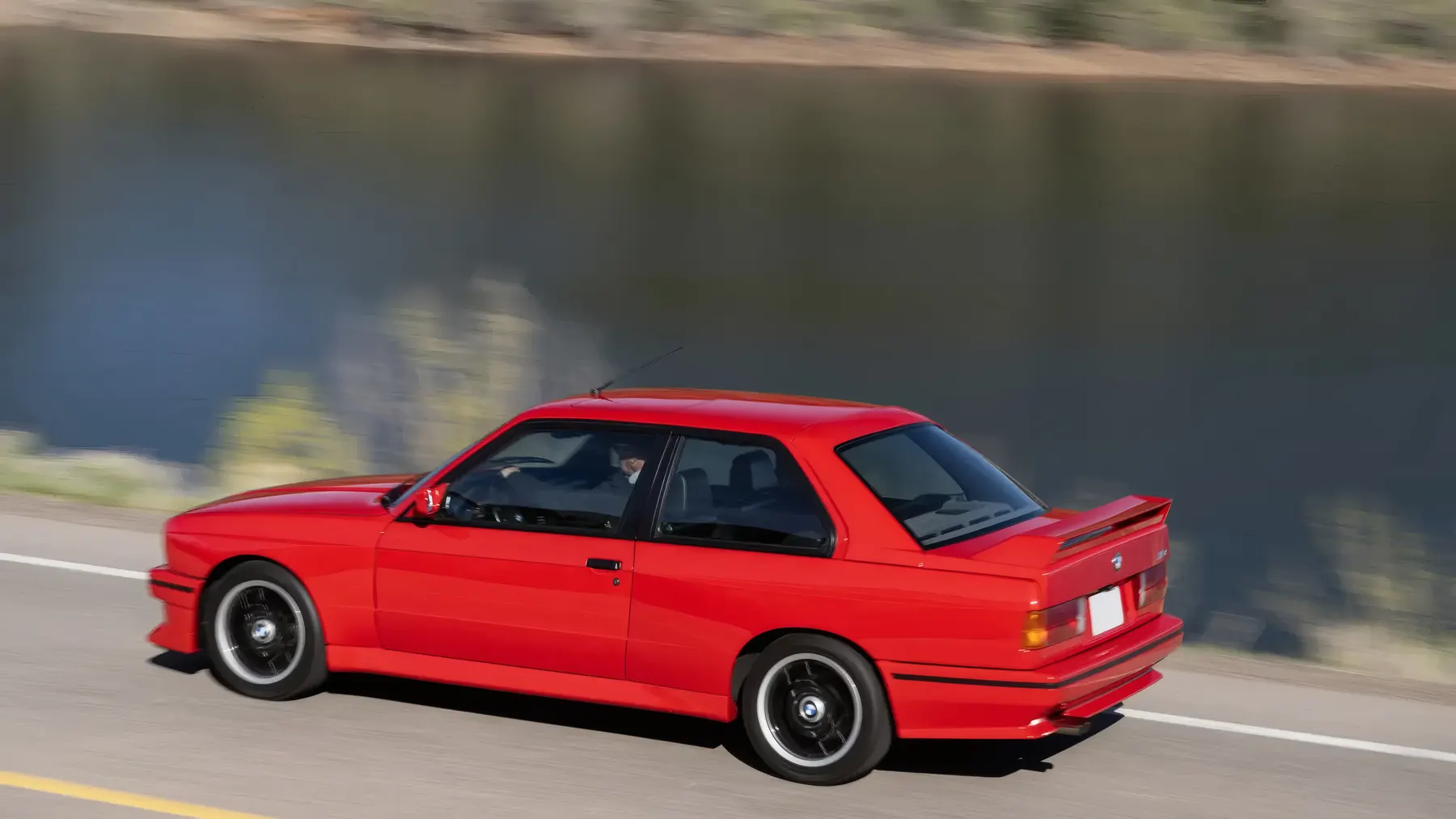
The platform beneath all of this remained the wider M3 bodyshell, which differentiated the car from an ordinary E30 3 Series far more than most special editions of any era bother to acknowledge. Only the bonnet, roof panel and sunroof carried over from the standard car; the front splitter, sills, rear apron, boot lid and the area around the rear window were all reworked, the windscreen was bonded rather than rubber-sealed, and the tailgate was raised and remade in glass-reinforced plastic, changes that dropped the drag coefficient from 0.38 to 0.33 and improved high-speed stability. Brakes, callipers and the master cylinder were unique to the M3, borrowing hub and calliper-bolt spacing from the larger E28 5 Series, and a Getrag 265 five-speed gearbox with a limited-slip differential was standard across the range. None of this was special to the Cecotto specifically - it was simply what every E30 M3 buyer got by 1989 - but it is worth remembering that even the most modestly specified Cecotto still rode on genuinely bespoke underpinnings, which is more than could be said for most manufacturers’ idea of a “special edition” saloon at the time.
BMW built 480 Cecotto-badged coupés between April and July 1989 for markets outside Switzerland, each carrying an individually numbered plaque on the centre console. The Ravaglia Edition, visually and mechanically almost identical but finished exclusively in Nogaro Silver metallic and sold only in the UK, totalled 25 cars. Combined, the two nameplates are often cited together as 505 cars, a figure BMW itself has used in retrospective material. Separately, a further batch - specialist sources differ on whether it ran to around 50 or 80 cars - was produced later in 1989 specifically for Switzerland, carrying a signed dashboard plaque rather than an individual number, where stricter contemporary emissions limits forced BMW to detune the engine to roughly 208bhp. A Cecotto badge, in other words, did not guarantee identical performance across every car that wore it.
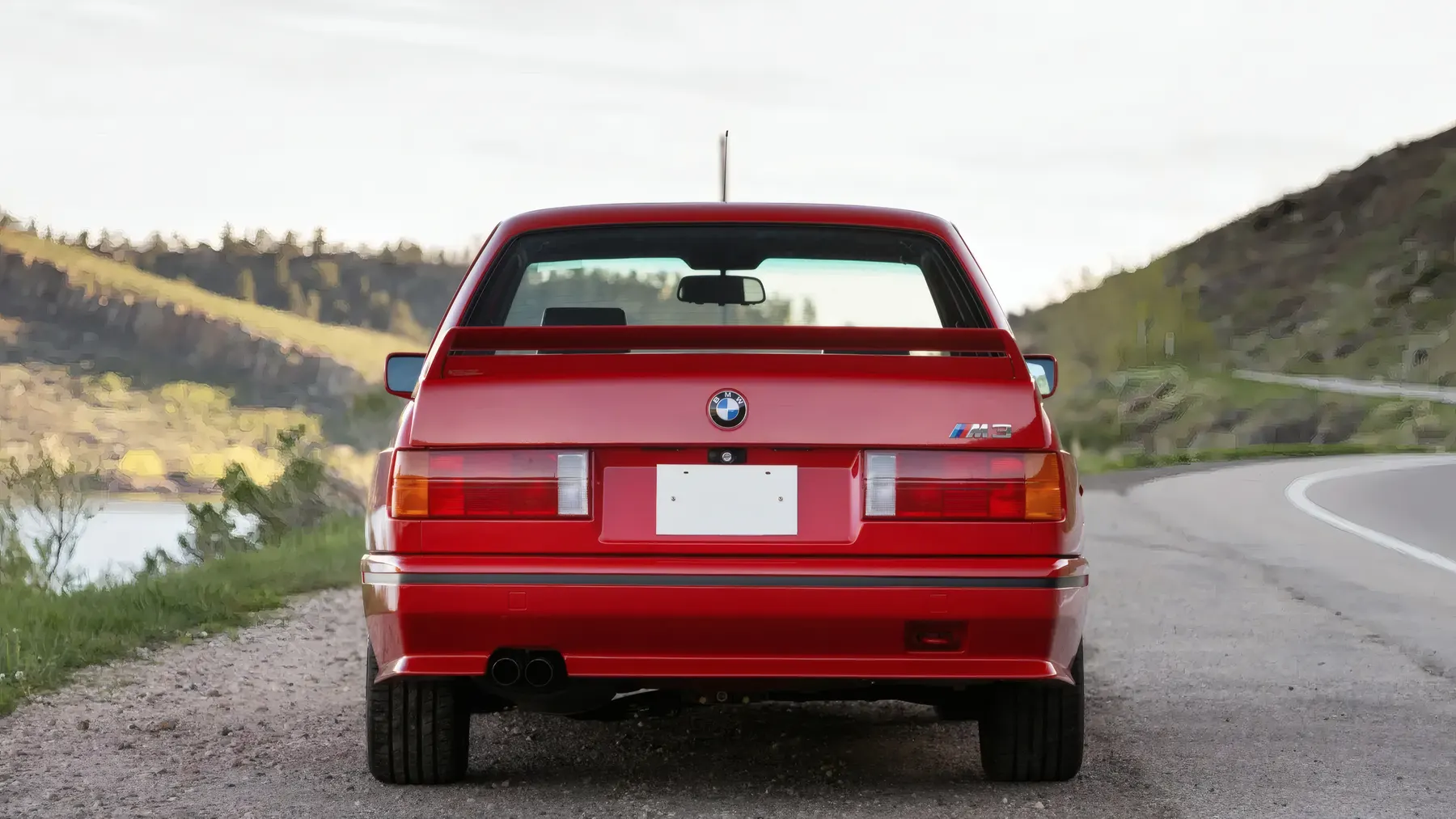
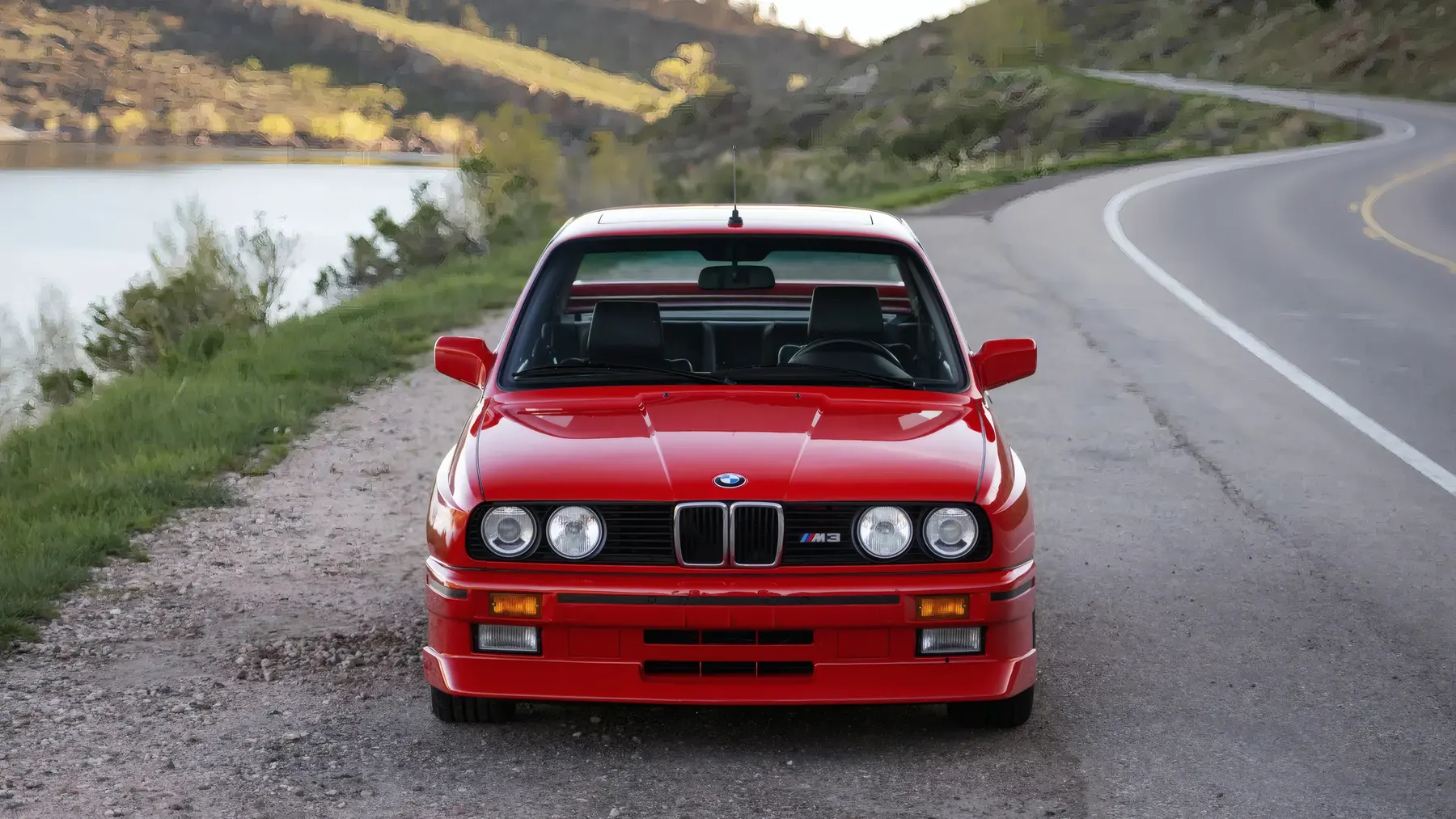
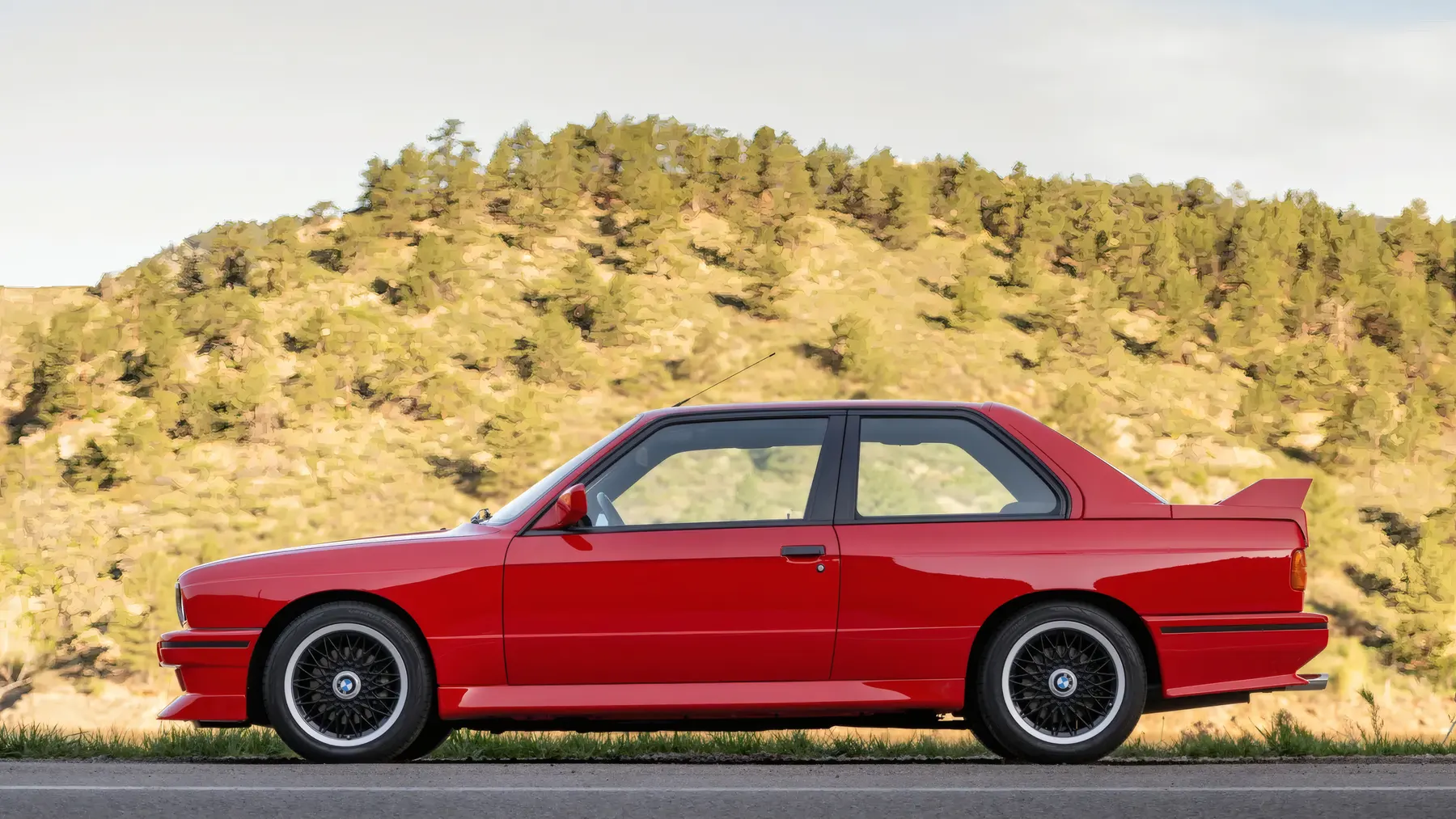
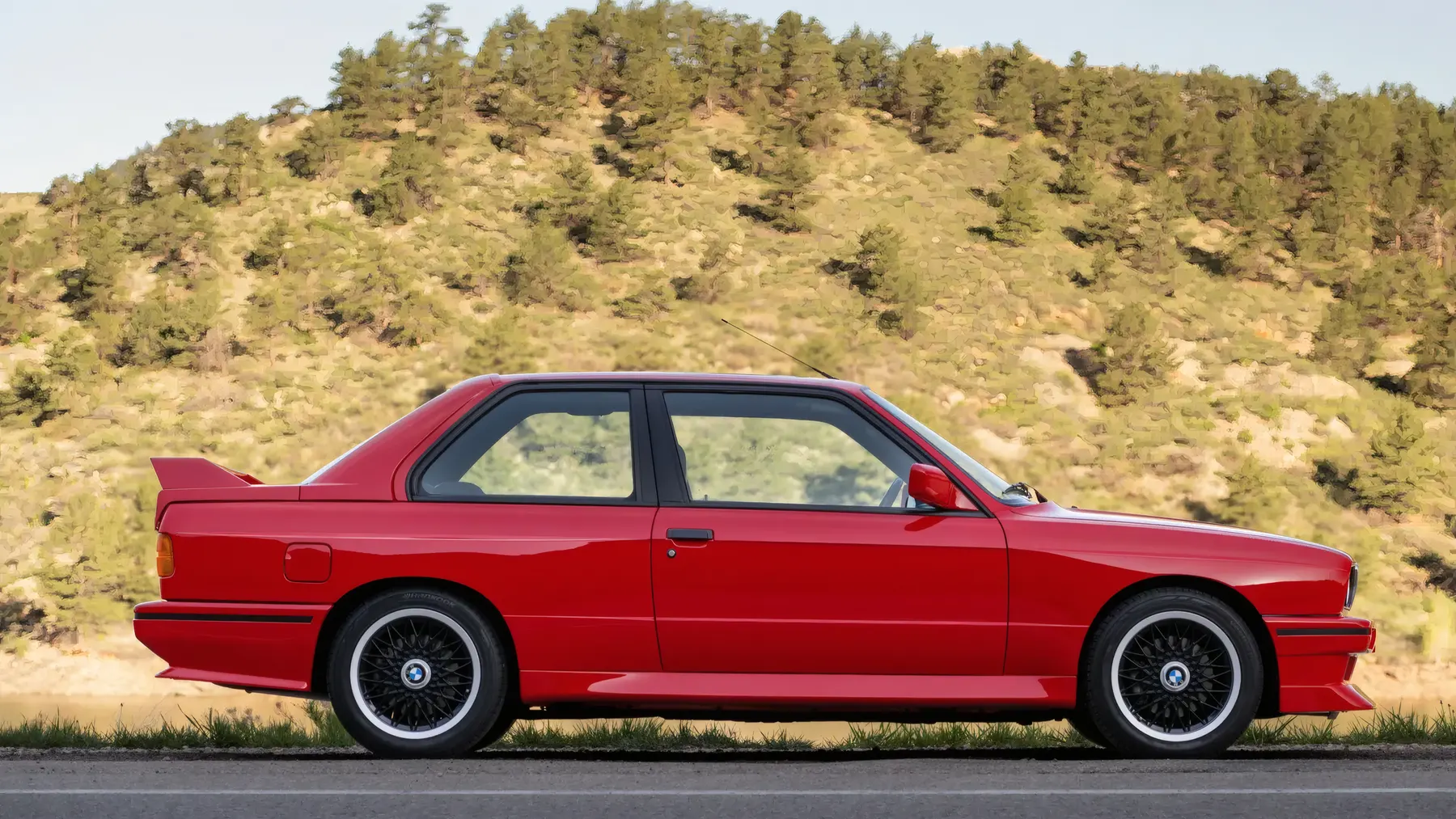
Beyond the engine, BMW kept the changes modest and mostly cosmetic or comfort-oriented. Buyers chose from the same three colours as the contemporary Evolution II - Misano Red, Macao Blue metallic, or Nogaro Silver metallic - over a cam cover painted to match the bodywork, 16-inch BBS-style cross-spoke alloy wheels with black centres on Cecotto cars and silver on the Ravaglia, front and rear spoilers borrowed from the Evolution II, thinner rear glass, chrome-finished tailpipes, a green-tinted band across the top of the windscreen, power windows, BMW’s “on-board computer II” trip computer, and a cassette storage box. Every other item on the standard M3’s options list, from air conditioning to a sunroof, remained available at extra cost. That tells you plainly what kind of special this was: not a stripped-out homologation tool in the mould of the Evolution cars, but a well-equipped M3 wearing a driver’s name.
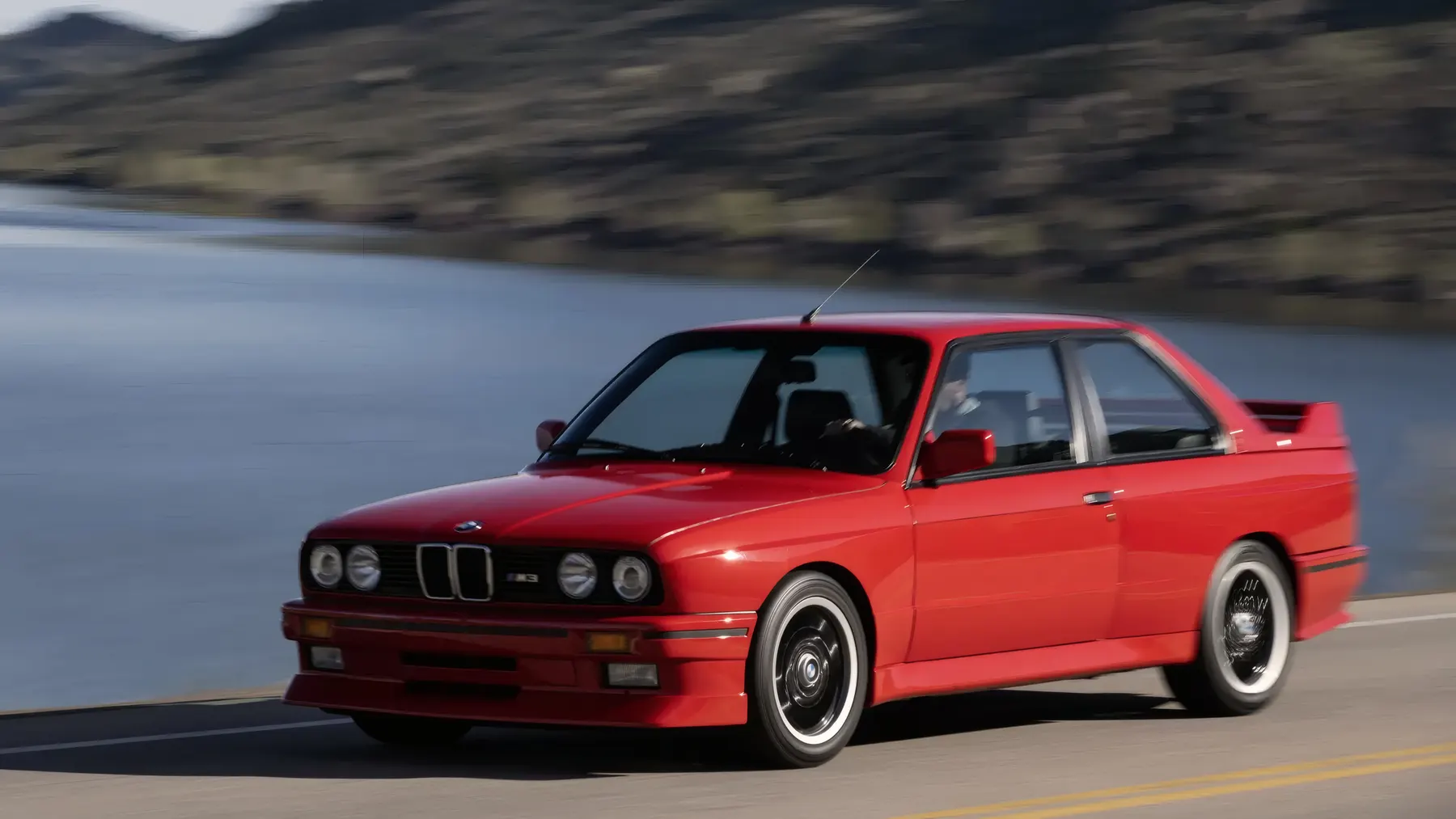
Behind the wheel, a Cecotto drives like any well-sorted catalyst-era E30 M3, which is to say it rewards patience more than outright shove. The S14 only really comes alive past 5,000rpm, with a torque curve flat enough through the mid-range that the car rarely feels dramatic until the tachometer swings toward its redline, at which point the extra 23bhp over a pre-1989 catalyst car is genuinely noticeable. The dog-leg five-speed Getrag gearbox - first down and to the left, second straight up from neutral - takes recalibration for anyone used to a conventional H-pattern, and the unassisted steering and firm, flat-cornering chassis demand real effort at low speed in exchange for the kind of direct, chatty feedback that made the E30 M3’s reputation in the first place. At around 1,200kg, it is light enough that 215bhp feels like plenty rather than merely adequate, and the compact 4,345mm body and 1,680mm width make it feel wieldy on a British or European B-road in a way few modern performance saloons can match.
This is where the Cecotto’s case gets complicated, and where honest assessment has to push back against its romantic billing. The headline mechanical upgrade that justified the premium and the numbered plaque - the 215bhp catalyst engine - became the standard specification fitted to every European catalyst M3 from September 1989 onward, a matter of months after the first Cecottos left the factory. Buyers who paid extra for exclusivity were, in effect, early adopters of a running change BMW rolled out to the entire range almost immediately; a standard M3 bought that winter carried the same power for less money and without a wait for a numbered car. Measured purely as a performance special rather than a trim exercise, the Cecotto also compares unfavourably with the Evolution cars either side of it on the timeline: the Evolution II that preceded it and the Sport Evolution that followed both brought genuine weight savings, revised aerodynamics, and chassis changes aimed squarely at the racetrack, while the Cecotto’s own contribution to serious performance began and ended with a reprogrammed engine control unit. Ownership brings period-correct S14 quirks that matter more today than they did in 1989: the absence of hydraulic lifters means valve clearances need regular manual adjustment, the twin-cam head and era-correct engine management reward specialist care rather than casual servicing, and the Swiss-market cars’ power deficit means buyers today have to check specification carefully rather than trust the badge alone. None of this makes the Cecotto a bad car. It makes it a considerably more modest one than its story suggests.
The Cecotto and Ravaglia editions never attracted the dedicated enthusiast literature or motorsport documentation that followed the Evolution II or Sport Evolution, and both are routinely treated in period and present-day coverage as a footnote within the wider E30 M3 story rather than a landmark in their own right - understandable, given how little separates them mechanically from a well-specified standard car. Collector interest has nonetheless grown steadily, driven less by outright performance than by rarity, the direct line to BMW’s touring-car dominance of the late 1980s, and the simple appeal of a numbered, driver-named special edition from a car this significant. Values for both editions have climbed noticeably ahead of standard-specification catalyst M3s over the past decade, reflecting scarcity within a model line whose total production, across every body style and variant from 1986 to 1991, ran to only 17,970 cars.
What the Cecotto Edition really represents is less a performance milestone than a snapshot of a particular moment: a manufacturer riding the momentum of a touring-car championship by putting a driver’s name on a car whose real advantage would belong to every M3 buyer within the year. That makes it a more honest piece of BMW Motorsport marketing than most retrospective write-ups give it credit for, and arguably a more interesting one - a special edition that was, almost by design, destined to become ordinary. Collectors chasing the E30 M3’s most serious engineering statements still gravitate toward the Evolution II and Sport Evolution. Anyone drawn instead to the human story behind the touring-car boom, to Cecotto’s own improbable path from teenage motorcycle champion to BMW works driver, will find this is the M3 that was actually built with him in mind.
Technical data
Performance Specifications
| Variant | Engine | Power | Torque | 0–62mph | Top Speed | Kerb Weight | Production |
|---|---|---|---|---|---|---|---|
| Standard E30 M3, catalytic converter (1986–Apr 1989) | 2.3L S14 I4 | 192bhp @ 6,750rpm | 170lb-ft @ 4,750rpm | n/a | 146mph | approx. 1,165–1,200kg* | part of 17,970 total E30 M3 production |
| Johnny Cecotto Edition / Roberto Ravaglia Edition (Apr–Jul 1989) | 2.3L S14 I4, reprogrammed engine management | 215bhp @ 6,750rpm | 170lb-ft @ 4,600rpm | 6.7 sec | 143mph | 1,200kg | 480 (Cecotto, non-Swiss markets) + 25 (Ravaglia, UK only) |
| Cecotto Edition, Swiss-market batch (1989) | 2.3L S14 I4, detuned for emissions | approx. 208bhp* | n/a | n/a | n/a | approx. 1,200kg* | approx. 50–80* |
| Standard E30 M3, catalytic converter (Sept 1989–1991) | 2.3L S14 I4 | 215bhp @ 6,750rpm | 170lb-ft @ 4,600rpm | n/a | n/a | approx. 1,200kg* | part of 17,970 total E30 M3 production |
| M3 Sport Evolution (1990) | 2.5L S14 I4 | 235bhp @ 7,000rpm | 177lb-ft @ 4,750rpm | n/a | 154mph | approx. 1,200kg | 600 |
Sources
- E30 Zone Wiki: S14 Engine
- BimmerLife: Johnny Cecotto Drives His M3 for BMW Classic
- Carscoops: BMW M3 Johnny Cecotto Edition
- Car & Classic: 1989 BMW M3 E30 Cecotto
- AutoScout24: BMW M3 E30 Johnny Cecotto Swiss Edition
- Auto Motor und Sport: BMW E30 M3 Cecotto Edition
- StanceWorks: A History Lesson – Johnny Cecotto, BMW, and the M3 That Bears His Name
- Petrolicious: This Special Edition Johnny Cecotto BMW E30 M3 Is Keeping the DTM Fandom Alive in Hungary
- Classic Heroes: BMW E30 M3 Cecotto
- BMWBLOG: BMW E30 M3 Roberto Ravaglia Edition
- BMW Group UK Press Club: BMW M3 Roberto Ravaglia Limited Edition Specification Sheet
- MotorSport Retro: Legends – Johnny Cecotto
- Wikipedia: 1989 Deutsche Tourenwagen Meisterschaft
Join the discussion
Comments
Loading comments…
Leave a comment
Share a detail, memory, or perspective. Every comment is reviewed before publication.