Honda NSX-R: Why Honda Stripped a Supercar to Create Type R
1996 Honda NSX-R





Images: RM Sotheby's
Honda’s engineers faced an unusual problem when they set out to make the NSX more serious: the car had already used up all the power that Japan’s manufacturers had agreed a road car should have. A voluntary industry ceiling, which works out at roughly 276 bhp, applied to domestic-market cars, and the standard NSX had reached it. The obvious route to a faster special was closed, so the team went the other way. They removed mass, rebalanced what remained and tuned the car’s behaviour rather than its output. The result was the NSX-R, the first car to wear the Type R badge, and the method it established is the one every later Type R has followed.
The foundations were the standard NSX, which Honda put on sale in 1990 as the world’s first mass-production car with an all-aluminium monocoque body. It was a deliberately approachable supercar, and Honda’s own engineers describe its development as a debate between a “Silver Faction”, who wanted advanced human-centred technology, and a “Red Faction”, who wanted more speed. The road car satisfied the first group better than the second. Supercar Nostalgia argues that it outclassed its Porsche 964 and Ferrari 348 rivals in almost every department, losing mainly on badge appeal and the Ferrari’s looks, yet its easygoing, compliant set-up left some Japanese customers wanting something harder. The NSX-R was the Red Faction’s belated answer to them. Honda introduced it on 27 November 1992 and built it until September 1995, in right-hand drive and for Japan only. Supercar Nostalgia notes that Porsche had a Carrera RS version of the 964-generation 911 in the pipeline as the project was approved, which gave the timing a competitive edge. The usual production figure is 483 cars, though evo has quoted 464 for the same run, so the tally is best treated as approximate. The chassis underneath had already received Formula One-flavoured input: Ayrton Senna reportedly judged the prototype fragile and Honda stiffened the structure in response, while Motoharu Kurosawa is credited as the development driver who did most of the Nürburgring work that shaped the production car.

Honda says the lightest NSX-R was 120 kg lighter than the standard car, and most sources give the finished car a kerb weight of 1,230 kg, though some writers claim a saving closer to 140 kg. The weight came out through subtraction: most of the sound deadening, the air conditioning, the audio system, the traction control, the spare wheel and some of the electrical equipment. Leather power seats gave way to Recaro buckets with carbon-Kevlar shells, an airbag-free Momo wheel replaced the standard one, a sculpted titanium knob topped the five-speed gearlever, and forged Enkei wheels reduced unsprung weight. The power steering went too. Honda kept the electric windows, and customers could reinstate air conditioning, a stereo or carbon interior trim from the options list, so the car was a little less ascetic than its reputation suggests.
The engine was the 2,977 cc C30A, an all-alloy 90-degree V6 with VTEC and a bore and stroke of 90 by 78 mm. Honda’s changes were in assembly rather than specification: the crankshaft assembly was blueprinted and balanced using the labour-intensive methods applied to its racing engines, aimed at sharper response rather than higher peak output. Quoted figures stayed level with the standard Japanese car’s, at around 276 bhp at 7,300 rpm and 217 lb-ft at 5,400 rpm according to PistonHeads. Other sources quote the export-market NSX’s 270 bhp or as much as 290 bhp, and specialist writers have long suggested that real output was higher than claimed, so any single figure deserves caution. A final drive of 4.235:1 instead of 4.06:1 and a higher-locking limited-slip differential sharpened acceleration at a small cost in top speed, which sources put between 163 and 168 mph, with 0-60 mph arriving in a little over five seconds.
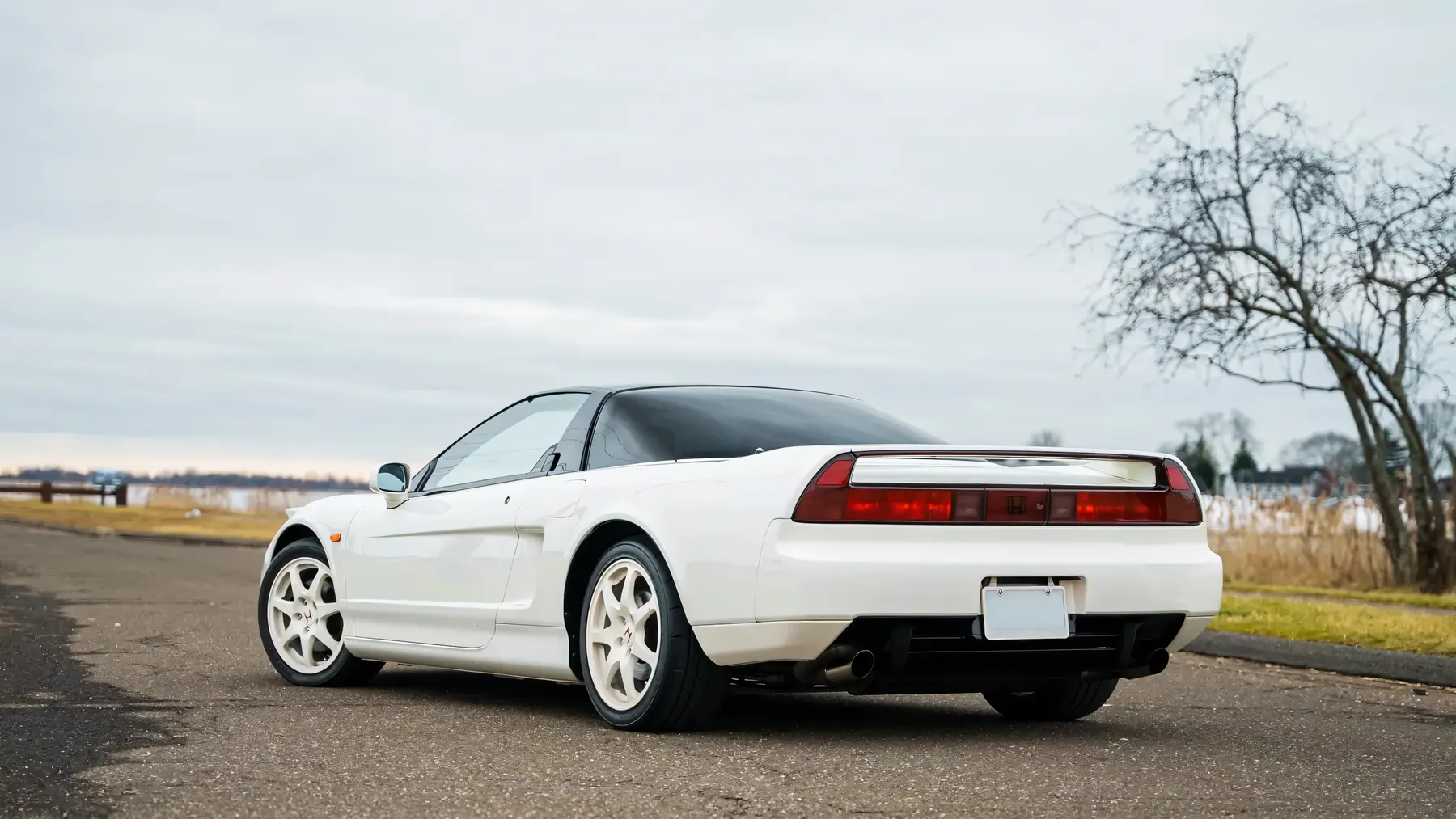
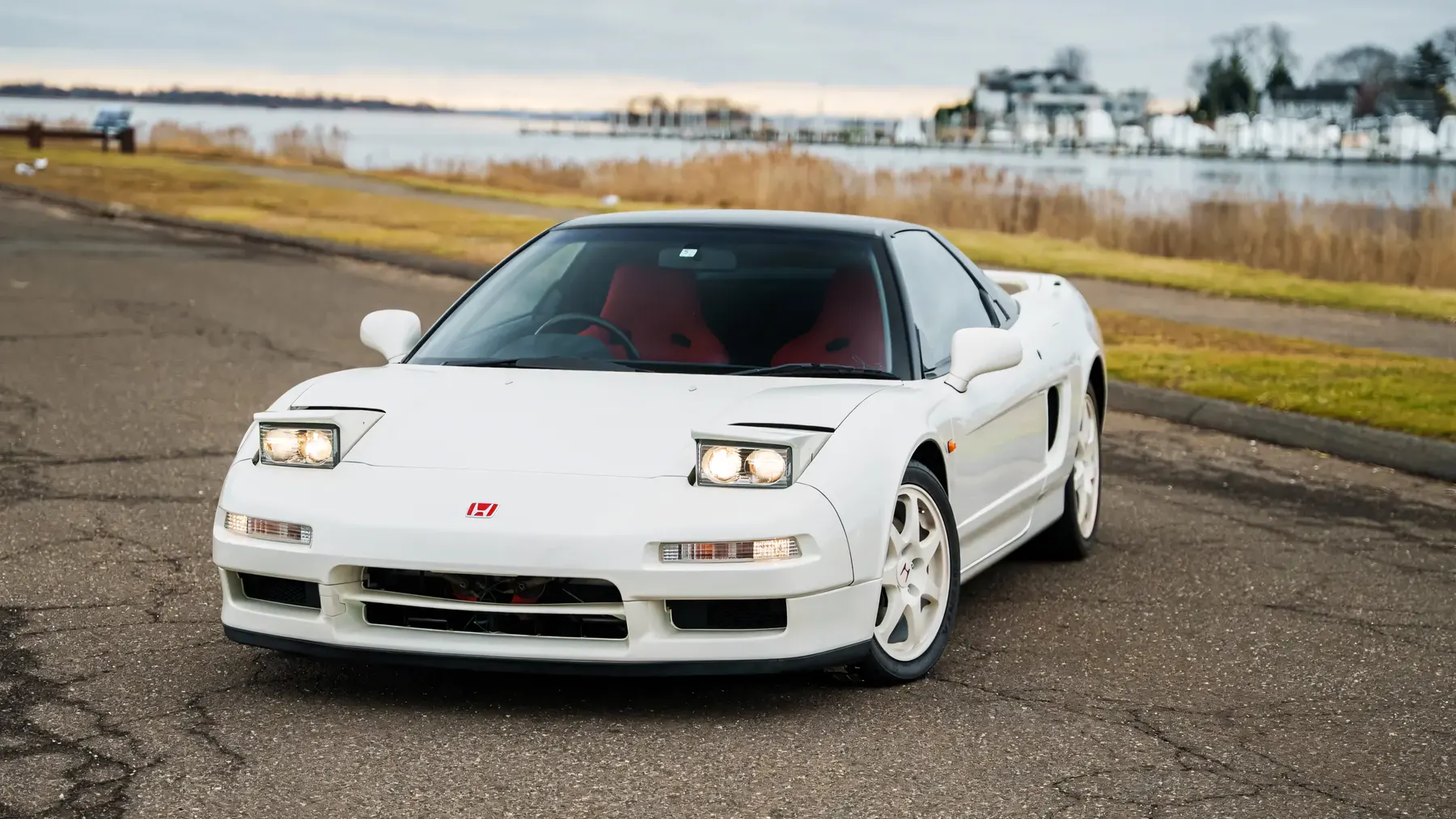
The suspension work was aimed at taming the standard car’s tendency to oversteer at the limit. Honda stiffened the springs, dampers, anti-roll bars and bushes in a way that reduced the car’s rearward spring bias and added rear-end grip, and it fitted extra brackets beneath the battery tray and ahead of the radiator to increase rigidity. Running changes were modest: the 1994 model year brought the larger seven-spoke wheels used across the NSX range and a quieter gear-cutting method, and 1995 added a lower second gear and a Torque Reactive limited-slip differential. Visually the car was discreet. Wire mesh in the nose where the fog lamps had been, a red-backed Honda badge, the Enkei wheels and a numbered sill plaque were most of the clues.
From the driver’s seat, the character comes through consistently across the years. PistonHeads, writing in 2019, praised the deep, supportive seats, the low scuttle and thin pillars that give a panoramic view out, and dials with yellow needles that can be read almost in peripheral vision. The unassisted steering is heavy at low and medium speeds, then lightens as speed rises and begins to relay what the front tyres are doing. The VTEC changeover blends in around 6,000 rpm rather than arriving like a switch, and the long gearing and modest torque mean the car never feels dramatically quick. Its appeal lies elsewhere: it is rewarding at a pace well short of its limits, which is rarer than outright speed. Hagerty’s Henry Catchpole, driving the later car, found the same talkative steering and a precise, tight gearshift, and noted that the V6 felt like enough in something so light. evo’s long-term view of the NA2 is that Honda sacrificed low-speed ride and steering so that both are right at speed, after which the chassis feels calm, adjustable and easy to read. The engine pulls to 8,000 rpm with a green shift light at 7,000 rpm that is hard to obey, and evo singles out the brakes for their feel. The model’s lore also includes widely circulated footage of Senna lapping Suzuka in an NSX-R wearing loafers and white socks.
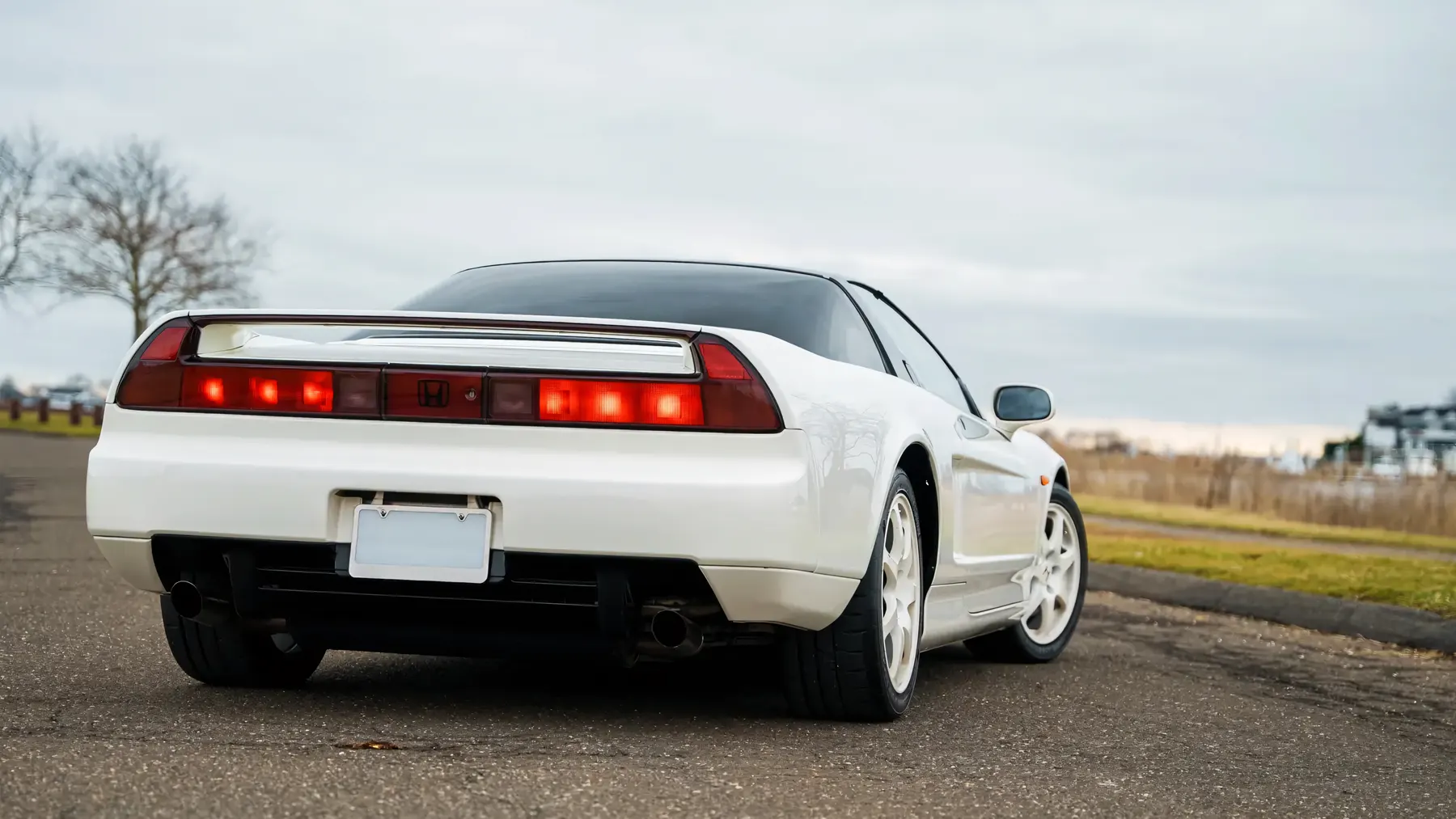
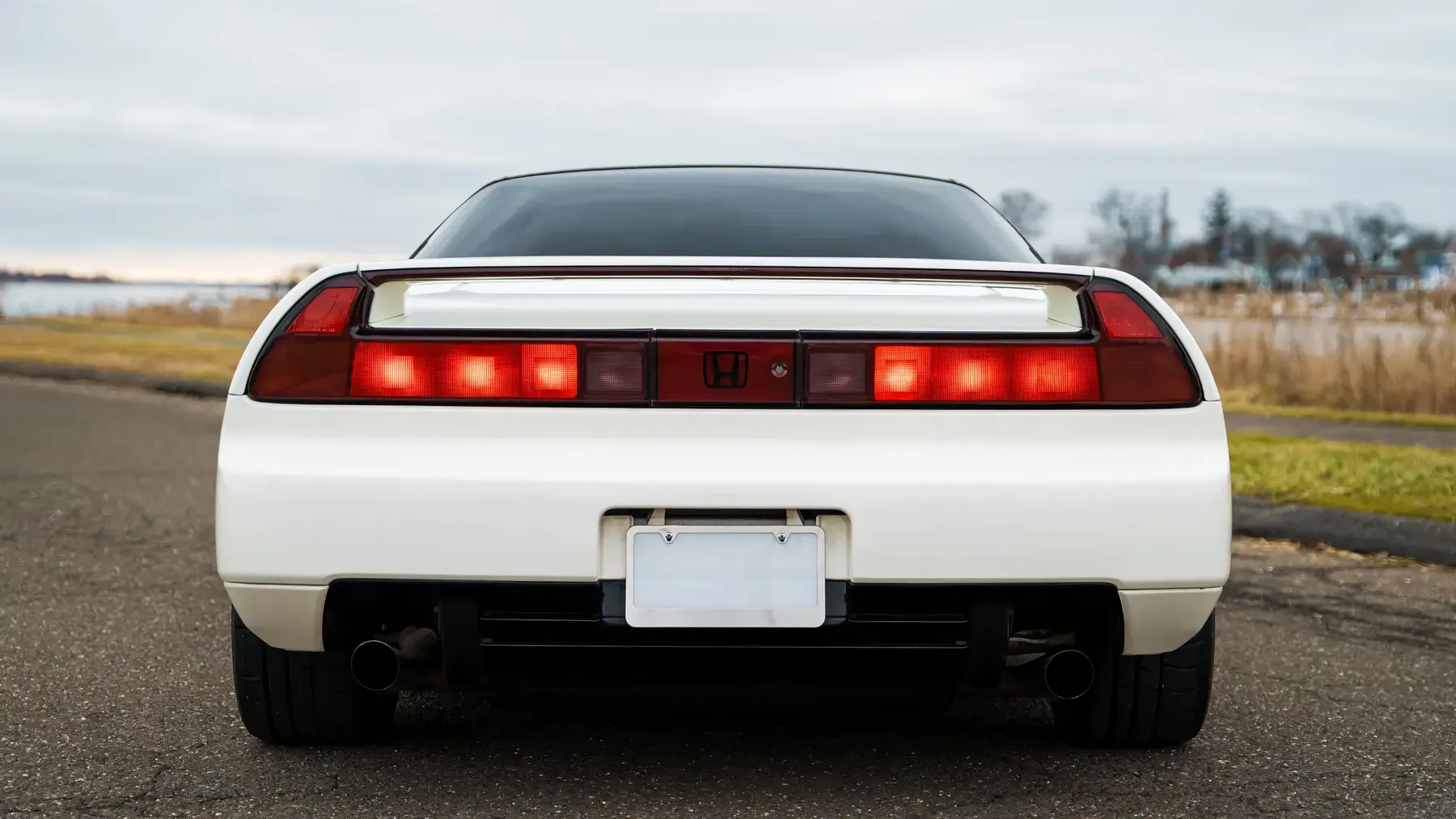
Honda revived the NSX-R in May 2002 on the facelifted NSX, with fixed headlamps and the 3.2-litre C32B V6, and again for Japan only. The voluntary power ceiling still applied, so Honda’s engineers extended the idea to aerodynamics. By their own account they flattened the underfloor, let air out through the bonnet and adjusted front-to-rear lift balance with the rear spoiler, using moving-belt wind-tunnel work and simulation while staying within minimum ground-clearance rules. The vented carbon-fibre bonnet was described at the time as the largest single carbon panel on a production road car, and the NSX-R also gained a carbon boot lid with a larger spoiler, a finned undercover and a rear diffuser.
The weight programme was fastidious. evo lists a bonnet saving of 2.2 kg, a hollow carbon wing saving 1.3 kg, thinner rear glass saving 200 g and an instrument panel 620 g lighter, along with a smaller battery, no central locking or electric mirrors, lighter carpet, no underseal and no power steering. Kerb weight was 1,270 kg, and sources describe the saving as anything from 70 kg to almost 100 kg depending on the baseline. The C32B displaced 3,179 cc from a 93 by 78 mm bore and stroke and was paired with a six-speed gearbox, a final drive about 4 per cent shorter than the standard car’s, a more finely balanced rotating assembly, a shorter-travel throttle pedal, Showa dampers and hollow anti-roll bars. Quoted output was again around 276 bhp at 7,300 rpm with 224 lb-ft at 5,300 rpm, although evo notes that cars have produced close to 300 bhp in practice. Autocar’s 2004 test added a lighter flywheel, strut braces, bigger brakes and lower, stiffer suspension to the list, and judged that the individual changes were modest but combined into what felt like a different car. evo reported a Nürburgring lap of 7:56.73 in 2002, a time other sources say matched the far more powerful Ferrari 360 Challenge Stradale, and its own review page lists the NSX-R as its Car of the Year for 2002. An estimated 140 were built, all in right-hand drive.
Between the two generations of R, the lightweight role was reportedly filled by the Type S-Zero, a limited run of 3.2-litre NSXs built from 1997 with the earlier R’s suspension tuning. At the very end, in 2005, Honda built five NSX-R GTs, with bodies roughly 180 mm longer and 90 mm wider, to homologate aerodynamic parts for its Super GT racer; only one went to a private buyer. Honda announced the end of NSX production that July, after more than 18,000 cars over 15 years.
None of this came free. The ride was the most persistent complaint: Autocar’s testers found the 2004 car too firm for most UK roads and called the ride its Achilles’ heel, while PistonHeads found the original car unyielding even by present-day standards. The unassisted steering makes the first miles hard work, and evo describes it as very heavy at low speed and rewarding only once you are moving. Deleting insulation made the cabin loud, and evo found the V6 an unremarkable buzz on light throttle that only comes alive when wrung out. Equipment was a sore point: Autocar objected to a car costing 75,000 pounds lacking central locking and electric mirror adjustment, and Honda itself acknowledges that the NA1’s price of more than 9 million yen put it beyond most buyers. Performance was also more modest than the badge implied. With long gearing and 217 lb-ft, the NA1 can feel unhurried, and PistonHeads reckoned a modern hot hatch would leave it far behind on a public road. By 2002 the platform was a 1989 design, and Honda’s inability to lift output meant the NA2 relied on chassis and aerodynamics to stay with rivals that had far more power. Even the output figures are murky, because the unchanged official numbers obscure true outputs, and specialist writers suggest the claim also spared Honda a fresh round of type approval.
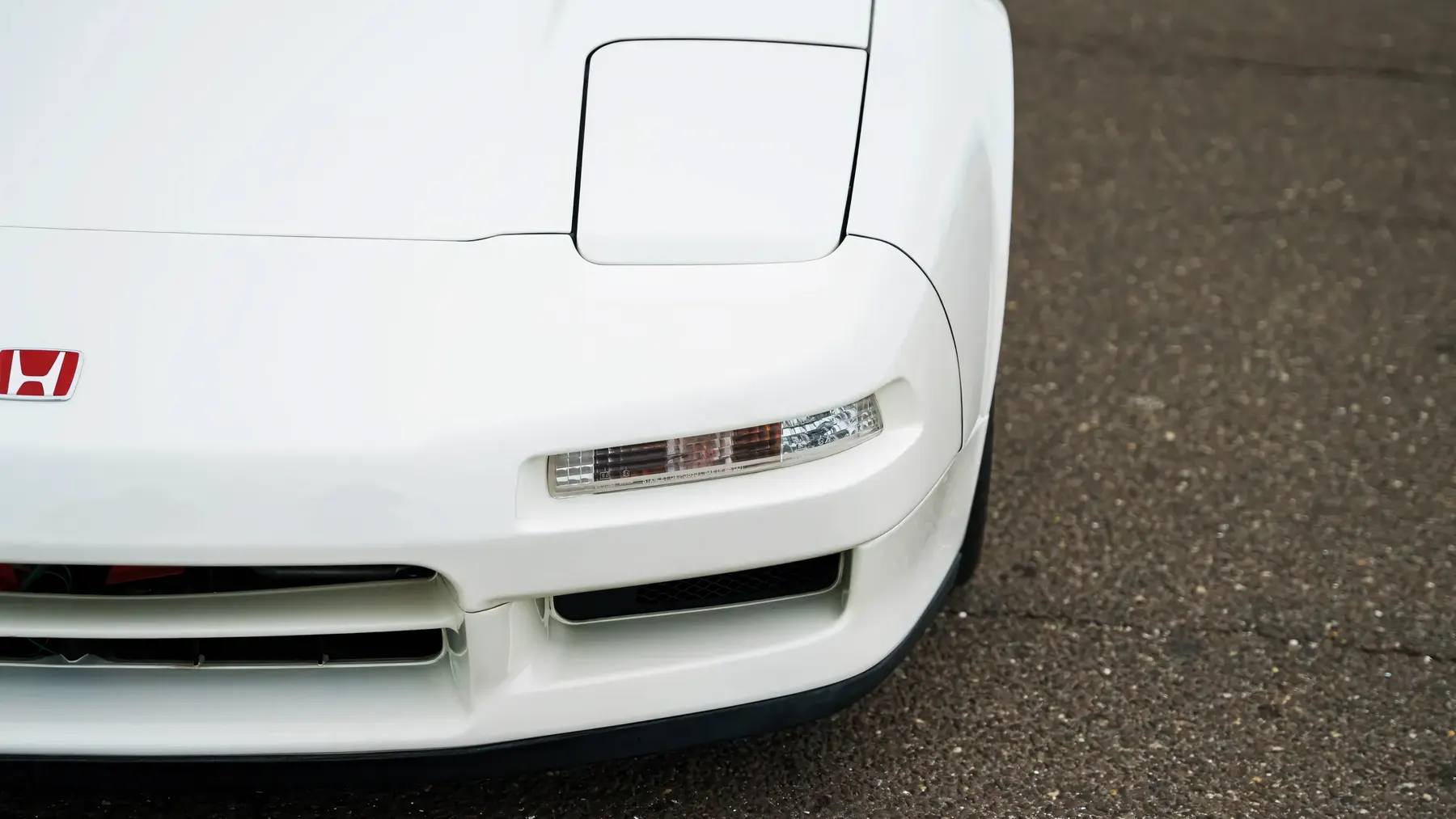
The NSX-R’s influence is easiest to measure in what followed. Honda’s own history of the badge ties the white body colour and red H to the RA272, the car that gave Honda its first Formula One win in 1965, and counts twelve Type R models up to 2022. The Integra Type R of 1995, which Honda says followed the NSX-R’s example in weight reduction and body rigidity, was priced at 2.22 million yen against more than 9 million yen for the NSX-R, which shows how quickly the idea moved from a supercar few could afford to a car many could.
Collectors have noticed. evo reports that a 2003 example sold for just under 1 million euros at a 2025 auction, a level that puts a Honda of that vintage among hypercars. What the NSX-R proved, and what makes it worth discussing beyond its rarity, is that a car’s limits are not only set by its output. Honda could not add power, so it worked on mass, response, balance and airflow, and drivers across nearly two decades have described a car that felt coherent in a way few supercars have managed since. It asked a great deal in return, and its steering, ride and noise were real costs for anyone who wanted a supercar for everyday use. The case for it rests on sacrifices that were deliberate, made for a small group of drivers who knew what they were buying.
Technical data
Performance Specifications
| NA1 NSX-R (1992-95) | NA2 NSX-R (2002-05) | |
|---|---|---|
| Engine | 2,977 cc DOHC VTEC V6 (C30A), 90 x 78 mm bore and stroke | 3,179 cc DOHC V6 (C32B), 93 x 78 mm bore and stroke |
| Power (quoted) | c. 276 bhp @ 7,300 rpm† | c. 276 bhp @ 7,300 rpm† |
| Torque | 217 lb-ft @ 5,400 rpm | 224 lb-ft @ 5,300 rpm |
| Transmission | 5-speed manual, 4.235:1 final drive, limited-slip differential | 6-speed manual, final drive c. 4% shorter than standard NSX |
| Steering | Unassisted | Unassisted |
| Brakes | Ventilated discs, 282 mm, 4-channel ABS | Ventilated discs, 298 mm, 4-channel ABS |
| Kerb weight | 1,230 kg | 1,270 kg |
| Saving over standard NSX | c. 120 kg (some sources up to 140 kg) | c. 70-100 kg (sources differ) |
| 0-60 mph | c. 4.9-5.1 s | 4.6 s (0-62 mph)* |
| Top speed | c. 163-168 mph | c. 175 mph* |
| Nürburgring | Not reliably documented | 7:56.73 (evo) |
| Wheelbase | 2,530 mm | 2,530 mm |
| Production | 483 (evo cites 464) | c. 140 (estimated)* |
| Market | Japan only, right-hand drive | Japan only, right-hand drive |
Sources
- Honda Global - Celebrating the 30th Anniversary of Honda Type R (Honda Stories)
- Honda Global Heritage - The NSX / 1990
- Honda Global Newsroom - Honda to Discontinue Production of the NSX Sports Car (12 July 2005)
- Supercar Nostalgia - Origin R: Honda NSX 3.0 Type R
- Supercar Nostalgia - Old but Gold: Honda NSX 3.2 Type R
- Supercar Nostalgia - Take Me to the Super GT: Honda NSX 3.2 Type R GT
- evo - Honda NSX-R review
- evo - Pristine Honda NSX duo to headline Tokyo auction
- Autocar - The Honda NSX’s last hurrah (Throwback Thursday)
- PistonHeads - Honda NSX-R: PH Heroes
- Hagerty UK - The Driver’s Seat: Henry Catchpole on the Honda NSX-R
- Calibre - Driving Senna’s Supercar: The Honda NSX
- RM Sotheby’s - Honda NSX-R catalogue text (general model background only)
- Wikipedia - Honda NSX (first generation) (secondary cross-check only)
Join the discussion
Comments
Loading comments…
Leave a comment
Share a detail, memory, or perspective. Every comment is reviewed before publication.