BMW M3 E46: The 8,000rpm Six, the CSL and the Cracked Subframe
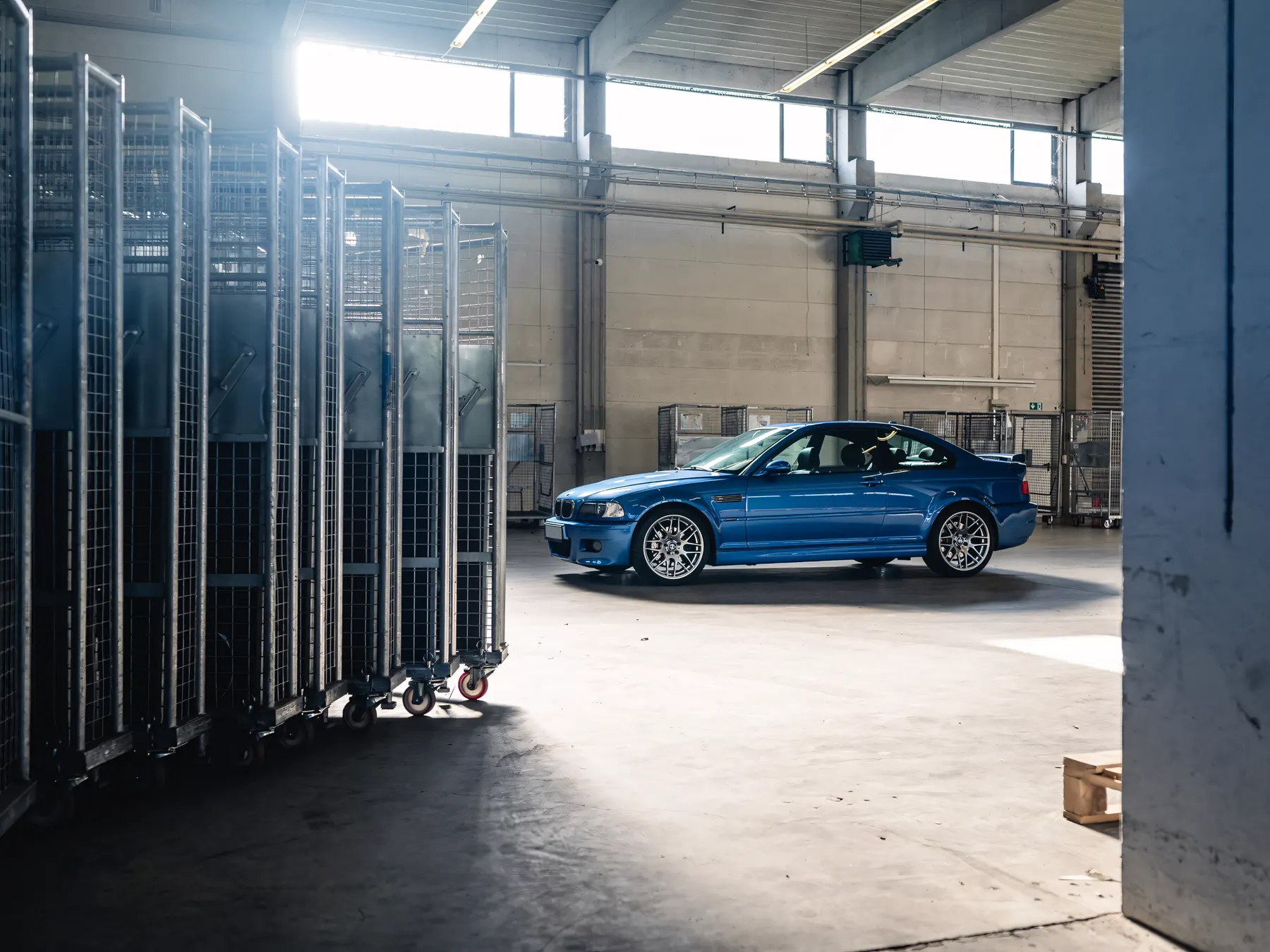
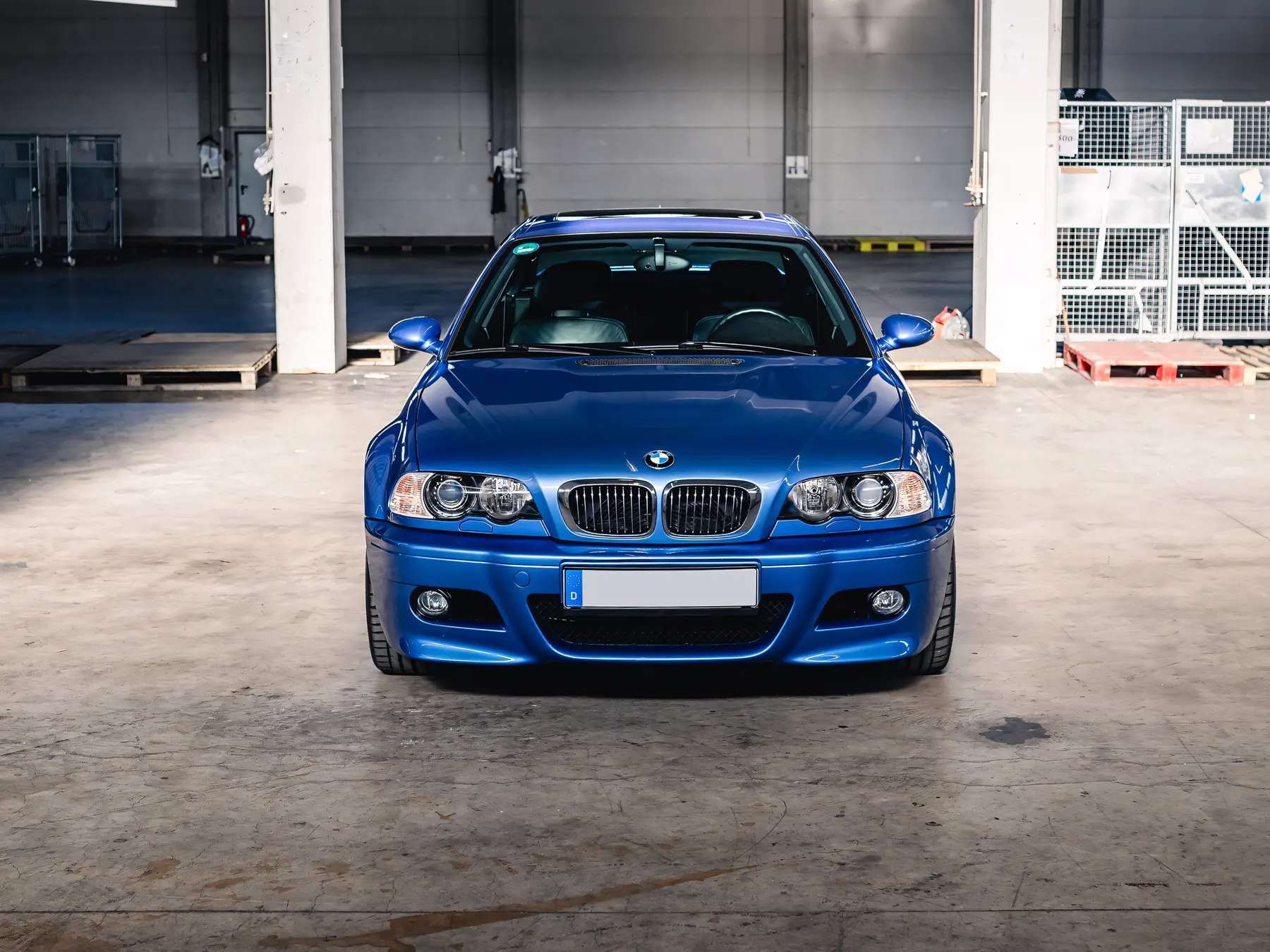
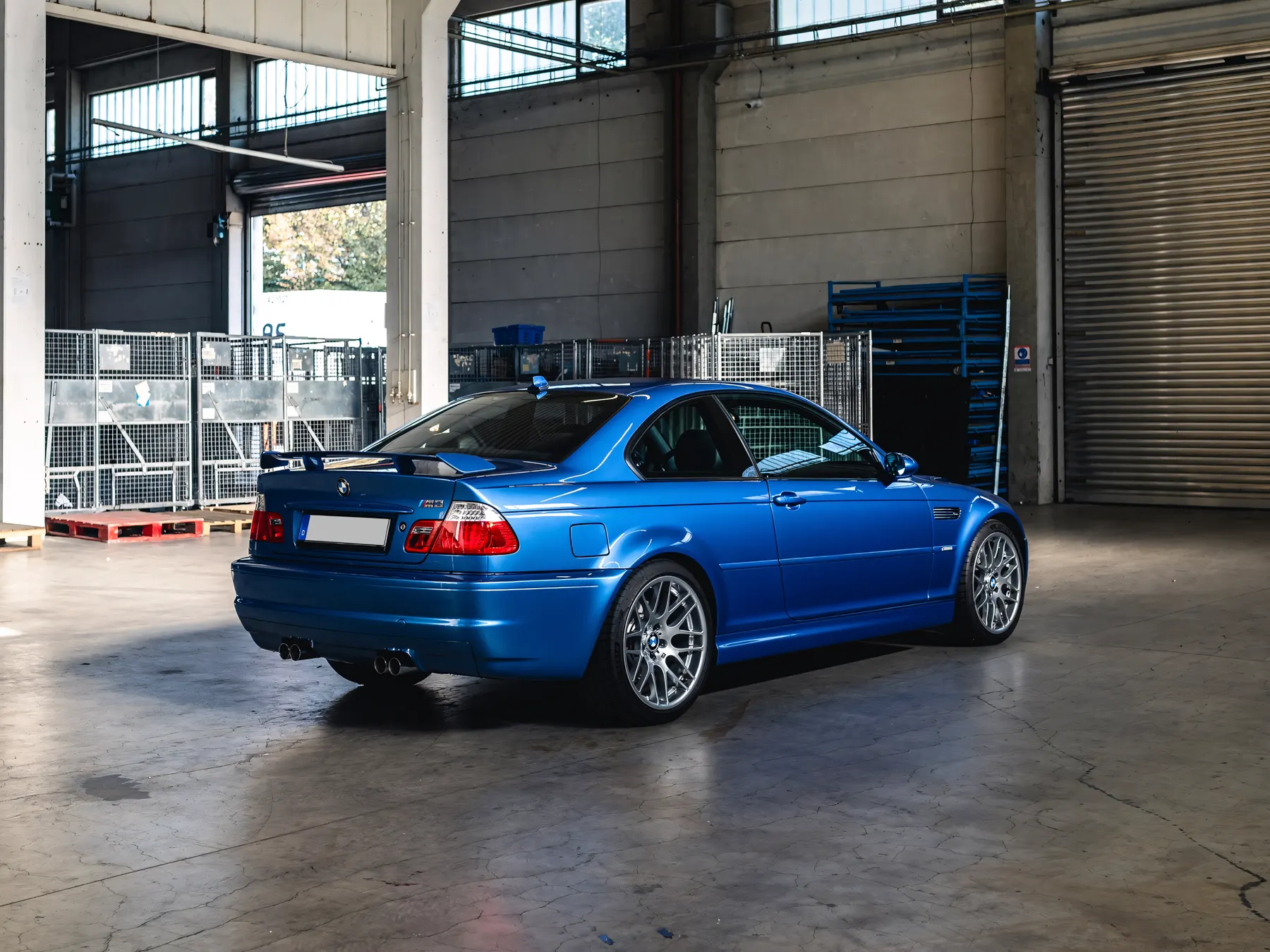
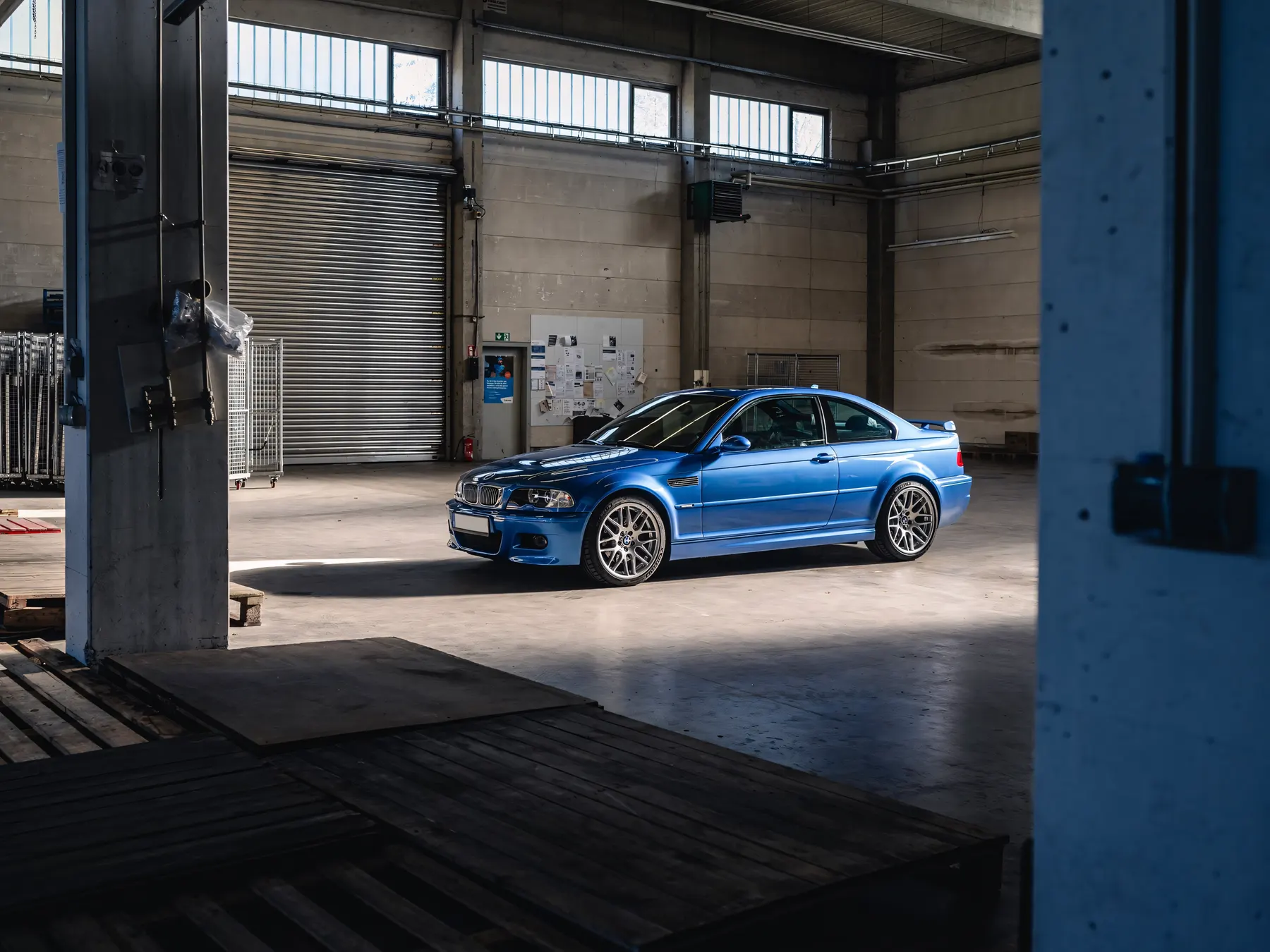
2003 BMW M3 Coupe




Images: Maximilian Vogl / RM Sotheby's
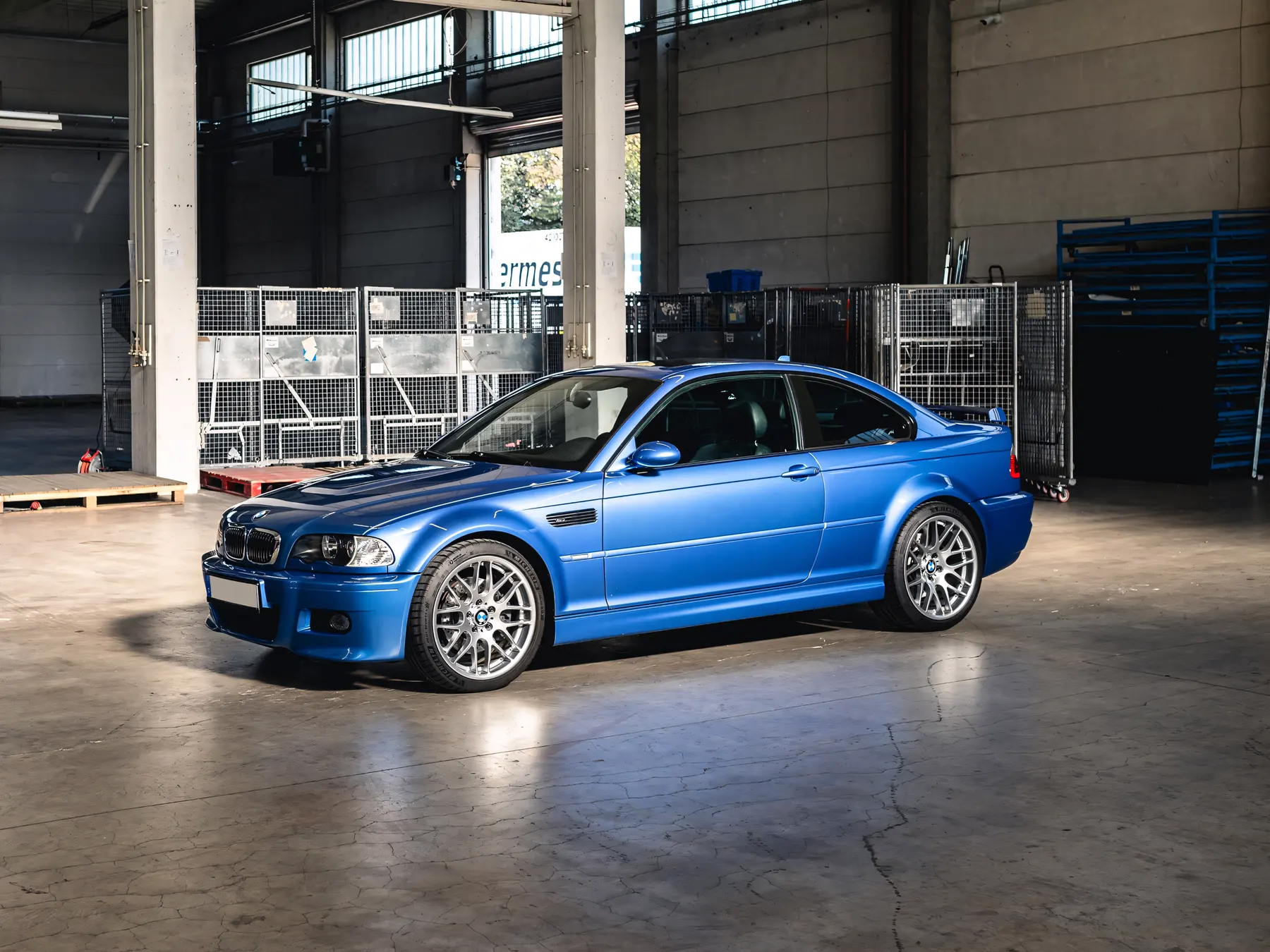
The chrome-edged gills set into the front wings of an E46 M3 were supposed to cool the engine. According to BMW M’s own account, testing showed the ducts were not needed, and the car kept them anyway, where they became one of the best-known details of any BMW of the period. It is a small piece of corporate honesty that explains the third-generation M3 rather well. This is a car in which theatre and substance sit unusually close together, and in which the substance, a naturally aspirated straight-six that revved to 8,000 rpm and a chassis shaped by an enormous amount of Nürburgring testing, was strong enough that the theatre rarely felt like a bluff.
It also arrived when BMW needed to make a point. The E30 M3 of 1986 was a true homologation special, built around a high-revving four-cylinder to satisfy touring-car rules. The E36 M3 of 1992 introduced the straight-six and sold in much larger numbers, but BMW M itself says it was not primarily developed as a racing homologation car, and evo has described it as slightly underwhelming for all its popularity. The E46 generation, launched in 2000, was the attempt to recover the E30’s sense of purpose without surrendering the E36’s usability. evo put it on the cover of its September 2000 issue with a headline promising the best driver’s car BMW had ever built, a bold claim given the E30 M3’s reputation. A convertible followed in 2001. By the time production ended in 2006 it had become the best-selling M model BMW had built: BMW M gives a total of 85,139 cars, while Hagerty’s sales tally comes to 85,766, made up of 56,133 coupes and 29,633 convertibles.
Everything else follows from the S54 engine. BMW M describes it as an almost entirely new design, although Top Gear traces its lineage to the S50 six of the E36 M3, with redesigned pistons, rods and crankshaft that were lighter and stronger. It displaces 3,246 cc from an 87 mm bore and 91 mm stroke, runs an 11.5:1 compression ratio on an iron block, uses double VANOS variable valve timing and gives every cylinder its own electronically controlled throttle. In European specification it made 338 bhp at 7,900 rpm and 269 lb-ft at 4,900 rpm, comfortably more than 100 bhp per litre without forced induction. US-market cars were rated at 333 bhp and 262 lb-ft, so the headline figures depend on where the car was sold. The numbers undersell the delivery. The individual throttles give the engine a pin-sharp response that evo, revisiting the car years later, still found remarkable, and the sound builds from a classy mid-range drawl into a metallic crescendo at the limiter. evo calls it arguably the pinnacle of naturally aspirated BMW sixes. For a car so associated with revs it is also tractable: BMW M points out that 80 per cent of peak torque is available at 2,000 rpm, and evo found the M3 makes seriously good progress without troubling 5,000 rpm. BMW M credits the engine with a string of International Engine of the Year awards, though its own pages disagree on how many.
The chassis work was no less thorough. At the front, BMW M fitted a wider track, bespoke lower arms and bearings, stiffer bushings and new steering knuckles, with a bracing thrust plate to stiffen the structure and a subframe taken from the 3 Series Convertible for strength. The rear axle sat in an uprated subframe with a V-brace and rose joints in place of rubber bushings, and the variable M differential, which uses a shear pump and a multi-plate clutch to push torque to the wheel with more grip, was standard from the start. Dynamic Stability Control was fitted as well, though evo’s view was that the car’s handling hardly needed it. The development programme included roughly 130,000 km of Nürburgring lapping, according to evo, and the finished car weighed less than 1,500 kg in European-market coupe form, at 1,495 kg. BMW North America’s published figure for its coupe is around 1,550 kg, with a near-even 50.3/49.7 front-to-rear weight distribution.
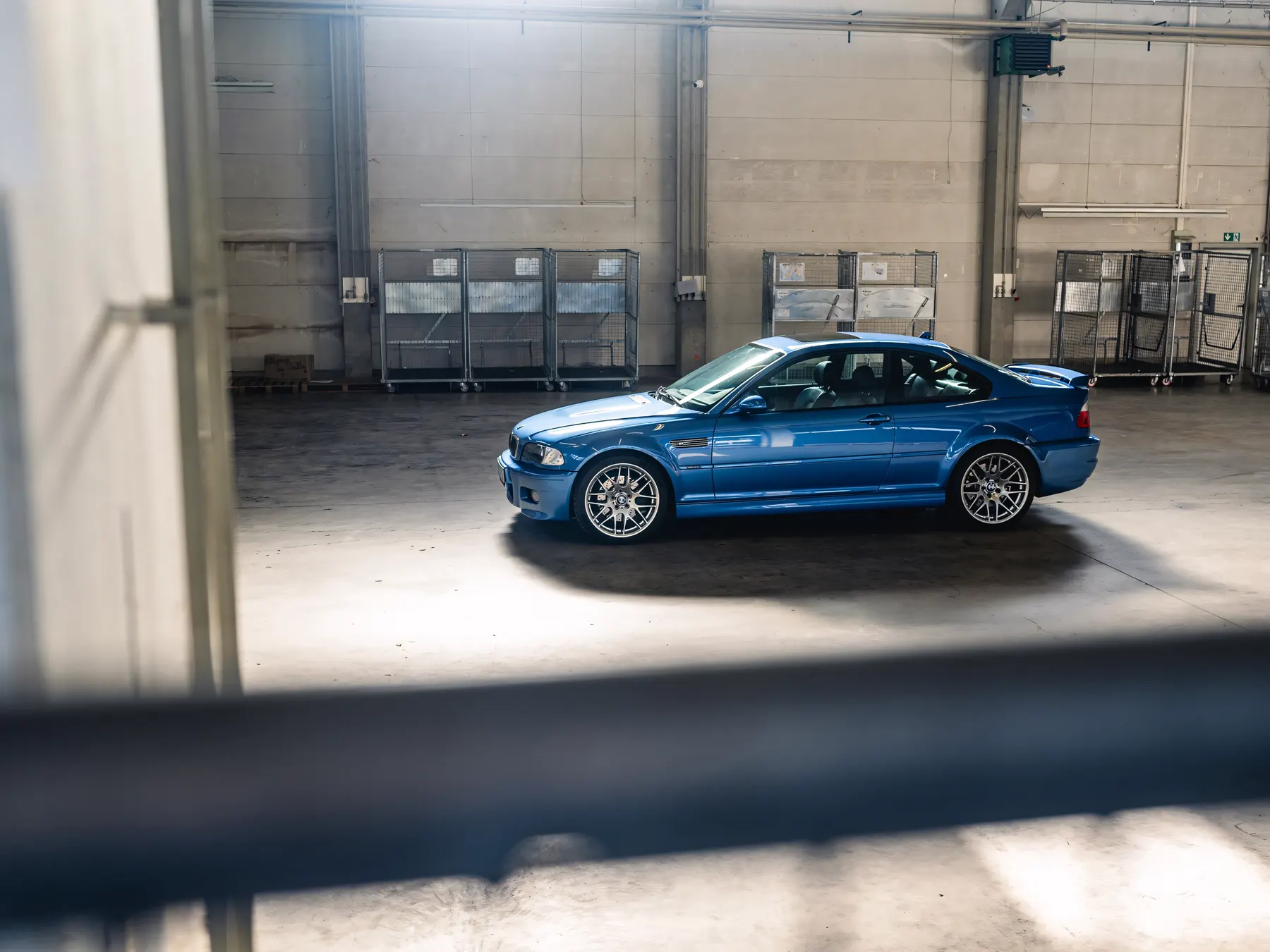
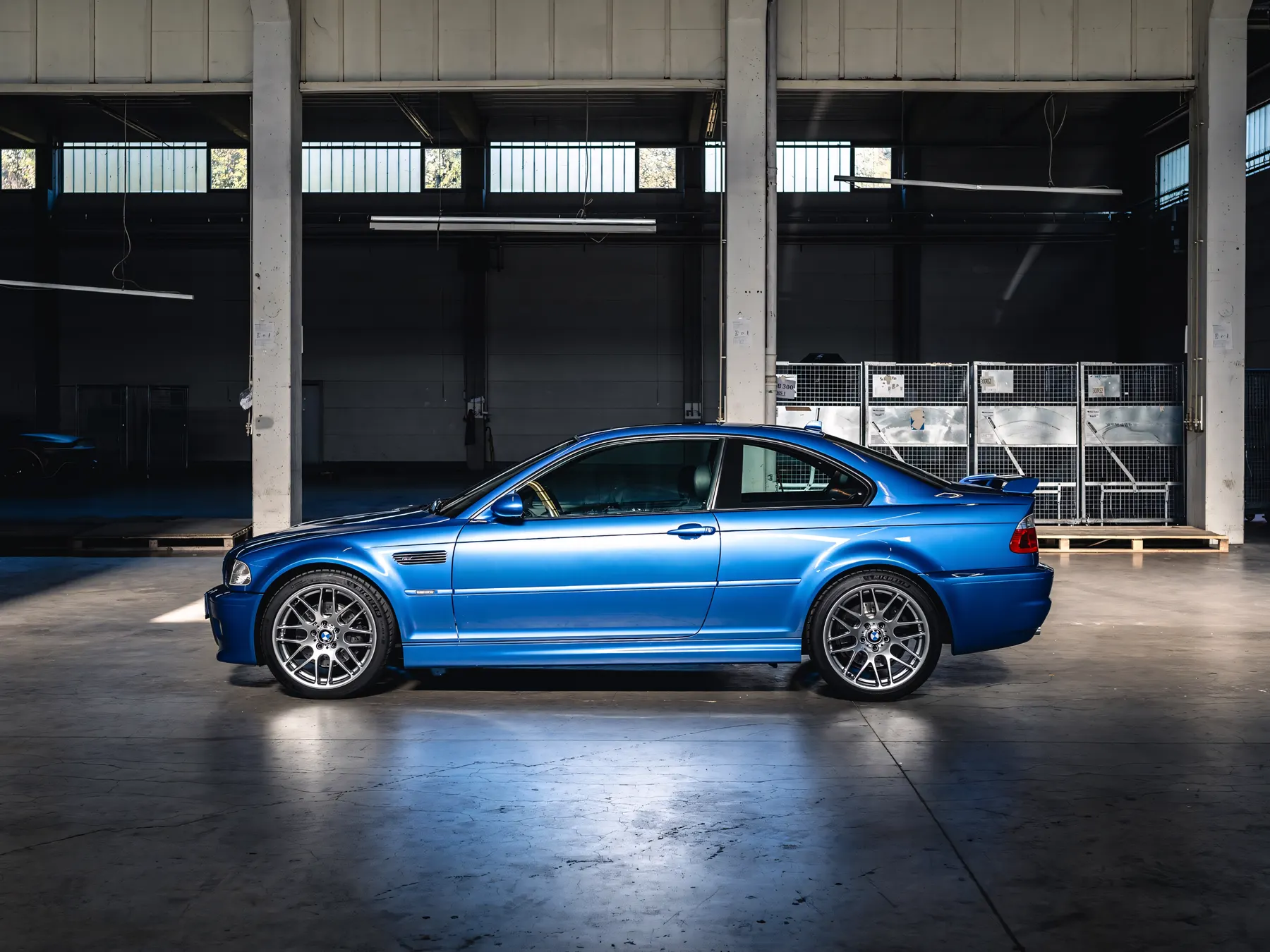
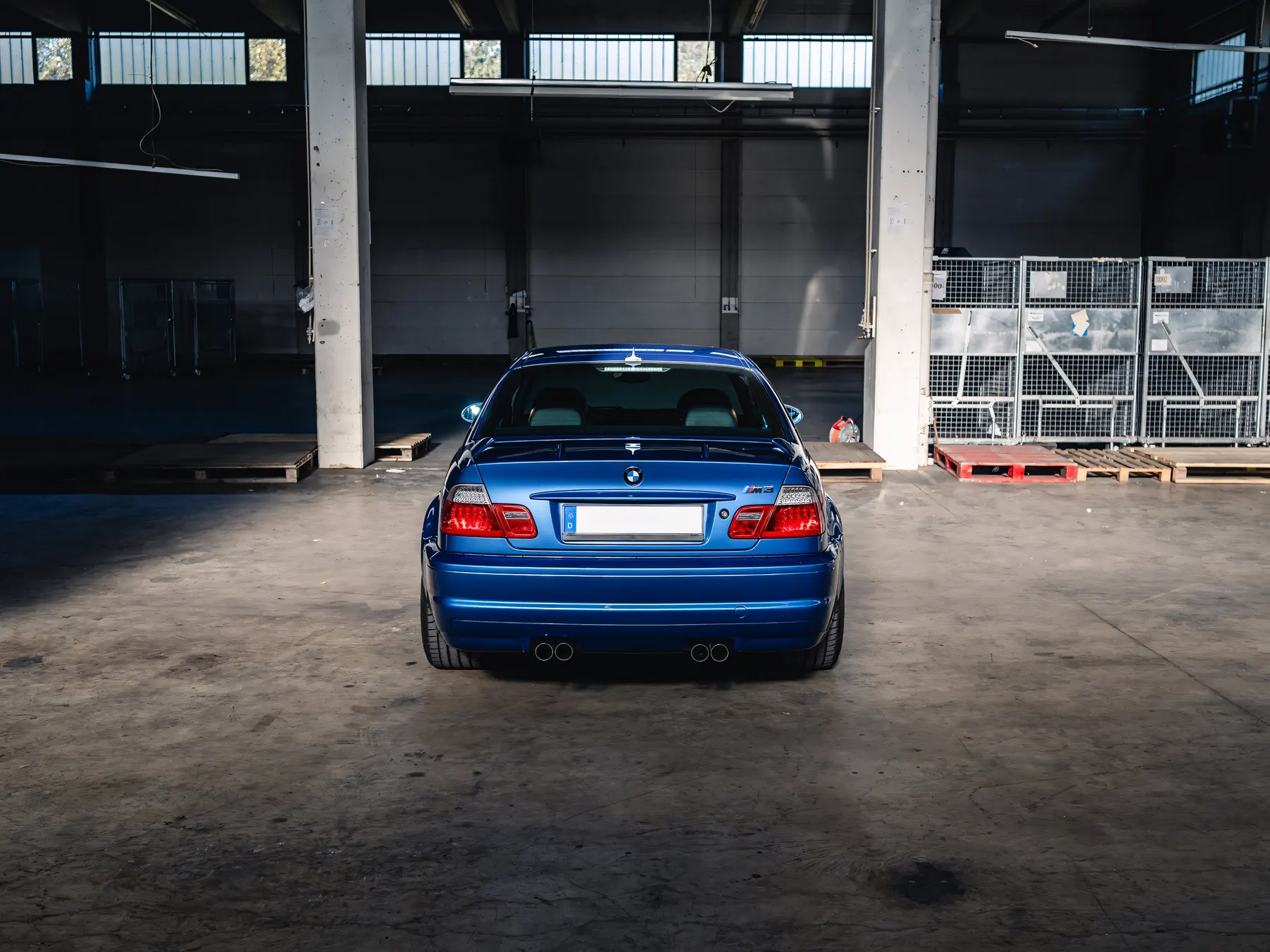
The body wears its purpose openly. The wheelarches were widened to cover the extra track and bigger tyres, the front apron gained large intakes feeding engine and brake cooling, and the bonnet’s power dome exists to make room for the intake system beneath it. A small Gurney flap on the boot lid reduces rear lift, four exhaust tips fill the rear valance, and the 2003 facelift was deliberately cautious, adding LED tail lamps and little else. It looks lean rather than muscular, and evo observes that it has aged better than the bulkier cars that came after it. Inside, Top Gear notes that BMW loaded it with all the kit the era could muster, including early navigation and voice activation, arriving a year ahead of iDrive, and that the materials have worn well. The cabin itself is simple rather than lavish, with two big dials, a tall gearlever and a three-spoke wheel that evo finds a bit too fat. The seats adjust in many directions without ever quite becoming comfortable, in evo’s experience.
Driven properly, the E46 M3 rewards commitment rather than bravado. evo describes a car that lopes along happily on the standard 18-inch wheels, then snaps into corners with remarkable composure once the pace rises. The absence of turbochargers is central to that: with no big slug of torque for the rear axle to contain, and a differential that locks progressively, traction is excellent and corrections are small and accurate. When the rear does let go it does so gradually, edging into slip rather than snapping, which makes the car unusually easy to exploit. Top Gear put its performance in the same bracket as a contemporary Porsche 911, with 62 mph arriving in around five seconds, but noted that the M3 was the more practical car, with four seats and a usable boot. evo found it held its own against more exotic sports cars in group tests, and it finished second at the 2001 evo Car of the Year, behind only the Pagani Zonda C12-S.
None of that makes the standard M3 flawless, and its weak points were real. The steering is the most persistent complaint. Top Gear found it numb and gluey on real roads, and evo’s Jethro Bovingdon calls it the glaring dynamic weak link, because the 15.4:1 rack asks for bigger inputs than the car’s underlying agility deserves. BMW’s answer was a quicker 14.5:1 rack on the CSL and the later CS, and fitting one to an earlier car has become a well-trodden upgrade. The ride is the second problem: the suspension struggles with short, sharp bumps, producing a vertical bounce that is worse on the optional 19-inch wheels and can make the car feel heavier than it is. The brakes are the third. Top Gear thought them terrific at road speeds, yet hard users complained on track, and evo regards them as a glaring weak link on a car whose engine invites you to go faster. Then there is the engine’s flip side. It is torque-light by modern standards, so overtaking means dropping a gear or two, which is a fair price for the noise but a real one in everyday use.
The optional SMG II gearbox deserves separate criticism. It is essentially the manual gearbox with an automated single-plate clutch, operated by paddles or the gear lever, and its shifts are strictly sequential. Top Gear dismissed the paddles as cheap plastic and described a rocker switch offering six shift-aggression settings, from a slow thunk to a vicious bang; evo’s John Barker found upshifts either ponderous or brutal. Cars.co.za’s buyer’s guide treats the SMG hydraulic pump as a “when, not if” failure item, and the single clutch wears like a consumable. Reliability beyond the gearbox is mixed. evo’s buying guide records that engines built before June 2003 were prone to big-end bearing failure, with oil-supply upgrades that should have been carried out under warranty, and Cars.co.za reports that some cars have spun bearings well below 100,000 km while others pass 150,000 km on the originals, with getting the oil to temperature before hard use a key factor. Cracking of the rear subframe is another well-known issue: caught early it is easily repaired, but left alone it becomes expensive, and evo suggests listening for clicks under acceleration and braking. VANOS pump wear and rust complete a list that explains why cheap examples are rarely cheap to run, although evo still judges the M3 mostly reliable.
Variants beyond the standard coupe were few. The convertible, introduced in 2001, was about 165 kg heavier than the coupe in US specification. In 2005, with the E90 generation already launched elsewhere in the 3 Series range, BMW offered the package evo calls the CS pack, known as the Competition Package in the US and Europe. It brought the CSL’s 19-inch wheel design, the faster steering rack, the M Track stability setting, revised spring rates and bigger brake discs, with the manual gearbox standard and SMG a £2,100 option. evo says it largely cured the standard car’s ride problem, though the brakes remained a weak point, and counts it a favourite.
The car that defines the range for many people is the M3 CSL of 2003. Its Coupé Sport Leichtbau name revived the 1970s 3.0 CSL, and the diet was serious: 110 kg removed, leaving 1,385 kg. The first visible carbon-fibre roof on an M car did part of the work, alongside composite parts in the front apron, rear diffuser and intake manifold, a thin-glass rear window, an aluminium bonnet, bucket seats and reduced sound deadening, and the radio and air conditioning were not fitted as standard. The S54 gained a carbon airbox fed by a round intake in the front bumper, larger manifolds and reprofiled camshafts, rising to 355 bhp and 273 lb-ft. Top Gear’s arithmetic is revealing: roughly five per cent more power, but a ten per cent weight saving. BMW M claims 62 mph in 4.9 seconds and a Nordschleife lap of 7 minutes 50 seconds, and says buyers holding a racing licence could have the speed limiter lifted to roughly 174 mph, up from 155 mph. Only 1,383 were built, in two colours, Sapphire Black and Silver Grey.
It was not universally acclaimed at launch. evo recalls that it cost around £20,000 more than a standard M3 for a modest power increase, wore optional Michelin Pilot Sport Cup tyres so skittish in the cold and wet that buyers signed a disclaimer, had brakes evo judged sub-par, and was available only with the SMG gearbox, which evo calls its real Achilles heel. Top Gear described the standard tyres’ tread as tokenistic and the car a handful in the wet. Time has been kinder. In its 2026 review evo puts CSLs at roughly £80,000 to £120,000, and a specialist now sells a manual conversion without apparently denting values.
The motorsport story is oddly detached from the road car’s engine. The M3 GTR that won the 2001 American Le Mans Series, taking the driver, constructor and team championships according to BMW M, was powered by a 4.0-litre V8, the P60B40, making comfortably more than 440 bhp, not by the S54. The ALMS GT rules required a road-legal counterpart, so BMW M built ten GTR Street cars: a roadgoing V8 of more than 345 bhp, a carbon-fibre roof, aprons and wing, and a weight of 1,350 kg. A V8 would not reach a series-production M3 until the E90 generation in 2007. BMW M also built an E46 M3 Touring that was used for testing but never entered production.
From today’s vantage point the E46’s standing is both secure and slightly paradoxical. It was the last M3 with a naturally aspirated straight-six: the E90 that followed took a V8, and the F80 a turbocharged six, each gaining outright pace the E46 cannot match. What they did not keep was the character of an engine that gave its best beyond 7,000 rpm and shaped everything about how the car was driven. evo argues you can no longer buy that kind of hard-edged, highly strung mechanical experience new without moving into 911 GT3 or Ferrari V12 territory, and that the M3 does things those cars cannot, being narrower and having less grip, so more of the engine can be used more often. It remains attainable too: evo’s September 2025 guide listed a good standard car at around £25,000, though its reviewer feared that would not last. The gills still cool nothing, but the engine behind them is the reason people still stop to look.
Technical data
Performance Specifications
| Specification | M3 coupe (European market) | M3 coupe (US market) | M3 CSL (European market) |
|---|---|---|---|
| Production | 2000–2006 | 2000–2006 | 2003 |
| Engine | S54B32, 3,246 cc straight-six, 24 valves | S54B32, 3,246 cc straight-six, 24 valves | S54B32HP, 3,246 cc straight-six, 24 valves |
| Bore × stroke / compression | 87 × 91 mm / 11.5:1 | 87 × 91 mm / 11.5:1 | Not separately verified |
| Power | 338 bhp @ 7,900 rpm | 333 bhp @ 7,900 rpm | 355 bhp @ 7,900 rpm |
| Torque | 269 lb-ft @ 4,900 rpm | 262 lb-ft @ 4,900 rpm | 273 lb-ft @ 4,900 rpm |
| Transmission | 6-speed manual or 6-speed SMG II | 6-speed manual or SMG | 6-speed SMG II only |
| Kerb weight | 1,495 kg | approx. 1,550 kg* (convertible approx. 1,715 kg*) | 1,385 kg |
| Weight distribution (front/rear) | Not separately verified | 50.3 / 49.7 % (coupe) | Not separately verified |
| 0–62 mph | approx. 5.1–5.2 s† | 4.8 s to 60 mph (BMW North America claim)† | 4.9 s |
| Top speed | 155 mph (limited) | Not separately verified | 155 mph (limited); limiter could be raised to approx. 174 mph* for racing-licence holders |
| Steering ratio | 15.4:1 | Not separately verified | 14.5:1 |
| Wheelbase | Not separately verified | 2,731 mm* | Not separately verified |
| Length × width × height | Not separately verified | 4,493 × 1,781 × 1,372 mm* | Not separately verified |
| Total production (all E46 M3) | 85,139 (BMW M)‡ | Included in total | 1,383 |
Sources
- BMW M: The BMW M3 E46 portrait
- BMW M: The BMW M3 CSL
- BMW M: The BMW M3 generations at a glance
- BMW of North America: 2003 BMW M3 Coupe & Convertible Specifications
- evo: Used BMW M3 (E46, 2000-2006) review, history and buying guide
- evo: Used BMW M3 CS (E46, 2005-2006) review
- evo: BMW M3 CSL (E46, 2003-2004) review
- Top Gear: BMW M3 (E46) review
- Hagerty: 2003 BMW M3 valuation guide
- Cars.co.za: Modern Classic: BMW E46 M3 Buyer’s Guide
Join the discussion
Comments
Loading comments…
Leave a comment
Share a detail, memory, or perspective. Every comment is reviewed before publication.