Lamborghini Murciélago R-GT: The GT1 Bull Starved of Support
2004 Lamborghini Murciélago R-GT




Images: RM Sotheby's
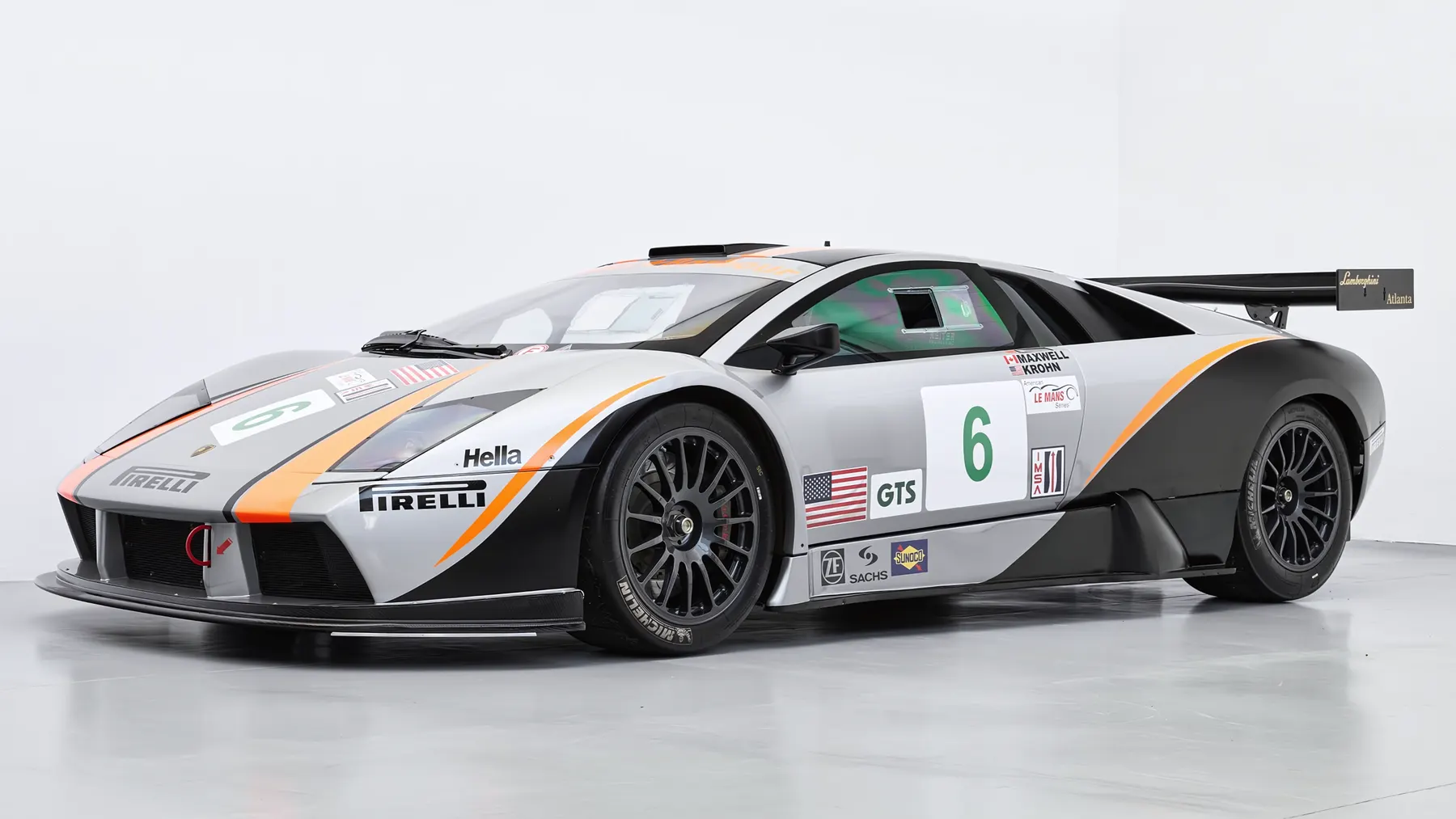
The first thing Lamborghini did to turn the Murciélago into a racing car was discard the feature that made the road car so reassuring. The production Murciélago split its power 30:70 front to rear through a viscous-coupling four-wheel-drive system, which helped a car weighing about 1,660 kg before fluids put its power down without fuss. The Murciélago R-GT, unveiled at the 2003 Frankfurt show, dropped all of that. To satisfy FIA and ACO rules it became rear-wheel drive, gained a six-speed sequential gearbox and was built to a class weight of 1,100 kg, roughly a third less mass than the car it was derived from. It was a serious attempt to put Lamborghini’s flagship into GT1. Its story is as much about who was prepared to keep developing it as about what it could do on a good day.
The road car had arrived in 2001 as the first new flagship developed under Audi ownership, drawn by Luc Donckerwolke. Its structure was a welded tubular steel spaceframe reinforced with carbon, clothed in aluminium and carbon panels. evo describes it as the last V12 flagship from Sant’Agata to be built of steel and the last to carry the old Bizzarrini-derived V12, which made 572 bhp in 6.2-litre launch form. Lamborghini’s racing record in this era was thin by comparison. Reiter Engineering had been running a modified Diablo GTR in the FIA GT Championship since 2000, and the Japan Lamborghini Owners’ Club had been campaigning Diablos in the Japanese GT series with little to show for it. A customer racer with Lamborghini and Audi Sport involvement was a real change of ambition. The R-GT was developed jointly by Lamborghini, Reiter and Audi Sport, and built to Automobile Club de l’Ouest specification so it could contest the FIA GT Championship, the American Le Mans Series GTS class and Le Mans. It was sold through Lamborghini’s Customer Sports Programme at a base price below €500,000, and it was never street-legal. Auction-house research suggests Reiter built around eleven.
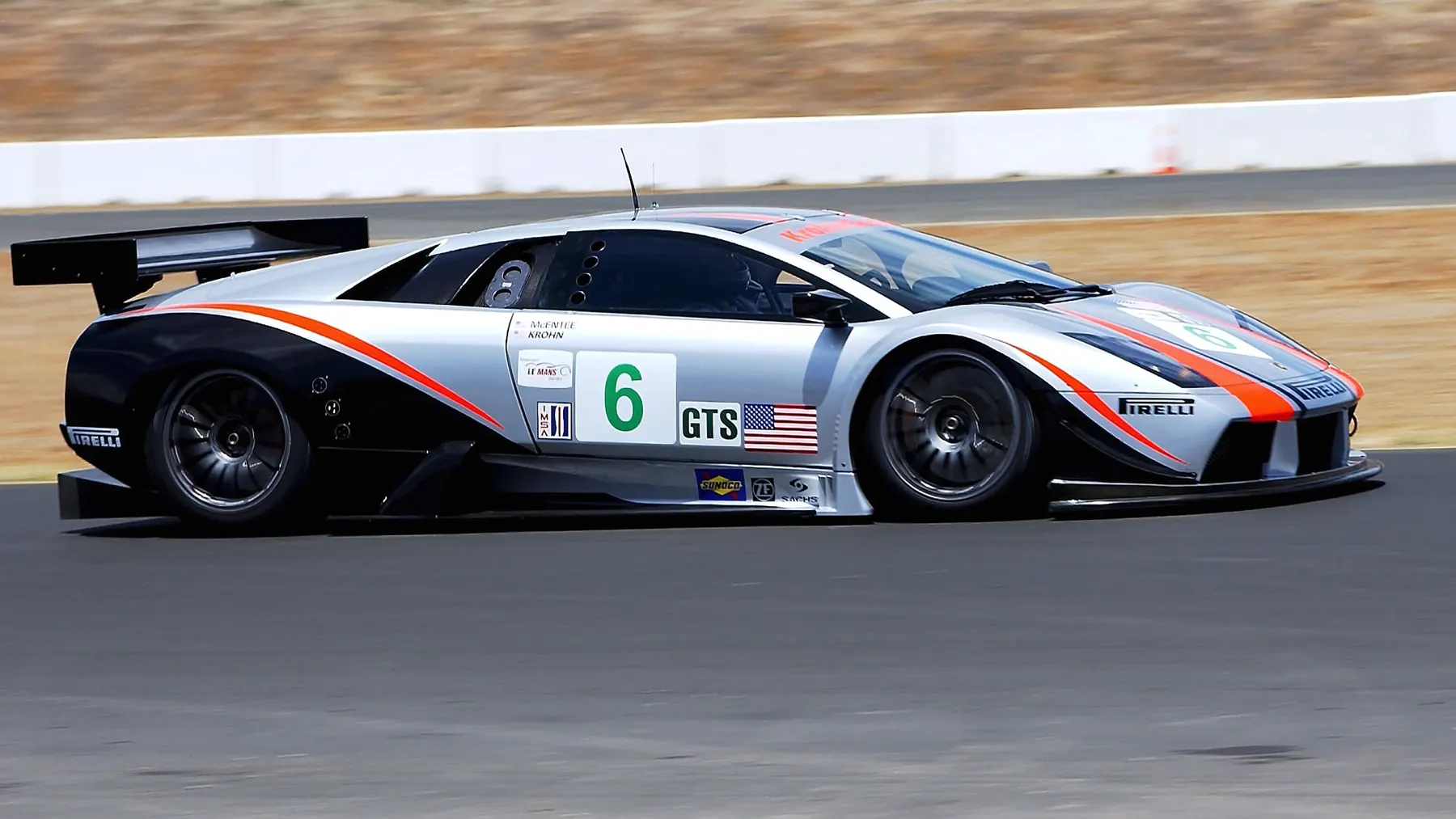
The early running was messier than the launch publicity implied. Lamborghini’s own release named Estoril in October 2003 as the maiden race, but catalogue histories of the programme say the prototype was withdrawn after early testing showed it well off the pace. The turnaround was quick. At Valencia in April 2004 the R-GT qualified fifth, led the race and finished third, a result Lamborghini billed as its first podium in international racing, nine months after the drawing board. A later Michelin tyre test at Misano produced the most revealing remarks of the car’s early life. Hans Reiter said it was quicker than the Prodrive-built Ferrari sharing the test on intermediate and wet tyres. On slicks the two swapped a tenth or two from day to day, but the compound had been designed with front-engined cars in mind and did not suit a mid-engined Lamborghini. That detail sums up the R-GT’s position. It was a mid-engined, production-derived outsider racing front-engined Ferraris and Corvettes, on tyres developed for someone else’s layout.
Behind the driver sat an air-restricted V12 that Lamborghini described as a six-litre, slightly smaller than the road car’s 6.2, with dry-sump lubrication. Contemporary figures run from about 590 to roughly 600 bhp depending on source and restrictor, and the Le Mans-oriented package Reiter prepared for 2007 was reported at about 520 bhp. The carbon body panels carried regulation aerodynamics, reportedly including a deeper front lip, side sills, a large diffuser and a rear wing, on the road car’s wide, low shape. On paper that is around 540 bhp per tonne. But the road car was designed around roughly 42:58 front-to-rear weight distribution and four driven wheels, and the R-GT had to put all of its output through the rear axle. Its rivals included the Maserati MC12, which dailysportscar notes did not conform to ACO rules yet enjoyed astonishing success in the FIA GT Championship and at the Spa 24 Hours. The Murciélago conformed to both rulebooks, but by its own driver’s admission in 2007 it was not a title contender.
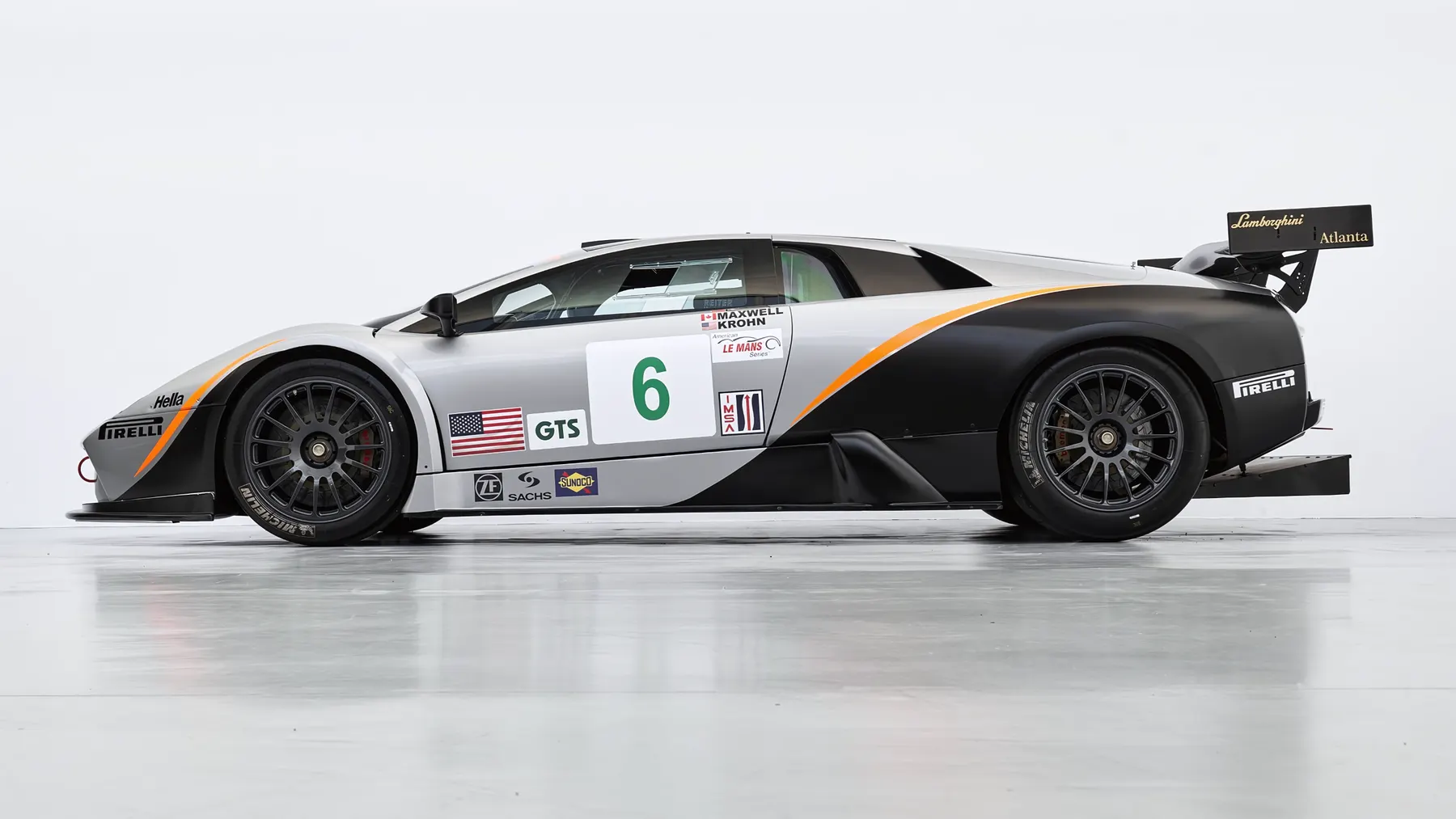
The R-GT spawned a small family of derivatives. JLOC took a new R-GT for the 2004 JGTC season and called it the RG-1. A parts shortage forced the team back into its old Diablo for the Tokachi round, and in GT500 the Murciélago stayed uncompetitive against factory-backed Nissan, Honda and Toyota entries. JLOC homologated it for GT300 in 2005 and moved there fully in 2006, when Marco Apicella and Yasutaka Hinoi won the Suzuka season opener. Motorsport.com describes that as the Murciélago’s first win in international competition. Lamborghini’s own account differs. The company counted the FIA GT opener at Zhuhai on 25 March 2007 as its first international victory. The All-Inkl Racing car of Christophe Bouchut and Stefan Mücke won a two-hour race that ended with the top three inside four seconds, chased home by two Corvettes. Which counts as “first” depends on how you rate a GT300 win in Japan, but Zhuhai came against the established FIA GT field. JLOC also built an RG-1LM for Le Mans, and Reiter’s line ended with the LP670 R-SV for the 2010 FIA GT1 World Championship, which took race wins but no overall title. There was a road-going offshoot too. Reiter showed a road-going Murciélago wearing the R-GT name at an Essen Motor Show, with carbon aero parts and, oddly, its exhausts moved to the top of the tail. AutoBild reported a conversion costing about €75,000 that took 80 to 100 kg off a standard car.
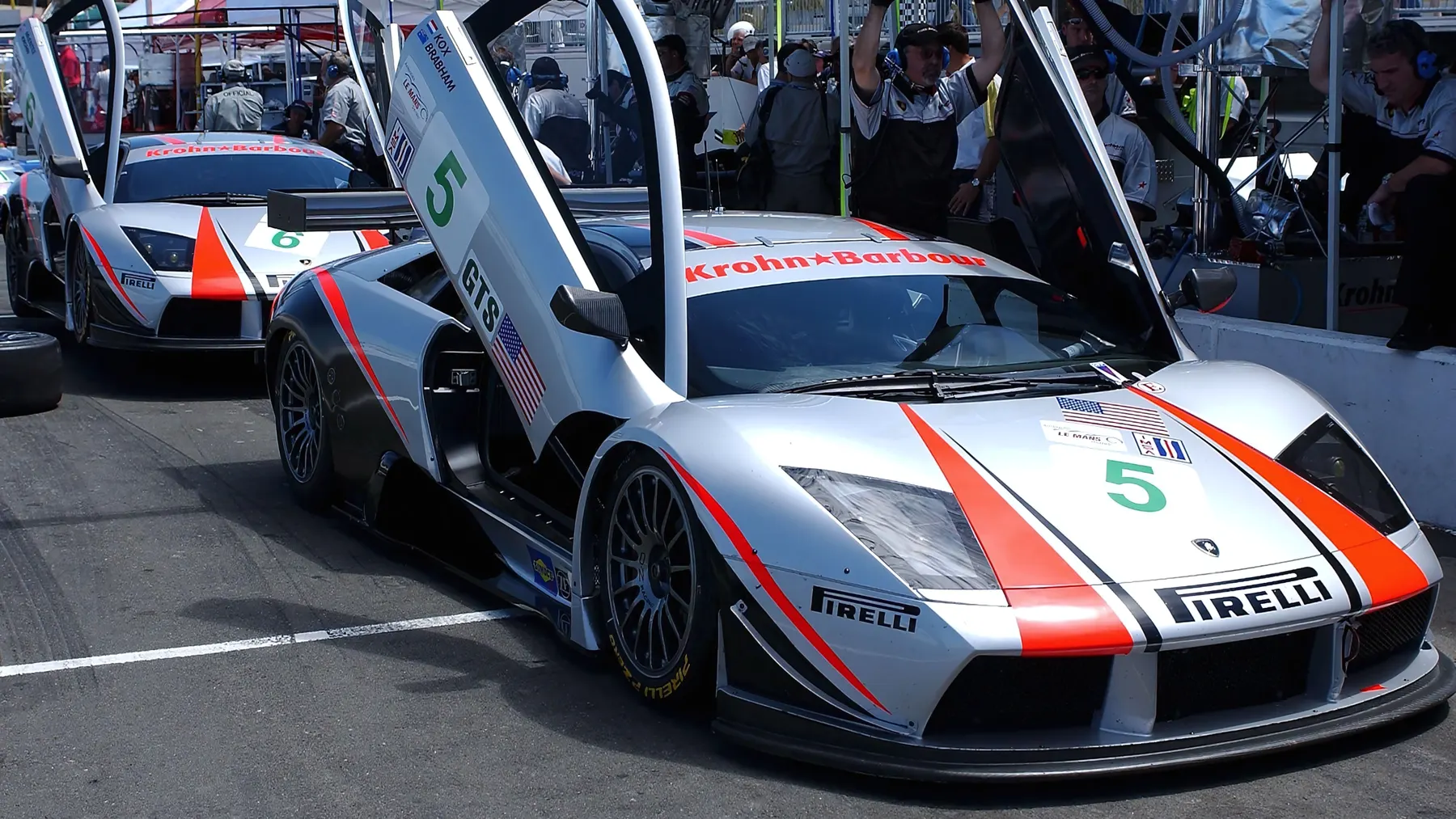
The case against the R-GT is easiest to make in its reliability and support record. Krohn-Barbour Racing’s American Le Mans Series campaign, two cars debuting at Mid-Ohio in June 2004, produced a best result of second in class at Sonoma and then a run of retirements. The team quit after Petit Le Mans without contesting the final round or planning for 2005. One participant said the promised factory support never materialised. Lamborghini said it had given considerable input and that the changes it and Reiter recommended were only just bearing fruit. Drive shafts were a recurring weakness. At the 2007 Spa 24 Hours Reiter’s own car broke three, and its customer’s car retired for the same reason. JLOC’s replacement car lasted one lap at that year’s Le Mans with a broken drive shaft, and a similar failure ended JLOC’s first 2009 practice session after about 400 metres. Across five attempts between 2006 and 2010, Murciélago-derived cars never recorded a classified Le Mans finish. JLOC’s Isao Noritake blames starved development. In his account Audi Sport lost interest early, no manufacturer ever backed the project, and with only one or two cars racing the differential and transmission were never properly developed. Add the tyre problem, and Peter Kox calling it “brave” to take the car to a low-drag, high-power circuit like Monza, and the R-GT’s road-car pedigree clearly did not translate automatically.
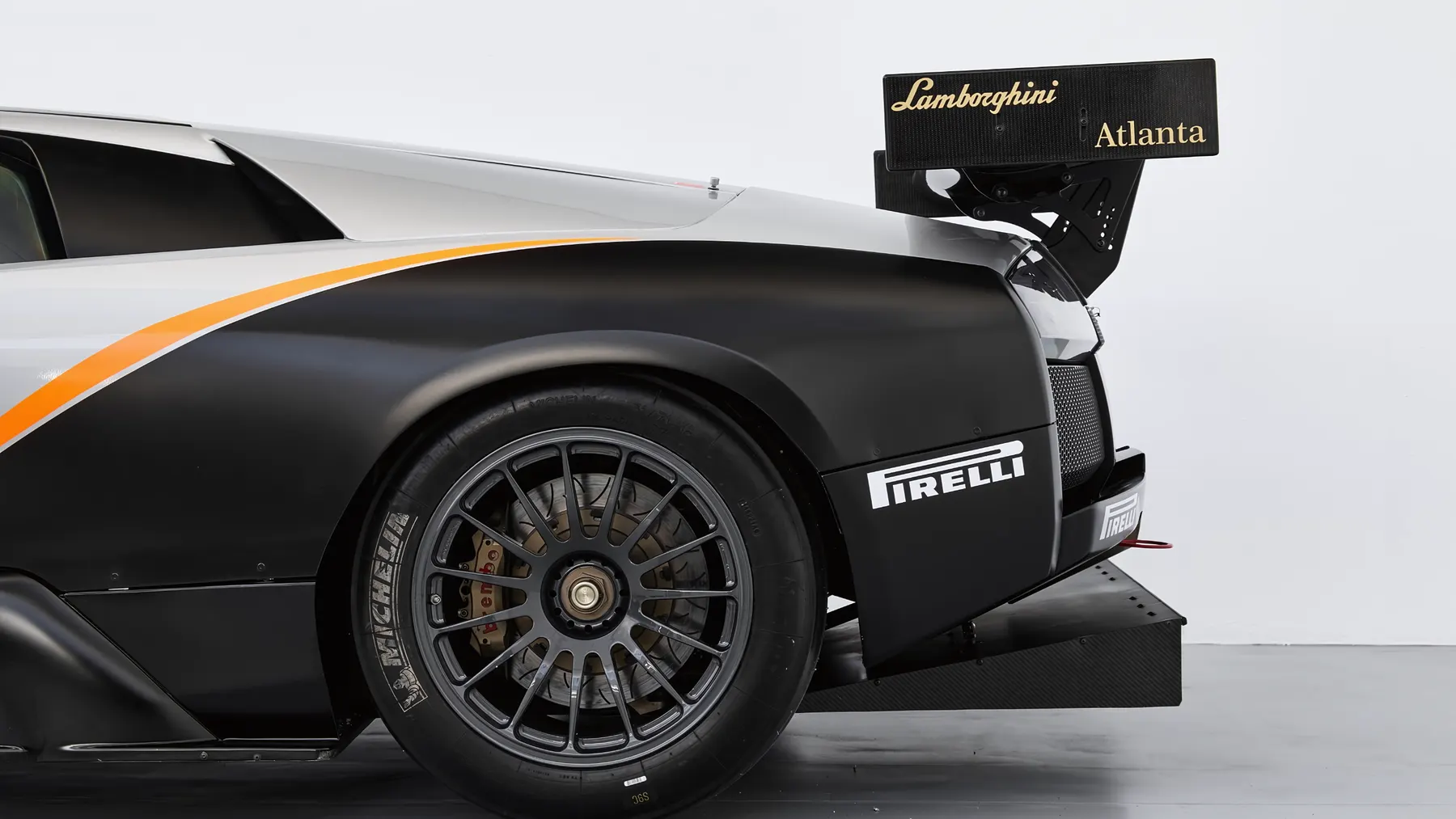
What redeems it is that the car kept getting quicker whenever someone paid attention. Reiter reported the revised car third-fastest of the conventional GT cars at the 2005 Monza opener, before a Ferrari 575 Maranello tagged it at the Parabolica. By the end of 2006 it was fastest in a free practice session at Adria and ran with the front-runners for much of the race. At Spa in 2007 it was within six tenths of the pole-setting Corvette in practice before the drive shafts failed. Those are the marks of a quick but under-developed car.
The Murciélago R-GT leaves behind a template and a warning. It showed that a Lamborghini V12 flagship could become a credible customer racer in under a year, and that this was the easy part. The harder years came afterwards, when a handful of cars and a supplier base too small to fund development meant customers found the weaknesses in public. It is hard not to read the later GT3 programmes as the answer. Reiter went on to build the Gallardo GT3, a standardised car sold under clear regulations to many customers. JLOC, the team that persevered through all of this, won the Super GT GT300 title in 2024 with a Huracán GT3. The R-GT itself now survives as a historic GT1 racer, eligible for series such as Endurance Racing Legends.
Technical data
Performance Specifications
| Specification | Road Murciélago (2001 launch) | Murciélago R-GT (2003–2009 front-line use) |
|---|---|---|
| Engine | 6.2-litre V12 | 6.0-litre V12, air-restricted, dry sump |
| Power | 572 bhp | c. 590–600 bhp* |
| Torque | 479 lb-ft | Omitted (not corroborated) |
| Drive | Permanent four-wheel drive, viscous coupling (30:70 front:rear) | Rear-wheel drive |
| Gearbox | Six-speed manual (automated paddle-shift also offered) | Six-speed sequential |
| Weight | c. 1,660 kg (before fluids) | 1,100 kg (class specification) |
| Structure / body | Steel tubular spaceframe, carbon reinforcement, aluminium and carbon panels | Carbon body panels, regulation aerodynamics |
| Price | n/a | Base below €500,000 (2003 announcement) |
| Production | n/a | c. 11 cars† |
Sources
- Racecar – Lamborghini takes debut podium (19 April 2004)
- Racecar – Lamborghini R-GT runs well in tyre test
- Racecar – Reiter Lamborghini shows gains at Monza
- Racecar – Lamborghini and Krohn Barbour Racing
- Racecar – Lamborghini to enter ALMS with new Krohn-Barbour Racing team
- Supercars.net – 2004 Lamborghini Murciélago R-GT (reproducing Lamborghini press text)
- LamboCars – Lamborghini Murciélago R-GT
- LamboCars – 2 Murciélago R-GT entered into 2007 FIA GT Championship
- LamboCars / Reiter Engineering GT1 Newsletter – Total 24H de Spa 2007
- Motorsport.com – Remembering Lamborghini’s ill-fated last stint at Le Mans
- 24h-lemans.com (ACO) – The 24 Hours of Le Mans and Lamborghini (Part 2)
- Dailysportscar – All The GT1s, Part Three: Lamborghini to McLaren
- Wikipedia – JLOC
- Wikipedia – Reiter Engineering
- evo – Lamborghini Murciélago (2001–2011) review
- Supercar Nostalgia – Guide: Lamborghini Murciélago
- RM Sotheby’s – Murciélago model background (launch specification)
- Supercar Nostalgia – One to Buy: 2004 Lamborghini Murciélago R-GT (RM Sotheby’s catalogue background)
- Classic Driver – 2004 Lamborghini Murciélago R-GT (programme background)
- Motor Authority – Reiter Engineering unveils road-going Lamborghini Murciélago R-GT
- AUTO BILD – Reiter Murciélago Strada
- Jalopnik – More Bull: Reiter Engineering’s Lamborghini Murciélago R-GT Le Mans Racer for 2007
- Auto123 – 2005 Lamborghini Murciélago R-GT
Join the discussion
Comments
Loading comments…
Leave a comment
Share a detail, memory, or perspective. Every comment is reviewed before publication.