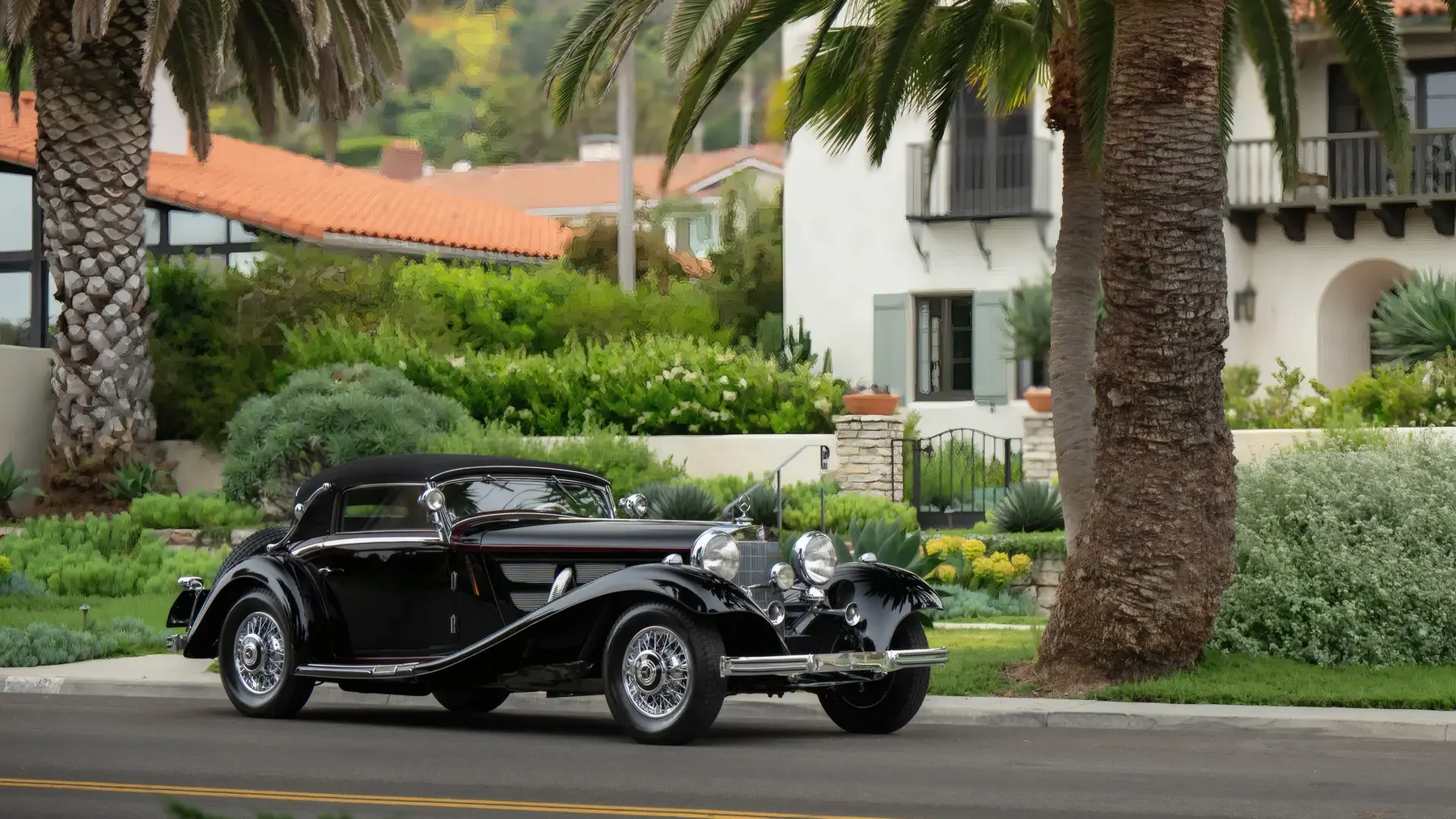
1936 Mercedes-Benz 540 K Cabriolet A by Sindelfingen
Images: Robin Adams / RM Sotheby's
When Mercedes-Benz engineers fitted a Roots-type supercharger to the 5.4-litre straight-eight of the 540 K, they did not intend it to run continuously. The blower was a reserve - a theatrical punctuation mark summoned only by flooring the throttle past a mechanical detent, at which point it announced itself with a rising, reedy shriek entirely out of keeping with the car’s otherwise composed demeanour. That contradiction sits at the heart of the 540 K Cabriolet A: a machine of extraordinary refinement that, at a moment of the driver’s choosing, abandoned refinement entirely.
The 540 K arrived in 1936 as the development of the earlier 500 K, sharing its basic architecture but with the straight-eight bored out from 5.0 to 5.4 litres - 5,401cc to be precise - and the chassis stretched to accommodate the longer block. The M24 engine breathed through a single carburettor in normal running and produced around 115 bhp in that state, which through a mass approaching 2,500 kg for a fully bodied car amounted to sedate, effortless progress rather than anything resembling urgency. Engaging the supercharger transformed that figure to approximately 180 bhp and the soundtrack to something between a dental drill and a civil defence siren. The blower was not rated for extended use; drivers who held it engaged through extended stretches risked overheating it, and the mechanically sympathetic approach was to use it in short, decisive bursts. This gave the 540 K a peculiar driving discipline: majestic in cruise, briefly ferocious in demand, then majestic again.
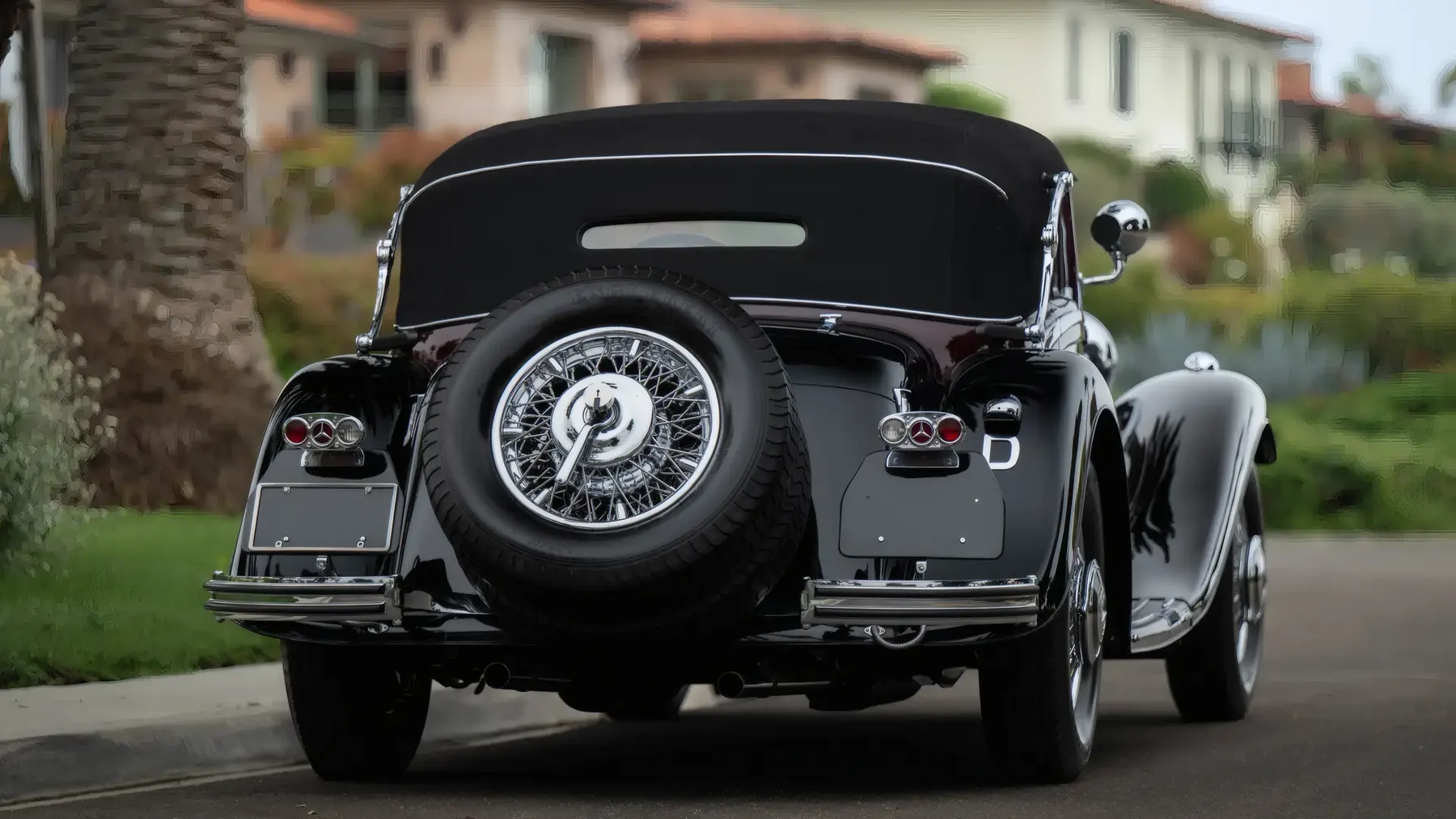
The Cabriolet A was the most intimate of the several open body styles offered on the 540 K platform. Sindelfingen, Mercedes-Benz’s own coachbuilding works near Stuttgart, produced it as a strict two-seater - its designation reflecting a hierarchy of cabin configurations in which the A suffix indicated the smallest, most focussed arrangement, with the Cabriolet B offering a small rear seat, and the C and D variants progressively more generously proportioned. The Cabriolet A therefore sat at the sporting end of the range despite being nowhere near a sports car in any functional sense; it was more a declaration of personal extravagance than a tool for covering distance quickly. With a top speed in the region of 106 mph and the weight and dimensions of a small house, it did not accelerate so much as gather pace with immense authority.
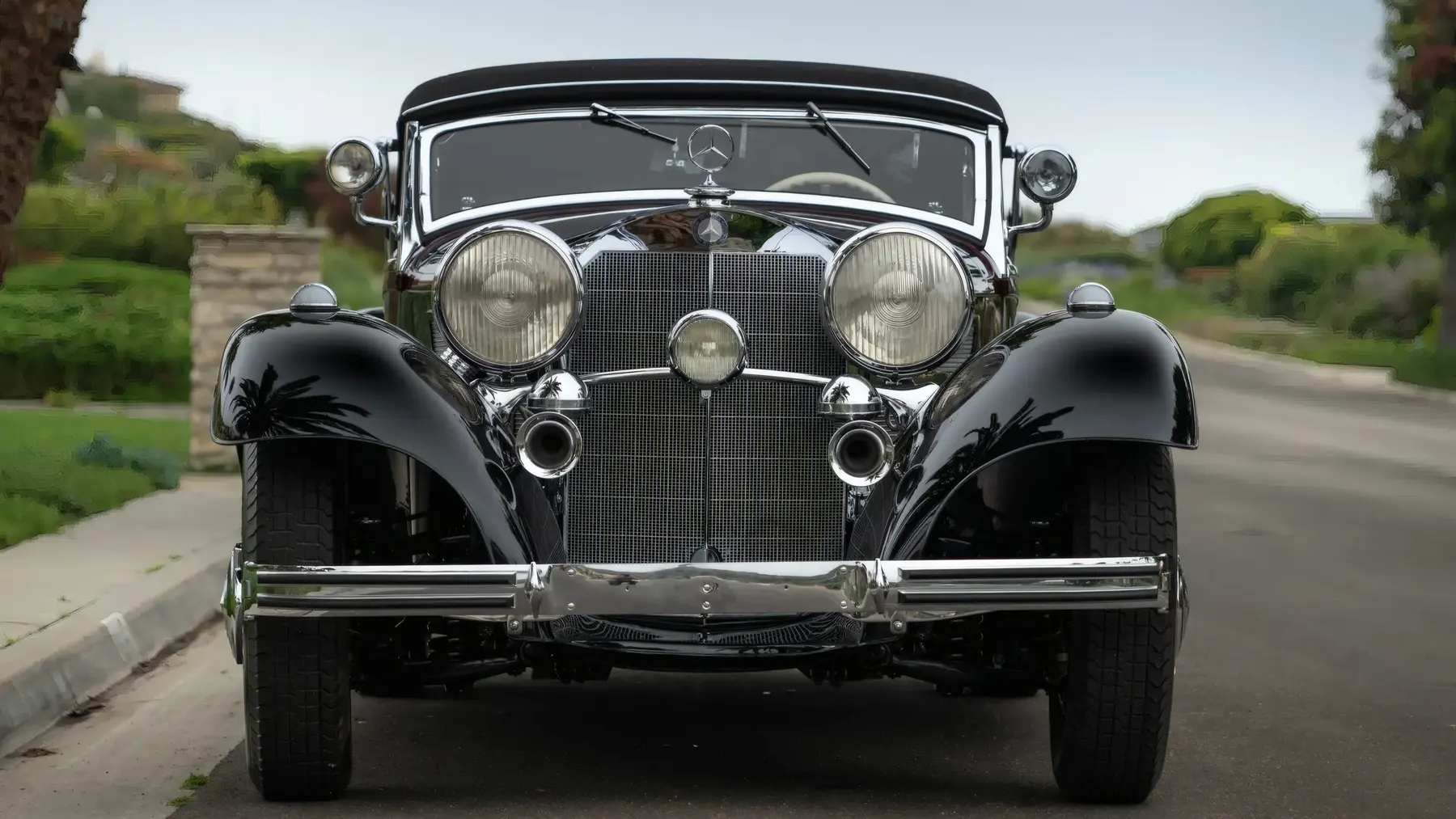
What Sindelfingen produced in the Cabriolet A body was coachwork of remarkable visual coherence. The long bonnet - unavoidable given the straight-eight’s dimensions - was not merely accepted as an engineering compromise but exploited as a design asset, its length broken by individual chromed exhaust pipes emerging from the right flank and sweeping rearward before exiting just ahead of the front wheel arch. These pipes were not purely decorative; the exhaust routing was genuine, though the dramatic presentation was clearly intentional. The wings swept in a continuous, unhurried arc from headlamp to running board, substantial in section but shaped with enough curvature to avoid heaviness. The radiator shell, upright and proudly three-pointed, anchored the nose with a formality that the rest of the body spent its considerable length trying to soften.
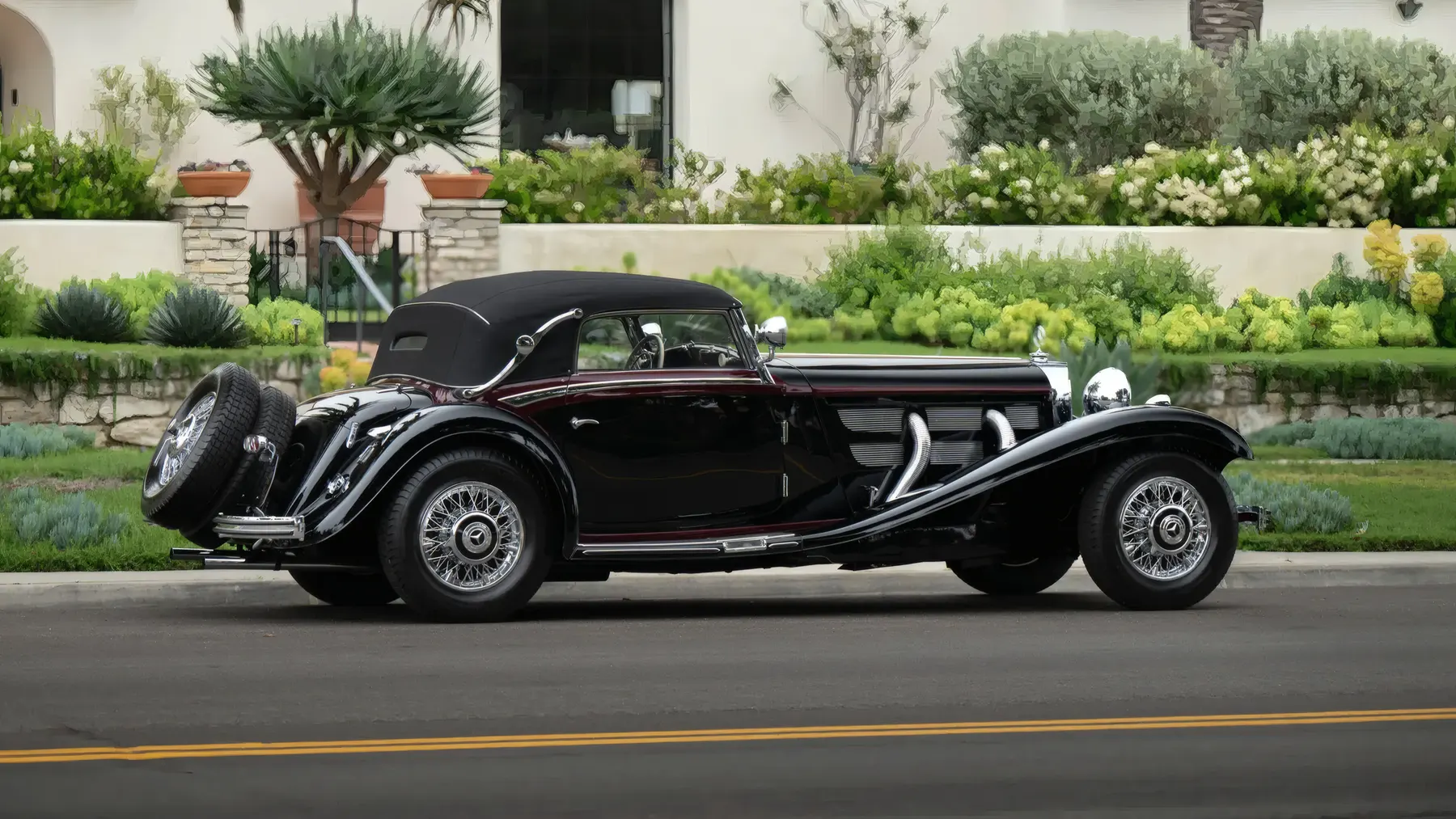
The hood arrangement on the Cabriolet A was among the more satisfying elements of the design when lowered, the fabric roof folding into a compact stack that disappeared beneath a tonneau cover to leave an uninterrupted sweep from scuttle to tail. The cabin itself was two seats and little else - a leather-bound cockpit of unusual quality for the period, with instrumentation that took precision engineering seriously and a steering wheel of substantial diameter that gave the driver leverage over a car that did not otherwise particularly invite hurried direction changes.
Independent suspension at all four corners set the 540 K apart from many contemporaries. The front used a double-wishbone arrangement with coil springs; the rear employed a swing axle with coil springs - modern in concept for 1936, though the swing axle’s tendency to produce large camber changes under compression limited the car’s enthusiasm for corners taken at speed. Hydraulic brakes on all four wheels were standard, the drums large enough to cope with the mass in ordinary driving, though extended mountain passes required respect. The chassis was a conventional ladder frame but robustly engineered, and the overall impression behind the wheel was of a car that isolated its occupants from road imperfections without entirely severing them from information about the road’s surface - a balance that was genuinely impressive for the era.
Production of the 540 K in all body styles was never large. The car was hand-assembled to a degree that made each example a significant undertaking, and Sindelfingen’s involvement meant the Cabriolet A examples were factory works rather than the commissions sent to independent coachbuilders that accounted for some 540 K chassis. The total production run across all 540 K variants through to 1940 is generally cited as somewhere in the region of four hundred cars, with the various Cabriolet body styles accounting for the majority. Exact Cabriolet A numbers are uncertain in the historical record and should not be treated as settled; surviving examples are rare by any measure.
The political context of the 540 K cannot be ignored in any honest account of the car’s history. These were the years of National Socialist rule in Germany, and the 540 K existed in the overlap between industrial pride, export diplomacy, and the conspicuous tastes of a regime that understood the propaganda value of technical magnificence. Several examples reached senior figures in the Nazi hierarchy, and others were delivered to heads of state and wealthy clients internationally. This association colours the car’s historical position in ways that straightforward technical admiration cannot fully address, and it is worth noting that the engineering and artistic achievement of Sindelfingen’s craftsmen existed in service of a commercial and political machine whose other activities were catastrophic. The 540 K is a beautiful object with a complicated biography.
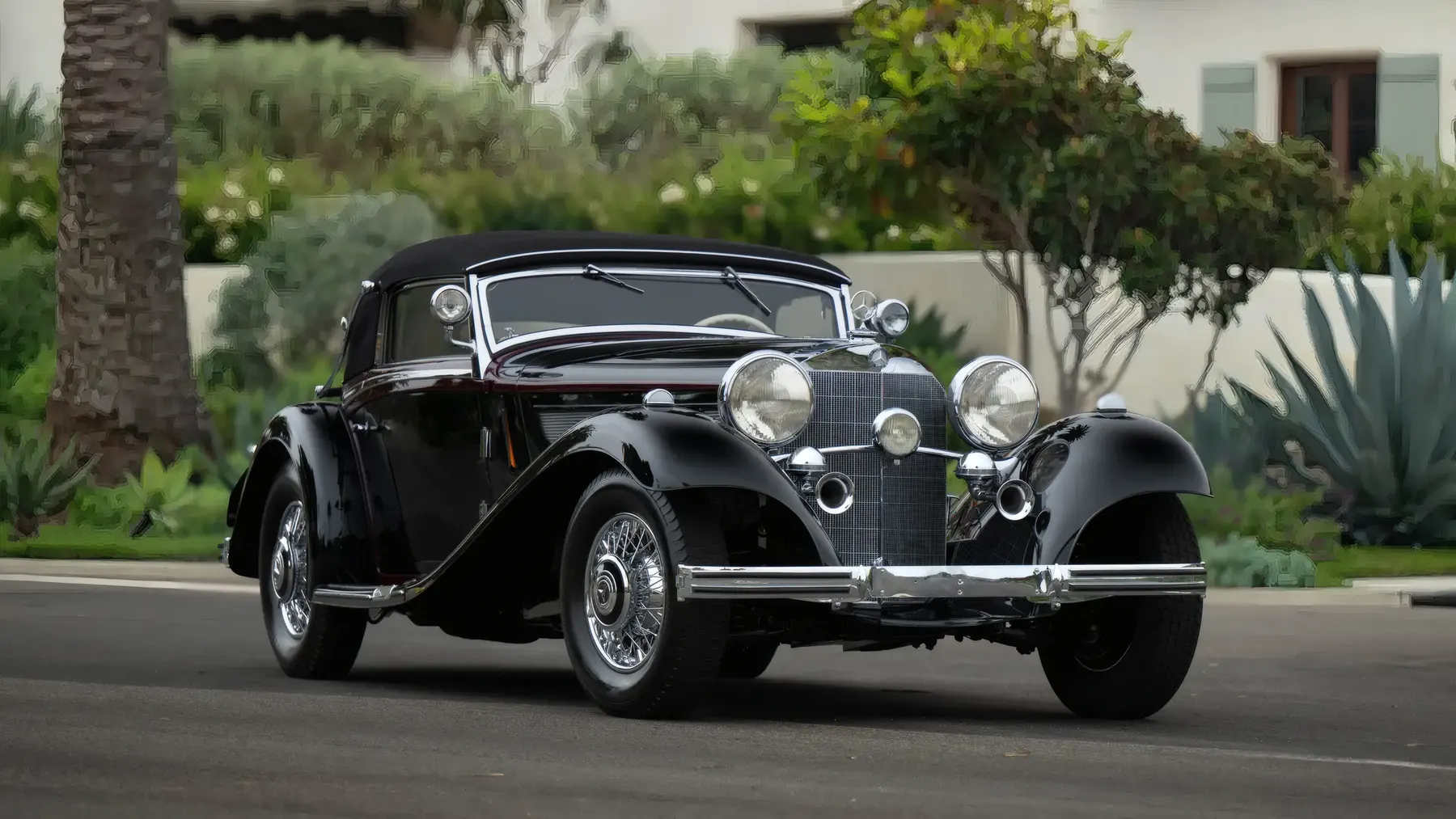
What it delivered to its owners in purely experiential terms was a journey unlike almost anything else then available. Starting the supercharged straight-eight on a cold morning involved flooding the carburettor, attending to the choke, and listening as eight cylinders found their rhythm with the slightly uneven cadence typical of the period before settling to a bass note of considerable authority. At low speed, the car moved with a smoothness that came partly from the long wheelbase and partly from the weight that, while it created its own challenges, also smothered the minor disturbances that would agitate a lighter machine. The supercharger, dormant at ordinary throttle openings, was always present as a potential - the sensation of holding something in reserve that was slightly larger than the situation called for.
Later assessment of the 540 K, including the Cabriolet A, has positioned it among the most significant pre-war automobiles produced anywhere. This reputation rests on the Special Roadster variant more than any other, that two-seat body being consistently ranked among the most beautiful cars of the twentieth century, but the Cabriolet A shares enough of the same platform, engineering substance, and Sindelfingen craftsmanship to occupy similar territory in the historical record. The Cabriolet A is perhaps less extreme in its visual statement than the Special Roadster - the closed rear deck and more conventional hood arrangement give it a slightly more restrained character - but it is a more usable object in the sense that extended open-air travel with a passenger was its actual design purpose rather than a theoretical possibility.
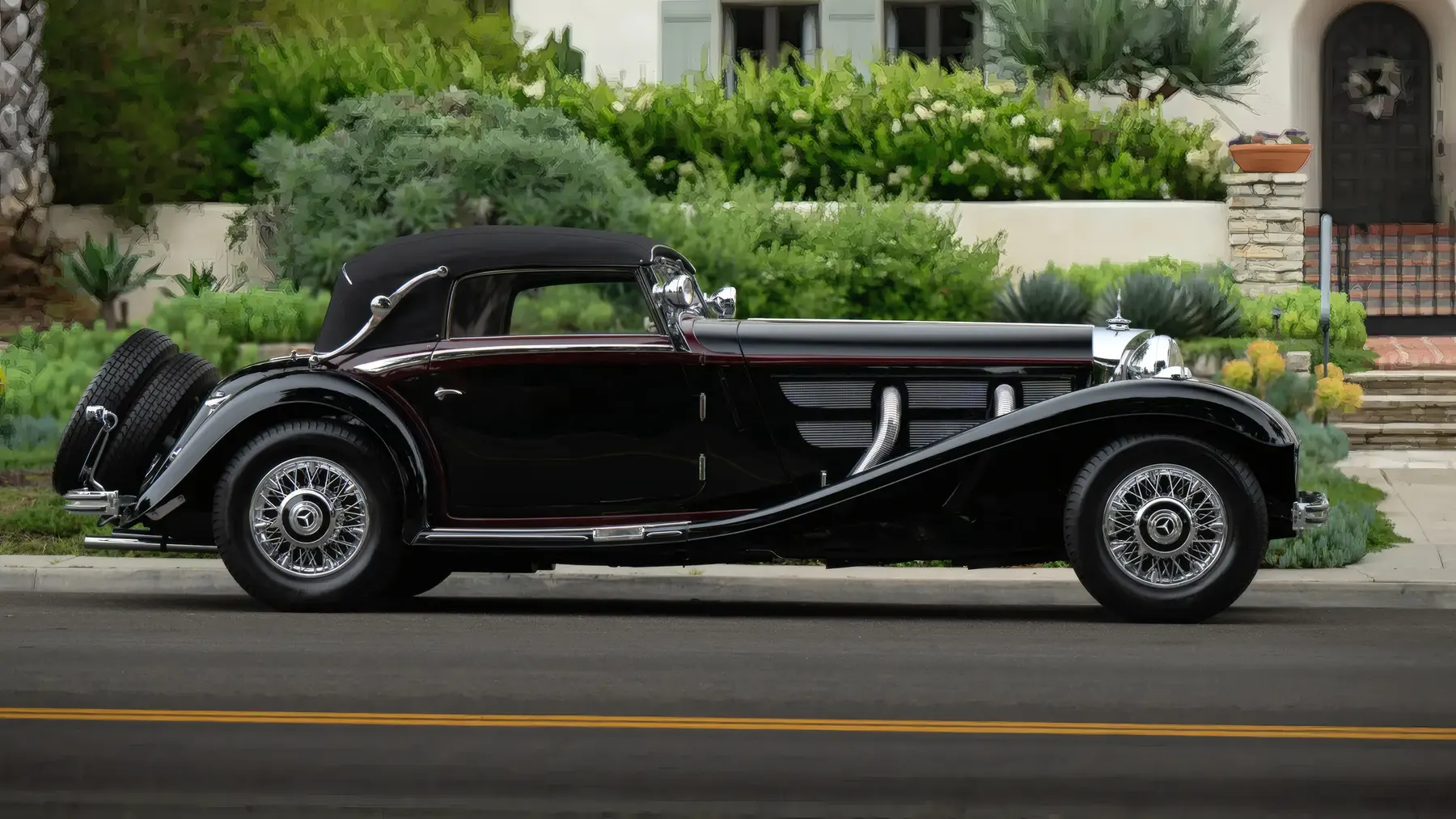
The surviving Cabriolet A examples that appear at major auctions and in museum collections consistently command the kind of attention that transcends normal collector car discourse. They are studied as industrial design objects, as engineering documents, as products of a particular cultural moment, and occasionally as mechanical objects that can still be driven. The supercharger still shrieks on cold engagement after nine decades. The drum brakes still require the same respectful treatment. The swing axle still reasserts its geometric logic at the limit. The 540 K Cabriolet A was built with such intrinsic quality that its age has become part of its character rather than an argument against it - the car made its compromises openly, in period, and the compromises have aged into honesty.