Alfa Romeo 1900C SS Berlinetta by Zagato: Why the Double Bubble Was No Gimmick
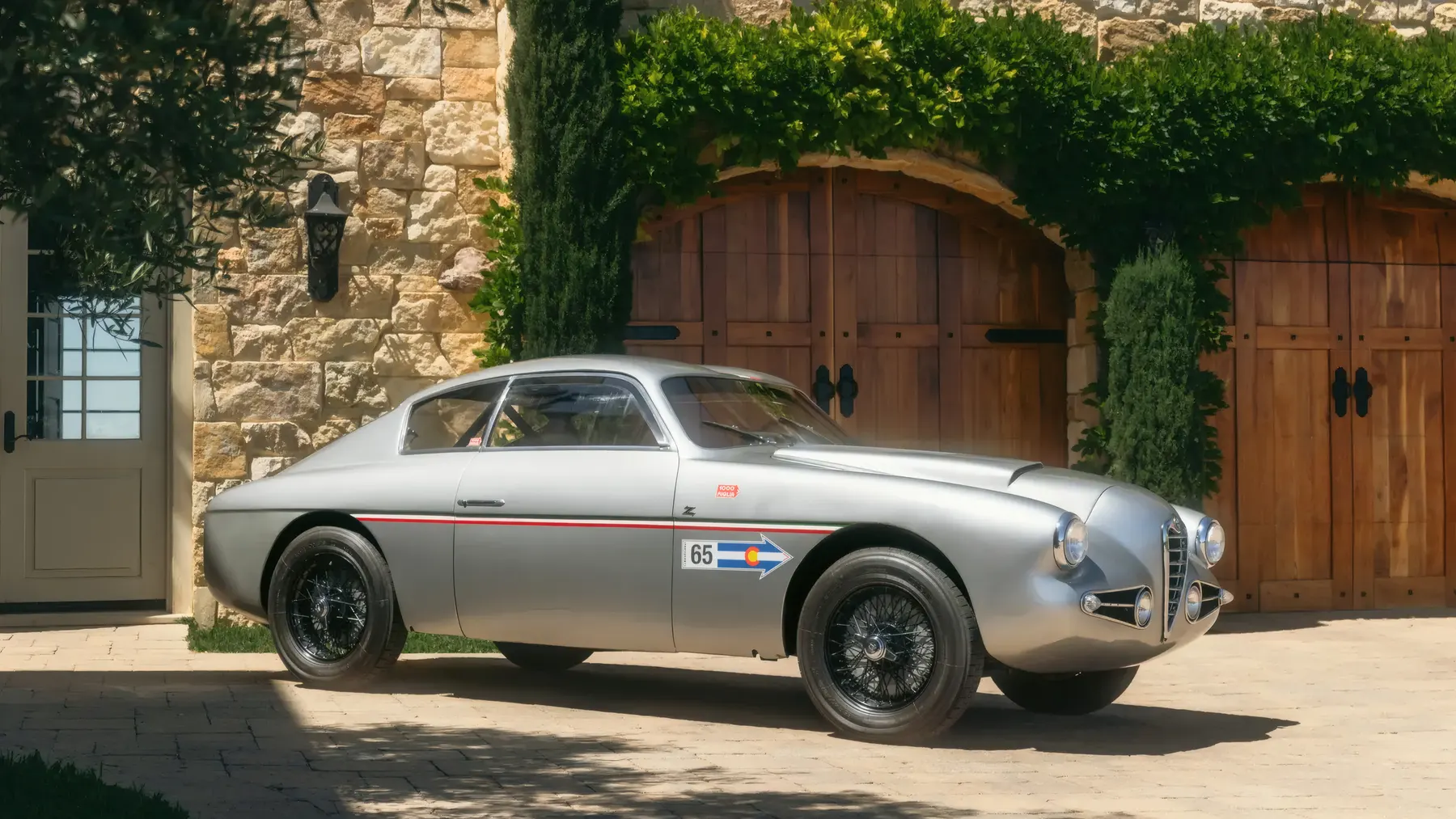
1955 Alfa Romeo 1900C SS Berlinetta by Zagato




Images: Mo Satarzadeh / RM Sotheby's
The 1950 Paris Motor Show presented Alfa Romeo with a particular kind of vulnerability. Here was the company whose pre-war Grand Prix machines had dominated European circuit racing, whose twin-cam engines had been balanced by hand in the Portello workshops, now standing before the press to announce its first car built on an assembly line. The 1900, the company said, was the car that “wins races and carries the family.” It sounded like marketing. It turned out to be engineering policy.
Within four years, that production-line platform - shortened, lightened, and handed to Elio Zagato’s workshop in Milan - had produced the most aerodynamically purposeful Italian Grand Touring car of its generation. The 1900C SS Berlinetta by Zagato was not the most powerful machine competing on Italian roads in the mid-1950s, nor the most refined, nor even the most celebrated. But in its resolution of competing demands - speed, aerodynamics, driver protection, structural integrity - it was arguably the most coherent.
Understanding the car requires understanding the platform it came from. The Alfa Romeo 1900 was, for its time, genuinely progressive. The monocoque construction that replaced the pre-war separate-chassis philosophy reduced weight and improved torsional rigidity simultaneously, a combination that gave the standard berlina a dynamic character well beyond what its specification suggested on paper. The twin overhead camshaft engine - 1,884 cc, its cams driven by chain rather than the more complex gear tower arrangements of some competitors, with a bore and stroke of 82.55 mm and 88 mm respectively - produced around 80 bhp in standard form, rising to approximately 90 bhp in the TI specification. The near-square dimensions allowed it to rev freely without the midrange lethargy that afflicted longer-stroke units of similar displacement, and it possessed a crispness that felt categorically different from the pushrod four-cylinders then common across most of Europe.
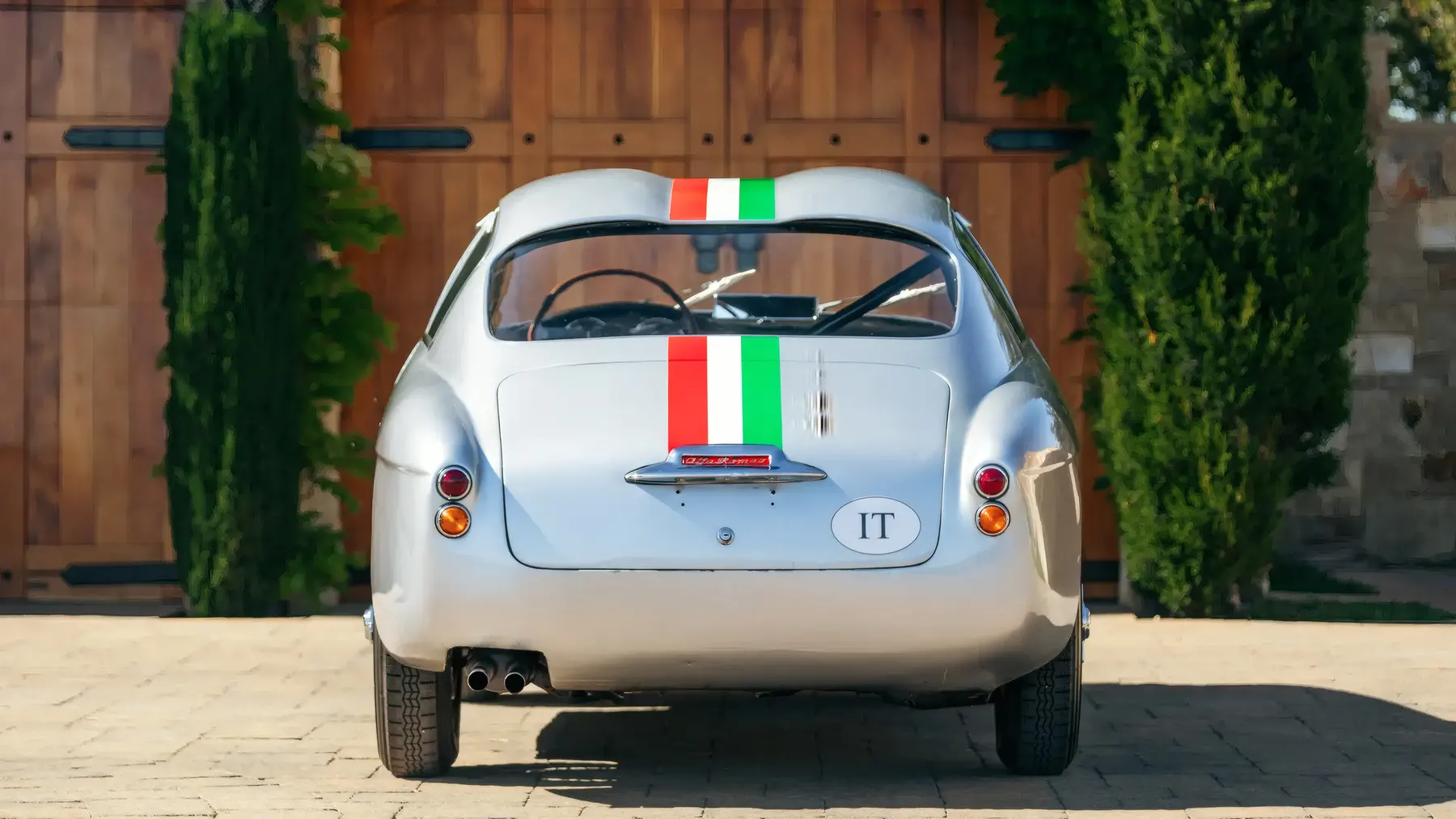
The 1900C - the C standing for Corta, meaning short - used a modified platform with a wheelbase reduced from the berlina’s 2,635 mm to approximately 2,420 mm. Alfa made this chassis available to Italy’s coachbuilding houses with a clear understanding of purpose: these were to be sporting machines, built for spirited road use and, with the right preparation and the right driver, genuine competition. Several carrozzerie took up the invitation. Touring, working with their patented Superleggera construction - ultra-fine steel tubes over which aluminum panels were stretched to form a semi-stressed skin - built a graceful Sprint coupe that became the most commercially successful variant. Pininfarina produced their own cabriolet interpretation. But it was the 1900C SS specification, fitted with dual Weber carburetors, raised compression, and various ancillary modifications that lifted output to approximately 100 bhp, that unlocked the platform’s full competition potential. And it was Zagato’s berlinetta that pursued that potential with the least compromise.
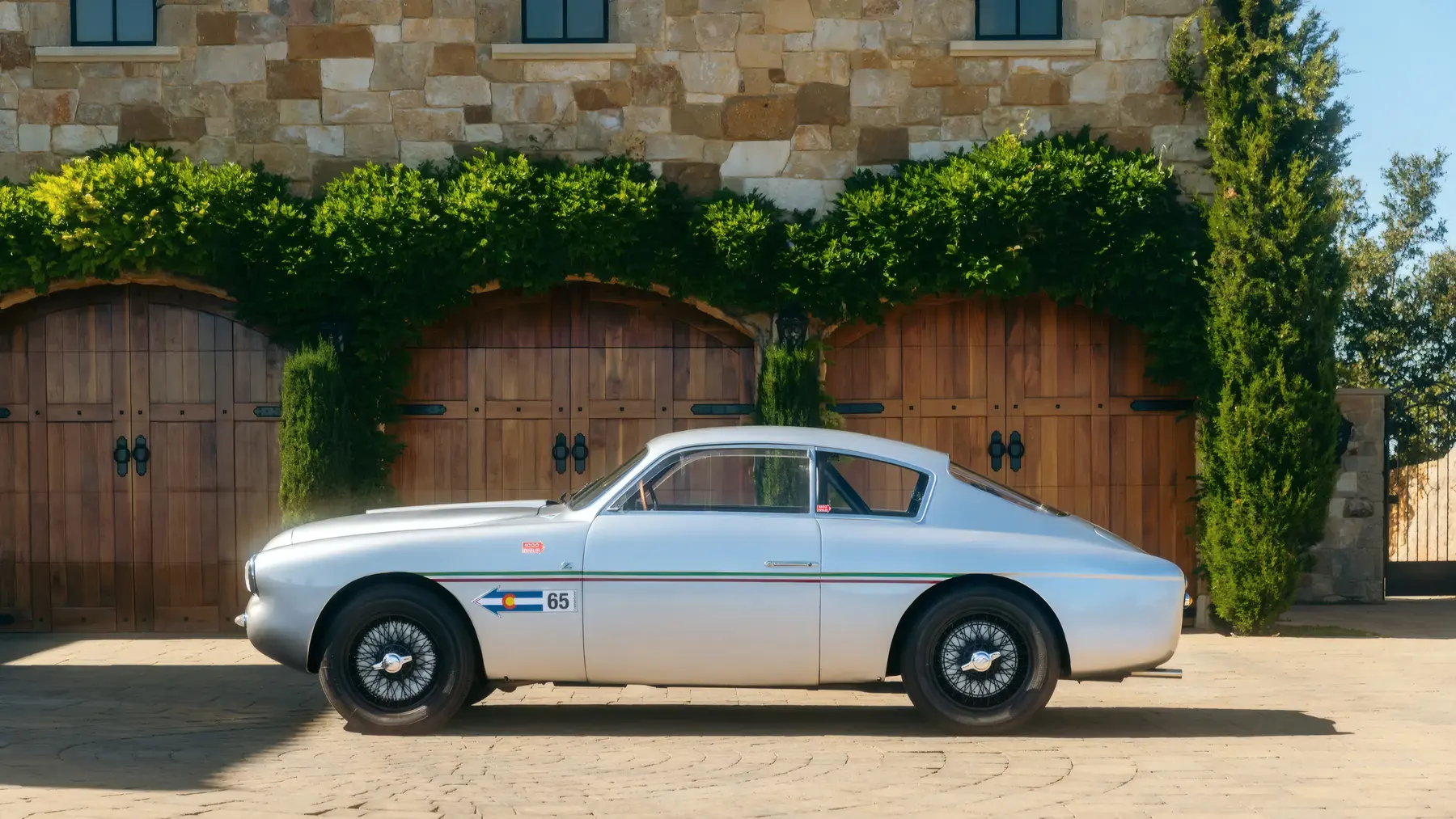
Zagato brought a different philosophy to the short-chassis Alfa than Touring or Pininfarina. Where Touring’s Sprint prioritized elegance with performance, and Pininfarina’s offerings leaned toward the grand touring market, Zagato’s berlinetta was conceived as a competition machine first and licensed for the road second. The house’s accumulated history in motorsport - bodies built for various privateer special-builders through the late 1940s and early 1950s - had given Elio Zagato and his craftsmen a particular sensitivity to what happened to a car body when air moved over it at speed. The berlinetta form they developed for the 1900C SS addressed this with unusual directness.
The body was low, purposeful, and visually austere compared to the flowering chrome and voluptuous curves of contemporary Italian road cars. The windscreen rake was aggressive for the period, the tail tapered cleanly, and the roofline bore two subtle longitudinal humps pressed into the aluminum roof panel. This was Zagato’s doppia gobba - the double bubble - and its presence on the 1900C SS berlinetta marked the first time it appeared on a production-intended coachbuilt body as a fully realised design strategy rather than an expedient compromise for a single car. The function was specific: to permit the lowest possible roofline without reducing cabin headroom below the minimum required for helmeted racing drivers. By locating each blister directly over the driver’s and co-driver’s positions, Zagato’s panel-beaters could crown the roof significantly lower than a flat or conventional single-arc profile would allow, reducing frontal area and improving airflow over the tail. The drag reduction was modest in absolute terms by any modern computational standard, but over the approximately 1,600 km of the Mille Miglia - where small differentials in aerodynamic resistance compound across many hours - it mattered. At top speed, which approached 120 mph in well-prepared examples, the difference between a disciplined aerodynamic form and a more casual one was measurable. The double bubble was not an aesthetic signature applied for recognisability; it was recognition that form could follow function even in hand-formed aluminum.
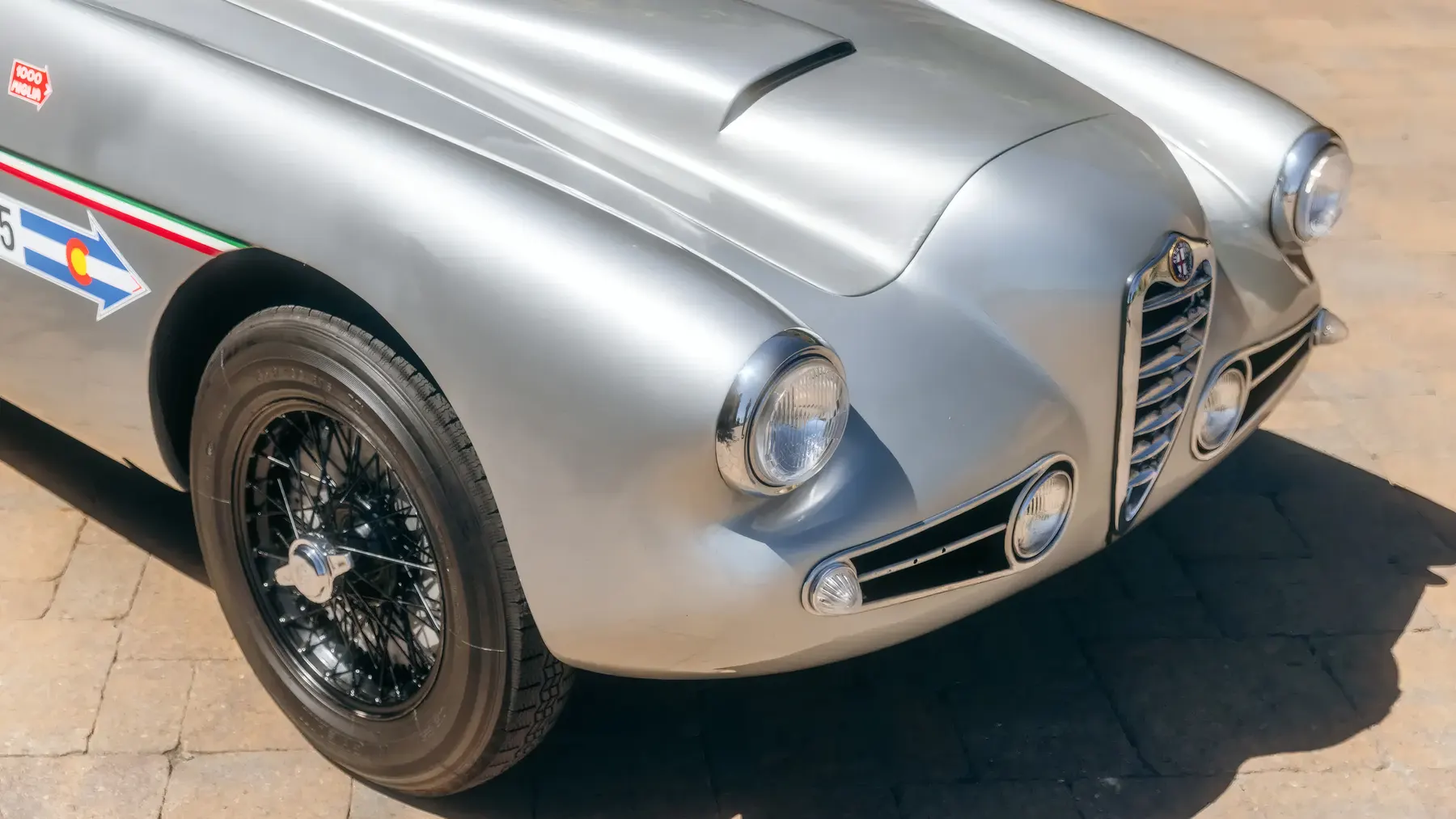
The cars built on this recipe found their natural habitat in Italy’s great long-distance road races. The Mille Miglia, which ran as an open-road event until 1957, was ideally suited to what the 1900C SS Zagato offered: a reliable, aerodynamically efficient, mechanically sophisticated Gran Turismo capable of maintaining high average speeds over varied terrain without demanding the constant mechanical sympathy that raw sports-racing machinery required. The twin-cam engine’s willingness to rev freely, combined with the close-ratio gearbox’s ability to keep the engine working in its productive range through corners, made the car considerably easier to manage over competition distances than its outright power figures suggested. Privateer entries using the Zagato berlinetta competed in class across the Mille Miglia and Targa Florio through the mid-1950s, their results reflecting honest capability rather than any particularly deep works support.
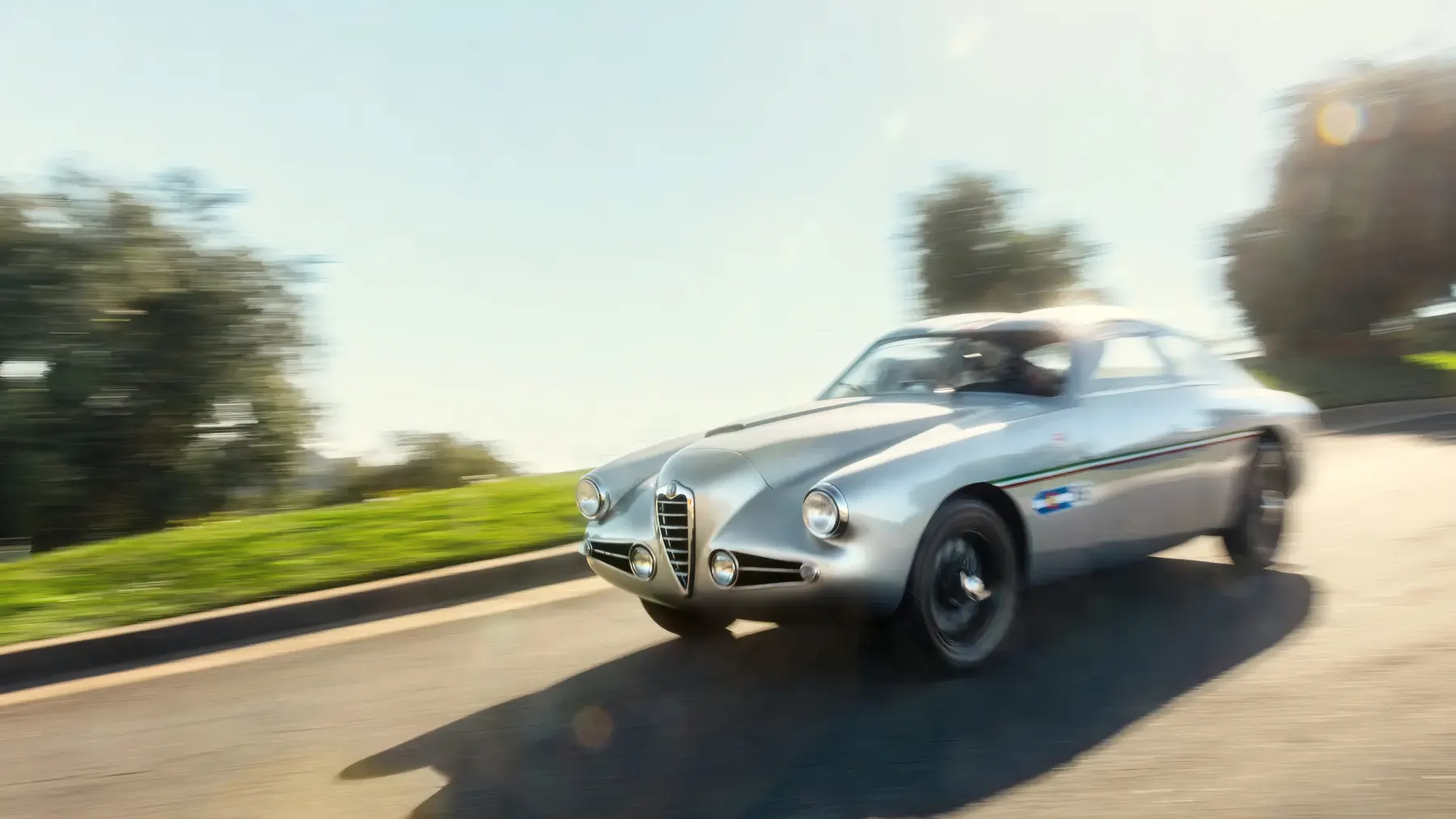
It would be misleading, however, to present the 1900C SS Berlinetta as a car without fundamental limitations, and understanding them is essential to understanding what the car actually was rather than what its striking appearance implies. The most significant constraint was inherent to its origins. The production monocoque platform, however progressive for a family berlina, was not conceived around minimising mass for competition purposes. The 1900C, even shortened and stripped and re-bodied in aluminum, carried structural weight that purpose-designed sports-racing cars of the period - a contemporary Lotus, or the lightest Osca and Stanguellini specials - simply did not. Against GT class rivals of similar displacement and comparable coachbuilt bodies, the 1900C Zagato was genuinely competitive. Against purpose-built competition machinery in outright performance, it was always fighting the physics of its origins. The distinction mattered in period and still matters to any fair assessment: this was an extremely well-executed GT competitor, not a racing car that happened to wear road-legal bodywork. Conflating the two has always been unfair to both categories.
The cockpit reinforced this truth. The berlinetta body, with its low roofline and closely coupled two-seat cabin, was not merely intimate by 1950s standards - it was functionally tight. Entry and exit required commitment, and once inside, the available space was clearly rationed in favour of aerodynamic priorities over occupant comfort. For a competition driver accustomed to the spartan accommodations of period racing machinery, this was unremarkable. For the owner who wished to use the car on the road between events - which the 1900C SS Zagato was certainly capable of, with its road registration and ostensibly touring specification - the experience was more demanding and, on longer distances, genuinely fatiguing. The dual-purpose rhetoric of the 1900 project extended to Zagato’s interpretation only in the technical sense that the car was road-legal. It was not, in any honest reading, a touring car.
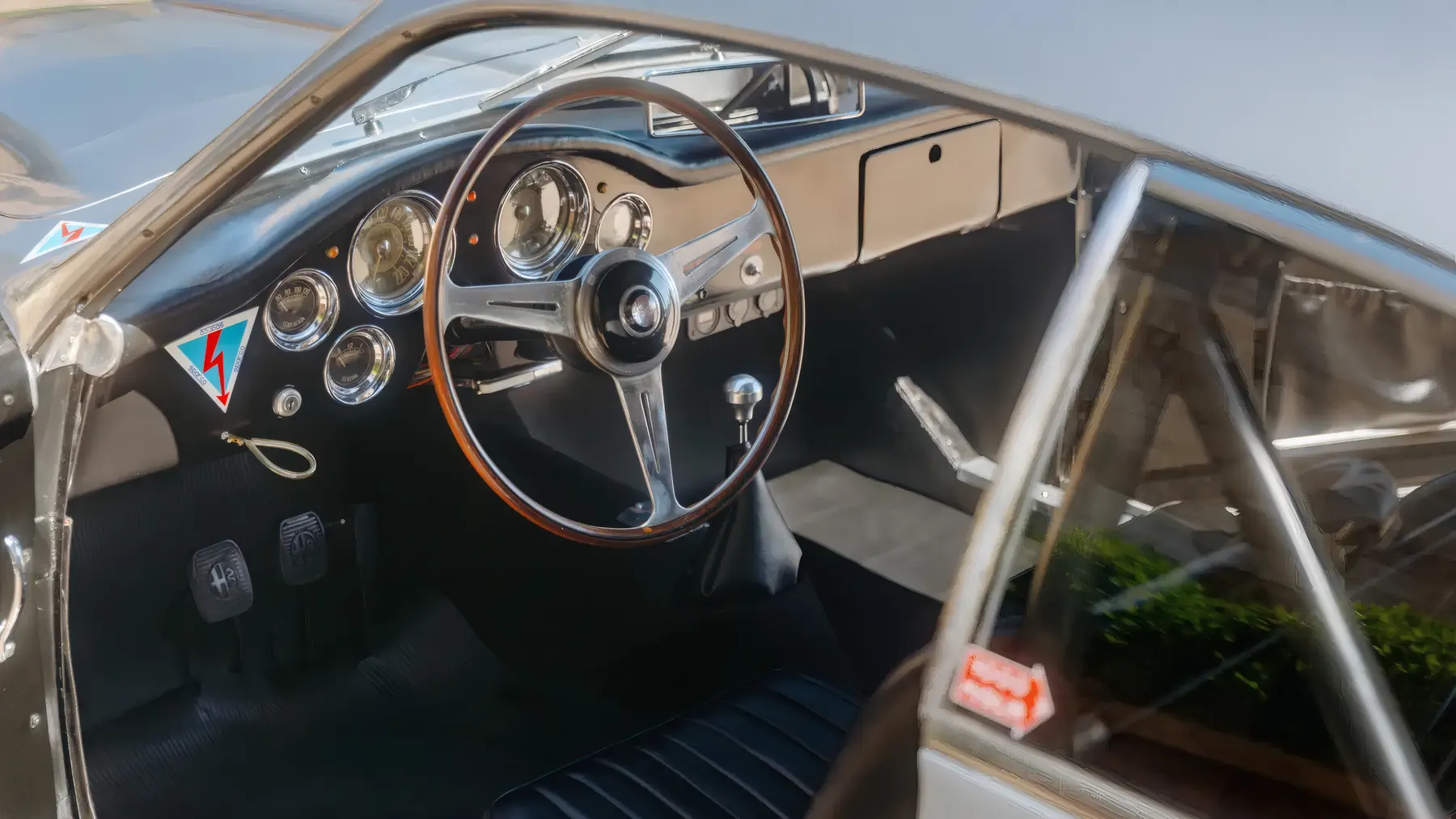
The twin-cam engine also imposed its own discipline on those who pushed it hard. In standard 1900 road tune, the unit was reliable and long-lived. At CSS specification with the Weber carburetors and raised compression, the tolerances narrowed. Competition use - particularly the sustained high-revving required on the Mille Miglia’s long straight sections - demanded careful attention to oiling, cooling, and chain tension. Well-maintained and properly driven cars covered the distance without crisis; those that were not suffered the consequences. The engine’s sophistication, which gave it such a competitive advantage over pushrod contemporary units, came with maintenance obligations that not every privateer entrant was equipped to meet consistently.
The total number of 1900C SS berlinettas Zagato completed is not definitively established in any single authoritative source, but all credible estimates place it in the low dozens - consistent with the hand-built, commission-by-commission nature of Italian coachbuilding practice in the period. Each car was constructed individually, with small variations in body detail, interior trim, and specification between examples depending on the customer’s intended use. The designation “1900C SS Berlinetta by Zagato” therefore encompasses a closely related family of machines rather than a homogeneous production run. This individuality is part of the cars’ contemporary appeal and part of the reason precise attribution and specification require careful primary research.
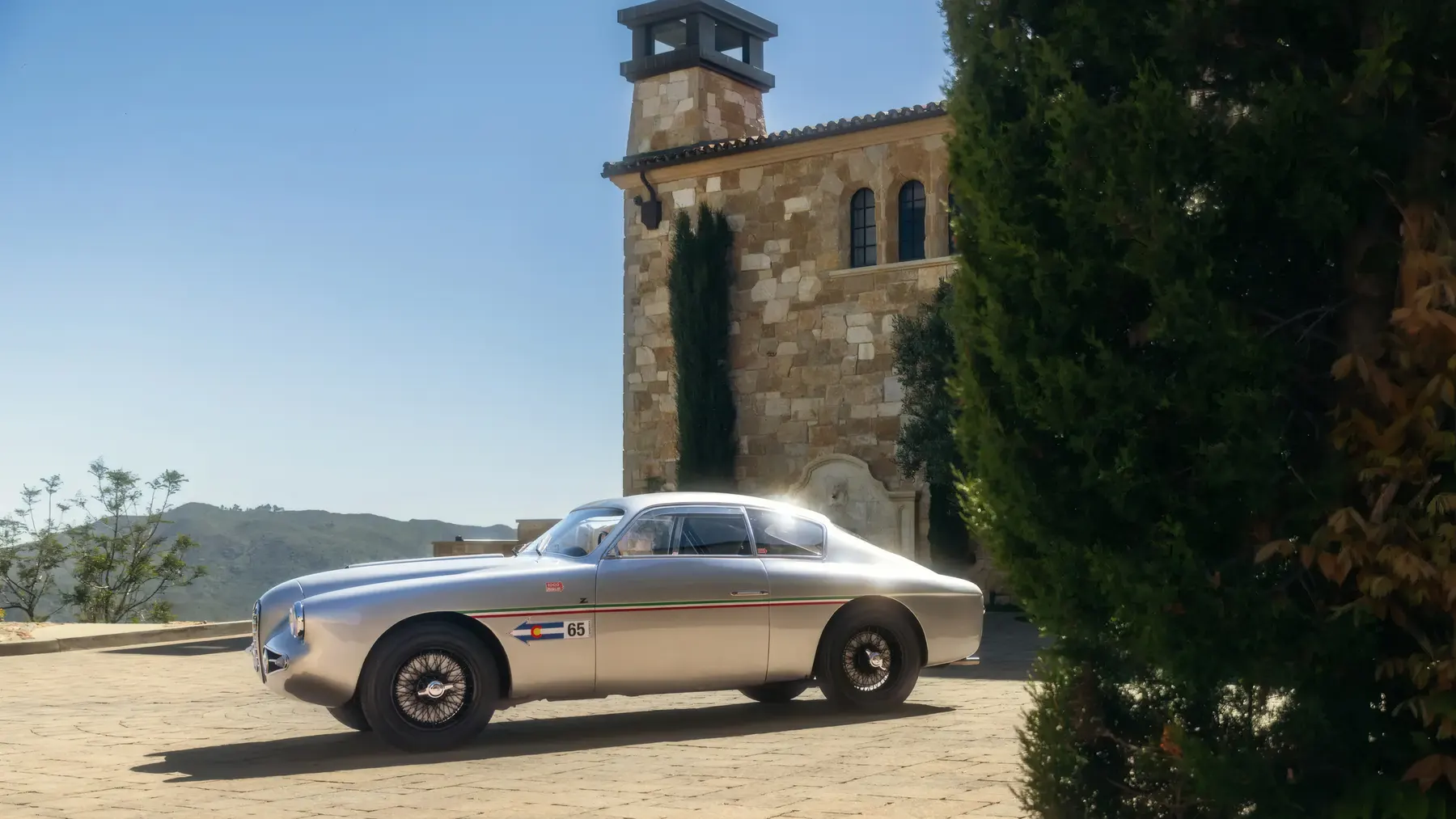
The 1900 platform was eventually superseded - first by the 1900 Super and later replaced in Alfa’s line by the Giulietta’s more sophisticated architecture. But the 1900C SS Berlinetta outlasted the platform in significance. It demonstrated, at a specific moment in Italian automotive history, what was possible when Alfa’s industrial decision to build around a production monocoque was engaged by a coachbuilder who understood competition aerodynamics as a discipline in its own right. The double bubble went on to appear on a string of subsequent Zagato commissions - Giulietta SZ, 2000 Sportiva, Aston Martin DB4 GT Zagato - each time confirming what the 1900C SS berlinetta had established first: that the device was not a quirk but a solution, and that at Zagato, at least in those years, solutions tended to be beautiful.
Join the discussion
Comments
Loading comments…
Leave a comment
Share a detail, memory, or perspective. Every comment is reviewed before publication.