Porsche 550 Spyder: How Wendler Built Porsche's First Racer
1955 Porsche 550 Spyder by Wendler




Images: Andrew Miterko / RM Sotheby's
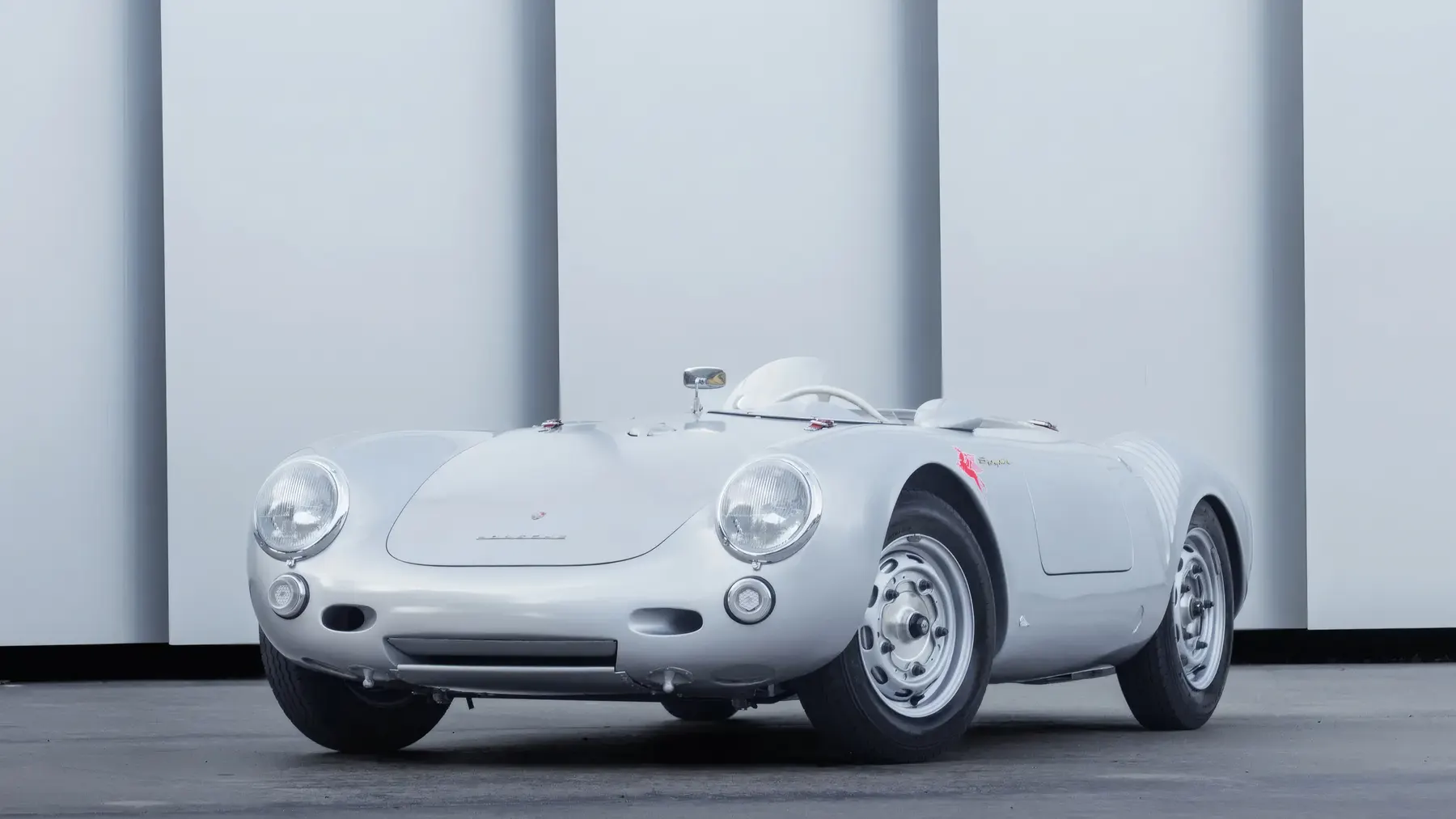
Porsche did not build the body of its own first purpose-designed racing car. That job went to Wendler, a Reutlingen coachworks that had spent the previous century making horse-drawn carriages and had only turned its attention to automobile bodywork between the wars. When Porsche needed someone to hand-beat aluminium panels over a competition chassis in 1953, its own production line at Zuffenhausen was still tooling up for the 356 road car, and the obvious in-house body supplier, Reutter, was fully committed to that programme. So the assignment went outside, to a firm whose most recent work had included ponton-style saloon conversions and the odd Volkswagen cabriolet. What emerged from that unlikely pairing, the Porsche 550 Spyder, became the car that taught the world Porsche could build a genuine competition machine, and very nearly all of them, from the first customer example to the last 550A, wore a body built by hands that had never touched a racing car before this contract.
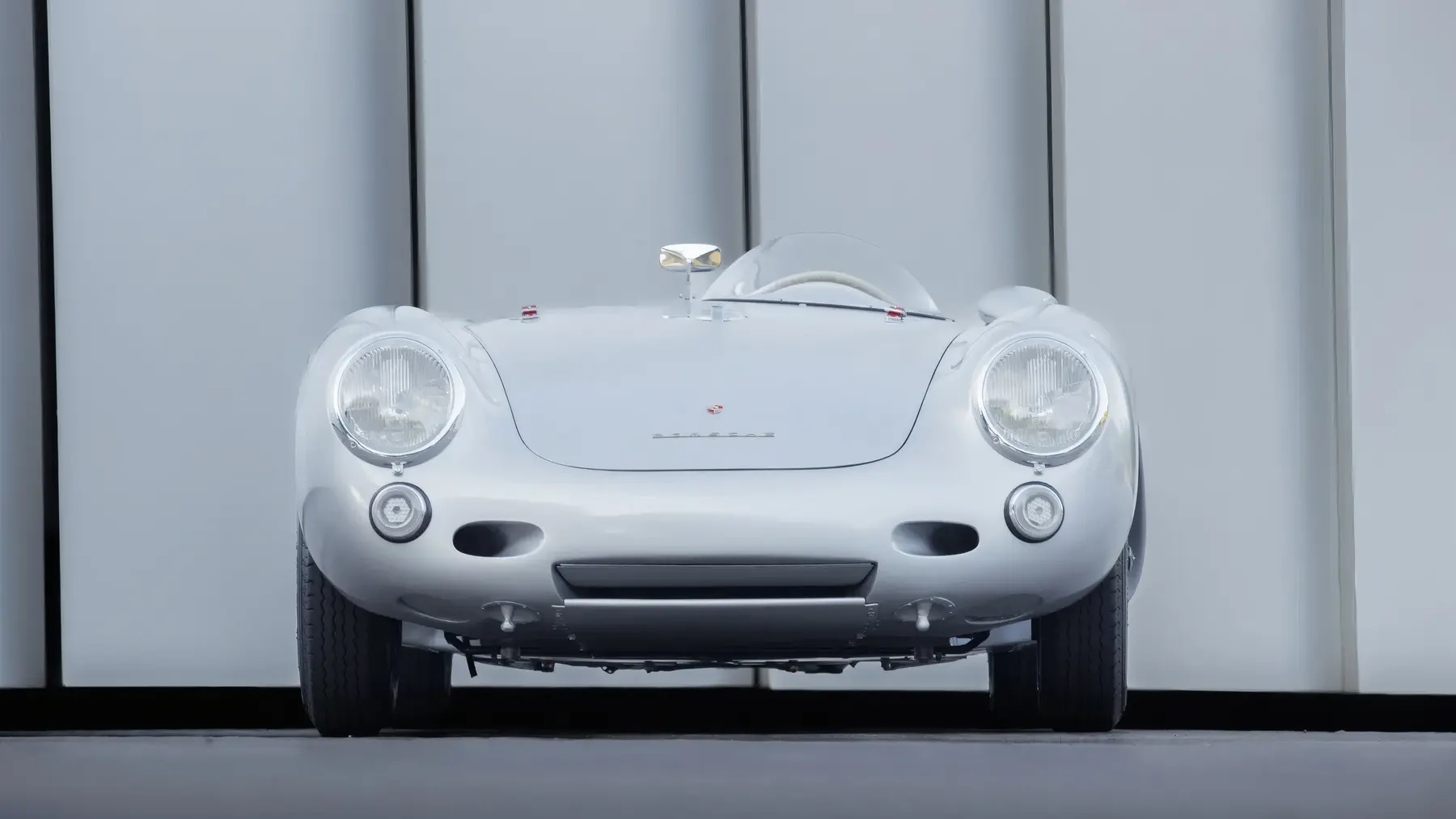
The car’s engineering roots lay in the specials that privateer Walter Glöckler had been racing since the late 1940s, lightweight tube-framed sports racers powered by Porsche’s own four-cylinder engines. Porsche’s engineering department, under chief engineer Karl Rabe, formalised that idea into the Type 550 during 1952 and 1953: a simple ladder-type tubular steel chassis carrying a mid-mounted engine ahead of the rear axle, with a suspension borrowed in principle from the Volkswagen-derived 356, trailing arms and transverse torsion bars up front, swing axles and torsion bars at the rear. The first prototypes appeared at the Nürburgring in May 1953, and a further batch, developed with coachbuilder Weinsberg, followed in time for that year’s Carrera Panamericana in Mexico. Wendler’s chance came almost by accident: assigned to build a single demonstrator car in a bid to win the production contract, the Reutlingen firm impressed Porsche enough that it was handed responsibility for essentially all subsequent bodywork, refining Erwin Komenda’s original styling with lower fenders and the slanted headlights borrowed from the contemporary 356.
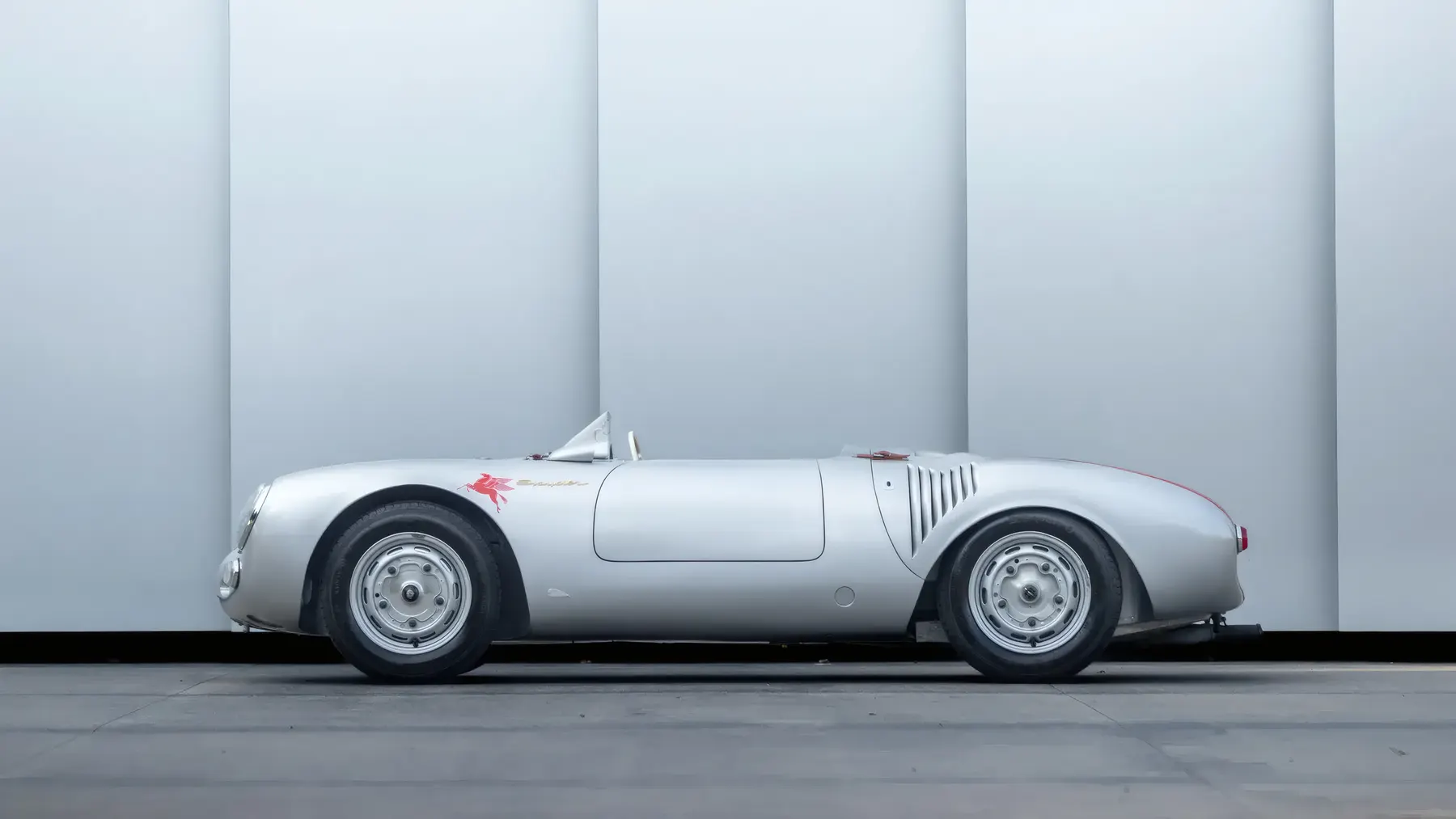
Wendler’s contract for the definitive production Spyder covered around 69 cars, roughly a third of them destined for the United States through importer Max Hoffman, and Porsche’s own build records show the process evolving in real time: numbering conventions between frame and body were corrected partway through the run, and reinforcement was added to the front chassis structure once Porsche’s engineers realised that bigger front brakes fitted from 1955 were putting new stresses on a design that had not been engineered for them. None of this diminishes what a remarkable achievement the 550 represented for such a small coachbuilder; each car remained subtly different from its neighbours, hand-formed rather than pressed from a die, with Wendler’s own emblem among the few adornments on an otherwise unfussy shape.
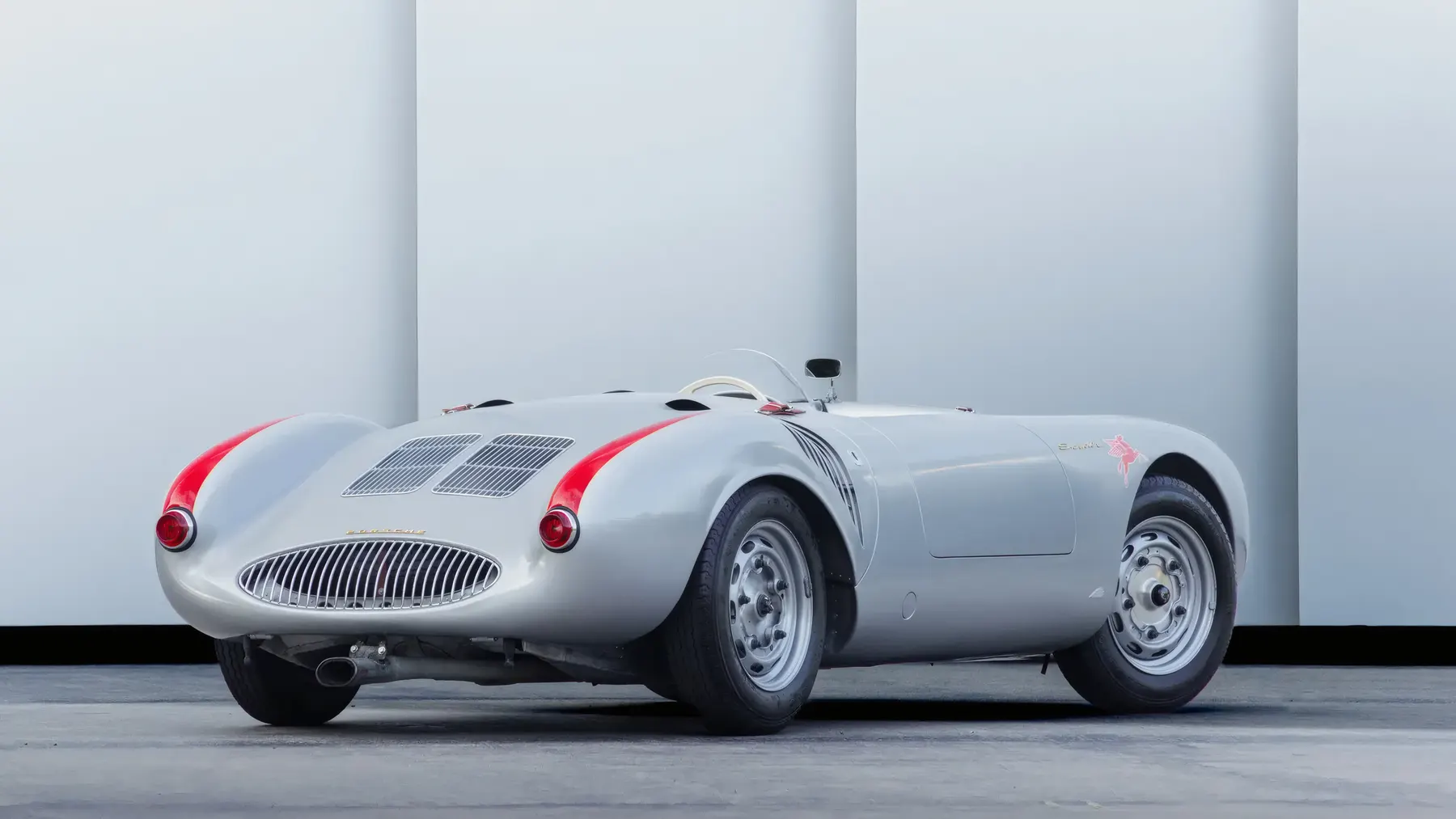
Underneath the delicate bodywork sat the car’s real party piece: Ernst Fuhrmann’s Type 547 engine, a 1.5-litre air-cooled flat-four with double overhead camshafts on each bank, driven through a vertical shaft nicknamed the Königswelle, or “king’s shaft.” It was not ready in time for the 550’s earliest outings; the first prototypes actually raced with a simpler pushrod unit borrowed from the 356 1500 Super, producing around 80bhp. Once installed, the four-cam transformed the car’s performance, with a dry-sump, twin-plug design that produced around 110bhp (peak power is recorded variously as arriving at 6,200rpm and 7,000rpm depending on the source) from just 1,498cc, roughly half as much again as the contemporary pushrod 356 engine of the same capacity. The engine’s complexity was extraordinary for its era: period accounts describe a skilled mechanic needing around 120 hours to assemble one from scratch, with valve timing alone sometimes taking the better part of a working day to set correctly. Porsche’s success with the Type 547 at the 1954 Carrera Panamericana was significant enough that the company adopted “Carrera” as a model name for years afterward, and the same basic engine, in various states of tune, went on to power the 356 Carrera road car, the 550A and 718 RSK racers, and eventually the 904.
Not every 550 was a spyder in the strict sense. Porsche’s works team fielded a handful of enclosed coupé versions, nicknamed “Buckelwagen,” or hunchback, for their humped rooflines, for endurance events like Le Mans, where a lower-drag body could pay dividends on the long straights, and some examples were built or modified to run smaller 1.1-litre engines to contest that class rather than the 1.5-litre category the road-going Spyder normally raced in. The factory’s own naming was similarly fluid: cars were catalogued internally as the 550/1500 RS, with “RS” standing for rennsport, racing. It was only once Hoffman began marketing the later car more heavily in the United States that the simpler “Spyder” name he had already popularised stuck to the whole line, applied retroactively by enthusiasts and dealers alike to cars the factory itself had labelled differently.
By late 1956 Porsche had reworked the car into the 550A, addressing the flex in the original tubular ladder frame with a considerably stiffer full spaceframe, paired with a five-speed transmission and a revised independent suspension. Wendler again supplied the aluminium bodywork, subtly reshaped with louvred access panels behind the doors and small nose ducts, and the results showed almost immediately: the 550A delivered Porsche’s first overall victory in a major international motor race, at the 1956 Targa Florio, where Umberto Maglioli drove the entire 720-kilometre Sicilian course alone, beating larger-engined works entries from Ferrari, Maserati, and Mercedes-Benz by close to fifteen minutes. Porsche built around 40 examples of the 550A before it gave way to the 718 RSK, meaning total production of both generations combined sits at roughly 130 chassis, a tiny number that, even allowing for the handful of works cars and prototypes built outside the standard customer contract, leaves Wendler responsible for the vast majority of every 550 or 550A body that left the factory.
Racing success came quickly and often. A 550 took a class win and third place overall at the 1954 Carrera Panamericana, beaten only by two larger Ferraris, and the model went on to win its class at Le Mans in several consecutive years through the 550A’s run, along with class and outright wins at Sebring, the Nürburgring, and numerous European hillclimbs. Porsche’s own museum archive recounts a favourite anecdote from the 1954 Mille Miglia, in which driver Hans Herrmann and his co-driver passed beneath a closing railway barrier in their low-slung Spyder unscathed, the kind of story that cemented the car’s “giant killer” reputation, built on a power-to-weight advantage that let it repeatedly embarrass far more powerful machinery over a full race distance. Just as importantly, the 550 was genuinely dual-purpose in a way few pure racers of the period managed: a private owner could drive one to a circuit, race it, and drive home again, which is precisely how many of Wendler’s customer cars were used by weekend privateers across Europe and North America.
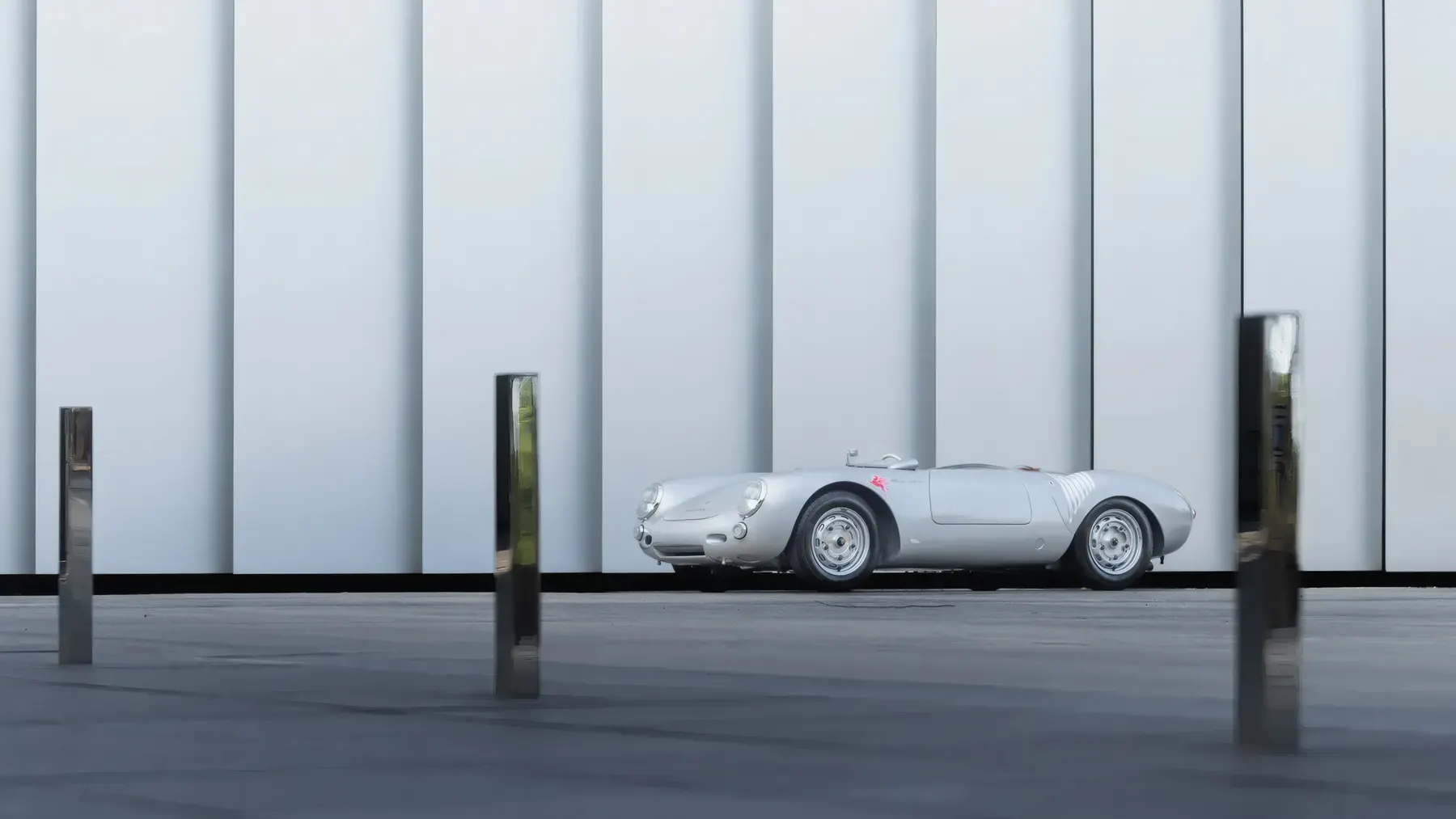
That accessibility also gave the 550 an unusually public afterlife. Actor James Dean bought one shortly before his death in a September 1955 road accident while driving to a race in California, and the resulting worldwide attention brought the Spyder a level of fame that had little to do with lap times or class trophies. It is a slightly uncomfortable irony that a car built to be raced hard by serious competition drivers became, for much of the wider public, known first as a symbol of celebrity tragedy, but it did little to dampen genuine enthusiasm for the model among the racers and collectors who actually understood what Wendler and Fuhrmann had built.
None of this came cheap. A new 550 listed at around DM 24,600 in Germany, or close to US$6,800 for American buyers by the mid-1950s, more than double the price of a contemporary 356 Speedster, itself hardly a budget car. That positioning meant the 550 was never intended as a volume product; it was sold in tiny numbers to serious amateur and semi-professional racers who valued its competitiveness over any pretence of everyday usability, which suited both Porsche’s limited production capacity and Wendler’s essentially artisanal build process.
For all its brilliance, the 550 Spyder asked real compromises of anyone who owned one, and it is worth being honest about them rather than treating every quirk as charm. The swing-axle rear suspension, inherited in principle from the Volkswagen-derived 356, produced pronounced camber change under hard cornering loads, a trait that rewarded skilled drivers and punished anyone who got it wrong, particularly once grip ran out on the narrow, low-section tyres typical of the period. The original tubular ladder frame flexed more than Porsche’s engineers were comfortable with once larger front brakes were introduced partway through production, requiring localised reinforcement before the company abandoned the design altogether in favour of the 550A’s stiffer spaceframe, a tacit admission that the first-generation chassis had reached the limit of what it could handle. The Type 547 engine’s genius came at a real cost in ownership terms too: its extraordinary assembly and set-up time made it expensive to build, difficult to service outside a handful of specialist workshops, and unforgiving of anything less than meticulous maintenance. And despite Wendler’s evident skill with aluminium, hand-building bodies in small batches inevitably produced detail inconsistencies between cars, differing fitment and numbering discrepancies visible in the factory’s own records, the reality of coachbuilt construction rather than any failure of craftsmanship, but a genuine limitation compared with the tighter tolerances a larger in-house body plant could have delivered. As a road car, meanwhile, the 550 offered almost nothing in the way of weather protection or comfort: a shallow, cramped cockpit, a windscreen barely worth the name on many examples, and drum brakes that, however well regarded in period road tests, could not match what disc brakes would soon bring to sports car racing.
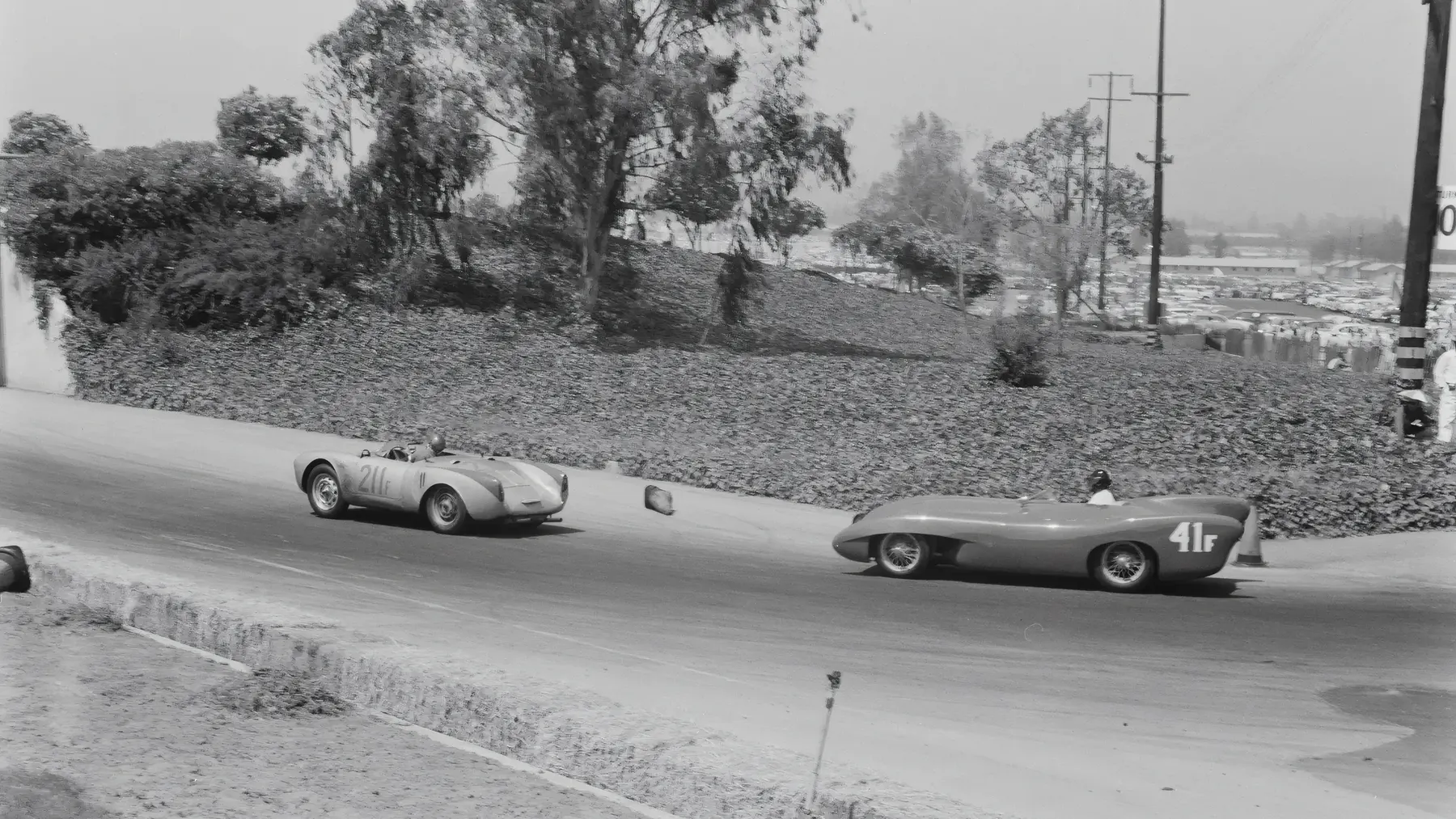
What made all of this worthwhile, in period and in retrospect, was how the 550 felt to drive well. Sitting low, with the engine mounted just ahead of the rear axle rather than fully behind it, the car had a genuine mid-engine balance that was still a novelty in 1953; most of its rivals were front-engined, heavier, and less agile through direction changes even when they carried far more power. Komenda’s body, refined through Wendler’s construction, wrapped that mechanical package in a shape almost devoid of ornament: smooth, low, and functional, distinguished mainly by the coachbuilder’s own badge and, in competition trim, by whatever coloured stripes a team painted on to identify its car among a grid of similarly silver Spyders. It was not a car designed to be beautiful for its own sake, yet the honesty of that design, every surface justified by aerodynamics or packaging rather than styling flourish, has aged into something genuinely admired by collectors today.
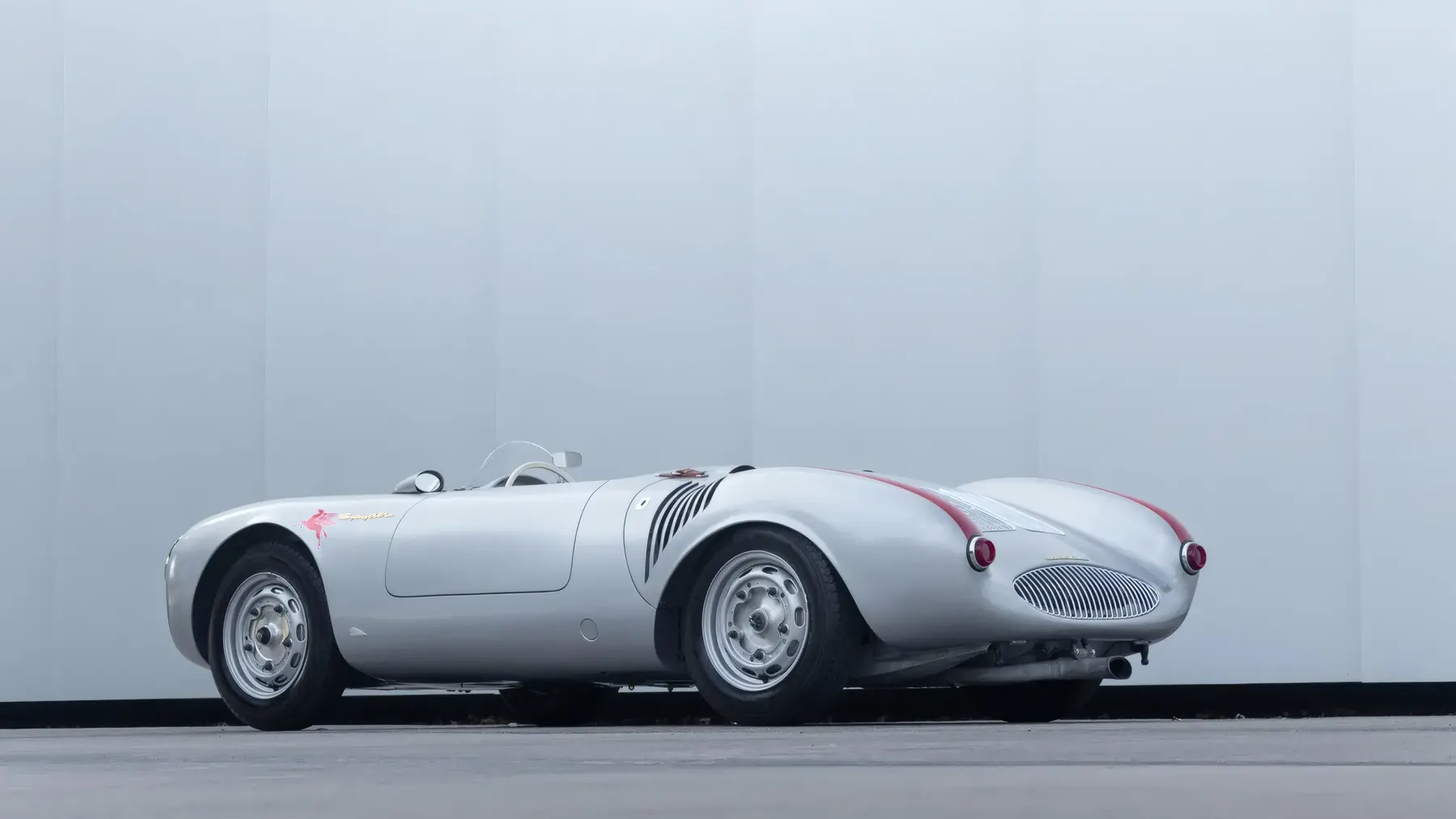
The 550 Spyder’s real legacy is less about any single race win than about what it proved Porsche could do without help from Zuffenhausen’s own body shop. A coachbuilder that had never built a racing car body before 1953 turned out to be exactly what a small, ambitious manufacturer needed: fast, flexible, and willing to iterate a design through nearly 130 individually hand-built cars across two generations. The four-cam engine Wendler’s aluminium panels wrapped around went on to define Porsche performance for a decade, and the partnership itself set a template, outside coachbuilders shaping some of Porsche’s most important early cars, that the company would return to again in the years that followed. Surviving 550s and 550As are scarce enough today that most enthusiasts will only ever see one at a concours or museum, but the car’s importance to Porsche’s identity as a racing manufacturer, rather than merely a maker of well-engineered road cars, is hard to overstate.
Technical data
Performance Specifications
| Specification | Detail |
|---|---|
| Engine | 1,498cc air-cooled flat-four, double overhead camshafts per bank (Type 547 “Fuhrmann”) |
| Power | approx. 110bhp (peak engine speed cited as 6,200–7,000rpm depending on source) |
| Torque | approx. 90 lb-ft (single-source estimate; treat with caution) |
| Transmission | 4-speed manual (550); 5-speed manual (550A) |
| Chassis | Tubular steel ladder frame (550); full tubular spaceframe (550A) |
| Suspension, front | Trailing arms, transverse torsion bars |
| Suspension, rear | Swing axles, torsion bars |
| Brakes | Hydraulic drums, all four wheels, 280mm |
| Kerb weight | approx. 590kg dry (customer-spec cars); factory figures range 590–685kg depending on measurement standard |
| Wheelbase | 2,100mm |
| Length | 3,600mm |
| Width | 1,550mm |
| Height | 1,015mm |
| Front/rear track | 1,290mm / 1,250mm |
| Ground clearance | approx. 150mm |
| Top speed | approx. 137mph |
| Production | approx. 90 Type 550 (1953–1956) plus approx. 40 Type 550A (1956–1957); roughly 130 chassis combined |
| Price new | approx. DM 24,600 (Germany); approx. US$6,800 (US, 1955) |
Sources
- Porsche Newsroom: Porsche 550 Spyder (Porsche Museum press kit)
- Porsche Newsroom: The super sportscars from Porsche
- Porsche Newsroom: “Königswelle”: Mechanical Masterpiece
- Porsche Newsroom: Viva México: Panamericana livery celebrates motorsport in Mexico
- Type550.com: Production
- Type550.com: 550 Specs
- Type550.com: Type 547 Engine
- Secret Classics: Mercedes-Benz 320 Cabriolet by Wendler
- Hagerty Valuation Tools: 1954 Porsche 550 Spyder
- Stuttcars: Porsche 550A RS Spyder (1956–1957)
- Conceptcarz: 1954 Porsche 550 RS Spyder
- Automotive Masterpieces: 1956 Porsche Spyder Typ 550/1500 RS
- Der White’s 356 Literature: 356 Porsche Price Lists
- TorqTalk: Survivor ‘Container’ Porsche 550 Spyder
- Supercar Nostalgia: Porsche 550/1 Guide
Join the discussion
Comments
Loading comments…
Leave a comment
Share a detail, memory, or perspective. Every comment is reviewed before publication.