Fiat 600 Jolly by Ghia: The Doorless Fiat That Cost Twice as Much
1958 Fiat 600 Jolly by Ghia




Images: Gerard Brown / RM Sotheby's
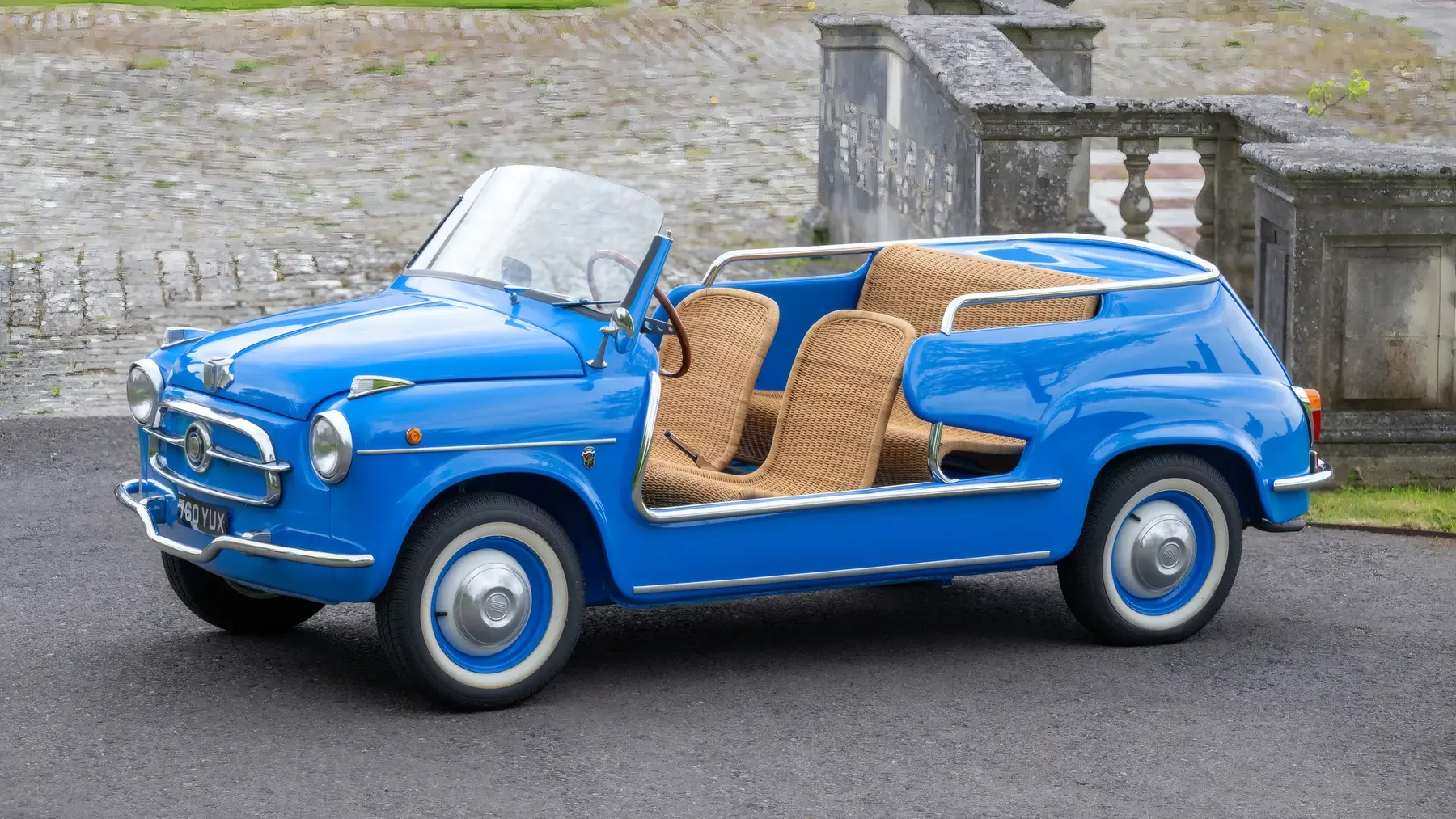
Dante Giacosa’s Fiat 600 was built on a thoroughly sensible premise: put four people and their shopping into the smallest, lightest, cheapest car that could still keep up with traffic, and make it simple enough to build in vast numbers. Carrozzeria Ghia’s answer was to take that car, remove the roof, the doors and most of the glass, bolt in wicker seats and sell the result for roughly twice the price. The Fiat 600 Jolly by Ghia is among the most cheerfully perverse things ever done to a mass-market Fiat, and the fact that it worked says as much about the 600’s underlying good manners as it does about the tastes of the Mediterranean yacht set.
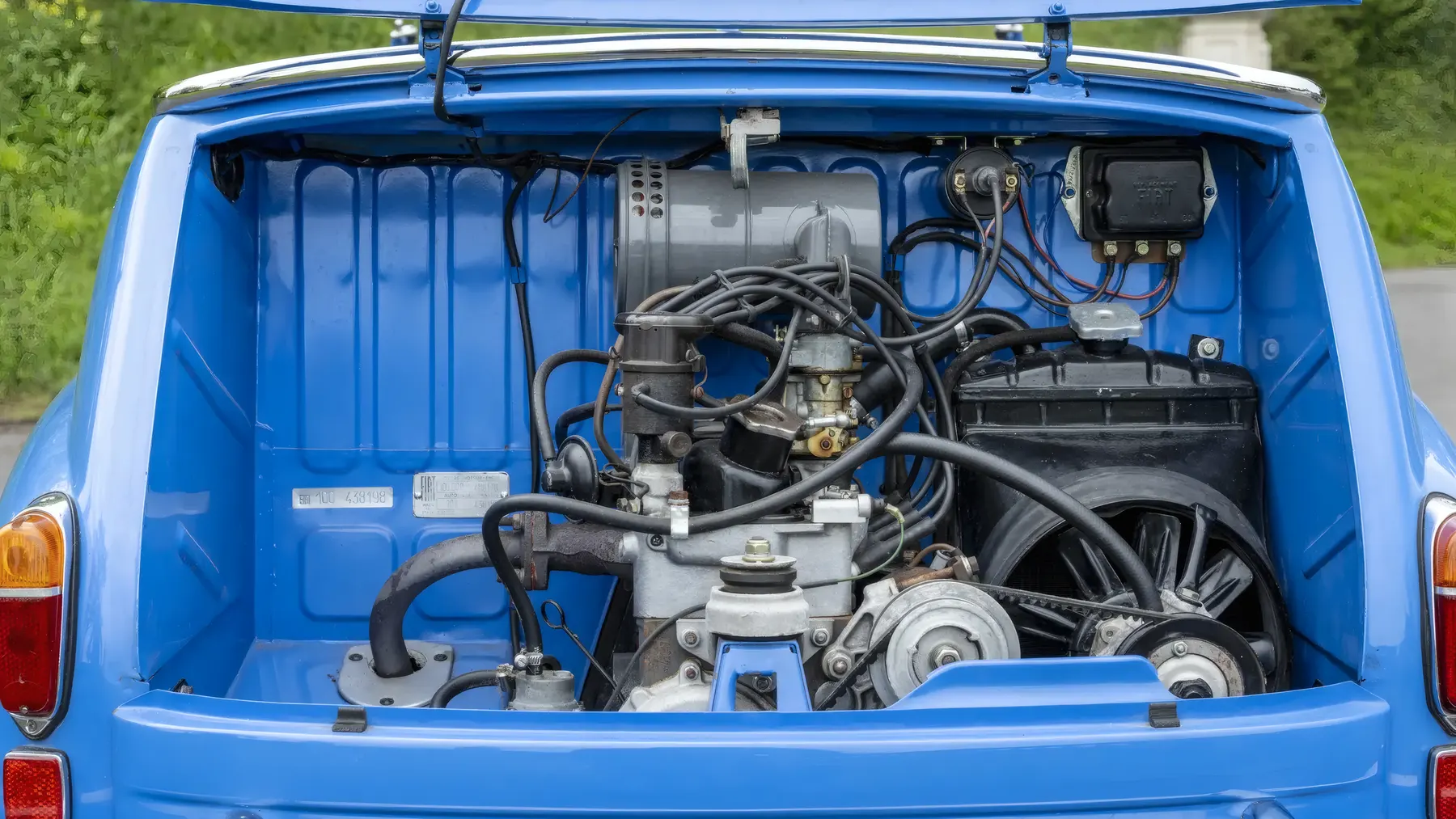
The donor car debuted at the Geneva Salon in March 1955. Developed as Progetto 100 and known formally as the Tipo 100, it was the first Fiat to combine a unitary body with a rear-mounted engine, and it placed a water-cooled, overhead-valve 633cc four-cylinder behind the rear axle, driving through a four-speed gearbox that left first gear unsynchronised. Suspension was independent all round, with a transverse leaf spring at the front and coil springs with radius arms at the rear, and the brakes were drums at all four corners. The wheelbase was 2,000mm, and sources put the kerb weight somewhere between 585 and 610 kg. The brief had reportedly called for something nearer 450 kg that could cruise at around 53 mph, a target the production car overshot on weight but not on appeal. Classic & Sports Car’s A-to-Z guide calls the standard 600 noisy and rust-prone, yet the same magazine argues it always handled better than its reputation implied, and the buying public agreed: depending on the source, the 600 family totalled somewhere between roughly 2.5 and 2.7 million cars.
The Jolly’s own origin story is murkier than the legend suggests. The popular version has Gianni Agnelli demanding a land tender small enough to ride on the stern of his roughly 25-metre ketch, Agneta, and Ghia obliging. Richard Heseltine, writing for Classic & Sports Car, finds no evidence for it, and points out that beach cars were already floating around: a cut-down Belvedere in 1954, a Pinin Farina Multipla-based car for the Agnelli estate on the Côte d’Azur, and takes on the theme from Savio and Vignale. What Ghia’s chief, Luigi Segre, contributed was the realisation that a beach car could be a production item rather than a rich man’s one-off. His prototype appeared at the 1957 Turin Salon on the new Nuova 500, with Frua and Lombardi showing similar ideas, and a 600-based Jolly joined the line-up in 1958. For a firm that had spent the 1940s making pots, pans and roller blinds to survive, the orders were a remarkable reversal.
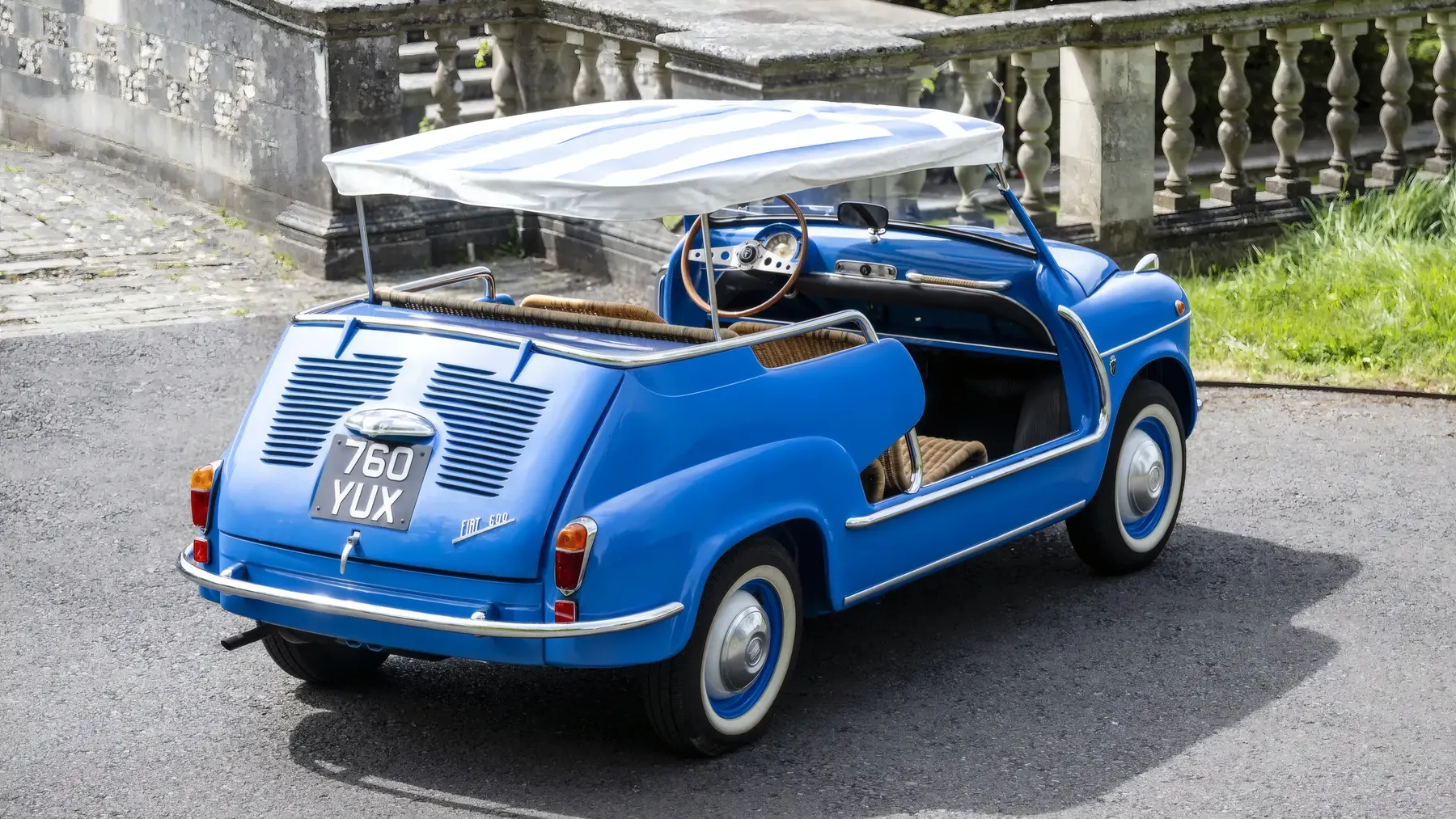
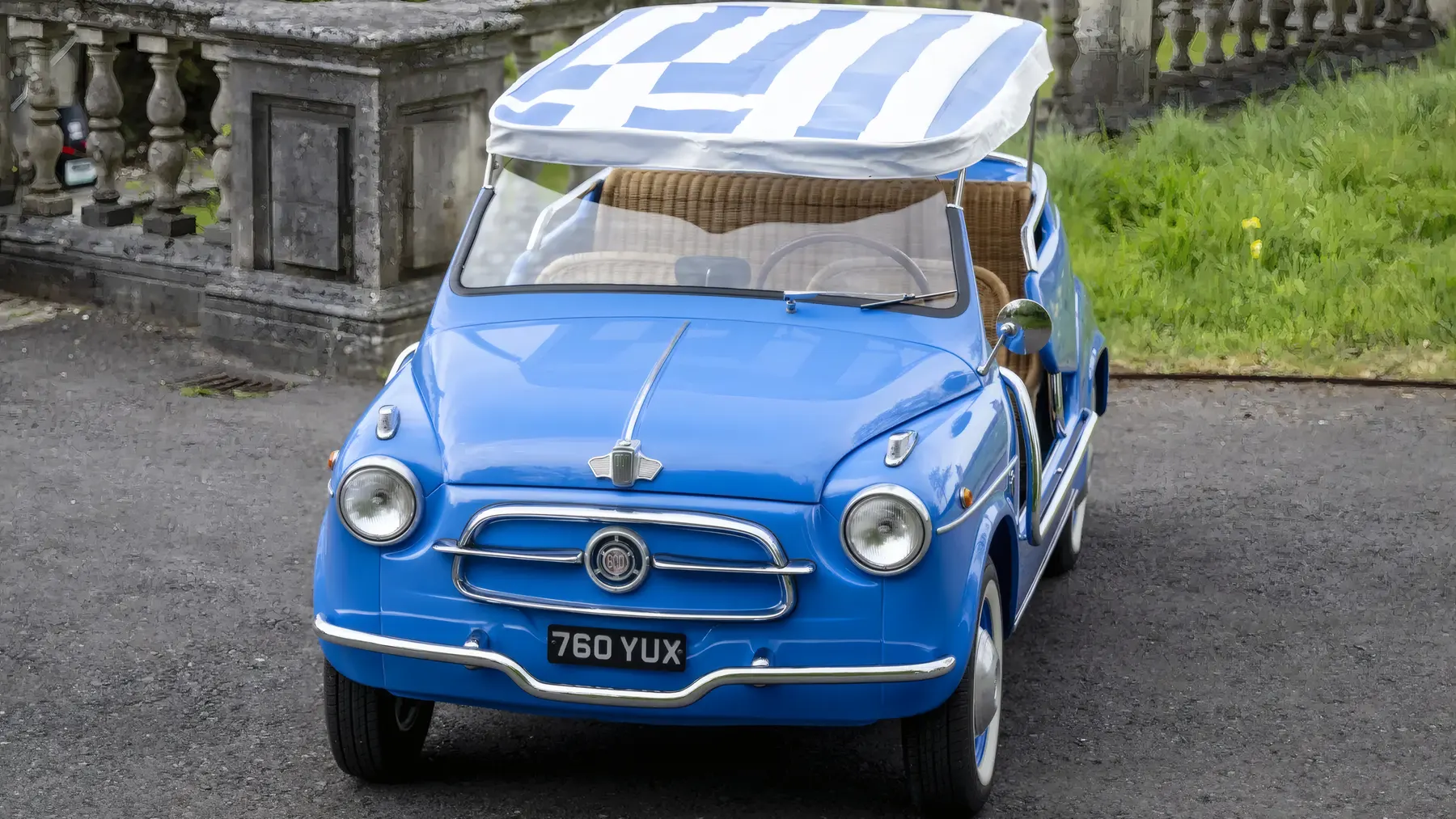
Taking the roof off a monocoque is never free, and Ghia’s craftsmen paid for it in steel. A latticework of tubing was added to stiffen the shell, step-over sills replaced the doors, the windscreen was cut down, and a chromed handrail ran around the cockpit in lieu of seat belts. In the manner of period coachbuilding, lead was used to smooth the joins, adding mass to a car with little to spare. Wicker seats and an optional fringed surrey top completed the look. Heseltine thinks the result reads as a car designed open from the outset rather than a chop, praising the sculpted flanks; the outline has been retrospectively attributed to Sergio Sartorelli. Ghia’s brochure for the “Jolly de Plage” pitched it as equally at home on the golf course or a hunting trip as at the quayside, and the firm hedged its bets with a Renault 4CV-based beach car for the American market and a three-wheeled Lambretta Jolly aimed at the Far East.
Most Jollys were built on the 500, and the four-cylinder 600-based cars sit above them as the quick ones, which is a relative term: Heseltine credits the 500 Jolly with 12 bhp. For the 633cc 600 Jolly, Classic & Sports Car quotes 22 bhp, while RM Sotheby’s catalogue texts variously quote 20 and 28.5 bhp. That spread may reflect different rating conventions, though none of the sources says so. From 1960 the 600D brought a 767cc engine with somewhere around 30 bhp, and on the standard car lifted the top speed from about 59 mph to about 68 mph. Nobody seems to have recorded what the Jolly’s extra tubing and lead cost in performance. How many were built is equally uncertain. Heseltine puts the general consensus for Jollys of all kinds, up to the end in 1966, at around 440, while RM Sotheby’s refers to 600 to 700 Ghia-built cars between 1958 and 1966, and a museum account claims Fiat sent some two hundred 600s to Ghia in 1958 alone, a figure that sits awkwardly alongside catalogue descriptions of the four-cylinder cars as a small minority. Treat every number as an estimate.
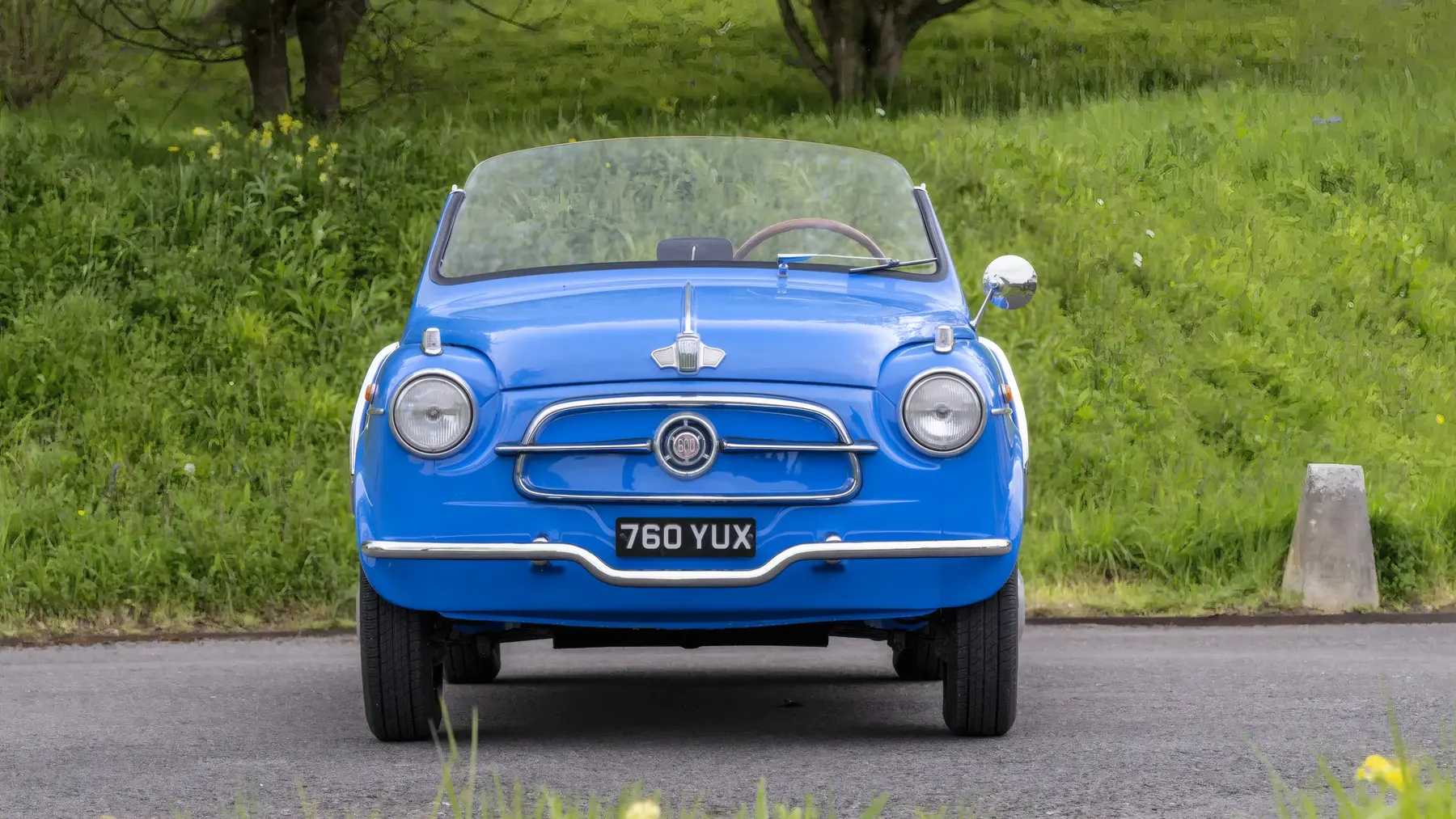
Behind the wheel it is every bit as silly as it looks, and better for it. You sit on the seat rather than in it, and the wicker is surprisingly comfortable when stationary. The cabin furniture amounts to a speedometer, which carries gear-change points, and token switchgear. The 633cc four sounds fizzy and eager, and 22 bhp is enough to romp away from a standstill, though the gearchange is rubbery. The surprise is the structure: given how little reinforcement Ghia added, you expect scuttle shake, yet Heseltine reported no discernible flex. The handling is the ordinary 600’s, which is to say rather good, but the Jolly asks you to slow for corners for a reason that has nothing to do with grip. There are no doors, no belts and nothing to stop you leaving. Its great side effect is attention. Park one anywhere and a crowd forms, and Heseltine could think of no other car that did this so reliably.
The money matters to the story. RM Sotheby’s puts the Jolly at about twice the price of a standard 600, and Classic & Sports Car says the 600 Jolly was offered in the United States at roughly the cost of a new Corvette. Customers reportedly included Aristotle Onassis, who allegedly owned three, and Lyndon Johnson, who used one on his Texas ranch, while a resort on California’s Catalina Island took 32 as taxis. That tells you what the car really was: not transport, but a status accessory for people who already owned the real car, the yacht and probably the villa.
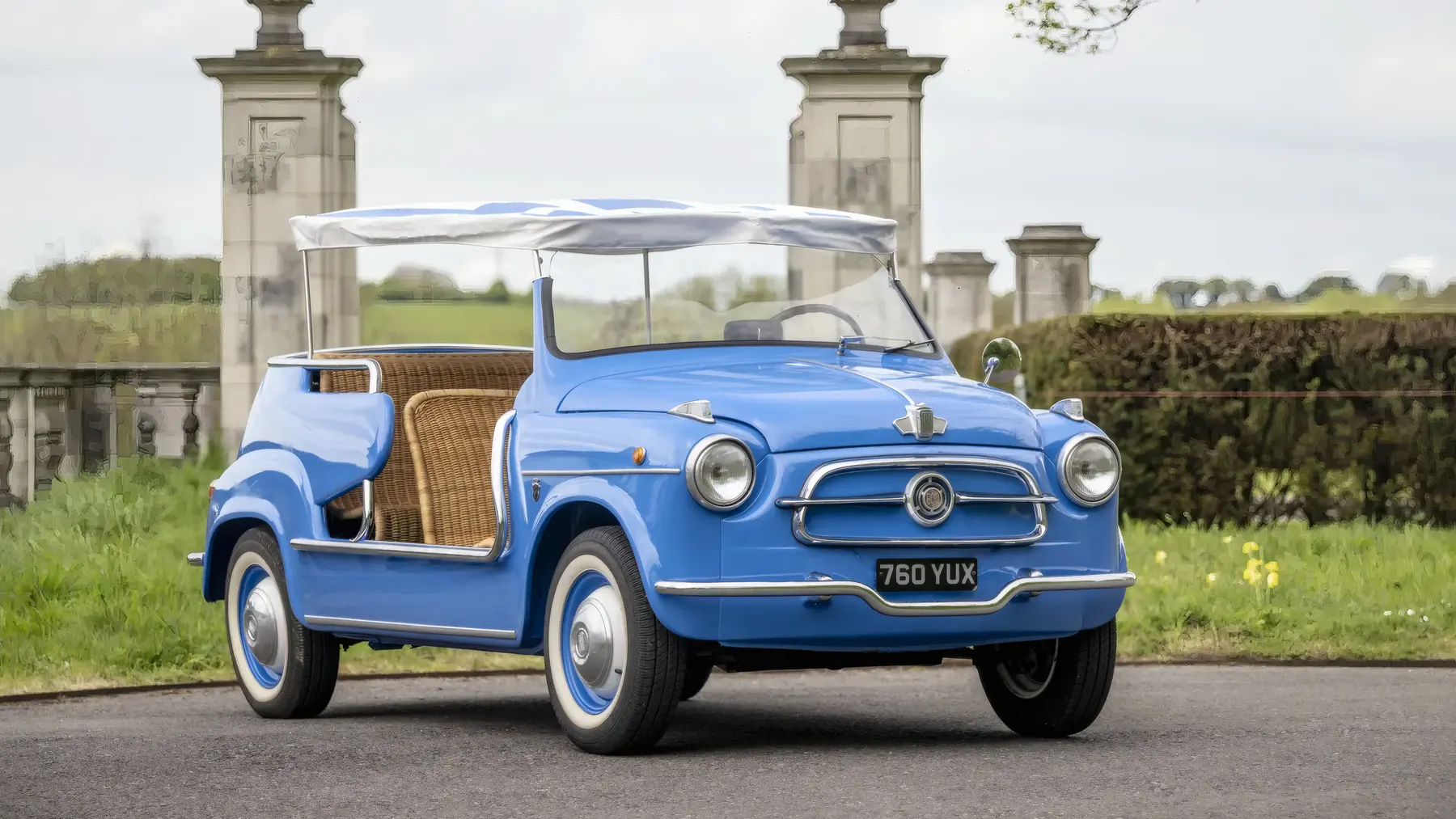
The flaws are the other side of the same coin, and they are specific. There is no weather protection worth the name. The surrey top is a sunshade rather than a roof, its spindly hoops will buckle if you drive with it up, and putting it up correctly in even a moderate headwind is a battle. The cut-away sides, absent doors and lack of belts are tolerable at resort speeds and alarming anywhere else. Build quality is also less polished than catalogue copy suggests. RM Sotheby’s has described the Jolly as having “excellent build quality”, but a specialist who has worked on one told Classic & Sports Car the original construction was not great, citing rippling in the strengthening around the door apertures, seats that had clearly been persuaded into place with a hammer, and floors with no real reinforcement, just bars to raise the sill line wrapped in folded sheet steel. Rust, a common denominator for steel-bodied cars of the period, is the main reason Sports Car Market’s writer gives for how few survive. And for double the price of a 600 you received the same noisy little engine, the same unsynchronised first gear and a good deal less usability. Heseltine called it “one of the most pointless cars ever made”, and then admitted it is impossible not to like.
Copyists followed, from OSI, Sibona & Basano and Michelotti to beach cars on DAF, BMC and Innocenti Mini and even Alfa Romeo Giulia Super platforms, but Classic & Sports Car judges none of them as successful as Ghia’s. Today, genuine cars fetch six-figure sums at major auctions, and RM Sotheby’s catalogues describe the four-cylinder 600 Jolly as considerably rarer than the 500-based cars and fiercely sought after by Fiat enthusiasts. Fakes and tributes are plentiful too, which is a caution as much as a compliment.
What keeps the Jolly interesting is the contrast at its core. Giacosa’s car was engineered to strip out cost, and Ghia turned it into one of the most expensive accessories of the Riviera season, with the Fiat’s sound basic bones doing more of the work than any lead or tubing. Others sketched beach cars as one-offs; Segre saw that there was a production run in it, and that is why the Jolly is the one people remember. It was a toy, it was built like one in places, and it was never going to be a good car. It remains one of the few cars that can make a police crew abandon their patrol car to sit in it, giggling.
Technical data
Performance Specifications
| Specification | Fiat 600 Jolly (633cc) | Fiat 600 D Jolly (767cc) |
|---|---|---|
| Jolly production | 600-based cars from 1958 | 767cc engine from the 1960 model year; Jolly range ended 1966 |
| Layout | Rear-mounted engine, rear-wheel drive, unitary body | Rear-mounted engine, rear-wheel drive, unitary body |
| Engine | Water-cooled OHV inline-four, 633cc | Water-cooled OHV inline-four, 767cc |
| Power | 22 bhp (other catalogue figures: 20 and 28.5 bhp)* | Around 30 bhp* |
| Torque | Not stated† | Not stated† |
| Transmission | Four-speed manual, first gear unsynchronised | Four-speed manual, first gear unsynchronised |
| Suspension | Independent: transverse leaf spring front, coil springs with radius arms rear | Independent: transverse leaf spring front, coil springs with radius arms rear |
| Brakes | Four-wheel hydraulic drums | Four-wheel hydraulic drums |
| Wheelbase | 2,000 mm | 2,000 mm |
| Kerb weight | Standard 600: roughly 585–610 kg; Jolly not documented* | Standard 600 D: not corroborated; Jolly not documented* |
| Top speed (standard donor car, unladen) | About 59 mph | About 68 mph |
| Top speed (Jolly) | Not recorded* | Not recorded* |
| Bodywork | No doors, cut-down windscreen, wicker seats, optional fringed surrey top | As 633cc |
| Price relative to standard 600 | About twice as much | About twice as much |
| Jolly production (all types) | Roughly 440 to 700 Ghia-built cars, 1958–1966; 600-based share not established* | As 633cc |
Sources
- Classic & Sports Car – Life’s a beach: Fiat 600 Jolly (Richard Heseltine)
- Classic & Sports Car – A-Z of classics: Fiat 600/600D
- RM Sotheby’s – Fiat 600 Jolly by Ghia, Monterey 2024 (general model background only)
- RM Sotheby’s – Fiat 600 Jolly, California 2013 (general model background only)
- RM Sotheby’s – Fiat 600 D Jolly by Ghia, Monaco 2022 (general model background only)
- RM Sotheby’s – Fiat 600 D Jolly by Ghia, Amelia Island 2020 (general model background only)
- Sports Car Market – 1962 Fiat Jolly profile
- Audrain Automobile Museum – 1959 Fiat 600 Jolly
- Wikipedia – Fiat 600 (design brief, gearbox and top-speed figures)
- Conceptcarz – Fiat 600D (600D introduction and engine output)
Join the discussion
Comments
Loading comments…
Leave a comment
Share a detail, memory, or perspective. Every comment is reviewed before publication.