Aston Martin DB4 Series IV Special Series: Not Always a Vantage
1962 Aston Martin DB4 'Special Series Engine' Series IV




Images: RM Sotheby's
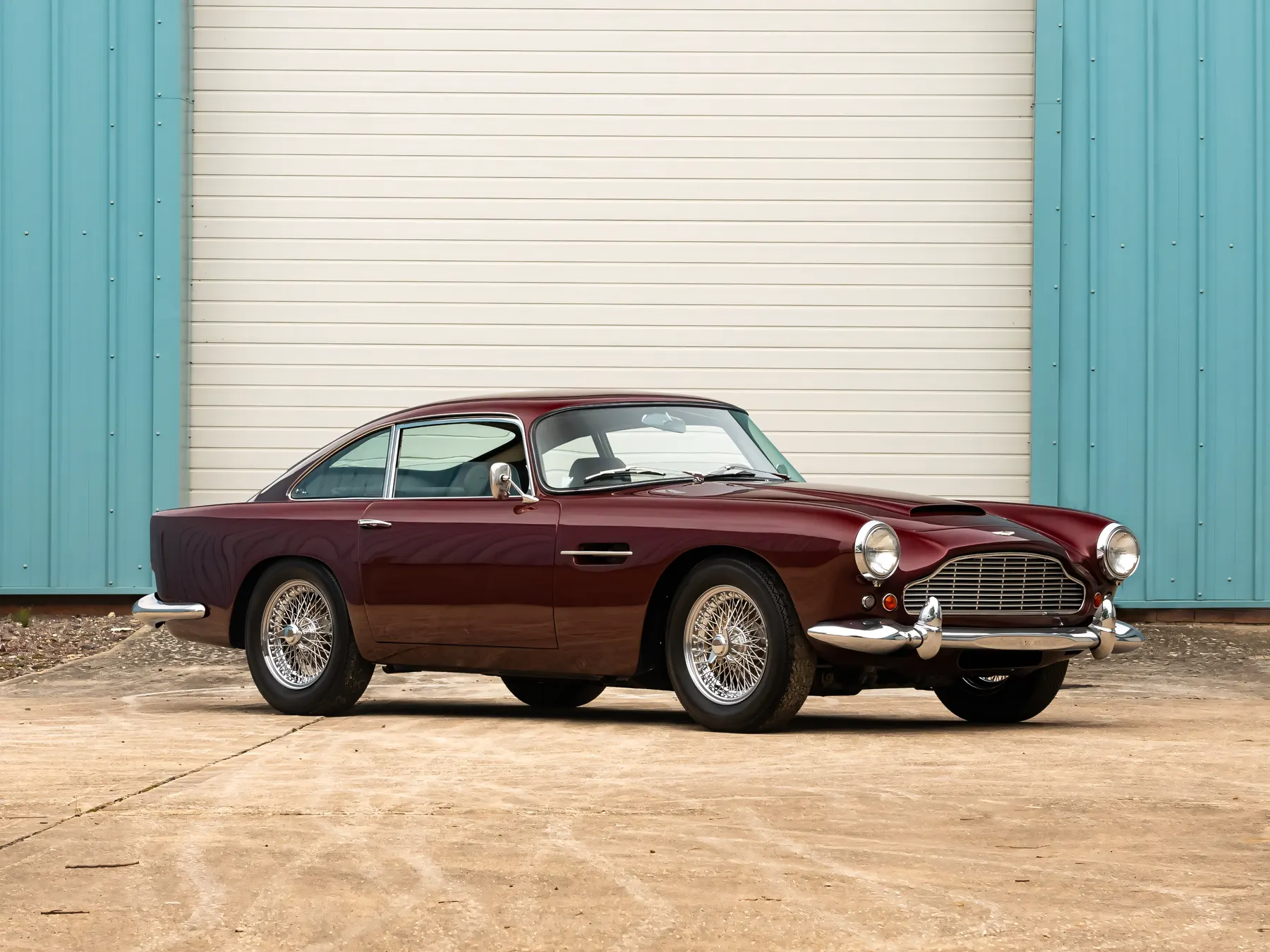
A third SU carburettor, bigger valves and a little more compression: that was the entire recipe for the DB4’s Special Series engine, and the strangest thing about it is how much confusion it has caused since. Aston Martin made it available in September 1961, alongside the Series IV, and quoted 266 bhp against the standard engine’s 240. What the factory did not do was give the result a tidy identity. Some Special Series cars were sold as Vantages, while others, fitted with exactly the same engine behind the older exposed headlamps, are not normally classed as Vantages at all. Untangling that is the easy part. The more interesting question is what an extra 26 bhp could achieve in a grand tourer that was never light.
The DB4 itself had been a clean break. Aston Martin started work on it in 1956 under general manager John Wyer, with Harold Beach responsible for the chassis and Tadek Marek for the engine, and by the factory’s own account every major component was new. It appeared at the London Motor Show in 1958 with a steel platform chassis and a Superleggera body designed by Touring of Milan, aluminium panels over a framework of small-diameter steel tubes, and it was the first Aston Martin to be built entirely at Newport Pagnell. Because the platform chassis did the structural work, the tube framework was only needed around the bonnet, windscreen, roof, rear wings and tail. Marek’s engine replaced the W.O. Bentley-designed LB6, a 2.9-litre unit that had run out of development room, with an all-aluminium twin-cam six of 3,670 cc whose square 92 mm bore and stroke gave it a more eager nature than the long-stroke engine before it. In standard form it produced 240 bhp at 5,000 rpm and 240 lb-ft at 4,200 rpm, good for around 140 mph and roughly nine seconds to 60 mph on the factory’s figures. Aston Martin also pitched the DB4 as the first production car able to reach 100 mph and stop again in under 30 seconds.
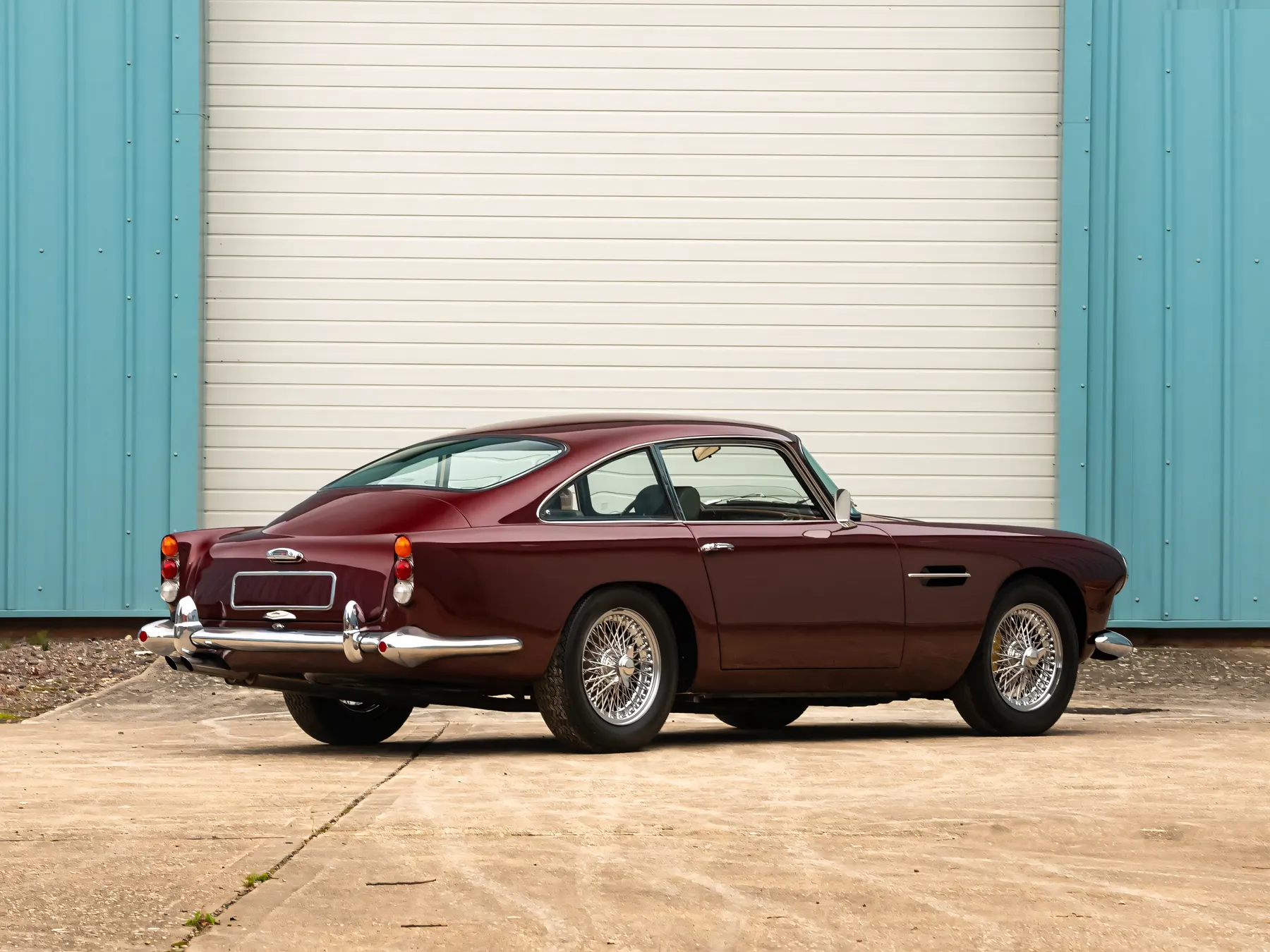
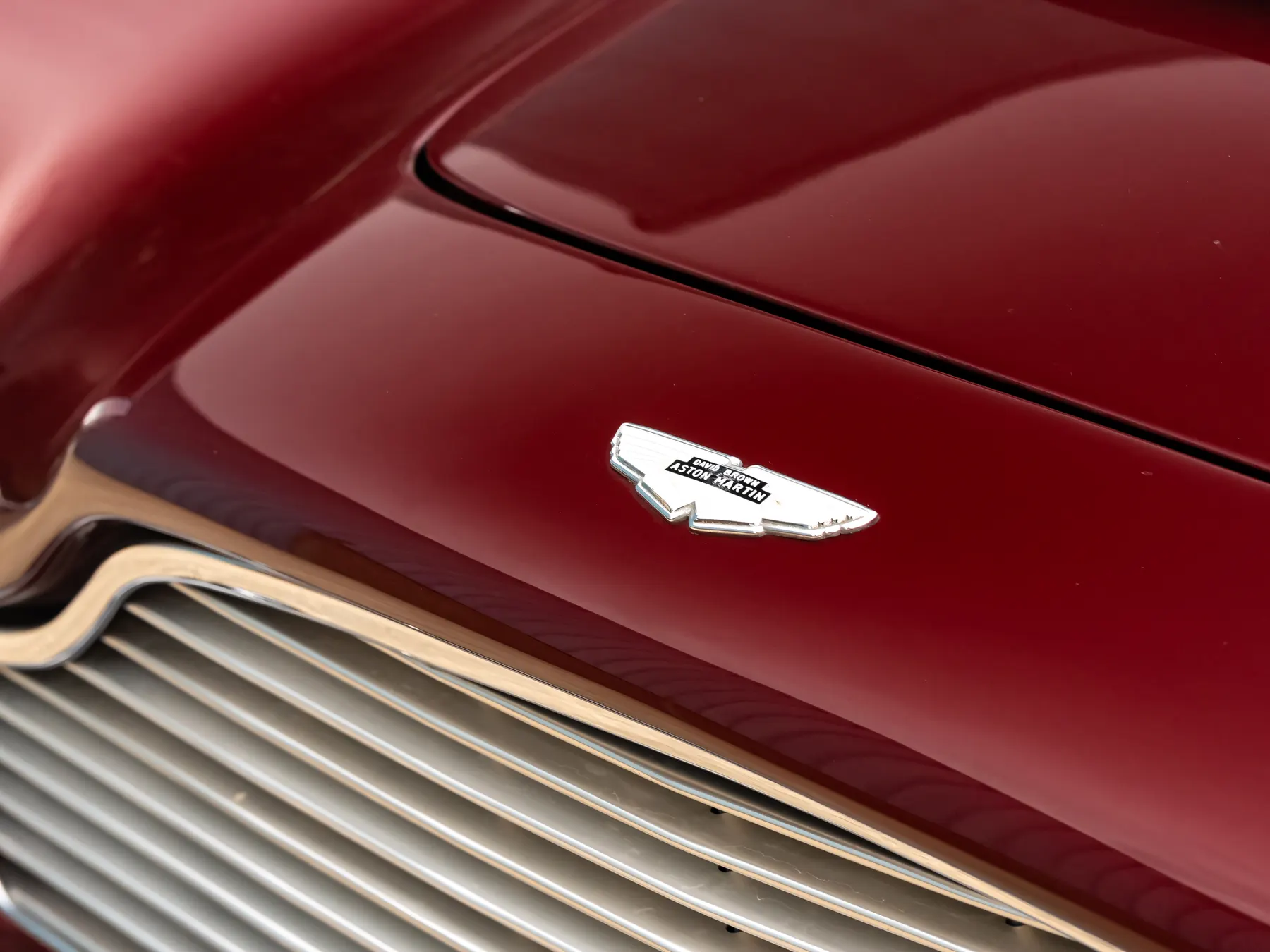
The company kept altering the car throughout its life, and enthusiasts later sorted the changes into five series. By September 1961 the DB4 had accumulated window frames, a front-hinged bonnet, a larger sump and better heating, and the Series IV added the details that identify it in photographs: a flatter, lower bonnet scoop, a barred grille in place of the earlier egg-crate pattern, and recessed, triple-stacked tail lamps that would carry straight over to the DB5. Mechanically it brought a standard oil cooler and a twin-plate clutch, both evidence of the effort spent on curing the early cars’ tendency to run hot. A convertible joined the range at the London Motor Show in October 1961.
The Special Series engine arrived on top of that. A third SU HD8 carburettor, larger valves and a compression ratio of 9:1 lifted output to a quoted 266 bhp at 5,750 rpm, with roughly 254 lb-ft at 4,500 rpm; the block was unchanged from the standard car. The way the gain was distributed is revealing. Power rose by just over ten per cent and its peak moved 750 rpm higher, yet torque improved by only about 14 lb-ft. This was a top-end tune rather than a change in how the car pulls from low revs, and it reads as a response to buyers who wanted the fastest DB4 available rather than a cure for any weakness. Neither the name nor the idea was new. Aston Martin had first offered a Vantage engine on the DB2 in 1950, and one specialist account says a big-valve, high-compression option branded Special Series had appeared on the DB2/4 in 1955. The DB4 simply revived an old habit of selling a hotter motor to people willing to pay for it.
The Vantage name is where it gets complicated. RM Sotheby’s catalogue history says the factory applied it to Series IV cars that also had the DB4 GT’s faired-in headlamps, glass-covered, set back in the front wings and ringed with chrome, and puts the total at 45 saloons. Those cars also took the GT’s instrument layout, with a separate dial for each function and an oil temperature gauge. Most, but not all, Special Series DB4s received the covered-headlamp nose. One enthusiast reference is blunt that a saloon with the engine ordered as a cost option and ordinary headlamps is not normally classified as a Vantage, and RM’s own cataloguers have drawn the same line. The engine also went into open cars, although only 11 of the 30 Series IV convertibles received it. For a buyer or a researcher, the practical lesson is that “SS engine”, “Vantage” and “covered headlamps” overlap heavily without being synonyms, and that the build records matter more than the badge. Visually this is the DB4 that many people prefer, and it is not hard to see why. The Series V that replaced it in September 1962 was roughly 90 mm longer and also taller, on smaller wheels; it gained space and pointed towards the DB5, but Hagerty’s David Lillywhite finds it less attractive. The Series IV keeps the tighter proportions of Touring’s original drawing: a long bonnet, delicate pillars and a clean flank interrupted only by the vent and strake in the front wing. His one complaint is the rear window, whose edges sit awkwardly high in the roofline. Inside, the mood is businesslike rather than opulent. Seat backs are low, glass area generous and the dashboard plain, with chrome-bezelled Smiths dials and toggle switches and timber only on the steering wheel rim. Visibility is excellent and four adults can sit in reasonable comfort. One caution: an enthusiast reference notes that even the convertibles launched alongside the Series IV saloon carry the longer body, so the compact look belongs to the closed cars only.
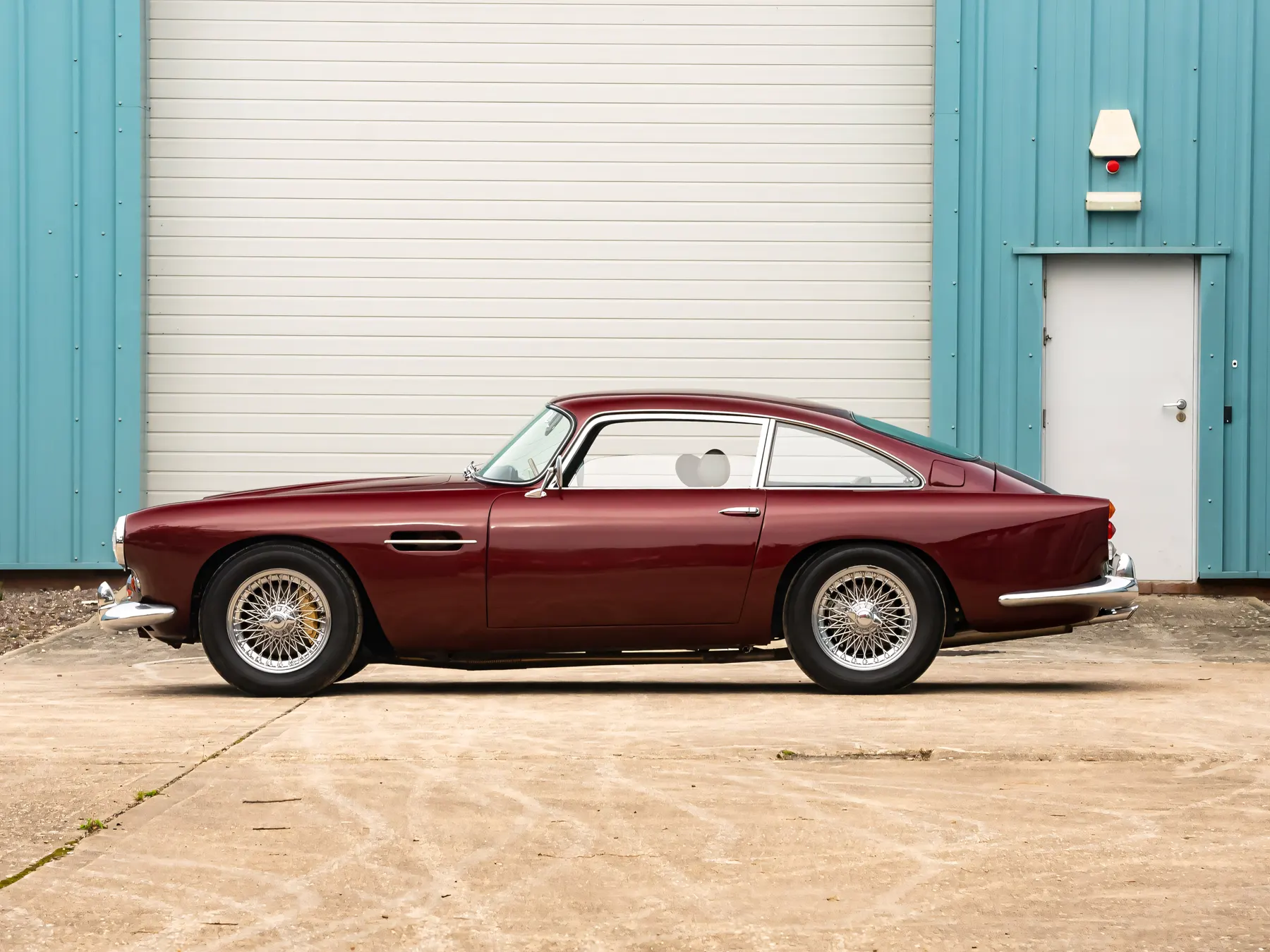
Under the skin the engineering is full of sensible decisions that stopped short of ideal. Hagerty notes that the original plan for a perimeter frame was dismissed by Touring as unworkable with its construction methods, leaving a hefty steel platform that cancels much of the weight advantage you might expect from aluminium panels. A De Dion rear end was also planned, but the noise it would have fed into the cabin was judged unacceptable, so the car got a live axle located by trailing links and a Watt’s linkage, with coil springs all round and double wishbones at the front. The steering is unassisted rack and pinion, the brakes are servo-assisted discs at all four corners, and the gearbox is a four-speed David Brown unit with overdrive available. Hagerty puts the standard car’s combination of a 140 mph top speed and a 0-60 mph time of about 9.5 seconds down to its high gearing, which is worth remembering whenever 266 bhp is quoted.
Accounts of driving DB4s are remarkably consistent. The clutch is heavy, the slim chrome gear lever needs a firm hand, and the gearbox is satisfyingly mechanical but not one to hurry. There is play around the straight-ahead in the steering, which then weights up in corners rather like an unmodified MGB’s but with far more mass behind it, and the brakes need a similarly muscular shove. evo found the car less demanding than its age suggests, though clean changes still call for a precise hand. Once you adapt, the reward is a car that leans predictably, lets go progressively when provoked and delivers its power with muscle rather than frenzy, to a soundtrack of straight-six rumble, gearbox whine and twin exhausts. Hagerty likens it to an English Ferrari 250 GT Lusso or Maserati 3500 GT and concludes that there is more sports car in this GT than it first appears. Those impressions describe DB4s generally rather than Special Series cars specifically, so the effect of the extra output has to be inferred. A higher power peak with barely any extra torque suggests a car that likes revs a little more than the standard one, without changing what it is.
It is worth being blunt about where the car falls short, because the market’s affection can drown out the negatives. The first is weight. Aston Martin quotes 1,308 kg for the standard DB4, so the Special Series engine adds its gain to a car already carrying a lot of metal for 1961, and set against the factory’s roughly nine-second claim for 0-60 mph that makes the SS car quicker rather than truly sharp. The second is effort. Heavy unassisted steering, a stiff clutch and brakes that demand a firm push are charming to someone who enjoys learning them, but they are also why the DB4 can feel heavy and cantankerous in tight corners, and they are least forgiving in town traffic. The third is cooling. Period-minded histories and modern buying guides alike admit that early cars overheated, and Gooding’s catalogue writers say insufficient cooling could end in engine failure; the factory’s answer, in stages, was more oil capacity and then an oil cooler that the Series IV made standard. A higher-compression, higher-revving version of the same engine is unlikely to have eased that burden, and even a sympathetic road test mentions cooling modifications as a sensible aid. Then there is the structure: electrolytic corrosion can develop where aluminium panels meet steel, with the bumper tube passages, footwells, sills and suspension mounts all weak points, and a proper restoration is described as extremely expensive. Finally, this variant carries a provenance problem of its own. Many standard engines have been converted to Vantage specification over the years, and not every conversion has the correct camshaft, valves and carburation, so an SS claim needs checking against factory records.
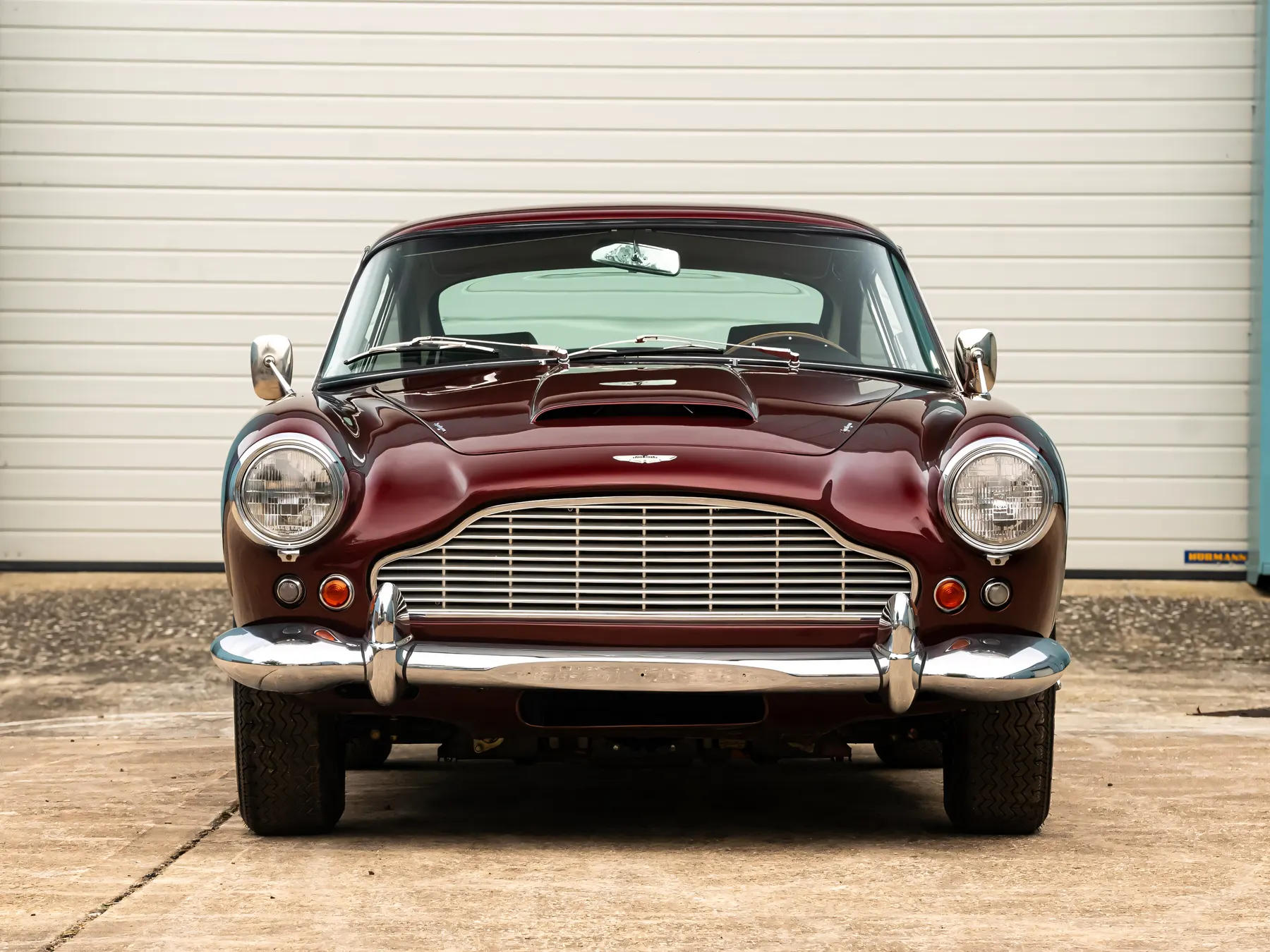
Collectors treat the Series IV Special Series as something close to the connoisseur’s DB4. RM Sotheby’s describes the covered-headlamp cars as the best DB4 to own aside from the GT, and the shorter body and GT-style nose are the usual reasons given. There is dissent worth hearing, though. Sports Car Market’s analysts questioned whether any single DB4 deserves that crown, noting that asking owners would yield a different answer each time and that the GT variants could claim to be more desirable. The GT makes a strong case on dynamics: three Weber carburettors, twin-plug heads and a quoted 302 bhp at 6,000 rpm against the SS engine’s 266 bhp at 5,750 rpm. That engine was a separate and expensive option, which is why the Special Series car is best understood as the middle rung: tuned, but still a touring engine.
What the Series IV Special Series left behind was a template. The recessed tail lamps went straight into the DB5, and the covered-headlamp look stayed on Aston Martins until DB6 production ended in 1971. The Series V that followed carried the longer, taller body the DB5 would inherit, and the DB5 added a 4.0-litre development of Marek’s engine and a ZF five-speed gearbox, supplying the extra ratio that the DB4’s tall four-speed lacked. From that angle the SS engine marks the moment Aston Martin accepted that a road-going GT could be sold partly on being tuned, while never turning the DB4 into a different car. It is better read as the best-proportioned DB4 given a more energetic heart, a combination that explains both why it is the most admired of the series and why, thanks to its weight, its steering and its cooling, it still asks its owner to meet it halfway.
Technical data
Performance Specifications
| Specification | Standard DB4 (factory figures) | Series IV with Special Series engine |
|---|---|---|
| Engine | All-aluminium DOHC straight-six, 3,670 cc (92 x 92 mm) | Same block, larger valves, revised cylinder head |
| Carburettors | Two SU | Three SU HD8 |
| Compression ratio | Not corroborated (omitted) | 9:1 |
| Power | 240 bhp at 5,000 rpm | 266 bhp at 5,750 rpm |
| Torque | 240 lb-ft at 4,200 rpm | c. 254 lb-ft at 4,500 rpm* |
| Transmission | Four-speed manual, overdrive optional | Four-speed manual, overdrive optional |
| Kerb weight | 1,308 kg | Not corroborated (omitted)** |
| Wheelbase | 2,489 mm | 2,489 mm |
| Length x width x height | 4,480 x 1,676 x 1,321 mm (saloon)*** | Not stated separately |
| Suspension | Front: double wishbones, coil springs, anti-roll bar. Rear: live axle, trailing links, coil springs, Watt’s linkage | As standard |
| Brakes | Servo-assisted discs, all four wheels | As standard |
| 0-60 mph | Approx. 9 seconds (factory); about 9.5 seconds (Hagerty) | Not established (omitted)** |
| Top speed | Approx. 140 mph | Not established (omitted)** |
| 0-100-0 mph | Under 30 seconds (factory claim) | Not established |
| Series IV build period | September 1961 to September 1962**** | |
| Related counts | 45 covered-headlamp Vantage saloons; 11 of 30 Series IV convertibles with SS engine |
Sources
- Aston Martin: DB4 & DB4 Convertible (heritage models)
- AstonMartins.com: DB4 Vantage
- AstonMartins.com: DB4 Convertible (Series 4 & 5)
- AstonMartins.com: DB4 to AM Vantage, the Newport Pagnell six-cylinder cars
- RM Sotheby’s: 1962 Aston Martin DB4 Series IV Vantage Coupé (model background)
- RM Sotheby’s: 1963 Aston Martin DB4 Series V Vantage (model background)
- Gooding & Company: 1962 Aston Martin DB4 Series IV SS Convertible (model background)
- Zwischengas: DB4 Series IV Convertible Special Series Vantage (model-level counts only)
- Hagerty UK: Driving the Greats: Aston Martin DB4
- evo: Aston Martin DB4 review, history and specs
- Supercar Nostalgia: Guide to the Aston Martin DB4 Vantage
- Petrolicious: Aston Martin DB4, DB4 GT & DB4 Vantage Buying Guide
- Goodwood: Aston Martin DB4 Buyer’s Guide
- Magneto: Aston Martin DB4, DB5 and DB6 Buying Guide
- Sports Car Market: 1962 Aston Martin DB4 Series IV analysis
Join the discussion
Comments
Loading comments…
Leave a comment
Share a detail, memory, or perspective. Every comment is reviewed before publication.