Shelby 289 Cobra: The Real Story Behind the "Snake Charmer" Nickname
1964 Shelby 289 Cobra "Snake Charmer"




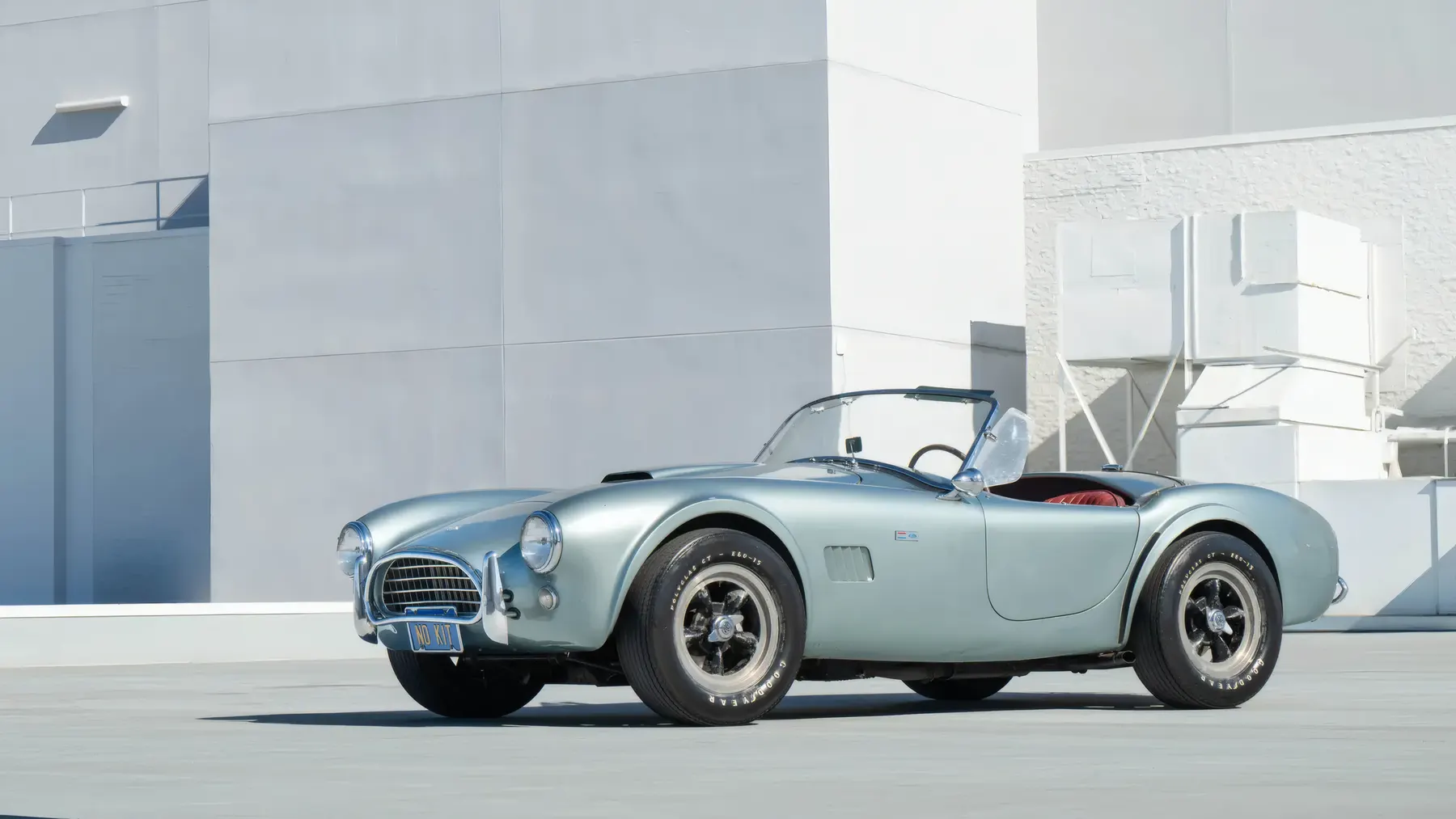
Images: Hank Williams (The Original Owner) / RM Sotheby's
Anyone pairing “Shelby 289 Cobra” with “Snake Charmer” into a search bar is chasing a person’s story as much as a car’s. Carroll Shelby coined that nickname for a customer he’d befriended on the West Coast racing scene in the 1960s - it was never a trim level, a factory option, or anything AC Cars or Shelby American wrote on a build sheet, and no 289 Cobra ever left either factory wearing that name. What the phrase does point toward, honestly, is the car underneath it: the small-block Cobra that people who have actually driven every variant Shelby built - 260, 289 and 427 alike - tend to quietly nominate as the one they’d most want to own. Not the fastest, not the most famous, but the version where the Cobra’s whole premise, a featherweight British roadster stuffed with a cheap American V8, finally worked as a cohesive car rather than a barely-contained experiment.
Carroll Shelby’s basic idea, hatched in 1961 after a heart condition ended his own racing career, was neither original nor complicated: marry a light, agile European sports car to a big, inexpensive American V8. He wrote to AC Cars in Thames Ditton, Surrey, about their Ace roadster - a capable but underpowered machine built around a simple tubular steel chassis, whose supply of Bristol straight-six engines had just dried up. AC, keen to keep the Ace’s production line running, agreed to keep shipping chassis and hand-formed aluminium bodies; Ford, looking for a cheap way to embarrass Chevrolet’s Corvette and Ferrari’s GT cars on track, supplied the small-block V8s. The result was a genuinely transatlantic assembly process that never really changed for the model’s whole run: AC built and trimmed each rolling chassis and body in England, then shipped it, engine and gearbox absent, to Shelby’s workshop in Los Angeles, where his crew fitted the drivetrain and, as often as not, straightened out bodywork that had been knocked about crossing the Atlantic. In the US the car was sold as the Shelby Cobra or Shelby AC Cobra; AC continued selling right-hand-drive examples at home under its own Cobra badge.
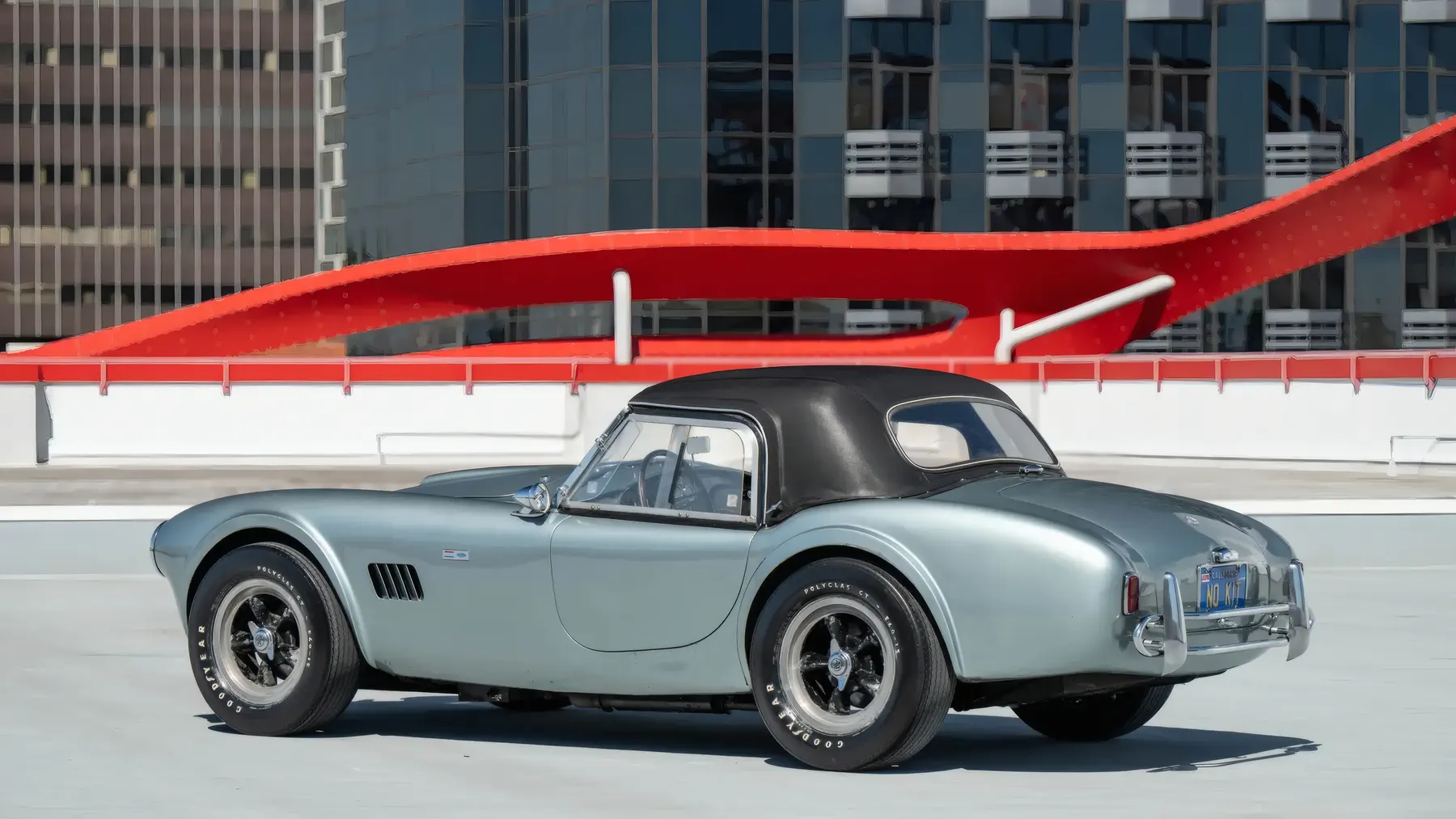
The earliest cars, later known informally as Mark I, used Ford’s 4.3-litre 260 cubic inch V8; Shelby built 75 of them before switching, through 1962 and into 1963, to the larger 4.7-litre 289 cubic inch unit. Fifty-one of those first 289-engined cars kept the Ace’s original worm-and-sector steering box, a setup increasingly overwhelmed by the V8’s torque and none too precise even in period. AC’s chief engineer, Alan Turner, fixed that in late 1962 with a rack-and-pinion conversion borrowed partly from the MGB, launching the definitive Cobra 289 Mark II in early 1963. Roughly 528 Mark II cars were built to the summer of 1965, though totals vary a little depending on how sources count the earlier worm-and-sector 289s alongside them, with some tallies putting combined 289-engined production closer to 580 cars. Either way, it’s a small number for a nameplate with this much reach: every leaf-spring Cobra Shelby and AC built between 1962 and 1965, 260 and 289 combined, comes to something in the region of 650 cars, before the wider, coil-sprung 427 arrived to take the model in a different direction entirely.
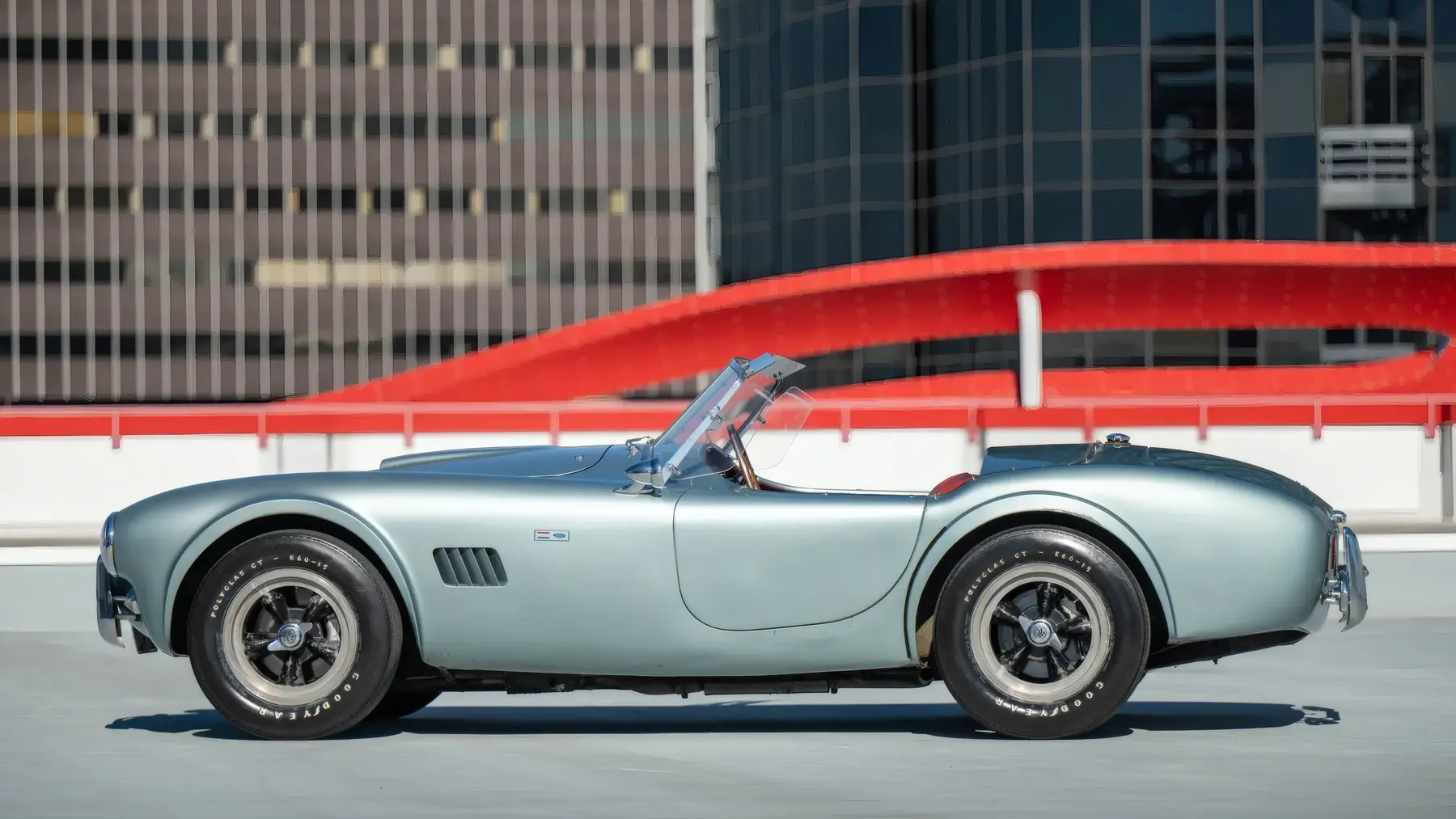
Underneath, the 289 Cobra never fully shook off its origins as a mid-1950s British sports car. The chassis was a simple tubular steel frame, its main rails around 76mm in diameter, suspended at each end by transverse leaf springs - a layout AC had specified years before anyone imagined putting a 4.7-litre V8 between the front wheels. What made the combination work was the engine: Ford’s “HiPo” K-code 289, fed by a single four-barrel carburettor, solid lifters and a more aggressive camshaft than the standard road unit, producing 271 bhp and 312 lb-ft of torque, sent through a four-speed manual gearbox and a Salisbury differential to solid disc brakes at all four corners. There was no brake servo and no power assistance for the steering; everything about driving one quickly was a matter of leg strength and forearm work. At around 1,050 kg kerb weight, the power-to-weight ratio was startling for 1963 - closer to a contemporary Ferrari GT car than to anything else being built in real volume in America or Britain. In competition trim, running Weber carburettors and further-tuned internals, the same basic engine gave up to roughly 370 bhp, enough to make the 289 Cobra genuinely competitive with Ferrari’s 250 GTO in GT racing, at least on circuits that didn’t turn the contest into a long, flat-out top-speed run.
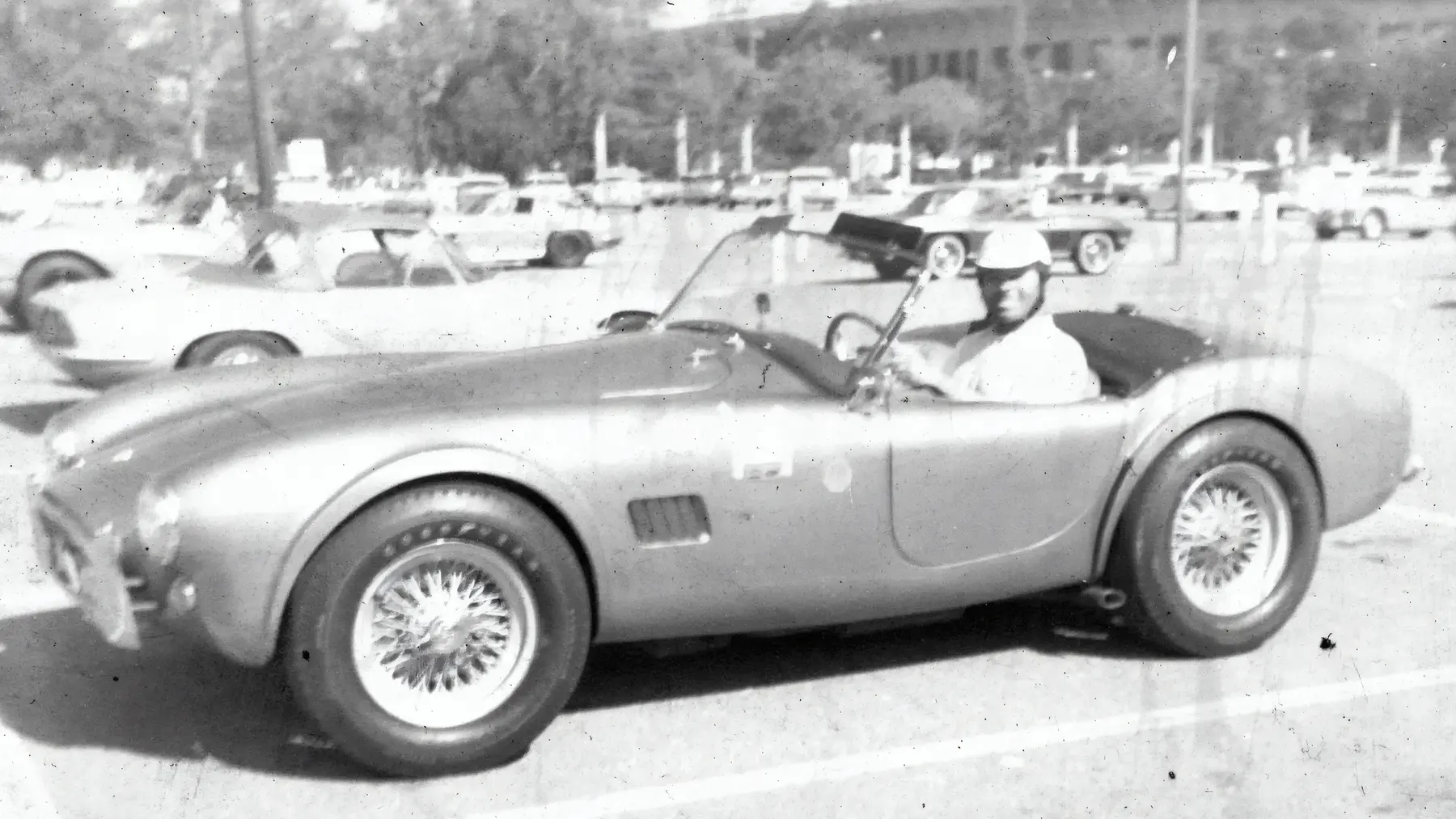
That last caveat mattered enormously to how the model’s story played out. On American club and national circuits, the 289 Cobra was close to unstoppable: it won the inaugural United States Road Racing Championship for manufacturers in 1963, its new rack-and-pinion cars embarrassing the Corvette Sting Rays that had, until then, been the domestic benchmark. Shelby’s works team debuted the car on the international stage at the Sebring 12 Hours that March, and by 1964 had built a full FIA World Championship for Makes campaign around it, entering standard “FIA”-specification roadsters alongside the newly developed Daytona Coupe. Drivers including Dan Gurney, Bob Holbert and Ken Miles took the team to class wins at the Targa Florio, the 24 Hours of Le Mans and the RAC Tourist Trophy that season, finishing second in the GT manufacturers’ standings to Ferrari; in 1965, with the balance tipped further toward the more aerodynamic Daytona Coupe, Shelby American finally won the title outright, the first time an American constructor had done so at the FIA’s top level.
The Daytona Coupe is really a footnote to the 289 roadster’s own limitations rather than a separate story: after Le Mans in 1963 exposed how badly the open Cobra’s blunt-nosed aerodynamics capped its speed down the long Mulsanne Straight compared with Ferrari’s 250 GTO, Shelby had aerodynamicist Pete Brock design a closed, low-drag body around the same 289-powered running gear. The roadster, in other words, was fast enough everywhere except where sustained top speed alone decided the outcome - a useful bit of context for understanding both cars’ places in the lineup, and a reminder that the 289 Cobra’s competition career was ultimately built on chassis balance and traction rather than outright pace.
None of that translates into a car that feels remotely modern to drive, and it was never meant to. Turn the key and the 289 doesn’t so much start as detonate, settling into a lumpy, mechanical idle that never quite recedes into the background the way a modern V8’s does. The unassisted steering is heavy at parking speeds and unfiltered once moving - every camber change and bit of road texture arrives at the rim more or less unedited, rather than being smoothed out for the driver’s comfort. The clutch and the unboosted brakes both reward strong legs, and the four-speed gearbox, mechanically precise as it is, wants deliberate, heel-and-toe downshifts rather than lazy stabs. Specialists and long-time owners who have spent real time across the range tend to single out the 289 as the sweet spot: quick enough to feel properly urgent, but light and progressive enough that the chassis rarely feels on the verge of being overwhelmed in the way a 427 can. Torque arrives early and stays flat for a long time, so it doesn’t demand constant gear-swapping to feel alive, and that tractability is arguably the 289’s most underrated quality - it rewards a smooth, confident driver on a fast, open road far more than it rewards outright bravery on a tight, technical circuit.
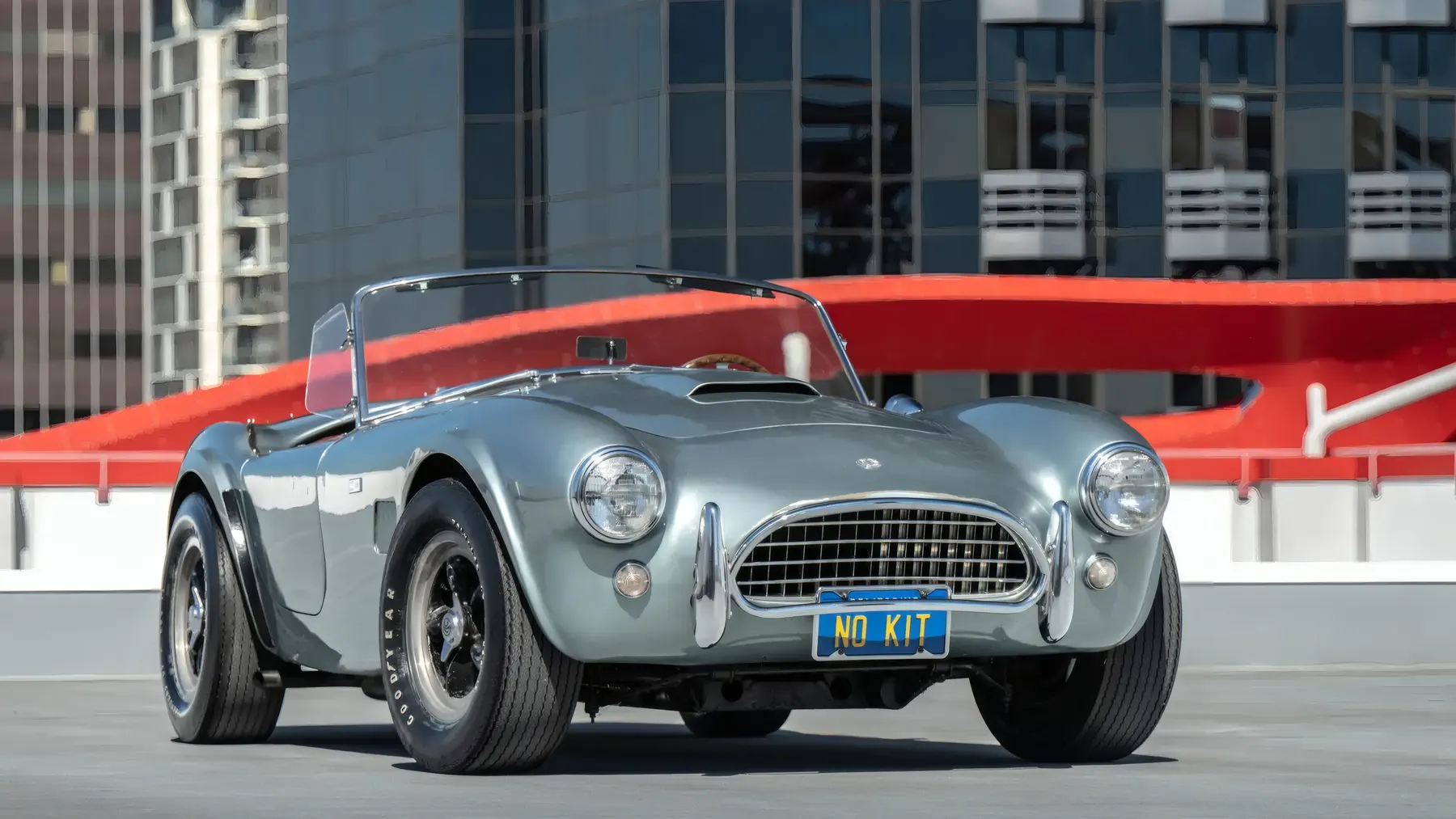
It’s worth being honest, though, about how compromised the 289 Cobra is as a piece of engineering, rather than simply charmingly raw. The chassis, fundamentally an AC Ace frame never redesigned from the ground up for this much torque, flexes noticeably under hard cornering loads - a problem AC only properly addressed when it built a much stiffer, wider-tubed frame for the later 427. Weather protection is minimal to the point of irrelevance: a flimsy fold-down soft top, no wind-up windows on most cars, and side curtains that do little beyond token rain deflection, all wrapped around a cockpit that runs uncomfortably hot in traffic thanks to the engine and side-exit exhausts sitting close to the footwells. The unassisted disc brakes, sharp and effective when fresh, were prone to fade under the sustained hard use of a full race distance - a real limitation for a car that was, after all, sold and raced as genuine competition equipment rather than a boulevard cruiser dressed up to look fast. And because AC built the rolling chassis and body in England while Shelby’s crew finished each car in Los Angeles, quality control varied more than buyers might expect for what the car cost at the time; it was not unusual for bodywork knocked out of alignment during the Atlantic crossing to need correction before a car reached its first owner. None of this made the 289 Cobra a bad car for what it was built to do, but it did make it a demanding, occasionally hazardous machine to drive quickly in period, and a genuinely impractical one to live with day to day - cramped, loud, thirsty, and short on any concession to comfort that wasn’t strictly necessary.
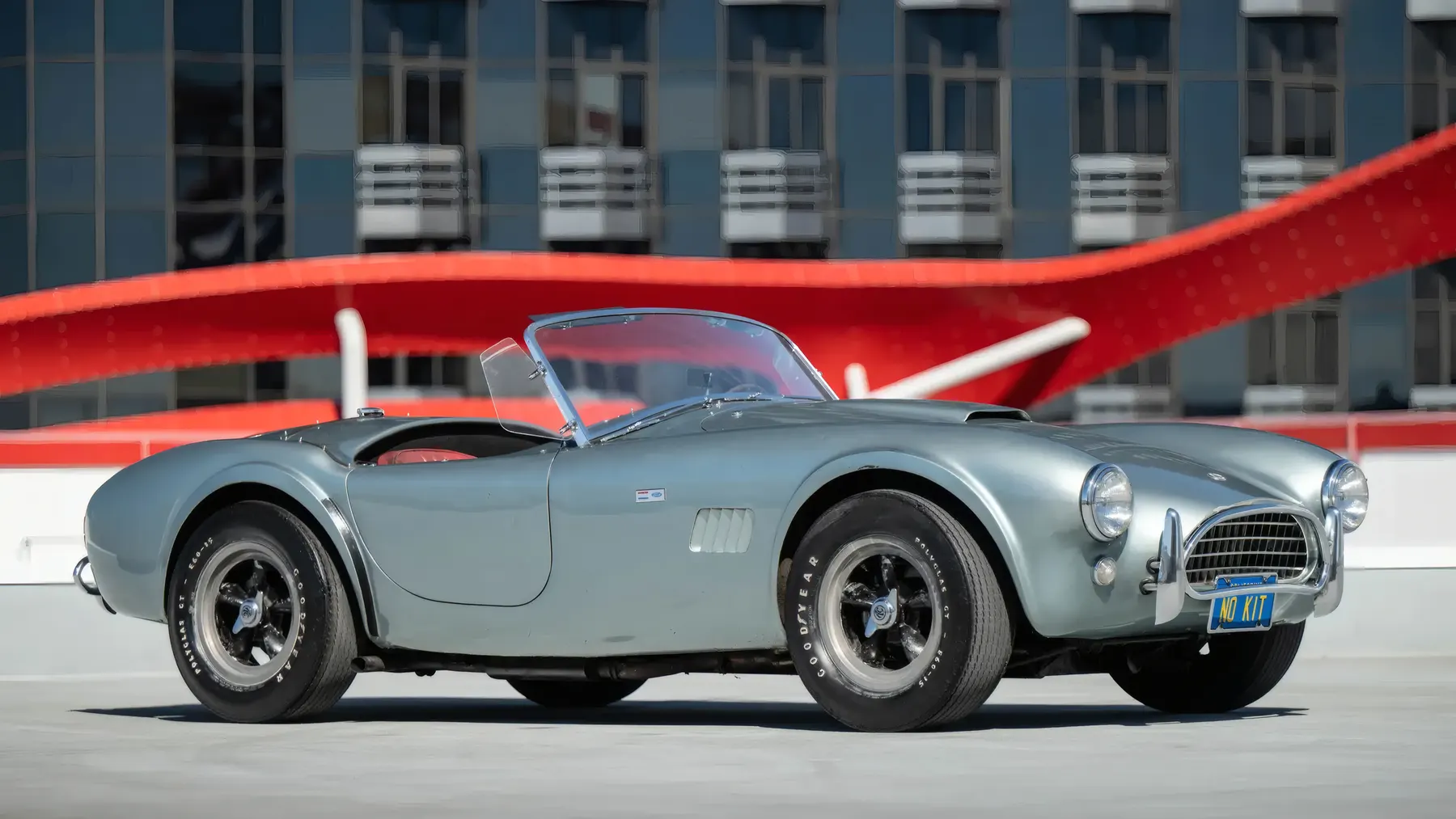
None of that has hurt its standing since. What started as a low-volume, hand-built alternative to Corvettes and Jaguars for a narrow band of wealthy American sports car racers has become one of the blue-chip names in the classic car market, with genuine 289s now routinely changing hands for six and seven-figure sums, and even the smaller-engined 260 Mark I commanding serious money today. That value has, inevitably, spawned an enormous parallel industry of continuation and replica Cobras, from Shelby’s own 1980s CSX4000-series cars, built on leftover original-specification frames, to decades of fibreglass-bodied kit and turnkey reproductions from firms such as Factory Five and Superformance. Specialist opinion is genuinely split on this point: some argue a well-sorted modern replica, with better brakes, more rigid construction and none of the original’s parts-supply headaches, is simply the more usable car, while others insist that only a real AC- and Shelby-built chassis carries the model’s actual history. Either way, the flood of imitators has made buying a genuine period 289 a matter that demands real expertise and documentation, since the number of Cobra-shaped cars on the road today vastly exceeds the number Shelby and AC ever built.
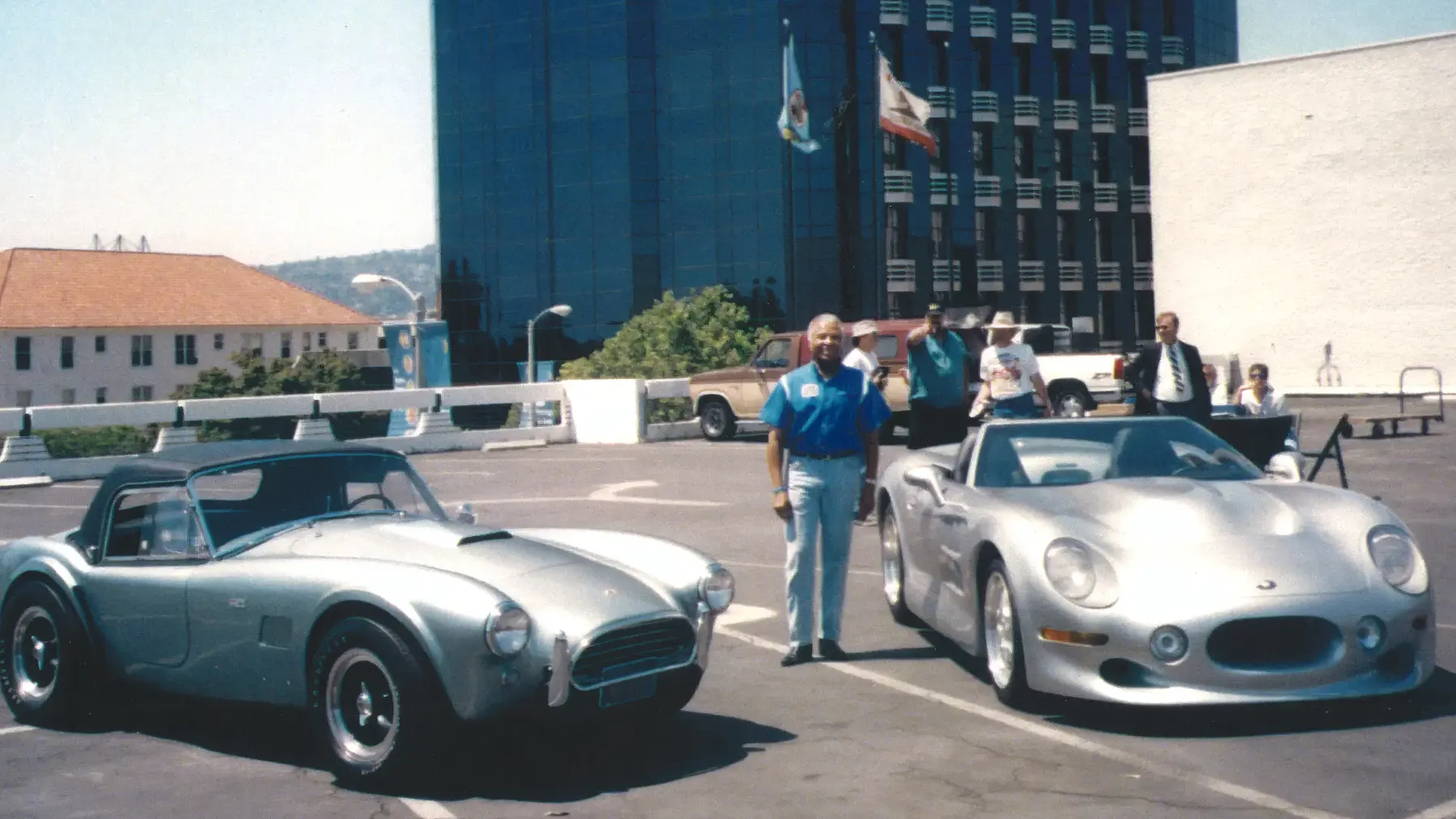
Which brings the story back around to names, and why “Snake Charmer” ended up attached to a 289 Cobra rather than some other model. It’s a coincidence of timing and personality - a nickname born of one owner’s relationship with Carroll Shelby - but it landed on the right car almost by accident. The 289 was always the Cobra built to be lived with rather than merely survived: potent enough to matter on a racetrack in 1963 and 1964, civil enough in its power delivery that people genuinely did drive them for years afterward, and honest enough about its own flaws that nobody who has actually owned one mistakes it for a modern car wearing a costume. That combination, more than any nickname, is what earned the 289 Cobra its reputation.
Technical data
Performance Specifications
| Specification | Figure |
|---|---|
| Engine | Ford 289 “HiPo” (K-code) OHV V8, 4.7 litres, single four-barrel carburettor |
| Power | 271 bhp at approximately 5,750–6,000 rpm |
| Torque | 312 lb-ft (peak rpm cited variously as c. 3,400–4,500 rpm across sources) |
| Competition engine output | Up to approximately 370 bhp (Weber-carburetted, race-tuned) |
| Gearbox | 4-speed manual (Borg-Warner T-10, aluminium case) |
| Steering | Worm-and-sector (early Mark I 289, 51 built); rack-and-pinion from early 1963 (Mark II, c. 528 built) |
| Suspension | Tubular steel chassis (c. 76mm main tubes), transverse leaf springs front and rear |
| Brakes | Solid discs, all four corners, unassisted |
| Kerb weight | Approximately 1,050 kg |
| Production | c. 528 Mark II (rack-and-pinion) 289 Cobras, 1963–1965; c. 51 earlier Mark I 289s; c. 650 leaf-spring Cobras (260 and 289 combined) in total |
Sources
- AC Cobra - Wikipedia
- Shelby Daytona - Wikipedia
- Shelby Cobra - FIA Historic Database
- The story of the Shelby Cobra in 5 cars - Hagerty Media
- 1965 Shelby Cobra 289 R&P - Hagerty Valuation Tools
- Shelby Hierarchy: Tracking Values of the Cobra Quiver - Hagerty Media
- Shelby Cobra Driving, Engines & Performance - Top Gear
- 1964 Shelby AC Cobra 289 - Silodrome
- Ford 289: The 4.7L V8 That Powered Shelby Legends In the '60s - CarBuzz
- Ford 289 Engine Guide - Specs, Upgrades, and Reliability - Muscle Car Club
- 1963 Cobra Le Mans - Shelby American Collection (general USRRC/championship background only)
- 1963 Shelby 289 Cobra, Arizona 2024 - RM Sotheby’s (general model background only)
- 1963 Shelby Cobra 289 - Sports Car Market (general model background only)
Join the discussion
Comments
Loading comments…
Leave a comment
Share a detail, memory, or perspective. Every comment is reviewed before publication.