Ferrari 275 GTB/4 NART Alloy: The Four-Cam Built to Race
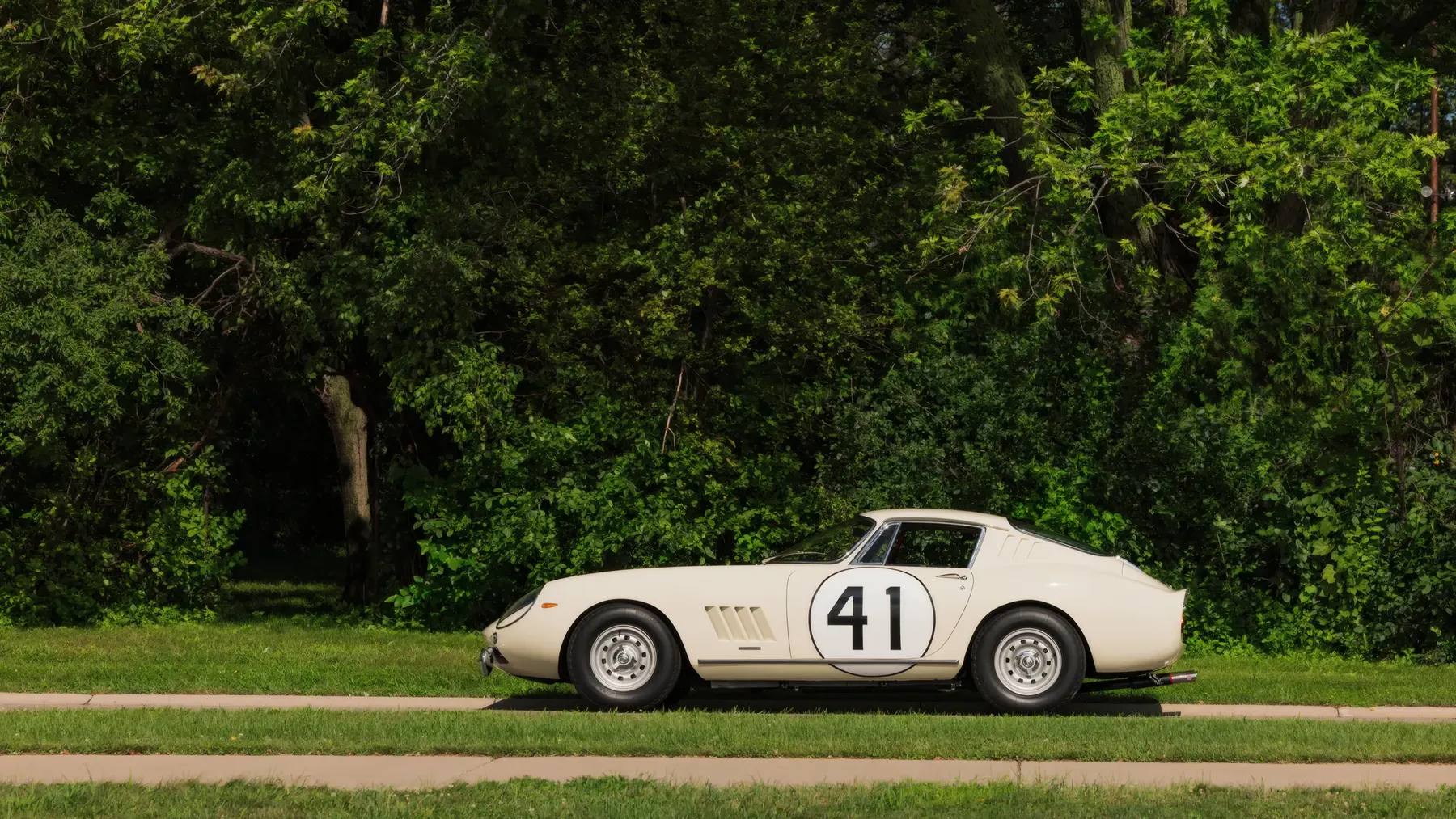
1967 Ferrari 275 GTB/4 NART Alloy by Scaglietti




Images: Trevor Thompson / RM Sotheby's
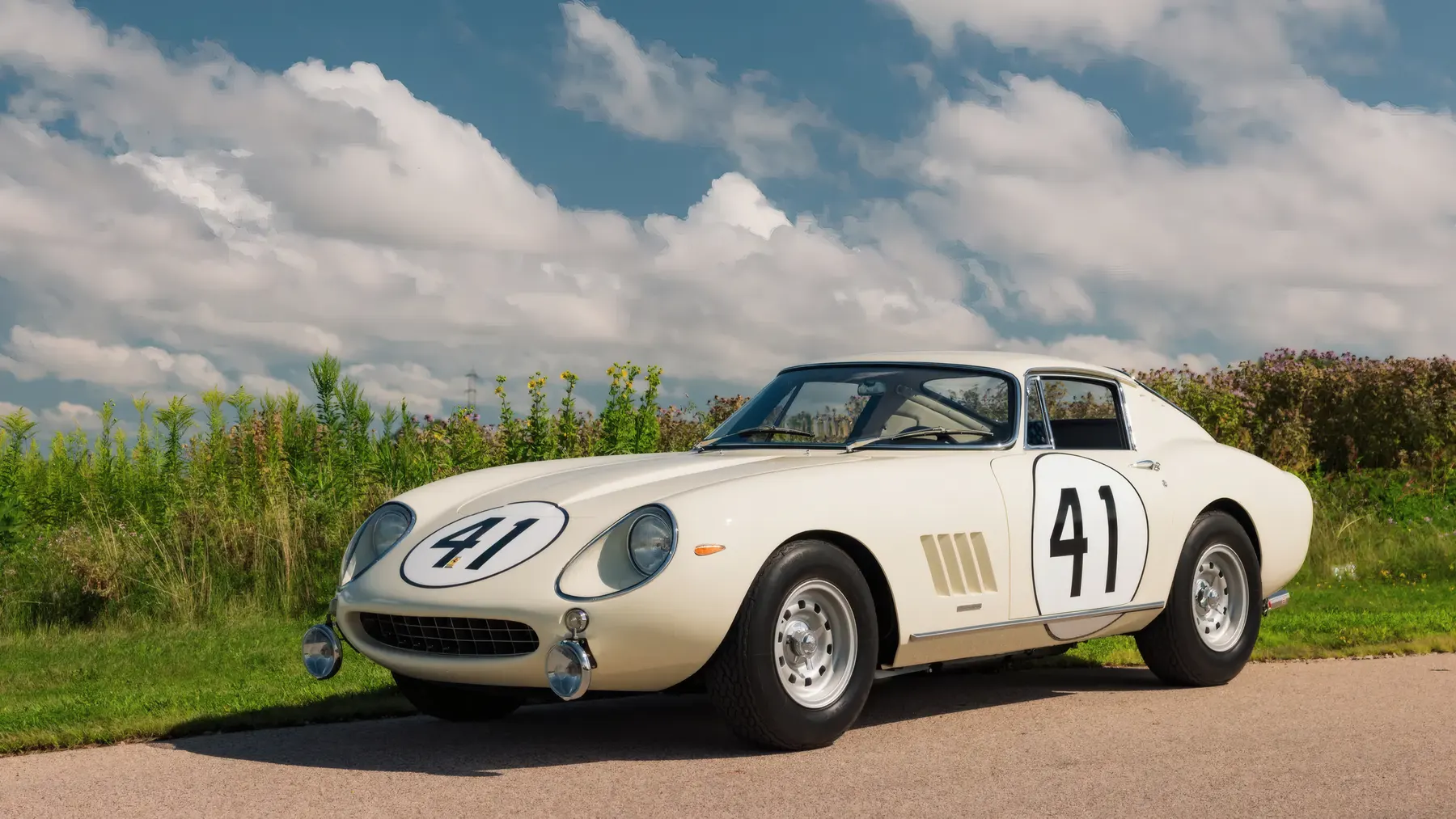
Not every lightweight Ferrari of the 1960s was built with a stopwatch in mind. Most alloy-bodied specials that left Maranello in this era went to wealthy clients who simply wanted the fastest, priciest version of whatever model already sat in their garage, not a competition licence. On paper, the alloy-bodied 275 GTB/4 belonged to that first group: an extravagant, four-cam grand tourer made even lighter for buyers who valued exclusivity as much as outright pace. But a handful of these cars ended up instead in the hands of Luigi Chinetti’s North American Racing Team, and there the contradiction sharpened into something more interesting: a plush four-cam berlinetta, ordered by some clients with power windows and a radio console, repurposed by others into a genuine class-winning endurance racer.
The 275 GTB/4 itself arrived at the Paris Motor Show in October 1966 as the third and final act of the 275 GTB story, and the last car built around the long-serving Colombo-designed short-block V12 before Ferrari moved on to the larger-engined Daytona. It inherited the long-nose bodywork and torque-tube driveline that Ferrari had only recently perfected on the outgoing two-cam GTB, changes originally introduced to cure real problems: the earliest short-nose cars suffered front-end lift at speed and driveline vibration from an interim propshaft arrangement, both resolved by 1966 with a longer nose and a rigid torque tube linking engine to the rear-mounted transaxle. What made the GTB/4 new was under the bonnet, quite literally announced by a slim, shallow bulge running down its centreline to clear taller cam covers and a larger air cleaner. Inside sat a four-cam evolution of the familiar 3.3-litre V12, its twin-overhead-camshaft cylinder heads and dry-sump lubrication derived directly from the racing department’s 275 and 330 P2 sports-prototypes of the 1965 season, engineered under Mauro Forgheri. It was, by Ferrari’s own account, the first series-production Ferrari sold with four camshafts, and the model quickly earned the enthusiast shorthand “the four-cam.”
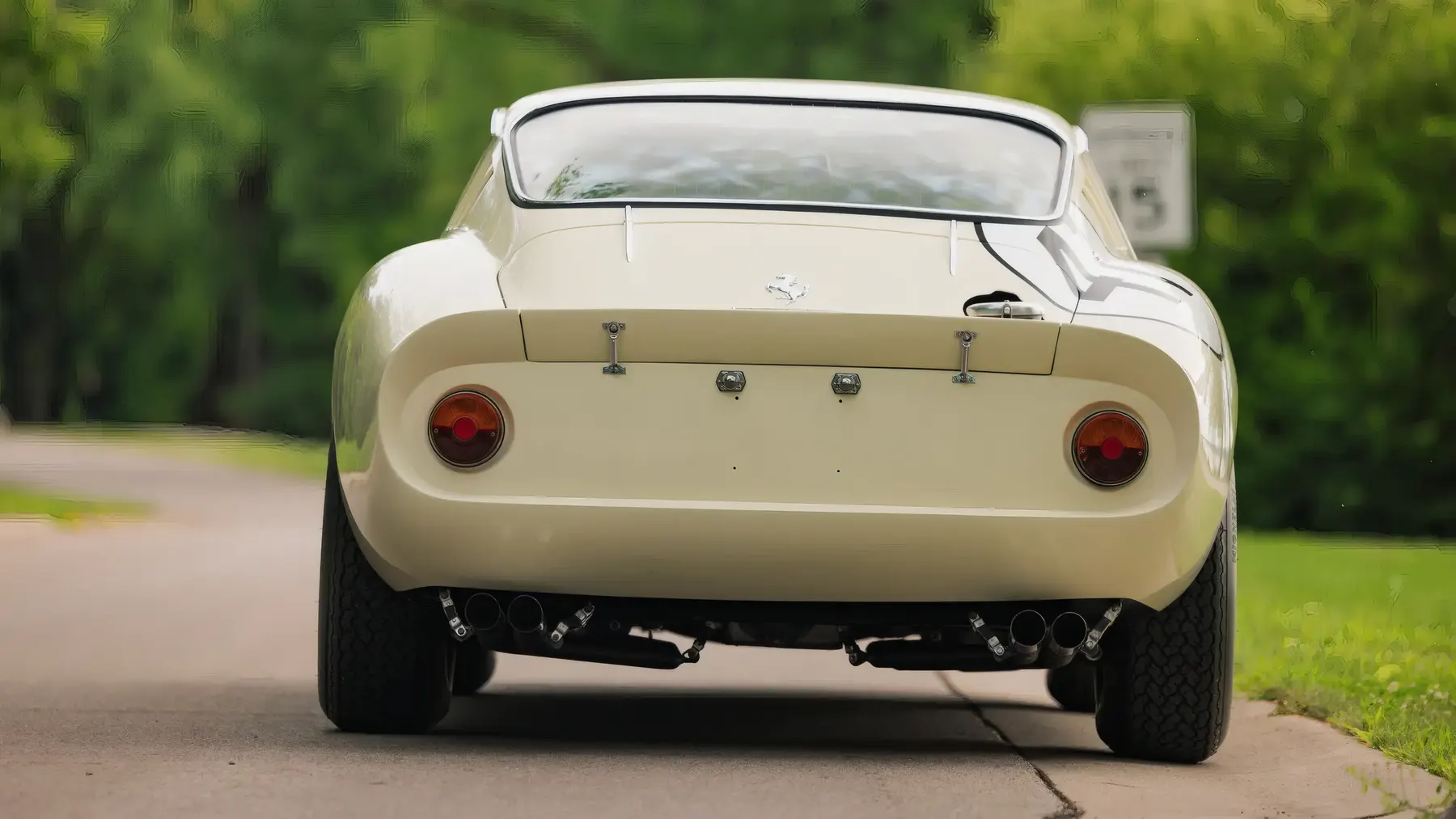
Specification followed logically from that racing lineage: 3,285cc, a 77mm bore and 58.8mm stroke, six twin-choke Weber 40 DCN carburettors as standard equipment rather than a costly option, and a claimed 300bhp at 8,000rpm sent through a five-speed transaxle. Suspension remained double wishbones and coil springs at each corner, with disc brakes all round. Production ran to roughly 330 cars between the Paris launch and March 1968, a run cut shorter than Ferrari might have liked by tightening American safety and emissions rules, which pushed the factory toward the larger, more compliant 365 GTB/4 Daytona that succeeded it.
Design continuity mattered as much as the mechanical changes underneath. Pininfarina’s long-nose shape, worked out over the final two-cam cars specifically to cure that high-speed lift, carried across to the GTB/4 essentially unaltered save for the telltale bonnet blister, and it remains one of the most resolved and widely admired designs to come out of the Pininfarina-Scaglietti partnership in the 1960s. Each body was still built largely by hand in Scaglietti’s Modena workshops rather than stamped out on an industrialised production line, which gave individual cars a degree of character that a more standardised contemporary rival simply could not offer. Ferrari positioned the GTB/4 as the range-topping expression of its V12 grand-touring berlinetta line, priced well above the marque’s lesser front-engined offerings and aimed at clients for whom one car needed to double as elegant road transport, concours entrant, and, for a select few, occasional competition tool.
Every 275 GTB/4 already mixed materials in the way most contemporary Ferraris did, with a steel main structure and aluminium bonnet, boot lid, and doors fitted as a matter of course. A rarer, more thoroughgoing option went further still: a handful of cars, most reliably counted at sixteen, received a fully aluminium body built by Carrozzeria Scaglietti, saving in the region of 100kg over a steel car and nudging the power-to-weight ratio meaningfully in the buyer’s favour. Cavallino Magazine’s own historical research put that figure at sixteen out of 330 cars built, or roughly five per cent of total production, and different sources over the years have occasionally cited slightly different counts, but sixteen is the number best supported by specialist research today. Crucially, this alloy bodywork was never a separate model on Ferrari’s build sheet. It was an expensive special order, available to favoured clients for whatever reason they wanted the ultimate expression of the four-cam car, whether their ambitions were purely social or genuinely sporting.
This is where the “NART Alloy” label, as it is used by today’s auction houses and specialists, needs a little unpacking, because it is not a period Ferrari designation at all. It describes, specifically, those alloy-bodied 275 GTB/4s that can trace genuine competition history back to Luigi Chinetti’s North American Racing Team, as distinct from the other alloy cars that stayed in private hands as extremely light road cars, and distinct again from the separate 275 GTS/4 “NART Spyder,” an open two-seater Chinetti commissioned directly from Ferrari and Scaglietti in a run of only ten cars. The Spyder shared its four-cam engine and much of its coachwork lineage with the GTB/4 but is a different, drophead model entirely, and the two are easy to conflate given how often “NART” appears in both names. By the late 1960s, Chinetti’s team was one of only a handful of privateer outfits enjoying genuinely close support from the Ferrari factory, a relationship built on his standing as Ferrari’s American importer and his long personal friendship with Enzo Ferrari. That closeness let NART routinely lay hands on some of Maranello’s most capable client equipment, and an alloy-bodied four-cam berlinetta, already lighter and more highly specified than the steel-bodied norm, was an obvious candidate for competition duty once Chinetti’s mechanics got hold of one.
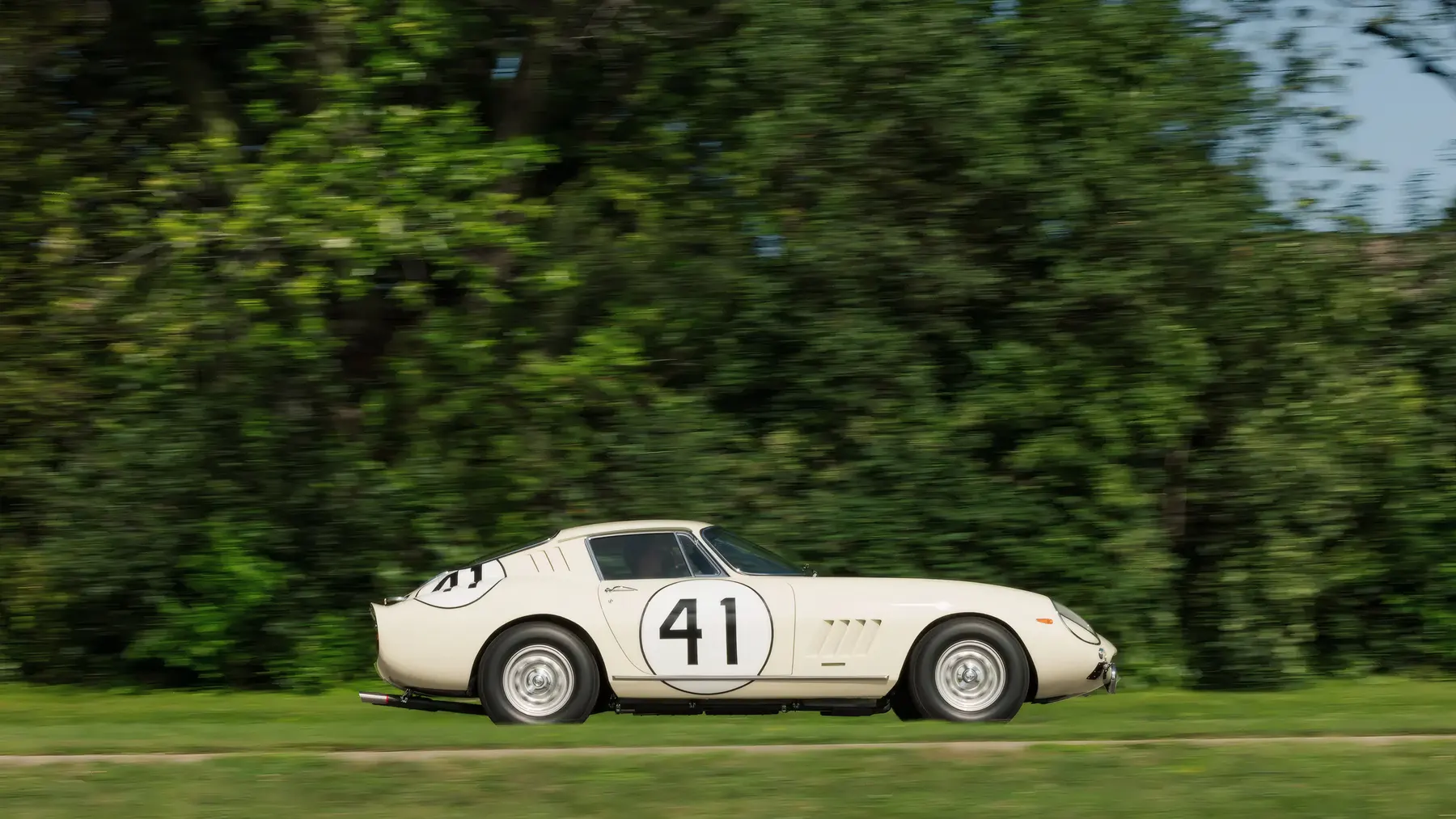
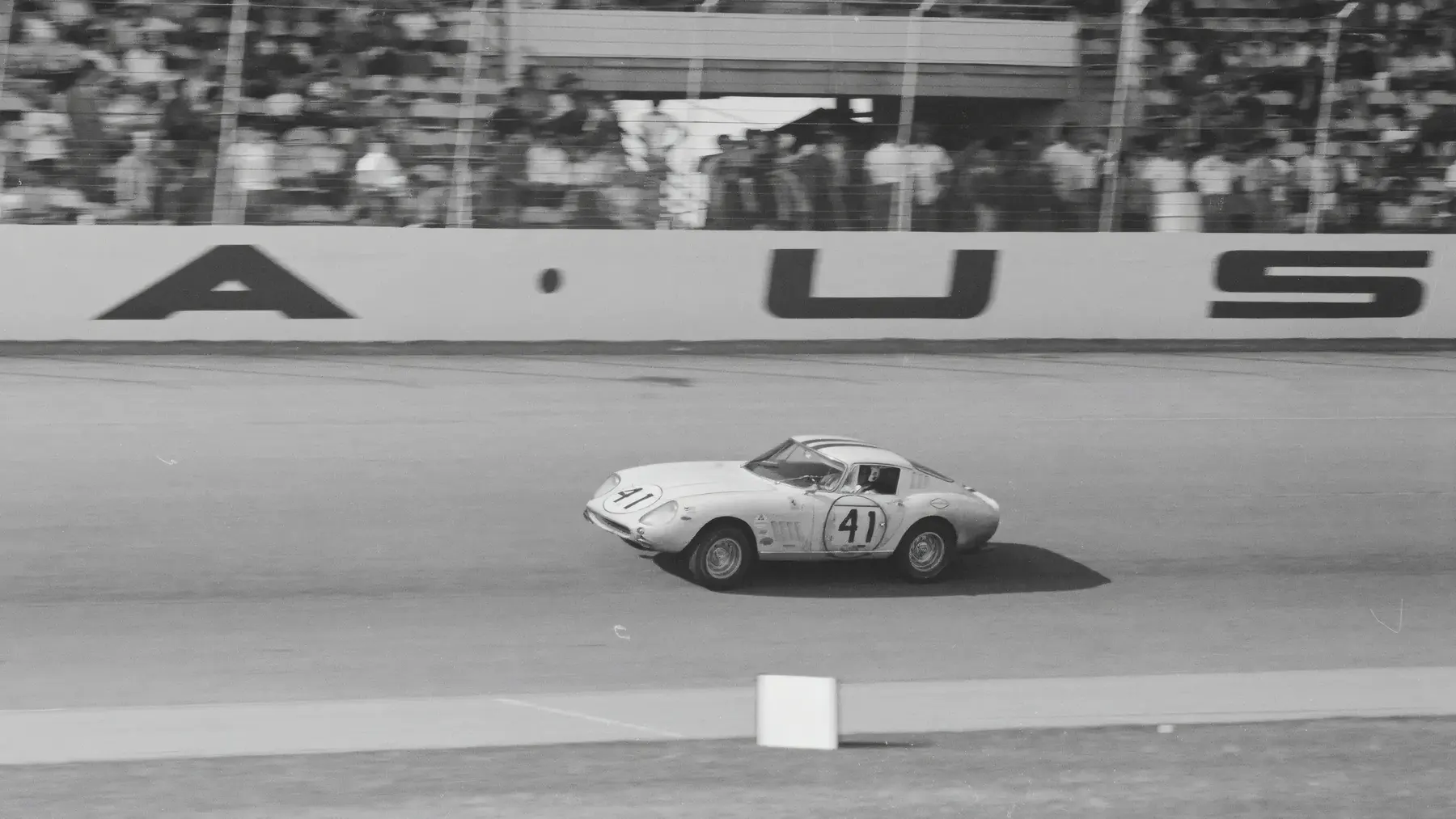
Racing history for these cars is modest in volume but genuinely significant in outcome. NART-prepared alloy GTB/4s appeared in period at events including the Watkins Glen six-hour race, and one entry was turned away from scrutineering at the 1968 24 Hours of Le Mans over a wheel-specification dispute rather than any fault of the car itself. The high point came at the 1969 24 Hours of Daytona, where a NART-entered alloy GTB/4 took a class victory, generally regarded as the strongest competition result achieved by any 275 GTB/4 anywhere. NART was not alone in pushing the model toward racing, either: Ferrari’s Swiss importer, Scuderia Filipinetti, fielded a handful of GTB/4s of its own for Peter Baumberger’s “Three Bears” effort, including at least one further alloy-bodied example, showing that the four-cam’s appeal to serious club racers extended well beyond Chinetti’s own operation.
None of which was really the point of driving one on the road, and by most contemporary and modern accounts the 275 GTB/4 rewarded that use case handsomely. The V12 pulls cleanly toward its redline with a voice that changes character noticeably above about 5,000rpm, and specialists who have driven these cars on demanding mountain roads and hillclimbs describe a chassis that lets its rear tyres slide progressively and predictably on committed corner entry, with brakes that keep working convincingly even after repeated hard use, aside from a tendency for temperatures to creep up under sustained circuit driving before a cool-down lap settles things again. Owners of period-tested examples have also noted that the unassisted steering is genuinely heavy at parking speeds, only relaxing into something rewarding once the car is properly rolling and best appreciated on a racetrack rather than around town, and that the gearbox can feel stubborn and notchy until fully warmed through. It is the kind of car, in other words, that asks for a bit of familiarity before it gives up its best side, and those who have spent real time behind the wheel on demanding roads tend to describe an unusually deep attachment to it once that familiarity is earned.
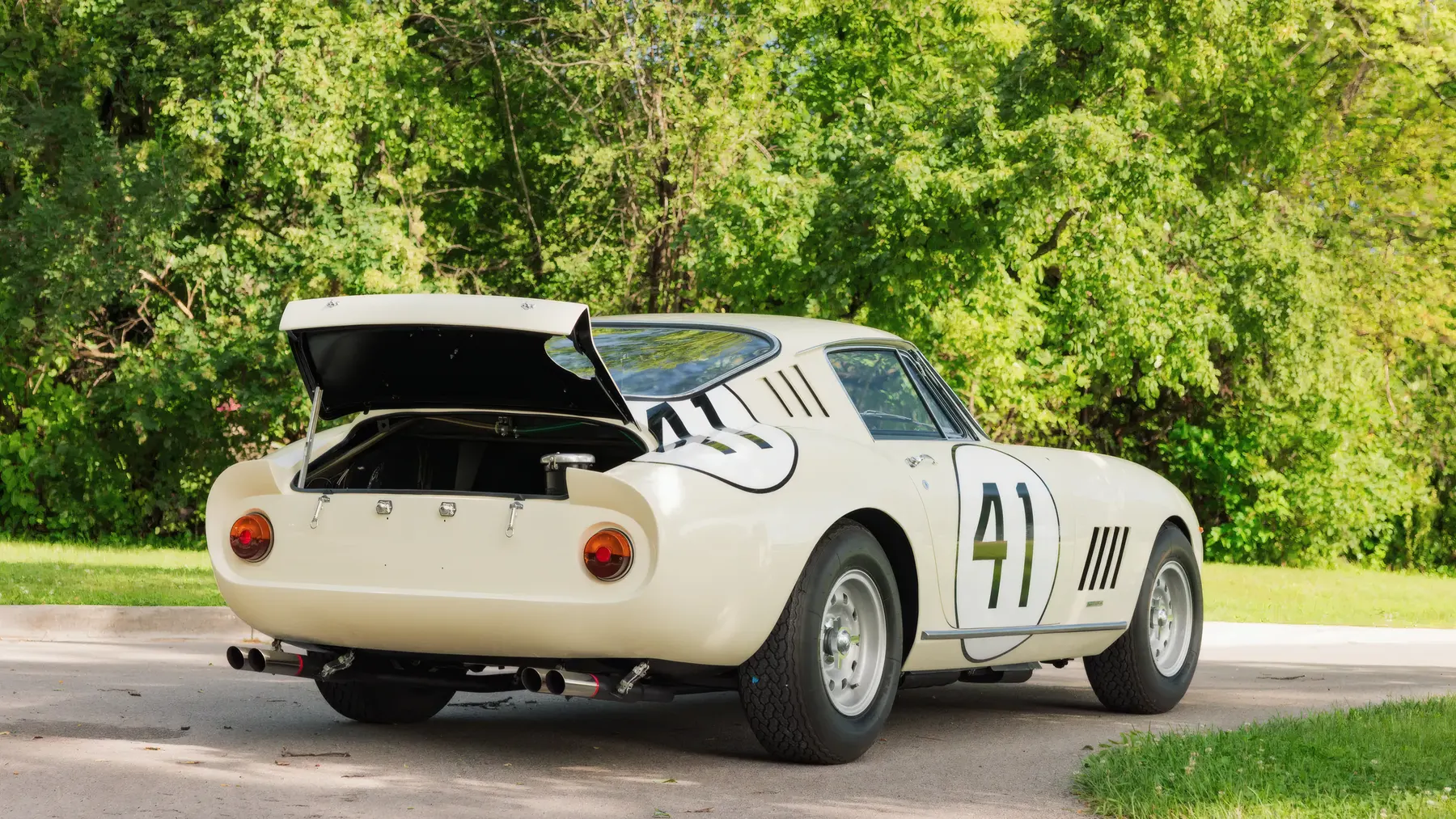
That combination of praise and honest caveat deserves a fuller airing, because the four-cam upgrade was not the unambiguous leap forward its billing suggested. Specialist research into the engine’s output shows peak power held at a claimed 300bhp whether a given 275 was fitted with the six-carburettor two-cam engine or the new four-cam unit, meaning buyers paid substantially more for a dry-sump lubrication system, six carburettors that demand careful synchronisation, and twice as many camshafts, without a matching jump in outright performance. For many original buyers, the real appeal of “four cams instead of two” was prestige and refinement rather than a transformed driving experience, and that added mechanical complexity has aged into a genuine ownership burden today, since specialists capable of setting up the valve gear and carburation correctly are increasingly hard to find. The cabin, meanwhile, offers 1960s Italian grand-touring ergonomics rather than anything approaching modern comfort: tight for larger drivers, prone to heat soak from the transmission tunnel and exhaust routing on a warm day, and fitted with steering that only starts to make sense once the car is moving with purpose. Alloy bodywork compounds the practical trade-offs rather than resolving them; it is thinner and more vulnerable to accident damage than steel, and considerably more specialised and expensive to repair correctly, a poor bargain for cars that period racers did, on occasion, actually crash. And the model’s production life was brutally short, replaced within roughly eighteen months of its debut, which meant the four-cam GTB/4 never had the chance to mature through the kind of running updates that shaped other long-lived Ferrari lines. Today, ironically, the very rarity and competition pedigree that make the NART-linked alloy cars so desirable have priced them into a stratosphere where they are far more likely to sit in a climate-controlled collection than to be driven in anger the way Chinetti’s own mechanics once used them.
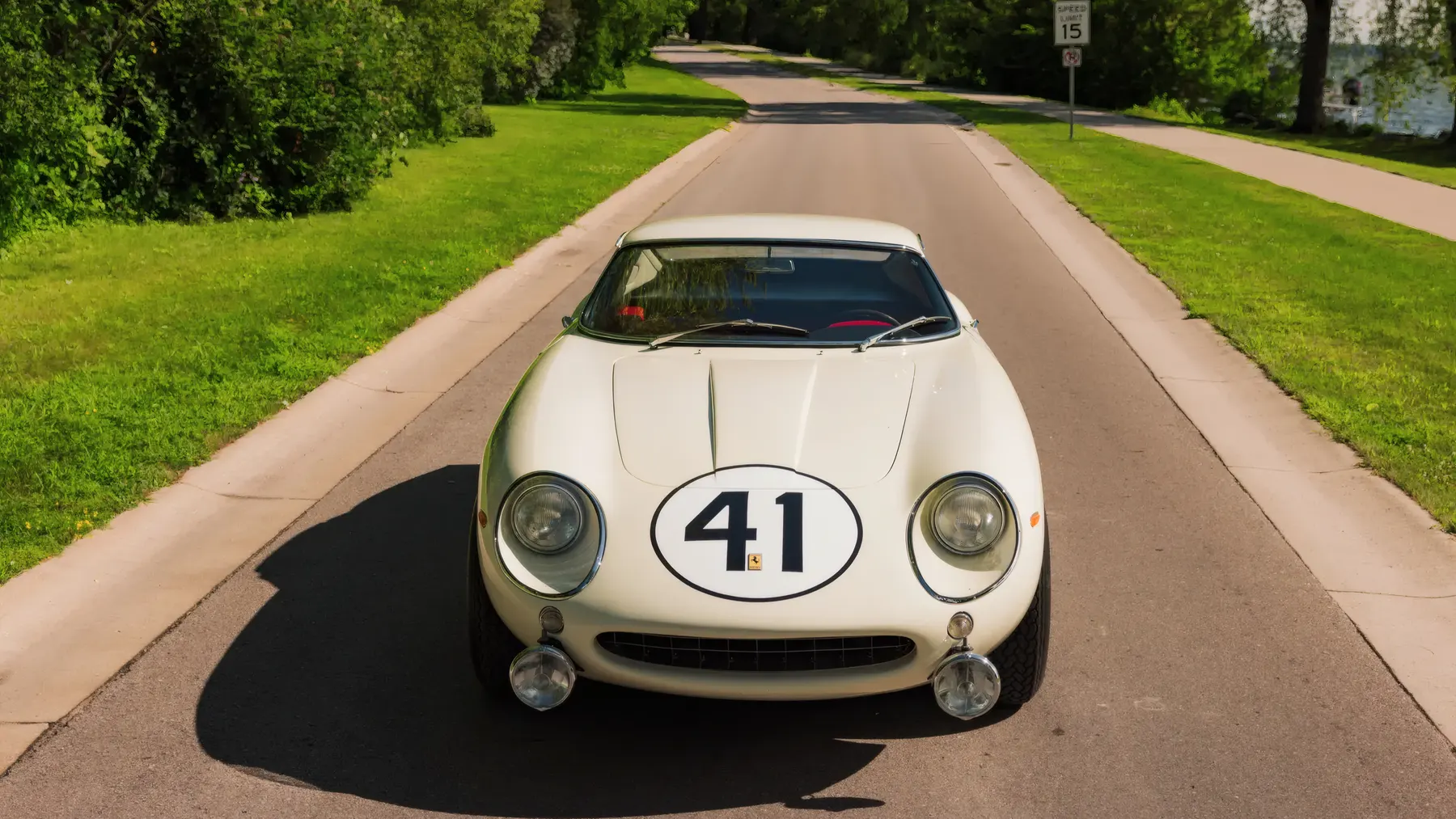
Positioned within Ferrari’s wider lineage, the 275 GTB/4 sat between the smaller-engined short-wheelbase berlinettas that preceded it and the larger 4.4-litre Daytona that followed, offering noticeably more torque and flexibility than the SWB while never quite matching the outright muscle of the car that replaced it. Among specialist collectors and marque historians today, the long-nose, four-cam 275 is frequently rated among the best-looking and best-balanced of the entire 275 family, a reputation the alloy cars only sharpen given how few were built and how directly some of them were tied to Ferrari’s client-racing culture rather than to garages and boulevards alone. The alloy-bodied cars with a genuine NART racing history sit at the very top of that hierarchy, changing hands for multi-million-dollar sums on the rare occasions one comes to market, a level of value that would have startled the private owners and privateer racers who bought and campaigned them as, fundamentally, usable cars rather than investments. What makes them worth understanding as a group, rather than simply as a line of expensive auction results, is what they reveal about Ferrari’s client relationships in this period: for a favoured few, the distance between an exquisitely trimmed road car and a genuine international-class racer could be closed with little more than a phone call to Modena, and nobody exploited that distance more thoroughly, or more successfully, than Luigi Chinetti’s small, well-connected racing team.
Technical data
Performance Specifications
| Specification | Detail |
|---|---|
| Production | 1966–1968; approximately 330 Ferrari 275 GTB/4s built in total |
| Alloy-bodied examples | Approximately 16 cars (roughly 5% of production); NART-linked competition history distinguishes the small “NART Alloy” subset |
| Engine | 3,285cc (3.3-litre) Tipo 226 V12, four overhead camshafts (two per bank), dry-sump lubrication |
| Bore x stroke | 77mm x 58.8mm |
| Carburetion | Six Weber 40 DCN twin-choke carburettors |
| Power | 300bhp at 8,000rpm (claimed) |
| Torque | Approximately 200–235 lb-ft depending on source (see Editorial Notes) |
| Transmission | Five-speed manual transaxle, rear-mounted, torque-tube driveline |
| Suspension | Independent all round, double wishbones and coil springs |
| Brakes | Four-wheel discs |
| Wheelbase | 2,400mm |
| Kerb weight | Approximately 1,270–1,300kg steel-bodied; alloy-bodied cars roughly 100kg lighter (see Editorial Notes) |
| Top speed | 165mph (claimed, period sources) |
| 0–100mph | Under 15 seconds (period sources) |
| Body | Design by Pininfarina, built by Carrozzeria Scaglietti, Modena; steel structure with aluminium bonnet, boot, and doors standard; full aluminium body a rare special-order option |
Sources
- Ferrari.com – 275 GTB4 Heritage Page
- RM Sotheby’s – 1967 Ferrari 275 GTB/4 NART Alloy by Scaglietti, Monterey 2024
- RM Sotheby’s – 1967 Ferrari 275 GTB/4 Alloy by Scaglietti, Sealed
- Sports Car Market – 1967 Ferrari 275 GTB/4 Alloy
- Sports Car Market – A Pair of 1967 Ferrari 275 GTB/4s
- Bonhams – 1967 Ferrari 275 GTB/4
- Supercar Nostalgia – Ferrari 275 GTB/4 & 275 GTS/4 Guide
- Octane Magazine – Driving a Ferrari 275 GTB/4 on the Modena Cento Ore
- Forza Magazine – One for the Road, Issue 81
- Classic Driver Magazine – Ferrari 275 GTB/4: Straight off the Track
- Talacrest – 1967 Ferrari 275 GTB/4 Alloy Body
- Heacock Classic – 1967 Ferrari 275 GTB/4
- Hagerty UK – 1967 Ferrari 275 GTB/4 Valuation & History
Join the discussion
Comments
Loading comments…
Leave a comment
Share a detail, memory, or perspective. Every comment is reviewed before publication.