BMW-Glas 1600 GT: The Frua-Styled Orphan BMW Inherited from Glas
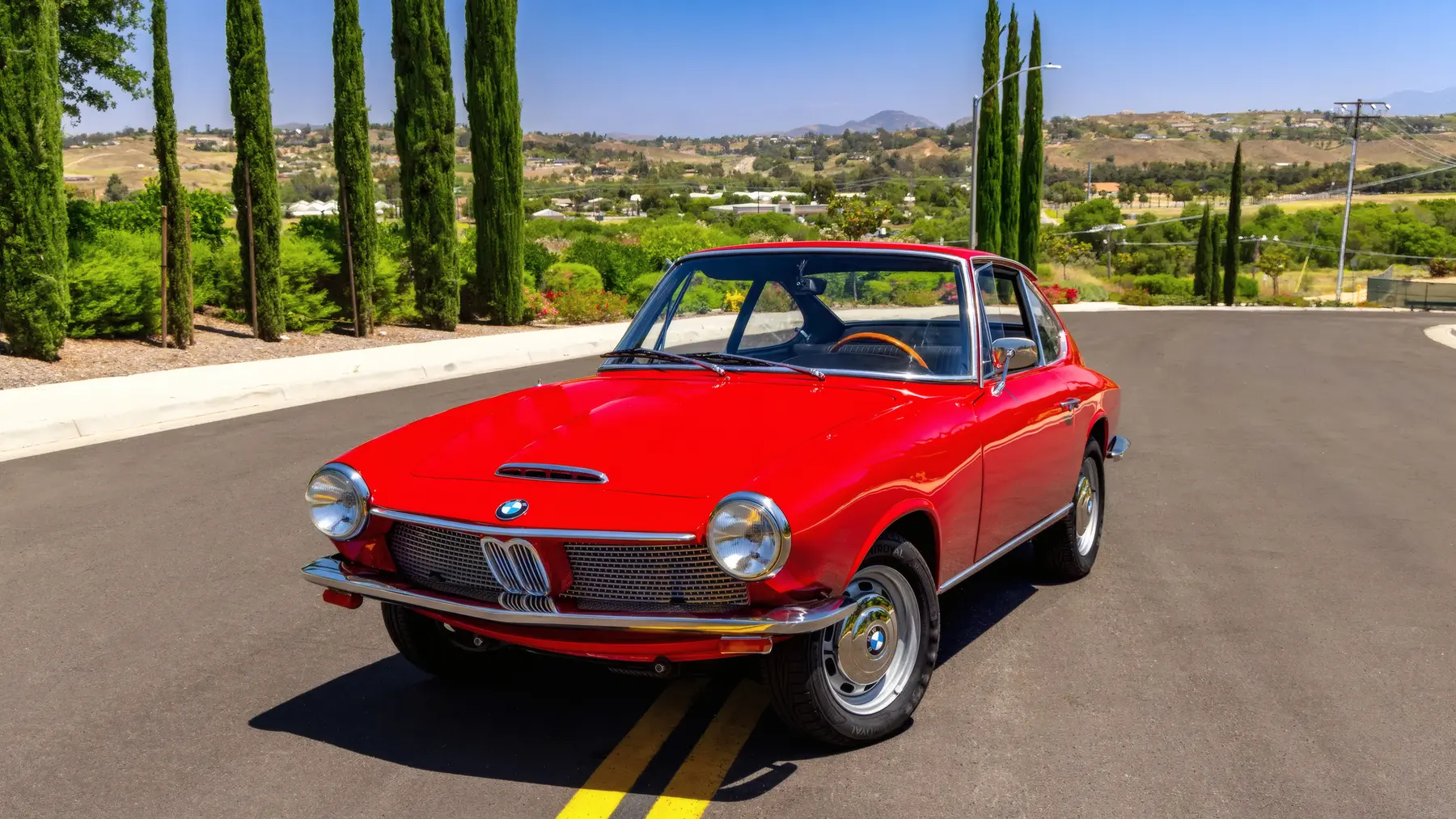
1968 BMW-Glas 1600 GT by Maggiora




Images: RM Sotheby's
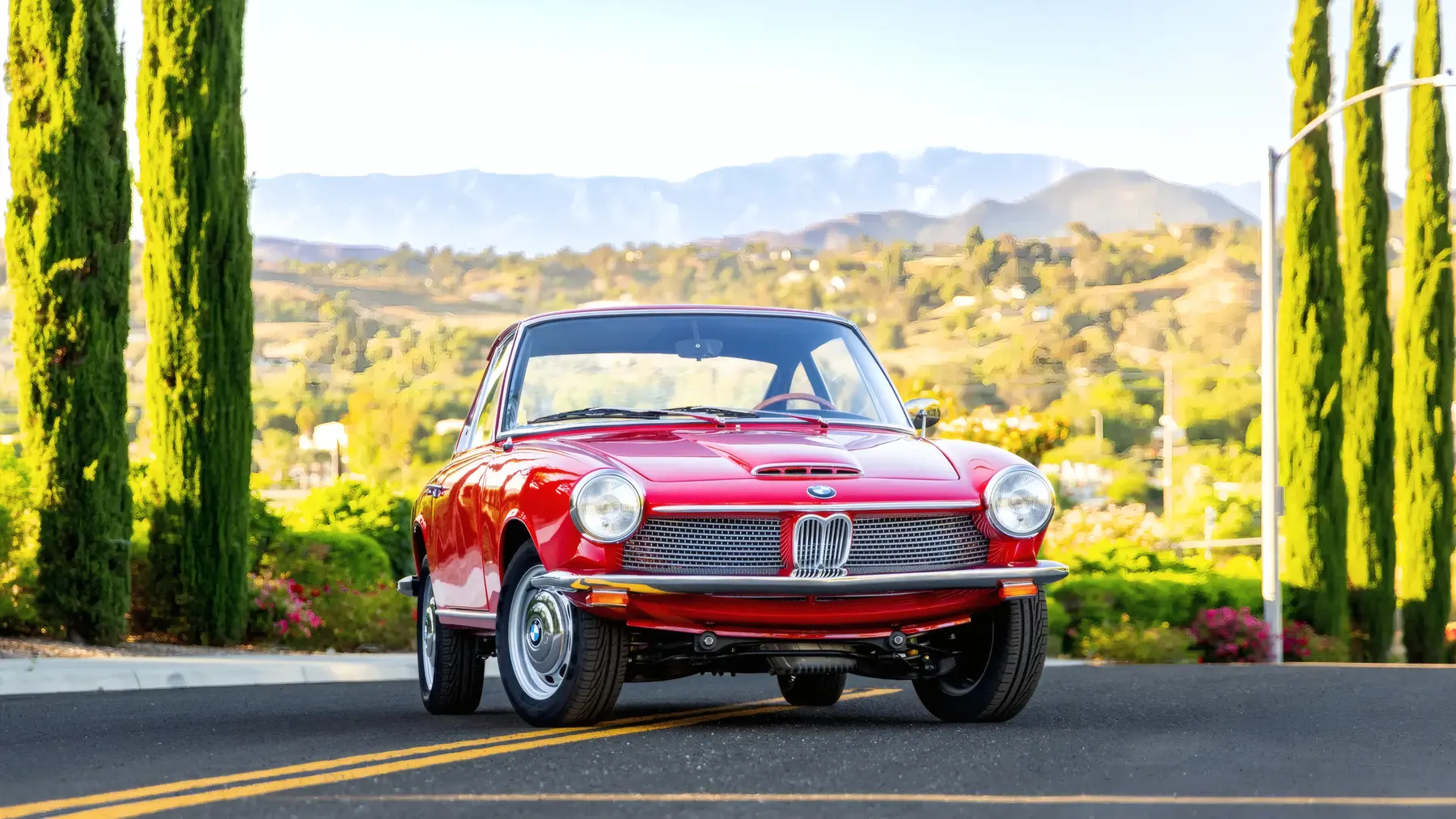
Badge engineering usually works forwards: a manufacturer builds a car, then dresses it up for a foreign market or a cheaper trim level. The BMW-Glas 1600 GT worked backwards. By the time a blue-and-white roundel appeared on its bonnet in the summer of 1967, the car underneath had already been designed, tooled, and in production for three years - for a completely different company. BMW didn’t create this coupé. It inherited it, along with a bankrupt manufacturer, an overambitious V8 flagship, and a factory at Dingolfing that would go on to build millions of 5 Series saloons. The 1600 GT is the small, charming evidence of that takeover: an Italian-styled, Italian-bodied German sports coupé that wore three different sets of badges in five years without ever really changing its skin.
The company behind the underlying design was Hans Glas GmbH, an agricultural-machinery maker from Dingolfing that had drifted into car production almost by accident, first with scooters and then with the bubble-shaped Goggomobil microcar. Riding West Germany’s post-war economic boom, Glas pushed upmarket through the early 1960s with a range of conventional saloons and, in 1963, a proper sports coupé of its own. The styling job went to the Italian designer Pietro Frua - reportedly because the commission had originally been intended for Borgward, whose collapse into insolvency freed Frua to look for a new client. What he produced, revealed at the Frankfurt motor show in September 1963 and put into production the following March as the Glas 1300 GT, was a neat, glassy fastback coupé with none of the awkwardness that afflicted so many small manufacturers’ attempts at a sporting model.
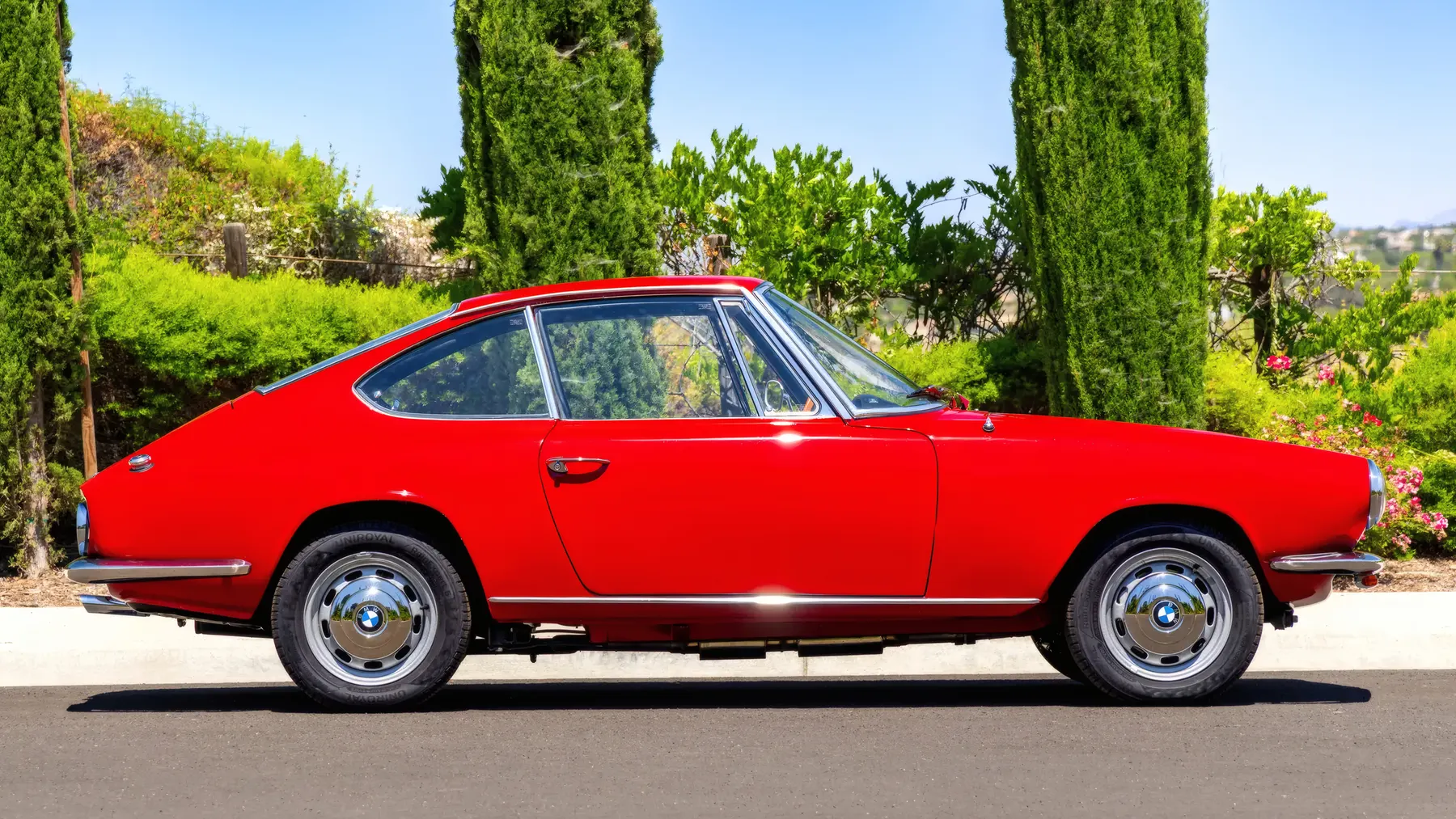
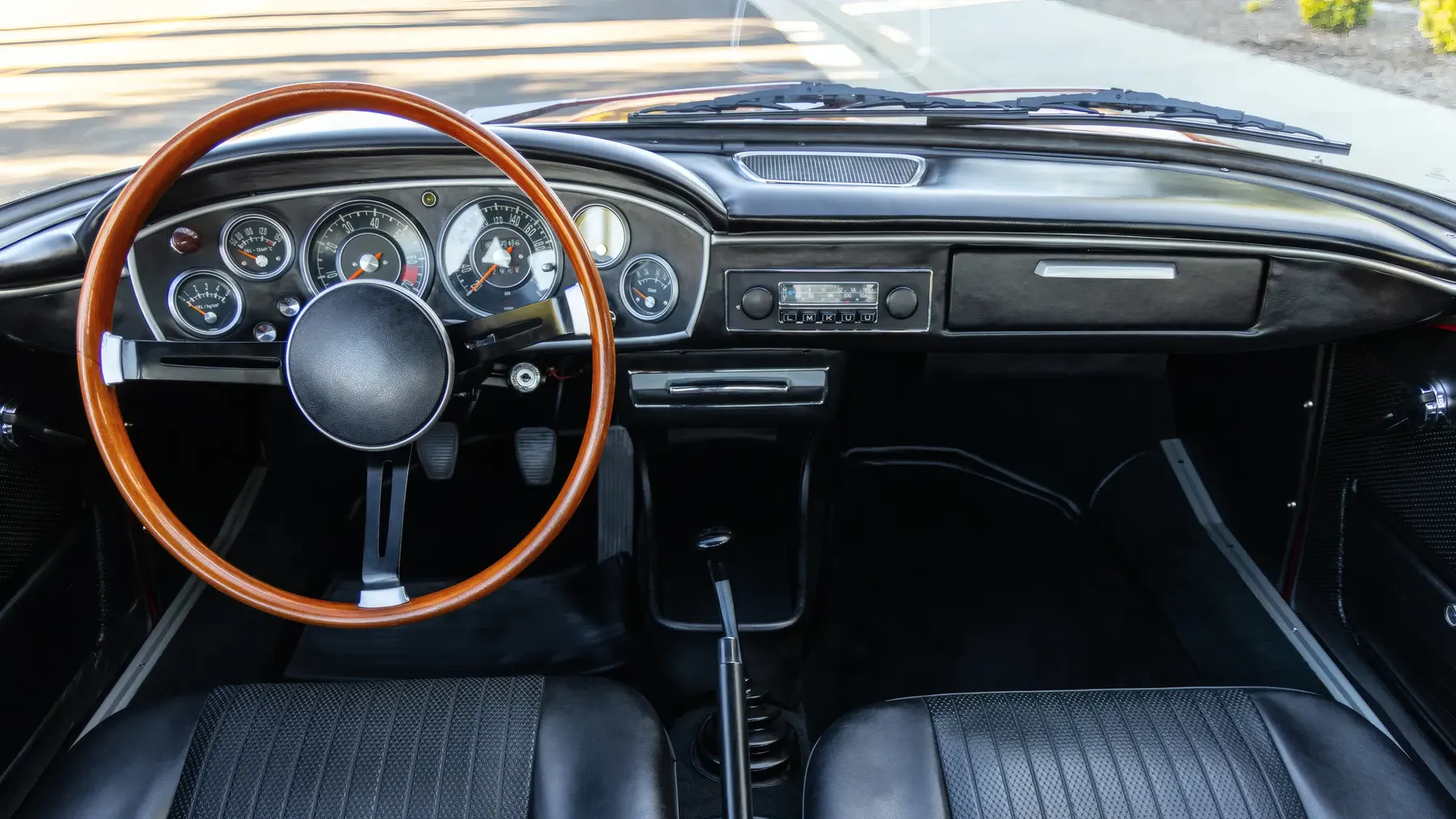
Even by Frua’s own standards, the shape held up well: compact and tidy rather than dramatic, with a short fastback roofline over a long bonnet and a relatively wide-glazed cabin that gave the driver genuinely good outward vision. Chrome-ringed dials sat in a leathercloth-trimmed dashboard that felt a class above the car’s modest price - a point of real pride for a manufacturer still trying to shrug off its reputation as a builder of scooters and bubble cars.
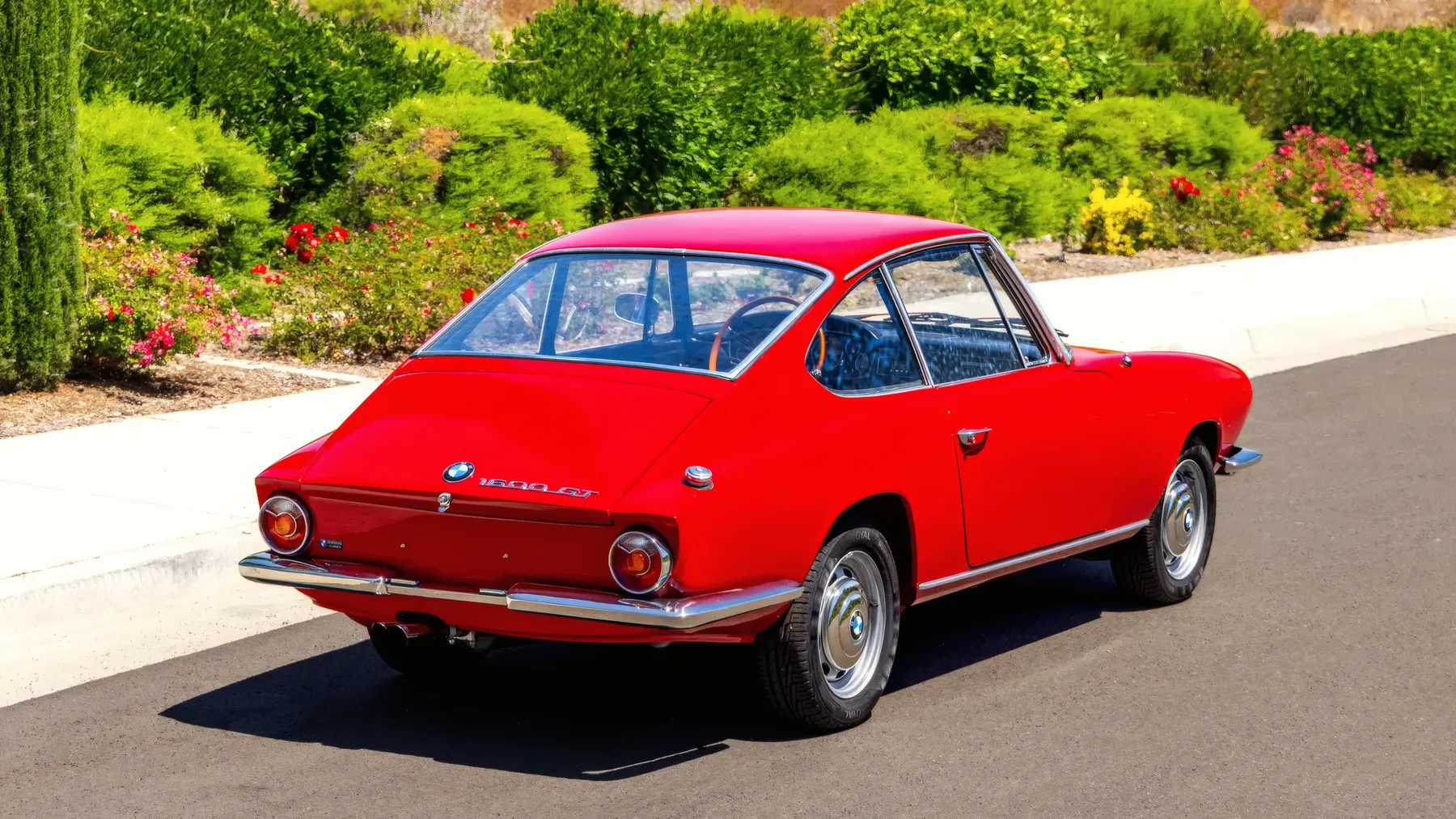
Frua didn’t build the bodies himself; that job went to the coachbuilder Maggiora, based around Moncalieri and later Chivasso on the outskirts of Turin. Maggiora pressed and welded the all-steel monocoques, then had them trucked over the Alps to Glas’s Dingolfing plant for final assembly - a slow, expensive process for what was meant to be a relatively affordable car, one that steadily ate into already thin profit margins. It was also, in hindsight, a template. BMW would later lean on exactly this kind of subcontracted coachbuilding for some of its most collectible cars, from the Bertone-bodied 3200 CS to Karmann’s work on the E9 3.0 CSL, but the arrangement with Maggiora long predated any BMW involvement. Maggiora built the body; Glas engineered and marketed the car underneath it, initially with a 1,290cc overhead-cam four making around 74bhp and a top speed of roughly 106mph.
That engine grew more potent within two years: output rose to around 84bhp in September 1965, at which point Glas also introduced a larger 1,682cc option, badged as the 1700 GT, producing roughly 99bhp and a genuinely respectable 115mph. A cabriolet joined the coupé in the range’s middle years, though in far smaller numbers - only 363 open cars were built against just over five thousand coupés. Glas even homologated the 1700 GT for the United States, hoping the little coupé might catch some of the goodwill that Porsche’s ageing 356 was starting to shed as its production wound down; period commentators reckoned the closely related 1300/1700 GT did real work for Glas’s credibility as a manufacturer capable of filling that gap. It never quite managed it. Glas, still remembered by most German buyers as the company behind the endearingly cheap Goggomobil, lacked the reputation to compete with established sporting marques at the GT’s price point, and sales were consistently softer than hoped.
Underfunded and overextended, Glas made the classic mistake of a small manufacturer trying to punch above its weight: rather than consolidating around its successful, low-cost models, it pushed upmarket again with an ambitious V8 flagship, the Frua-styled 2600 (later enlarged to 3000cc), which an unimpressed German press nicknamed the “Glaserati.” The gamble didn’t pay off. By November 1966, with the company drowning in debt, BMW bought Hans Glas GmbH outright. It was not a sentimental acquisition. BMW wanted Glas’s factory capacity and its engineering talent - notably chief engineer Karl Dompert, credited with pioneering the toothed nylon timing belt - rather than any particular affection for the cars themselves. Every Glas model bar the still-profitable Goggomobil was marked for extinction; the only real question was how long each would be allowed to limp on.
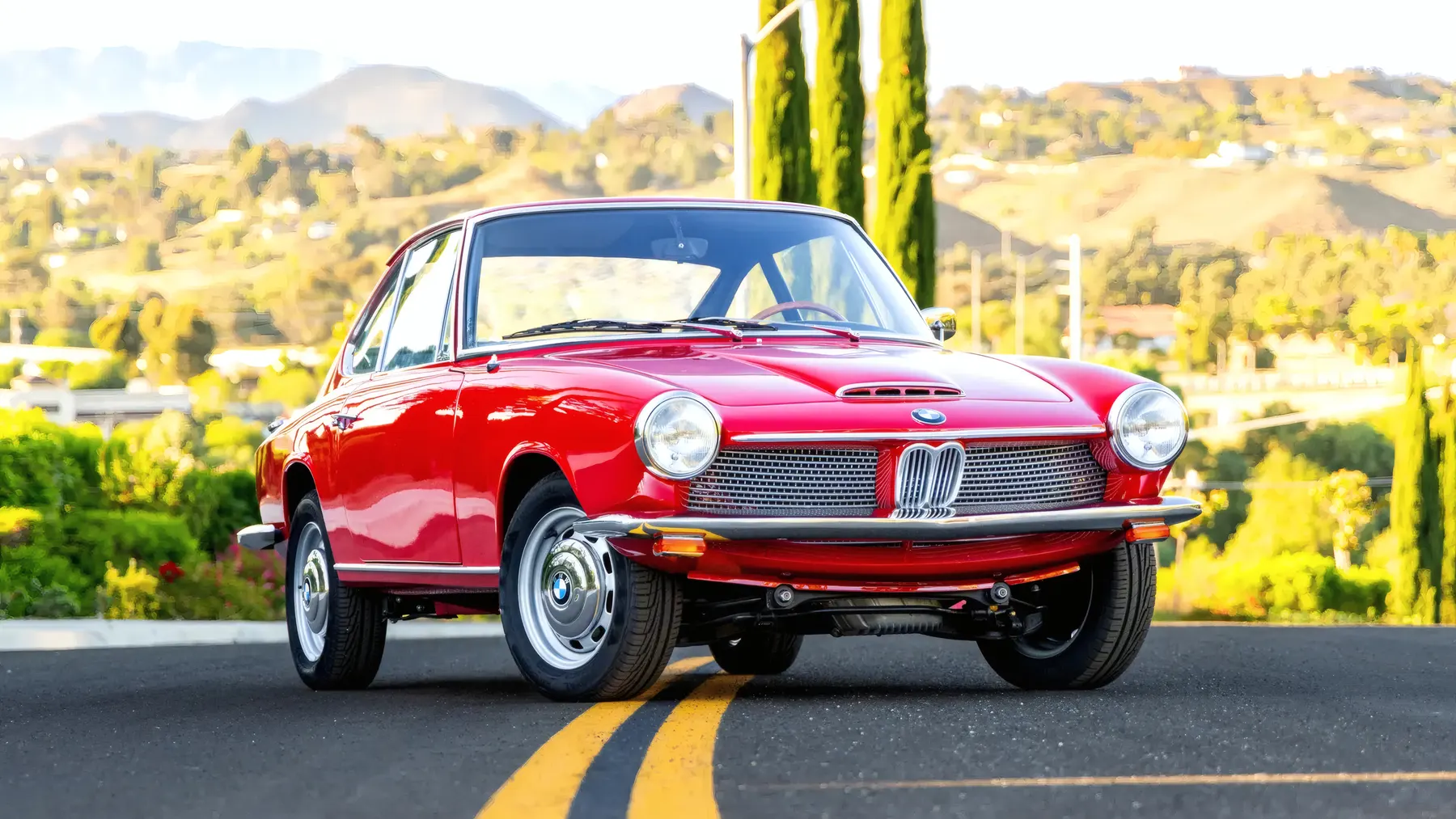
The GT coupé was granted a stay of execution, though not much of one. From around mid-to-late 1967, BMW re-engineered the surviving design just enough to wear its own badges. The Frua/Maggiora bodyshell carried over almost unchanged, gaining BMW’s twin-kidney grille, roundel badges, and round tail-lights borrowed from the newly launched 02 Series. Underneath, the changes ran deeper: BMW discarded Glas’s old rigid rear axle and leaf springs in favour of its own semi-trailing-arm independent rear suspension, moved to a 12-volt electrical system, and - most significantly - fitted the 1,573cc single-overhead-cam four from the twin-carburettor BMW 1600ti, its engine canted 30 degrees from vertical, as on BMW’s own “New Class” saloons, to allow a lower bonnet line. Power rose to somewhere in the region of 103–105bhp - contemporary sources differ slightly on the exact figure - with around 97lb-ft of torque arriving at 4,500rpm. At a kerb weight of only around 830kg, the newly-badged BMW-Glas 1600 GT could reach 60mph in roughly 10.8 seconds and run on to about 118mph: modest numbers on paper, but genuinely competitive for a small four-cylinder coupé of its era. A cabriolet version of the BMW car was considered, but only two prototypes were ever built before the idea was shelved.
On the road, the 1600 GT feels like a different animal from the softer, more relaxed 2600 V8 it briefly shared showroom space with. Where the V8 favours smoothness and a gentlemanly delivery of power, the four-cylinder GT is altogether feistier: its twin-choke Solex carburettors give it a peaky, urgent character and an exciting exhaust note that belies its modest capacity. It rewards a driver who keeps the revs up and works through the sweetly-shifting four-speed gearbox with some purpose; squeeze the throttle hard enough mid-corner and the semi-trailing-arm rear end lets you tighten your line rather than simply washing wide, a trait testers have likened to a small Alfa Romeo more than to anything wearing a Porsche badge. It is a car that asks to be driven with a bit of gusto rather than cruised, and it is all the more endearing for it.
That eagerness comes with real compromises, though, and it would be dishonest to wave them away as charming period quirks. The worm-and-roller steering is notably heavy at parking speeds and offers poor lock, making the 1600 GT a genuine effort to manoeuvre anywhere tight - hardly ideal in a car meant to double as everyday transport. The clutch is sharp rather than progressive, and the engine’s narrow, highly-strung power band means the gap between a clean getaway and an embarrassing bog-down is uncomfortably small if you’re not precisely in the right gear; the four-speed gearbox itself, slick as its action is once moving, has a notoriously vague detent between first and reverse that has caught more than one driver out. Inside, the cabin is closer to a two-plus-one than a genuine four-seater, and the column-mounted slide controls for heating and ventilation are fiddly and unintuitive next to the simple stalks fitted to contemporary rivals. More seriously for anyone considering one today, the largely hand-built, all-steel bodies were only lightly rustproofed from the factory, and rot in the sills, floors, and rear arches is a well-documented problem on surviving cars. None of this stopped the model from being genuinely enjoyable to drive, but it explains why period reviewers treated it as an enthusiast’s car rather than an easy daily companion, and why so many of the roughly 1,300 BMW-badged examples built didn’t survive to become the sought-after classics they are today.
Commercially, the reinvented coupé fared little better than its Glas-badged predecessors. BMW never officially sold the 1600 GT in the United States, despite the groundwork Glas had already laid by homologating the related 1700 GT there, and total BMW-badged production amounted to only around 1,300 cars - sources differ on the precise figure, with some citing 1,259 and others 1,298 - built over a run of well under fourteen months between mid-1967 and the spring of 1968. Part of the problem looks structural rather than a failure of the car itself. BMW’s own New Class saloons had already spawned the smaller, cheaper 02 Series by 1966, giving Munich an in-house compact sporting coupé that didn’t require shipping half-finished bodies over the Alps from Turin. Persisting with an inherited, low-margin, logistically awkward niche model made limited commercial sense once BMW had a homegrown alternative in the pipeline, and the 1600 GT was allowed to quietly expire rather than being developed further.
What survives is a genuinely odd footnote in BMW’s history: a car styled by an Italian designer and built by an Italian coachbuilder, for a German company BMW hadn’t even bought yet when the shape was first sketched. Today, that oddity is exactly what makes the BMW-Glas 1600 GT so appealing to specialist collectors. It is rare enough that clean, correctly presented cars now command serious money - UK specialist valuations in the region of £55,000 for good examples were being quoted as of the early 2020s - and distinctive enough, with its Frua fastback roofline and its slightly uneasy blend of Italian style and Bavarian mechanicals, that it doesn’t get mistaken for anything else in a car park full of 02 Series and E9 coupés. One specialist magazine has gone so far as to argue that BMW wouldn’t build anything quite like it again - a small, affordable, four-cylinder sporting coupé bought in from someone else’s design department - until the Z3 arrived thirty years later; whether or not that comparison entirely holds up, it captures how genuinely singular the 1600 GT’s position in BMW’s family tree remains. Acquired almost by accident, adapted just enough to wear the roundel, and quietly discontinued within two years, it is a reminder that some of the most interesting cars in any manufacturer’s history are the ones that company never actually set out to build.
Technical data
Performance Specifications
| Specification | Glas 1300 GT (1964) | Glas 1300 GT (1965 revised) | Glas 1700 GT (1965–67) | BMW-Glas 1600 GT (1967–68) |
|---|---|---|---|---|
| Engine | 1,290cc SOHC four, single carburettor | 1,290cc SOHC four, single carburettor | 1,682cc SOHC four | 1,573cc SOHC four, twin Solex carburettors |
| Power | ~74bhp* | ~84bhp* | ~99bhp* | 103–105bhp*† |
| Torque | not corroborated | not corroborated | not corroborated | ~97lb-ft @ 4,500rpm |
| 0–60mph | not corroborated | not corroborated | not corroborated | ~10.8 sec |
| Top speed | ~106mph* | ~109mph* | ~115mph* | ~118mph |
| Kerb weight | not corroborated | not corroborated | not corroborated | ~830kg |
| Wheelbase | 2,320mm | 2,320mm | 2,320mm | 2,320mm |
| Length | 4,050mm | 4,050mm | 4,050mm | 4,050mm |
| Transmission | 4-speed manual, RWD | 4-speed manual, RWD | 4-speed manual, RWD | 4-speed manual, RWD |
| Suspension (rear) | rigid axle, leaf springs | rigid axle, leaf springs | rigid axle, leaf springs | independent, semi-trailing arm |
| Production | part of 5,013 Glas-badged coupés built 1964–67 (combined figure) | " | " | 1,259–1,298‡ |
Join the discussion
Comments
Loading comments…
Leave a comment
Share a detail, memory, or perspective. Every comment is reviewed before publication.