Ferrari 365 GTS: The Rarest Ferrari Spider Nobody Wanted in 1969
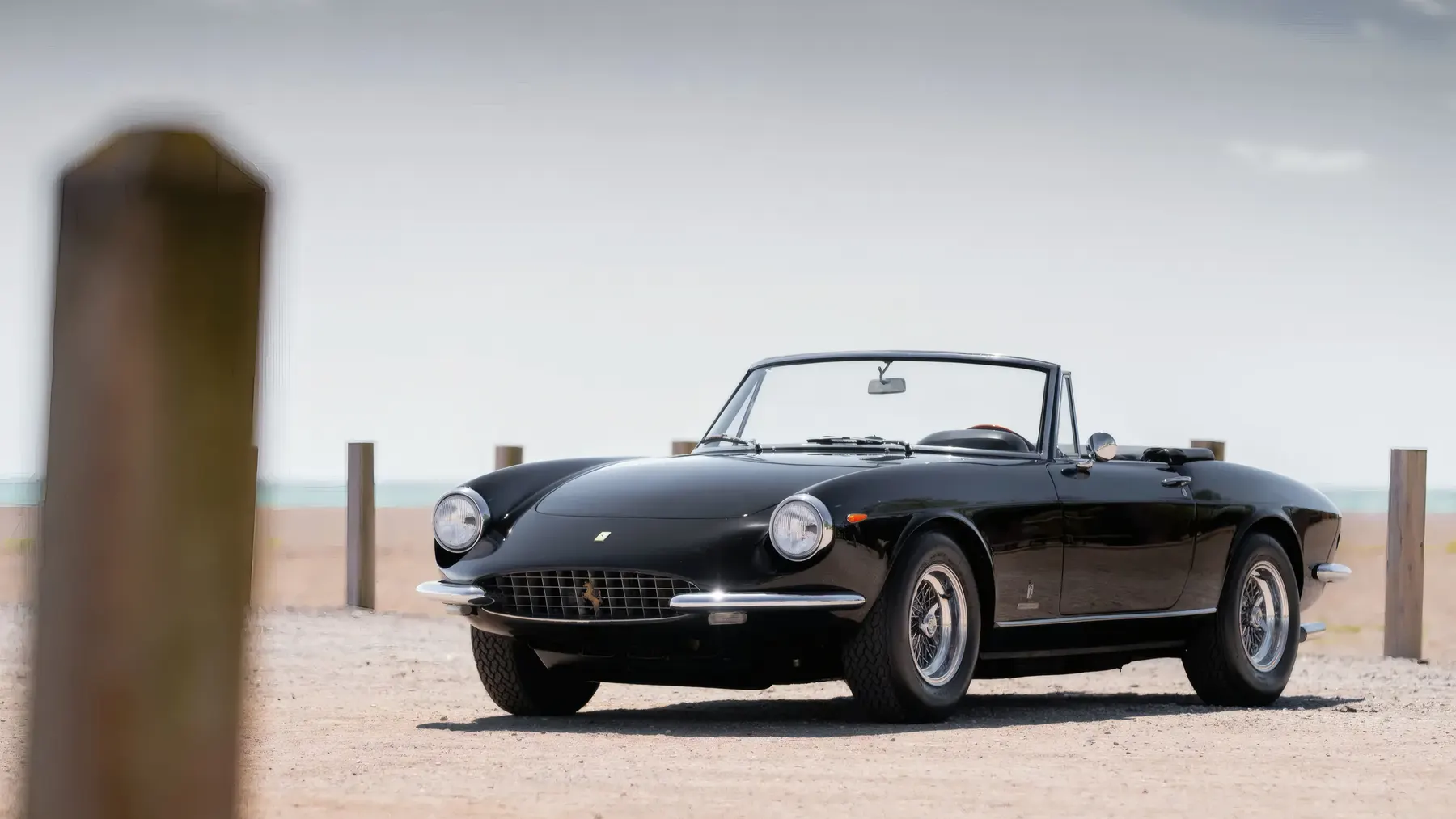
1969 Ferrari 365 GTS by Pininfarina




Images: Darin Schnabel / RM Sotheby's
Ferrari’s stand at the Paris Motor Show in October 1968 carried two very different answers to the same question: how do you follow the 330 GTC and GTS? One answer was the 365 GTB/4, a shark-nosed berlinetta soon nicknamed the Daytona that redefined what a front-engined Ferrari could be. The other, announced at the same time but built in a fraction of the numbers, was the 365 GTS - an open two-seater that kept faith with an older, gentler idea of what a Ferrari grand tourer should feel like. History remembers the first car. The second was overshadowed so completely that Ferrari built only twenty of them before quietly dropping it from the catalogue within about a year.
The 365 GTS was the final and most powerful expression of a lineage that ran back through the 330 GTC and GTS, the 275 GTS, and the original 250 GT coupés and cabriolets of the late 1950s: an ongoing promise that the marque’s most demanding clients could have a genuinely quick V12 Ferrari with the roof folded away. That thread had not always run smoothly - Ferrari left a gap of several years between the 250 GT Series 2 Cabriolet and the 275 GTS, filling it only with the fixed-head 250 GT Berlinetta Lusso - and by the late 1960s the open two-seat V12 Ferrari sat alongside a broader range that also included the practical four-seat 365 GT 2+2 and the smaller, six-cylinder Dino 206 GT built in partnership with Fiat. Mechanically, the GTS amounted to little more than a re-engined 330 GTS. Ferrari enlarged the existing Colombo-derived V12 from 4.0 to 4.4 litres, kept the same short-wheelbase chassis and running gear, and sold the result at the top of its two-seat range, just below the flashier, six-carburettor Daytona. Buyers shopping in this bracket had no shortage of alternatives elsewhere - Lamborghini’s Islero, Maserati’s Mexico, Aston Martin’s DB6 and Jaguar’s E-type all competed for similar money - but none carried quite the same weight of factory pedigree, and few were engineered with such deliberate emphasis on long-distance comfort over outright theatre.
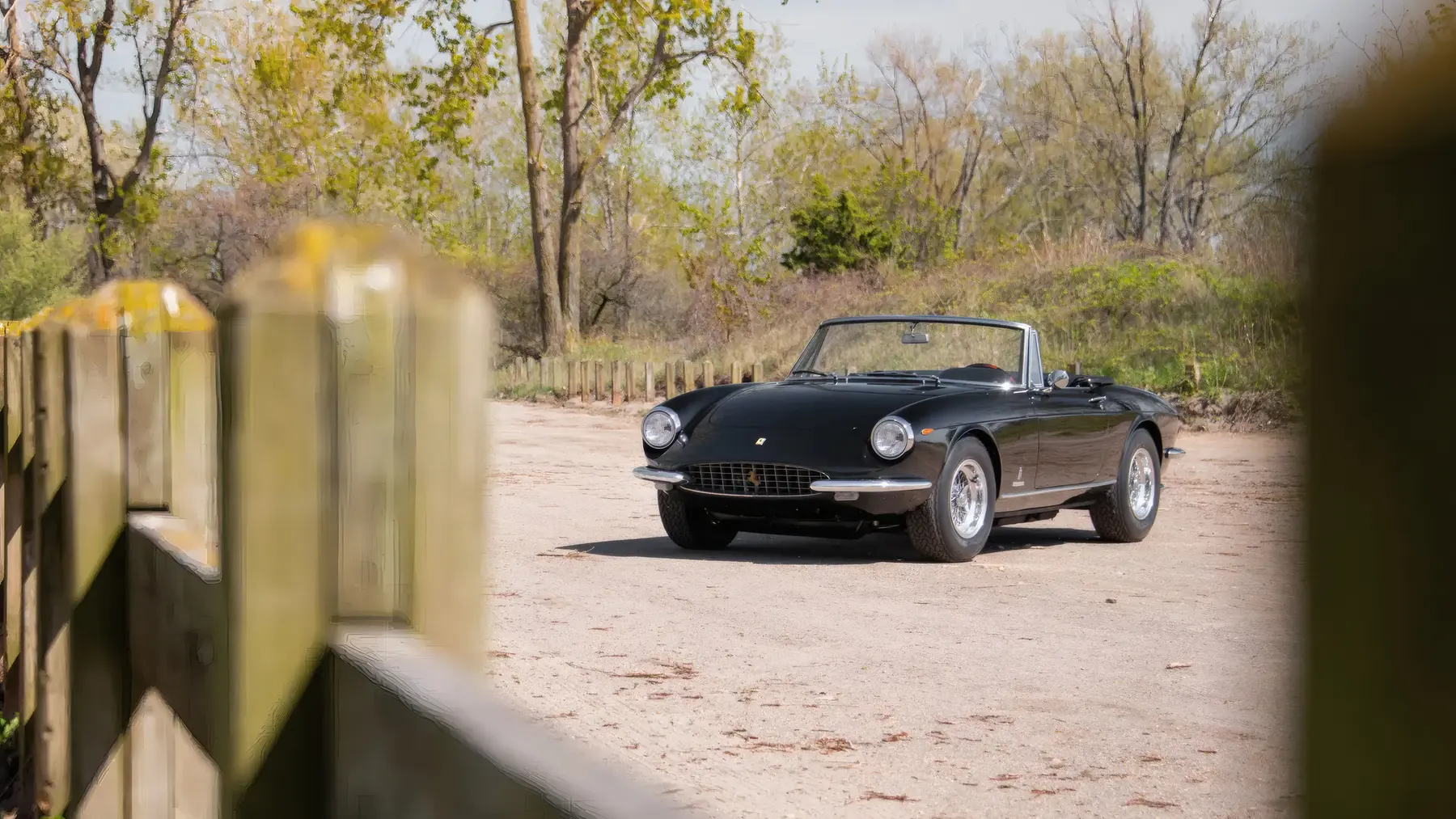
Under the bonnet sat the Tipo 245/C engine, a further development of Gioacchino Colombo’s original 60-degree V12 architecture that dated back to Ferrari’s earliest road cars. Bore grew by 4mm over the outgoing 330-spec unit to 81mm, stroke stayed at 71mm, and the resulting 4,390cc all-alloy engine - still a single overhead camshaft per bank, the last configuration of its kind Ferrari would put into series production - breathed through three twin-choke Weber 40 DFI carburettors, switched from DFI/5 to the newer DFI/7 type on the final cars, to produce a claimed 320bhp at 6,600rpm. Torque, quoted at around 267 lb-ft, mattered more in daily use: Ferrari’s own literature noted meaningful pull from as low as 2,500rpm, giving the car a flexibility its high-revving reputation didn’t always suggest. Drive went through a rear-mounted five-speed transaxle enclosed in a torque tube - a layout first used on the 330 GTC in 1966 - which helped achieve close to ideal front-rear weight distribution. The tubular steel chassis, reinforced to cope with the heavier engine and reclassified as Tipo 592/C, carried double-wishbone independent suspension at each corner, architecture that traced back to the 275 GTB, along with coil springs, telescopic dampers, a front anti-roll bar and four-wheel Girling disc brakes assisted by a pair of servos. Track widened slightly at the front to 1,410mm and narrowed a touch at the rear to 1,414mm, and Firestone tyres were fitted as standard, a legacy of the American company’s sponsorship arrangement with Scuderia Ferrari’s racing programme. Kerb weight is one of the few figures period and retrospective sources disagree on: some marque-specialist accounts put the GTS at around 1,250kg dry, some 100kg lighter than the closed GTC’s roughly 1,350kg - an unusual outcome for an open car, which typically needs extra bracing - while a contemporary Autocar road test of the GTC alone recorded a noticeably heavier 1,451kg kerb figure, a gap that likely reflects differing measurement conventions rather than a genuine contradiction.
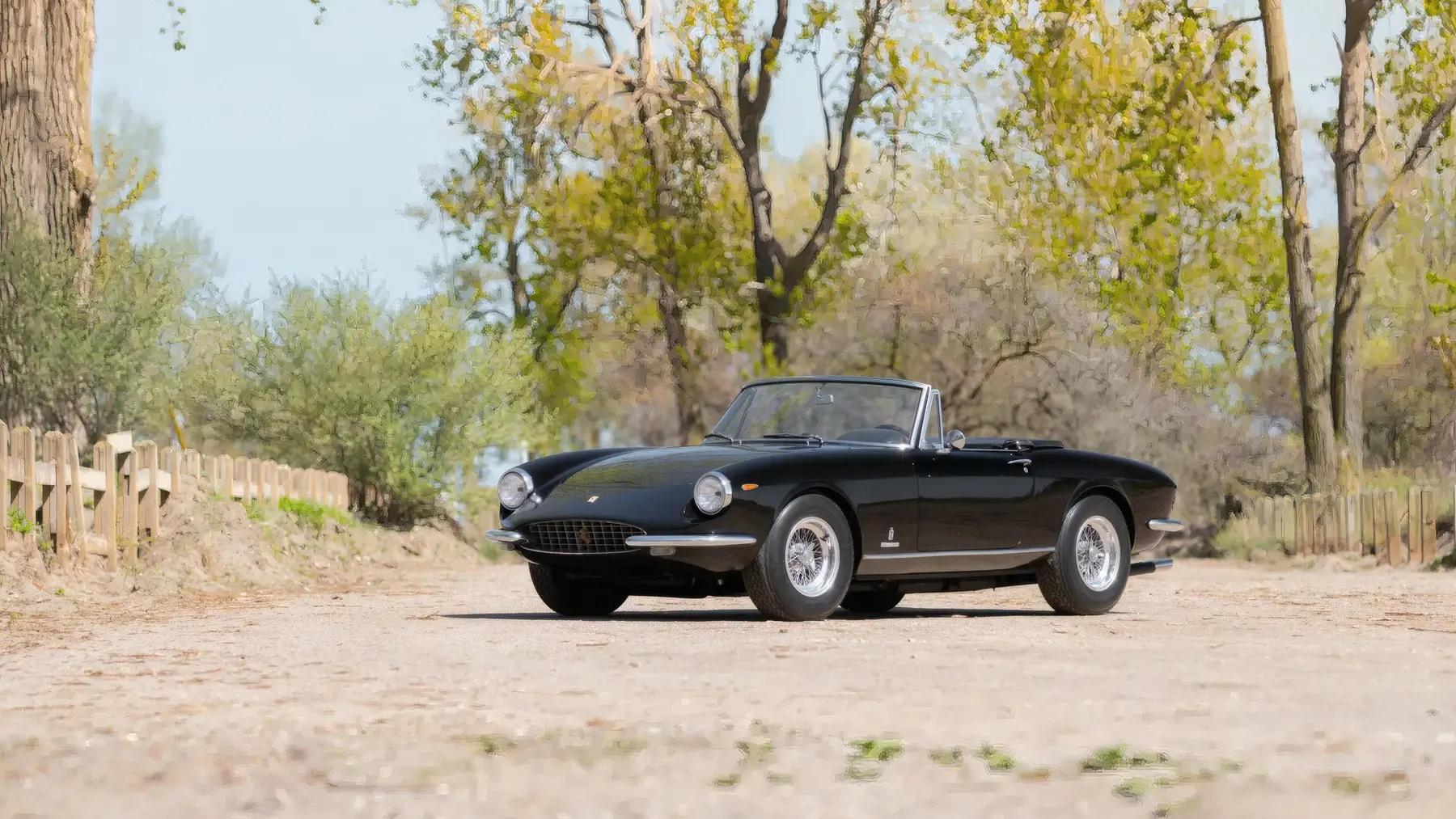
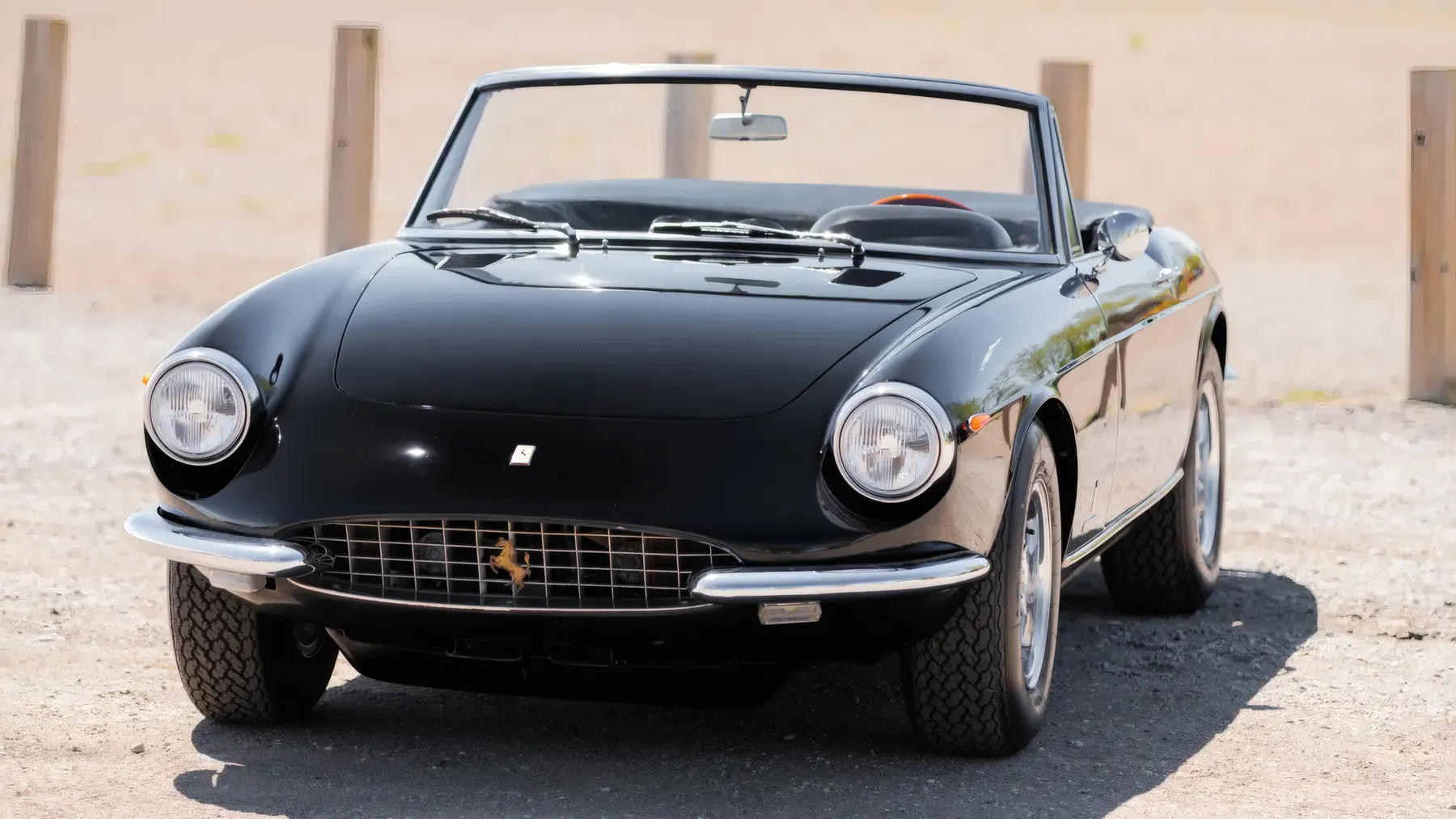
Visually, Pininfarina changed remarkably little in the transition from 330 to 365 specification, which was rather the point. The shape, credited to Pininfarina’s Aldo Brovarone, was left almost entirely alone; the clearest giveaway was a pair of satin-black cooling vents added along the trailing edge of the bonnet, replacing the louvres that had sat behind the front wheelarches on the 330 cars, along with the quiet deletion of the chrome model badge on the tail. Inside, changes were similarly modest: a relocated choke lever with its own warning light, revised door panels with armrests, an illustrated gearchange pattern on the knob, and two new circular demister vents set into the top of the dashboard. The GTS’s soft-top was a simple folding canvas affair carried over unaltered from the 330 GTS, disappearing almost entirely from view behind the seats beneath a clip-on vinyl tonneau when lowered, with a hardtop offered as an option for owners who wanted year-round use. It was a handsome, unhurried shape - a teak-veneered dashboard, a wood-rimmed three-spoke wheel and a curved binnacle of Veglia dials gave the cabin an understated, almost gentlemanly character that had more in common with a Ferrari from a decade earlier than with the creased, flatter-surfaced Italian design language already emerging around it. That restraint was, depending on who was asked, either the car’s quiet charm or a sign that Ferrari had let a successful shape run on a little too long.
Behind the wheel, the 365 GTS rewarded a patient, deliberate driving style rather than outright aggression. Visibility was exceptional for any era, thanks to slim pillars and a low scuttle, and the controls - heavy at parking speeds - settled into a genuine rhythm once rolling: a positive clutch, a dogleg first gear, and a gearchange that turned wonderfully slick once the transaxle oil had warmed through. The V12 needed revs to come alive, its quad exhausts building from a burble into a proper howl as the tachometer swept past 4,000rpm, and period drivers, including Grand Prix veterans Paul Frère and Phil Hill, praised a chassis balance that felt genuinely neutral rather than the mild built-in understeer of earlier Ferrari GTs; Frère himself reported that it would drift smoothly and controllably right at the limit. Braking, courtesy of twin-servo Girling discs, felt oversensitive around town but hauled the car down from speed with total confidence and no hint of fade. A contemporary Autocar road test of the closed GTC - mechanically all but identical to the GTS bar the roof - recorded a 0-60mph time of 6.3 seconds and a top speed of 151mph at 6,600rpm; built to essentially the same specification, the open car would have performed within a whisker of those figures. For all its performance, specialists who have driven both consistently single out its usability: a genuinely spacious boot, comfortable seats on long journeys, and, for European and American customers alike, an optional factory air-conditioning system that few contemporary rivals could match. Ferrari specialists who have restored the cars also note that, transaxle rebuilds aside, the mechanicals are comparatively straightforward by Ferrari standards of the period - well-built, rust-resistant bodywork and accessible panels that made the 365 easier to keep sound than the more fragile Ferraris that had come immediately before it.
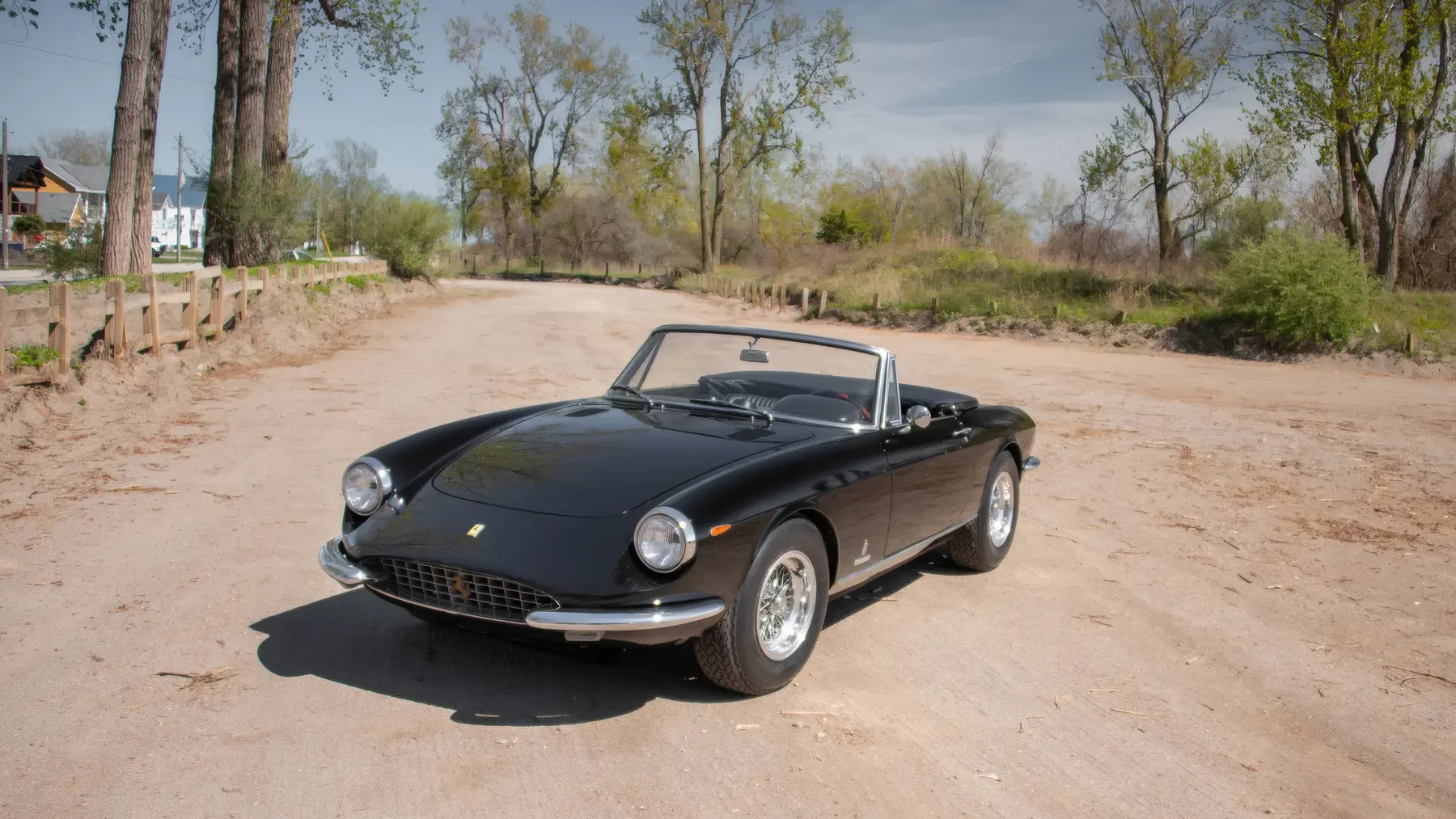
None of this made the 365 GTS an easy car to live with, and its flaws were real rather than merely nostalgic footnotes. The unassisted ZF worm-and-roller steering was the most persistent complaint among period drivers and modern specialists alike: heavy at low speed, with poor lock that made parking and tight manoeuvring a genuine chore, and one that owners and restorers have long wished Ferrari had swapped for a proper rack-and-pinion set-up, as rival manufacturers increasingly did through the late 1960s. Running one was expensive in ways that went beyond the purchase price - fuel consumption hovered around 12mpg regardless of how gently it was driven, meaning that even with a generous 90-litre tank, a car pitched as an effortless long-distance tourer needed remarkably frequent stops. Commercially, the model was something close to a flop in period. It arrived at the same show as the far more glamorous Daytona, wore styling that already looked conservative next to the sharper-edged Italian exotics emerging around it, and was widely regarded by contemporary buyers as a run-out model rather than a fresh proposition; sales were modest even by Ferrari’s low-volume standards of the day. Tightening American safety and emissions regulations, which would soon push Ferrari’s older single-cam V12s out of its most important export market altogether, gave the company an additional reason to end GTS production after barely a year rather than persevere with a model that had generated little enthusiasm at launch.
Ferrari built the 365 GTS between February and October 1969, every one of them left-hand drive, for a total of just twenty cars alongside a broadly corroborated figure of around 168 examples of the closed GTC - production tallies for the coupé vary slightly by source, but the GTS figure of twenty is consistently agreed upon, making it comfortably the rarest series-production Ferrari spider built before 1970. For as long as it remained in production, it was also the only open V12 Ferrari money could buy new. Its replacement arrived at the Frankfurt show in 1969 in the shape of the 365 GTS/4, the open version of the Daytona, which shared nothing mechanically with the car it succeeded beyond the badge and the general concept - a reminder that Ferrari’s engineering priorities had already shifted decisively toward the twin-cam architecture that would define the next decade of front-engined V12s.
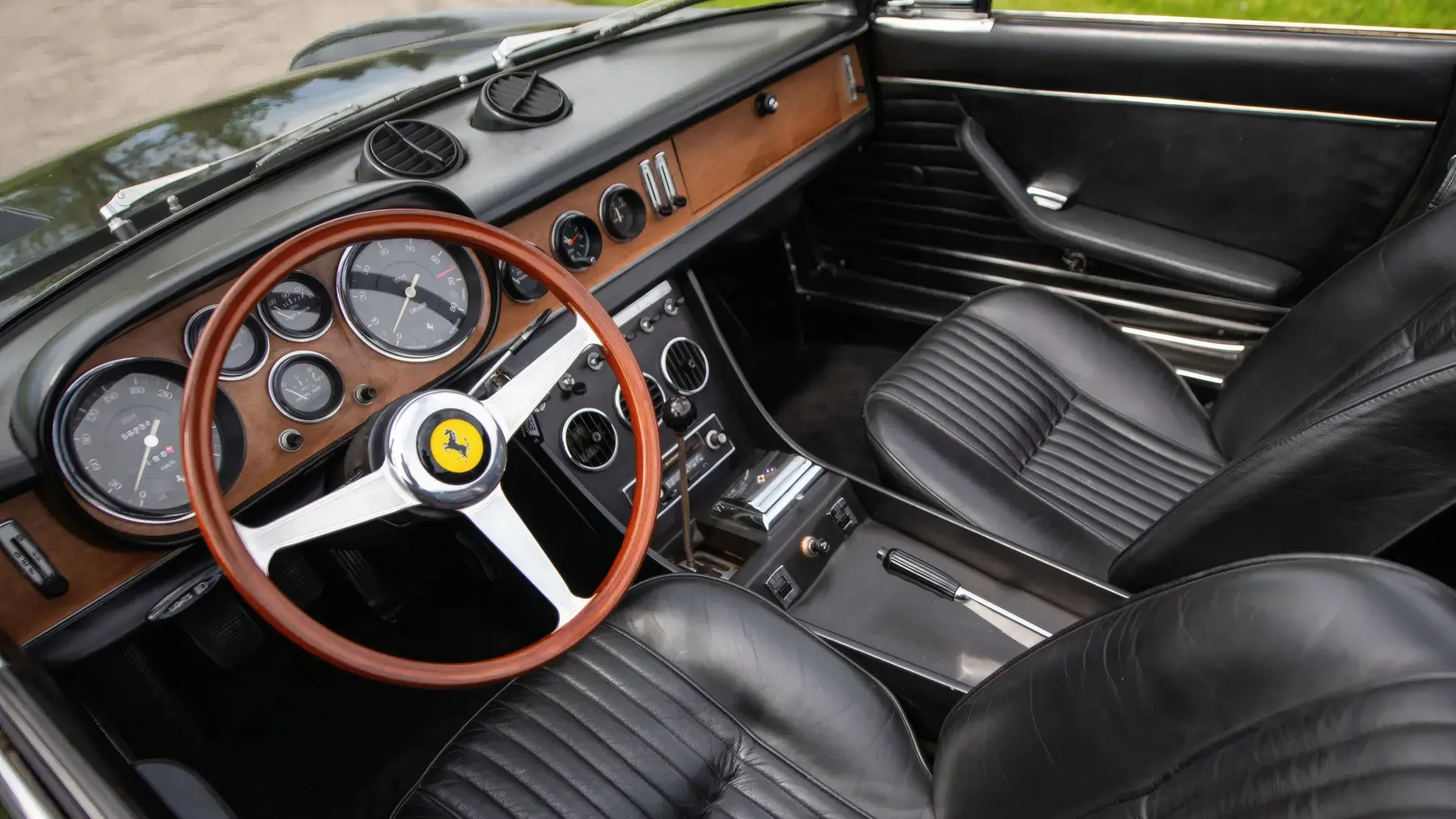
Decades on, the reassessment has been thorough. Specialists and marque historians who have driven both increasingly describe the 365 GTS and its coupé sibling as more cohesive, better-balanced road cars than the Daytona they stood beside at launch - quieter, certainly, but arguably more honest about what a grand tourer needs to be day to day. Values for the 330/365 GTC family have historically trailed the Daytona’s despite that reputation, a pattern collectors and specialists trace directly back to the same overshadowing that hurt sales in period. What has changed is the perspective: a car that struggled to find twenty buyers when it was new is today recognised as one of the most complete front-engined Ferraris of the 1960s, made rare less by design than by an unlucky accident of timing - a genuinely excellent tourer launched next to a sensation, and cut short by regulation before the wider market had worked out what it was missing.
Technical data
Performance Specifications
| Specification | Ferrari 365 GTC (1968–1970) | Ferrari 365 GTS (1969) |
|---|---|---|
| Engine | Tipo 245/C, 60° V12, SOHC per bank | Tipo 245/C, 60° V12, SOHC per bank (shared) |
| Displacement | 4,390cc (81mm x 71mm) | 4,390cc (81mm x 71mm) |
| Carburettors | 3x Weber 40 DFI/5 (early), DFI/7 (late) | 3x Weber 40 DFI/5 (early), DFI/7 (late) |
| Power | 320bhp @ 6,600rpm (claimed) | 320bhp @ 6,600rpm (claimed) |
| Torque | approx. 267 lb-ft, strong from ~2,500rpm | approx. 267 lb-ft, strong from ~2,500rpm |
| Compression ratio | 8.8:1 | 8.8:1 |
| Transmission | 5-speed transaxle, rear-mounted, torque tube | 5-speed transaxle, rear-mounted, torque tube |
| Suspension | Independent, double wishbones, coil springs, telescopic dampers, front anti-roll bar | Independent, double wishbones, coil springs, telescopic dampers, front anti-roll bar |
| Brakes | 4-wheel Girling discs, twin servo assistance | 4-wheel Girling discs, twin servo assistance |
| Steering | Unassisted ZF worm-and-roller | Unassisted ZF worm-and-roller |
| Wheelbase | 2,400mm | 2,400mm |
| Kerb weight | approx. 1,350–1,451kg (sources vary)* | approx. 1,250kg (dry, per marque-specialist sources)* |
| 0–60mph | approx. 6.3 sec (period Autocar test, GTC) | not independently tested; expected comparable to GTC* |
| Top speed | 151mph @ 6,600rpm (period Autocar test, GTC) | not independently tested; expected comparable to GTC* |
| Fuel consumption | approx. 12mpg (period test) | approx. 12mpg (estimated, shared drivetrain)* |
| Fuel tank | 90 litres | 90 litres |
| Production | approx. 168 built, 1968–1970 (RHD/LHD) | 20 built, Feb–Oct 1969 (LHD only) |
Sources
- Ferrari 365 GTS (1969) - Ferrari.com Official Heritage Page
- Ferrari 365 GTC (1968) - Ferrari.com Official Heritage Page
- Ferrari 365 GTC & 365 GTS: A Historical & Technical Appraisal - Supercar Nostalgia
- 1969 Ferrari 365 GTS by Pininfarina - RM Sotheby’s, Monterey 2024
- Road Test: 1969 Ferrari 365GTC (LHD) - Drive-My.com, by Mick Walsh
- 1969 Ferrari 365 GTC - Sports Car Market
- Know Your Ferraris: The 365s - Drive Cult
- Ferrari 365 - Wikipedia
Join the discussion
Comments
Loading comments…
Leave a comment
Share a detail, memory, or perspective. Every comment is reviewed before publication.