1976 Triumph TR6
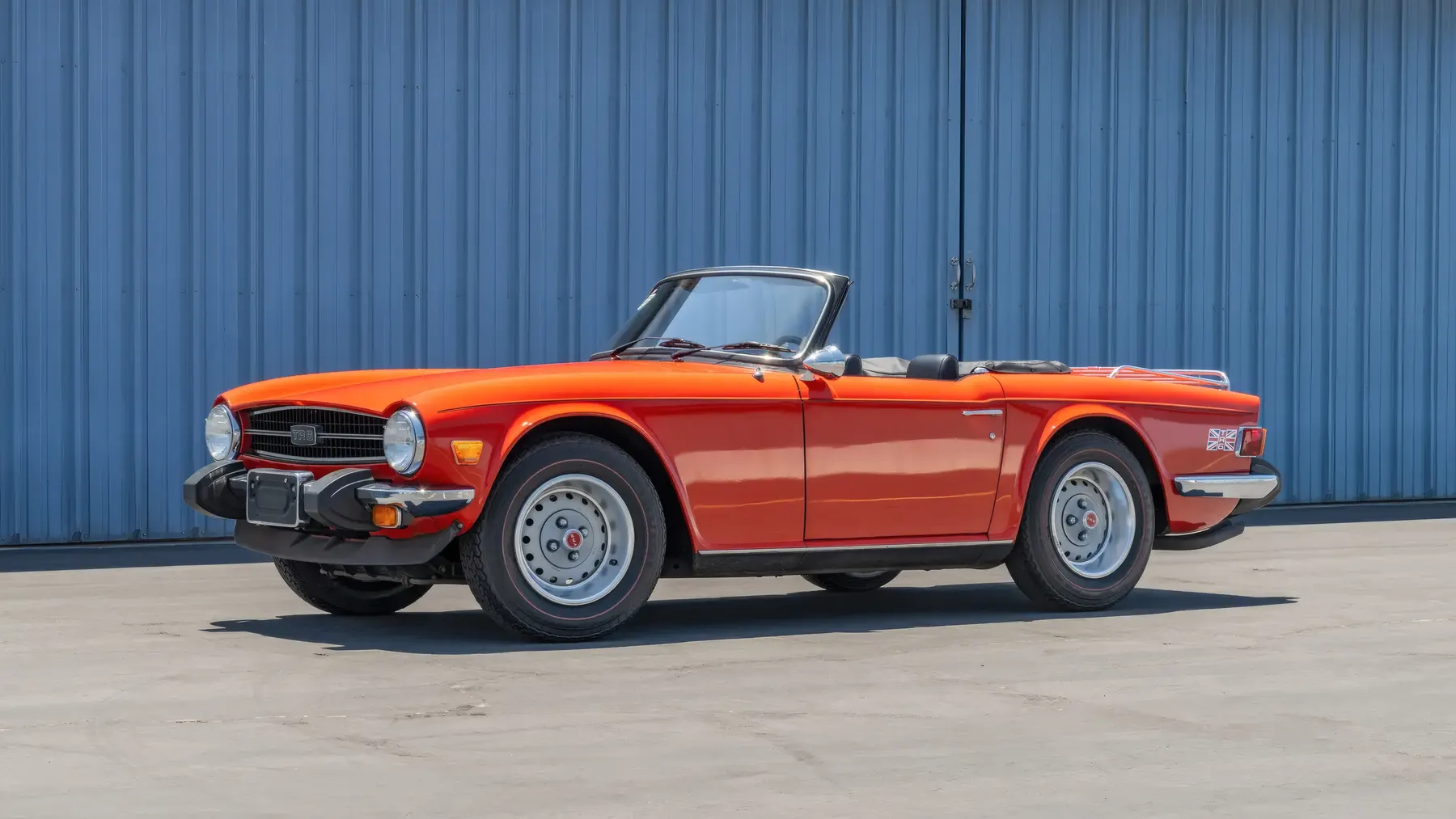
The Triumph TR6 sits at the end of a lineage built on honest brutality - the kind of sports car philosophy that held that if the driver wanted comfort, they had bought the wrong machine. But before passing judgement on the last traditional TR, it’s worth pausing at the exact engineering decision that defines everything about it: the moment Triumph’s management chose not to build an entirely new car, but to ask the German coachbuilder Karmann to reshape the nose and tail of the existing TR4/TR5 structure while leaving the centre section - doors, floor, bulkhead - essentially untouched. That budgetary compromise, completed in 1967 and put on sale in late 1968, produced one of the most visually convincing reskins in British automotive history, and an argument that sometimes thrift and taste can cooperate.
Karmann’s work was genuinely skilled. The squared-off Michelotti styling of the TR5 gave way to something crisper and more assertively masculine - a flat bonnet, a broad front grille flanked by recessed headlamps, and a Kamm-effect tail that truncated cleanly rather than trailing away apologetically. The body measured 3,950mm in length with a 2,235mm wheelbase, and while those dimensions were unremarkable, the visual proportions worked with unusual coherence for a car born under cost constraints. The centre section giveaway - look hard at the door line and you can trace the TR4’s ghost - was invisible to the vast majority of buyers, who simply saw a purposeful two-seater that looked contemporary in an era when Italian styling was setting the agenda for everyone.
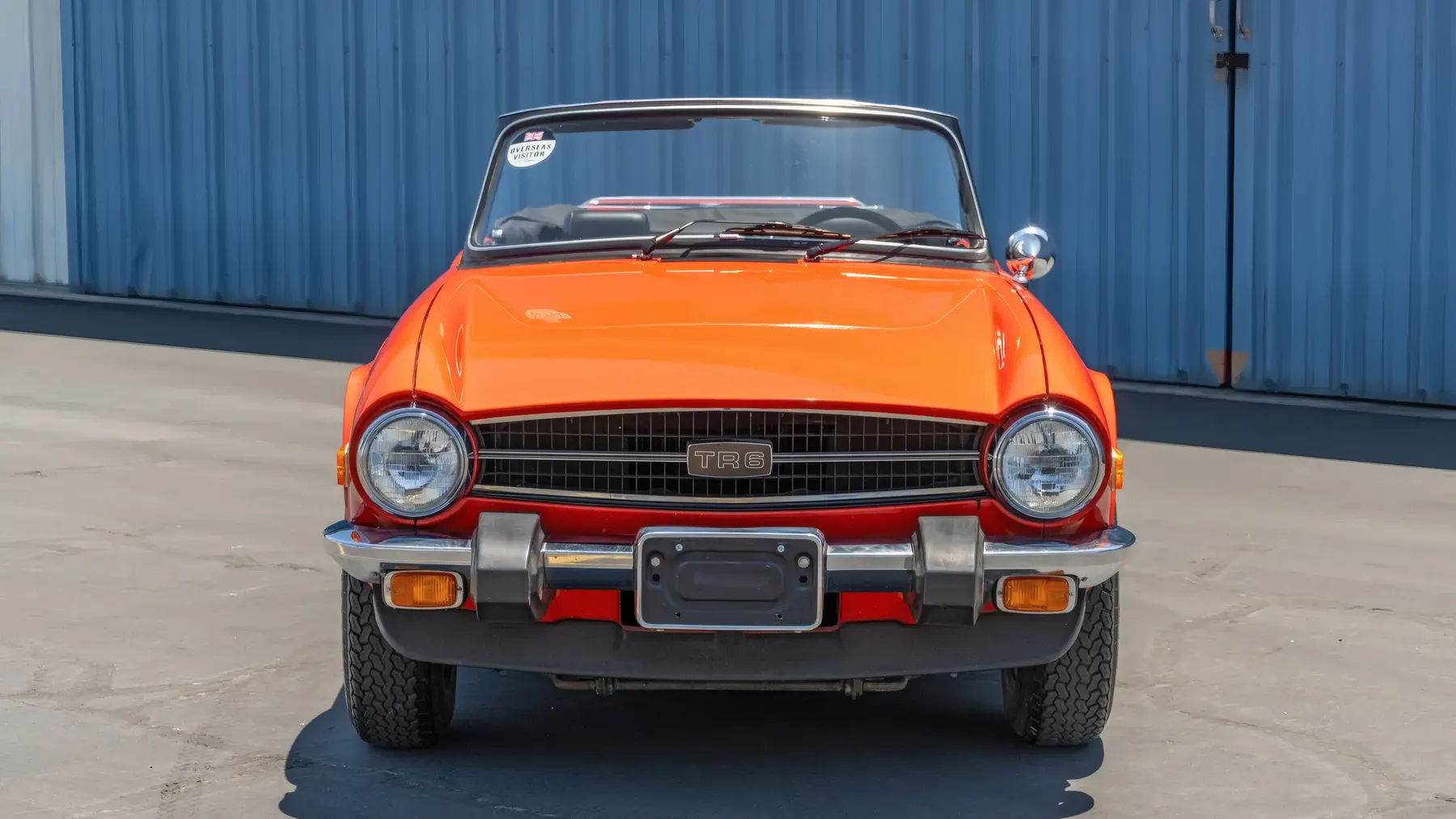
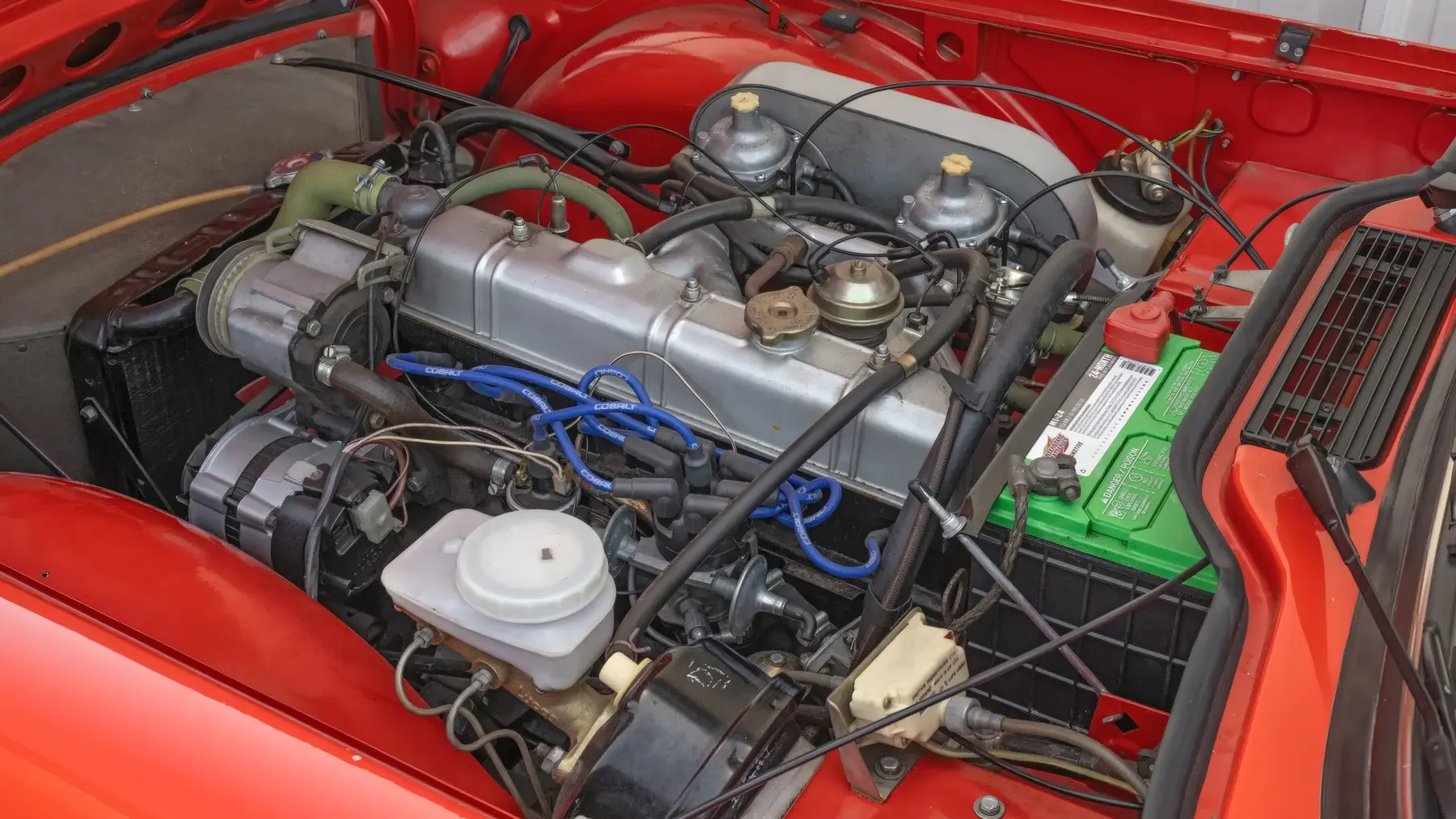
The engine beneath that restyled bonnet was the real reason the TR6 existed. Triumph’s 2,498cc straight-six had been introduced in the TR5 alongside Lucas mechanical petrol injection - a system that made the TR5 one of Britain’s first mass-produced fuel-injected cars - and it carried over directly into the TR6’s European and home-market variants with an initial output of 150 bhp at 5,500rpm and 164 lb-ft of torque. The Lucas PI system was a low-pressure arrangement running at around 110psi, and its reputation has been coloured by decades of mismanagement and neglect. A properly calibrated, well-maintained system delivers a progressive, surge-like power delivery that carburetted contemporaries genuinely could not match - a building rush through the mid-range that rewards the driver who has learned the engine’s character. The weakness is real but specific: on hot days, under-bonnet temperatures can vaporise fuel in the delivery pipes, stranding the driver without warning. This was not a subtle fault, but it was a manageable one, and it did not define the car.
What did define a substantial portion of the TR6’s production was its split identity across markets. The North American specification - CC commission numbers versus the European CP - swapped the Lucas injection for twin Zenith-Stromberg carburettors, reducing output to 104 bhp and peak torque to 143 lb-ft, complying with increasingly stringent US emissions and safety legislation that would shadow British sports cars throughout the 1970s. The difference in character between the injected and carburetted car is significant enough that they occupy somewhat different positions in the enthusiast hierarchy today, with the PI cars commanding greater affection if not always greater reliability. Further complicating the picture, from 1973 the European injection cars were themselves detuned from 150 bhp to 125 bhp - a concession to the same regulatory pressure that had already neutered the American version. The TR6 spent much of its production life accommodating forces that were working against it.
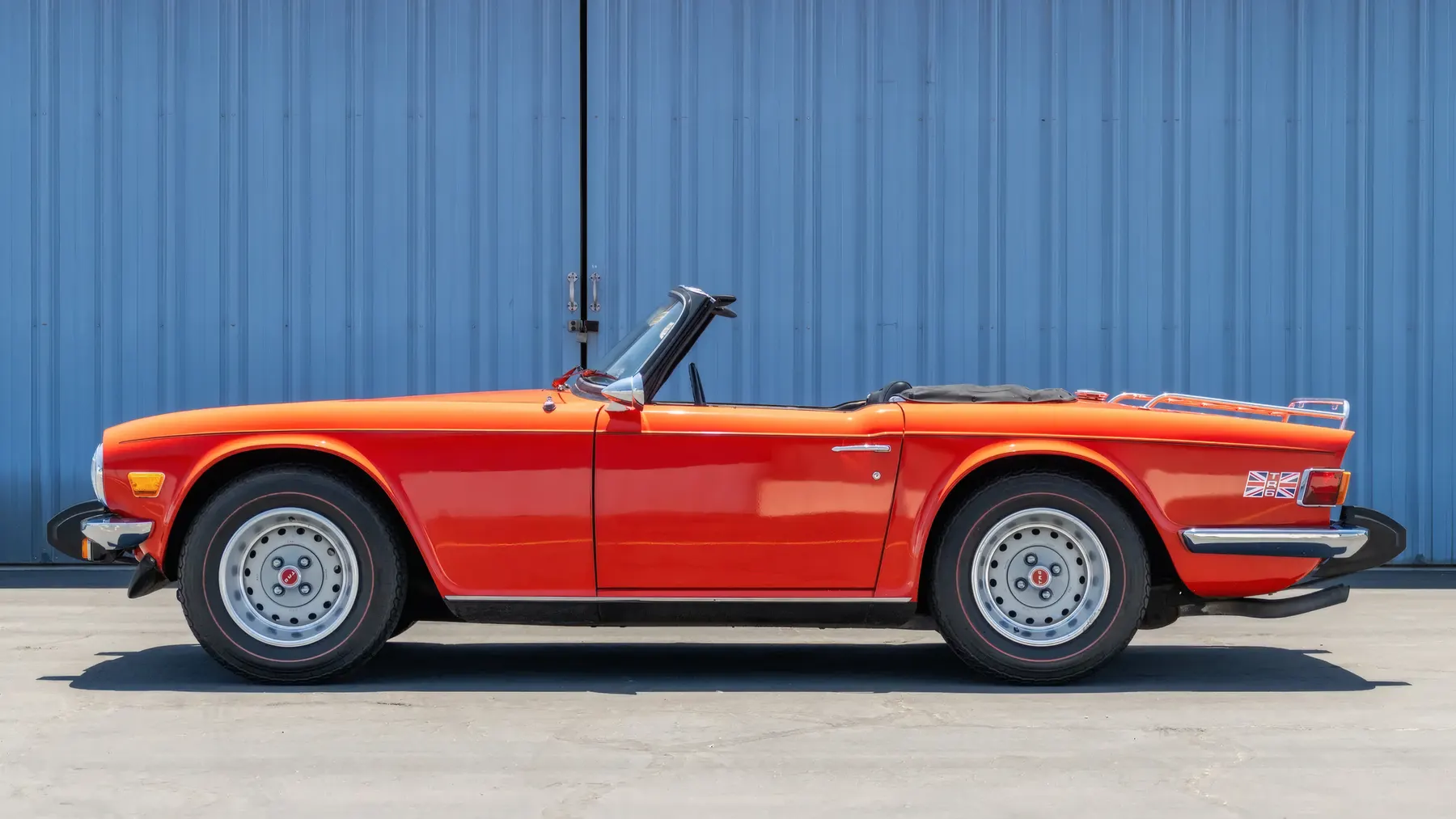
The chassis was the TR4A’s independent rear suspension arrangement - a semi-trailing arm setup that represented a genuine advance over the live-axle predecessors - paired with wishbones up front, rack and pinion steering, front disc brakes, and rear drums. The rack was notably direct, giving the driver clear, if not particularly tactile, communication with the front wheels. The rear suspension’s geometry could become wayward under provocation, and the combination of a live-rear-axle-era body on a newer suspension platform meant the TR6 never entirely resolved the tension between its hereditary architecture and its aspirations. Body-on-frame construction, in an era when monocoque was becoming standard even in affordable sports cars, added kerb weight and a degree of structural imprecision that sharper contemporary rivals exploited. Dunlop SP radials on 15-inch wheels were standard, and the handling reward for a driver willing to learn the car’s preferences was genuine and satisfying rather than challenging by any inherent malevolence.
Performance in European specification was properly competitive for 1968. Motor magazine recorded 117 mph and 0–60 mph in 8.5 seconds with overall fuel consumption of 20.8 mpg on a touring run, figures that sat comfortably within the sports car mainstream of the period. A competent driver in a 150 bhp car could lean on the torque across a wide rev range, use the optional Laycock de Normanville overdrive - electrically switched, standard fitment in much of its market life - to extend the gearing on motorway stretches, and arrive at the sort of unhurried quick that the TR6 did better than almost anything at its price point. The overdrive was not merely a convenience: with it, the TR6 became a genuinely usable long-distance car, pulling cleanly at relaxed revs while holding a pace that outran the traffic rather than merely keeping up with it.
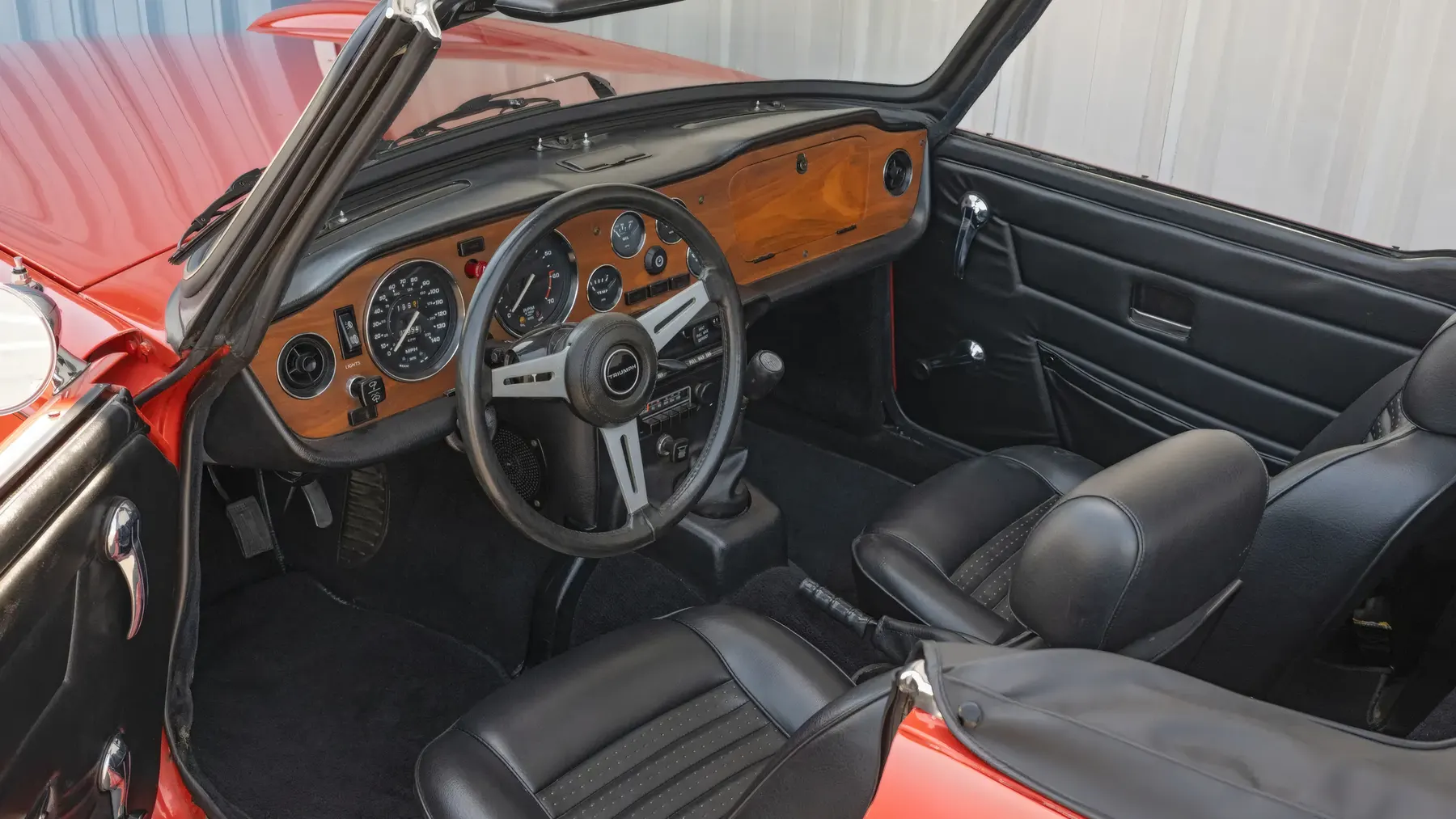
The cabin was Spartan in the TR tradition but not entirely spartan in the pejorative sense. Bucket seats, full instrumentation, pile carpet in both footwells and the boot, and a hood that could be raised in a hurry without special knowledge were all part of the standard specification. The driving position was low and stretched in the British sports car manner - left knee pressed outward against the transmission tunnel on some body configurations, right arm aware of the proximity of the door. These were not design flaws so much as genre conventions that the TR6’s buyers understood and, in many cases, actively wanted. The car made no secret of what it was.
Where the TR6 fell short of the promise suggested by its engine was in the details. The build quality that British Leyland’s rationalised production methods delivered in the early 1970s was inconsistent. Electrical components - and there was the familiar Lucas repertoire to consider - could be unreliable in a way that damaged the car’s everyday dependability. Rust was an existential threat from relatively early in a car’s life, attacking the sills, the inner wings, and the floor with an enthusiasm that makes survivors today either genuinely original and carefully preserved or carefully reconstructed. The TR6’s structural layout made it vulnerable in ways that contemporaries built on welded monocoques were not, and the long-term attrition rate among production cars reflects this.
The TR6 was the best-selling TR of the entire nameplate’s history, with 94,619 built between 1968 and 1976, of which the substantial majority - around 83,480 - went to North America. That statistic is simultaneously a measure of the model’s commercial success and a reminder of how thoroughly American appetite shaped British sports car production in this era. The last TR6s rolled off the Canley production line in July 1976, replaced by the TR7, which was so comprehensively different in philosophy - wedge body, live rear axle, fixed-head coupé aimed at safety-standard compliance - that it felt less like a successor than a rebuke. The TR6’s final years overlapped with the TR7’s introduction, and the contrast was stark enough to define how each car has been remembered.
Contemporary reception was broadly enthusiastic within its segment. Autocar had called it at launch “the last of the real sports cars,” a verdict that reflected both genuine admiration and the uncertainty about where the sports car would go next. The TR6 was never positioned as a precision instrument - it was positioned as an experience, and on that measure it delivered convincingly. Critics noted the handling’s limits and the build quality’s variability without letting either judgement override the basic pleasure of driving something that was honest about its intentions.
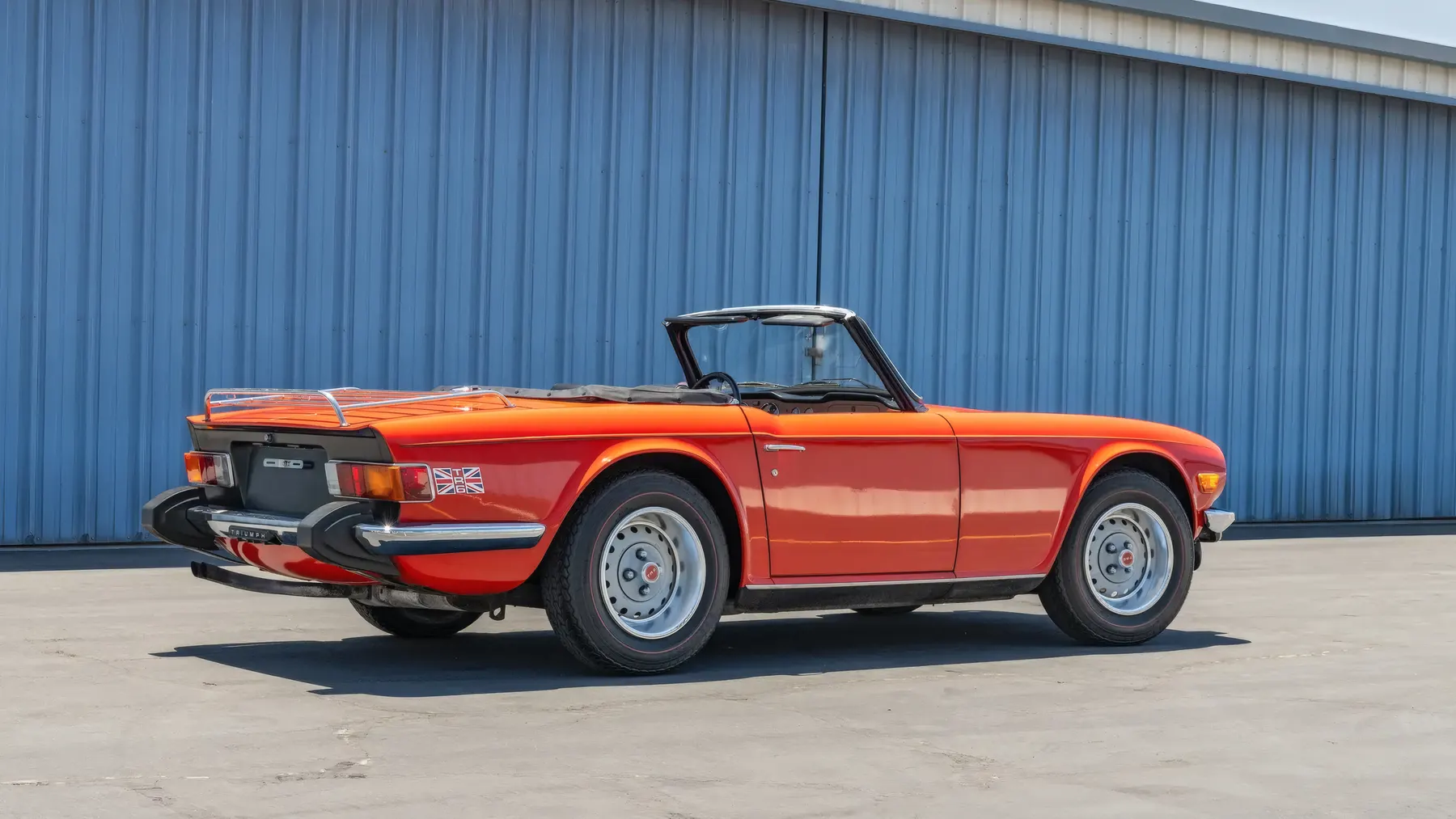
In the decades since, the TR6 has become one of the defining icons of accessible British sports car culture - partly because of the sheer number produced, which keeps supply reasonable and costs sane by classic car standards, and partly because its pleasures are genuine and relatively easy to access. The combination of a smooth, characterful six-cylinder engine, direct steering, and a body that still looks purposeful without the self-consciousness of later styling has given it a durability as a driver’s car that its original brief never quite demanded but entirely deserved. The Karmann compromise, the Lucas gamble, the American detuning - none of it stopped the TR6 from being, in its better moments, exactly what a sports car should be.