2003 Lotus Esprit S4 V8 SE 'Final Edition'
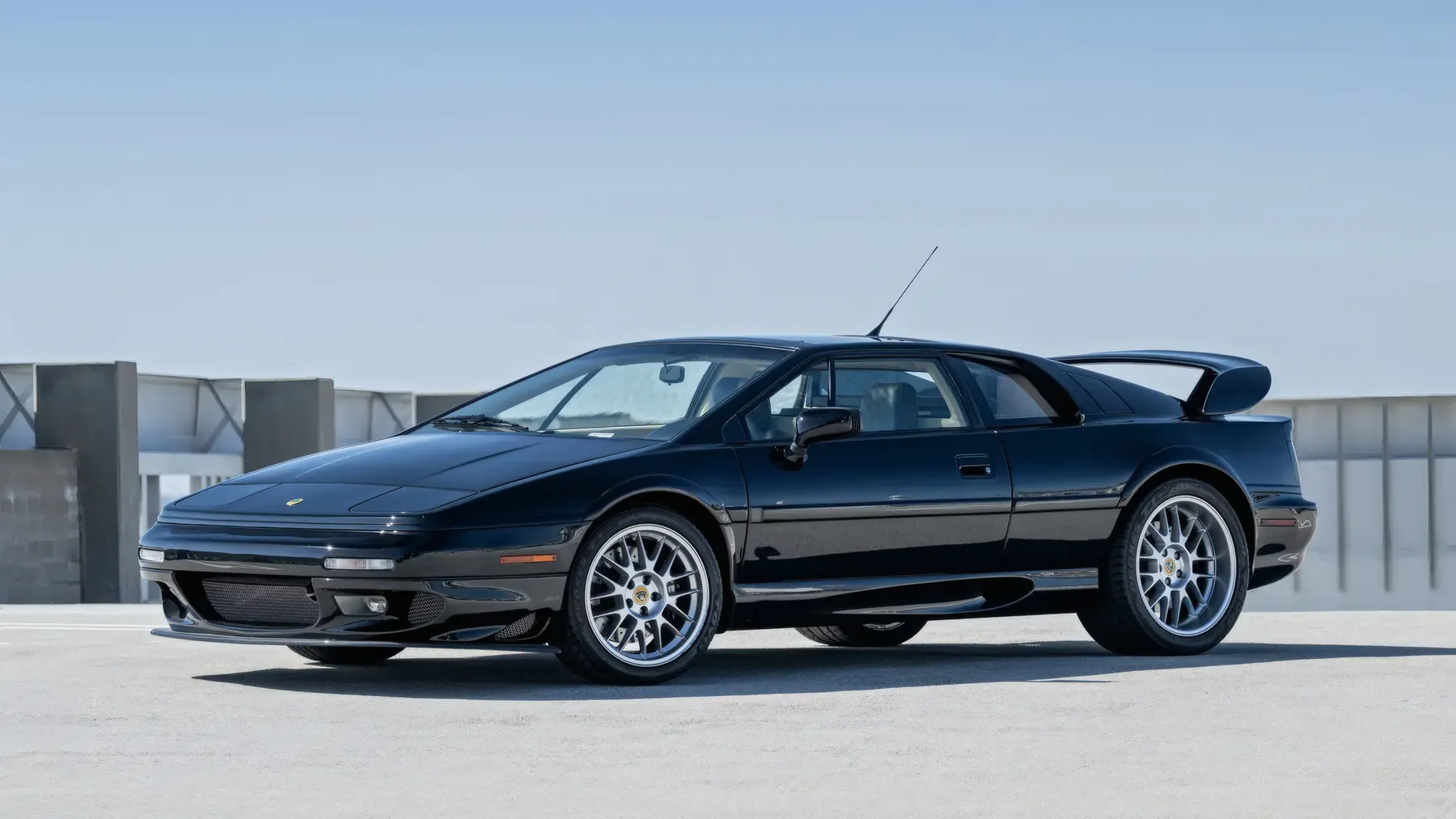
When Lotus drew a line under the Esprit in February 2004, they did so with 79 cars. That number is so small it barely registers as a production run - more like a handwritten list than a factory output - and yet those Final Edition V8s carry the full weight of nearly three decades of one of Britain’s most consequential mid-engine coupes. The Esprit didn’t end with a fanfare. It ended the way it had lived: quietly radical, slightly impractical, and completely irreplaceable.
The story starts not with the V8 but with the shape, which arrived in 1975 as a Giorgetto Giugiaro exercise in wedge-form geometry that made everything else on the road look like furniture. The Series 1’s origami creases and flat-glass surfaces were breathtaking in a way that had nothing to do with horsepower - a 2.0-litre naturally aspirated four-cylinder producing around 156 bhp was modest even then - and everything to do with a design language that read as pure speed made structural. Giugiaro had drawn it as a concept for Lotus’s stand at the 1972 Turin Motor Show, and when it reached production, it was barely changed. That fidelity to the original vision was either brave or lucky, but it gave the car an identity so strong that it survived engine changes, turbos, and eventually an entirely different powerplant without ever seeming confused about what it was.
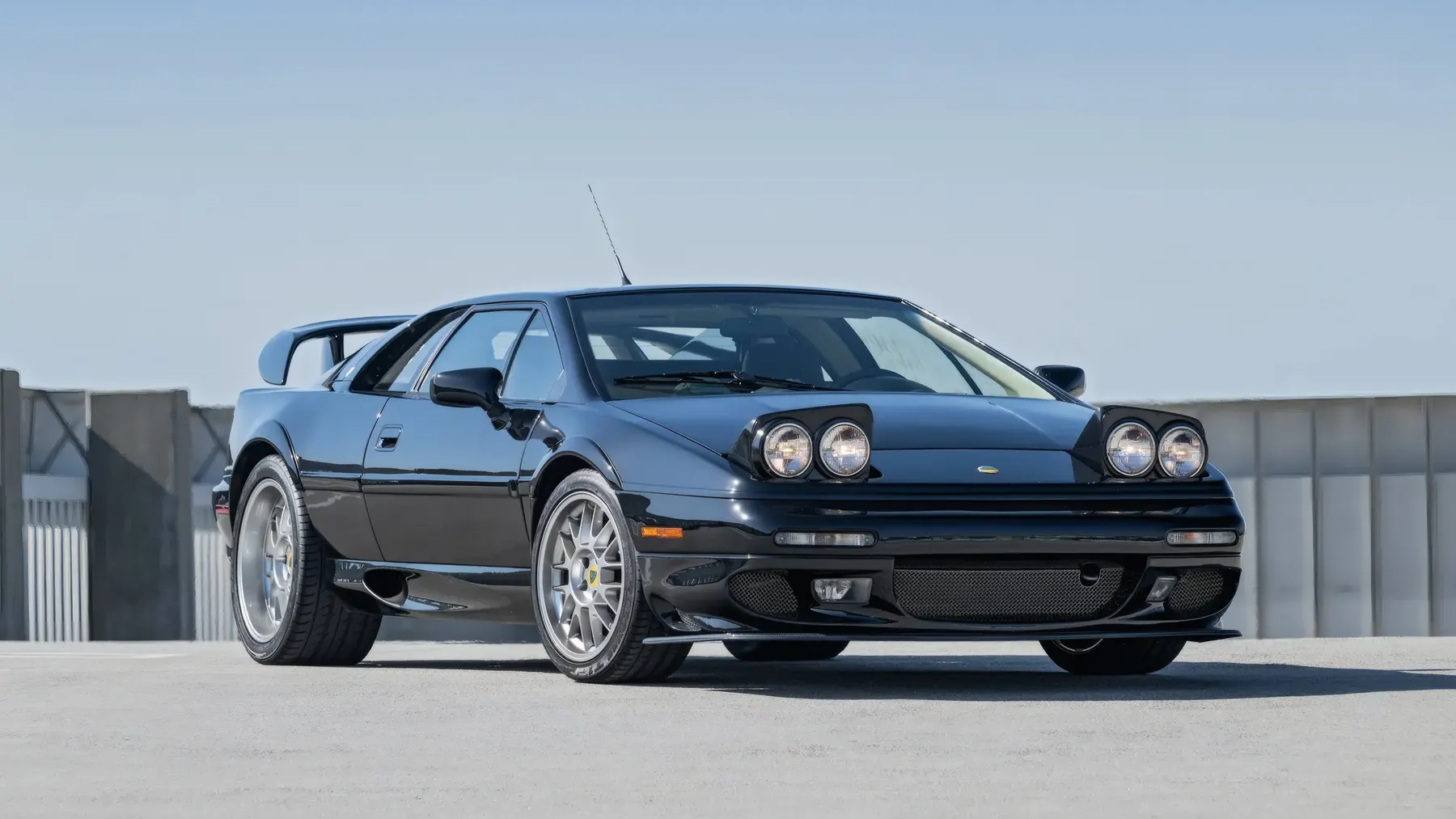
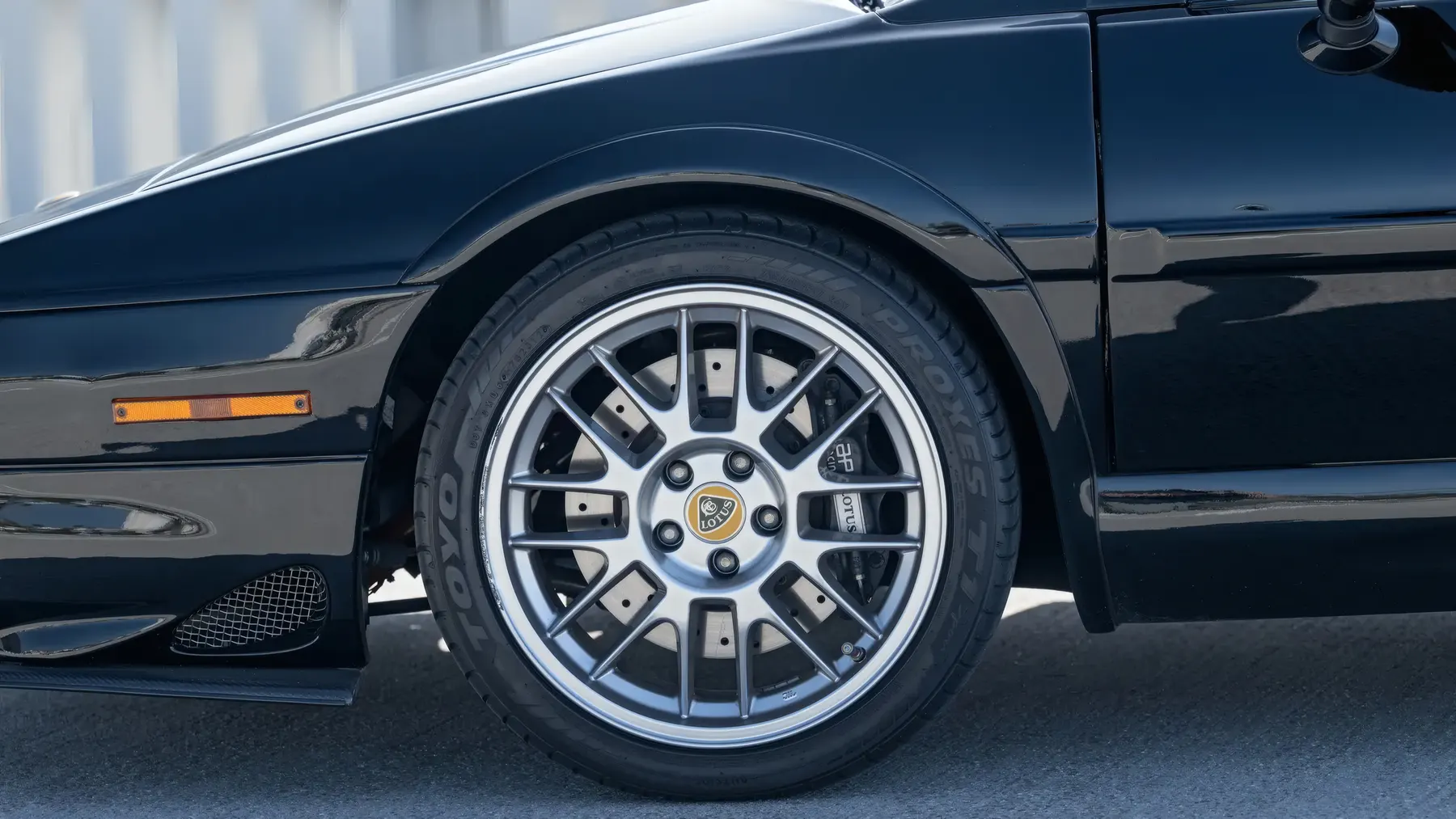
The S4, which arrived for the 1993 model year, was the final significant evolution of the four-cylinder car. Riding on a steel backbone chassis clothed in hand-laid fibreglass bodywork that had been progressively reshaped through the S2, S3, and Turbo generations, the S4 used the same fundamental architecture Peter Stevens had restyled in 1987, adding more muscular wheelarch flares, a revised front end with pop-up headlamps, and a tail treatment that felt genuinely modern rather than merely updated. The engine was the 2.2-litre Lotus 910 four-cylinder with a water-cooled Garrett turbocharger, producing around 264 bhp - enough to reach 60 mph in approximately 4.7 seconds - but the real point of the S4 was the chassis. On steel backbone, double-wishbone suspension front and rear, with the engine hanging behind the driver and ahead of the rear axle, the handling balance was something that engineers at Ferrari and Porsche would have recognised immediately and respected. The S4s, a hotter 285 bhp variant with Brembo brakes and racing-sourced suspension tuning, pushed the envelope further still, and was genuinely considered among the sharpest-handling cars on sale in the mid-1990s regardless of price.
But the four-cylinder’s story was always going to end at some point. Lotus had been developing a V8 for years, and in 1996 it finally arrived: a 3,506 cc all-alloy unit with twin Garrett T25 turbochargers, DOHC 32-valve architecture, and 350 bhp at 6,500 rpm with 295 lb-ft of torque arriving at 4,250 rpm. The engine was entirely Lotus’s own design rather than a bought-in unit, which made it an engineering achievement disproportionate to the company’s size. It was a tight package, necessarily so given the Esprit’s dimensions - the car was never large - and fitting twin turbos into the existing bodyshell required serious ingenuity on the part of the engineering team at Hethel. The result could reach 175 mph and despatch 60 mph from rest in around 4.7 seconds, which in 1996 placed it firmly in the territory of the Ferrari F355 and Porsche 911 Turbo, at a substantially lower price.
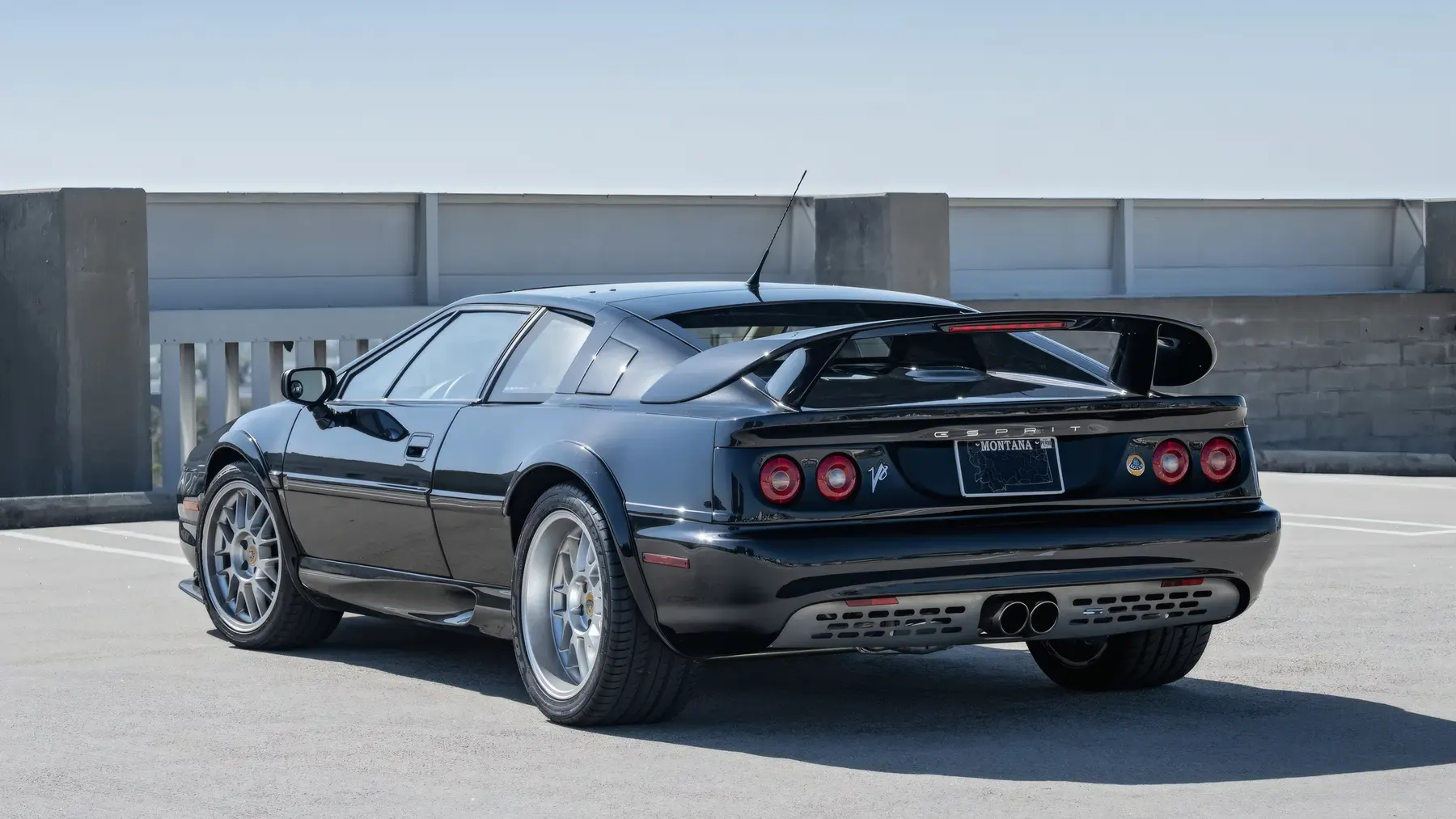
The V8 came in three flavours over its production life. The standard V8 was the purist’s choice: relatively stripped-out, focused on the driving experience that the Esprit’s chassis had always promised. The V8 SE added a luxury layer - leather, a better audio system, and more comprehensive equipment - while the V8 GT tilted back toward sport. The Final Edition cars drawn from this lineage, produced in that closing production run of 79 units to mark the end of manufacturing at Hethel, represented a distillation of everything that had been learned across the model range. Most were finished to SE-equivalent specifications, offering buyers what amounted to the most complete and refined version of the car that Lotus had ever assembled.
Dimensionally, the Esprit was always a compact proposition. The body measured 4,394 mm in length with a wheelbase of 2,438 mm, the width running to 1,883 mm with mirrors. The fibreglass shell kept kerb weight at 1,380 kg for the V8 - competitive by supercar standards and substantially lighter than several contemporary rivals with equivalent or lesser performance. The five-speed Renault UN1 transaxle, which Lotus had used in various forms since the Turbo era, remained the transmission of choice, and while its gearshift quality divided opinion - it never quite matched the precision of the best Italian gearboxes - it was robust enough for the engine’s torque and well-positioned for heel-and-toe downshifts on a committed back-road run.
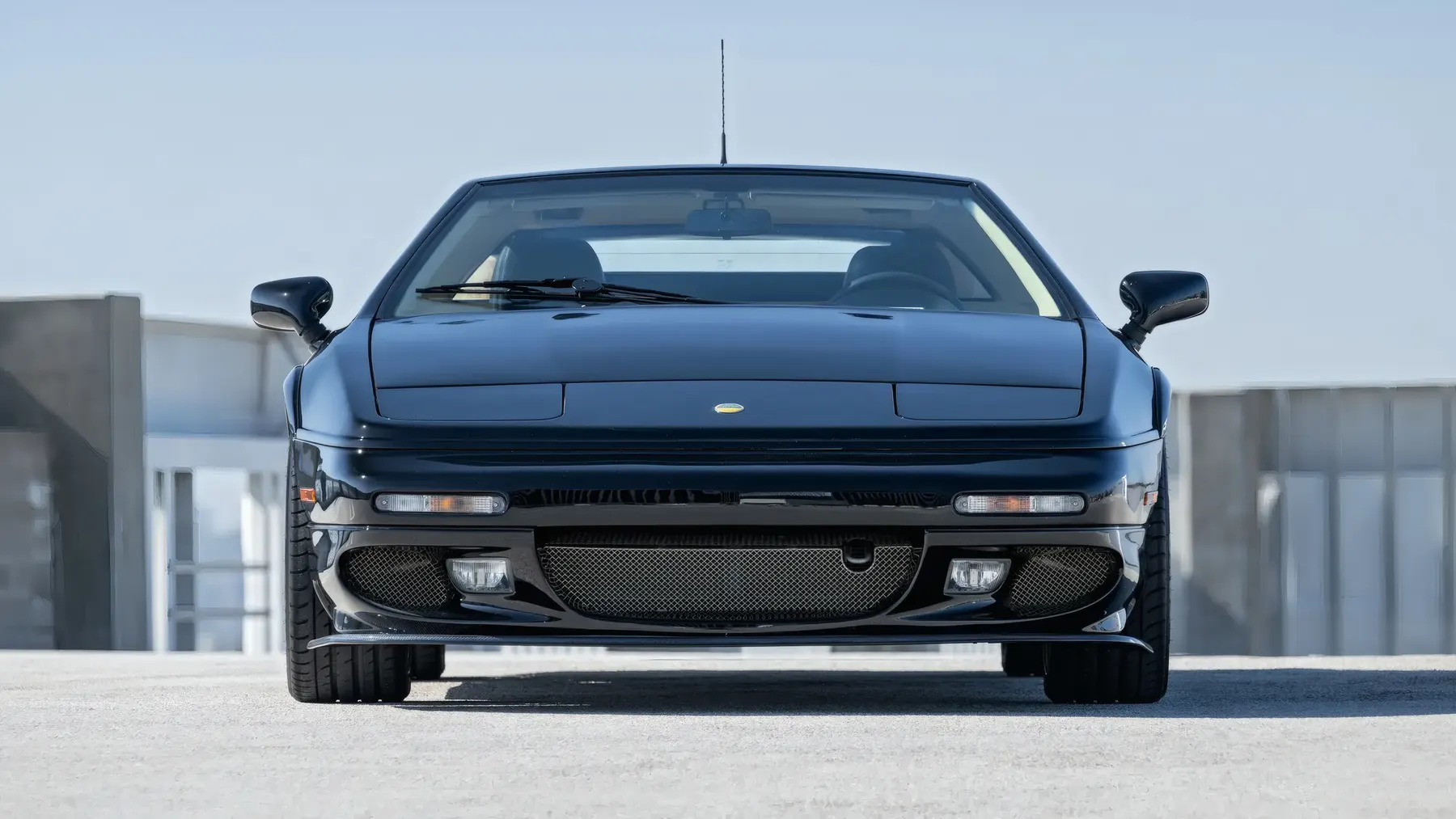
Aesthetically, the Stevens restyle had aged well into the 1990s. The composite bodywork allowed curves that steel pressings couldn’t economically produce, and the low, hunkered stance - the roofline sat at just 1,139 mm from the ground - gave the car a visual threat that belied its modest footprint. The pop-up headlamps were already anachronistic by the late 1990s, but somehow added to the car’s character rather than detracting from it. The interior was always the Esprit’s most complicated relationship with its owner. Ahead of the final update the cabin had been criticised, fairly, for dated plastics, switchgear of dubious quality, and a driving position that required a certain flexibility to enter gracefully. Later cars addressed some of this - the V8 SE’s interior was a genuinely well-appointed place to sit - but it was never going to be mistaken for a Ferrari 360’s cockpit.
On the road, the V8 Esprit operated according to its own internal logic. The steering, rack-and-pinion with no power assistance in the later cars, was communicative to an unusual degree - you felt surface textures, camber changes, and tyre load through the rim in a way that modern assisted systems cannot replicate. The chassis offered tremendous mechanical grip through those double-wishbones, and the weight distribution - approximately 38:62 front-to-rear - meant that the nose turned in with enthusiasm and the car was broadly neutral rather than either understeer-prone or treacherous. The twin-turbo V8 delivered its power in a manner that demanded respect: the Garrett T25s spooled with a certain lag at low rpm before the torque arrived with genuine authority at mid-range, and managing that delivery through corners on a damp road required the kind of active engagement that drivers weaned on modern traction control systems sometimes found alarming.
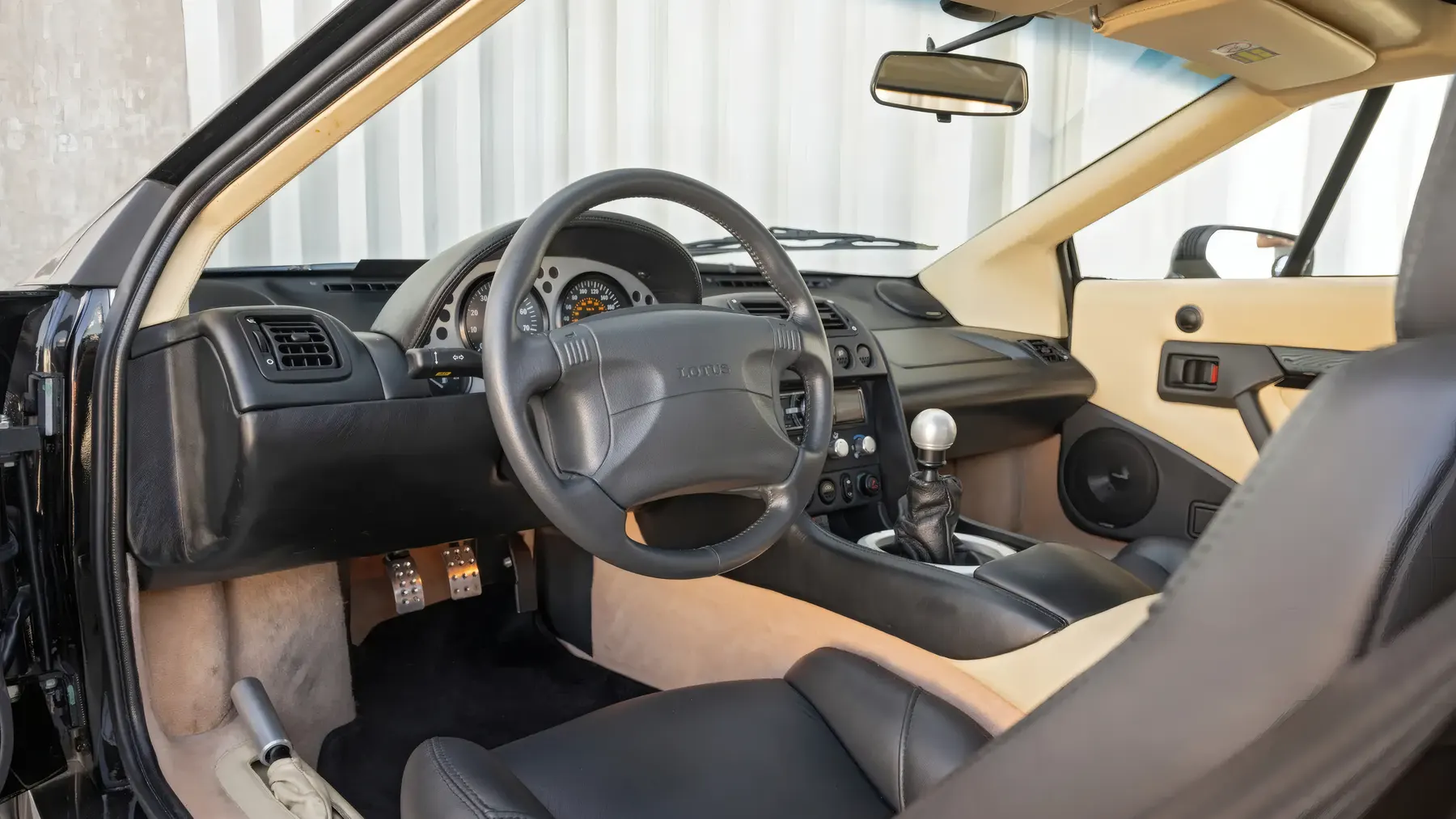
The Esprit’s genuine innovations deserve acknowledgement. The steel backbone chassis, developed by Colin Chapman through the Elan and refined over decades, was a genuine engineering contribution to mid-engine car design - lightweight, torsionally stiff, and amenable to modification without compromising the basic architecture. The fibreglass composite bodywork predated the industry’s wider embrace of composite materials and gave the car a corrosion-free longevity that contemporary steel-bodied rivals could not match. The V8 engine itself, for a company with Lotus’s resources, was an act of engineering ambition that rivals three times the size might have declined on cost grounds alone.
The compromises are worth naming honestly. The Renault gearbox, while adequately strong, was never a match for the car’s sporting character when cold - early morning shifts were agricultural until the transmission warmed through. Rear visibility was minimal, a function of the high tail and those broad rear haunches. Luggage space, at 200 litres, was sufficient for a weekend trip only if packing was strategic. Build quality improved markedly through the model’s life, particularly in the V8 era, but the early reputation for electrical gremlins and imperfect panel fit was not entirely undeserved and remained part of the car’s narrative even when the reality had improved.
The Esprit’s cultural footprint was established early and has proved durable. The white S1 that Roger Moore drove into the sea and then - in a moment of cinema’s most cheerful disregard for physics - drove back out of it as a submarine in The Spy Who Loved Me in 1977 turned the car into a global icon before most of its eventual buyers had finished secondary school. That association with Bond became the car’s dominant public identity, which was both a gift and a slightly reductive summary of something more complicated. The Esprit was not just a photogenic prop. It was a car that serious drivers respected on its merits, that road testers consistently found more rewarding to drive than its price alone might have suggested, and that held its own against rivals from manufacturers with substantially greater financial resources.
Critical reception of the V8 generation was broadly positive, with the handling repeatedly noted as the car’s strongest suit. Several publications placed it alongside the 911 Turbo and F355 in group tests, occasionally beating them on the dynamic qualities that Lotus had always prioritised, while conceding the interior and perceived quality to the competition. The price - Esprit V8 money bought considerably more expensive-feeling machinery from Stuttgart or Maranello - was a point of discussion, though buyers who understood what they were getting tended to consider it straightforwardly good value for a car of this capability.
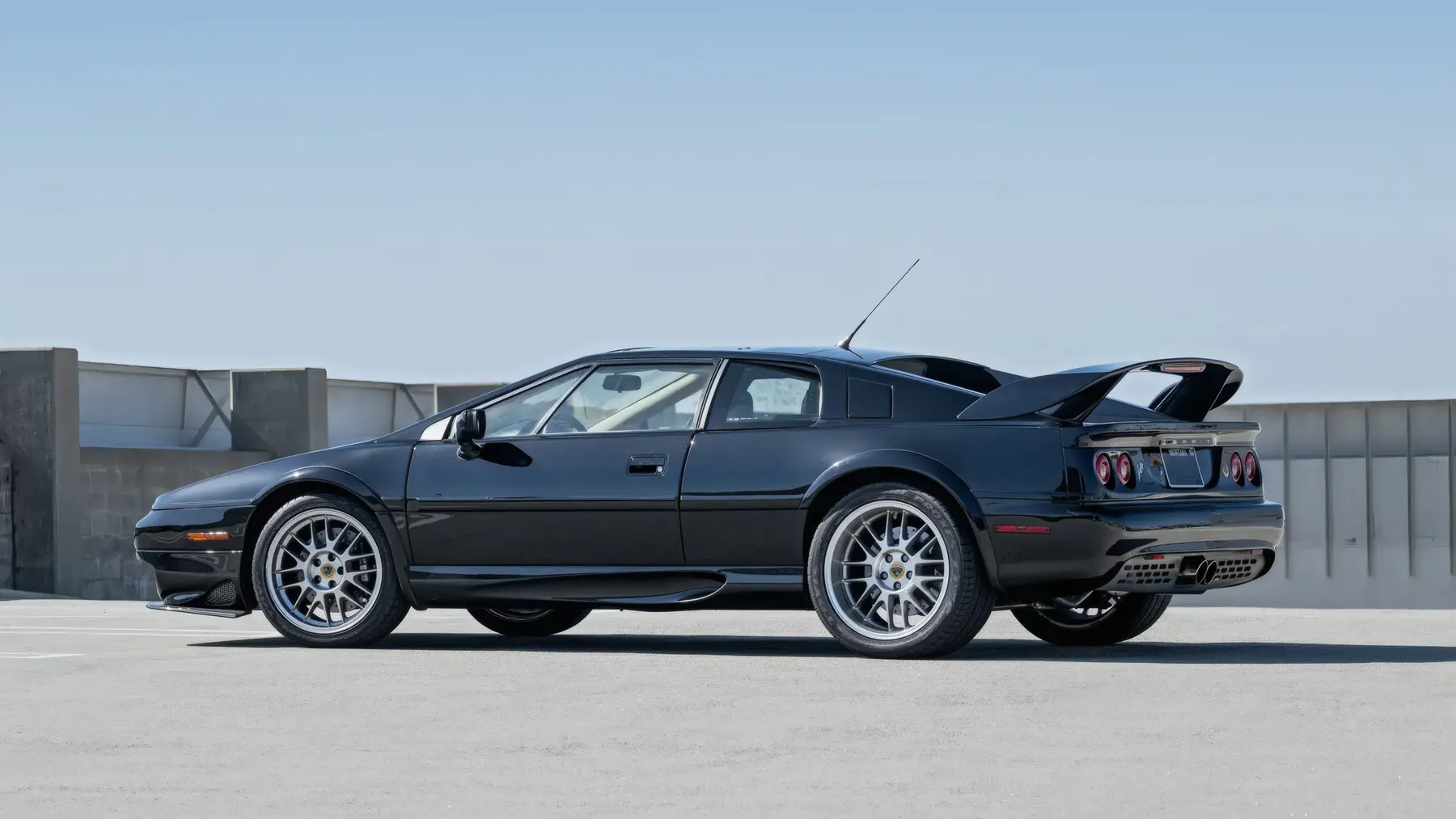
The Final Edition’s significance sits in the fact that nothing has straightforwardly replaced it. Lotus made various supercar-adjacent cars after 2004, including the Exige, the Evora, and eventually the Emira, but none occupied exactly the same conceptual territory - a fully enclosed mid-engine V8 coupe from Hethel, with a four-figure production life measured in the low thousands and a handling balance that remained best-in-class for most of its twenty-eight years. The 79 Final Editions are now collected items, their modest original prices long since receding in the rear-view mirror of history. What they represent, in the end, is the last expression of a lineage that began with Giugiaro’s pencil on a Turin drawing board - a car that never had the marketing budget, the showroom network, or the production volume of its rivals, but that drove better than any of them had a right to expect.