Porsche 993 Cup 3.8 RSR: The Air-Cooled Last Stand in GT Racing
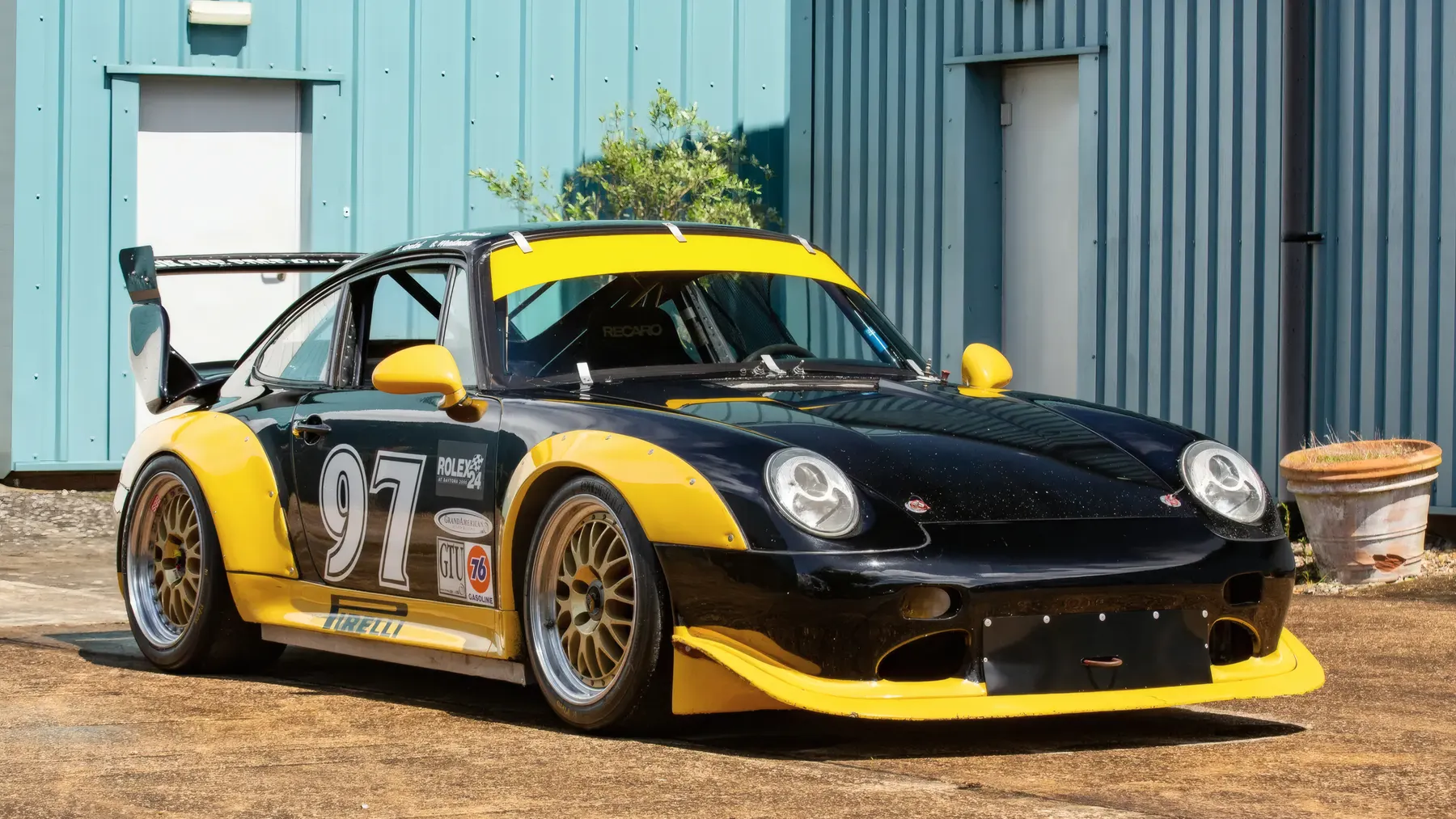
1996 Porsche 911 Cup 3.8 RSR
Images: Tom Gidden / RM Sotheby's
The 993 Cup 3.8 RSR occupied an unusual position in the mid-1990s GT racing landscape: it was simultaneously the most sophisticated evolution of a thirty-year air-cooled competition formula and a machine that everyone at Weissach understood could not continue much further. Porsche had been extracting competition performance from the rear-engined, fan-cooled 911 since the earliest RS and RSR variants of the late 1960s, and the accumulated engineering knowledge was vast. So, increasingly, were the approaching limits. What emerged from that productive tension was arguably the finest competition version the classic air-cooled 911 ever produced - a car that could win GT class honours at the highest level while carrying, in its architecture, the quiet acknowledgement that its era was ending.
Understanding the 993 RSR requires understanding what the 993 generation meant to Porsche at the time. Launched in 1993, this was the last 911 built around the original flat-six air-cooled concept, and Porsche knew it. The water-cooled 996 was already in development. The 993 introduced multi-link rear suspension and significantly revised bodywork that addressed longstanding criticisms of the 911’s aerodynamics and handling balance - genuine engineering progress, not mere face-lifting. But it was also, inescapably, a farewell to a formula that Porsche had been refining for three decades. That awareness permeated the competition programme. When Porsche Motorsport developed the Cup car for the Supercup one-make series and then pushed the architecture further into RSR specification for GT endurance racing, there was an implicit mandate to defend the formula with full commitment while it still could be defended.
The immediate competition context was provided by the BPR Global GT Series, a GT endurance championship co-founded in 1994 by Jürgen Barth - Porsche’s own motorsport director - alongside Stéphane Ratel and Patrick Peter, the series name deriving from their initials. That Porsche’s competition chief was a founding architect of the series in which the 993 RSR would compete is not a trivial detail; it shaped a natural alignment between the car and the championship’s structure. The series attracted manufacturer support from McLaren, Ferrari, Dodge, and Lotus among others, and its endurance format, with races typically running four to twelve hours, suited cars that could combine genuine pace with the mechanical consistency that customer-facing racing programmes require. In that environment, a well-developed 911 carrying Cup-car-derived reliability and RSR-level performance was a natural contender.
The Cup car base - the Porsche 911 Cup 3.8, used in the Supercup one-make series and associated national championships - provided the foundation. These were tightly controlled, production-derived machines built to consistent standards by Porsche Motorsport, and they had earned a reputation for exceptional reliability and manageable operational costs. The RSR variant went considerably further, applying the full competition treatment for open GT endurance racing. Where the Cup car was a supervised single-make exercise, the RSR was Porsche’s answer for GT2-class competition in the BPR series and later the early rounds of the FIA GT Championship.
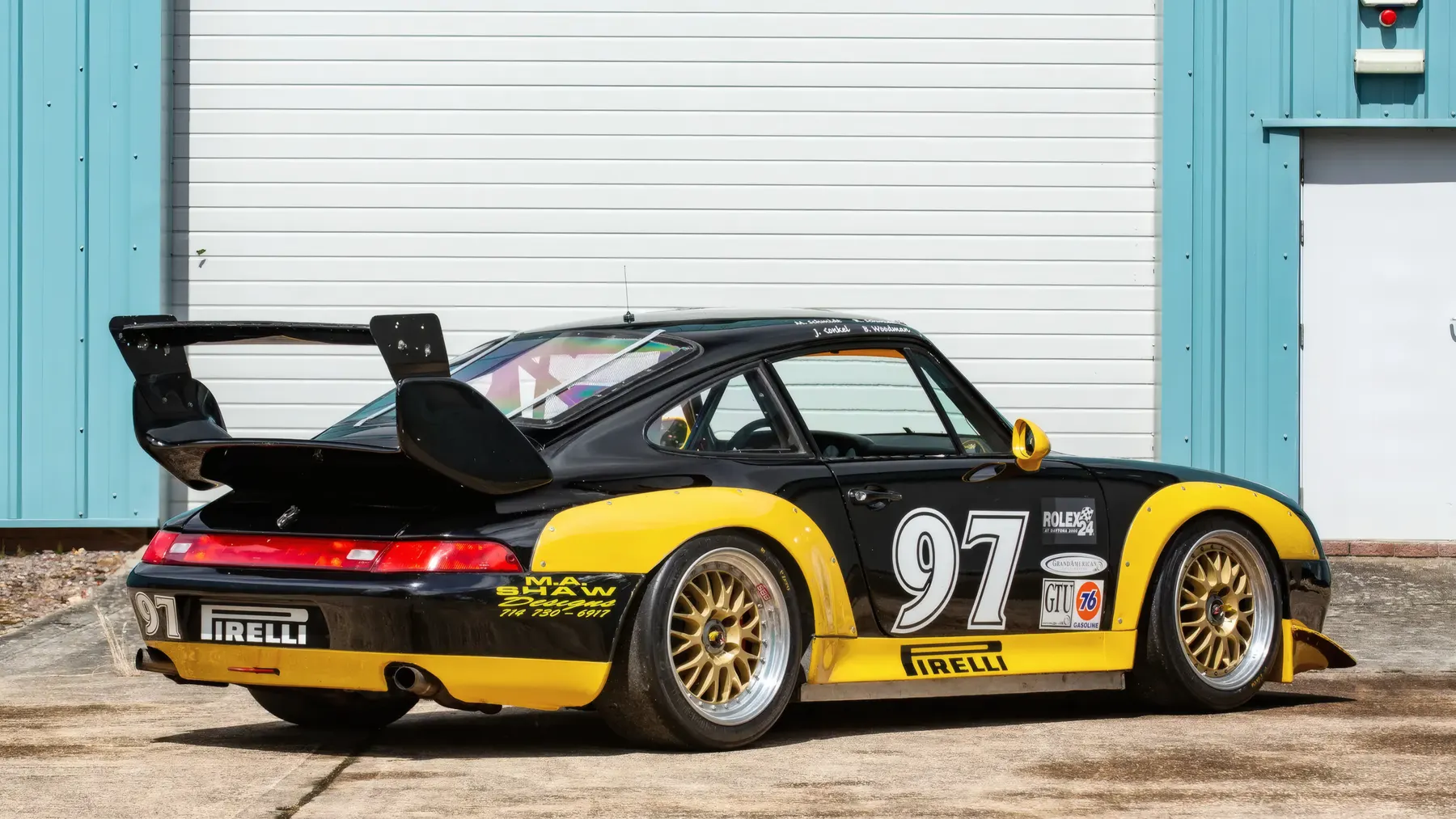
The engine is the 993 RSR’s defining element. The 3.8-litre air-cooled flat-six shares its origins with the 993 Carrera RS 3.8 road car unit - a bored-out, higher-compression derivative of the standard 993 Carrera’s 3.6-litre engine - but in RSR competition specification it goes considerably further. Individual throttle bodies replace the road car’s intake manifold, revised camshaft profiles alter the breathing characteristics, a higher compression ratio extracts more work from each combustion event, and a less restrictive exhaust allows the engine to breathe freely at high revs. Power output in RSR specification is generally quoted at around 325 bhp at the crankshaft, with some period sources and factory data suggesting that further-developed specifications could push meaningfully beyond that figure. Competition weight, with full safety equipment but stripped interior, comes in at approximately 1,025 kg, producing a power-to-weight ratio that was genuinely competitive within GT2 class at the time.
What those numbers cannot convey is the quality of the power delivery. The 993 RSR’s engine builds through its rev range with increasing urgency and mechanical directness - this is not a unit with a broad torque plateau designed for easy exploitation. It rewards high revs and penalises imprecise gear selection. Throttle response is immediate, with no electronic mediation between driver input and combustion event. At full throttle in the upper rev range, the exhaust note crosses the threshold from mechanical noise into something genuinely musical: a rapid, metallic howl carrying the specific pitch and intensity of an air-cooled six in full competition tune. Drivers who have spent significant time in the car describe the sensation of the engine arriving on cam and pulling hard to its rev ceiling as among the more memorable experiences available in a 1990s GT racing car.
The chassis reflects the 993’s most significant engineering advance over earlier 911 generations. Multi-link rear suspension replaced the trailing-arm geometry that had characterised every air-cooled 911 before it, and the effect on competition behaviour was immediate and substantial. The 964 RSR, the 993’s predecessor in GT racing, was a capable machine, but its rear suspension geometry had required careful management under compression and in high-speed transitions, particularly at circuits where lateral load transfers were most demanding. The multi-link rear of the 993 RSR is dramatically more composed in those conditions. Customer teams moving from 964 to 993 RSR programmes consistently noted the improvement in rear-end predictability, particularly at high-speed circuits where the earlier car’s behaviour had demanded ongoing driver and setup management.
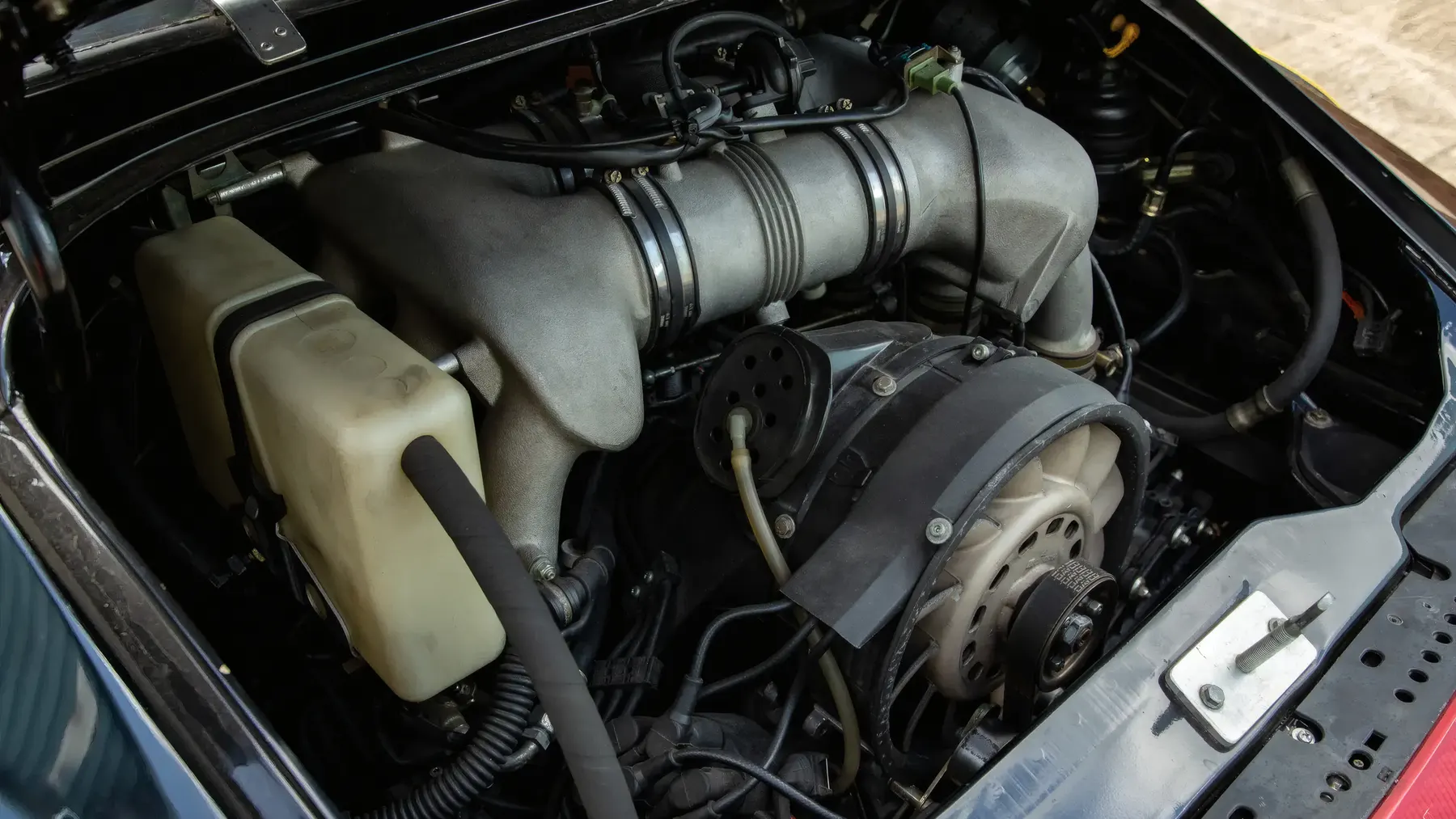
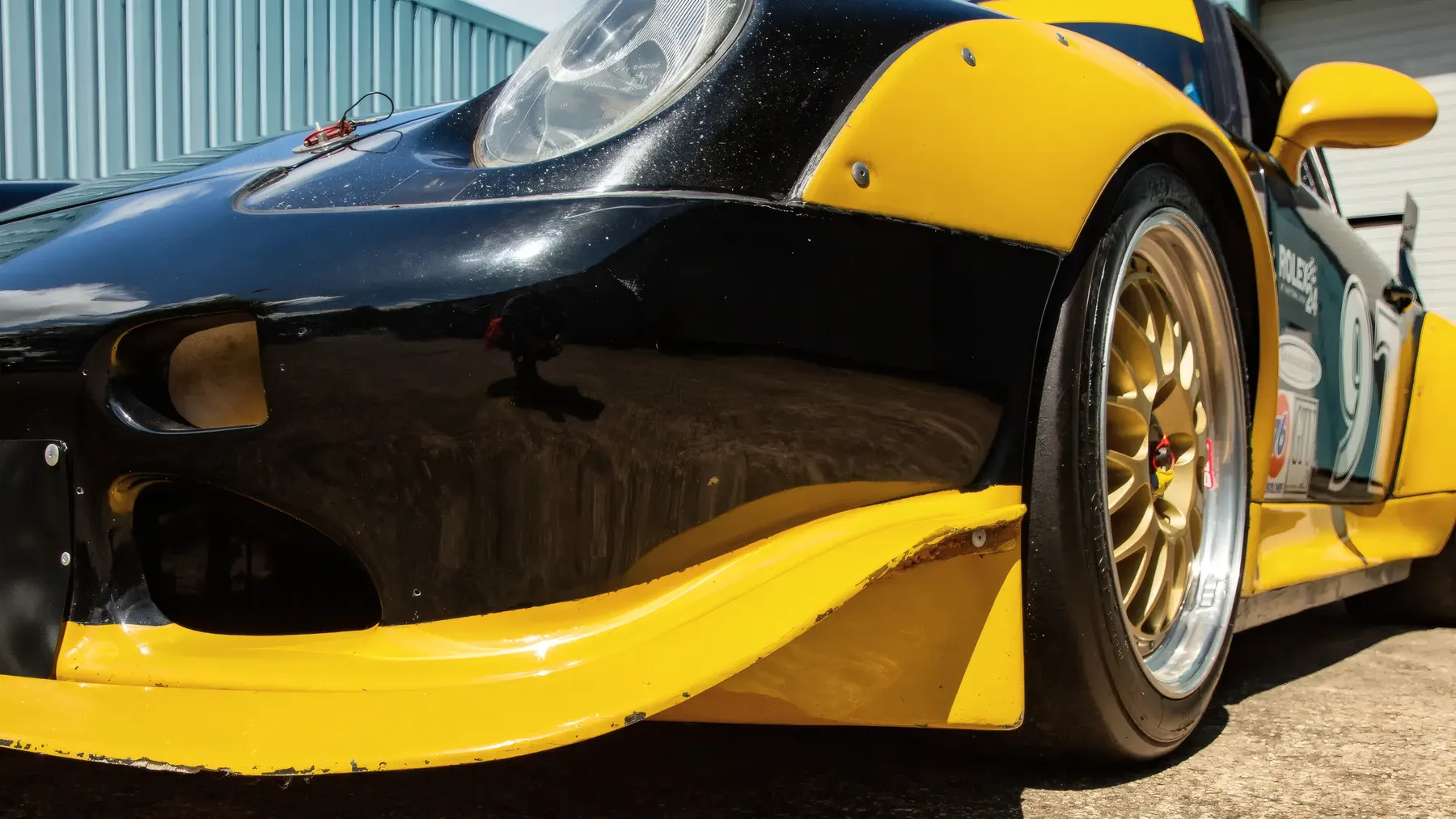
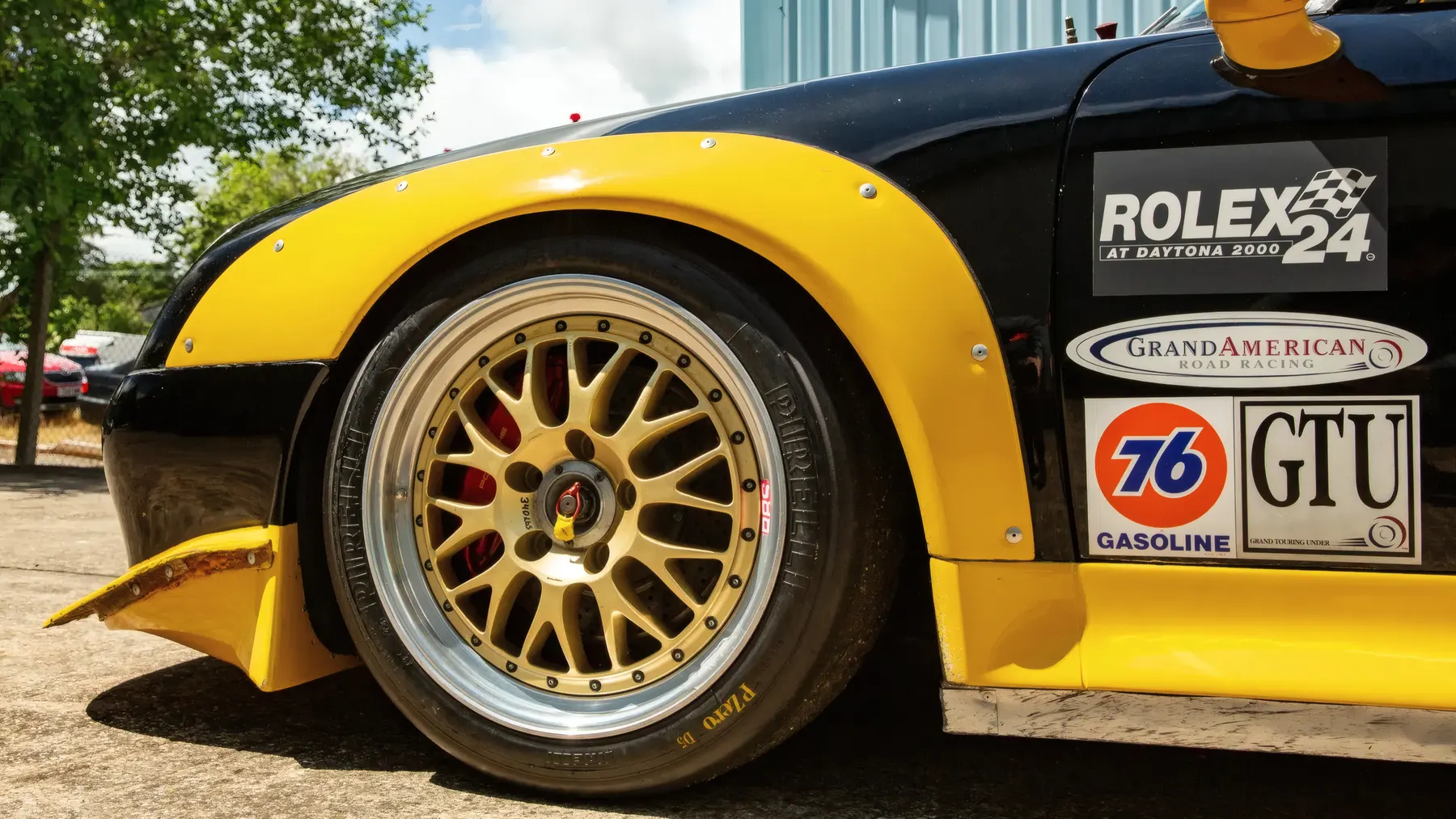
Wide-body bodywork, drawn from the Carrera RS lineage, allows significantly wider front and rear tracks and accommodates larger braking systems and tyre packages. The aerodynamic package - a substantial rear wing, front splitter, and managed undertray work - takes a practical rather than experimental approach to generating downforce. The 993 RSR works through traditional wing-and-splitter principles rather than sophisticated underbody diffuser geometry, and on circuits where aerodynamic loading is the primary performance differentiator, that approach imposes a ceiling that more aerodynamically sophisticated competitors did not face. This is a limitation baked into the car’s architecture, not a setup variable. In the cockpit, a full FIA-specification roll cage, competition seating and harnesses, and period data acquisition provide the working environment. The dog-ring gearbox is quick and precise but unforgiving of poorly timed shifts; conventional H-pattern competition gear selection - paddle shifts were not yet standard in this category - places the demands directly in the driver’s hands.
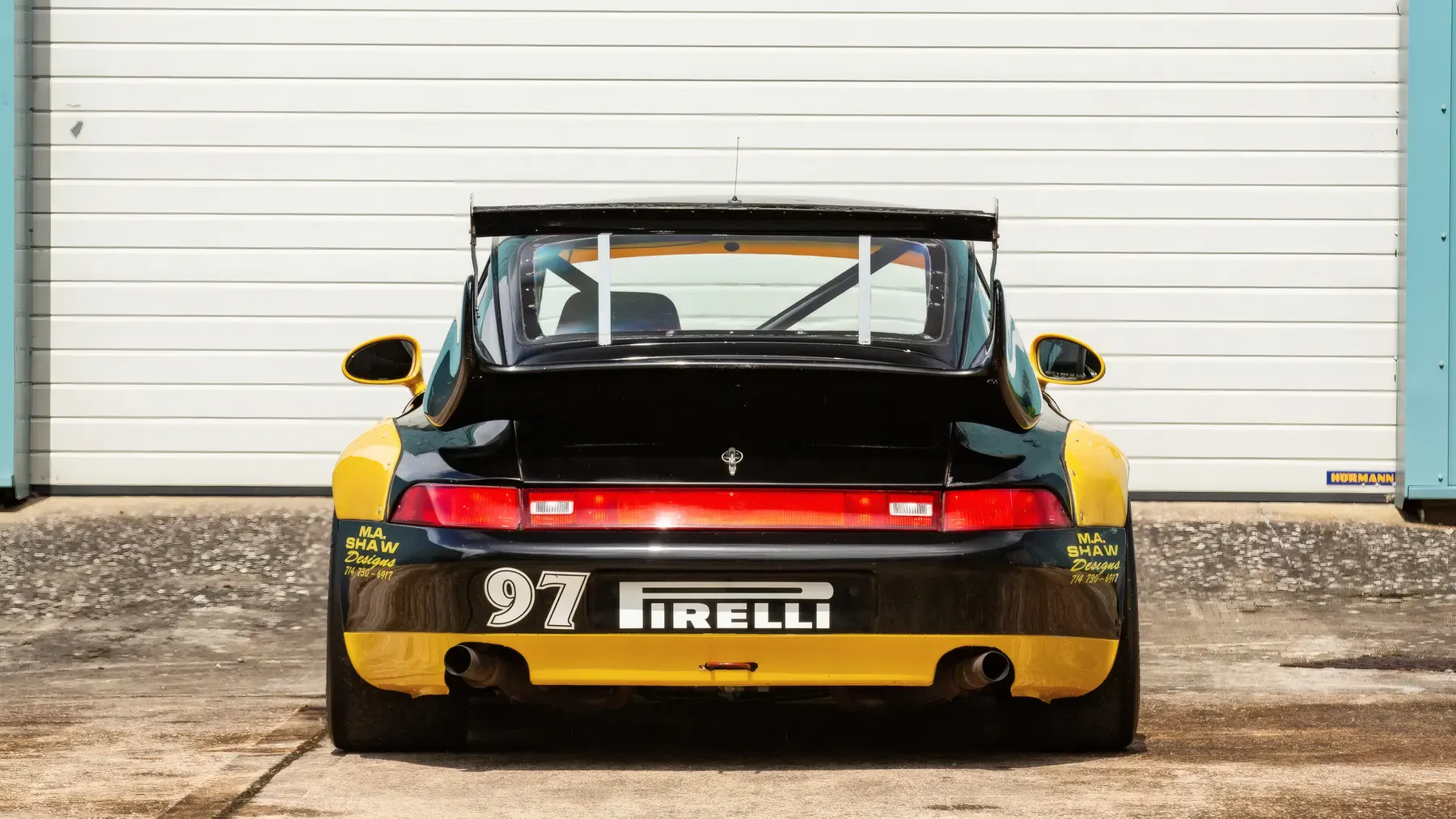
Racing results across the BPR Global GT Series and early FIA GT Championship rounds validated the 993 RSR as a genuine GT2-class competitor. Against Ferrari F355 Challenge-derived machinery, the developing Dodge Viper GTS-R, and various GT2 contenders of the period, the RSR proved consistently fast and reliably competitive in the endurance formats those series favoured. At Le Mans, GT2-class entries based on the 993 RSR accumulated strong results through the mid-1990s, with the car’s combination of pace, reliability, and Porsche Motorsport’s formidable factory support infrastructure making it a standard choice for privateer teams with Le Mans ambitions. Class victories at the Circuit de la Sarthe during this period were not surprises; they reflected the RSR’s genuine fitness for endurance competition at the highest level the car was designed to contest.
The car’s limitations, however, were genuine and consequential rather than theoretical. The air-cooled engine’s thermal management required more active attention during warm-weather endurance events than water-cooled competitors’ units demanded. Oil temperature sensitivity was an ongoing operational concern; teams managing the 993 RSR across extended summer endurance stints worked harder on thermal monitoring - oil cooler specifications, coolant routing, driver conduct under safety car periods - than rivals running water-cooled powerplants in comparable weight classes. This added operational complexity that, at the margin, represented a real disadvantage against better-resourced or more modern alternatives, and no engineering fix available within the air-cooled formula could fully eliminate it.
More structurally, the rear-engined layout imposed limits on aerodynamic development potential that became increasingly significant as GT2 competition intensified through the late 1990s. A mid-engined car can integrate rear underbody airflow more cleanly than a rear-engined machine where the engine occupies the space a diffuser needs. The 993 RSR’s packaging constrained where meaningful downforce could be generated and complicated the balance of front-to-rear aerodynamic load in ways that Porsche’s engineers could manage but not fully resolve within the architecture. Teams working the car on highly aero-sensitive circuits found themselves working harder for equivalent lap time against mid-engined cars whose packaging enabled cleaner aerodynamic solutions. The competition electronics were also relatively basic by the period’s evolving standards. Traction management and stability intervention were either absent or limited, placing the full burden of managing the rear-engined balance on driver skill. This suited experienced GT pilots who valued the mechanical, interactive character entirely - and the RSR genuinely rewarded that skill with communicative feedback. But it also meant that a broader population of competent GT drivers found the car harder to deploy at its limits than some alternatives, particularly at slow-corner exits where rear-engine inertia and the absence of electronic assistance exposed imprecision directly and immediately.
What is remarkable, given those constraints, is how long the 993 Cup 3.8 RSR sustained international competitiveness. Longevity came from compounding factors: Porsche Motorsport’s meticulous customer support; the engine’s thoroughly documented development history; exceptional endurance reliability, where a small pace deficit matters far less than the probability of covering the full distance; and the simple fact that the car’s handling demands, which could become a liability in less experienced hands, rewarded truly skilled drivers with genuine performance feedback that translated directly into lap time advantage. For privateer teams working within GT2 budgets, the RSR offered a well-supported, well-understood pathway to competitive results that genuinely expensive alternatives did not always guarantee.
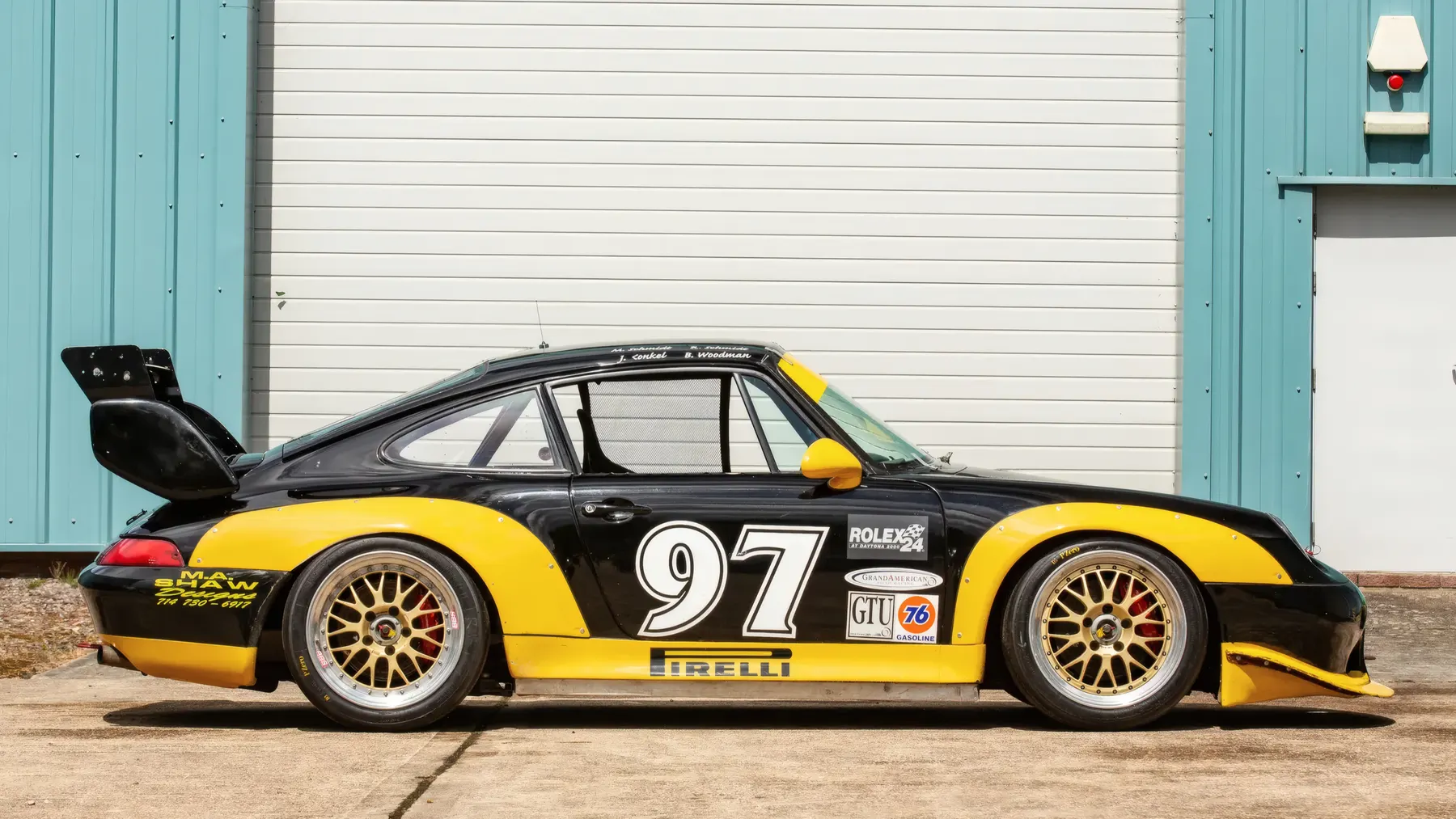
Porsche’s transition to water-cooling and the introduction of the 996-based GT3 RSR in the late 1990s closed the chapter the 993 Cup 3.8 RSR represented. The 996 GT3 RSR would prove faster, more broadly competitive, and eventually more dominant in GT endurance racing - but it was a different kind of machine: technically more progressive, less distinctly singular, and without the specific character that comes from being the final expression of a long and genuinely successful formula. The 993 Cup 3.8 RSR was not the fastest GT car of its era, nor the most technically progressive. What it was, and what makes it genuinely significant, is the most complete version of what the air-cooled 911 competition concept could become when Porsche applied three decades of accumulated racing knowledge to its logical conclusion - and chose to end it on a win.