Ferrari 410 Sport: Scaglietti's V12 Built for a Race That Never Ran
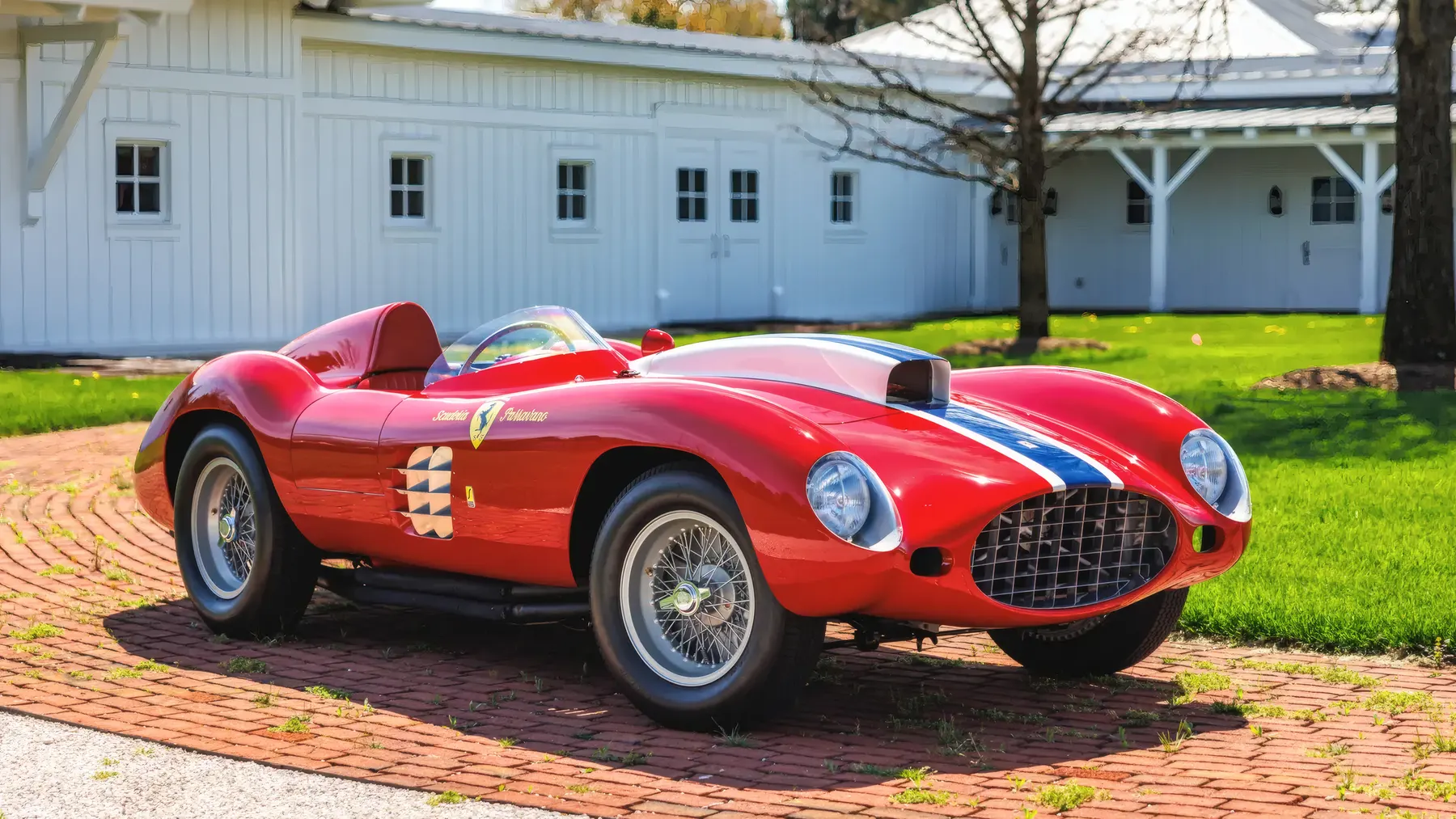
1955 Ferrari 410 Sport Spider by Scaglietti




Images: Theodore W. Pieper / RM Sotheby's
Ferrari built the 410 Sport to survive five days of Mexican highway driven flat out from dawn until dusk, then watched the race it was designed for get cancelled before a single example ever turned a wheel on the route. That contradiction sits at the centre of the model’s short life. It was the biggest, most powerful sports-racing Ferrari of the mid-1950s, engineered to a brutally specific brief, and it ended up with almost nowhere to use the capability Maranello had built into it.
The car arrived as the successor to the 375 Plus, the model that had won Le Mans in 1954 and had also been entrusted with Ferrari’s Carrera Panamericana campaign that same year. The Panamericana was the most punishing event on the calendar, a five-day, point-to-point thrash the length of Mexico on public roads of wildly varying quality, and the 375 Plus had struggled there. Riding high on its chassis and none too stable at speed over broken surfaces, the big Lampredi-engined cars were a handful, and one of the Ferrari entries in that 1954 race had been marred by a fatal accident to a co-driver. For 1955, Enzo Ferrari wanted a car purpose-built to tame that race, and the result was an entirely new chassis, internally designated the tipo 519/C: a low, wide, elliptical-section tubular spaceframe with additional cross-bracing, and a wheelbase shortened to around 2,420mm from the 375 Plus’s roughly 2,600mm, in the hope of taming the car over the Panamericana’s uneven going.
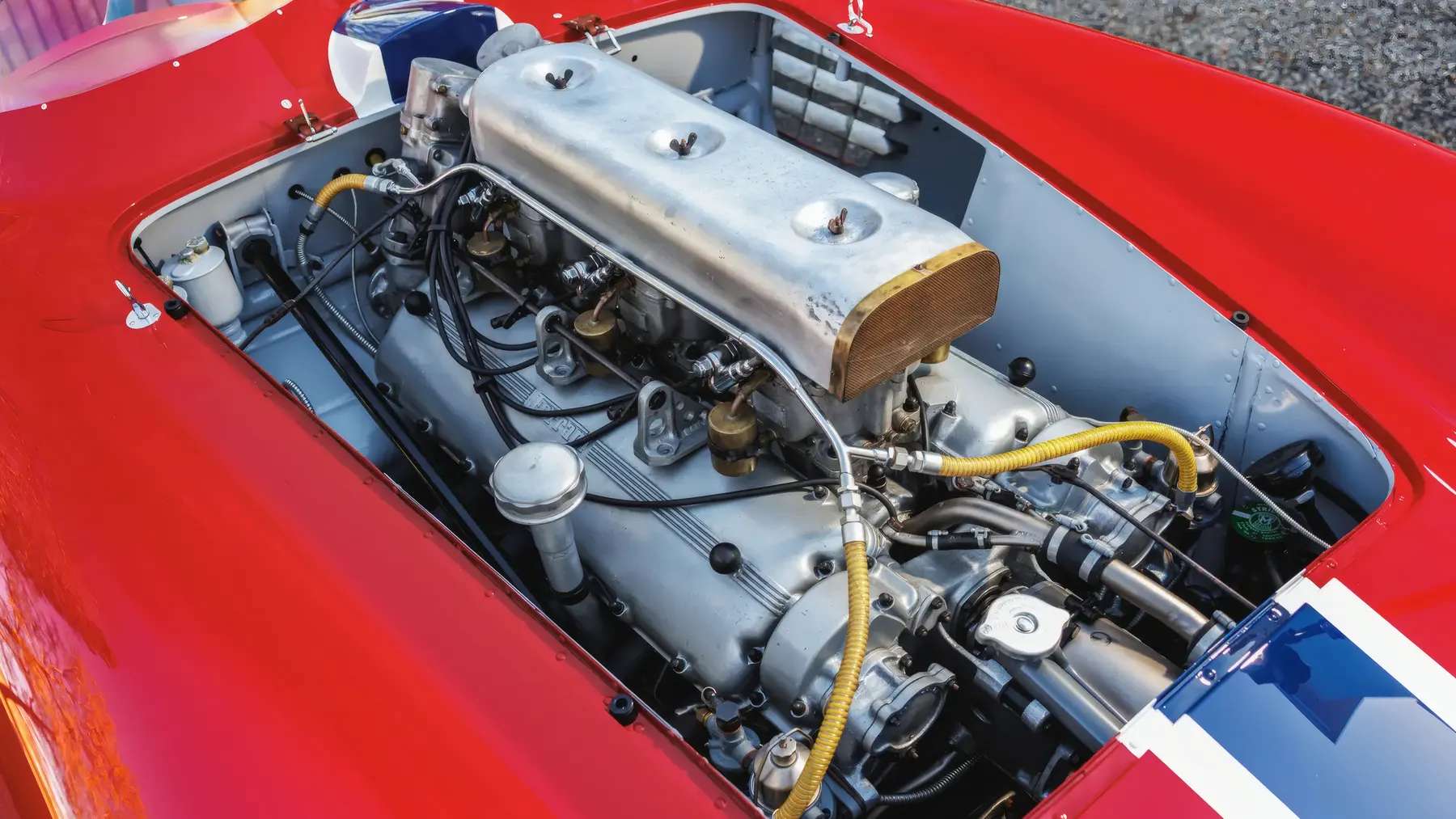
Aurelio Lampredi, rather than simply carrying over the 375 Plus’s engine, reworked his long-block V12 with a bigger bore and shorter stroke, arriving at 88mm by 68mm for a displacement of 4,962cc - the largest engine Ferrari had yet built, and one closely related in basic architecture to the unit destined for the contemporary 410 Superamerica road car. Two states of tune were offered. The first pair of chassis, built to customer order and generally referred to as 410 Speciales, carried a single-plug version of the engine fed by triple twin-choke Weber carburettors, developing somewhere in the region of 330 to 345 bhp depending on which period figures are consulted, at around 6,000 to 6,200 rpm. The two chassis built for factory competition went further, adopting a twin-plug ignition system borrowed from Ferrari’s Formula One practice, with a second set of spark plugs mounted outside the cylinder banks and reached through trapdoors cut into the bodywork, dual distributors, and three larger 46DCF/3 Webers. Output is generally quoted at around 375 to 380 bhp at 7,000rpm, though some published accounts put it closer to 400 bhp; one published torque figure for the twin-plug unit runs to roughly 403 lb-ft at 5,000rpm. Whichever number is accepted, this was, by a wide margin, the most powerful sports-racing engine Ferrari had built to that point, and it drove through a dry-sumped, triple-plate clutch and a five-speed transaxle gearbox mounted at the rear to help balance the car’s considerable weight.
All four chassis built carried a “CM” suffix in their factory designation, for Carrera Messicana - a small piece of paperwork commemorating a race that none of them would ever start. The 1955 Carrera Panamericana was cancelled outright, along with that year’s Nürburgring 1000km, in the aftermath of the Le Mans disaster in June 1955, when a Mercedes-Benz left the circuit and disintegrated in the crowd with catastrophic loss of life. Mexican authorities, already uneasy about the road toll of previous Panamericanas, chose not to proceed, and the marathon Ferrari had built its biggest V12 sports racer to conquer simply stopped existing as a target. The 410 Sport was left to find a second career in circuit racing instead, for which its long-tailed, long-legged design had not specifically been intended.
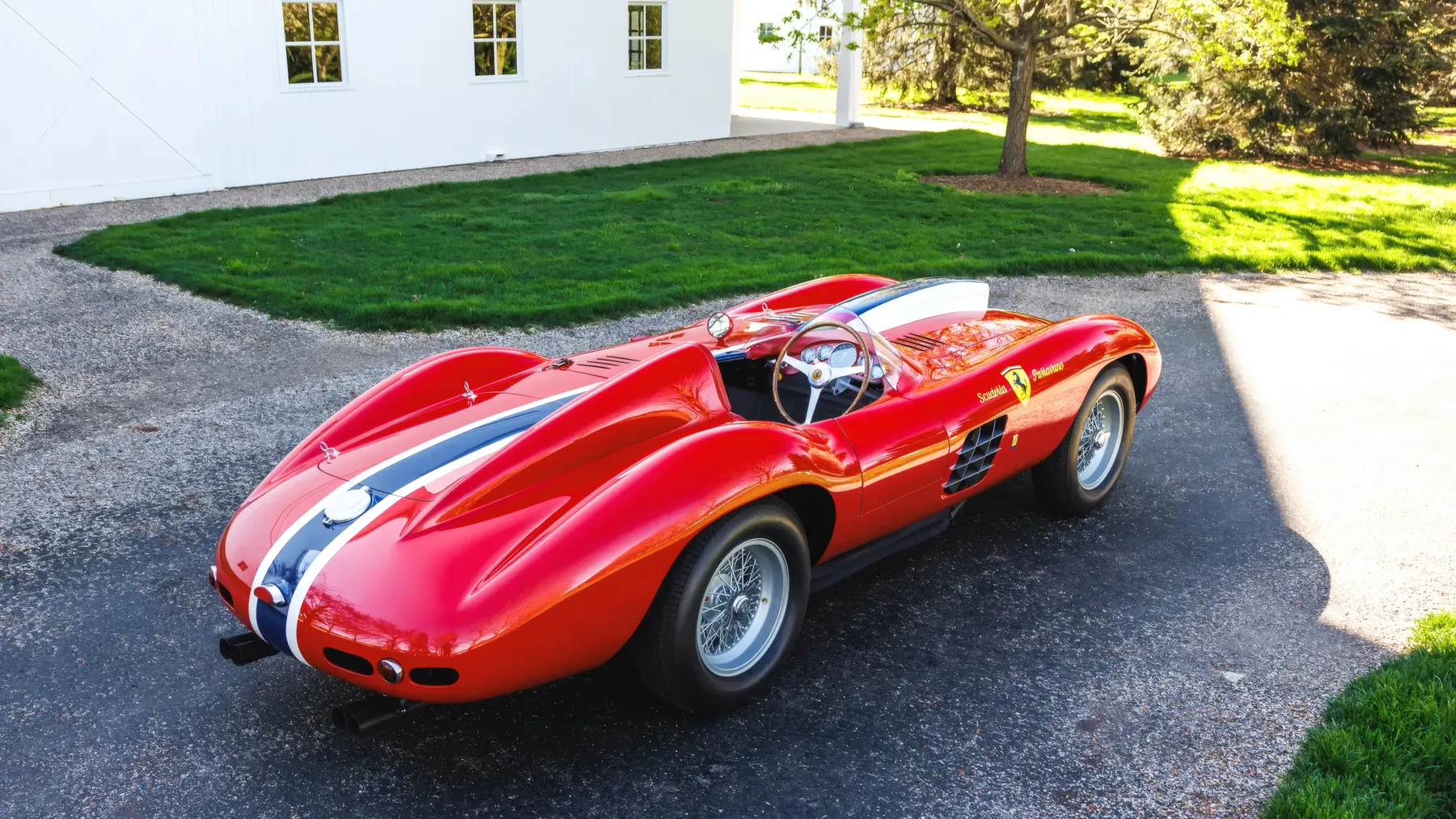
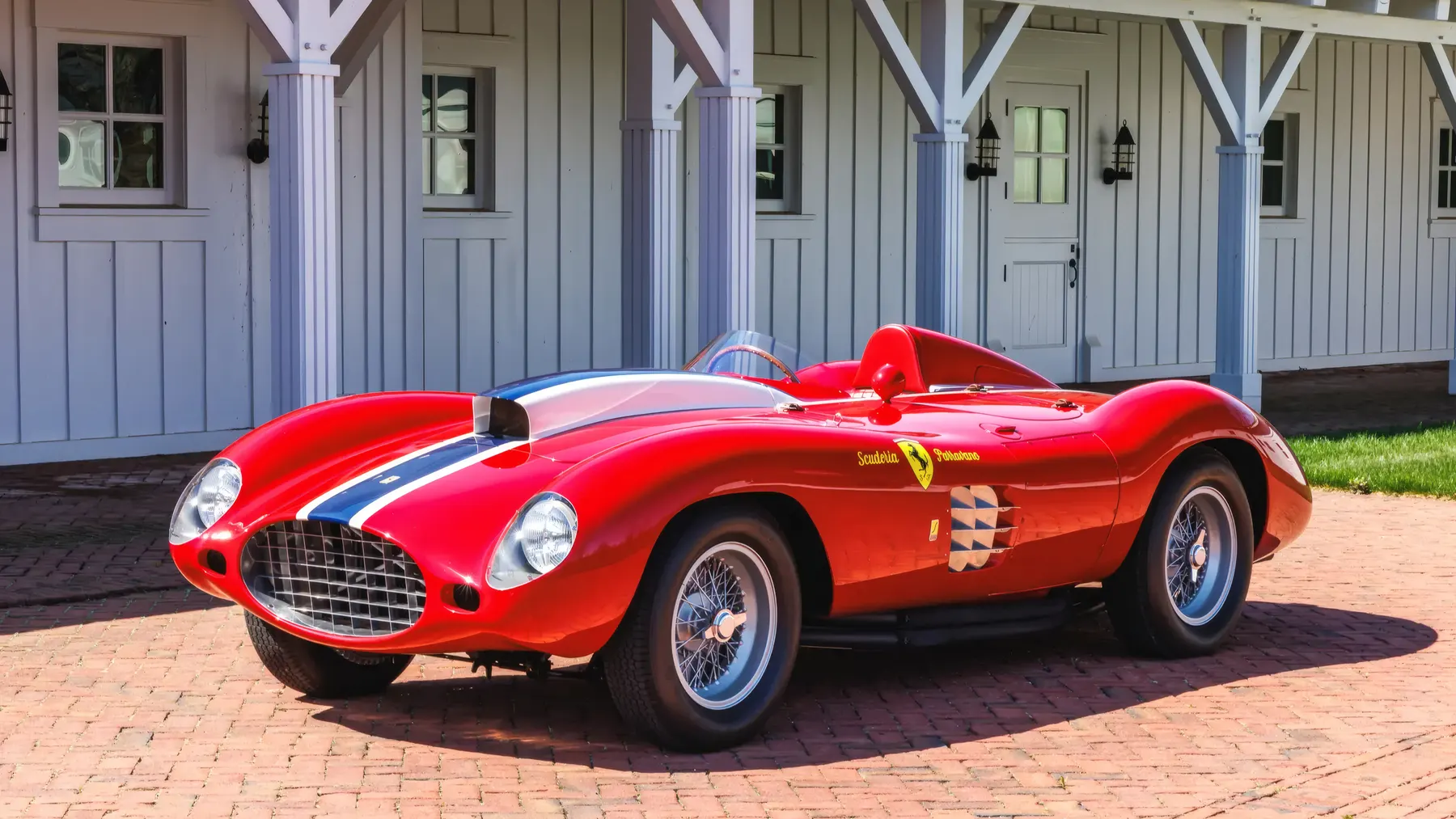
Scaglietti clothed all four cars, and did so in a way that was, for the era, unusual: rather than executing another carrozzeria’s drawings, as Sergio Scaglietti’s workshop typically did for Ferrari’s competition cars, this was one of the comparatively rare instances where Scaglietti both styled and built the bodywork outright, a distinction the coachbuilder marked by placing its own badge behind the front wheel arch. The result was aggressive and function-led rather than pretty in the manner of a Pinin Farina design: a vast, ovoid front grille, an enormous bonnet to grant access to the deep engine bay, and a stretched tail housing a 195-litre fuel tank sized for a race measured in days rather than hours. The two factory competition cars wore a distinctive wide engine cover cut to allow access to the twin-plug engine’s outboard spark plugs, while the two customer Speciales carried more conventional hoods and, in one case, ornamental louvered fender vents favoured by their first private owner. A fourth chassis was bodied not as a spider at all but as a one-off closed berlinetta for a Ferrari board director, its shape loosely echoing contemporary Pinin Farina coupés but grafted onto the shorter, wider 410 chassis - a reminder that Scaglietti’s brief for this small run extended beyond pure competition spiders.
Underneath, the suspension followed established Ferrari sports-racing practice: independent unequal-length wishbones at the front, and a de Dion rear axle located by a transverse leaf spring, a layout Ferrari had already adopted on its other big-banger racers. Front and rear tracks measured around 1,455mm and 1,450mm respectively, noticeably wider than either the preceding 375-series cars or the 290 MM that would replace the 410 Sport within a season, giving the car a planted, purposeful stance to match its length. Braking was by drums all round, mounted outboard of the wheels specifically to improve cooling under the sustained hard use of endurance racing - a sensible enough solution by 1954 standards, but one that was already being overtaken by events, since Jaguar’s D-type had raced with disc brakes since 1954 and the industry’s broader shift to discs was well under way by the time the 410 Sport reached the grid.
That grid appearance turned out to be a single one. With the Panamericana gone, Ferrari repositioned the works pair for the opening round of the 1956 World Sportscar Championship, the 1000km of Buenos Aires, entering them for Juan Manuel Fangio and Eugenio Castellotti in one car and Peter Collins and Luigi Musso in the other. Both cars showed real pace - the works pairing recorded a new lap record and touched speeds reported at up to around 188mph on the circuit’s long straights - but neither finished, both retiring with transmission and differential failures brought on, by most accounts, by the sheer torque the twin-plug V12 was feeding through the drivetrain. It was the only occasion the 410 Sport appeared as a factory entry, and rather than persevere with the model, Ferrari redirected its 1956 works effort toward the 860 Monza and the newer 290 MM for that year’s Mille Miglia and the rest of the championship. The two works cars were refurbished and sold on to private owners, joining the two customer Speciales that had already gone to American racers, and it was in privateer hands - mostly on the fast, wide-open circuits and airfield courses of West Coast and Caribbean club racing in the late 1950s - that the model built most of its competition record, driven at various points by, among others, Carroll Shelby, Phil Hill, Richie Ginther and Masten Gregory. That record tended to favour high-speed, flowing circuits where the engine’s sheer output could be exploited; on tighter, twistier tracks the car’s size, weight and long gearing worked against it, and it was regularly outpaced there by smaller, more agile machinery even when it held a straight-line advantage.
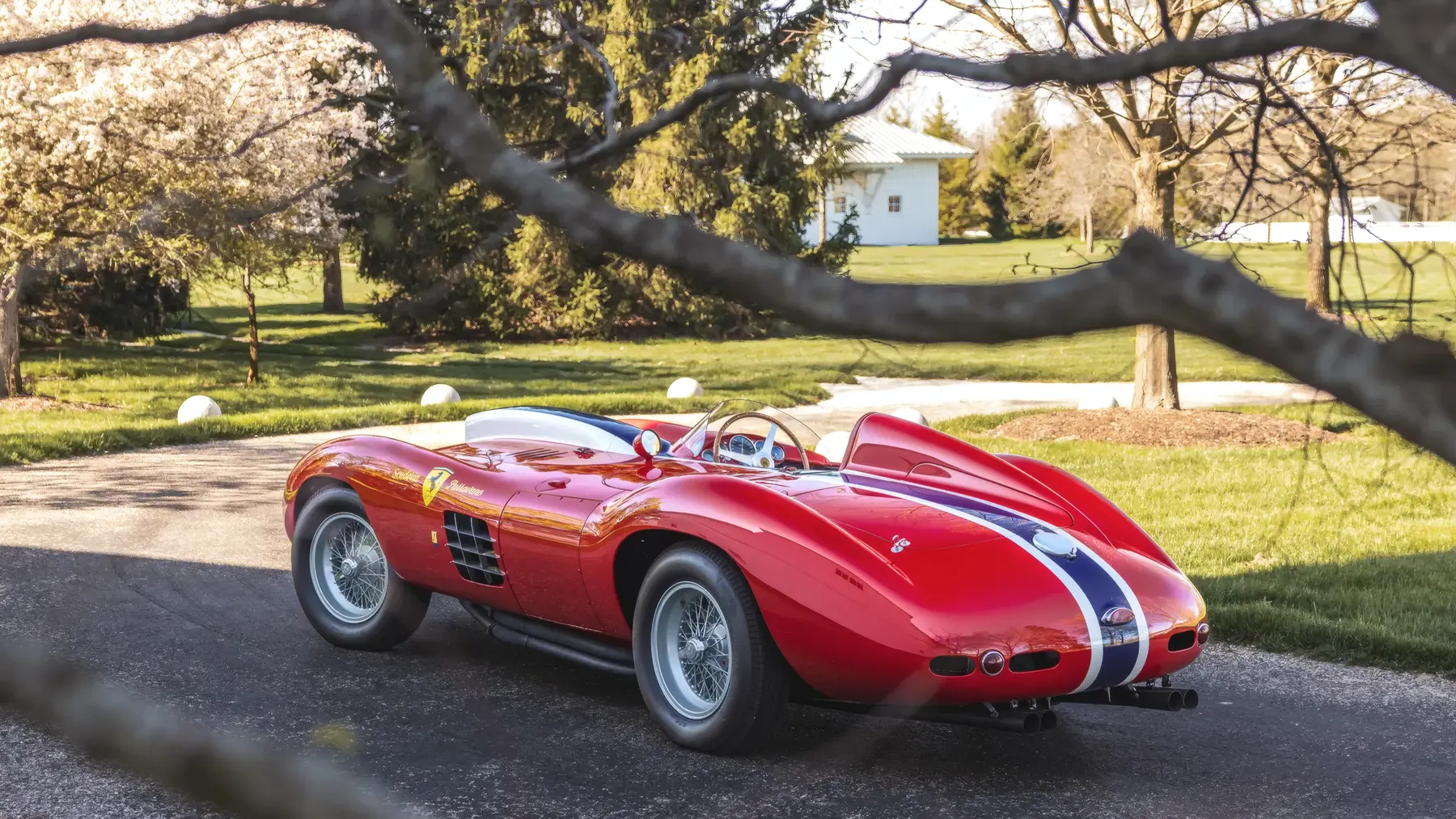
Ferrari never offered the 410 Sport as anything resembling a production model; it sat entirely outside the ordinary customer-car business the factory was simultaneously running with smaller four-cylinder racers, and even within Ferrari’s sports-racing line-up it was a specialist tool built in tiny numbers for a small circle of factory-connected buyers rather than a car anyone could simply order. That positioning shaped everything about how it must have felt to drive. With close to 4,962cc and, in twin-plug form, somewhere north of 375 bhp sent through a live rear axle-free de Dion layout and a five-speed transaxle, the 410 Sport would have offered a startling amount of shove for 1955, delivered low in the rev range from an engine that, unlike the smaller-capacity racers Ferrari would move toward within a couple of seasons, did not need to be worked hard to find its power. That in turn meant a car that could be driven, on the long, fast circuits and road stages it suited best, largely on throttle and torque rather than on constant gearchanging - but one that, with a heavy iron-block V12 sitting ahead of the front axle and drum brakes doing the stopping, would have demanded real physical effort and respect at the limit, particularly under sustained braking from the sort of speeds it was capable of reaching on a long straight.
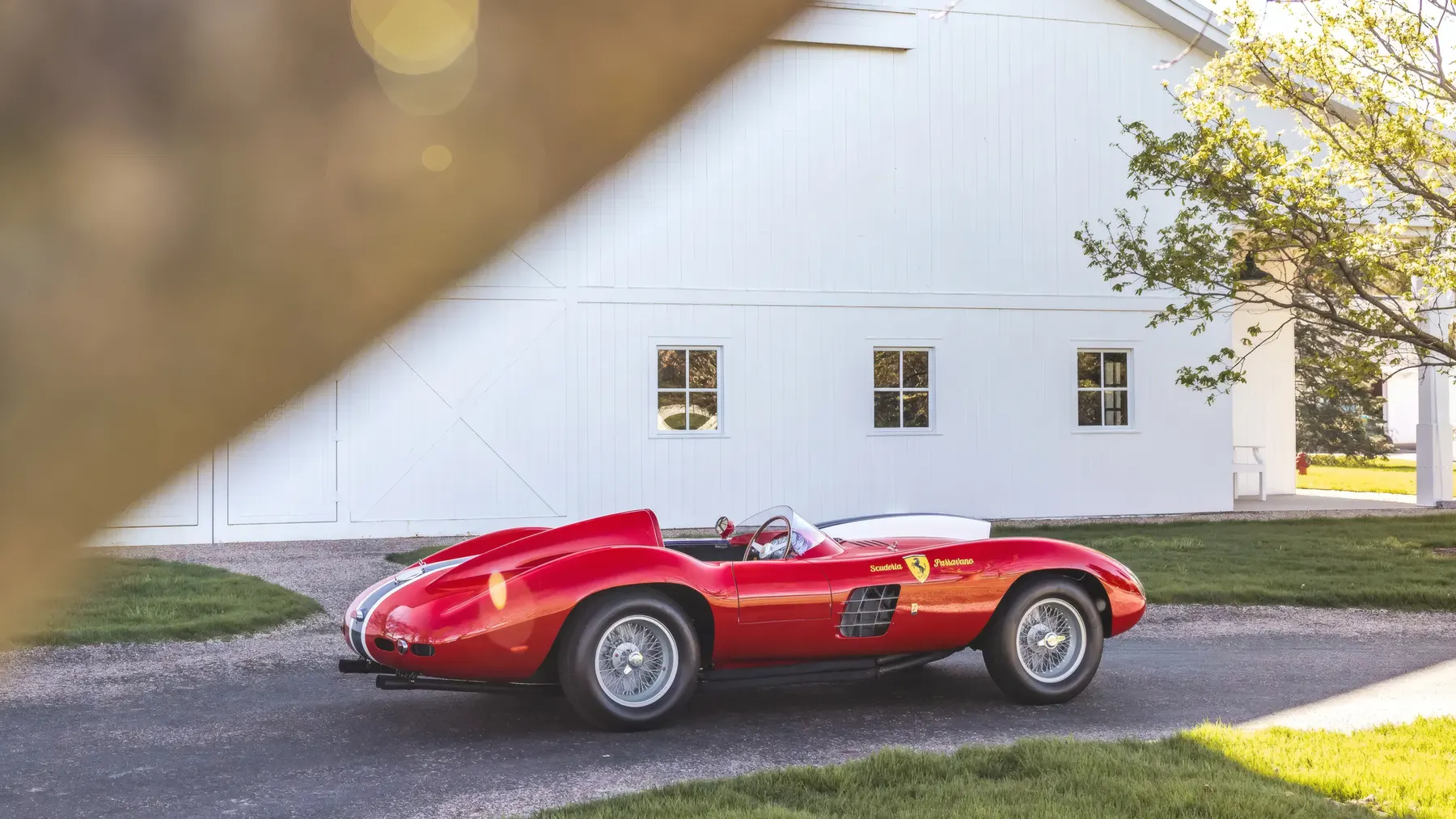
Look past the theatre of a 4.9-litre, roughly 380 bhp V12 sports racer and the 410 Sport’s real-world record is a model of compromises as much as capability. Its only appearance as a genuine works entry ended in a double retirement, both cars felled by a drivetrain that simply could not absorb the torque the twin-plug engine was producing - a fairly damning result for a car built expressly to survive five unbroken days of hard use. Its drum brakes, while thoughtfully engineered for cooling, were already a technological step behind what British rivals were racing, at a moment when the top level of sports car competition was visibly moving toward discs. And the fundamental premise of the car - an extreme, purpose-built machine designed around a single marathon event - proved to be its greatest vulnerability, because that event no longer existed by the time the cars were finished, leaving a tiny production run of four chassis to find relevance in a form of racing it had not specifically been built to win. Ferrari itself seemed to draw a similar conclusion: within a season the factory had moved on from ever-larger Lampredi V12s to the lighter, higher-revving Jano-designed V12 of the 290 MM, effectively retiring the big-block front-engined sports racer as a strategy rather than pushing the 410 Sport’s displacement approach any further. Whether that reflects a car that was simply overtaken by a better idea, or a promising design starved of the development time a longer works career might have given it, is hard to say with confidence given how briefly Ferrari actually raced it.
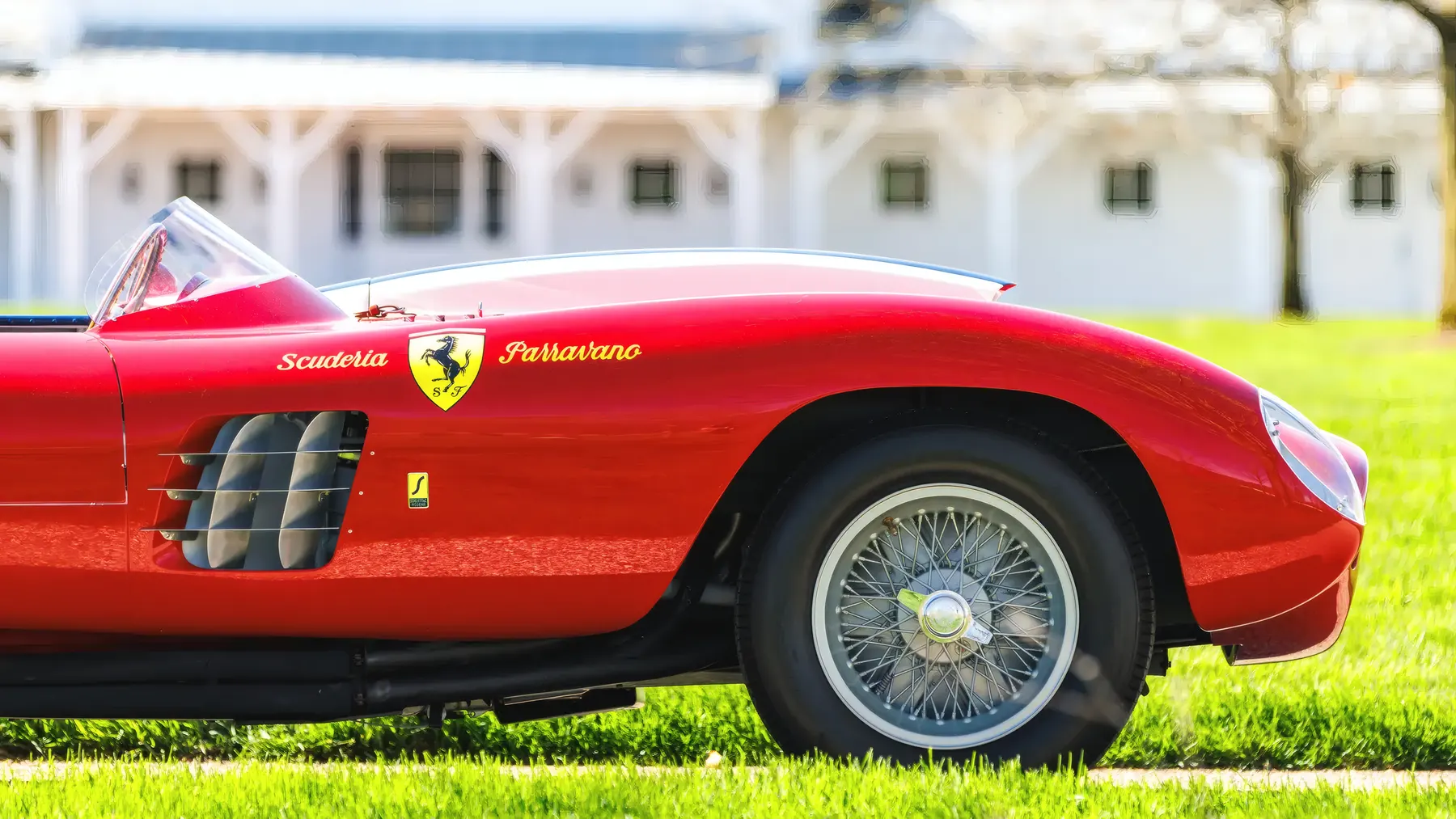
None of that has dented the model’s standing with collectors, for whom its rarity, its connection to some of the era’s best-known drivers, and its position as the final and most powerful expression of the Lampredi long-block V12 sports-racing line carry considerable weight. Only four chassis were built, split between the two customer Speciales, the two factory twin-plug cars, and the single closed berlinetta, and examples that have reached public auction in recent years have sold for eight-figure sums, among the higher prices recorded for any 1950s Ferrari sports racer. Its successor, the 290 MM, picked up where the 410 Sport left off with a smaller, lighter, more powerful-revving engine and a genuine works career including outright wins, which only sharpens the sense that the 410 Sport arrived at exactly the wrong moment: a car engineered with real ambition for a race that vanished from the calendar just as it was ready to run it, leaving a handful of cars to make their case, briefly and imperfectly, on tracks they were never quite designed for.
Technical data
Performance Specifications
| 410 Speciale (customer, single-plug) | 410 Sport (works, twin-plug) | |
|---|---|---|
| Production | 1955–1956, 2 chassis | 1955–1956, 2 chassis |
| Engine | Tipo 126, 60° V12, Lampredi long-block, sohc, 2 valves/cyl | Tipo 126/C, 60° V12, twin-plug ignition |
| Displacement | 4,962cc (88mm x 68mm) | 4,962cc (88mm x 68mm) |
| Compression | 8.5:1 | 8.5:1 |
| Fuel feed | 3x twin-choke Weber carburettors | 3x Weber 46DCF/3 carburettors |
| Power | approx. 330–345 bhp* @ c. 6,000–6,200rpm | approx. 375–380 bhp* @ 7,000rpm (period factory materials cite up to c. 400 bhp) |
| Torque | not reliably documented in sourced material | approx. 403 lb-ft* @ 5,000rpm |
| Weight (kerb) | approx. 1,200kg | approx. 1,200kg |
| Wheelbase | approx. 2,410–2,420mm (tipo 519/C chassis; individual cars vary slightly by source) | approx. 2,410–2,420mm |
| Track (f/r) | approx. 1,455mm / 1,450mm | approx. 1,455mm / 1,450mm |
| Brakes | drums, all round, outboard-mounted | drums, all round, outboard-mounted |
| Gearbox | 5-speed manual transaxle | 5-speed manual transaxle |
| Fuel tank | 195 litres | 195 litres |
| Top speed | not separately documented | approx. 174–188 mph* depending on source and ignition tune |
| Body | aluminium, Scaglietti | aluminium, Scaglietti |
Sources
- Ferrari 410 S - Wikipedia
- 1955 Ferrari 410 S Scaglietti Spider - Ultimatecarpage.com
- Ferrari 410 S Scaglietti Spider Specifications - Ultimatecarpage.com
- 1955 Ferrari 410 Sport - Supercars.net
- 1955 Ferrari 410 Sport Spider by Scaglietti, Monterey 2022 - RM Sotheby’s
- 1955 Ferrari 410 Sport Spider by Scaglietti, Monterey 2024 - RM Sotheby’s
Join the discussion
Comments
Loading comments…
Leave a comment
Share a detail, memory, or perspective. Every comment is reviewed before publication.