1999 Ferrari 456M GT
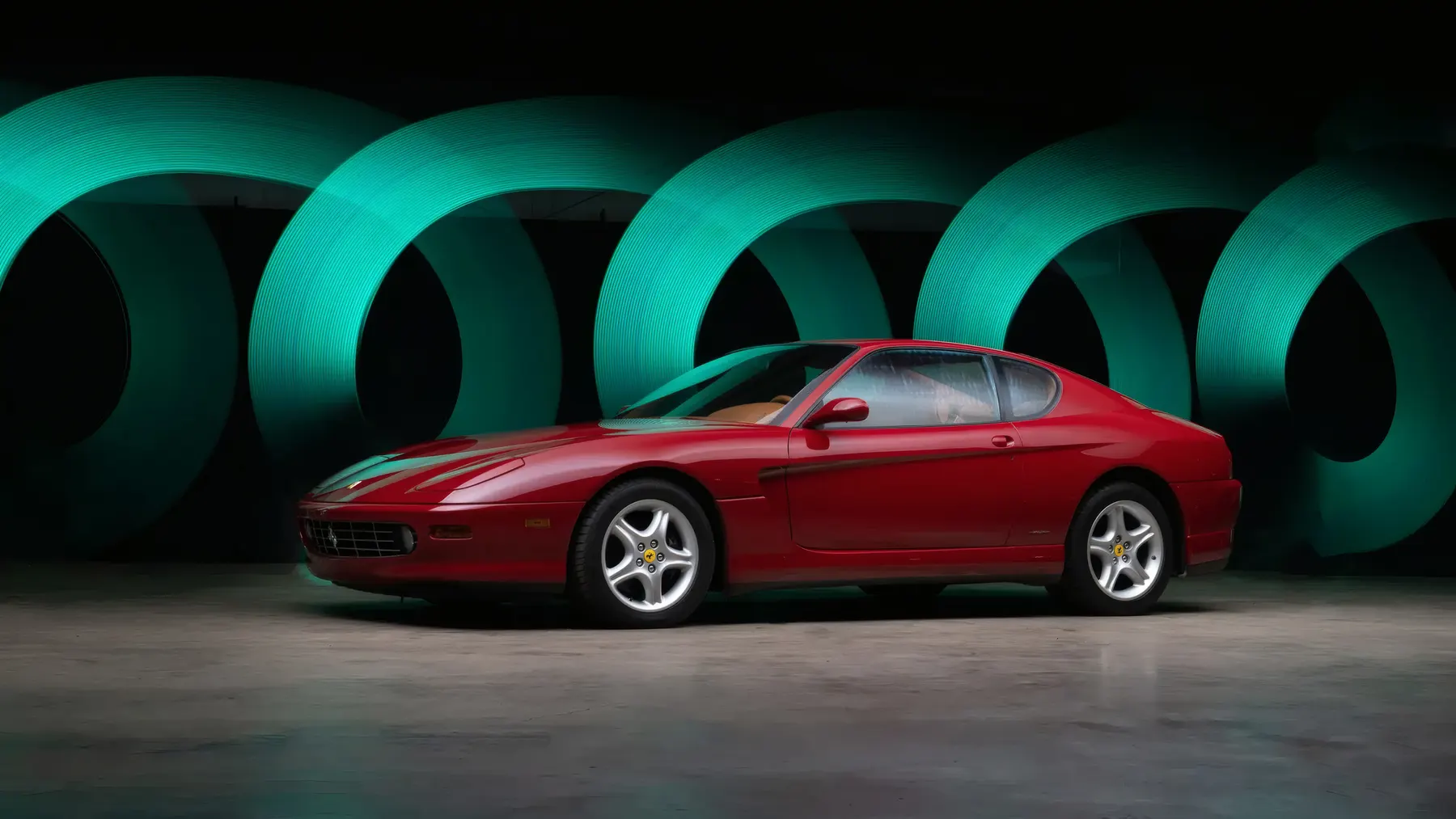
When Ferrari chose Luca di Montezemolo to lead the company’s revival in 1991, the mandate was clear: Maranello would build cars that could carry the brand into the next century without abandoning the front-engine V12 grand tourer that had defined Ferrari’s most liveable, most civilised identity. The 456 GT, launched at Paris in 1992, was the first answer to that mandate. The 456M GT, unveiled at Geneva in March 1998, was the considered refinement of it - a model that knew what it was and set about being it more completely.
The “M” in 456M stands for Modificata, and that word captures the project’s philosophy precisely. This was not a ground-up redesign but a disciplined, targeted improvement of a car that had already proven itself capable. Ferrari offered the 456M in two guises: the GT, with a six-speed manual gearbox, and the GTA, with a four-speed automatic developed in collaboration with FF Developments in Livonia. The distinction mattered commercially as much as it did dynamically - the GTA accounted for 650 of the 1,338 total 456M units built, suggesting that many buyers of front-engined Ferrari grand tourers were entirely comfortable letting a torque converter handle the shifts. The GT, with its 688 examples, was nominally the purist’s choice, though the performance gap between the two was narrow enough to make the point largely academic on public roads.
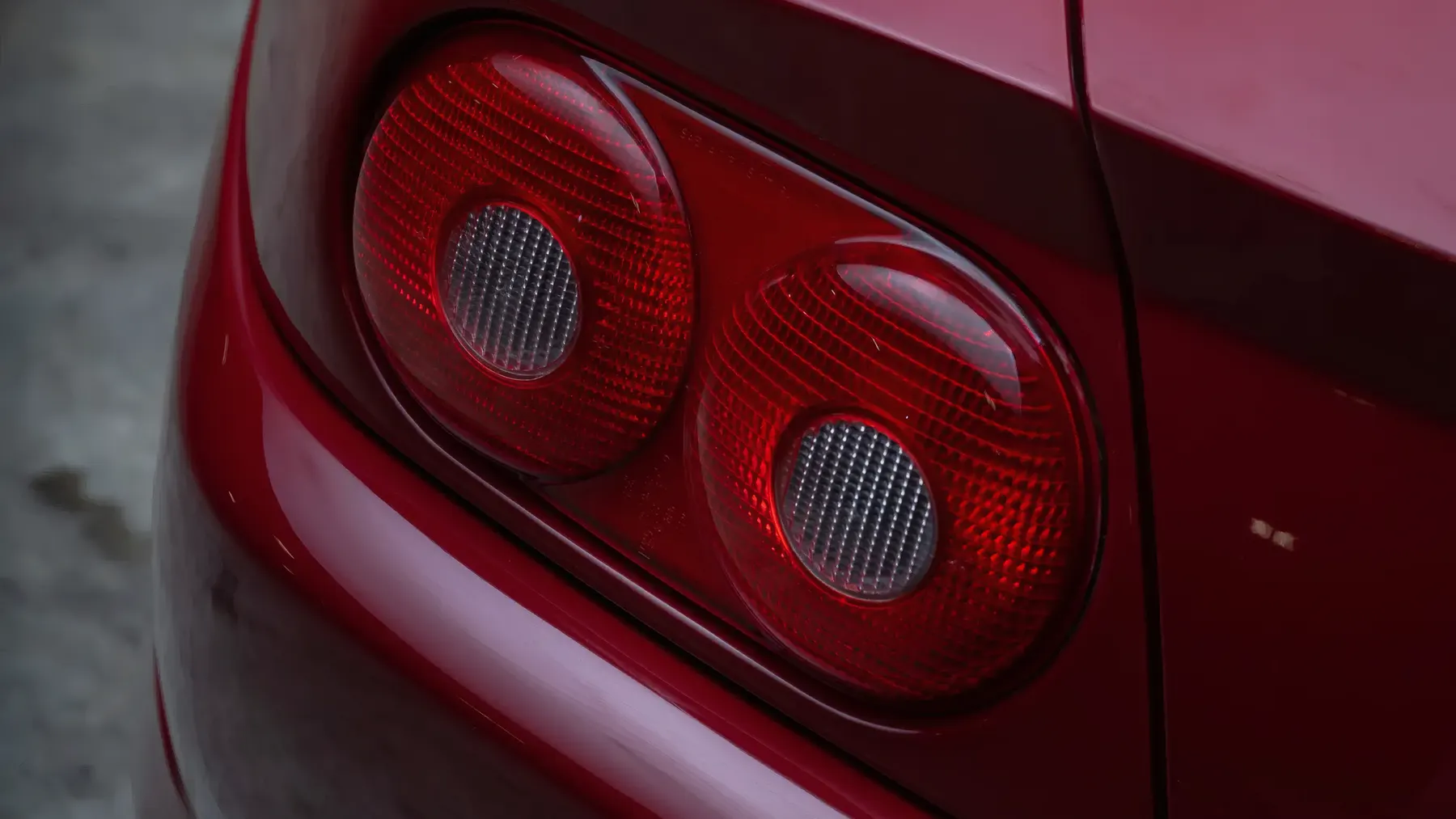
At the heart of both variants sat Ferrari’s 5,474cc, 65-degree V12, designated F116C, producing 436 bhp at 6,250 rpm and 406 lb-ft of torque at 4,500 rpm. The 65-degree V angle is worth dwelling on: rather than adopting the 60-degree architecture used in the 412 and the Daytona, Ferrari’s engineers traced the engine’s lineage back through the Dino V6, a decision that had implications for packaging, the centre of gravity, and the character of the power delivery. The engine management moved to Bosch Motronic M5.2, and the cylinder firing order was revised from the earlier 456 GT for smoother low-speed running - a detail that speaks to how seriously Ferrari took the grand touring brief. Dry-sump lubrication, twin overhead camshafts per bank, four valves per cylinder, and a 10.6:1 compression ratio completed a specification that was unambiguously serious. The block and cylinder heads were cast in light alloy, keeping the kerb weight at 1,690 kg - substantial for a two-door coupé, but reasonable given that the car was genuinely a 2+2 with real rear accommodation.
The chassis was a tubular steel structure, and the suspension geometry - unequal-length wishbones front and rear, coil springs over gas-filled dampers, anti-roll bars at both ends - was orthodox but carefully calibrated. The rear suspension incorporated self-levelling, a thoughtful concession to the car’s touring aspirations that prevented the tail sagging when two adults occupied the rear seats. Steering was rack-and-pinion, and the wheel and tyre combination was assertive: 255/45 ZR17 at the front, 285/40 ZR17 at the rear. The wheelbase of 2,600 mm gave the 456M its composed, settled quality on long-distance work, while the 4,763 mm overall length and 1,920 mm width communicated the car’s genuine scale.
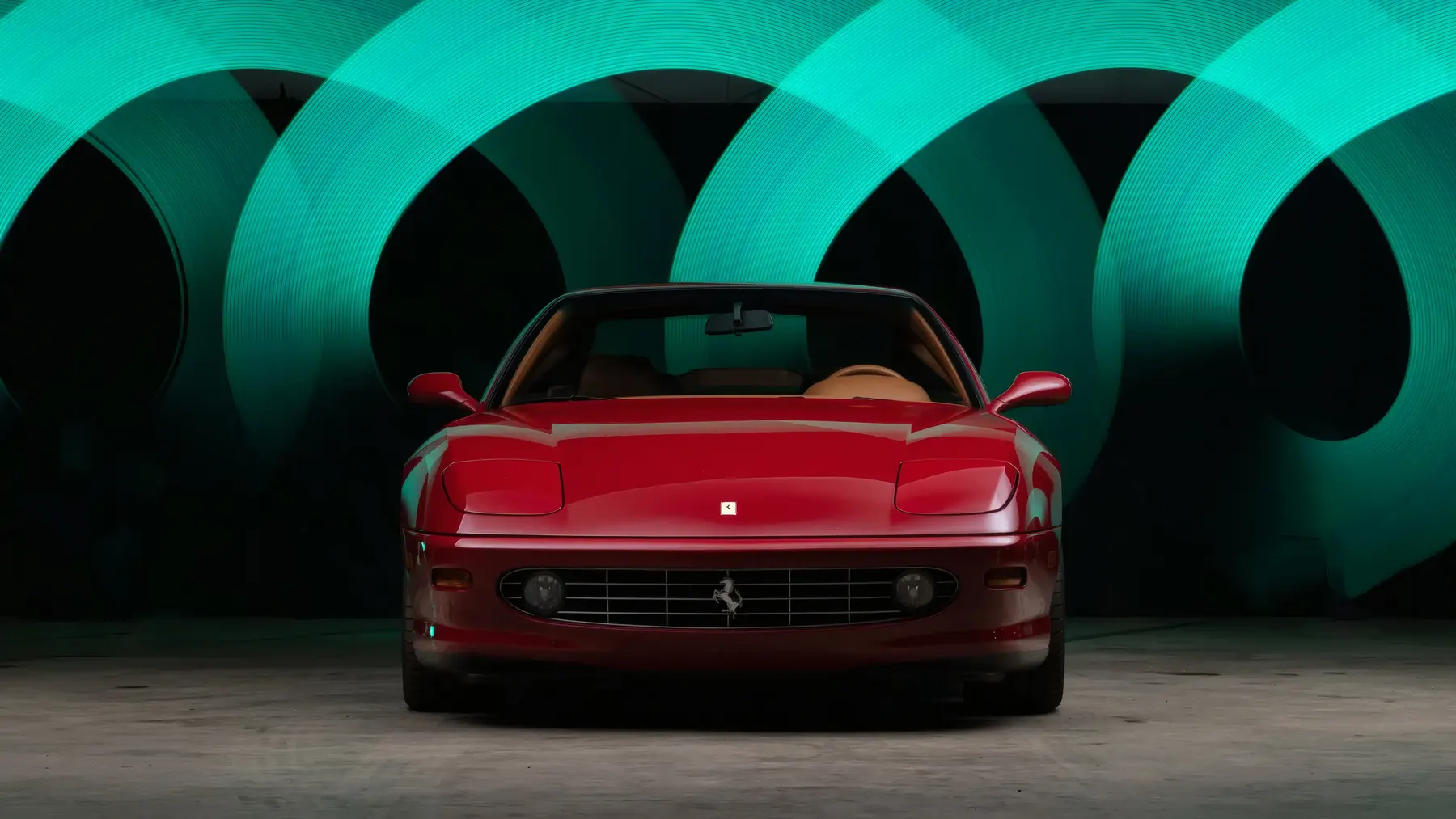
Pininfarina styled the bodywork, and Ken Okuyama’s drawings - some dating to 1996 during the Modificata’s development phase - shaped a front end that was subtly reshaped relative to the original 456. The grille was revised, with the fog lights relocated to outside the main grille aperture, and the undercarriage front spoiler was fixed rather than the motorised, speed-sensitive unit of the earlier car. The bonnet, notably, represented the first commercial application of carbon fibre in this position on a Ferrari production car - the preceding 456 GT had used a composite material, but the 456M went further. Pop-up headlamps were retained, making the 456M the last Ferrari production model to use them - an aesthetic detail that became, in retrospect, a small historical footnote.
Inside, the cabin received a thorough refresh. The instrument layout was simplified - fewer gauges on the dashboard - and a new Becker stereo was fitted ahead of the gear selector. The seats were redesigned, and the general quality of materials and ergonomics was lifted to address criticisms directed at the original car. Ferrari was acutely aware that the 456M’s buyers were comparing it not just against the 550 Maranello or the occasional Aston Martin, but against the saloon cars they might also own - Mercedes S-Classes and BMW 7 Series - and the interior had to compete on those terms.
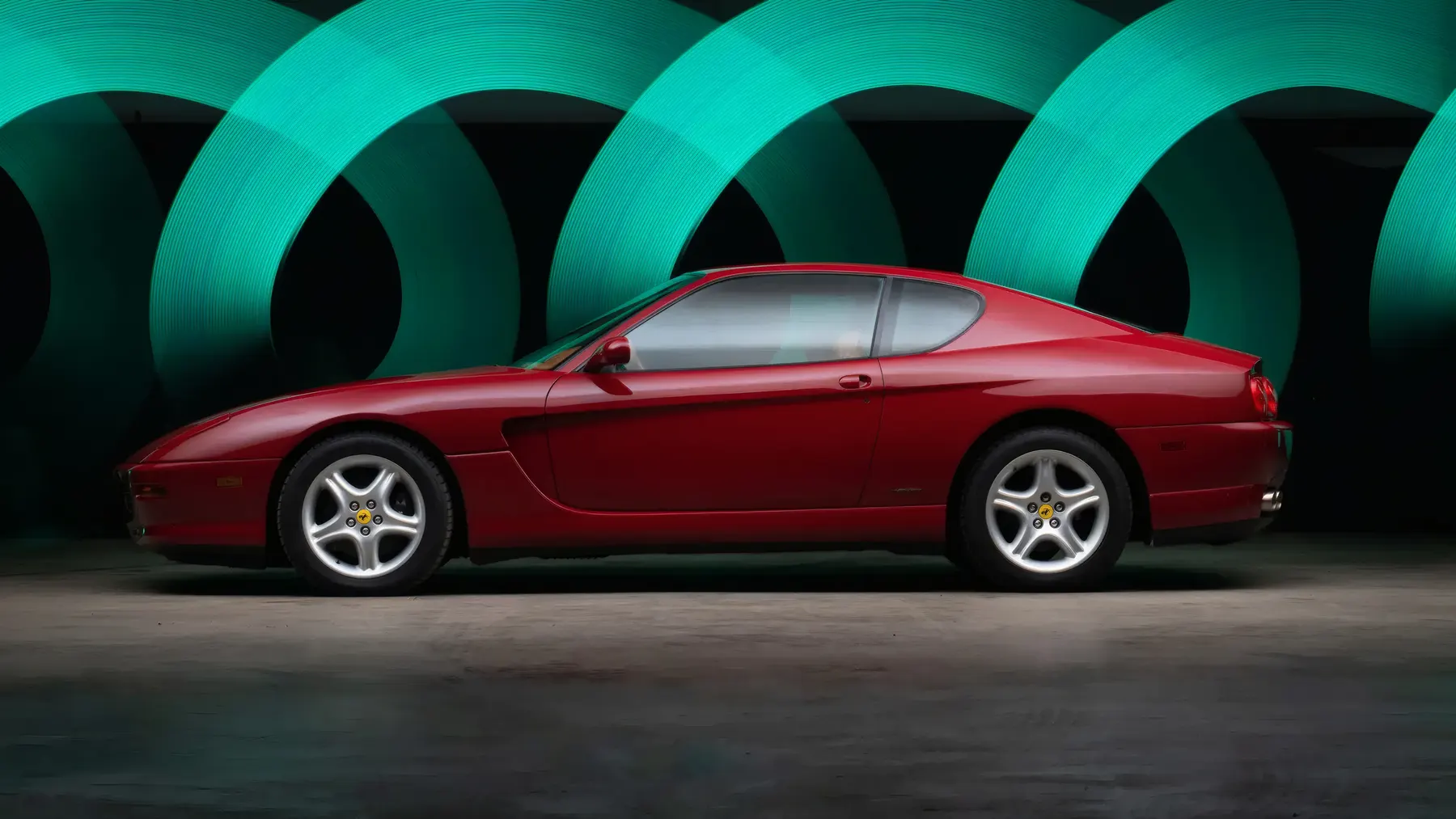
On the road, the 456M GT completed 0–62 mph in 5.2 seconds, with the GTA taking a marginal 5.4 seconds. Top speed was 186 mph for the manual, with the GTA managing a near-identical 185 mph. Those numbers, while genuinely quick, do not communicate what the car actually felt like to cover ground in. The long-stroke V12 - with its 88 x 75 mm bore and stroke dimensions - built torque in a wide, accessible band rather than demanding the driver chase a narrow rev window. The six-speed manual had a gated change, as expected, delivering that tactile, mechanical precision that Ferrari customers of this era regarded as a birthright. The ride quality, aided by the self-levelling rear, was supple enough for sustained motorway work, and the long wheelbase absorbed surface irregularities with composure that a mid-engined car simply cannot replicate.
The 456M’s strengths were architectural. The front-engine, rear-wheel-drive layout placed the V12 behind the front axle centreline and the gearbox at the rear as a transaxle, achieving a near-ideal front-to-rear weight distribution. That balance, combined with the wide rear tyres and calibrated suspension, gave the 456M a handling character that was progressive and readable rather than aggressive - a car that invited confidence and rewarded smooth inputs. For a grand tourer, that is exactly the correct priority ordering.
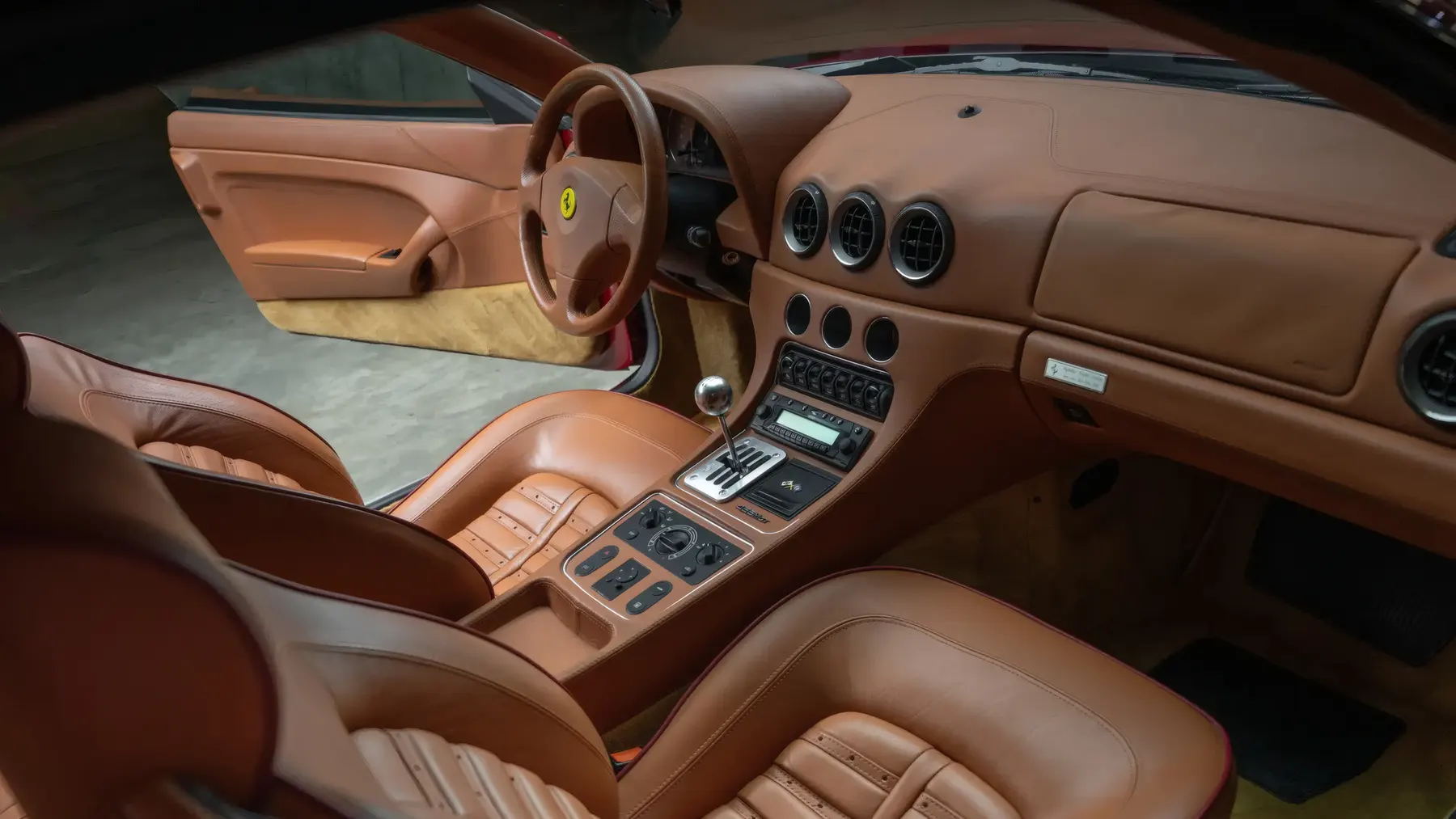
The drawbacks were real, though. The 456M’s weight was always a presence - at 1,690 kg it was not a light car, and in tighter or more demanding conditions the mass was detectable in the way the car responded to rapid direction changes. The four-speed automatic in the GTA, while a significant commercial proposition, was not a particularly modern unit by 1998 standards - the collaboration with FF Developments produced something adequate rather than inspired, and it lacked the responsiveness that later paddle-shift systems would make routine. The 456M was also, by this point, operating in a Ferrari range that had just produced the 550 Maranello: a lighter, sharper, more overtly sporting car that used a similarly positioned V12. Some buyers inevitably questioned what the 456M offered over the 550 for the additional complexity of the 2+2 package, and the answer - genuine rear-seat accommodation and a somewhat more refined ride - was not always a compelling close.
In its final production year of 2003, buyers could specify the 456M through the Carrozzeria Scaglietti personalisation programme, which allowed extensive bespoke customisation and was adopted by roughly 90 percent of Ferrari’s clientele at that point. A two-tone example expressly designed for Michael Schumacher appeared on the Ferrari stand as a demonstration of the programme’s scope, underlining that the 456M, even in its last months, retained the cachet to attract the marque’s highest-profile ambassador.
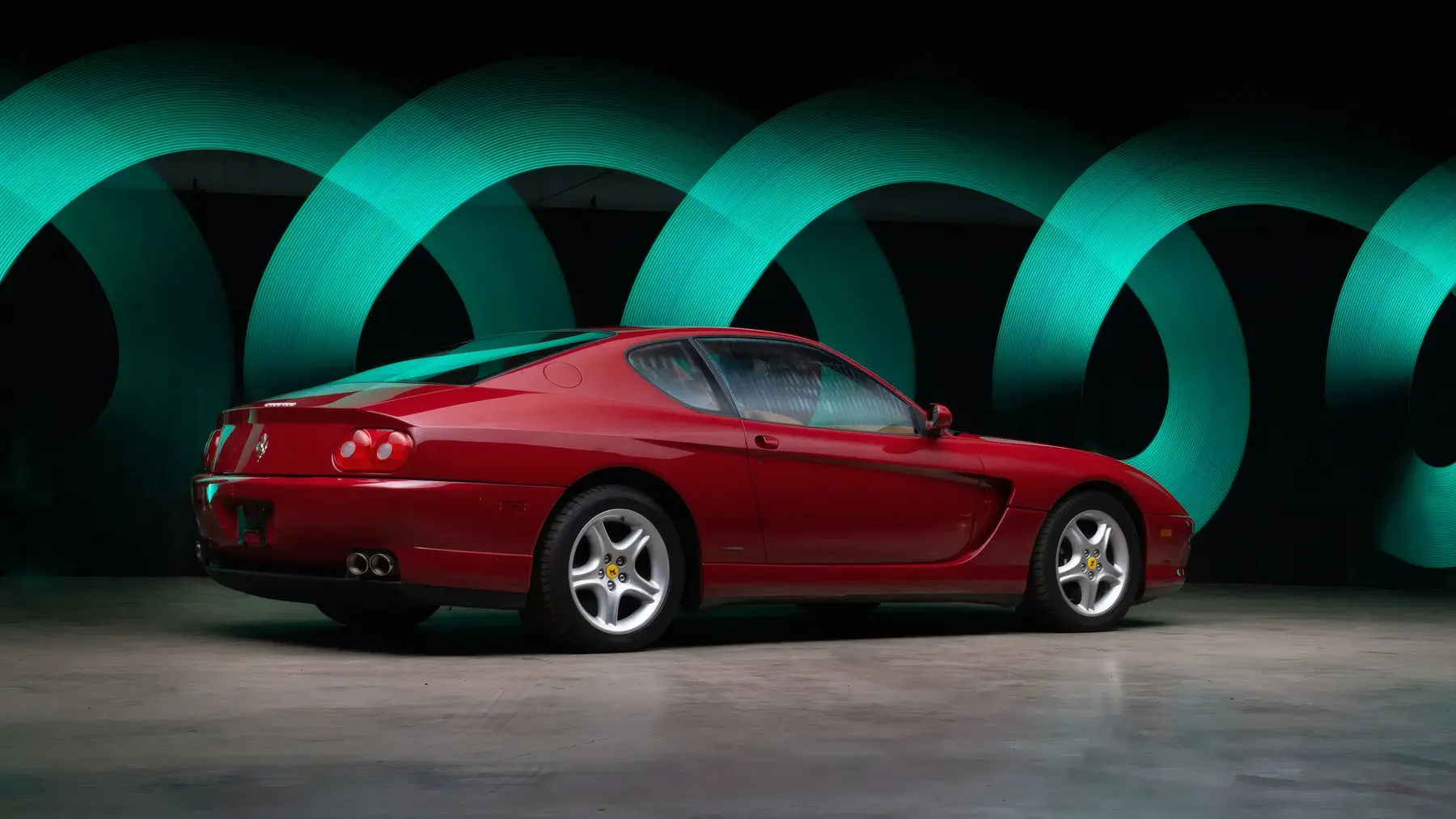
The 456M was replaced in 2004 by the 612 Scaglietti, a car that grew in every dimension and moved to an aluminium spaceframe construction. The critical reception of the 456M during its production life was broadly respectful rather than ecstatic - journalists acknowledged its engineering integrity and the genuine usability of its 2+2 layout, while noting the weight penalty and the relative conservatism of its technology compared to some contemporaries. In retrospect, that conservatism reads differently. The 456M was a car built on proven principles executed with care, and the market has come to appreciate it accordingly - values have climbed steadily as the collector community recognised what the model represented: the last naturally evolved iteration of Ferrari’s long tradition of front-engined grand touring, before the 612 ushered in an era of larger, more technologically elaborate, and arguably less characterful successors. The 456M GT, with its gated manual and its V12 tuned for torque over drama, remains the purist’s selection within the family - a car that made the journey as much the point as the destination.