Lamborghini Aventador LP 780-4 Ultimae: Farewell to the Pure V12
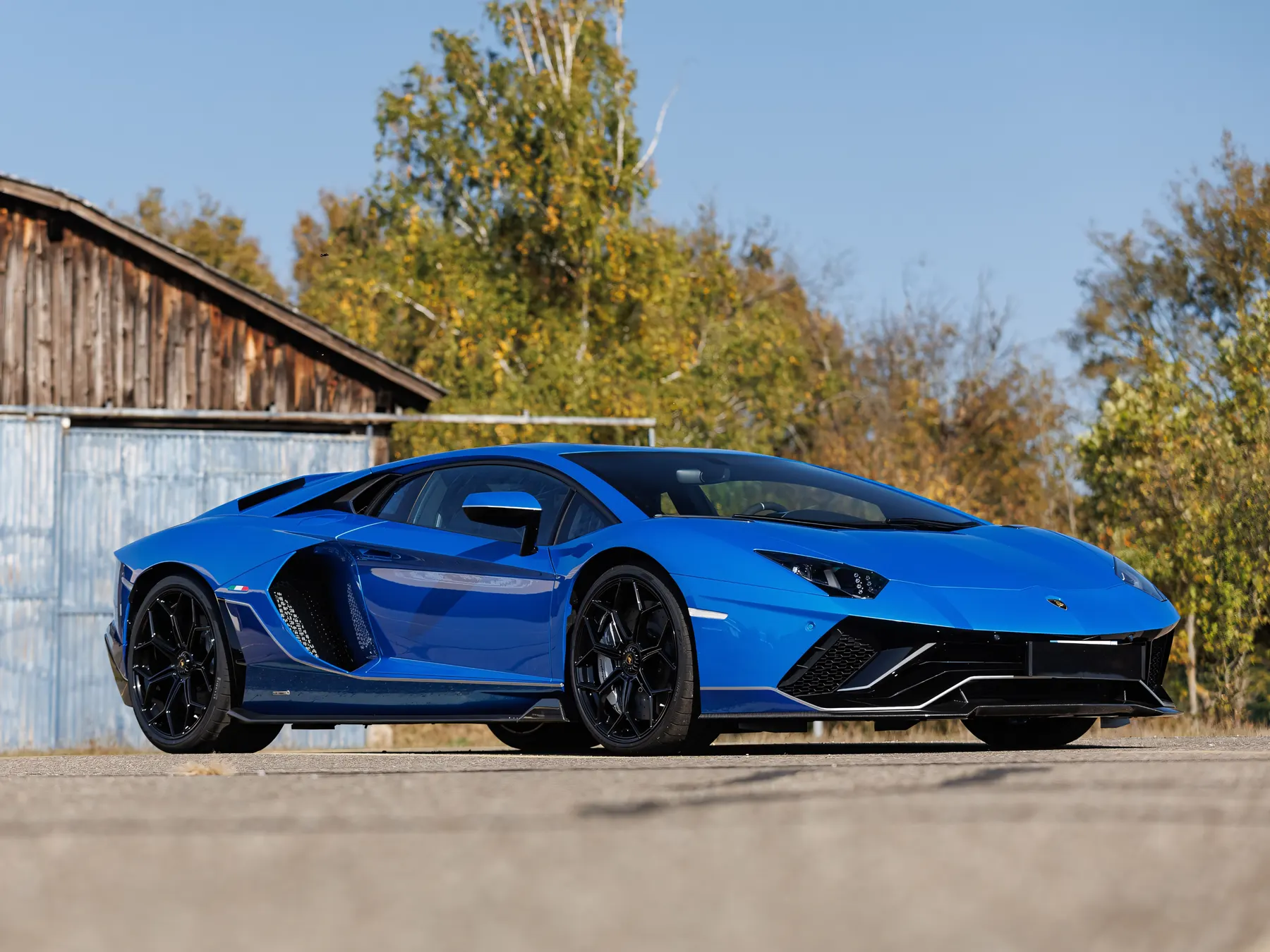
2022 Lamborghini Aventador LP 780-4 Ultimae Coupé




Images: Peter Singhof / RM Sotheby's
When Lamborghini decided how to close the book on eleven years of naturally aspirated V12 Aventadors, the company didn’t design a new car so much as assemble a highlight reel. The Aventador LP 780-4 Ultimae Coupé takes the engine output of the hardcore, Nürburgring record-setting SVJ and wraps it in the calmer, road-focused bodywork of the Aventador S, adds a numbered production run and a fresh colour palette, and finishes it off with a Latin name meaning “final” or “ultimate.” It is less a swansong composed from scratch than a greatest-hits compilation, engineered not to break new ground but to remind everyone, one last time, why the ground had been worth covering in the first place. That the approach worked commercially - all 600 examples built were spoken for almost as soon as order books opened - says as much about the emotional pull of a big, unassisted V12 as it does about Lamborghini’s instincts for a send-off.
The Aventador itself arrived at the 2011 Geneva Motor Show as the LP 700-4, replacing the ageing Murciélago and marking a genuine technical leap for Lamborghini, developed under chief technical officer Maurizio Reggiani in a clean-sheet effort with the Centro Stile design department. In place of the Murciélago’s part-steel structure, the new car used a single-piece carbon fibre monocoque weighing just 147.5kg, moulded in-house using Lamborghini’s own resin transfer moulding process - a genuine production-car first. A pushrod suspension system, borrowed in spirit from single-seater racing, replaced conventional coil-over dampers, while a completely new, in-house 6.5-litre 60-degree V12 producing around 690bhp sent drive through a seven-speed Independent Shifting Rod, or ISR, single-clutch automated transmission. Lamborghini chose that gearbox deliberately over a heavier, bulkier dual-clutch unit for the sake of packaging, weight and outright drama. It was a deliberately old-school choice even in 2011, and one that would come to define both the character and the criticism of every Aventador that followed it, Ultimae included.
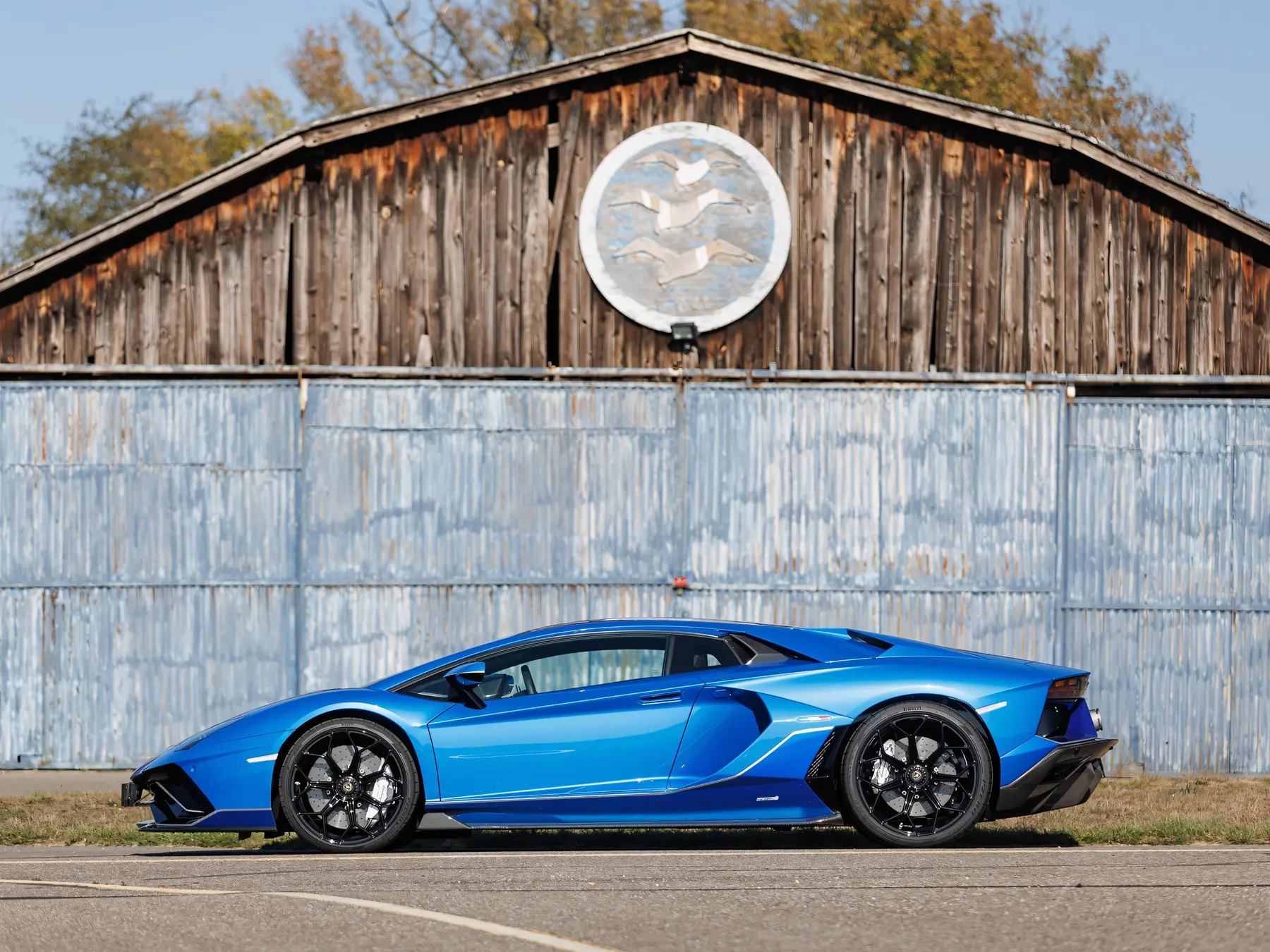
Design followed a similarly uncompromising brief. Filippo Perini, then running Centro Stile, drew an aeronautically inspired body of sharp, intersecting planes and hard-edged surfacing, topped off with the scissor doors Lamborghini reserves for its V12 flagships - a shape unmistakably descended from the Countach and Diablo before it, yet entirely of its own moment. That basic architecture, impossibly wide and waist-high, survived essentially unchanged through every Aventador variant that followed, the Ultimae included, even as the mechanical package underneath it grew steadily more sophisticated.
Over the following decade the Aventador evolved through more than eight distinct derivatives without ever abandoning that basic recipe. The 2015 SuperVeloce added around 50bhp and shed roughly 50kg to take Lamborghini under the seven-minute barrier at the Nürburgring Nordschleife for the first time, lapping in 6:59.75. The Aventador S of 2017, developed under new design chief Mitja Borkert, brought rear-wheel steering, adaptive magnetorheological dampers and around 730bhp, softening the Aventador’s notoriously reluctant low-speed manners without dulling its drama. The SVJ that followed in 2018 pushed further still, with around 759bhp, active aerodynamics borrowed from Lamborghini’s ALA system, and a Nordschleife lap of 6:44.97 that reclaimed the outright production-car record for the marque. By the time the model’s run ended, Lamborghini had delivered more than 11,465 Aventadors worldwide - comfortably more than the combined total of every V12 Lamborghini that had come before it, from the Miura through the Countach and Diablo to the Murciélago.
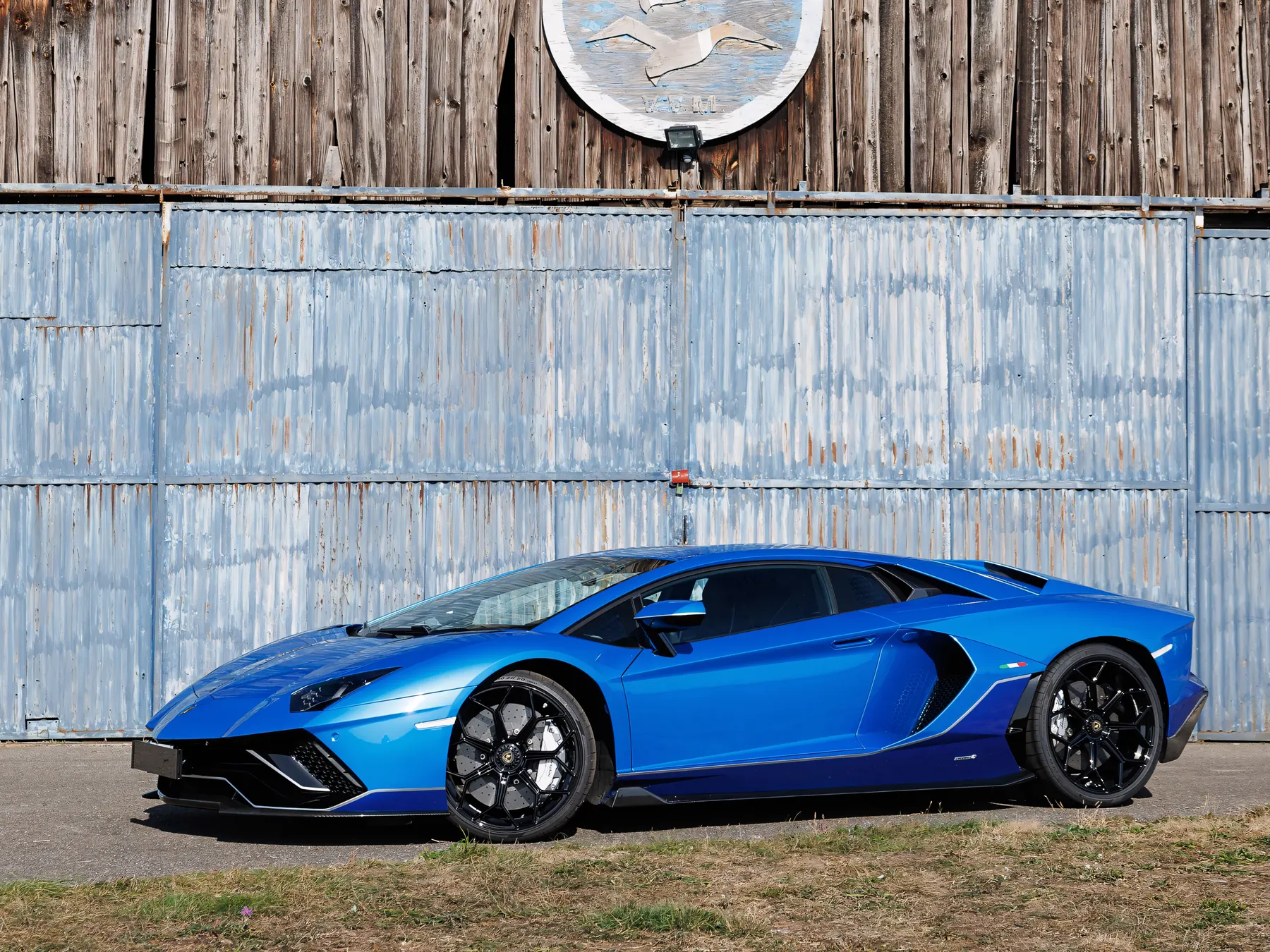
By the time the Ultimae went on sale, the market around it looked very different to 2011. McLaren’s 720S and, later, the 765LT offered comparable or greater outright pace from smaller, lighter, turbocharged V8s, while Ferrari’s 812 Superfast matched the Aventador’s V12 displacement and cylinder count in a front-engined, more overtly grand-touring package. Against that backdrop, the Ultimae made no attempt to compete on lap times or efficiency. Its pitch was unapologetically old-fashioned: a large-capacity, naturally aspirated engine with no turbochargers and no electric assistance, a manually-flavoured single-clutch gearbox, and a driving experience built around theatre rather than outright pace. It was, in effect, Lamborghini’s answer to the question of what a V12 supercar should feel like before hybridisation made the answer considerably more complicated.
Announced in July 2021 and shown publicly at that year’s Goodwood Festival of Speed, the Ultimae was conceived explicitly as a summary of the whole Aventador decade. Titanium intake valves lifted the familiar 6.5-litre V12 to 769bhp at 8,500rpm and 531lb-ft of torque at 6,750rpm - 10bhp more than the SVJ and 40bhp more than the standard Aventador S, and the most power ever extracted from a naturally aspirated, road-going Lamborghini V12. In coupé form, dry weight came in at 1,550kg, some 25kg lighter than the visually similar Aventador S, giving the Ultimae the same power-to-weight ratio as the far more track-focused SVJ despite carrying none of that car’s extreme wing-and-splitter aero package. Lamborghini quoted 0-62mph in around 2.8 seconds and a top speed of roughly 220mph, figures that made the Ultimae the quickest Aventador ever offered for sale. In place of the SVJ’s active aerodynamics, the Ultimae used a reworked front bumper, splitter and cooling ducts to recover some downforce, along with a two-position active rear spoiler mounted along the trailing edge of the engine cover.
Drive reached all four corners through a Haldex generation IV all-wheel-drive system with a rear mechanical self-locking differential, its torque split shifting automatically with grip and driving mode. Steering combined Lamborghini’s active Dynamic Steering system with the rear-wheel steer inherited from the Aventador S, sharpening low-speed manoeuvres while calming the car at motorway pace, and magnetorheological dampers, mounted to the same pushrod suspension architecture introduced on the original 2011 car, adjusted in real time across Strada, Sport, Corsa and Ego drive modes. Coupé and roadster production was capped from the outset at 350 and 250 cars respectively - 600 in total - and both sold out well before the first customer cars were delivered. UK list prices started from around £324,000 for the coupé, with other reported figures placing launch pricing closer to £345,000 for the coupé and £378,000 for the roadster once options were factored in; either way, Ad Personam personalisation added considerably more on top, with 18 standard factory colours supplemented by over 300 further shades through the bespoke programme. Inside, laser-cut Alcantara trim carried a Y-shaped motif unique to the Ultimae, and each car’s dashboard carried a numbered plaque marking its place in the run.
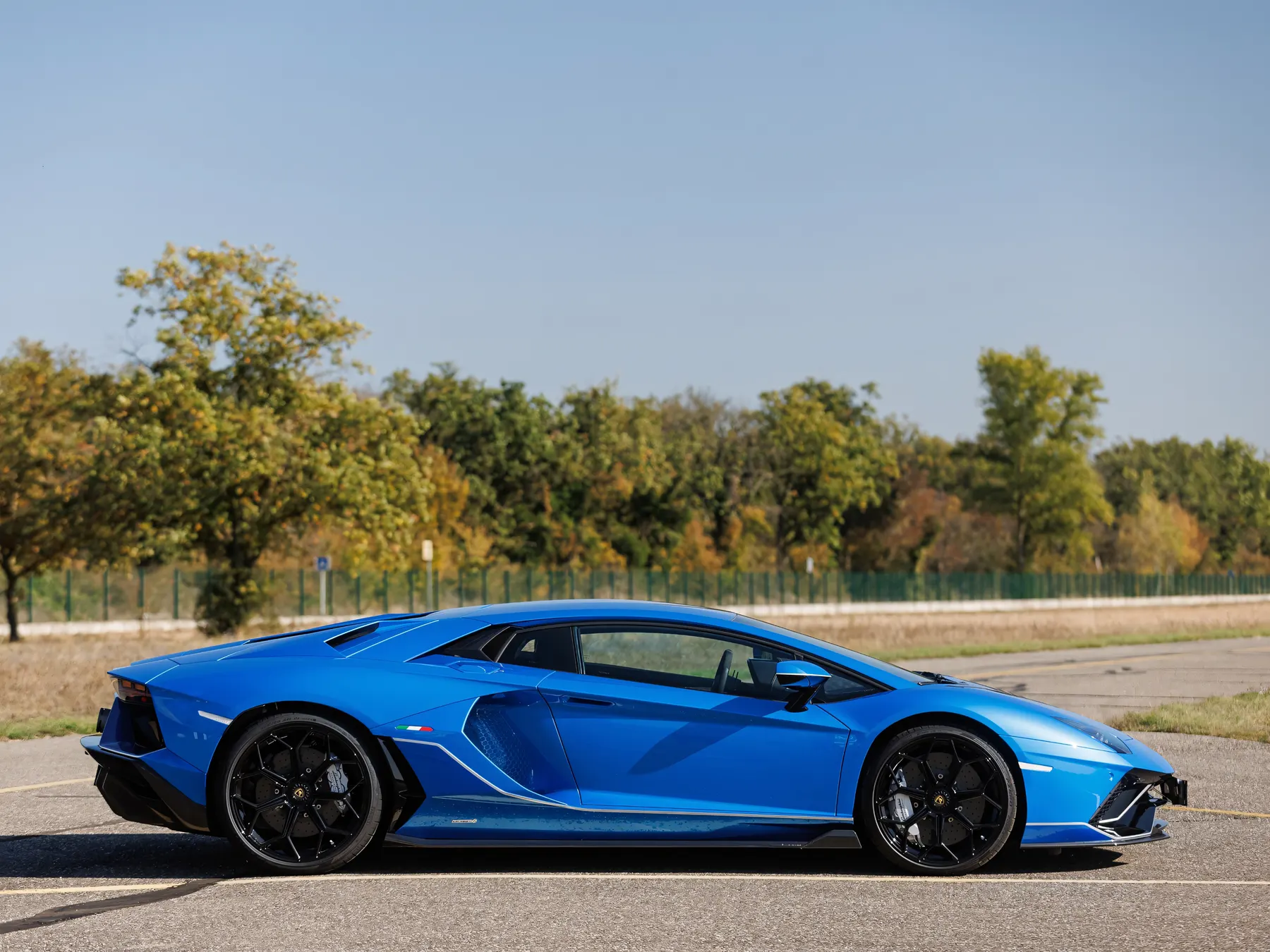
On the road, the theatre begins before the engine has even fired. Lift the scissor door, drop into a seat mounted low behind a deep dashboard and a windscreen raked back for what feels like metres, and press the starter button beneath its red flip guard. The V12 catches with a bark, settles into a busy, mechanical idle, and from there produces one of the great engine notes in modern motoring - industrial and blunt low down, increasingly zingy and raucous as the needle sweeps toward a redline close to 8,700rpm. Because the engine sits low and just behind the cabin, rather than slung high over the rear axle as in the Diablo and Murciélago it replaced, the Ultimae carries its mass with far less of the pendulous, tail-heavy feel that defined those earlier V12 Lamborghinis. The steering is quick without being nervous, and there is a vast reserve of mechanical grip underneath everything - enough that a road-going driver is unlikely ever to trouble the limits of either axle, let alone exceed them. In its softer Strada setting the ride is more compliant than the car’s enormous width and presence would suggest, rounding off bumps with real maturity; switch to Sport or Corsa and the whole car sharpens without becoming punishing on real, imperfect roads.
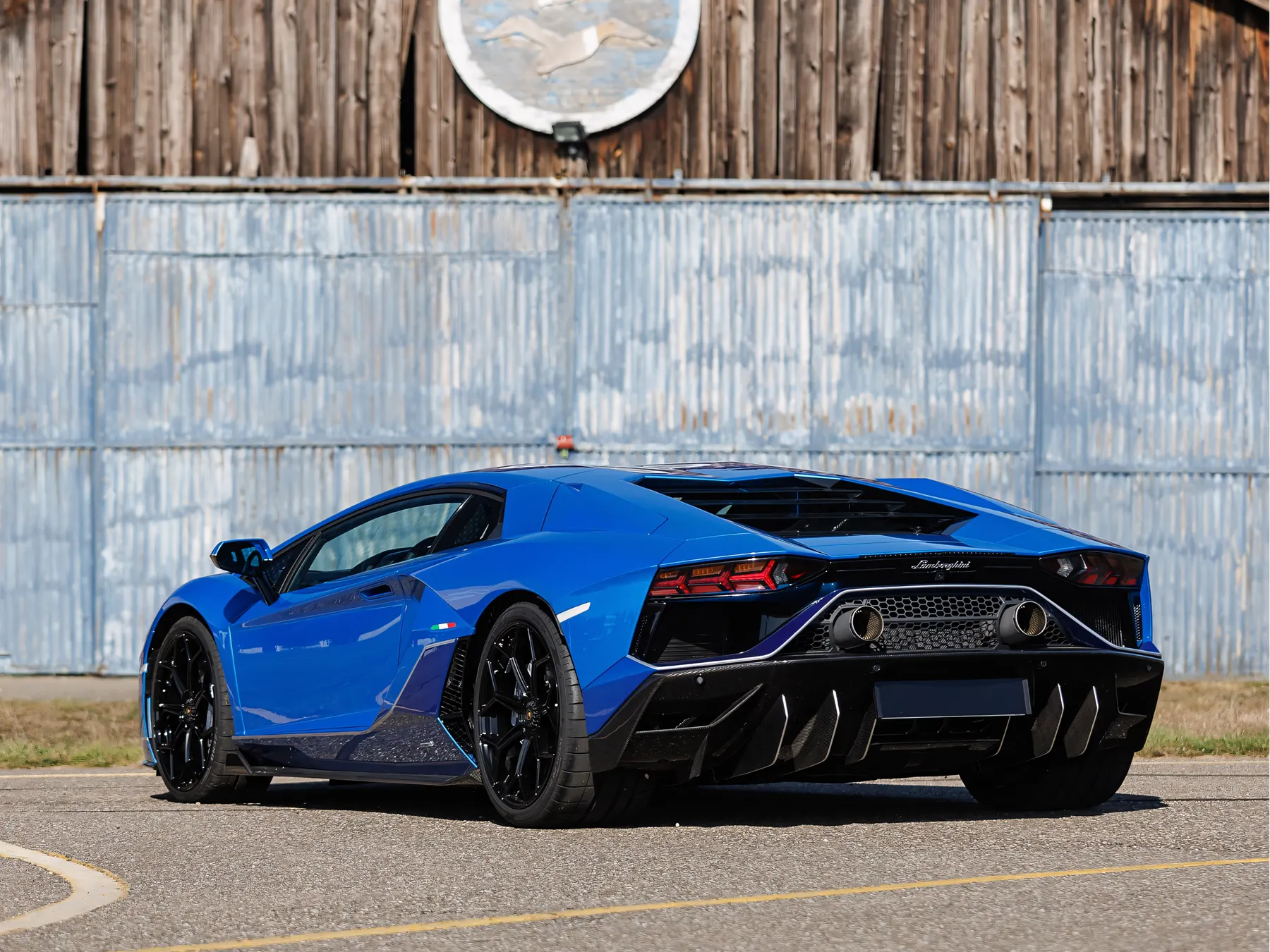
None of that changes the fact that, by the time the Ultimae arrived, several parts of the Aventador package had plainly aged, and it is worth naming those weaknesses rather than waving them away as charm. The ISR gearbox - the single-clutch transmission that had defined the car since 2011 - remained its most argued-over component. Left in automatic, upshifts could be strangely hesitant; driven hard, each gearchange arrives as an abrupt, head-nodding thump that experienced testers learned to brace for, and getting the smoothest shifts required lifting off the throttle manually while pulling the paddle, essentially doing the computer’s job for it. Against the dual-clutch transmissions used by virtually every rival by 2022, including Lamborghini’s own Huracán, it felt like engineering from a different decade, because in large part it was. The cabin carried its own compromises: reviewers repeatedly described the Ultimae as cramped for anyone of more than average height, with a driving position that was difficult to fully settle into, a busy centre console, and an infotainment system whose fixed, non-touch display and switchgear traced visibly back to an older generation of Audi hardware - a jarring detail in a car costing well over £300,000. Rear visibility, hemmed in by the Aventador’s broad haunches and shallow rear glass, made town driving and tight manoeuvring a genuine test of nerve rather than a minor inconvenience. Ownership reflected the exotic construction, too: repairing the carbon fibre monocoque was specialist work, and Lamborghini maintained a dedicated team of travelling technicians whose job was to visit dealerships worldwide and carry out monocoque diagnostics and repairs, a reminder that even modest structural damage could not simply be fixed at a local bodyshop. And for all the weight Lamborghini had shaved from the Ultimae relative to its siblings, a dry weight of around 1,550kg still left it meaningfully heavier than more modern rivals like the McLaren 720S - the price of permanent all-wheel drive and a platform whose fundamentals dated back to the late 2000s. None of this stopped every Ultimae from selling before most customers had even seen one in the metal, but it is worth being honest that the car’s appeal rested almost entirely on emotion and history rather than on being the most complete or modern supercar money could buy in 2022.
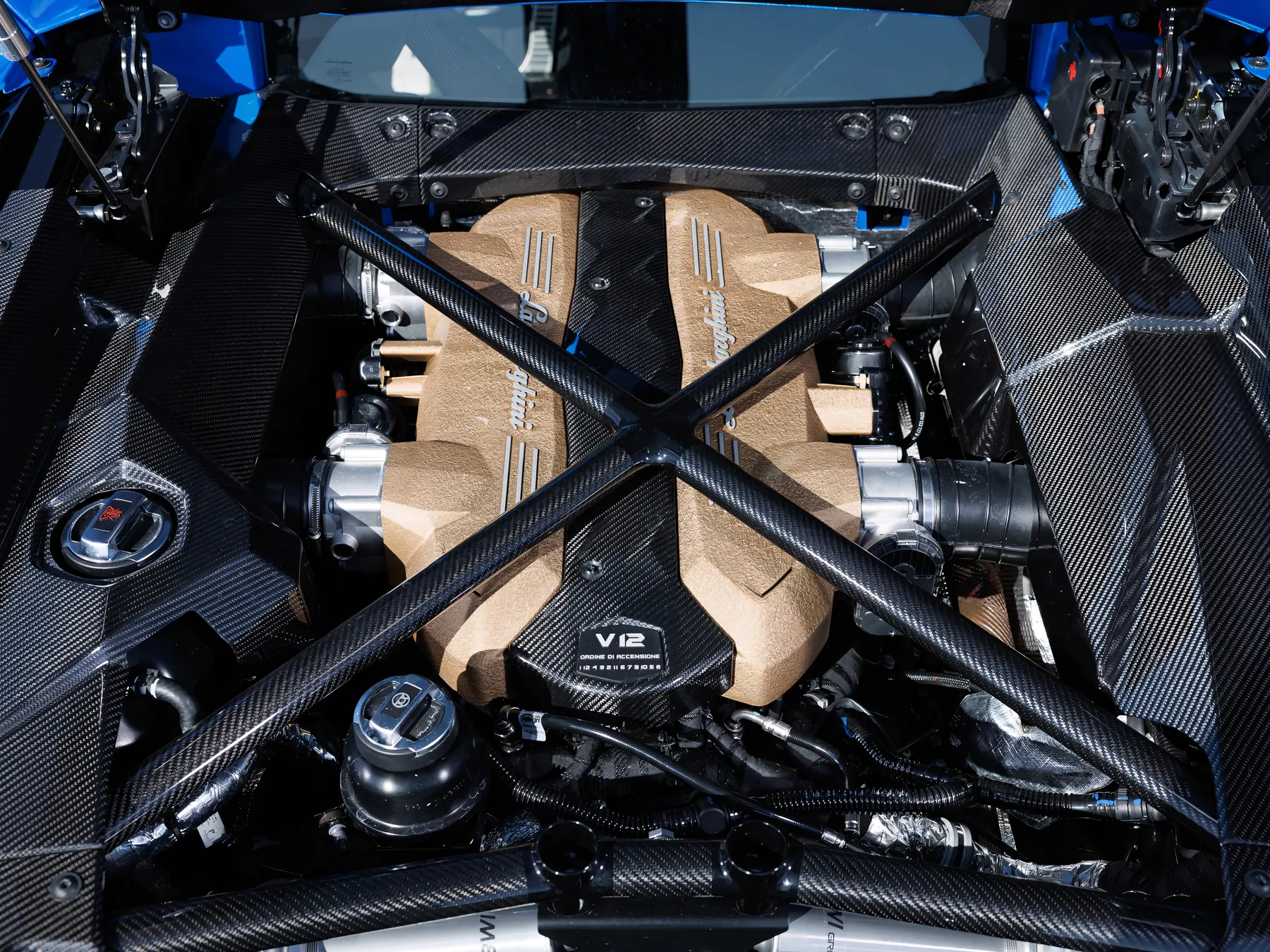
Production finally closed on 26 September 2022, with the very last Aventador - a Miura-inspired Ultimae Roadster finished in a pale Ad Personam blue - built for a customer in Switzerland, a neat piece of symbolism given that the Miura had effectively invented the mid-engined road-going supercar format the Aventador spent eleven years refining. Across the model’s whole run, Lamborghini reported that around 85 per cent of Aventadors left the factory with some form of Ad Personam personalisation, resulting in more than 200 unique colour and trim combinations - evidence that, flaws and all, owners treated the car less as a mass-production supercar and more as a bespoke commission. The naturally aspirated V12 didn’t disappear with the Ultimae so much as get reinvented: it returned the following year in the Revuelto, Lamborghini’s plug-in hybrid flagship, paired with three electric motors for a combined 1,001bhp and, tellingly, an eight-speed dual-clutch gearbox in place of the ISR - a quiet acknowledgement of the one piece of Aventador engineering nobody was sorry to see retired. What the Ultimae leaves behind isn’t a claim to being the sharpest or most modern Aventador ever built; the SVJ still owns that title on any track. It is instead the sense of a company that knew precisely how it wanted to say goodbye to an engine, a gearbox and an entire way of building supercars, and did so without apologising for any of it.
Technical data
Performance Specifications
| Variant | Production years | Power | Torque | Dry weight | 0-62mph | Top speed |
|---|---|---|---|---|---|---|
| Aventador LP 700-4 | 2011–2016 | ~690bhp* @ 8,250rpm | ~509lb-ft* | - | ~2.9s | ~217mph* |
| Aventador LP 750-4 SV | 2015–2016 | ~740bhp* | - | - | ~2.8s | - |
| Aventador S | 2017–2021 | ~730bhp* | ~509lb-ft* @ 5,500rpm | ~1,575kg** | - | - |
| Aventador SVJ | 2018–2021 | ~759bhp* | 531lb-ft @ 6,750rpm | - | - | - |
| Aventador LP 780-4 Ultimae Coupé | 2021–2022 | 769bhp @ 8,500rpm | 531lb-ft @ 6,750rpm | 1,550kg | ~2.8s | ~220mph |
Sources
- Lamborghini - Aventador LP 780-4 Ultimae
- Lamborghini News - “It Takes Time to Become Timeless”
- Lamborghini Media Center - “The Lamborghini Aventador – End of an Era”
- evo - Lamborghini Aventador Ultimae 2022 Review
- CAR Magazine - Lamborghini Aventador Ultimae (2022) Review
- Top Gear - Lamborghini Aventador Ultimae First Drive
- Top Gear - “Arrivederci, Raging Bull: This Is the Last Ever Lamborghini Aventador”
- Autocar India - “The Last Hurrah”
- Top Gear - Lamborghini Revuelto: 1,001bhp V12 Hybrid Aventador Successor
Join the discussion
Comments
Loading comments…
Leave a comment
Share a detail, memory, or perspective. Every comment is reviewed before publication.