1911 Rolls-Royce 40-50 HP Silver Ghost Open Drive Limousine 'The Dreamer' by Grosvenor
Images: Darin Schnabel / RM Sotheby's
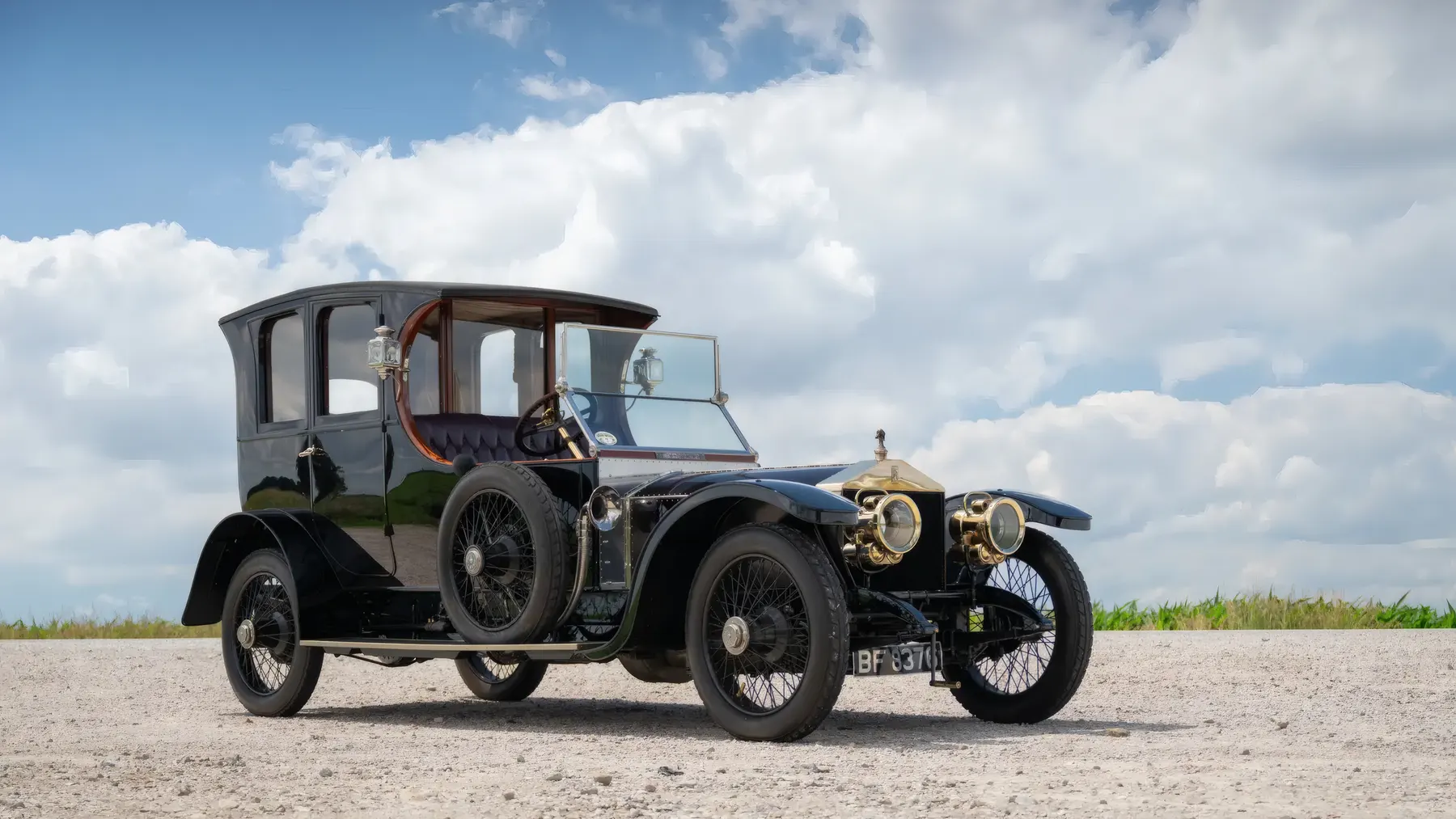
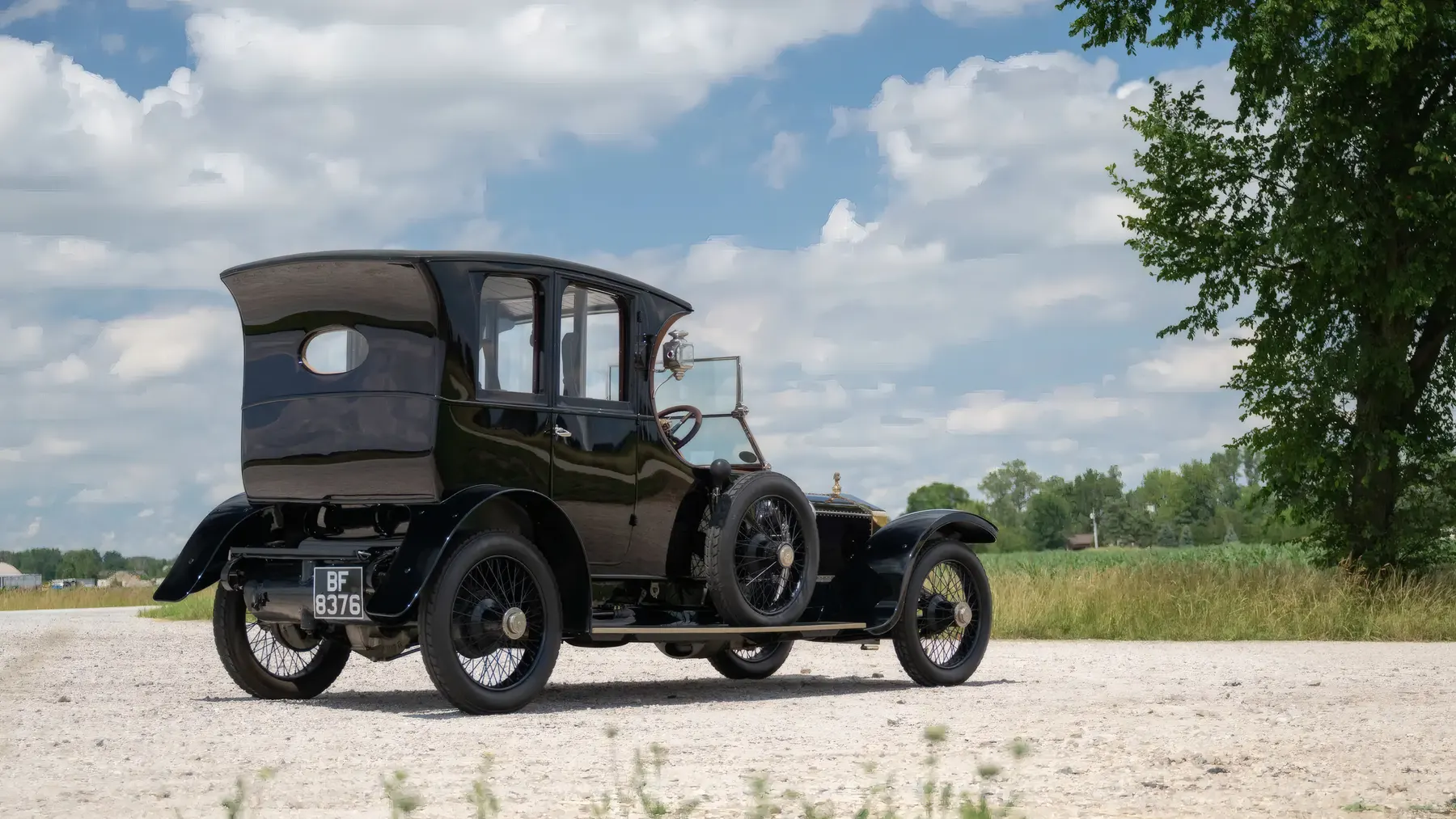
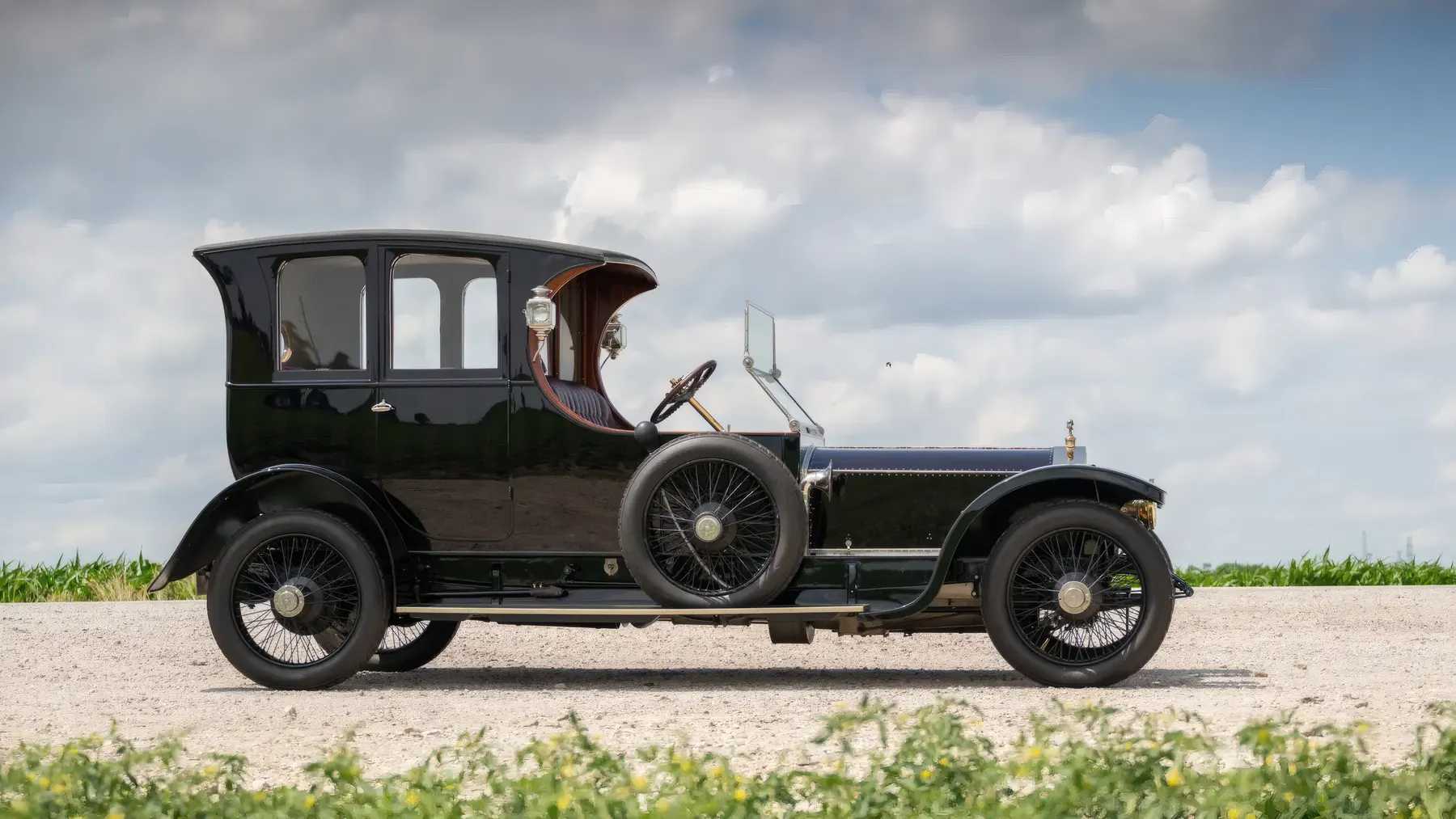
“The Dreamer” arrived before anyone expected it. When the Motor Age published a photograph of a 1911 Rolls-Royce Silver Ghost standing outside a townhouse in Adelaide in November 1912, readers in America encountered something that looked barely credible for the Brass Era - a formal open-drive limousine whose body panels flared upward into an elaborate outward-curving roofline before descending in a sweeping C-curve through the chauffeur’s compartment. It was a piece of coachbuilding that seemed to belong to a decade it hadn’t yet reached. That car was “The Dreamer,” bodied by the London house of Grosvenor, and it remains one of the most visually arresting expressions of what the 40/50 HP Silver Ghost could become in the hands of a gifted coachbuilder and an opinionated patron.
The Silver Ghost as a nameplate is the product of a very specific corporate gamble. In 1906, Rolls-Royce had been producing several models simultaneously - the 10 HP, 15 HP, 20 HP, 30 HP, and the V8-powered Legalimit - a spread of product that diluted manufacturing focus and complicated parts supply. Henry Royce and Charles Rolls made the decision to rationalise everything into a single model, and the 40/50 HP was the result. The chassis that emerged from that decision went on to underpin nearly 7,876 examples built between 1907 and 1926, becoming the longest-lived and most celebrated automobile of the Edwardian and early Georgian era.
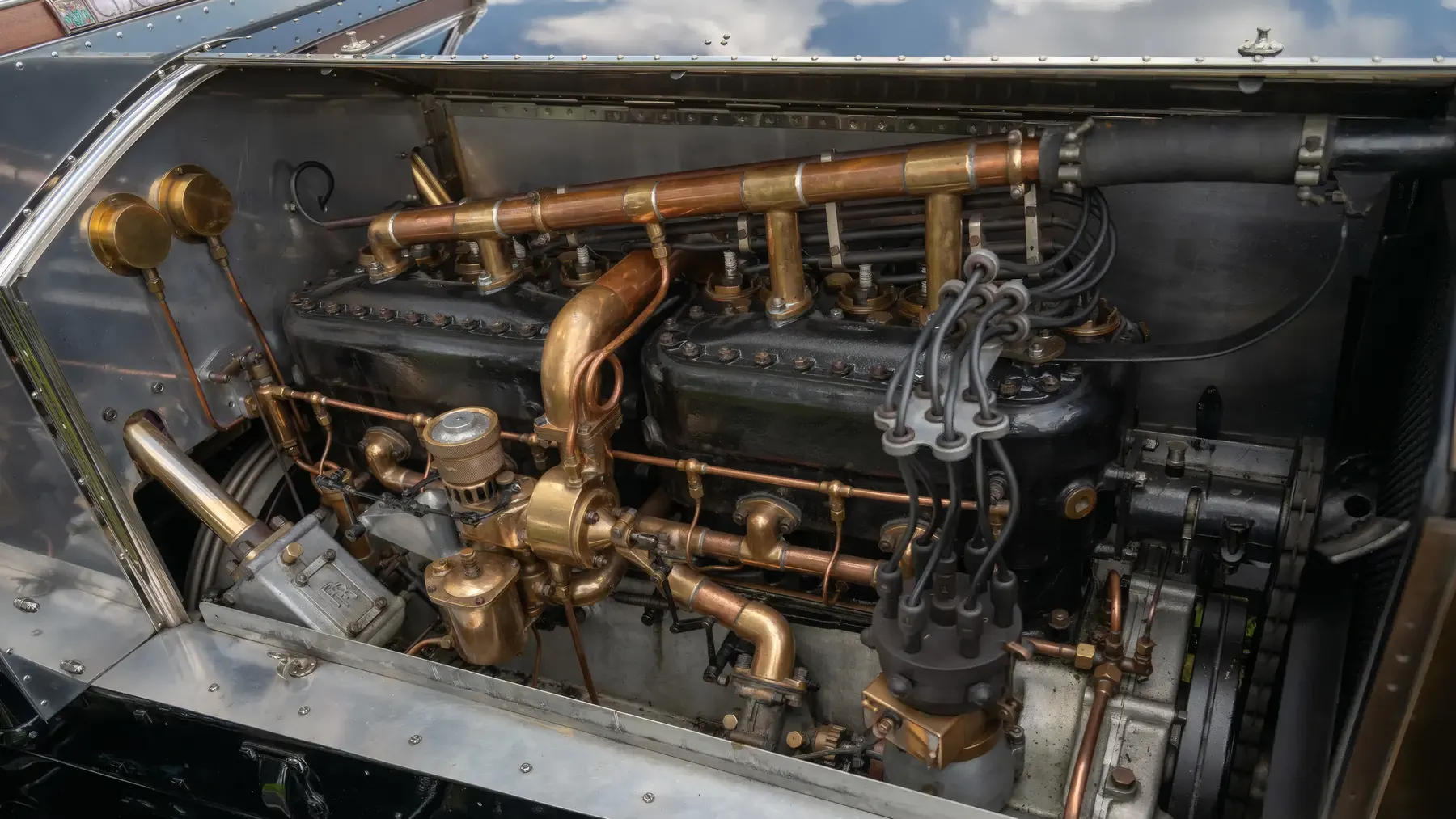
At its mechanical core, the early Silver Ghost was powered by a straight-six side-valve engine displacing 7,036cc, enlarged from 1910 onwards to 7,428cc - a bore of 114 mm and stroke of 119 mm - producing approximately 48 bhp at a leisurely 1,500 rpm. That figure looks modest on paper, but it misrepresents the engine’s character entirely. Royce designed the unit for extraordinary refinement at low crankshaft speeds, with an exceptionally long stroke providing generous torque at barely a fast idle. The torque output - around 200 lb-ft across a wide midrange band - meant the four-speed manual gearbox could be left in top gear for the vast majority of driving. This was not an engine that rewarded hard use; it rewarded patience and smoothness, which suited the formal bodies that were usually bolted above it perfectly.
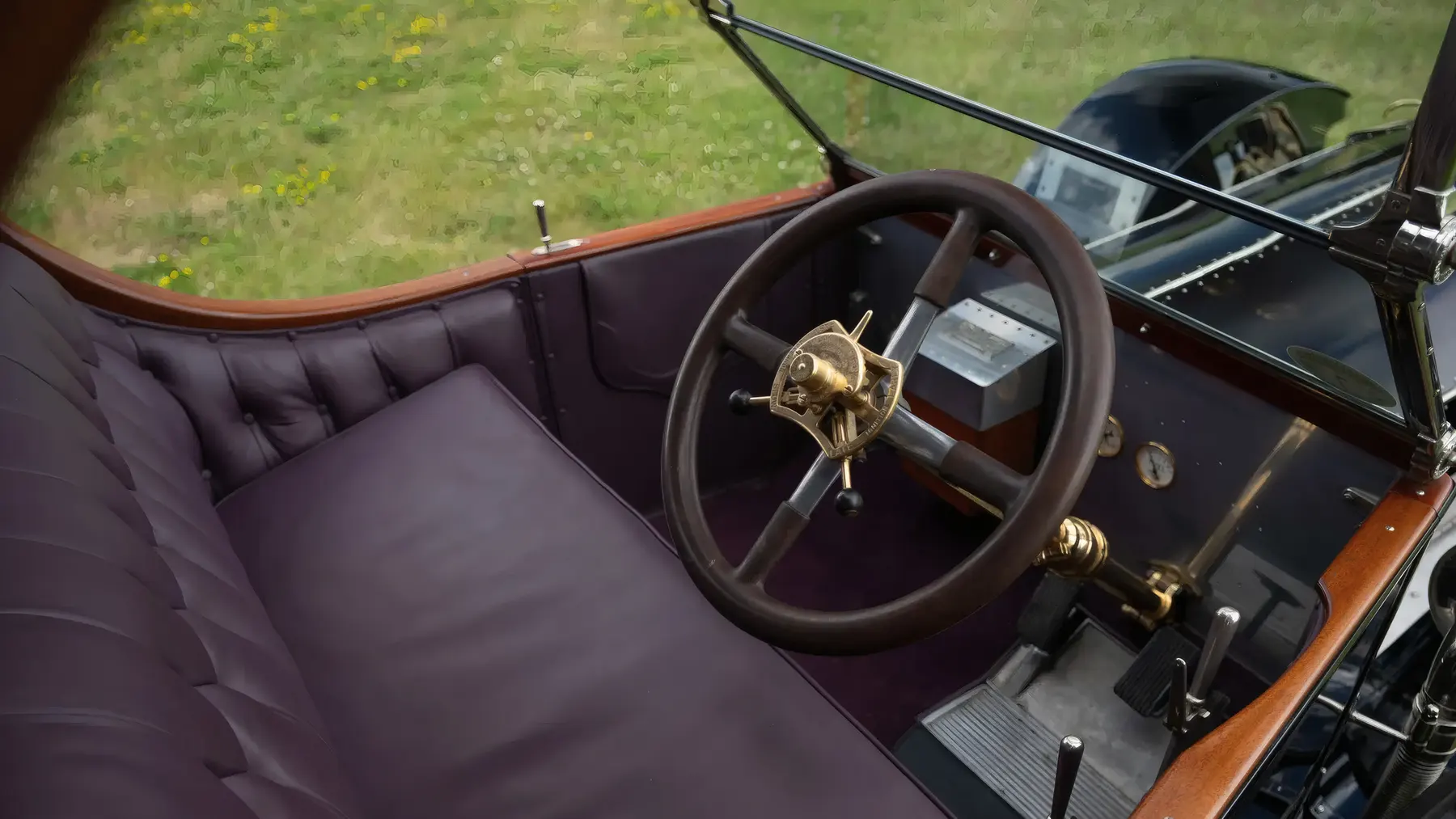
The “parallel bonnet” Silver Ghosts of the 1907–1914 period - so named for the straight, horizontal lines of the engine cover - were delivered as rolling chassis to coachbuilders, a practice standard to the industry at the time. Grosvenor was among the more accomplished of these craftsmen, operating from London and catering to precisely the sort of wealthy, internationally connected clientele who could specify a Silver Ghost and then dictate to the coachbuilder in detail. The open-drive limousine body form, of which “The Dreamer” is an example, divided the vehicle into two distinct social zones: the enclosed, warmly upholstered rear compartment for the passenger, and the entirely exposed forward position for the chauffeur, separated by a fixed division. The chauffeur drove in all weathers; the passenger did not. It was a statement about hierarchy as much as about design, and the Silver Ghost chassis accommodated it with the long, stately wheelbase that formal bodywork demanded.
What distinguishes “The Dreamer” within this tradition is the degree to which the Grosvenor body departed from period convention. Most open-drive limousines of 1911 were boxy, upright affairs - functional statements of prestige rather than exercises in sculptural ambition. The body here features panels that flare outward and upward in a manner more commonly associated with the coachbuilding of the late 1920s, the enclosed rear greenhouse resolving into a roofline of considerable elegance rather than the blunt cornice typical of Edwardian formal work. The result is a silhouette that reads as sporting despite the formal intent - something almost no other limousine of its period could claim.
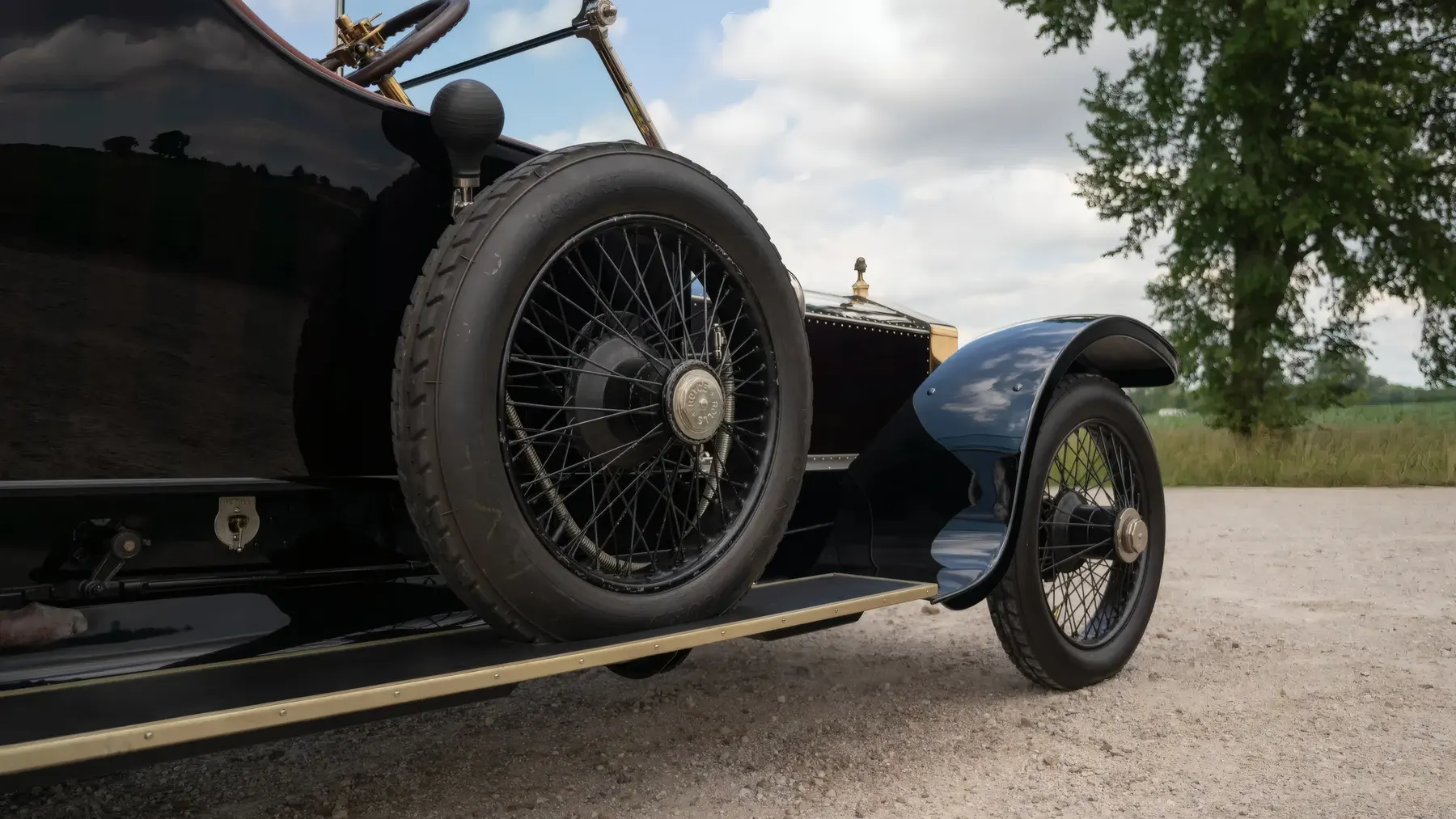
The chassis beneath this remarkable body had been modified by Rolls-Royce itself prior to delivery, which places “The Dreamer” in a specific and interesting category among Silver Ghosts. Rudge-Whitworth wire wheels were specified in place of the standard artillery wooden items, the steering rake was altered, the rear axle ratio changed, and - most significantly - an external slipper drive was fitted ahead of the timing case, which required the radiator to be repositioned and the hoodline extended. A Colonial-specification front axle was fitted, acknowledging the road conditions the car would face in South Australia. These were not trivial changes. The factory was, in effect, building a bespoke machine, and the extent of the modifications documents a level of customer engagement that was characteristic of the Silver Ghost era but which seems extraordinary today. Rolls-Royce at this stage was still a company with enough workshop proximity to its customers to have meaningful conversations about axle ratios.
In terms of dynamics, the Silver Ghost in general - and a modified example like this in particular - was not a fast car in any modern sense. A top speed in the region of 50 mph was the realistic expectation for a formal limousine body of this weight, and the tall, formally dressed body would have caught the wind considerably on the open roads of Edwardian South Australia. What the car delivered instead was a quality of progress that contemporary accounts describe with consistent vocabulary: silent, smooth, imperious. The long-stroke six generated so little mechanical noise at cruising speeds that wind and tyre noise became the dominant sensory inputs, and on the graded dirt roads outside Adelaide, that tyre noise would have been considerable. The long-travel suspension - semi-elliptic leaves all round - absorbed ruts and corrugations with a composure that no European motorcar of the period could match, and the altered axle ratio would have helped the engine pull through difficult terrain without the mechanical drama of downshifting a heavy, open-bodied car in the heat.
The Silver Ghost nameplate was not without genuine limitations, and honesty requires acknowledging them. The side-valve engine was already an engineering conservative choice even in 1907 - overhead valve and overhead camshaft configurations were known and proven in racing before the Ghost appeared. Royce chose the side-valve layout precisely because it was easier to keep clean and quiet, sacrificing specific power for refinement. The four-speed gearbox, while acceptable in period, required skill: the absence of synchromesh meant that gear changes on the move demanded double-declutching and careful rev-matching, which was a real task when the car was laden with passengers and luggage, particularly on a chassis with chassis-flex characteristics that could make precise pedal feel inconsistent.
Fuel consumption was also a matter of period realism rather than period shame - somewhere in the region of 15–18 MPG under normal conditions, which with the 7.4-litre engine and the formal body’s weight was neither surprising nor easily improved. More practically, the open-drive format meant that the chauffeur’s existence in a South Australian summer was one of sustained physical hardship, exposed to dust, heat, and direct sun in a way the passenger compartment specifically and deliberately avoided. This was a car designed for one person’s comfort at the direct expense of another person’s, and that social arithmetic was perfectly conventional at the time but reads strangely now.
The cultural significance of the Silver Ghost as a model is substantial and largely deserved. The 15,000-mile reliability trial of 1907, conducted by the Royal Automobile Club, produced no mechanical failures and a fuel consumption figure that impressed the technical press deeply. The Scottish Reliability Trials and the subsequent 1911 and 1913 Alpine Trials further reinforced the model’s reputation for mechanical integrity under sustained stress. The Ghost’s period reputation was such that The Autocar described it as “the best car in the world” in 1907, a claim that was quoted for decades afterward by the company’s own marketing department - which perhaps says as much about the power of early motoring journalism as it does about the car’s genuine engineering superiority.
The reception of the Silver Ghost among its intended market was essentially without parallel. In an era when motoring was still sufficiently unreliable and physically demanding to constitute a genuine adventure, the Ghost offered something that most manufacturers could not: consistent, repeatable performance without mechanical drama. The waiting lists, the repeat custom, the pattern of wealthy buyers specifying multiple bodies for a single chassis - all of this reflected a market convinced that Rolls-Royce had solved a problem that others were still struggling with.
“The Dreamer” in particular has attracted consistent scholarly and collector attention precisely because of the audacity of its Grosvenor body - it represents what the Silver Ghost chassis could inspire when the patron was visually ambitious and the coachbuilder was willing to take a risk. When it sold at RM Sotheby’s Monterey auction in 2024 for $280,000, it found a price that was, in some ways, surprisingly modest for a machine of this historical weight and visual distinction - a reflection less of its importance than of the specialist nature of the early Brass Era market, where condition, restoration fidelity, and the relatively small community of serious collectors set ceilings that the significance of the object alone cannot overcome.
What “The Dreamer” ultimately represents is the Silver Ghost at its most creatively realised - a chassis that Rolls-Royce engineered with uncommon integrity, handed to a coachbuilder willing to look forward rather than simply replicate convention, and specified by a patron who understood that a motorcar could be both a functional instrument and a piece of considered design. That this particular combination of factors produced something so visually advanced in 1911 that it would still read as elegant today is less a tribute to the period than to the specific individuals who had the clarity of vision to want it.