The Alfa Romeo 8C 2300 Lungo Spider That Wears Three Nations' Coachwork
1934 Alfa Romeo 8C 2300 Lungo Spider by Eagle Coach Works




Images: Darin Schnabel / RM Sotheby's
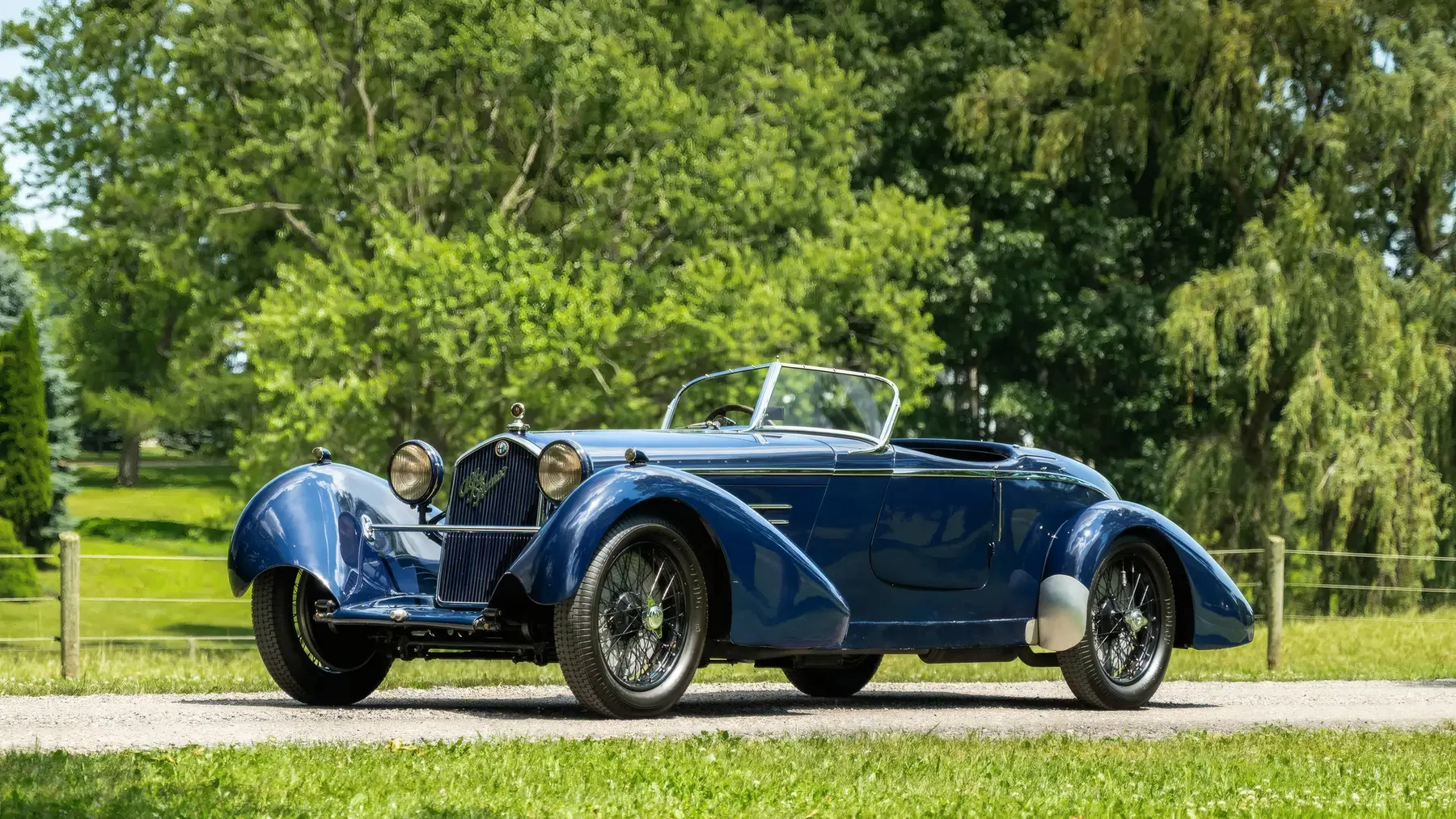
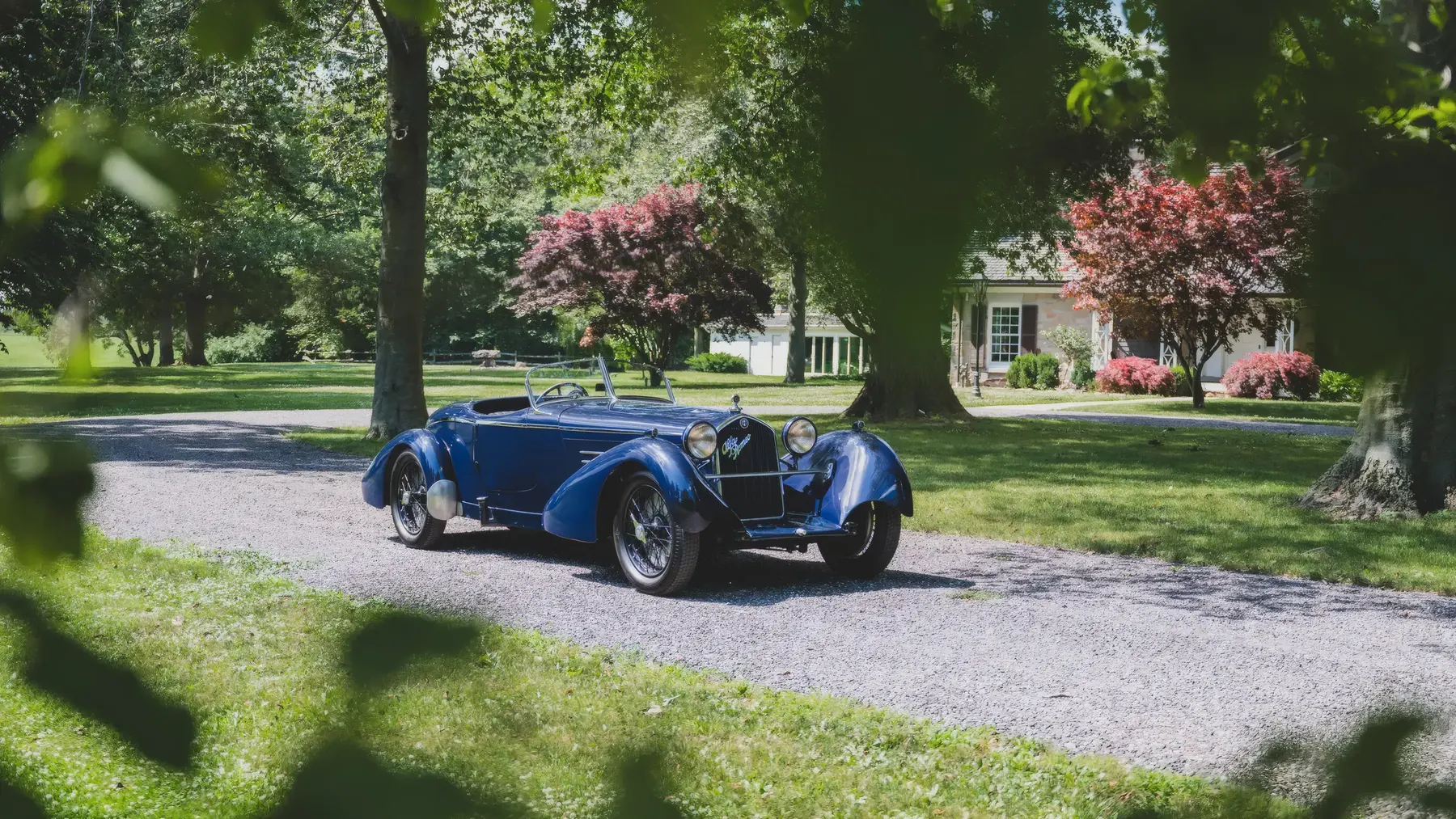
Alfa Romeo never built a body for the 8C 2300. That decision, unremarkable for an Italian racing marque of the early 1930s, is precisely what allowed one long-wheelbase 8C 2300 chassis to cross the Channel and re-emerge wearing aluminium panels shaped with half an eye on an American Auburn speedster and a French Amilcar roadster - a genuinely cosmopolitan piece of coachwork built not in Milan but in a Surrey workshop trading under the name Eagle Coach Works.
The chassis underneath is where the real story begins, and it is a story that starts with Vittorio Jano. Fresh from giving Alfa Romeo the supercharged straight-six 6C 1750 and the pioneering P2 grand prix car, Jano drew up the 8C engine as a natural extension of that six-cylinder architecture, carrying over its 65mm bore and 88mm stroke but splitting the unit into two identical four-cylinder blocks bolted end to end around a common crankcase, with hemispherical combustion chambers cast integrally into each block. There was no separate, bolt-on cylinder head, and therefore no head gasket to fail - an elegant piece of lateral thinking, but one that also meant any serious valve or top-end work required a far more involved strip-down than on a conventional engine of the period, a trait that made the 8C rewarding to own but never cheap or quick to service. At the heart of the unit, a train of gears split from the two-piece, ten-bearing crankshaft simultaneously drove the twin overhead camshafts, a single low-mounted Roots-type supercharger, and the oil and water pumps and generator in one continuous mechanical chain, a level of mechanical complication that period road testers and, decades later, the specialist auction houses that have sold these cars, have compared to fine watchmaking rather than conventional motor engineering.
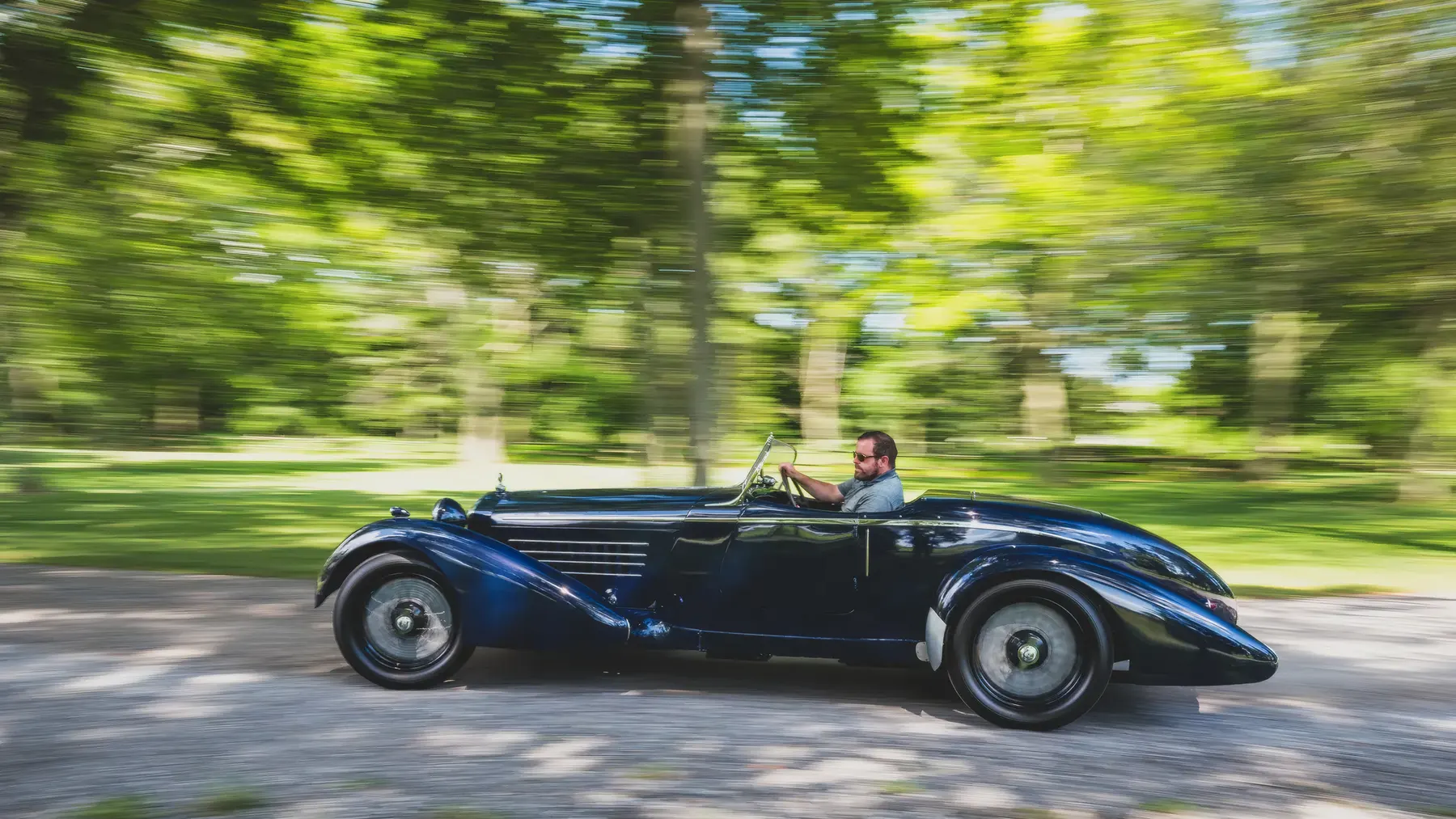
In its most common road tune, the 2,336cc straight-eight produced around 142bhp at 5,000rpm, enough to send a well-driven 8C 2300 comfortably past 100mph at a time when most sports cars struggled to reach 80mph. Shorter-chassis, more highly tuned examples were advertised at anywhere from the mid-150s up to around 180bhp depending on the year, the series, and which specialist source is doing the quoting; Alfa Romeo never rigorously standardised these figures across the model’s production life, and they have never been fully reconciled since, so any single number should be read as indicative rather than definitive. Two wheelbase lengths were offered: a short Corto chassis of roughly 2,740mm, favoured for outright competition work and for the semi-works Monza racers that grew directly out of it, and a longer Lungo chassis of around 3,100mm, intended for slightly more comfortable, better-proportioned coachwork without giving up too much of the car’s fundamental poise. A four-speed manual gearbox, semi-elliptic leaf springs front and rear on live axles, and finned aluminium drum brakes at all four corners completed a specification that was thoroughly conventional by 1931 standards but executed with a rigidity and a lightness that made the whole car feel considerably more modern than its underpinnings suggest on paper.
Alfa Romeo had not originally intended to sell the 8C to private customers at all; it was conceived first and foremost as a competition tool, entered at the Mille Miglia within months of its debut, and only from the autumn of 1931 was it offered commercially as a bare rolling chassis. Around 188 examples were eventually built for private hands across the 8C 2300’s production run into the mid-1930s - a tiny number even by the standards of exclusive sports cars of the period - and every single one of them left the factory without bodywork of any kind. Coachwork was entirely the buyer’s problem, which is exactly why no two 8C 2300s ever quite look alike. Most owners stayed within Italy, commissioning bodies from Zagato, Carrozzeria Touring, Castagna or Pininfarina, whose interpretations of the chassis - spare, louvred competition spiders from Zagato most famously - have become so closely associated with the model that many enthusiasts picture a Zagato body by default when the 8C 2300 is mentioned. A smaller number of chassis travelled further afield, to Swiss houses such as Graber and Tuscher, to Joseph Figoni’s atelier in Paris, and, more rarely still, into English hands, where a small domestic coachbuilding trade had long made a business of dressing continental exotica to suit British tastes and, not infrequently, British weather and right-hand-drive convention.
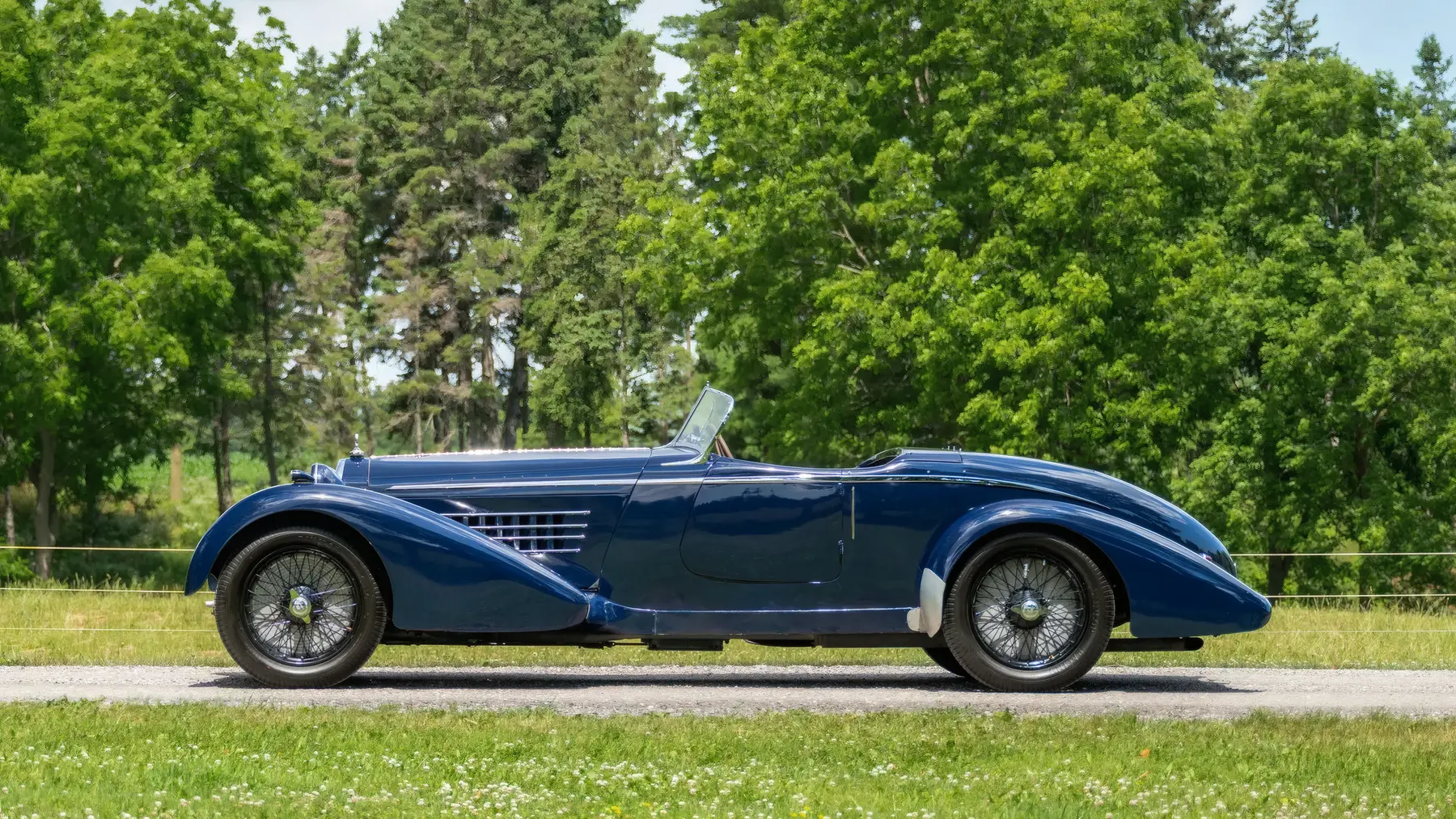
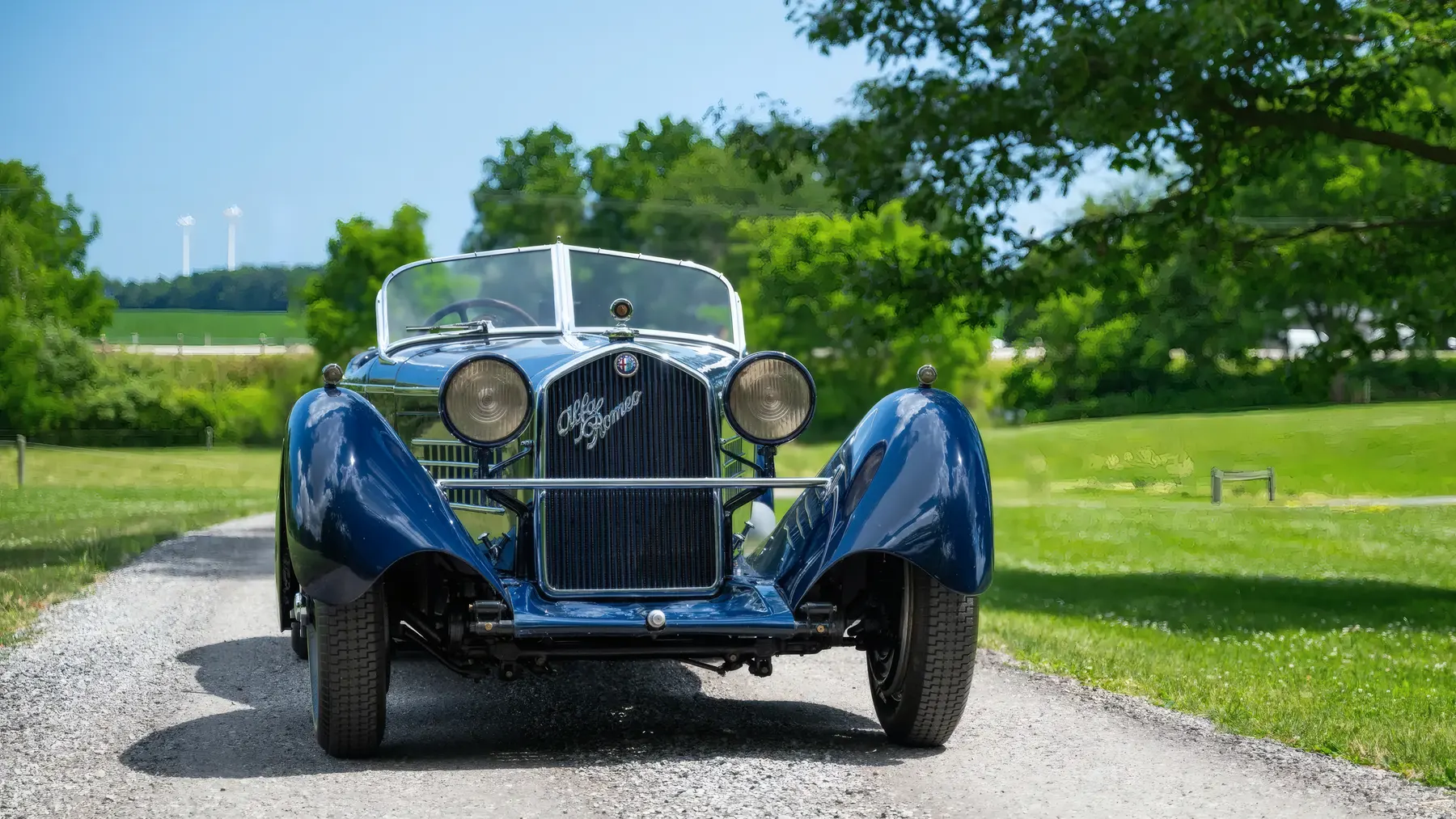
This particular Lungo chassis belongs to that rarer English branch of the story. Delivered new to a London dealership wearing a formal Italian cabriolet body by Castagna, it was stripped of that coachwork within months and rebodied in England as a low, boat-tailed two-seat spider - a completely different car in silhouette, intent and character from the one it had arrived as. The work is believed to have been carried out by Newns Coach Builders and Engineers of Thames Ditton, Surrey, a firm that traded under the considerably more evocative name of Eagle Coach Works Ltd, and the resulting design borrows as freely from contemporary American and French practice as it does from Italian precedent: the tapering, pointed tail and low beltline recall the boattail speedsters Auburn was building in Indiana at almost exactly the same moment, while the sweep of the front wings owes something to the sporting Amilcar Pégase then being bodied across the Channel in France. It stands as an unusual object even within a model whose entire commercial premise was individually commissioned coachwork: a purely Italian engineering masterpiece, wearing a genuinely international dress, built by a small English workshop that never achieved anything like the lasting name recognition of Zagato or Touring.
None of this coachbuilding individuality would matter nearly as much were it not for what the 8C 2300 achieved on the track, because it is the racing record that gives every subsequent body, however exotic its inspiration, something genuinely significant to clothe. The model won the Le Mans 24 Hours four years running, from 1931 through 1934, a run of consecutive victories that remains one of the most celebrated achievements of any pre-war sports car. Alongside that came repeated wins at the Targa Florio and the Mille Miglia through the early 1930s, success that Alfa Romeo folded straight back into the model’s naming and marketing: the short-wheelbase two-seat grand prix car took the “Monza” name after winning the 1931 Italian Grand Prix, and the sportier long-distance chassis picked up the informal “Tipo Le Mans” tag after its own repeated successes on the Sarthe circuit. The 8C engine’s competition career did not end there, either; developed further, it powered the Tipo B, or P3, monoposto to 46 grand prix victories between 1932 and 1935, making the 8C family, in various displacements and states of tune, one of the most successful racing engine lineages of the entire decade.
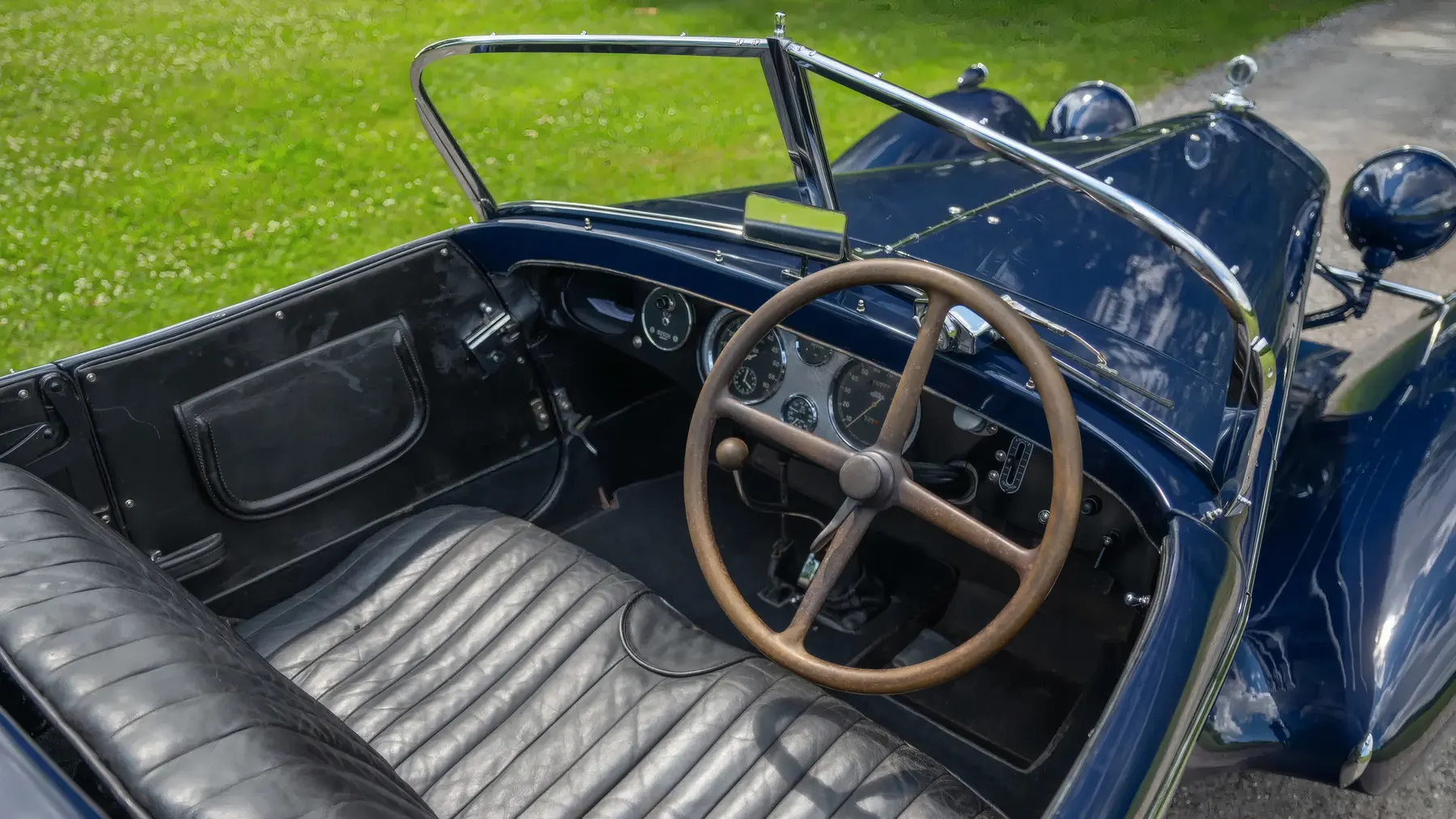
To drive an 8C 2300, in whatever coachwork it happens to be wearing, is to be reminded constantly that Jano’s engine was conceived for competition first and adapted to road use afterwards, not the other way round. The straight-eight pulls with real urgency once the supercharger comes on boost, and the mechanical noise from that central gear train - camshafts, blower and ancillaries all whirring in unison - is as much a part of the experience as the exhaust note itself. The steering is heavy at parking speeds but loads up progressively and communicates clearly once the car is moving, and the chassis, genuinely stiff for its era, lets a confident driver place the car with real precision on the kind of open, cambered roads it was designed for. None of this comes easily by modern standards, though: the drum brakes need planning ahead for rather than relied upon at the last moment, the ride on leaf springs and live axles is firm and busy over anything but a smooth surface, and the narrow period tyres offer nothing like the outright grip a modern driver would take for granted, even from a car with a genuinely serious sporting reputation.
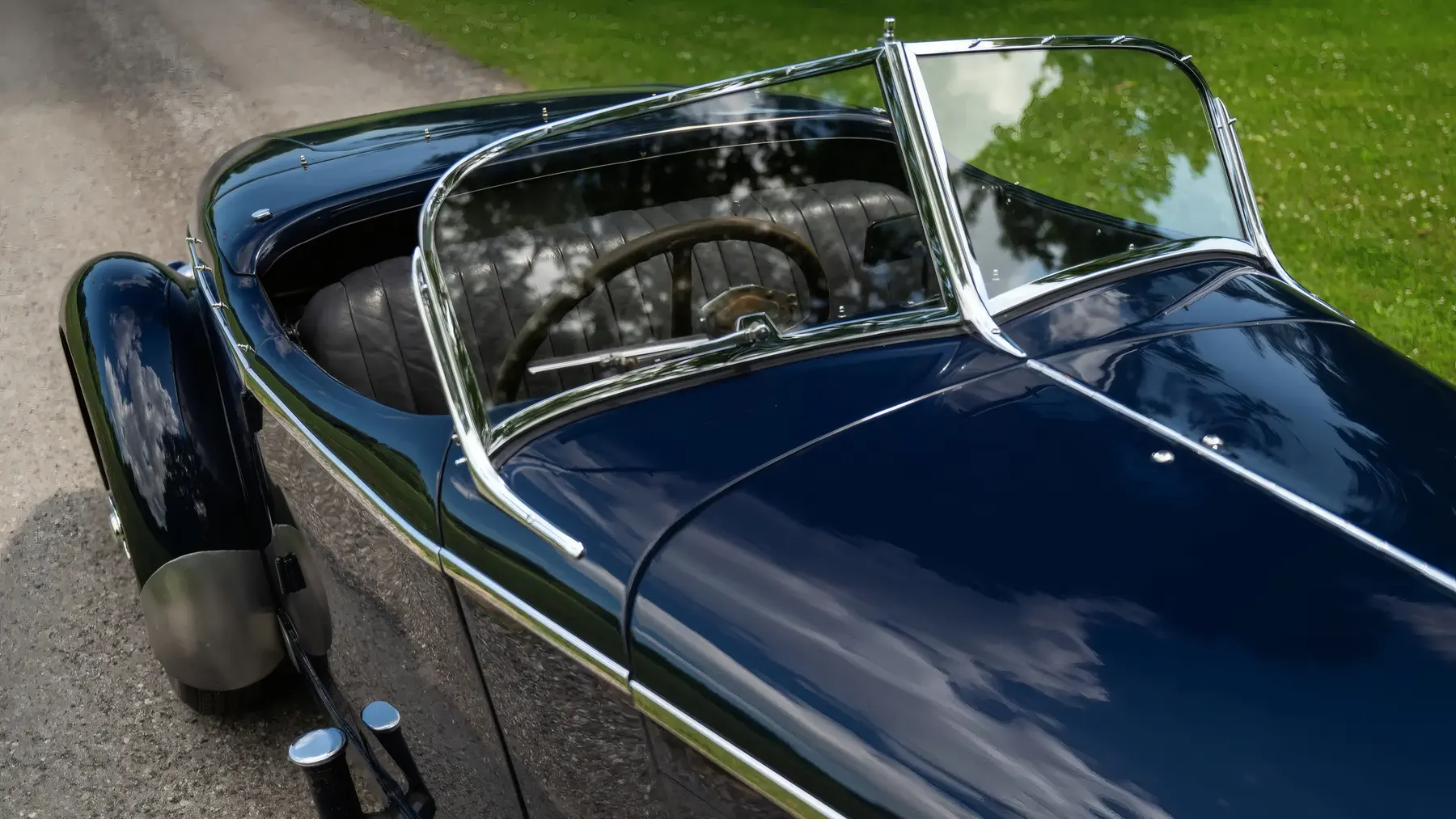
That reputation should not be allowed to obscure just how demanding, and in places how genuinely dated, the 8C 2300 could be to actually own and use. The same integral, non-detachable cylinder head that made the engine so distinctive also made it awkward and expensive to service properly: without a separate head to lift off, routine valve work or a simple decarbonise turns into a far more involved strip-down than a contemporary rival with a conventional bolt-on head would ever require, and specialists capable of doing that work correctly remain scarce and are never inexpensive. The chassis, meanwhile, aged quickly relative to Alfa Romeo’s own subsequent efforts; within a few years the related 8C 2900 arrived with genuinely independent suspension front and rear, a leap that threw the 2300’s conventional leaf-sprung live axles into sharp relief and left the earlier car riding, and handling, in a distinctly more old-fashioned manner than its glamorous successor despite the close family resemblance under the skin. There is, too, an authenticity question that shadows the model’s entire surviving population: because Alfa Romeo never fitted its own bodies, and because so many 8C 2300s were rebodied, crashed, raced hard and rebuilt more than once across nine decades, a meaningful number of surviving cars are, in the trade’s own blunt shorthand, composite “bitsa” machines assembled from parts of more than one original chassis, which complicates both their documented history and their standing with the most exacting judges. A car carrying a documented one-off English body in place of its original Italian coachwork, however beautifully executed and however interesting a story it tells, occupies a slightly awkward place within that hierarchy too: it is unquestionably a genuine and historically significant piece of coachbuilding, yet it does not carry the same factory-adjacent pedigree that a numbers-matching Zagato or Touring body commands among the most exacting collectors, for whom Italian coachwork on an Italian chassis remains the unspoken gold standard. And running one at all was never going to be cheap or convenient: a supercharged 2.3-litre straight-eight driven the way it wants to be driven is thirsty, its minimal weather protection and cramped, right-hand-drive cockpit prioritise speed over comfort, and the sheer scarcity of the model, sold new in tiny numbers to a wealthy few, meant it was never remotely accessible even when new.
None of that has dented the 8C 2300’s reputation as one of the defining sports cars of its era, and rightly so. Its combination of genuine competition pedigree, mechanical sophistication and coachbuilt individuality still keeps the model, in all its many guises, near the top of most conversations about the greatest sports cars of the pre-war period, spoken of in the same breath as contemporaries from Bugatti and Bentley despite sharing almost nothing mechanically with either. What a car like this Lungo spider adds to that broader story is a reminder of just how far an 8C 2300 chassis could travel, both physically and stylistically, once it left the factory gates at Portello with nothing but an engine, a frame and a set of wheels - how a single Italian chassis and engine could end up wearing an entirely different national identity depending on which coachbuilder, in which country, happened to get hold of it next.
Technical data
Performance Specifications
| Specification | 8C 2300 - road/touring tune (as fitted to this Lungo chassis) | 8C 2300 - sporting/works tune (representative, other chassis) |
|---|---|---|
| Engine | 2,336cc supercharged DOHC straight-eight, twin four-cylinder blocks on common crankcase, integral heads | Same architecture |
| Bore x stroke | 65mm x 88mm | 65mm x 88mm |
| Supercharger | Single Roots-type, gear-driven | Single Roots-type, gear-driven |
| Power | approx. 142bhp @ 5,000rpm* | approx. 155–180bhp, depending on year/series* |
| Transmission | 4-speed manual | 4-speed manual |
| Chassis | Pressed-steel ladder frame, semi-elliptic leaf springs, live axles front and rear | Same, typically Corto wheelbase |
| Brakes | Four-wheel finned aluminium drums | Four-wheel finned aluminium drums |
| Wheelbase | Lungo: approx. 3,100mm | Corto: approx. 2,740mm |
| Top speed | approx. 100–115mph* | up to approx. 130mph, competition-bodied examples* |
| Production (road-going 8C 2300, all coachwork) | approx. 188 chassis, 1931 – mid-1930s* | - |
| Coachwork on this chassis | One-off aluminium boat-tailed spider, Newns Coach Builders & Engineers (“Eagle Coach Works Ltd”), Thames Ditton, Surrey - replacing the chassis’s original Italian cabriolet body | - |
Sources
- RM Sotheby’s - 1934 Alfa Romeo 8C 2300 Lungo Spider by Eagle Coach Works, Monterey 2024
- Hagerty Media - Prewar Alfa Romeos Offer Pure Elegance, Exceptional Performance
- Hagerty Media - This Alfa Romeo 8C 2900B Is a Jewel of Italian Beauty and Performance
- Hagerty Valuation Tools - 1933 Alfa Romeo 8C 2300 Corto Spider Recreation
- Hagerty Insider - 1934 Alfa Romeo 8C 2300 Cabriolet Décapotable
- Concours of Elegance - Alfa Romeo 8C 2300 Zagato, Car of the Day
- Fiskens - 1931 Alfa Romeo 8C 2300 Zagato Spider
- Wikipedia - Alfa Romeo 8C
Join the discussion
Comments
Loading comments…
Leave a comment
Share a detail, memory, or perspective. Every comment is reviewed before publication.