Packard Super Eight One-Eighty Convertible Victoria by Darrin: Hollywood's Factory Custom
1942 Packard Super Eight One-Eighty Convertible Victoria by Darrin




Images: Darin Schnabel / RM Sotheby's
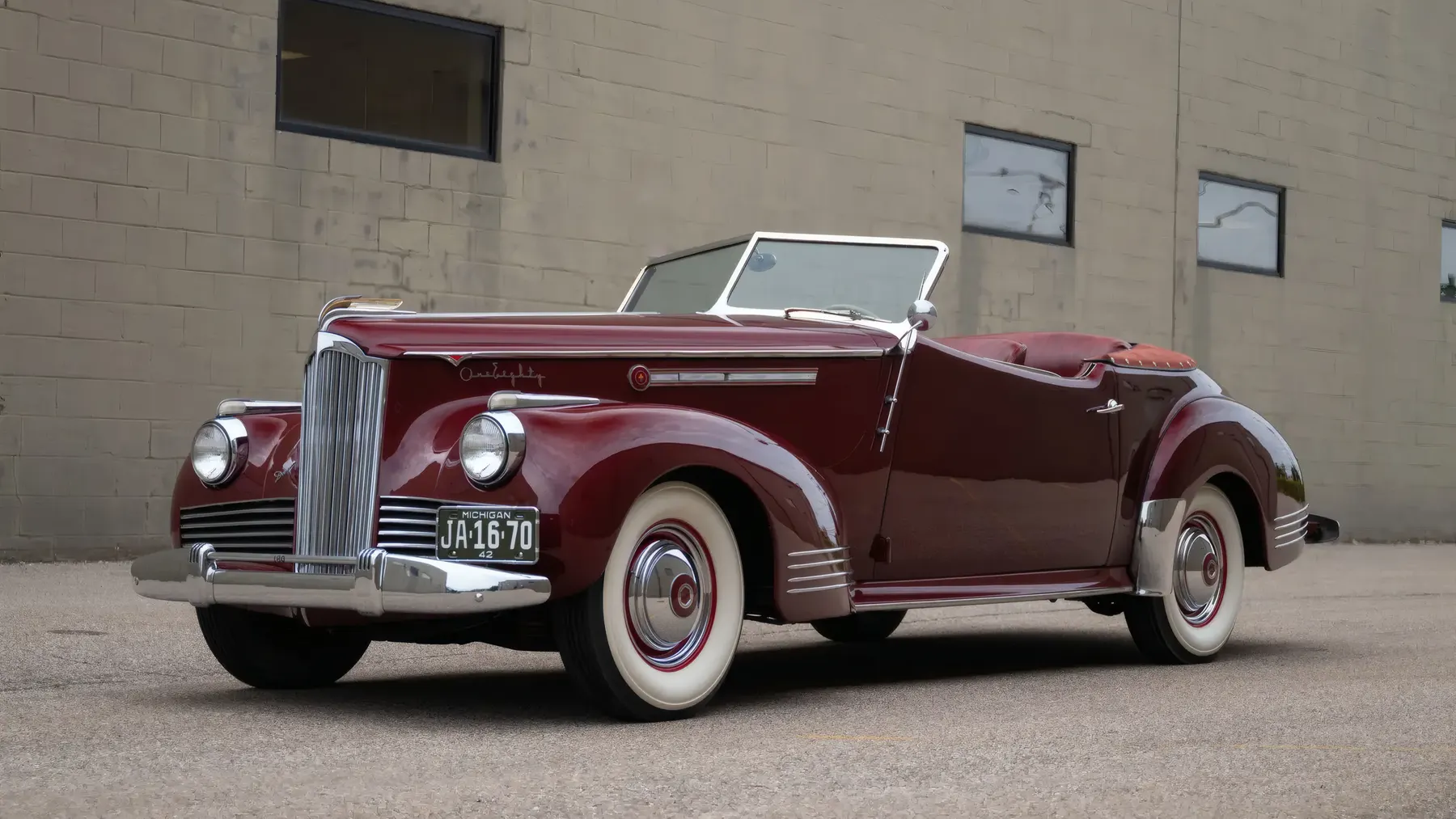
Packard’s president, so the story goes, was won over by a man standing on a cowl. In Howard “Dutch” Darrin’s own recollection, published in Automobile Quarterly, Alvan Macauley wanted to know whether a Hollywood-built convertible was strong enough to carry the Packard name, and Darrin’s answer was to climb onto the car and bounce up and down on it. That small piece of theatre explains most of what makes the Packard Super Eight One-Eighty Convertible Victoria by Darrin interesting: a car sold on glamour, adopted by a company whose reputation rested on solidity, and shaped by a long argument over whether the two could share a chassis.
Darrin was born in New Jersey, spent more than a decade coachbuilding in Paris, first alongside Tom Hibbard and later with a banker named Fernandez, and came home in 1937 as the market for European-style custom bodies collapsed. He settled in Los Angeles, opened a shop on Sunset Boulevard as Darrin of Paris, and by most accounts leaned on a Continental persona, accent included, to charm the film community. He did not draw; his shop foreman later recalled that Darrin described what he wanted and Rudy Stoessel built it. What they built, starting on Packard One-Twenty chassis, was a low, long-bonneted convertible with no running boards, a radiator set lower in the frame, a three-piece cast-aluminium cowl, and doors cut away in the sweeping curve later known as the Darrin dip. The donor was a humble One-Twenty business coupe, and by one account a skilled crew could turn one into a Darrin in about two weeks. Published counts of the Hollywood-built cars from 1937 to 1939 run from about sixteen to roughly two dozen, and a good share went to film and music names, with Clark Gable, Errol Flynn, Al Jolson and Gene Krupa among those usually cited.
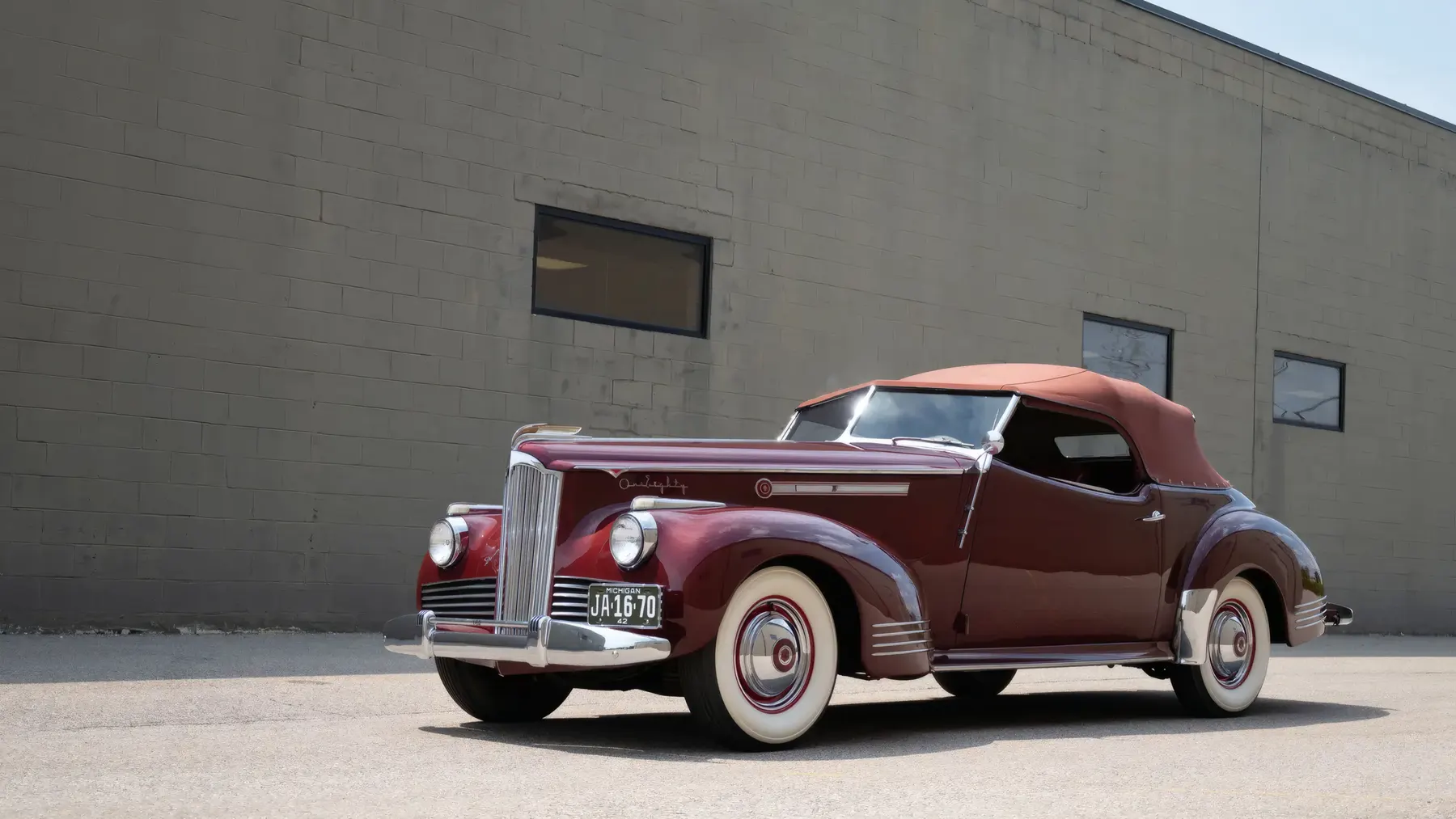
Packard’s own position in 1940 made it receptive. The Custom Super Eight One-Eighty had just replaced the Twelve as the company’s flagship, yet it shared its running gear with the One-Sixty, and Packard needed ways to make it feel distinct; six of the eleven One-Eighty body styles offered for 1940 were coachbuilt customs. RM Sotheby’s catalogue notes observe that the coachbuilding era was drawing to a close by 1939, which makes the Darrin a late and slightly industrialised answer: custom in appearance, but produced in a small series by contract builders. Dealers had seen the Darrins, and the company agreed to catalogue three of them for 1940, a sport sedan, a convertible sedan and the Convertible Victoria, on condition that they were built on the Super Eight chassis, reportedly over the objections of Packard’s own body engineers. Darrin received a fee on each car sold and agreed to oversee production, which began in the former Auburn-Cord body works at Connersville, Indiana. For the 1941 model year it moved to Sayers & Scovill in Cincinnati, a builder of hearses and flower cars, with Jeep work at Connersville usually cited as the reason. Darrin liked to recall that the first car off the Cincinnati line was followed closely by a hearse.
The nameplate covers three model years and, in practice, three different cars. The 1940 Victoria, on Packard’s 18th series, kept rear-hinged doors and carried its headlamps in separate pods; one source gives its catalogue price as $4,750, and Packard’s advertising billed it as the Glamour Car of the Year. A single Darrin Coupe de Ville was also built for that winter’s show circuit but never catalogued. Published production figures for 1940 are unreliable, ranging from a few dozen cars to around seventy once the cheaper One-Twenty version is counted, so any single number deserves suspicion. For 1941, Series 1906 in Packard’s numbering, the doors were rehung at the front, the headlamps moved into the wings, the nose used standard Packard sheet metal and the sedans were dropped, leaving the Victoria alone. The sedans had always been the less dramatic cars, because Packard insisted on standard parts, so the Victoria was where Darrin’s vision survived most intact. About 35 were built, although one catalogue says 33, at a list price reported as $4,595 in some sources and $4,795 in others. The 1942 cars, Series 2006, gained bilateral lower grilles; between 12 and 15 were completed, depending on the source, before civilian production stopped in February 1942, after which Darrin himself moved into aeronautical war work. The 1941 and 1942 cars are generally regarded as the best Darrins, partly because of the structural improvements Packard’s involvement brought and partly because of the more modern, Clipper-inspired front end that auction catalogues emphasise. Most catalogues give the wheelbase as 3,226 mm; a few cite 3,505 mm, the length used for other One-Eighty bodies.
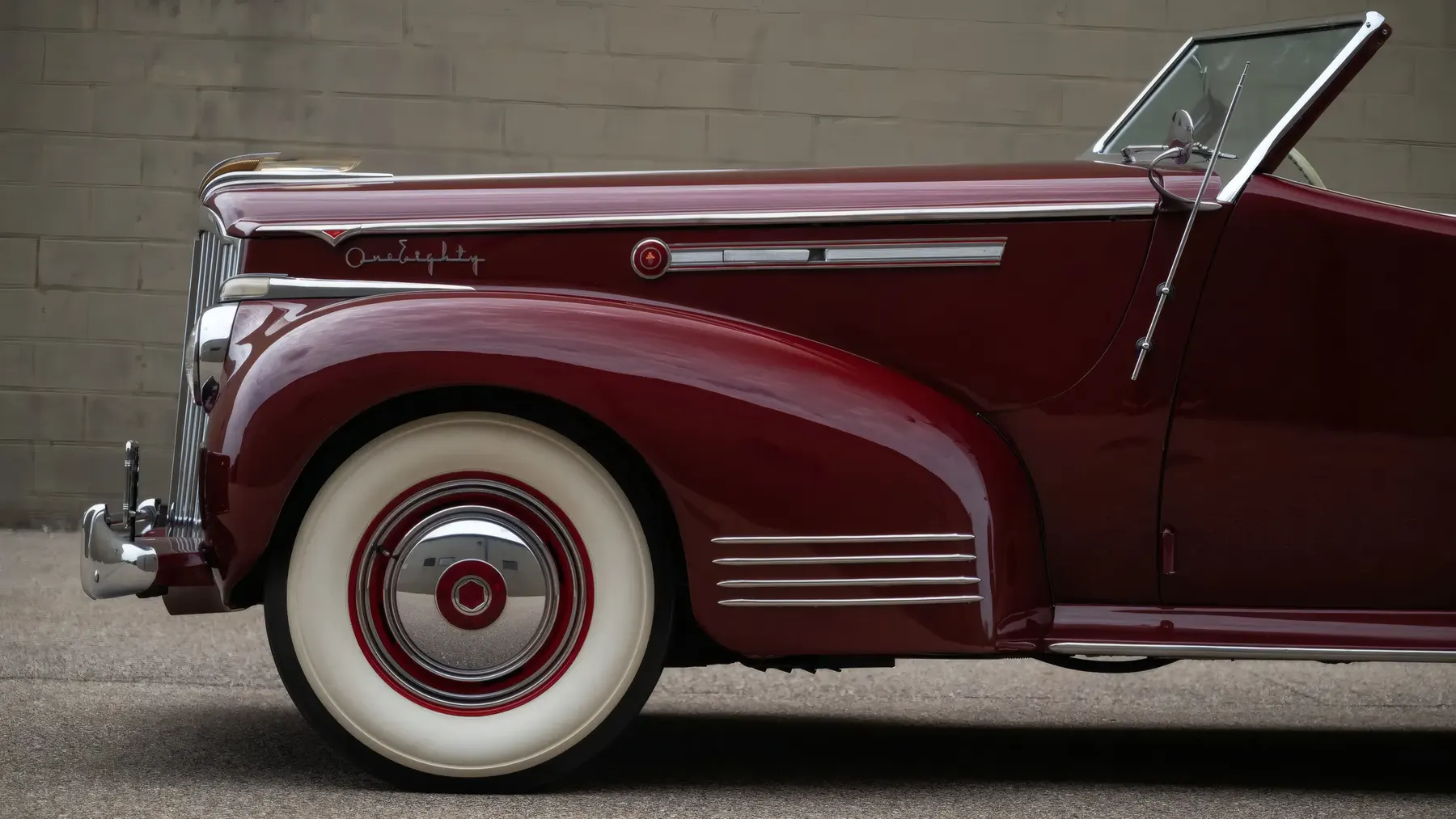
The design is what people come for. Seen side-on, the proportions do the work: a long bonnet pushed far ahead of the screen, a low V-shaped windscreen, cut-down doors, optional skirts over the rear wheels, and a beltline that kicks upward over the rear haunches rather than running straight to the tail. Without running boards the body sits cleanly on its chassis, at a time when Packard was only just making them optional. RM Sotheby’s catalogue copy calls the Darrin racy beside the Lincoln-Zephyr Continental, and the comparison is fair enough, since few American convertibles of 1940 and 1941 set out so deliberately to look low and fast. Darrin filed a patent for the Victoria design in November 1939. There is also a twist the later cars carry: under his agreement with Packard he was asked to contribute design proposals, and Alex Tremulis, who saw a Darrin clay model at Briggs, wrote to him in 1971 crediting him with most of the original thinking behind the Clipper. Packard never credited him officially and the claim rests on one man’s recollection, so it is best read as well-pedigreed enthusiast lore rather than settled history. The irony is that auction catalogues now describe the late Darrins as Clipper-inspired.
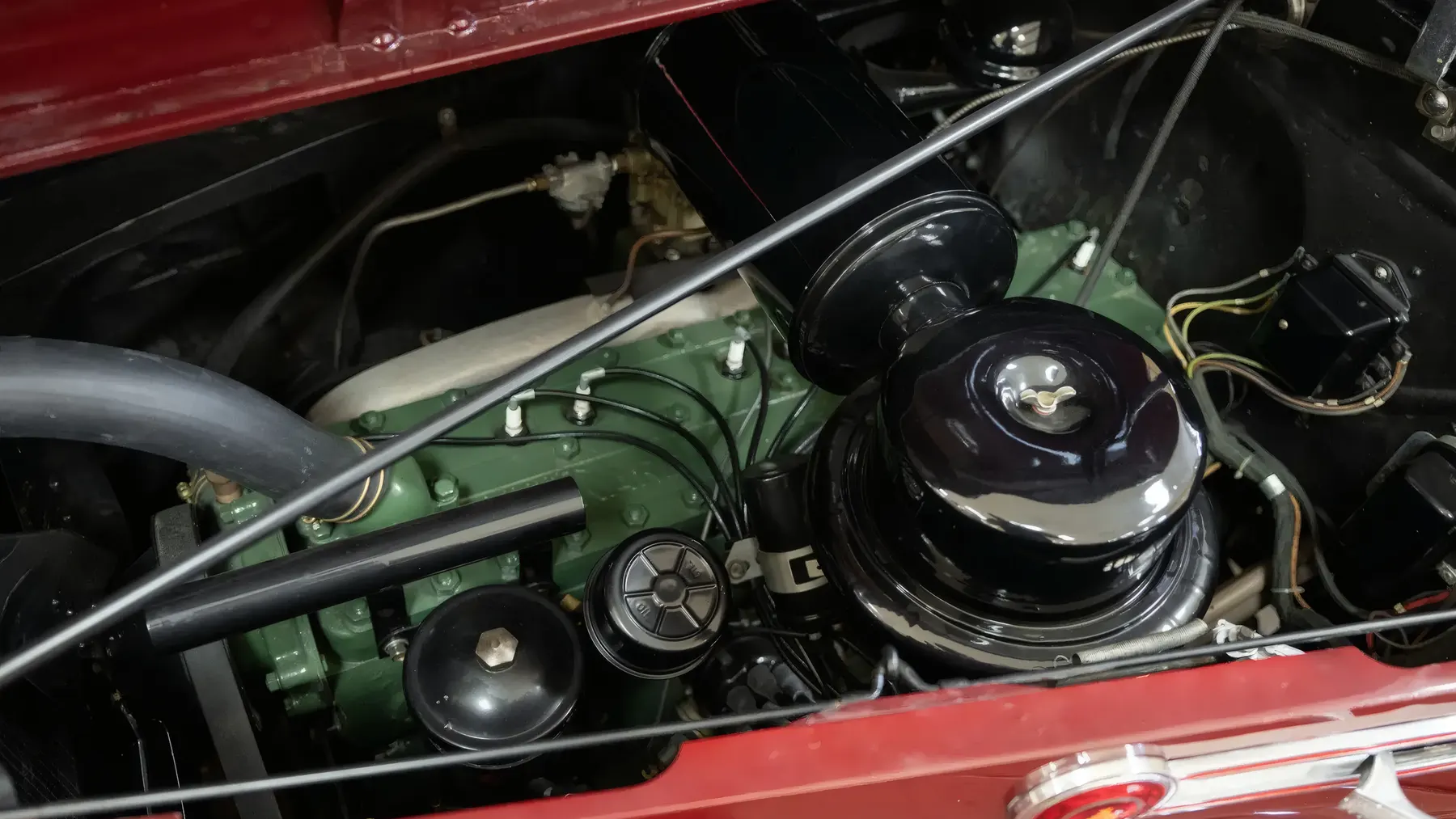
Underneath, the Darrin was a standard senior Packard, which is both its strength and its limitation. The engine was the 5.8-litre (356 cu in) L-head straight-eight with a single Stromberg carburettor, rated at 160 bhp at 3,500 rpm by most sources. The “180” in the name is the series number rather than the output, though at least one reference work credits the engine with 180 bhp. Packard advertised it as the most powerful eight-cylinder engine on the market. A three-speed column-shift manual was standard, overdrive was commonly fitted, and 1941 brought Electromatic Drive, a vacuum-operated clutch for the same gearbox. The chassis paired independent front suspension on coil springs with a live rear axle on semi-elliptic leaf springs and four-wheel hydraulic drum brakes.
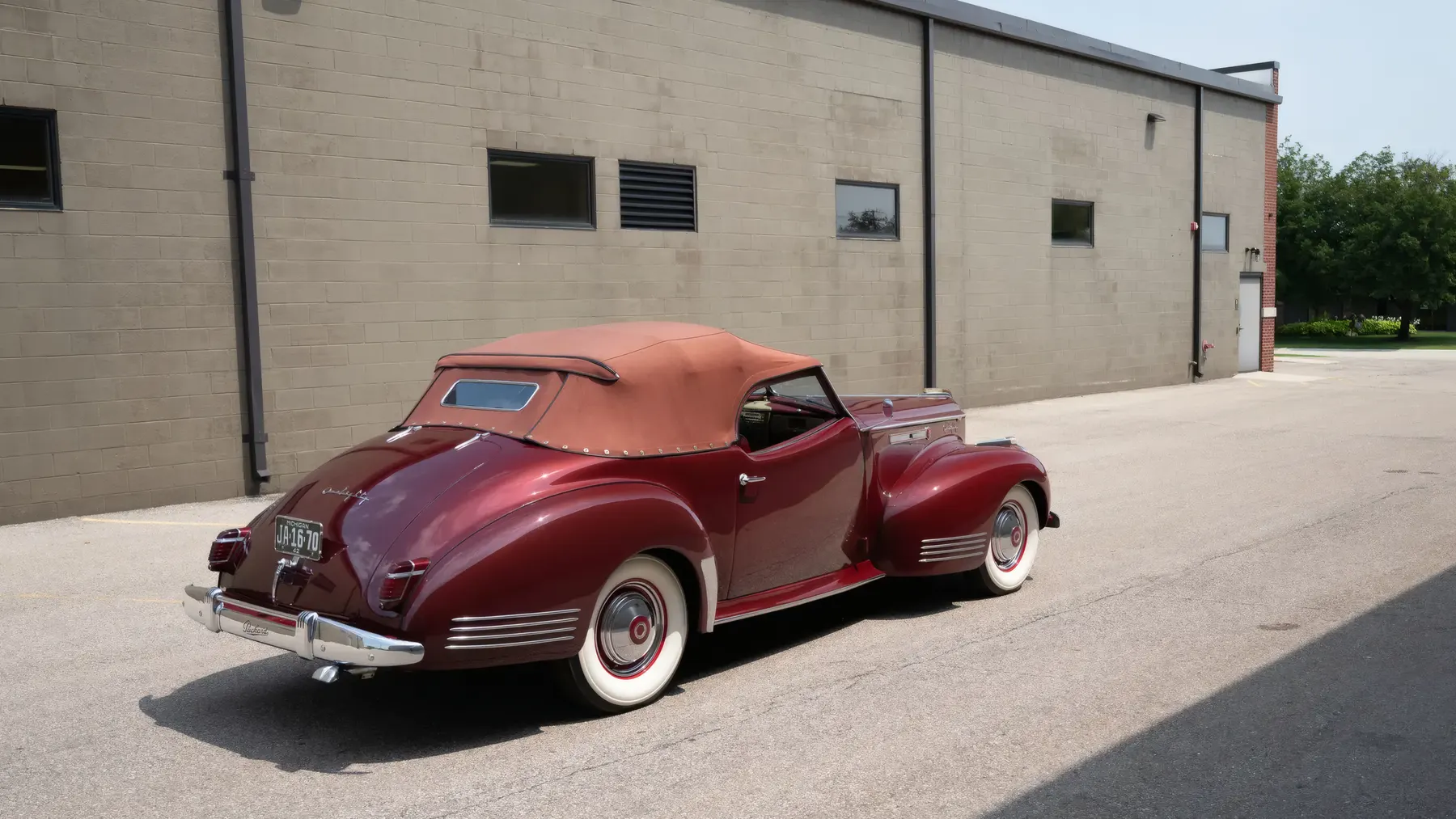
How it drove is harder to pin down than it should be, because the figures that circulate for these cars disagree and the sources I would trust offer no top speed or 0–60 mph time. What exists is anecdotal. One RM Sotheby’s catalogue note records a road test of a restored car that found excellent highway power, and cites an unnamed authority’s claim that the Darrin could outperform a Buick Century. Both are second-hand and neither is period test data, but they fit what the layout suggests: a big engine, a column shift and a long wheelbase make this a car for covering ground quickly and in comfort rather than attacking corners. Darrin’s sporting image was built at the kerb as much as on the road. By his own telling, he paid the doorman at Romanoff’s to keep a space free by the entrance so lunching film people could not miss a Darrin, and he rented cars to the studios for use in films.
The flaws are as much part of the story as the glamour. The Hollywood cars lowered the radiator by about 75 mm by deleting its supporting cradle, and the result on the first few cars, according to one detailed account, was a front end that vibrated, doors that could fly open in a fast corner, and a tendency to leak when it rained. Packard’s engineers had reason to object. The factory cars were strengthened with heavier body mounts, a front-end bracing kit and deeper door bottoms, which is as good a measure as any of where the design started, and many surviving cars have needed their cast-aluminium cowls repaired because they tend to crack under strain, which suggests the structure remained the weak point. Mechanically the Darrin offered nothing the One-Sixty did not, so what buyers paid roughly $4,600 to $4,800 for was the body and the badge, not any extra performance. There was no automatic transmission, because Packard’s Ultramatic did not arrive until 1949, and the live axle and drum brakes were conventional rather than advanced. Rollston, which supplied three other custom bodies for the 1940 One-Eighty, also built a near-identical convertible whose bodywork one account judges visibly better finished than Darrin’s. The business side was a muddle too. Darrin expected Packard to take every car he could build, yet Connersville was swamped by other work, he had to go looking for another builder, and the entire 1941 run was about 35 cars. The sedans faded quickly; RM’s catalogue says none are believed to have been built for 1941, and a Pasadena Packard dealer, frustrated at being unable to obtain Darrins, ordered half a dozen look-alikes from Bohman & Schwartz instead.
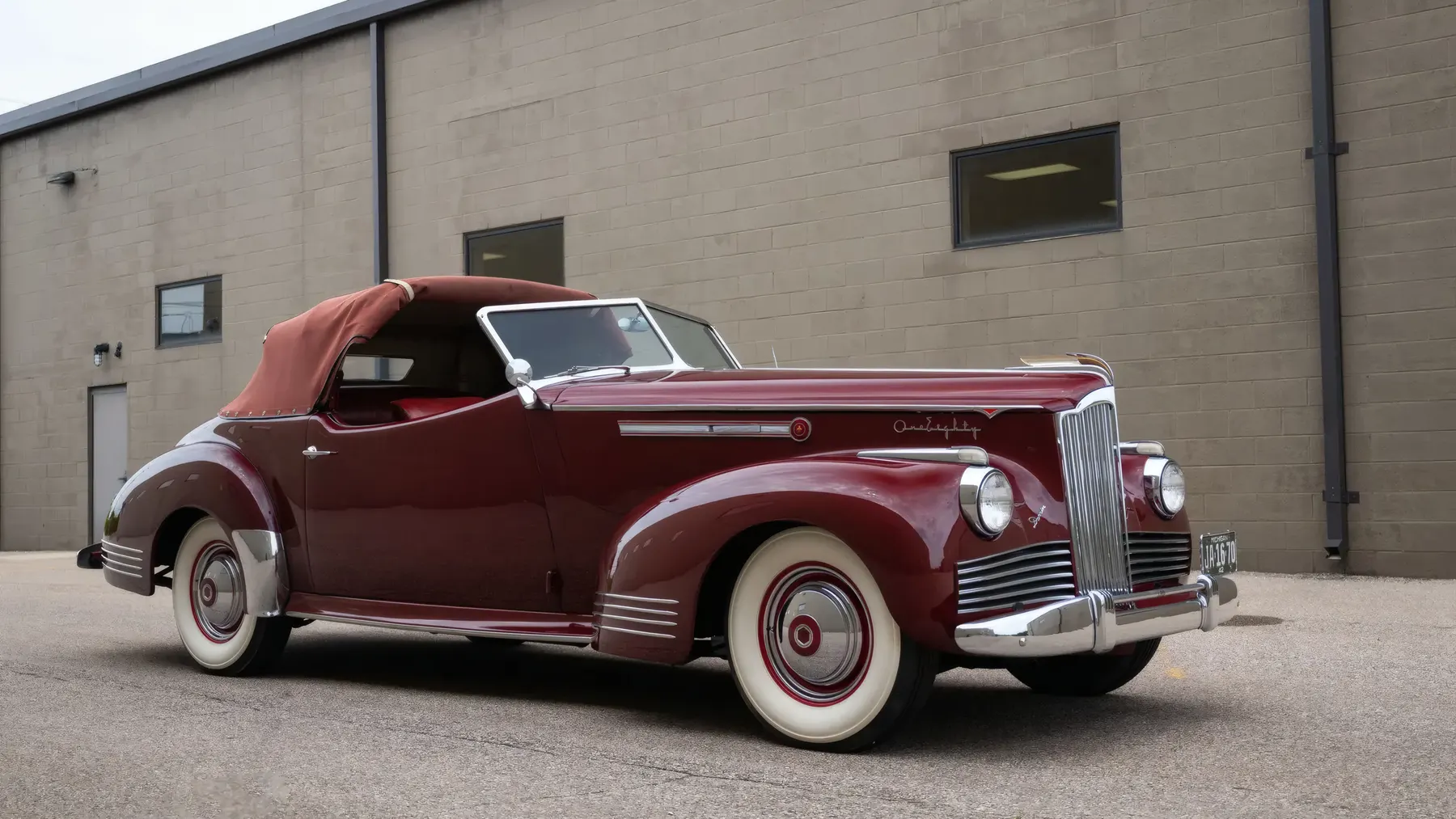
Contemporary reaction is better documented by anecdote than by road tests. Dealers were said to report showroom traffic jumping by as much as 300 per cent with a Darrin on the floor, and the sales contract reportedly required them to display one for 30 days, sold or not. Imitators followed. Nash tried a Darrin-influenced Special Cabriolet on its 1940 Ambassador, building 20 and selling 11 by one account, and because it kept the standard bonnet and radiator shell instead of sectioning them as Darrin did, the profile looked awkward beside the real thing. After the war Darrin was busy with Kaiser and Frazer, later designing the fibreglass Kaiser Darrin sports car, and the Victoria sat in memory until the early 1970s, when the NBC series Banacek gave its Boston insurance investigator a 1941 One-Eighty Darrin for daily transport and introduced the shape to a new generation. Today these cars are Classic Car Club of America Full Classics, with fewer than 20 of the 1941 cars estimated to survive. Catalogued sales through the 2010s mostly ran from the low $200,000s to around $400,000, and Sports Car Market’s Carl Bomstead remarked in 2017 that a 37 per cent rise in five years was hard to justify.
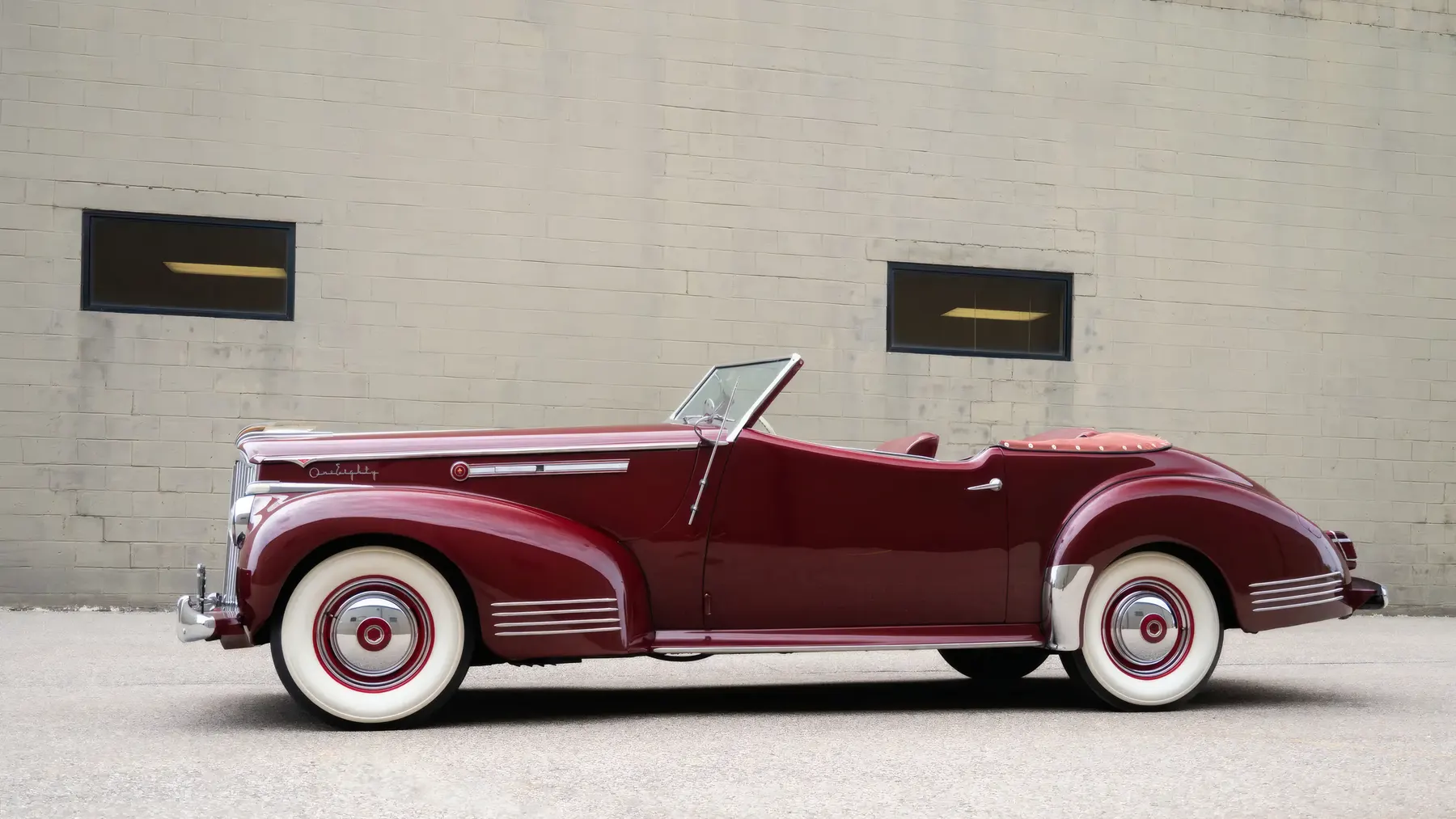
Packard rarely gave an outside stylist this much licence, and the war closed the experiment before anyone could judge whether it would have worked as a business. What survives is a small band of cars that looked like a dare in 1941 and still do, wearing the badge of a company that built its name on caution, and making their case with proportions rather than engineering.
Technical data
Performance Specifications
| Specification | 1940 (18th series) | 1941 (Series 1906) | 1942 (Series 2006) |
|---|---|---|---|
| Engine | 5.8-litre (356 cu in) L-head inline-eight | 5.8-litre (356 cu in) L-head inline-eight | Not separately confirmed in sources reviewed |
| Carburation | Not separately confirmed | Single Stromberg carburettor | Not separately confirmed |
| Power | 160 bhp at 3,500 rpm† | 160 bhp at 3,500 rpm† | Not separately confirmed |
| Torque | Not reliably published; omitted | Not reliably published; omitted | Not reliably published; omitted |
| Transmission | Not separately confirmed | Three-speed manual, column shift; overdrive commonly fitted; Electromatic Drive introduced | Not separately confirmed |
| Front suspension | Not separately confirmed | Independent, coil springs | Not separately confirmed |
| Rear suspension | Not separately confirmed | Live axle, semi-elliptic leaf springs | Not separately confirmed |
| Brakes | Not separately confirmed | Four-wheel hydraulic drums | Not separately confirmed |
| Wheelbase | Not confirmed for the Victoria | 3,226 mm (most sources); 3,505 mm (a few)‡ | Not separately confirmed |
| Door hinging | Rear-hinged | Front-hinged | Front-hinged |
| Headlamps | Separate pods | Wing-mounted | Wing-mounted |
| Production | Unsettled: a few dozen to about 70*§ | About 35 (one catalogue: 33)* | 12 to 15* |
| Original price | About $4,750 (one source) | $4,595 to $4,795 (sources differ)* | Not confirmed |
| Kerb weight, top speed, 0–60 mph | Not corroborated; omitted | Not corroborated; omitted | Not corroborated; omitted |
Sources
- RM Sotheby’s, 1941 Packard Super Eight One-Eighty Convertible Victoria by Darrin (Monterey 2011 catalogue essay)
- RM Sotheby’s, 1941 Packard Super Eight One-Eighty Convertible Victoria by Darrin (Hershey 2017 catalogue essay)
- RM Sotheby’s, 1941 Packard Super Eight 180 Convertible Victoria by Darrin (St. John’s 2011 catalogue essay)
- RM Sotheby’s, 1942 Packard One-Eighty Convertible Victoria by Darrin (Amelia Island 2018 catalogue essay)
- RM Sotheby’s, 1941 Packard Darrin One-Eighty Convertible Victoria (Arizona 2012 catalogue essay)
- RM Sotheby’s, 1941 Packard Super Eight One-Eighty Convertible Victoria by Darrin (Amelia Island 2014 catalogue essay)
- RM Sotheby’s, 1941 Packard Darrin One-Eighty Convertible Victoria (Amelia Island 2021 catalogue essay)
- RM Sotheby’s, 1941 Packard Darrin One-Eighty Convertible Victoria (Monterey 2020 catalogue essay)
- Sports Car Market, 1941 Packard One-Eighty Convertible Victoria by Darrin
- Coachbuilt.com, Darrin of Paris / Packard-Darrin (Mark Theobald)
- Hyman Ltd, 1941 Packard 180 Convertible Victoria by Darrin (model background)
- Gooding & Company, 1941 Packard 180 Custom Super Eight (technical specifications)
- conceptcarz, 1941 Packard Super-8 One-Eighty
- conceptcarz, 1940 Packard Super-8 One-Sixty and One-Eighty
- Wikipedia, Packard Custom Super Eight
- HowStuffWorks, Introduction to the 1937-1942 Packard Darrin
- Automobile Driving Museum, Packard One-Eighty Convertible Victoria placard
- America’s Packard Museum, 1940 Model 120 Convertible Victoria by Darrin
Join the discussion
Comments
Loading comments…
Leave a comment
Share a detail, memory, or perspective. Every comment is reviewed before publication.