Packard 734 Speedster Eight Phaeton: Four Seats, Full Speed, Wrong Year
1930 Packard 734 Speedster Eight Phaeton
Images: Teddy Pieper / RM Sotheby's
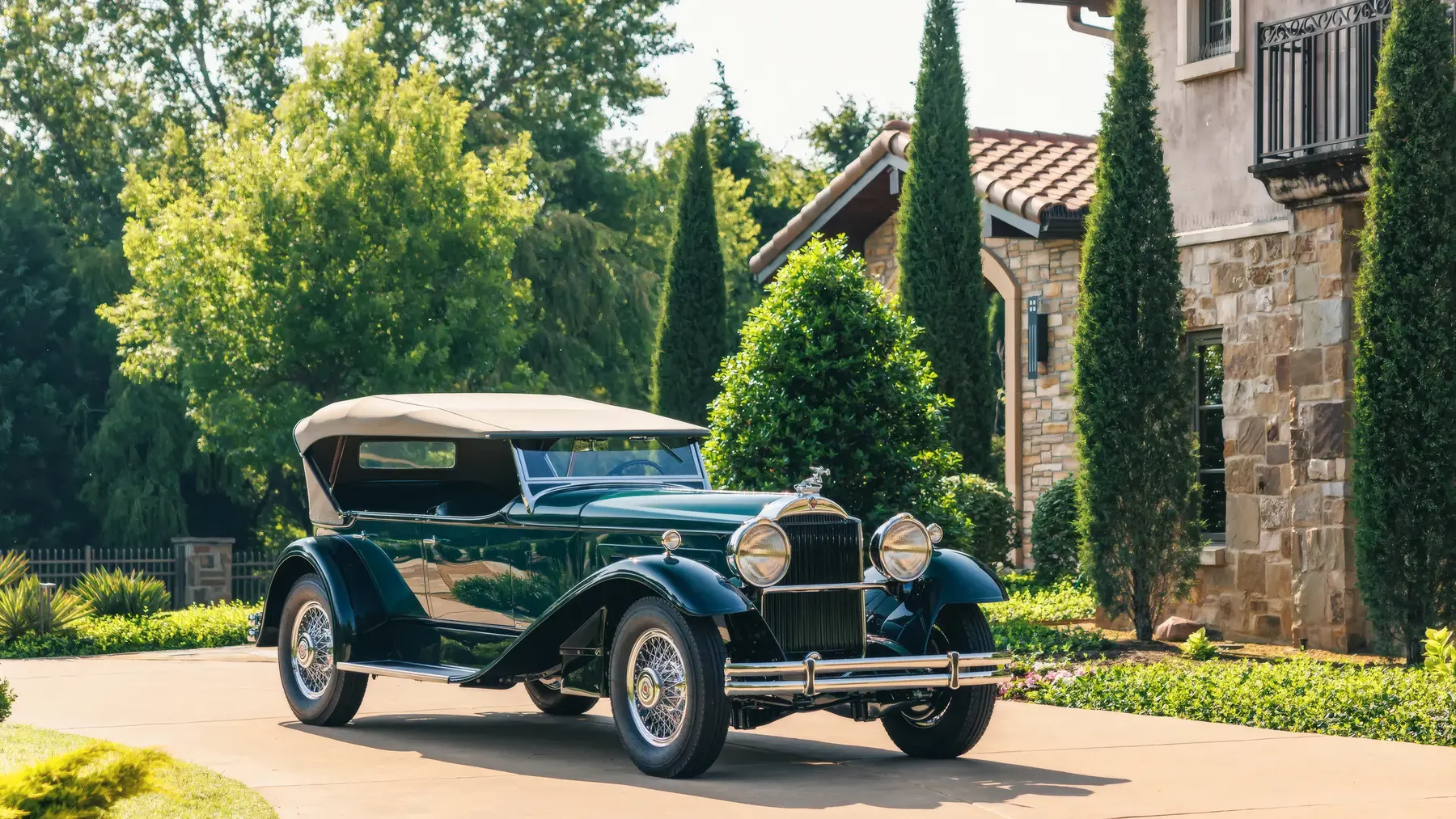
The premise of the Packard 734 Speedster Eight sits awkwardly alongside everything the Packard Motor Car Company had spent three decades building. Packard made its name on weight, ceremony, and the sombre dignity of formal coachwork; its customers were people who wanted to be driven, not people who wanted to drive. The 734 Speedster Eight Phaeton, catalogued for the 1930 model year, suggested the company had reconsidered - that the marque whose open cars typically resembled mobile drawing rooms had decided to build something that would actually press you into the seat cushion.
The Seventh Series designation, from which the “7” in 734 derives, covered Packard’s full range for the 1929-30 model year - from the six-cylinder 726 through to the large-wheelbase Custom Eights intended for formal limousine coachwork. The 734’s numerical suffix encoded its chassis dimension: a wheelbase of approximately 134 inches (around 3,404 mm), placing it among the shorter configurations in the Packard portfolio, though modest is a word that fits uneasily on a car of these proportions. What distinguished the 734 Speedster from its stablemates was not architecture but intent. This was a factory performance variant, engineered from the outset to a brief that had no precedent in Packard’s recent history.
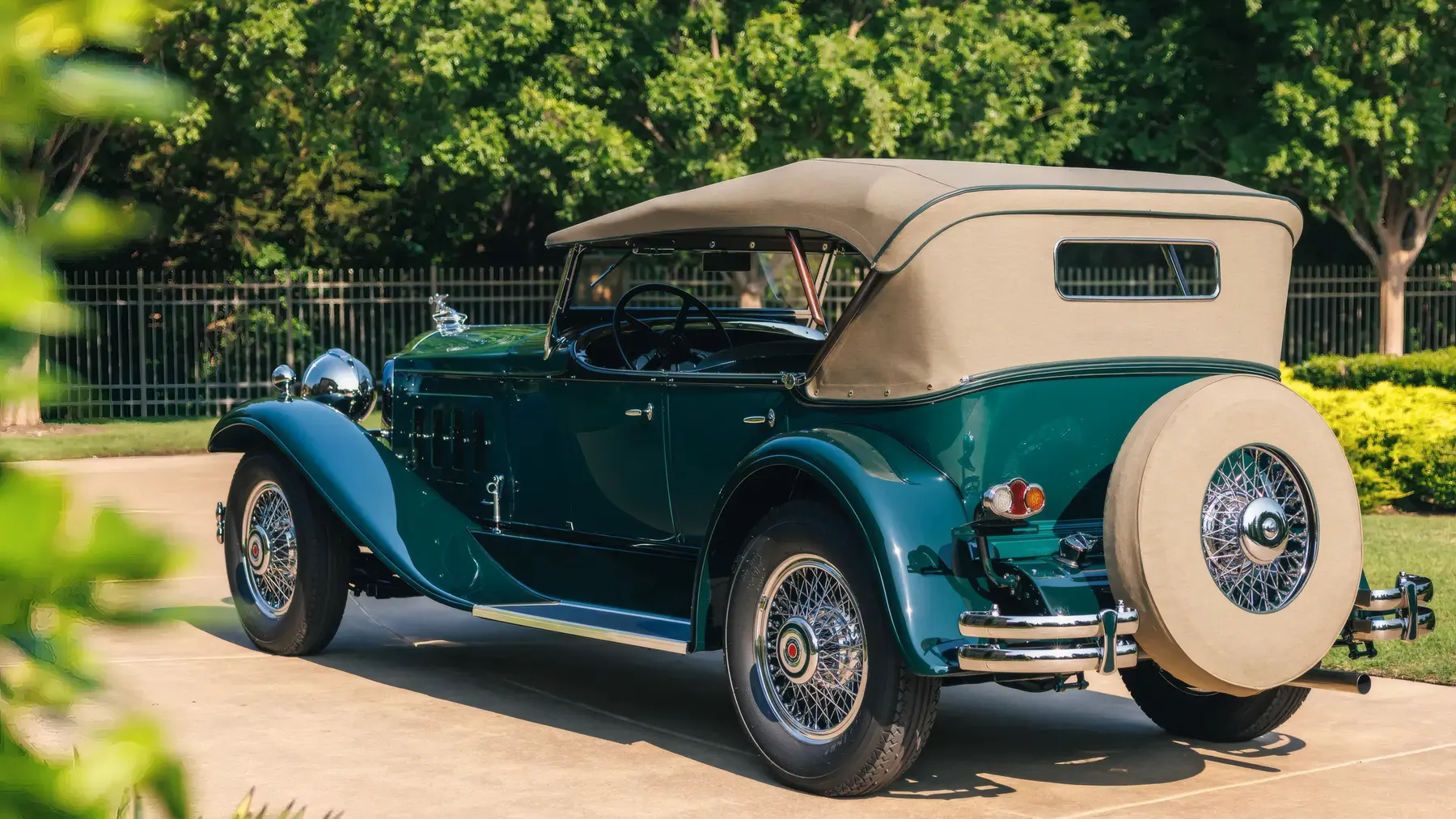
The engine was Packard’s larger straight-eight, displacing approximately 385 cubic inches (around 6.3 litres), the same unit carried over from the Custom Eight lineup. In standard Custom Eight trim the unit produced something in the region of 100 to 120 bhp - already a smooth and capable figure for 1930. For the Speedster application, Packard’s engineers raised the compression ratio and revised the carburetion, with period documentation attributing approximately 130 bhp to the 734 in production form, though some accounts suggest the factory-prepared demonstration examples were running somewhat higher. It is worth treating these figures with appropriate caution: factory power claims from this era were seldom independently verified, and variance between individual examples - especially those presented to press - could be meaningful. What is not disputed is that the Speedster’s output represented a genuine and deliberate factory upgrade, not simply a badge applied to a standard car.
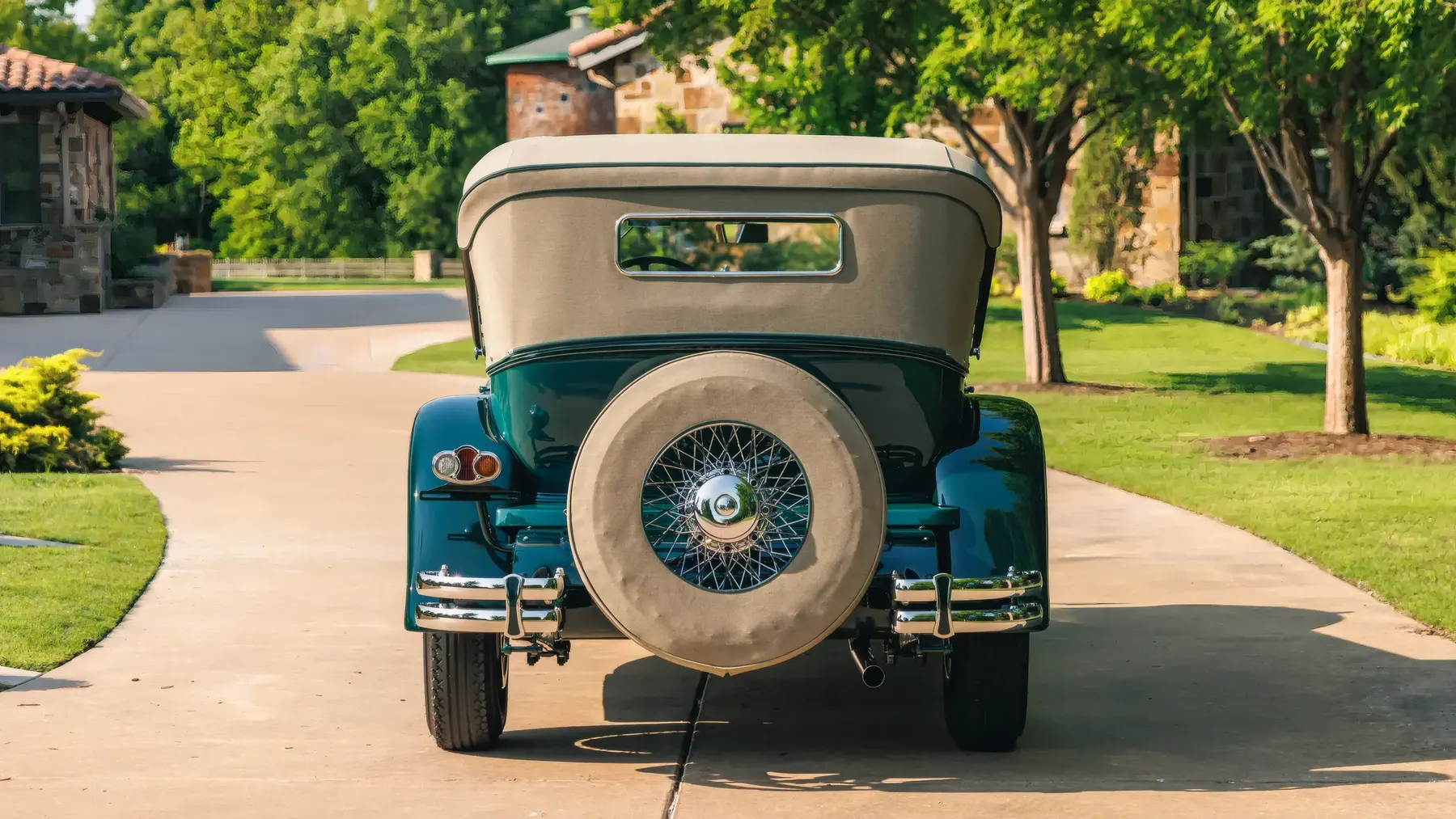
Three body configurations constituted the 734 Speedster range. The most celebrated was the two-seat boat-tail Runabout, a dramatically tapered open car whose profile became one of the defining images of late-1920s American automotive romanticism. Less discussed but arguably more purposeful was the Phaeton - a four-door, four-seat open touring body that retained the Speedster’s mechanical specification while extending it to genuine touring accommodation. The Phaeton existed in a distinct register from the Runabout: where the boat-tail car communicated pure speed theatre, the Phaeton communicated something more complex, a factory performance car that could carry four passengers with their luggage at velocities American roads in 1930 were thoroughly unprepared for.
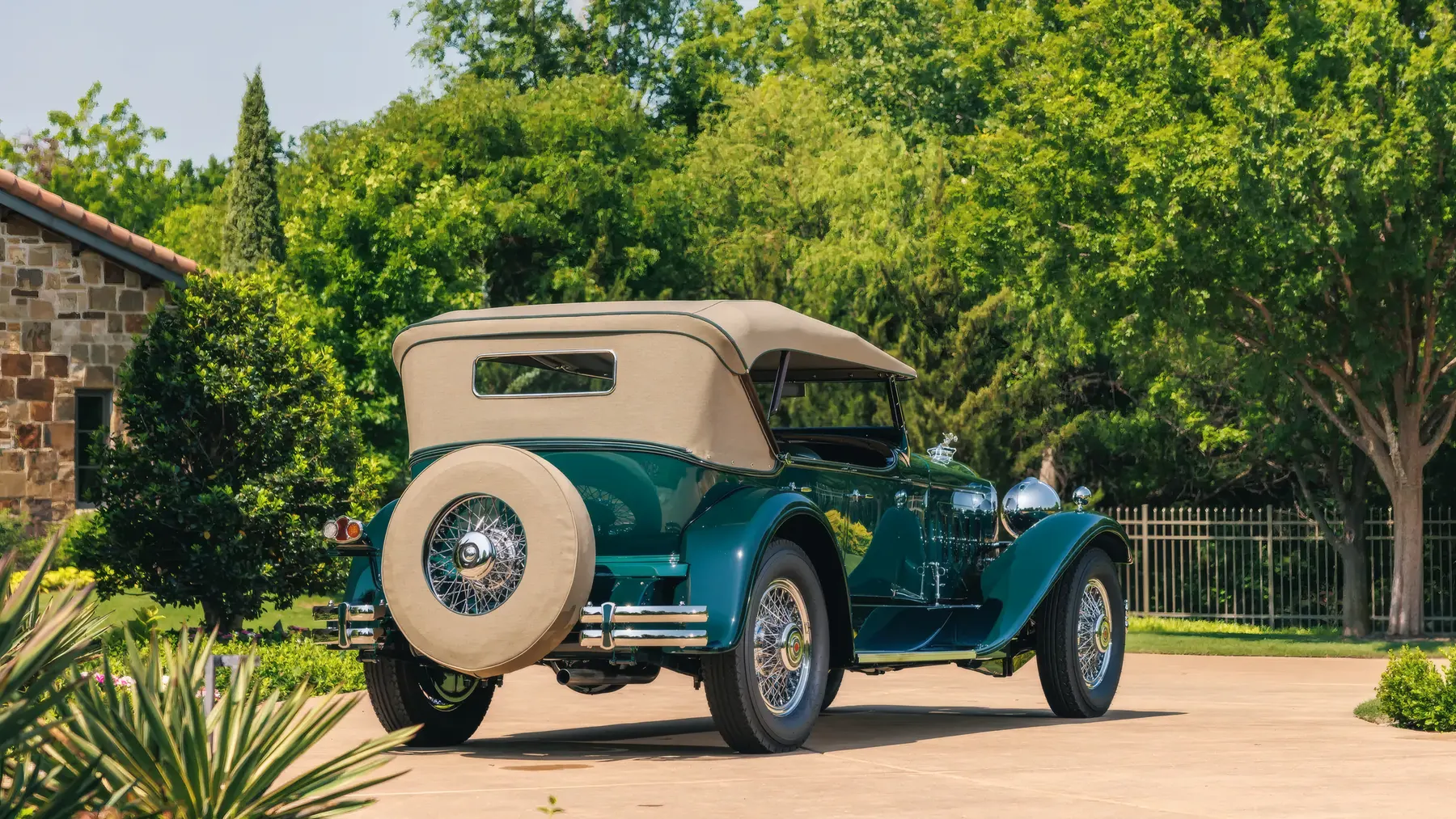
The coachwork, produced either under Packard’s own custom body operations or by independent coachbuilders working to the Speedster brief, followed a design language simultaneously formal and purposeful. The hood was extravagantly long even by period standards, the radiator shell tall and vertical, and the overall proportion oriented decisively around the horizontal. Relative to the enclosed formal bodies that constituted Packard’s mainstream, the Phaeton read as low and purposeful. With the windscreen folded flat and the full length of the bonnet ahead of you, the car communicated a specific kind of open-air ambition: exposed to everything, propelled by machinery that in 1930 felt genuinely serious. The Phaeton allowed this experience while carrying four people - a distinction the two-seat Runabout could not offer and one that represented real utility for a buyer who wanted performance without sacrificing passengers.
Packard claimed the 734 would approach 100 mph under appropriate conditions, a figure that period accounts generally corroborated for the lighter Runabout configuration. The Phaeton’s additional coachwork mass - four doors, folding hood, the full structure of open touring bodywork on a large ladder frame - pushed total weight to a figure well in excess of 1,700 kg, and the realistic top speed was almost certainly lower than the factory number, even if it remained extraordinary by 1930 standards. Acceleration figures were not systematically documented in period, and any 0-60 mph time offered today would be speculation rather than history. What contemporary accounts do convey is the sense of genuine force from the straight-eight at the top of its rev range, smooth and insistent in a way that made high-speed running feel less violent than the mechanical drama implied.
The landscape the 734 entered was small but defined. Stutz had been building American performance variants through the late 1920s, with increasingly sophisticated engineering arriving imminently in the DV-32 for 1931. Duesenberg’s Model J, introduced in 1928, had already transformed expectations of what American horsepower and American chassis engineering could achieve at the extreme of the market. Cadillac had just launched its V-16 for 1930 - a technical sensation, but one that prioritised imperious refinement over driver engagement. The 734 Speedster represented Packard’s first serious attempt to enter a performance conversation it had previously declined to join. Against Duesenberg in particular, the 734 occupied credible but clearly secondary territory; Packard’s engineers were optimising a luxury engine for greater output, not building a performance engine from first principles, and the character of the two cars reflected that difference.
That gap between aspiration and delivery points to the 734’s more honest limitations. The chassis beneath the Speedster was a conventional ladder frame with semi-elliptic springs, derived directly from Packard’s luxury applications and calibrated for the comfort of passengers in formal coachwork, not the enthusiasm of a driver on a demanding road. Body roll was considerable, steering was geared for patient long-distance touring rather than corner entry, and the brakes - mechanical drums all round - were working against substantial mass without the confidence-inspiring response that modern driving has made instinctive. The 734 was fast in a straight line; it was not agile, and the gap between the Speedster badge and the car’s dynamic reality was a real one rather than a period perception. Packard had the engine and the ambition; it did not have the chassis programme to match either.
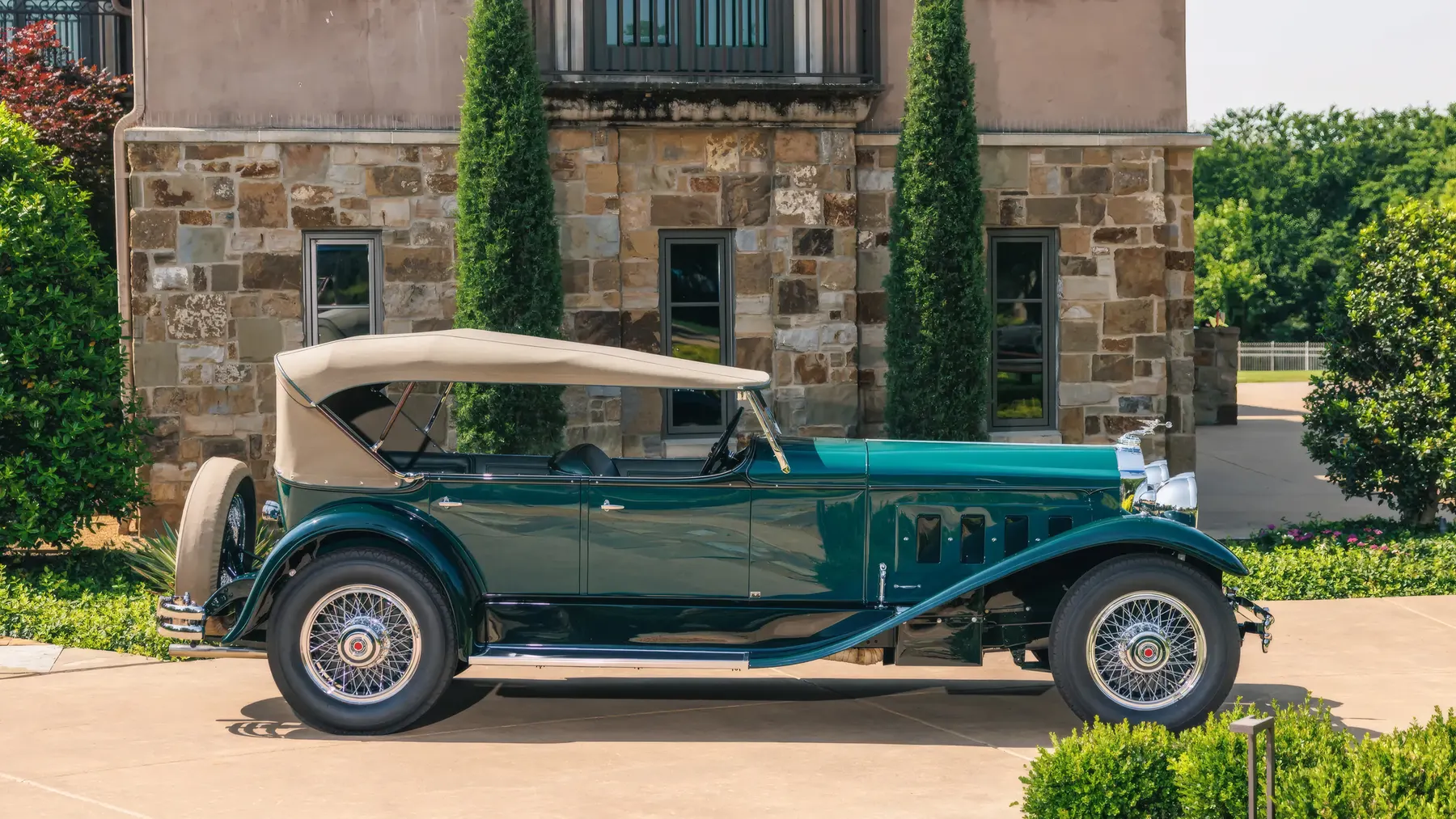
There is also the weather protection problem, specific to the Phaeton configuration. Open touring bodywork in 1930 meant a folding hood and side curtains, not proper windows - magnificent in dry conditions, increasingly grim when they changed. Erecting the hood was a production requiring time and patience, and even fully raised, the Phaeton offered nothing like the sealed, heated comfort of Packard’s enclosed formal bodies. This was true of all open touring cars of the period, but it underlines the genuine compromise built into the Phaeton’s appeal: the car was at its best on long, warm, unhurried runs, which was exactly the use case the 1929 crash was about to eliminate for most of the people capable of affording it.
The commercial timing was close to catastrophic. The Seventh Series had been conceived before the October 1929 crash, and the 734 arrived in the market as the consequences were beginning to hollow out American luxury spending. A premium-priced performance variant of an already expensive luxury car, targeting buyers watching their portfolios contract in real time - the 734 found almost no market. Total production across all Speedster body styles is generally estimated well below two hundred examples; the Phaeton configuration, less theatrical than the boat-tail and therefore less frequently photographed and preserved, represents a still smaller portion of that figure. The Eighth Series, which followed for 1931, brought no successor to the Speedster. The programme was quietly discontinued without ever having had a fair test in a functioning market.
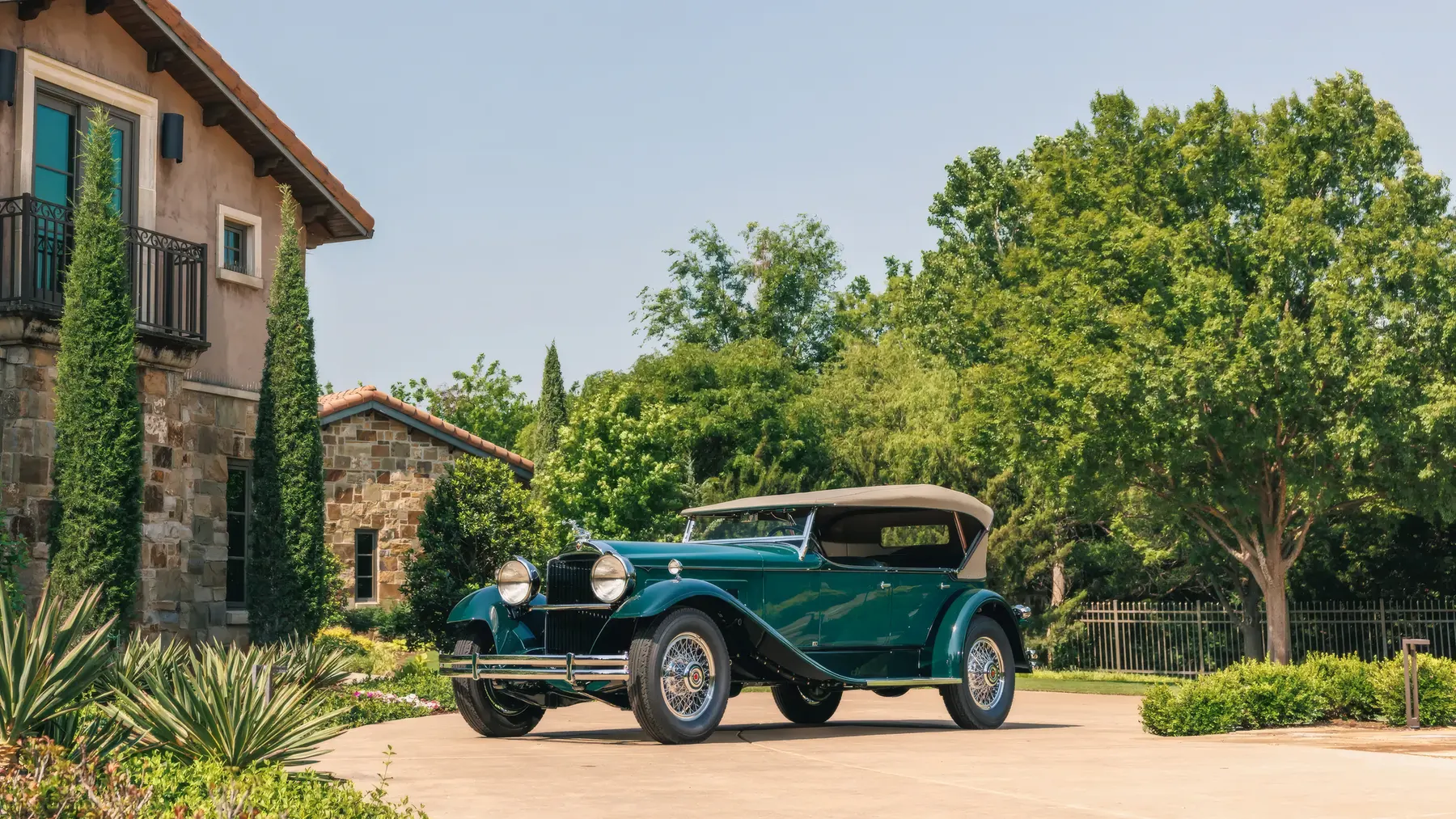
Whether the 734 Speedster Eight would have succeeded in better times is genuinely unknowable. The Depression foreclosed the question before it could be answered. What survives is a single model year’s worth of evidence: a factory performance car from America’s most prestigious marque, available in a Phaeton configuration that offered four seats and genuine speed in the same package, built with real engineering intent, and produced in numbers so small that its existence required a sustained act of institutional nerve that Packard never quite repeated. The boat-tail Runabout became one of the canonical images of pre-Depression American coachwork, a regular presence at Pebble Beach and in the auction records. The Phaeton occupies quieter territory - rarer in the surviving count, less cinematically celebrated, but perhaps the more revealing document: a complete grand touring automobile from the grandest American marque of its age, built open, built purposefully, and produced in a year when the world it was designed for had already started to dissolve.