Alfa Romeo Giulietta Sprint: The Stopgap Coupé That Rescued Alfa
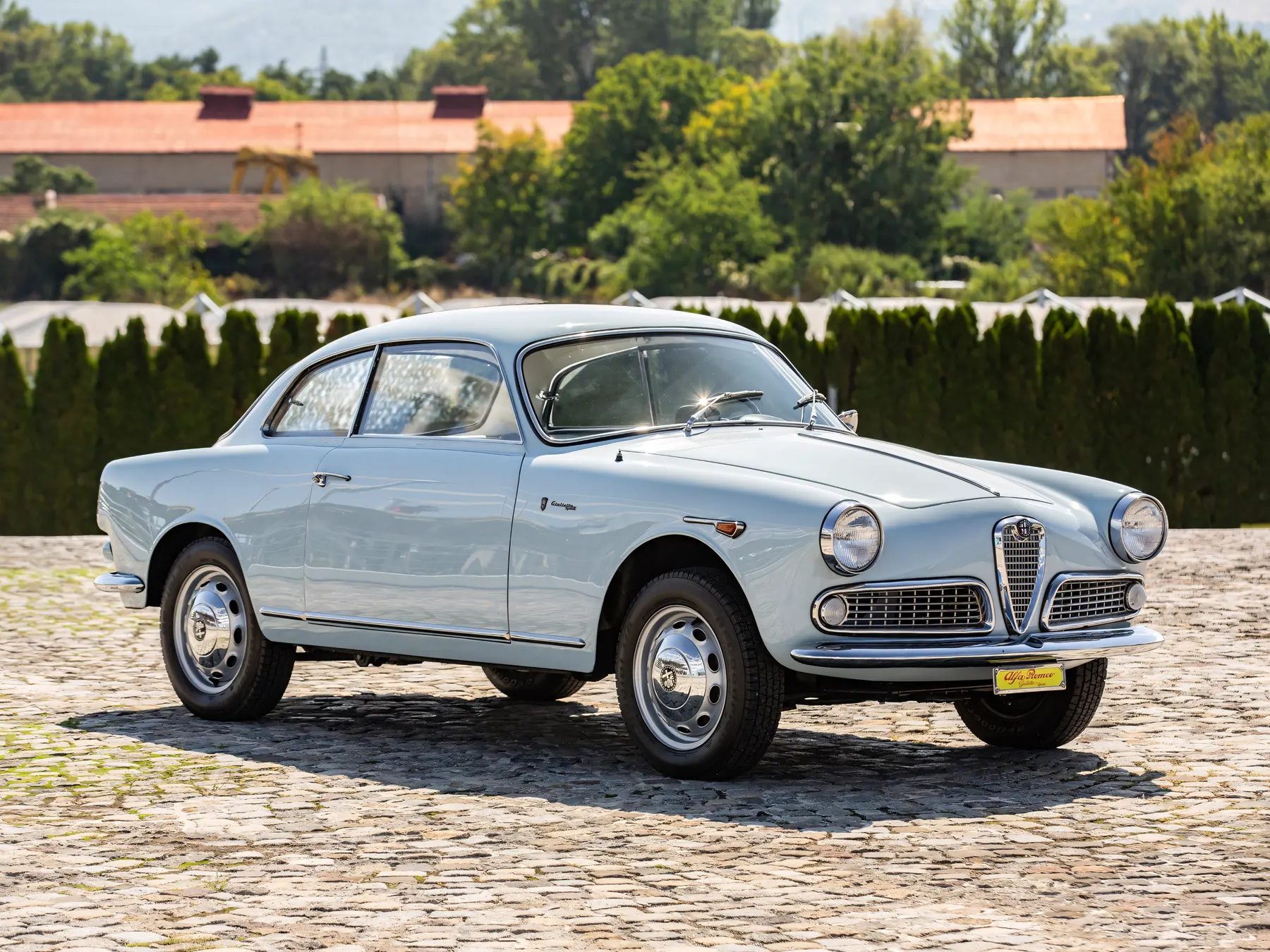
1962 Alfa Romeo Giulietta Sprint




Images: RM Sotheby's
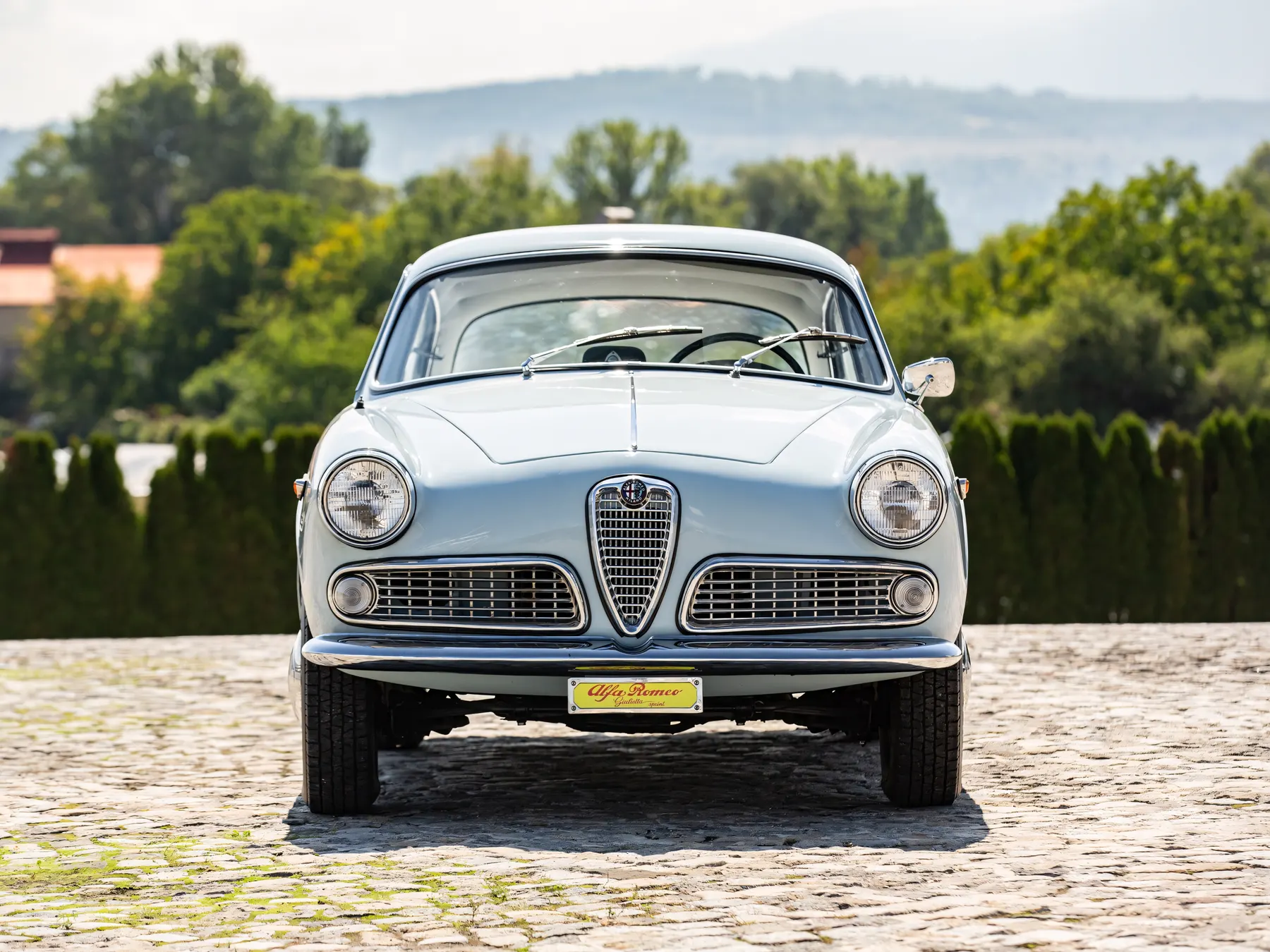
Alfa Romeo built the Giulietta Sprint to get out of an embarrassment, not to found a dynasty. By the end of 1953 the company had a new four-door saloon that was not ready, a state-owned parent that had helped fund it with bonds offering a few subscribers a free car by lottery, and a press corps starting to ask where the prizes were. Hagerty’s account of the episode points to resonance problems in the saloon’s steel unibody, and Alfa’s own heritage history adds that the Portello plant was not yet set up for the volumes the car would demand. The way out came from Rudolf Hruska, the Austrian engineer brought in to modernise production: have an outside coachbuilder make a short run of coupés on the new mechanicals, and give those to the winners. Boneschi, Boano and Bertone all submitted sketches, and Franco Scaglione’s proposal for Bertone won. A lottery fix-up became the first Giulietta the public ever saw.
The launch was pure theatre. Over Easter 1954, at Portello, two actors dressed as Romeo and Juliet jumped out of a helicopter and the Archbishop of Milan blessed the new car; the formal debut followed at the Turin Motor Show on 21 April, with one Sprint in Alfa red and another in sky blue. Then the planning collapsed. Alfa’s heritage department says pre-launch estimates were for 100 to 200 cars a year, while the Museo Alfa Romeo says roughly 2,000 orders arrived in the first days of the show, a figure some older accounts put far lower, and orders were suspended within days. Production could not keep up. By one widely cited breakdown only 12 Sprints were built in 1954, followed by 1,415 in 1955 and 1,855 in 1956, because every body was still hand-beaten at Bertone. Alfa wanted more than 30 bodies a day; Bertone’s answer, according to Hagerty, was to subcontract panel-beating to craftsmen scattered around Turin and take on hundreds of extra workers. Around 6,000 Sprints had been built by spring 1958, and the move to a new plant at Grugliasco in 1959–60 brought pressed, spot-welded panels and, by June 1961, the 20,000th Sprint bodyshell. Sources disagree about what Ghia contributed to the earliest cars: Classic & Sports Car describes a deal for Ghia to supply production shells that collapsed when Boano and Ghia parted acrimoniously, while other accounts credit Ghia with interiors and electrics on the hand-built first batch. Either way, those early cars differ from later ones in many small details, and restorers still have to deal with that. The waiting lists, Alfa’s heritage history notes, only made the car more desirable.
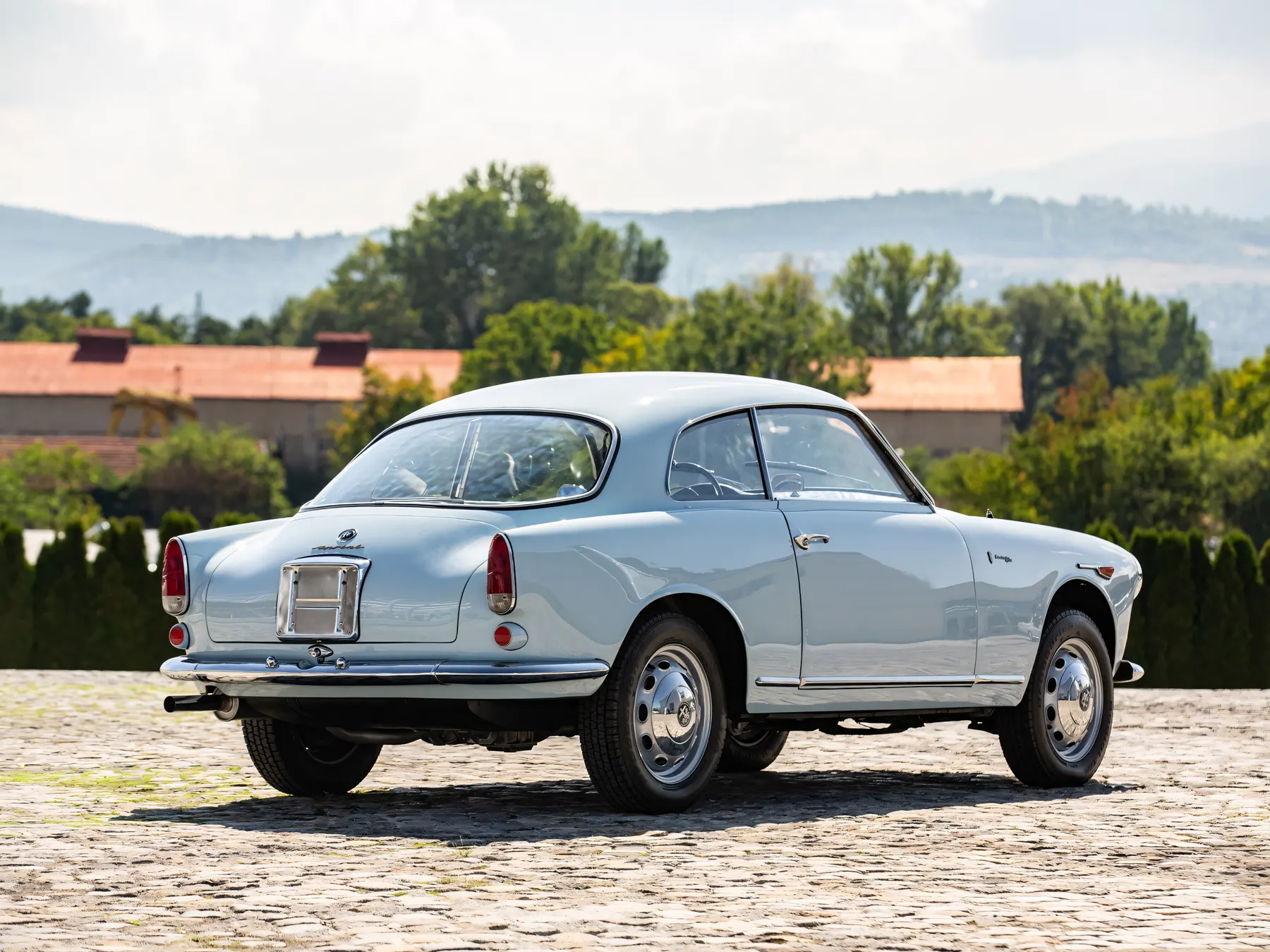
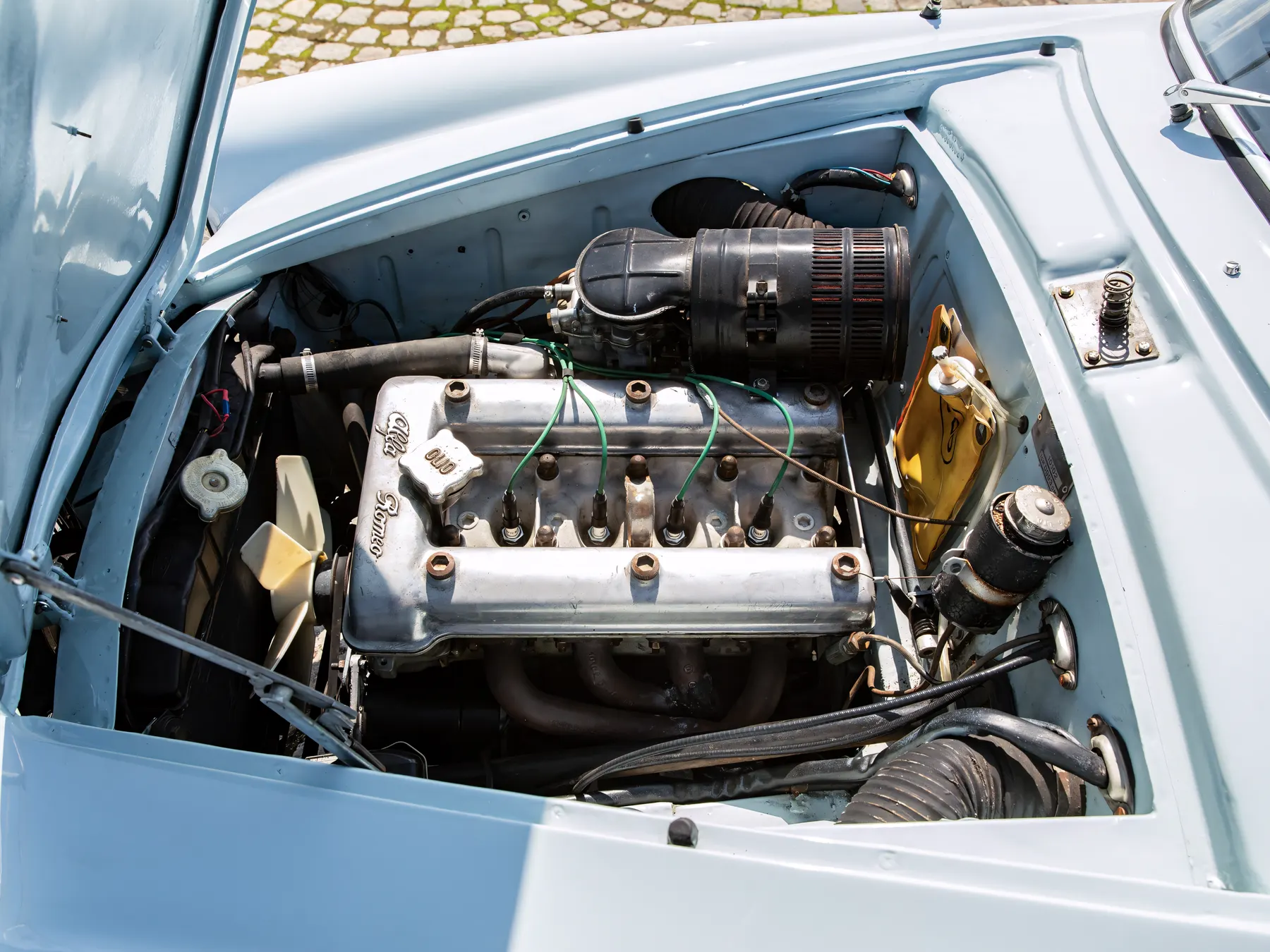
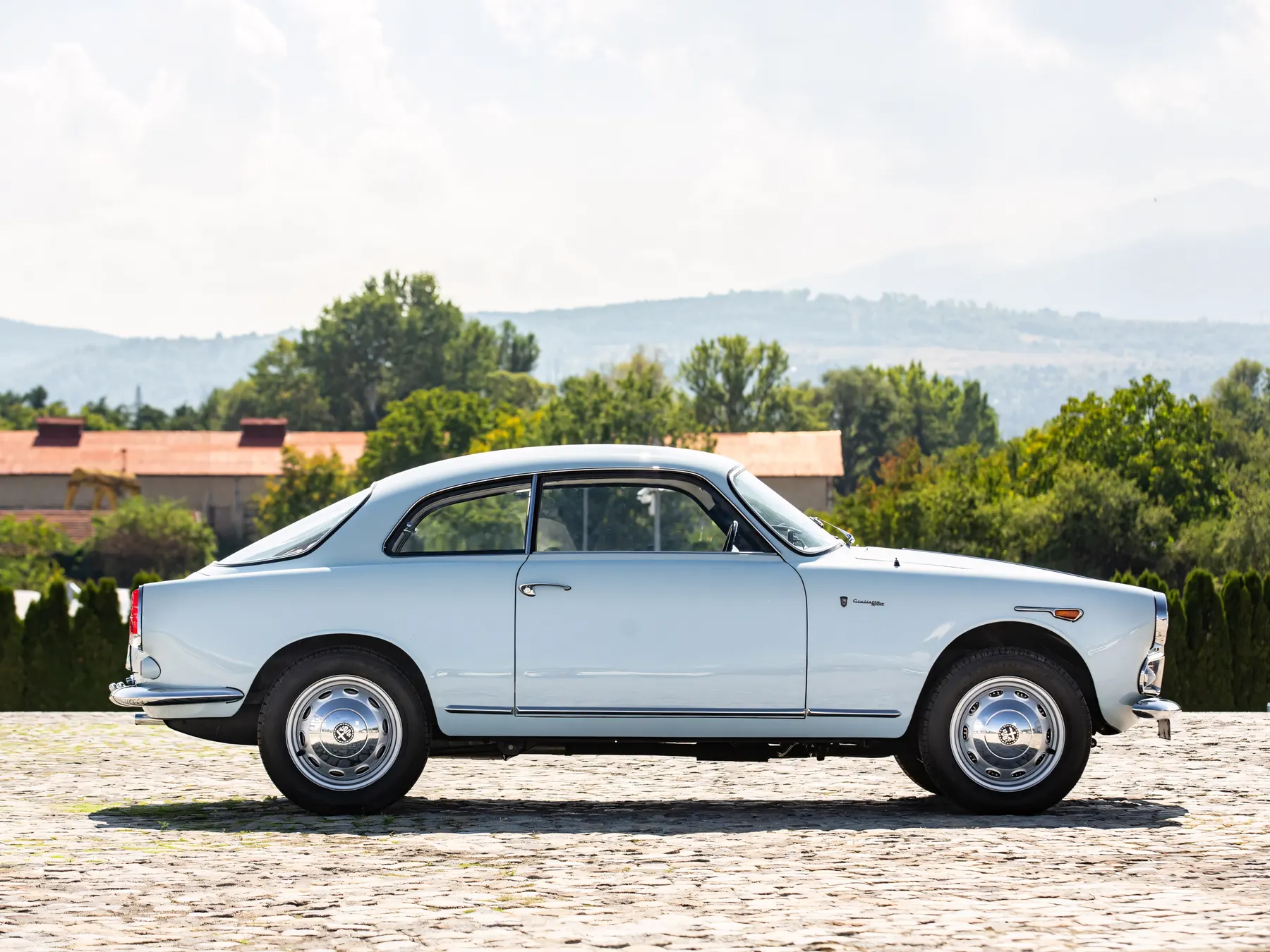
Beneath the Bertone skin sat the part that mattered most to Alfa’s future: a 1,290 cc all-aluminium four-cylinder with twin overhead camshafts, designed by Giuseppe Busso. It kept the basic layout of the larger 1900 engine but cut the capacity from nearly two litres and cast the block in aluminium, with iron wet liners, hemispherical combustion chambers, valves splayed at an included 80 degrees and chain-driven camshafts. Bore and stroke were a near-square 74 mm by 75 mm, a layout that suits its appetite for revs. Valve clearances are set with shims under bucket tappets, which makes a valve check more involved than on most cars. Around it Alfa built a steel monocoque on a 2,380 mm wheelbase, with double-wishbone front suspension, coil springs and an anti-roll bar, a live rear axle on coil springs located by trailing arms and an upper A-bracket, worm-and-roller steering, a four-speed gearbox and finned aluminium drum brakes at all four corners. Overall length was just under 4 metres. Alfa’s heritage department quotes 880 kg, though Classic & Sports Car’s factfile puts it closer to 905 kg. Early cars made about 65 bhp through a single twin-choke Solex, good for a claimed 103 mph, and Alfa’s heritage history argues that the low weight let the Sprint outpace many bigger, more powerful coupés from higher segments.
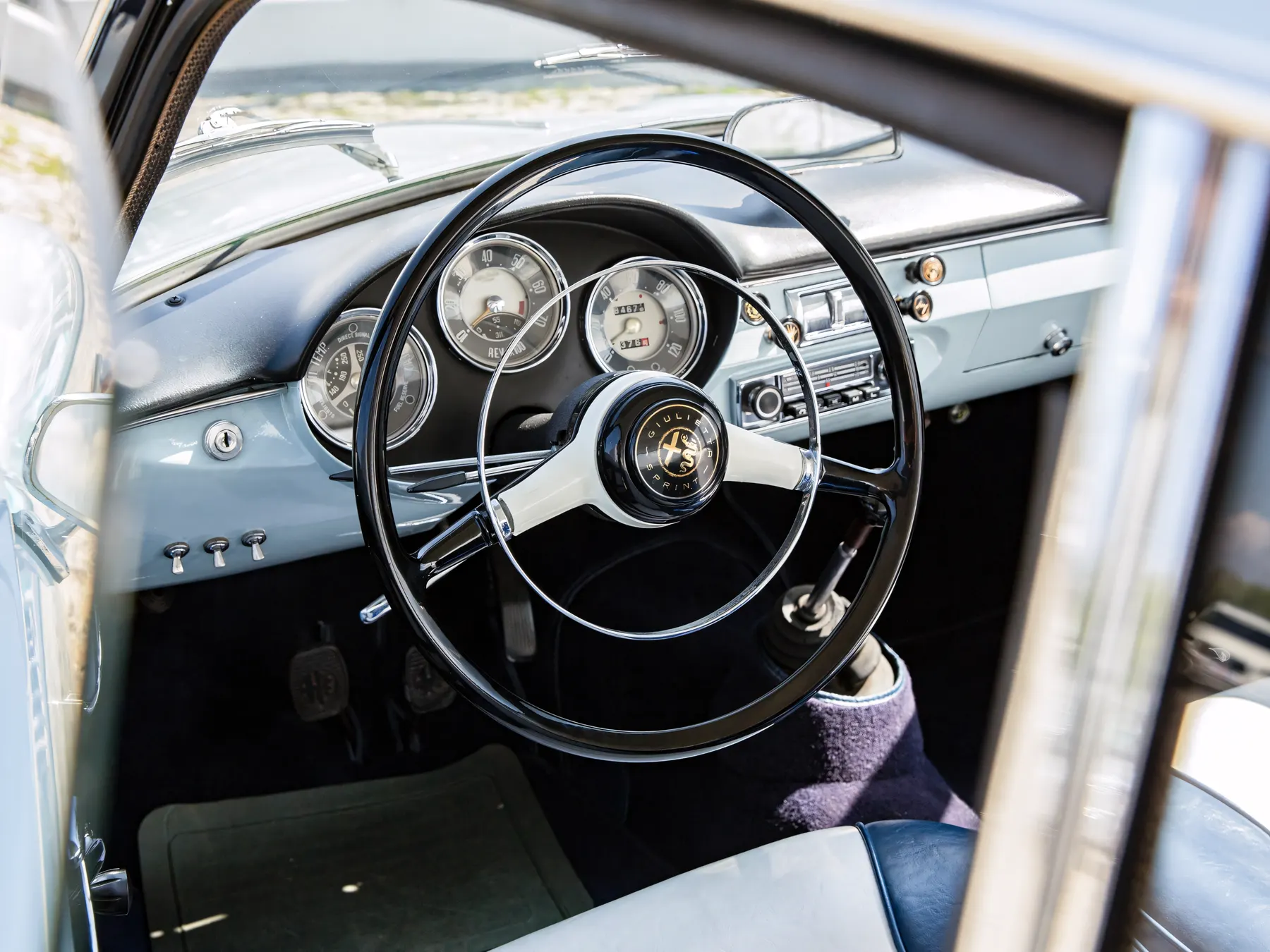
The Sprint did not stand still. A late-1956 uprating took the standard car from roughly 65 to 69 bhp. The Series II, presented at Monza in June 1958 and on sale from early 1959, gained higher compression and a split exhaust manifold for around 79 bhp, while a stronger gearbox with Porsche-type synchromesh arrived in 1958. Outside, a young Giorgetto Giugiaro’s revisions brought a finer grille, flanking intake grilles carrying the indicators in place of the original chrome eyebrows, and larger tail-lights; Classic & Sports Car feels the earliest cars’ styling purity was partly lost in the process. The designation changed too: the 750-series Sprint, coded 750B, became a 101-series car in 1959, with the Sprint listed as 101.02, which is why enthusiasts talk about 750 and 101 Giuliettas. Series I cars also had a column-mounted gearchange, replaced by a floor lever that arrived on the Veloce in 1956 and on the standard Sprint with the second series.
The Sprint Veloce, introduced in 1956 and coded 750E, was the one racers wanted. Twin double-choke Weber carburettors, higher compression and altered cam timing lifted output to about 90 bhp at 6,500 rpm, with torque quoted at between roughly 87 and 90 lb-ft. Weight came down through sliding Plexiglas side windows in place of winders, lighter doors, bonnet and boot lid, and bare wheels without chromed hubcaps; the saving is variously put at around 70 kg to 100 kg. Output figures need caution too, because Alfa’s own heritage page gives different numbers from the 90 bhp most sources use, and period brochures carried a higher gross SAE rating. Top speed is generally put around 112 mph. The Veloce won its class at the 1956 Mille Miglia, took further class wins at events such as the Sebring 12 Hours, and scored an overall victory on the 1957 Tour de Corse. Buyers who wanted the speed without the stripped cabin got the Confortevole, a rare variant (about 200 built, by one count) with wind-down windows and chromed hubcaps. The Sprint’s competition career also spawned relatives: a Sprint Veloce crashed on the 1956 Mille Miglia was rebodied by Zagato, leading to the SVZ and eventually the production SZ, while Bertone’s own Sprint Speciale, shown at Turin in 1957, took short-wheelbase Giulietta underpinnings into a far more aerodynamic shape.
On the road the Sprint rewards a driver who is willing to work for speed. Classic & Sports Car found it remarkable for something so small and old: the ride is pliant, the steering, at 2.5 turns from lock to lock, is about as precise as such a car could be, with real feedback, and the body leans noticeably in corners but in a faithful, predictable way that never hints at anything untoward. The engine revs eagerly and has usable torque, although the tachometer does not even register below 2,000 rpm. Torque is modest, with the same magazine’s factfile giving a little under 80 lb-ft for the standard car, so keeping the engine on the boil is part of the job. The driving position is quirky, because you sit high relative to the wheel even though the roofline does not encroach. A Giulietta specialist writing for Classic Motorsports describes the original suspension as both supple and rugged, with light but responsive steering. Performance was brisk for 1954 rather than quick by any later standard: 0–60 mph times quoted across the Sprint and Veloce range run from about 10.5 seconds to just over 13, and top speeds from 103 to 112 mph.
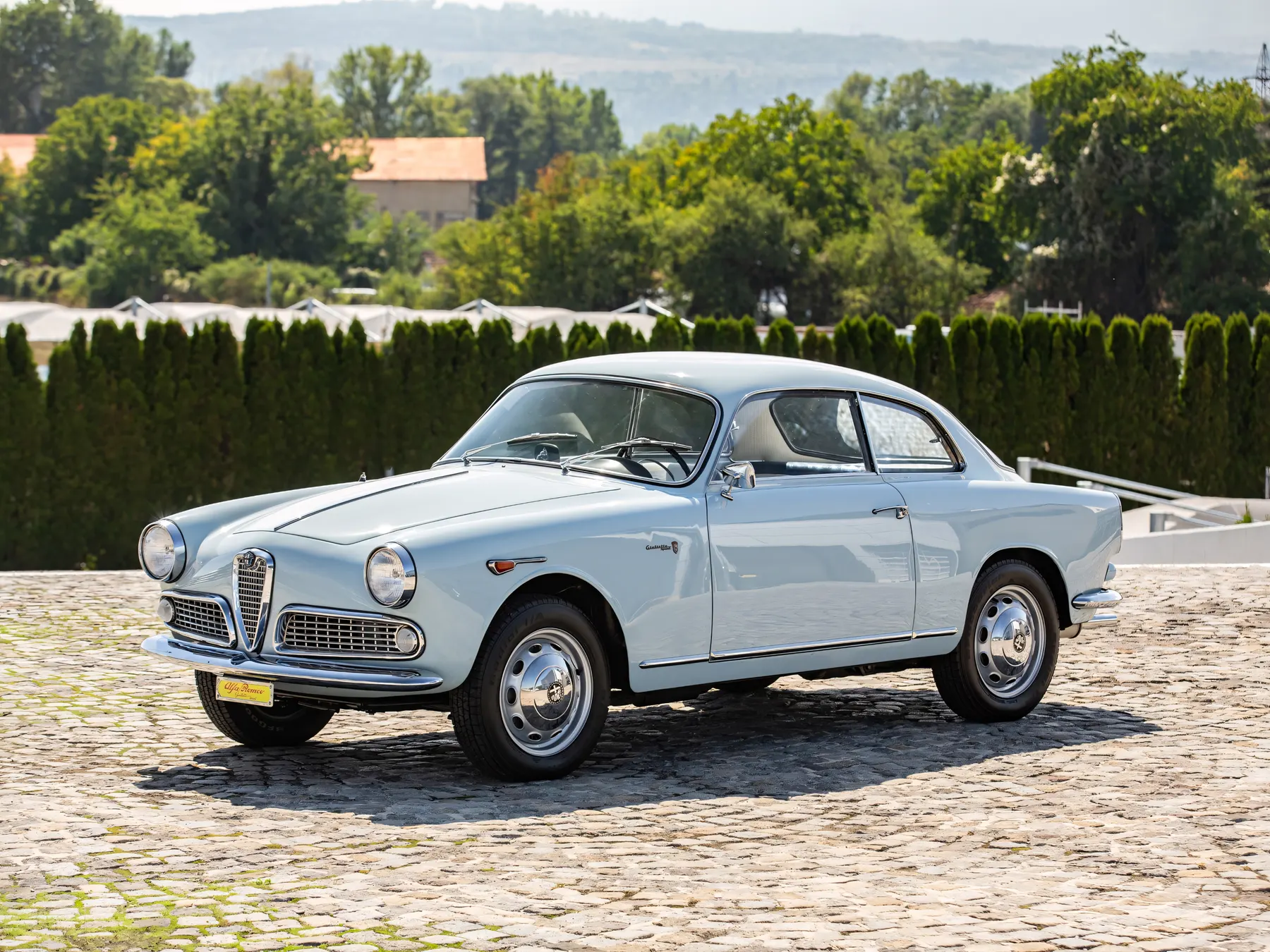
None of that makes the Sprint a complete car. The rear seat, which Alfa’s heritage history describes as makeshift, is an occasional-use affair in a body under 4 metres long, so the 2+2 label oversells it. The early gearbox was a weak point: Alfa introduced a stronger unit with revised synchromesh in 1958, and weak synchromesh and worn gearboxes are still listed among the common faults on used cars. The brakes are drums at all four corners, handsome in finned aluminium but modest for an engine that revs this freely; many owners choose a front-disc conversion, and factory front discs only arrived on the Giulia-badged successors. The soft suspension that gives the ride its pliancy also allows pronounced roll even with the anti-roll bar, and a loose-feeling rear end is often traced to worn trailing-arm bushes. In plain Sprint form the car was never especially fast, with those 0–60 times stretching beyond 13 seconds, and real pace meant the Veloce, which originally meant sliding side windows and a spartan cabin, a compromise Alfa softened with the Confortevole. Age has been unkind in other ways. Rust attacks the floor pans, sills and boot, previous bodywork is often poor, and body panels from one Sprint rarely fit another, probably a quirk of its hand-built beginnings. Missing trim and interior parts are hard to source, and oil leaks, often starting around the head gasket, are common on the twin-cam engine.
Because the Veloce was a ready-made template for tuning, one specialist notes that owners were bolting Veloce parts onto standard cars in period, and another says Alfa owners have swapped parts between models for decades, so confirming what a given Sprint really is takes marque knowledge. The same Classic Motorsports guide adds that engine and gearbox numbers can be checked against the correct range but not always against the chassis, because of Alfa’s record-keeping at the time. Bigger twin-cam engines of 1,750 or 2,000 cc, disc conversions and five-speed gearboxes are all available, yet one of the restorers in that 2014 guide prefers them close to original, arguing that even in standard form these cars outperformed the small-bore sports cars of their day. The same piece observed that the collector world was only then beginning to discover them in earnest.
The Sprint’s own story ended in stages. In 1962 the Giulia Sprint took over with the same bodywork, a 1,570 cc twin-cam, a five-speed gearbox and larger rear lights, with front discs arriving on Giulia-badged cars (sources differ on the exact timing), and a 1,300 cc Sprint was revived in 1964, to meet continuing demand and, according to one account, to suit the Italian tax system, running until 1965. The true successor, the Giulia Sprint GT, was styled at Bertone but built in-house by Alfa, which left Bertone scrambling for work; it was the flip side of a success that had turned a small coachbuilder into an industrial manufacturer almost overnight. The wider stakes were bigger than any single model. Classic & Sports Car argues that without the Giulietta Alfa Romeo would not have survived the 1950s, and that Bertone and Pinin Farina would have gone under with it. The Museo Alfa Romeo notes that the 100,001st Giulietta saloon made the Giulietta the first Alfa model to reach six-figure volumes, and the engine family the Sprint introduced outlived it by decades, with Classic Motorsports calling the 1,290 cc unit the basis for virtually all of Alfa’s four-cylinder engines through the 1990s.
The Sprint was cramped, drum-braked and rust-prone, and it was never meant to outlast a lottery. It was an emergency patch that turned out better than the plan it was patching. What it showed Alfa, and an Italy in the middle of its economic boom, was that a light, well-engineered coupé with a proper engine and a beautiful shape could be built in thousands without losing its character.
Technical data
Performance Specifications
| Specification | Sprint Series I (750B) | Sprint Series II (750B / 101.02) | Sprint Veloce (750E / 101.06) |
|---|---|---|---|
| Production years | 1954–58 | 1958–62 (1300 Sprint revived 1964–65) | 1956–62 |
| Units built | c. 24,000 across both series† | Included in Series I figure† | c. 3,100† |
| Layout and body | Front engine, rear-wheel drive, steel monocoque 2+2 coupé by Bertone | As Series I | As Series I |
| Engine | 1,290 cc all-aluminium DOHC four, 74 × 75 mm bore and stroke, iron wet liners, two valves per cylinder | As Series I | As Series I |
| Carburation | Single downdraught twin-choke Solex | As Series I | Two side-draught twin-choke Webers |
| Compression ratio | c. 8.0:1 | c. 8.5:1 | c. 9.1–9.5:1* |
| Power | c. 65 bhp at 6,000 rpm (c. 69 bhp from late 1956)* | c. 79 bhp at 6,300 rpm* | c. 90 bhp at 6,500 rpm* |
| Torque | c. 72–80 lb-ft at c. 4,000 rpm* | c. 72–80 lb-ft at c. 4,000 rpm* | c. 87–90 lb-ft* |
| Gearbox | Four-speed manual, column change; stronger gearbox with Porsche-type synchromesh from 1958 | Four-speed manual, floor lever | Four-speed manual, floor lever from 1956 |
| Front suspension | Double wishbones, coil springs, anti-roll bar | As Series I | As Series I |
| Rear suspension | Live axle, coil springs, trailing arms, upper A-bracket | As Series I | As Series I |
| Steering | Worm and roller, c. 2.5 turns lock to lock | As Series I | As Series I |
| Brakes | Finned aluminium drums, front and rear | As Series I | As Series I |
| Wheelbase | 2,380 mm | 2,380 mm | 2,380 mm |
| Length / width / height | c. 3,980 / 1,535 / 1,320 mm | c. 3,980 / 1,535 / 1,320 mm | c. 3,980 / 1,535 / 1,320 mm |
| Kerb weight | 880–905 kg* | 880–905 kg* | Roughly 70–100 kg less than a standard Sprint* |
| Top speed | c. 99–103 mph | c. 103 mph | c. 106–112 mph |
| 0–60 mph | Up to c. 13.2 s* | Up to c. 13.2 s* | From c. 10.5 s* |
Sources
- Stellantis Heritage – Alfa Romeo Giulietta Sprint
- Museo Alfa Romeo – Giulietta turns 70
- Classic & Sports Car – Alfa Romeo Giulietta Sprint, Spider, SS, SZ and ti: glory days
- Classic & Sports Car – An Alfa Romeo Giulietta Sprint like no other
- Hagerty UK – Historic Maserati factory, home of Bertone’s brilliance, is listed for sale
- Classic Motorsports – Alfa Romeo Giulietta: Buy one now? Buyer’s Guide
- Goodwood Insurance – Alfa Romeo Giulietta buyer’s guide
- Journal Auto – Happy Birthday Giulietta
- Wikipedia – Alfa Romeo Giulietta (1954)
- Wikipedia – Alfa Romeo Twin Cam engine
- Unique Cars and Parts – Alfa Romeo Giulia GTV 105/115 Series Coupe
Join the discussion
Comments
Loading comments…
Leave a comment
Share a detail, memory, or perspective. Every comment is reviewed before publication.