Lamborghini Diablo SE30: The Birthday Special With No Power Steering
1995 Lamborghini Diablo SE30




Images: Kevin Van Campenhout / RM Sotheby's
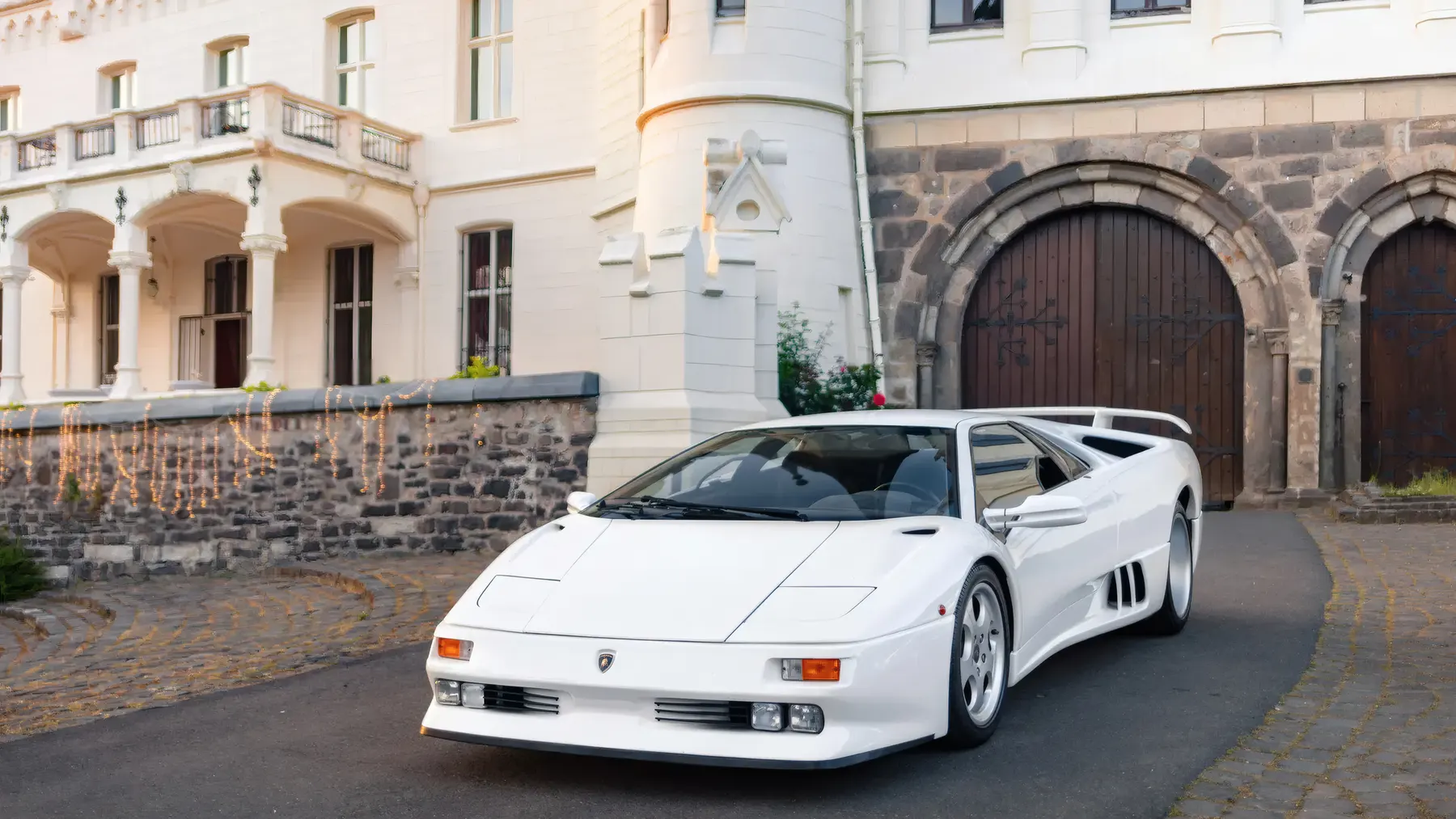
Lamborghini threw itself a thirtieth birthday party in September 1993, and the gift it unveiled was almost spiteful in its purity: a Diablo stripped of power steering, anti-lock brakes, air-conditioning and even its own name badge, built to remind everyone that the marque hadn’t gone soft. The timing made the gesture stranger still. Chrysler, the American conglomerate that had owned Lamborghini since 1987, was already negotiating its exit, and by the time the first production examples reached customers the following June, control of Sant’Agata Bolognese had passed to MegaTech, a Bermuda-registered venture backed by Indonesian capital and connected to the family of the country’s president. By one insider’s account, the sale itself began almost by accident, with a former McLaren Formula 1 programme employee fielding a stray phone call from an Indonesian businessman looking to buy “a car company” and pointing him toward Lamborghini, who in turn rang a well-connected friend to make it happen. The Diablo SE30, then, is a car conceived to mark continuity and delivered into a moment when almost nobody inside the company was sure who it belonged to.
The Diablo itself was only three years into what would become an eleven-year production run when the SE30 arrived. Marcello Gandini had drawn the original wedge as a successor to the Countach, only for Chrysler’s design studio under Tom Gale to soften its edges before launch - a compromise that reportedly irritated Gandini enough that he later took the shape he preferred and offered it elsewhere. The original Diablo had launched in 1990 as a rear-wheel-drive car making around 485bhp from its 5.7-litre V12, and by early 1993 Lamborghini had already broadened the range with the Diablo VT, whose viscous-coupling four-wheel-drive system - adapted in part from lessons learned on the LM002 off-roader - could send up to a quarter of the engine’s torque forward to tame the car’s famously edgy handling. The SE30 arrived just months later as a deliberate rebuttal to that softening. Rather than adopting the VT’s new safety net, Lamborghini kept the SE30 firmly rear-driven, treating it as the last word on the purer, lighter Diablo concept rather than a preview of where the model line was headed.
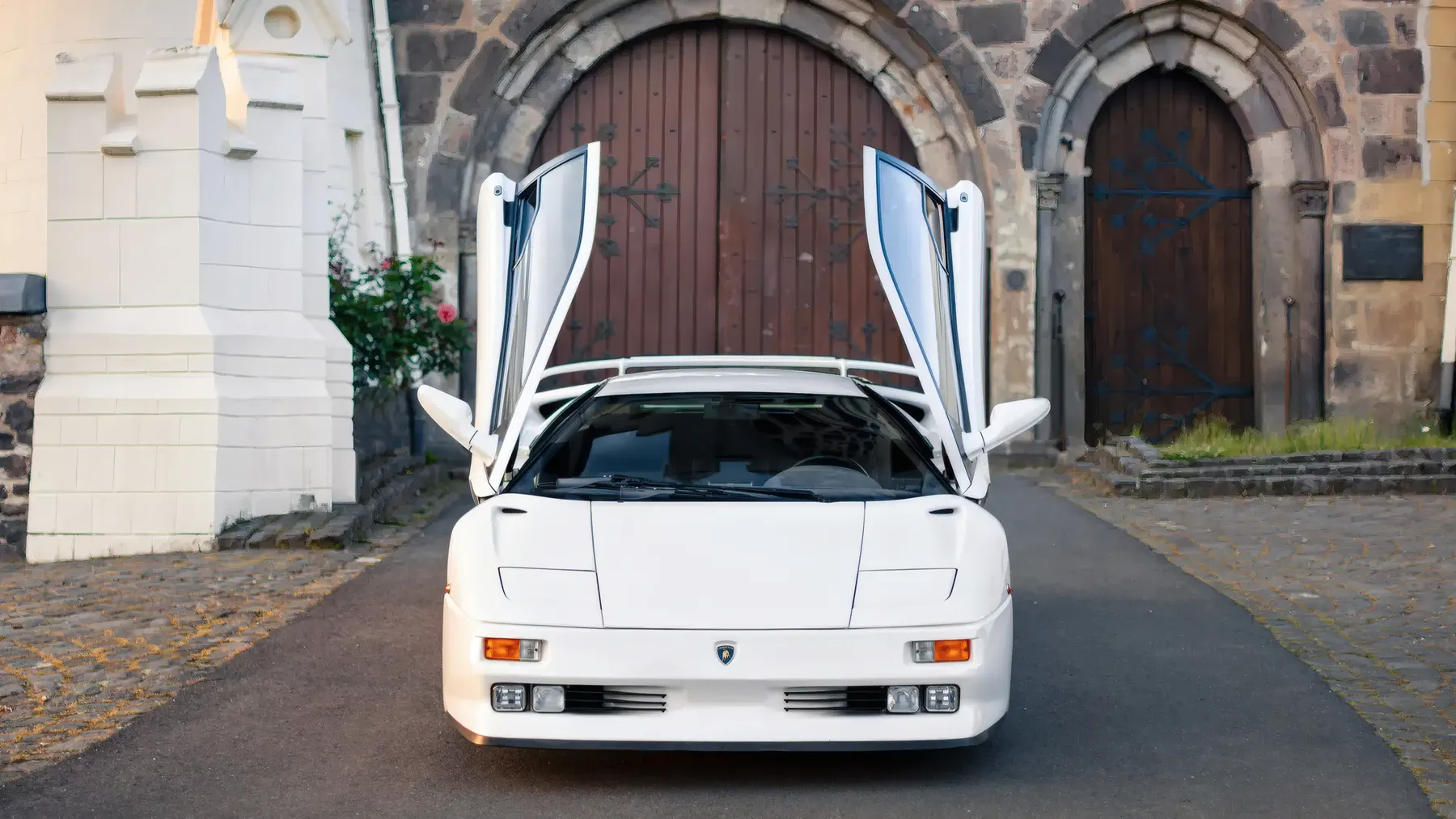
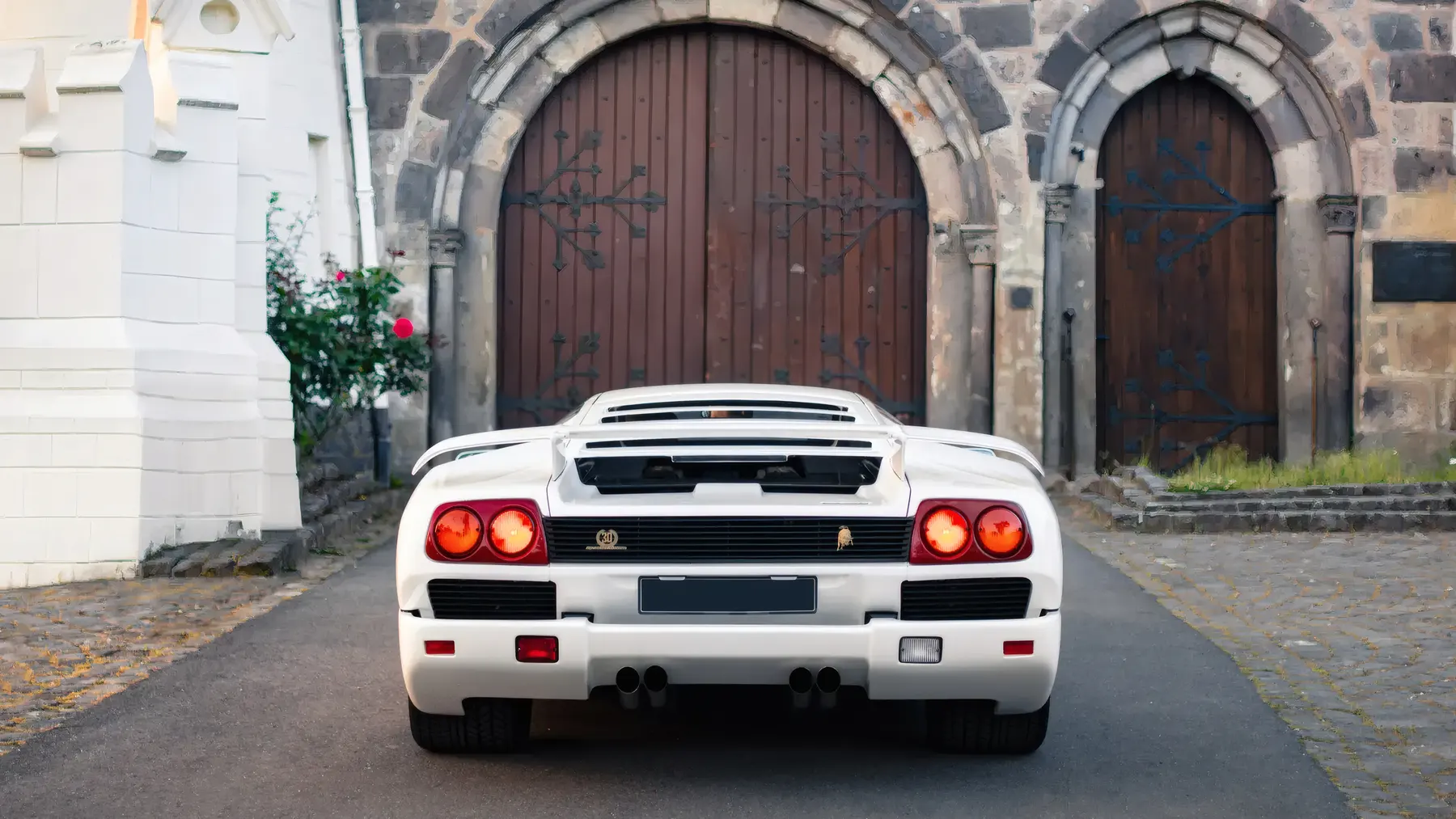
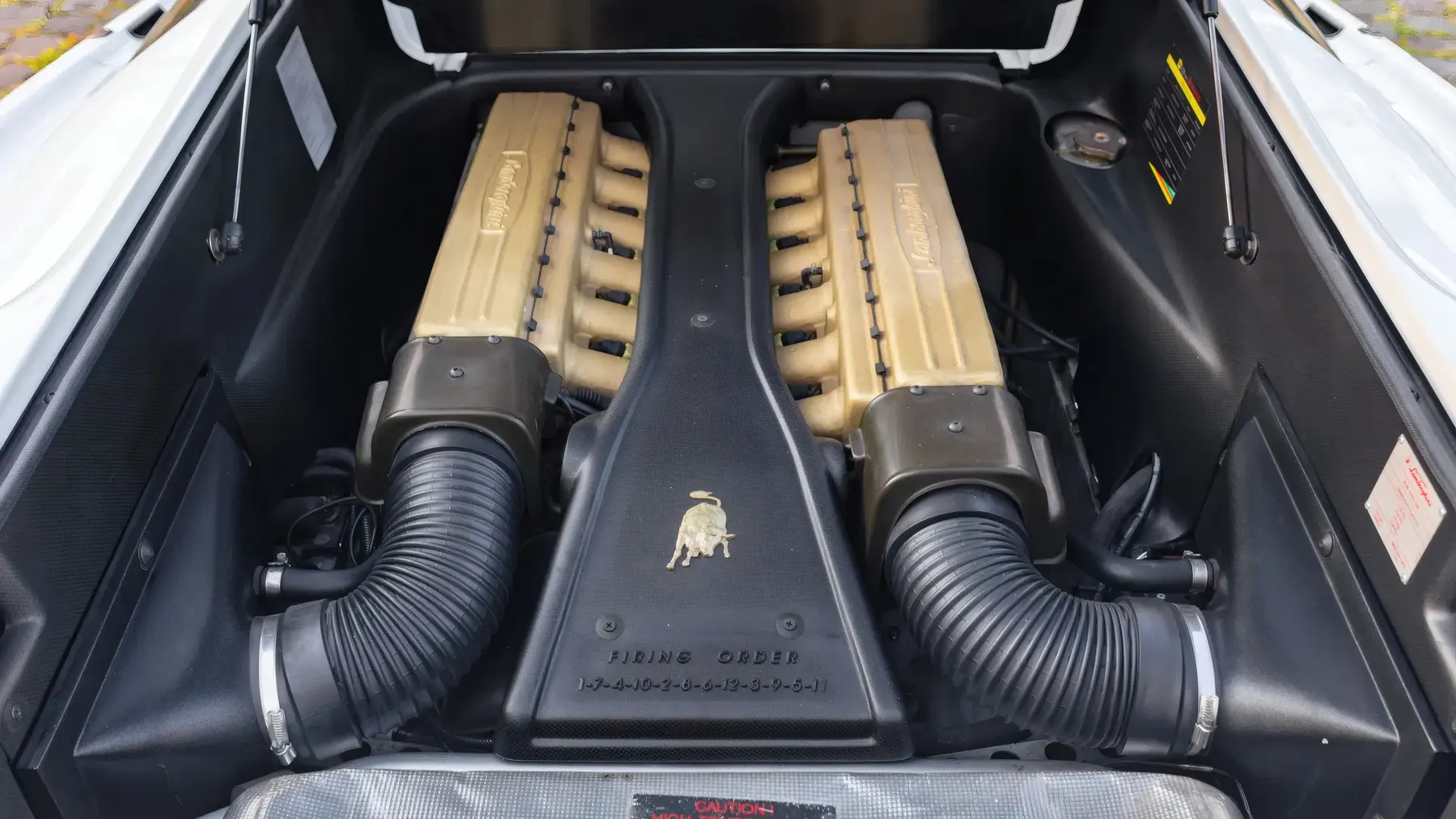
Under the rear deck sat a reworked version of the familiar naturally aspirated 5,707cc V12, still a 60-degree unit with dual overhead camshafts and four valves per cylinder, but breathing through a magnesium intake system, revised cylinder heads and a free-flowing exhaust, with the fuel injection remapped to suit. Output rose to a little over 500bhp - commonly quoted at 518bhp at 7,000rpm, with 428lb-ft of torque arriving in the mid-range - sent exclusively to the rear wheels through a five-speed manual gearbox with a dogleg first gear and a dry single-plate clutch. Lamborghini paired that with a genuine, if modest, diet: around 125kg was trimmed from the standard rear-drive car’s kerb weight, bringing the SE30 to roughly 1,450kg, helped along by fixed Plexiglas side windows with a small sliding vent in place of power-operated glass, carbon-fibre composite body panels, lightweight carbon-fibre bucket seats, and the wholesale deletion of air-conditioning, the stereo and power-assisted steering. The result was a 0-62mph time of around four seconds, with top speed reported variously - depending on the source and the conditions of the test - anywhere from a little over 200mph to around 210mph.
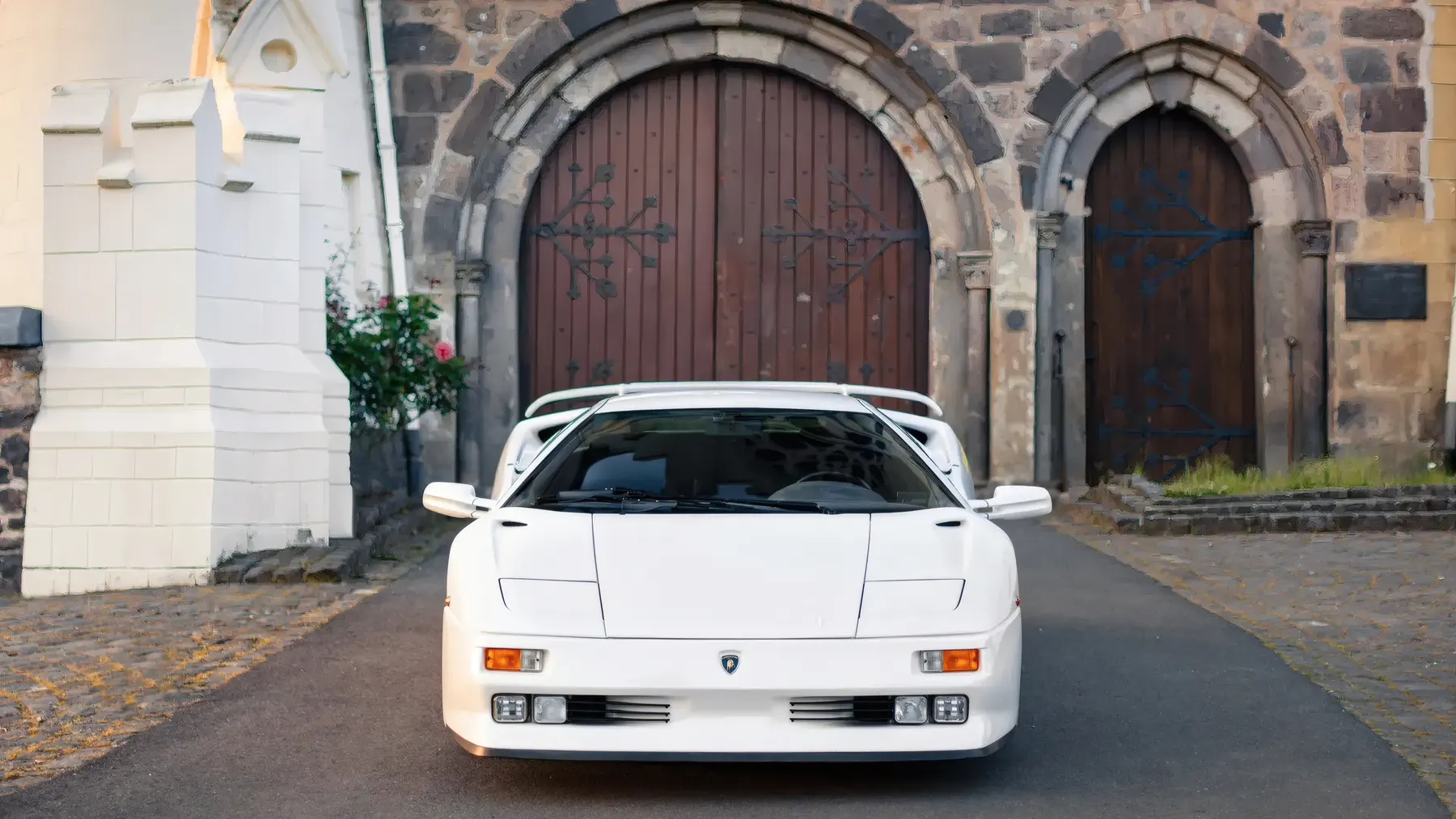
Visually the SE30 wore its intent plainly. A deeper front bumper with reworked cooling ducts, flank intakes feeding the engine bay, Miura-style louvres over the deck lid, and a bespoke adjustable rear wing that lowered itself automatically at speed to cut drag all marked it out from a standard Diablo, as did deep-dish OZ magnesium wheels - seventeen inches at the front, eighteen at the rear - that exposed SE30-specific Brembo calipers and drilled discs. Most cars left the factory in Viola SE30, a metallic violet developed specifically for the model and, notably, one that remains available as a Lamborghini paint option today, paired with blue Alcantara trim that swept across the dashboard, seats, headliner and door panels in place of the standard car’s leather. Special 30th-anniversary badging replaced the usual Diablo script altogether, and buyers with different tastes could specify their own colour and trim combinations away from the default, so not every SE30 left Sant’Agata in purple. Purposeful carbon-fibre bucket seats held driver and passenger with four-point harnesses rather than the standard Diablo’s multi-adjustable leather chairs, reinforcing the sense that comfort had been deliberately deprioritised. A flat-bottomed steering wheel finished the cabin’s race-car pretensions, its centre cap borrowed - according to Lamborghini’s own period press material - from an old parts bin containing components dating back to the company’s first road car, the 350GT.
Driven hard on a wet road, an SE30 makes its priorities obvious within the first few corners. The unassisted steering is heavy at parking speeds but loads up beautifully once the car is moving, feeding back precisely through a small-diameter wheel shaped to sit exactly where your hands fall. Ride quality is better than the specification sheet suggests - the SE30 breathes with the road rather than fighting it - and the driver can dial the anti-roll bars from firm to considerably stiffer using a small lever by the open-gate shifter, a genuine mechanical adjustment rather than an electronic setting. The V12’s character dominates everything: a deep, brusque howl building toward a 7,500rpm redline with no sign of running out of breath, matched by a clutch and gearbox that reward a firm, deliberate hand rather than a delicate one. What the car does not do is forgive carelessness. With no anti-lock system, hard braking on a wet surface can lock a front wheel in an instant, as one contemporary road test discovered when a sudden trio of sheep blocking a Welsh B-road produced a genuine near-miss despite a careful, progressive squeeze of the brake pedal. It is the kind of moment that explains why period road testers rarely explored the far edge of a Diablo’s cornering limits, and why, more recently, a well-known British television programme famously ended up putting one in a field. The rear-biased weight distribution compounds the effect: the tail needs to be managed with smooth, measured inputs rather than sudden ones, the mass building progressively behind the driver through faster corners until only a few degrees of extra steering lock are needed to keep it in check.
That rawness came with real costs that went beyond character. Nigel Gordon-Stewart, Lamborghini’s International Sales and Marketing Director at the time, has since been candid that the cars built during this period suffered from inconsistent factory quality: valves were still being lapped by hand on the same low-volume assembly line as every other Diablo, and by his own account fit, finish and paintwork on cars leaving Sant’Agata could be poor, the whole operation more artisanal workshop than precision manufacturer. The absence of power steering and ABS, meanwhile, was as much a practical drawback as a purist’s badge of honour - genuinely hard work at low speeds and genuinely risky to lean on in poor conditions, in a way that rival specials like the Ferrari F40 the SE30 was implicitly answering did not entirely share. Right-hand-drive cars added their own quirk: the wheelarch intrusion skews the footwell inward, and the pedal box sits close enough to the brake that a careless foot can snag beneath it when lifting off the throttle. Practicality was never the point, but the deletion of air-conditioning, stereo and sound insulation, combined with barely-there luggage space and windows that only cracked open a few centimetres, made the SE30 a genuinely uncomfortable companion on anything but a short, dry drive - a fair trade for the committed buyer chasing the purest possible Diablo, but a real limitation all the same for anyone hoping to use one regularly.
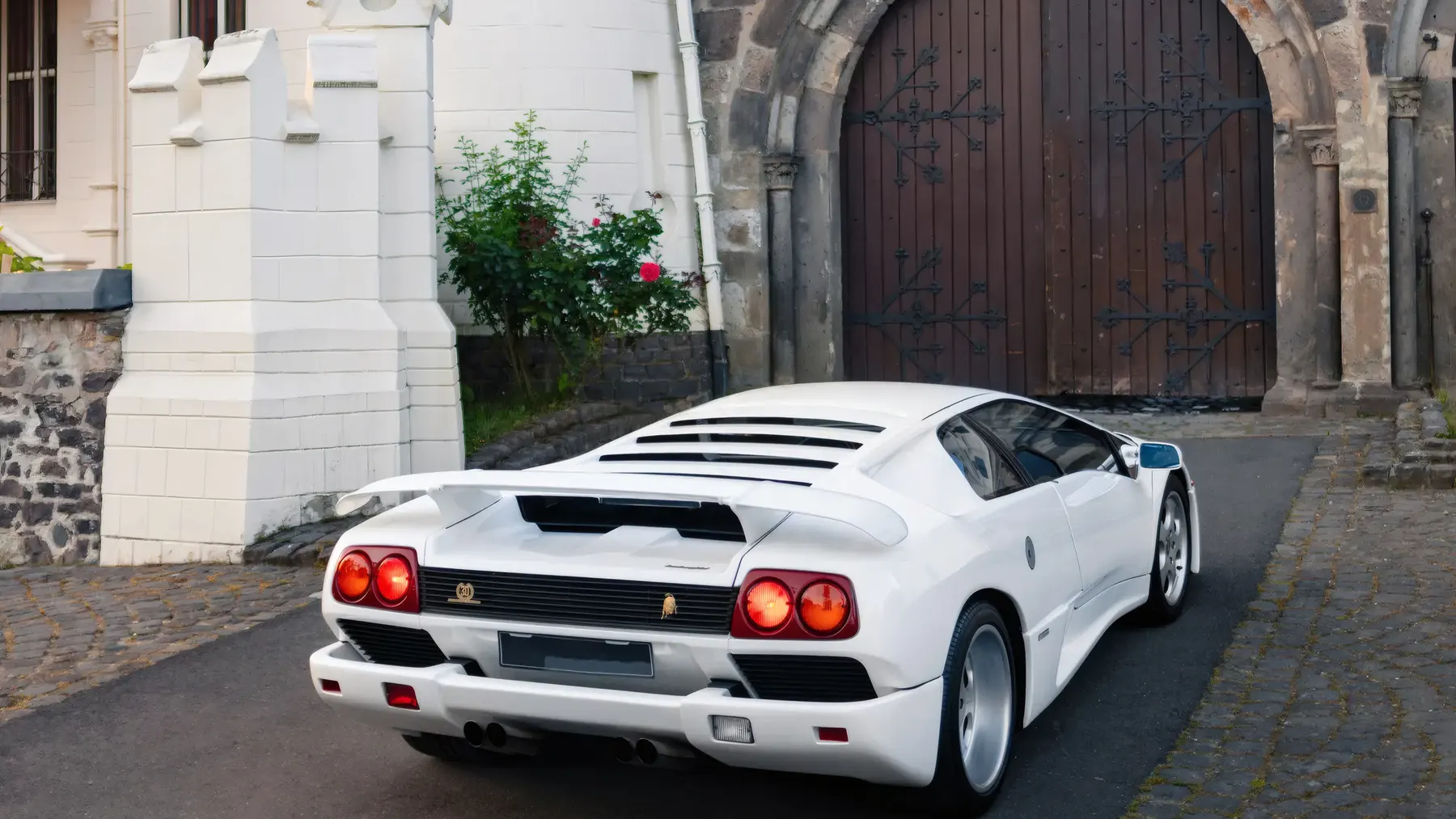
Word of a Jota-badged conversion had circulated since the SE30’s earliest planning stages, when Lamborghini reportedly hoped the special edition could form the basis of a homologated GT competition car at a moment when sports car racing’s rulebooks briefly demanded only a single road-legal example to qualify a design. That ambition never fully materialised in period. Instead, towards the end of the SE30’s production run in 1995, the Jota package arrived as a further road-going upgrade rather than a competition conversion: a new engine cover with twin intakes feeding a V12 reworked to produce around 595bhp. Lamborghini built only 28 Jota kits, of which roughly 14 to 15 were fitted at the factory to new cars, with the remainder used to retrofit existing SE30s in the field - making the Jota, by any measure, one of the rarest derivatives of an already scarce model.
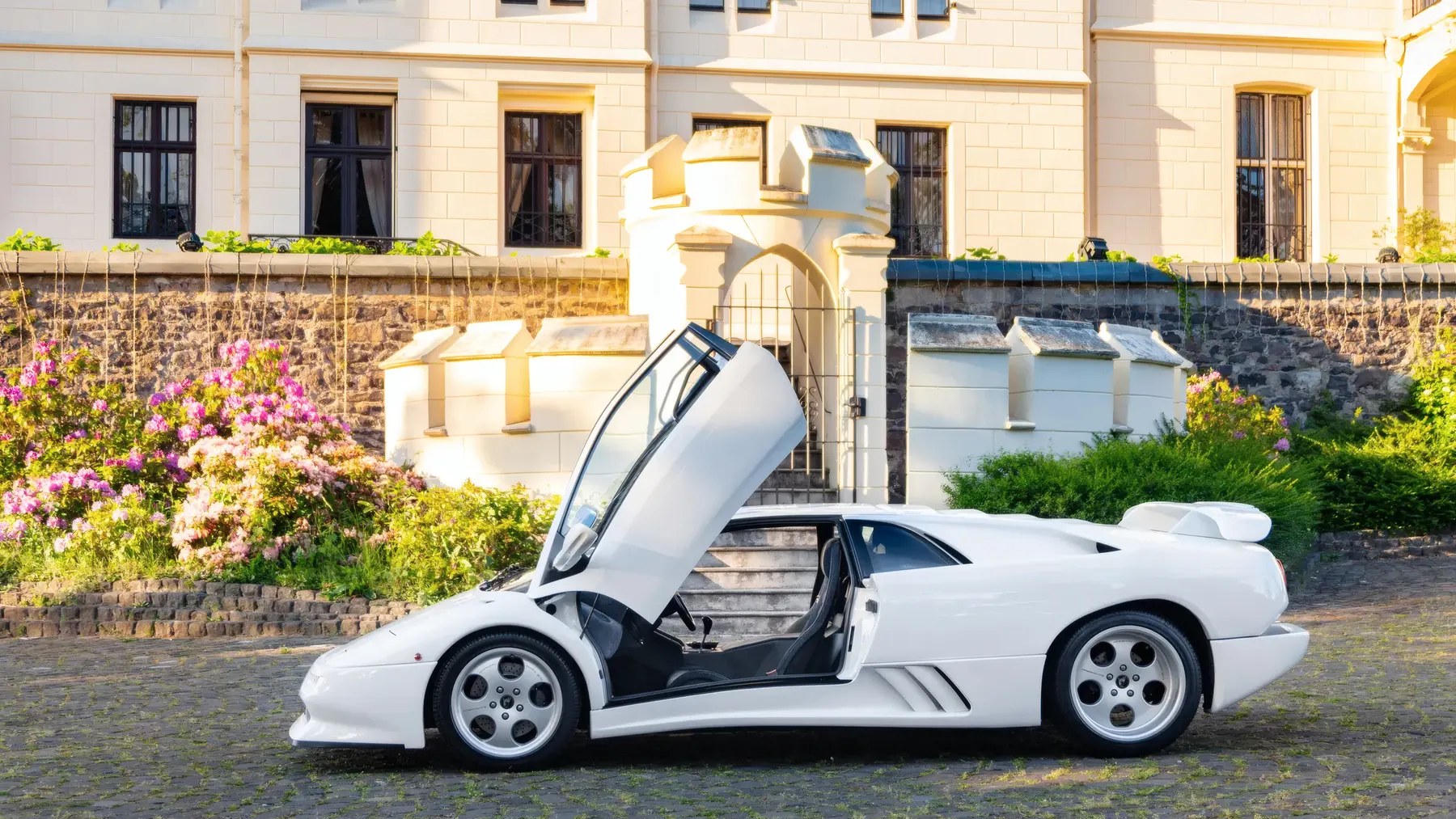
Limited to around 150 units in period sources, though at least one specialist Lamborghini owners’ registry lists a somewhat lower confirmed total, the SE30 carried a new price of roughly $275,000, a substantial premium over the standard car for what was, underneath the carbon-fibre and Alcantara, still recognisably the same Diablo platform. It also arrived into a market that had moved on since the Diablo’s 1990 launch, with the Ferrari F50 and Bugatti EB110 both newly established as serious rivals for headlines and buyers’ attention.
That premium bought more than hardware, though. Gordon-Stewart credits the SE30 with generating fresh press coverage and dealer interest at a moment when Lamborghini had sold barely 100 cars in the whole of 1993 and Chrysler’s own management had reportedly written the brand off as an indulgence. New Indonesian ownership brought in former Lotus managing director Mike Kimberley to run the company, and it was Kimberley who pushed Gordon-Stewart to commit to a sales target that, at the time, felt close to impossible. They got there anyway: alongside the SE30’s launch, Lamborghini set up the Philippe Charriol one-make racing series to keep Diablos visible on track, and Gordon-Stewart has since credited the combined effort with lifting road-car sales by more than 300 per cent inside a few years. One development mule based on an SE30 later fed directly into engineering work for the subsequent Diablo SV, a simplified, rear-drive-only model that continued the SE30’s back-to-basics philosophy at a more attainable price point, even as the wider industry conversation inside Lamborghini’s boardroom had already turned to what would come after the Diablo altogether. The car found unexpected cultural reach in the meantime, appearing in its violet launch colour in Jamiroquai’s “Cosmic Girl” music video, a small but memorable boost to a brand badly in need of visibility during the MegaTech interregnum that preceded Volkswagen’s eventual, more stable ownership from 1998.
Three decades on, the Diablo SE30 occupies an unusual place in Lamborghini’s story: not the fastest Diablo, not the best-selling, and by its own marketing director’s admission not always the best-built, yet arguably the clearest statement of what the model line was supposed to be about before all-wheel drive, driver aids and creature comforts crept back in over the rest of its run. It is a car that makes its case through omission as much as addition - through everything Lamborghini chose to leave out in order to keep the V12, the chassis and the driver talking to each other as directly as possible, at exactly the moment the company itself had the least idea what came next.
Technical data
Performance Specifications
| Specification | Diablo (1990, RWD) | Diablo SE30 (1993-1995) | Diablo SE30 Jota (1995) |
|---|---|---|---|
| Engine | 5.7-litre naturally aspirated V12, DOHC, 4v/cyl | 5.7-litre (5,707cc) naturally aspirated V12, DOHC, 4v/cyl | 5.7-litre naturally aspirated V12, DOHC, 4v/cyl |
| Power | 485bhp | approx. 518bhp @ 7,000rpm* | approx. 595bhp* |
| Torque | 428lb-ft | 428lb-ft | not corroborated to two specialist sources - omitted |
| Drive / gearbox | RWD, 5-speed manual | RWD, 5-speed manual, dogleg 1st | RWD, 5-speed manual |
| Kerb weight | heavier than SE30 by approx. 125kg (exact period figure not corroborated) | approx. 1,450kg | not corroborated to two specialist sources - omitted |
| 0-62mph | not corroborated to two specialist sources - omitted | approx. 4.0 seconds | not corroborated to two specialist sources - omitted |
| Top speed | over 200mph | approx. 202-210mph (sources vary)* | not corroborated to two specialist sources - omitted |
| Production | ongoing model line | approx. 150 units* | 28 upgrade kits (approx. 14-15 factory-fitted) |
| Price new | lower than SE30 (exact period figure not corroborated) | approx. $275,000 | approx. $300,000 |
Sources
- Ultimatecarpage.com - Lamborghini Diablo SE30
- Ultimatecarpage.com - Lamborghini Diablo SE30 Specifications
- Ultimatecarpage.com - Lamborghini Diablo SE30 Jota
- Octane Magazine - Lamborghini Diablo SE30: Taking the Bull by the Horns
- RM Sotheby’s - 1994 Lamborghini Diablo SE30 (Miami 2026)
- RM Sotheby’s - 1995 Lamborghini Diablo SE30 (Monterey 2024)
- autoevolution - Lamborghini Diablo SE30 Specs, Performance & Photos
- Wikipedia - Lamborghini Diablo
- Wikipedia - Lamborghini
- Wikipedia - Megatech (company)
- The Lamborghini Registry - Diablo SE30
- Yahoo Autos - On This Day in 1987, Chrysler Bought Lamborghini
Join the discussion
Comments
Loading comments…
Leave a comment
Share a detail, memory, or perspective. Every comment is reviewed before publication.