The Delahaye 178 Cabriolet by Chapron: Coachbuilt Elegance at the End of an Era
1949 Delahaye 178 Cabriolet by Chapron
Images: RM Sotheby's
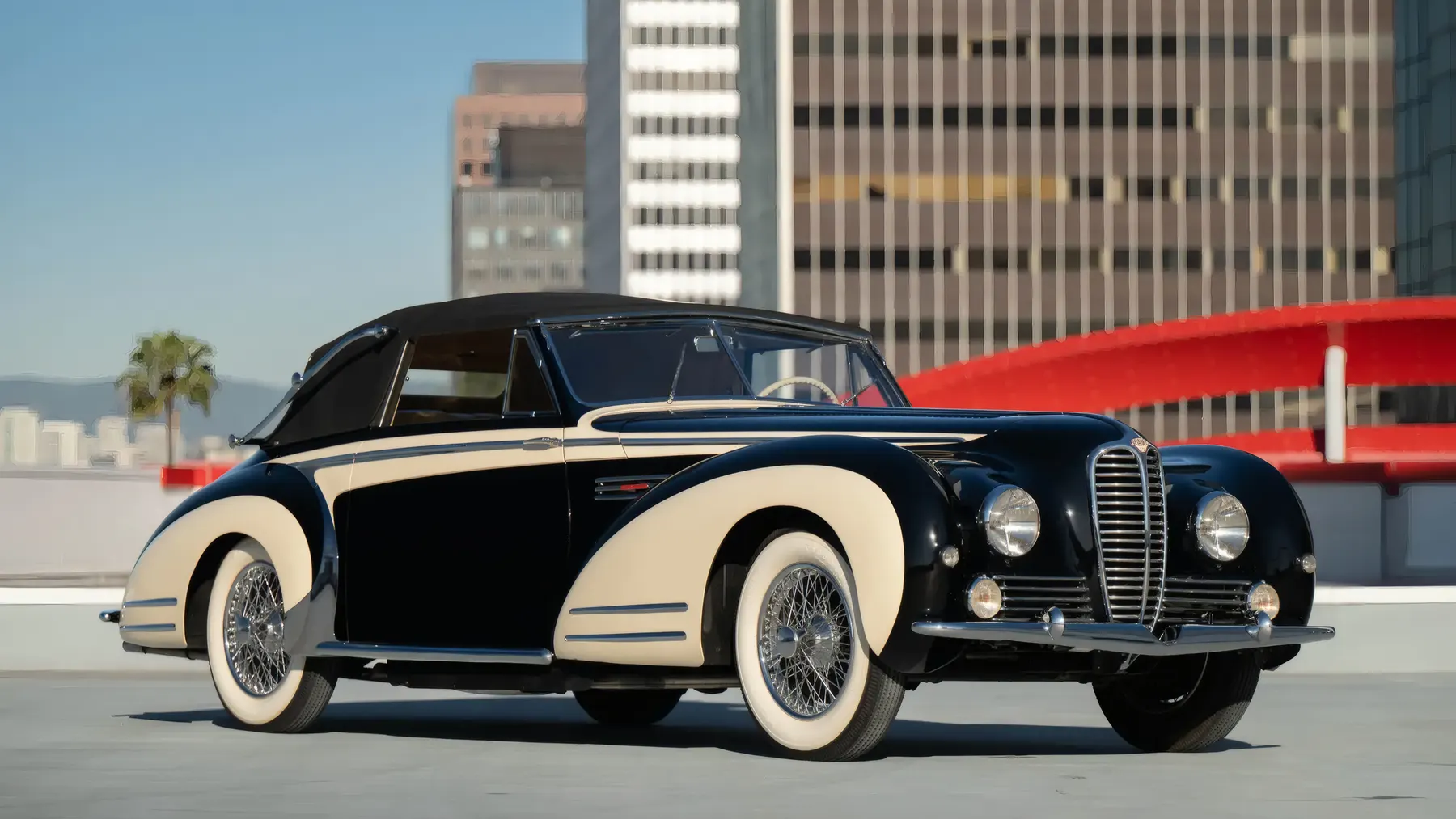
At Carrosserie Chapron in the early 1950s, the aluminium panels being shaped over the Delahaye 178 chassis were among the finest coachwork France had ever produced. They were also, in a sense, among the last.
The 178 arrived at a moment when Delahaye, one of the most storied names in French automotive engineering, was caught between two incompatible realities. The company’s reputation had been built on prewar sportscars - on the twin-carburettor Type 135 that excelled at Le Mans and carried the bodies of Figoni et Falaschi, Guilloré, and Letourneur et Marchand - on a tradition of elegant, technically serious machinery with roots in the nineteenth century. But the world emerging from the Second World War had little interest in sustaining that tradition. France’s postwar austerity, the punitive fiscal horsepower system that imposed crushing annual taxes on large-engined cars, and the rapid industrialisation of the motor industry combined to strangle the artisanal luxury sector almost entirely.
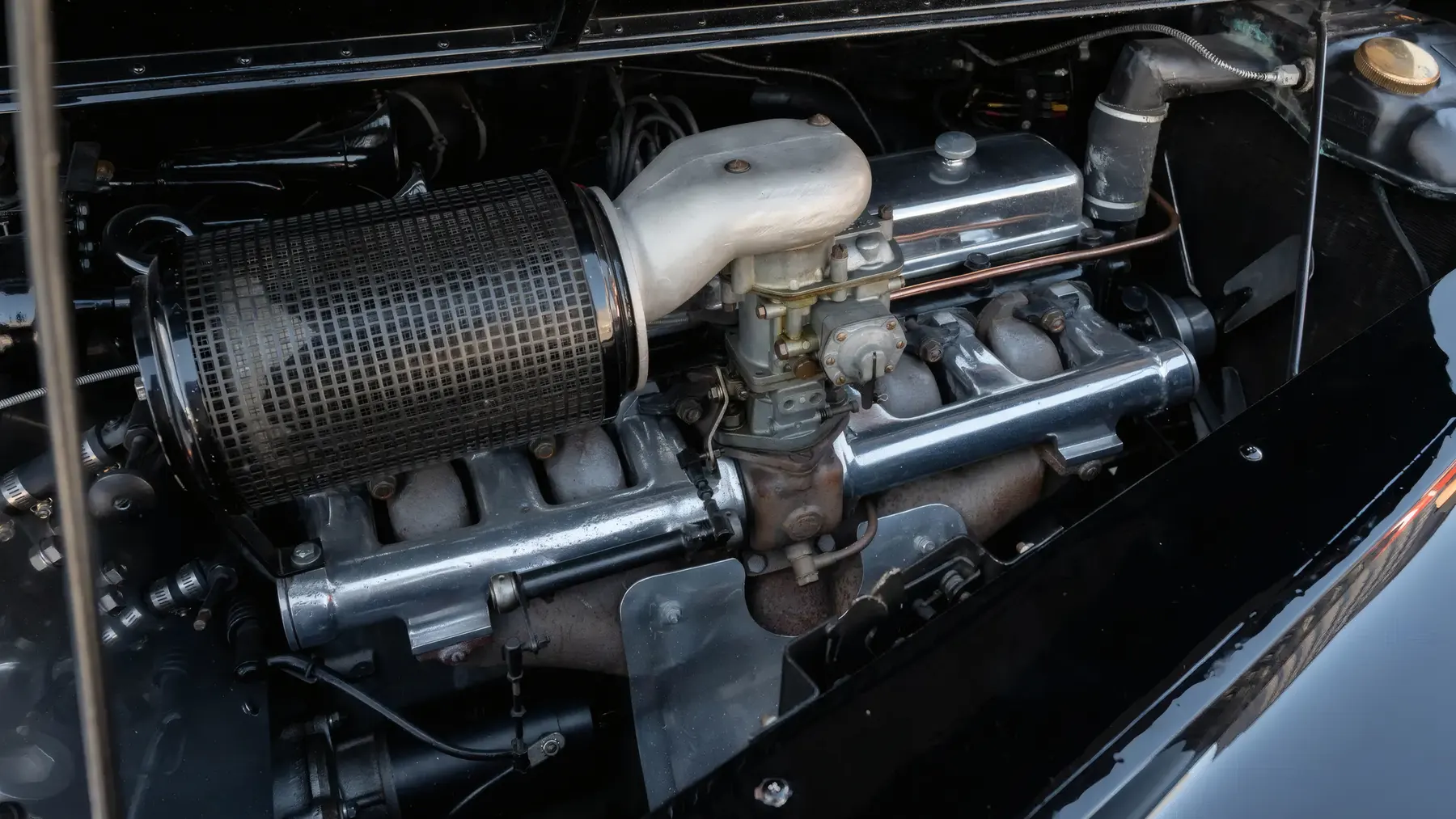
Delahaye’s response was a range of postwar models that tried to preserve the prewar formula while acknowledging the changed circumstances. The Type 135 soldiered on in updated form, and larger, more elaborate chassis - including the Type 175 and the 178, which was developed with coachwork commissions specifically in mind - extended the range upward toward a clientele that still existed, even if it was shrinking. The 178 was built around a substantial cruciform frame with independent front suspension, hydraulic brakes, and the straight-six engine from Delahaye’s established postwar family. Specific output figures for the 178 varied with tune and individual specification, but the engine sat within the general range of Delahaye’s other postwar sixes - sufficient for a luxury chassis of the era, if not compelling by the standards of what American manufacturers were simultaneously producing.
What distinguished the 178 as a mechanical proposition was less the engine than the gearbox. Like most Delahayes of the period, the 178 was typically paired with the Cotal electromagnetic transmission, a device that occupied its own peculiar corner of automotive engineering history. Rather than a conventional synchromesh system, the Cotal engaged each ratio through electromagnetic clutches, requiring a specific technique from the driver: ease the throttle, move the lever with a deliberate light touch, then reapply power. Done correctly, the change was smooth and surprisingly brisk. Done incorrectly, it was abrupt and jarring. The system gave Delahayes a slightly ceremonial, other-worldly quality - the driver had to develop a specific relationship with the car, a rhythm that took time to acquire and that transferred to no other machine on earth.
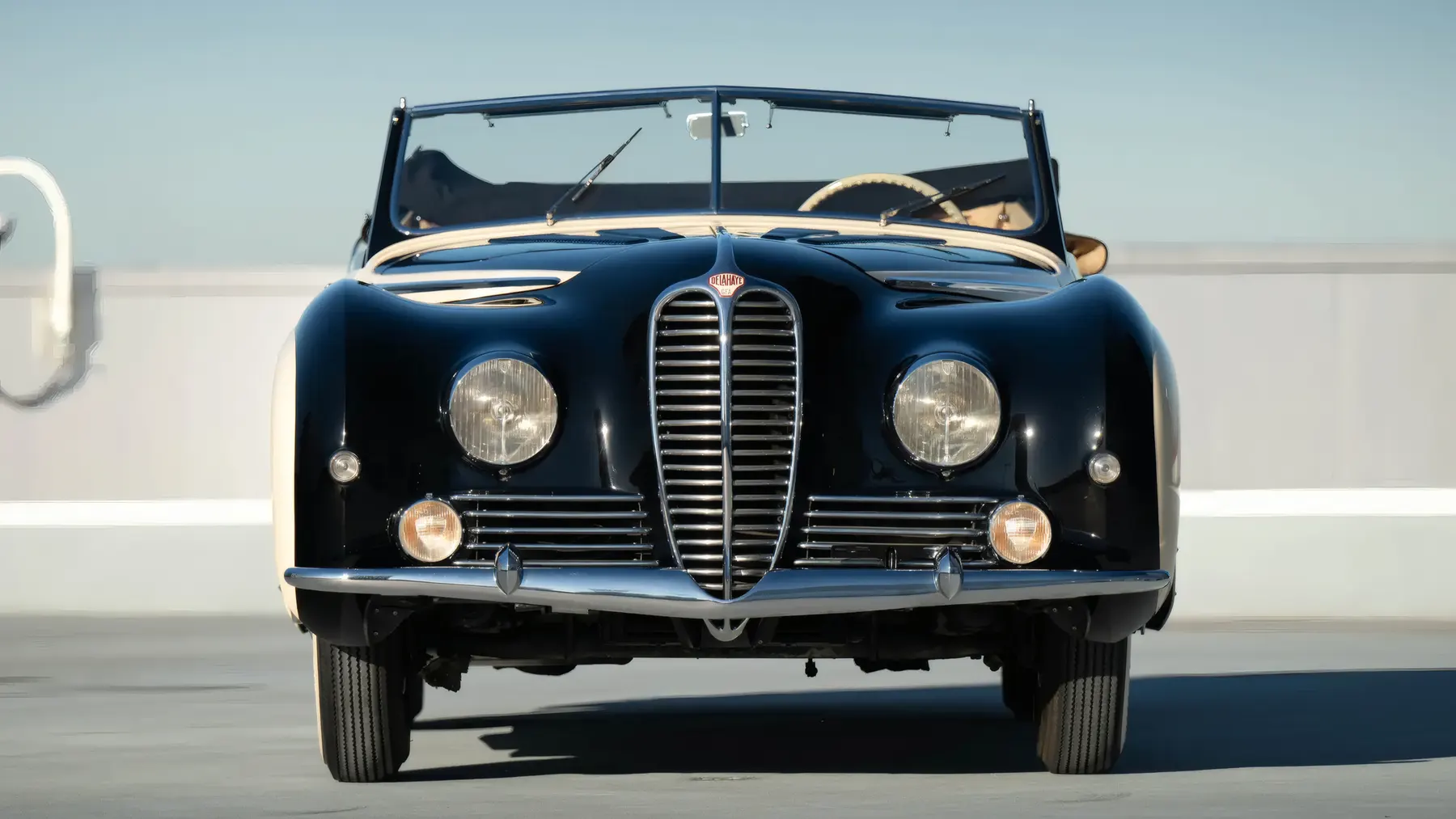
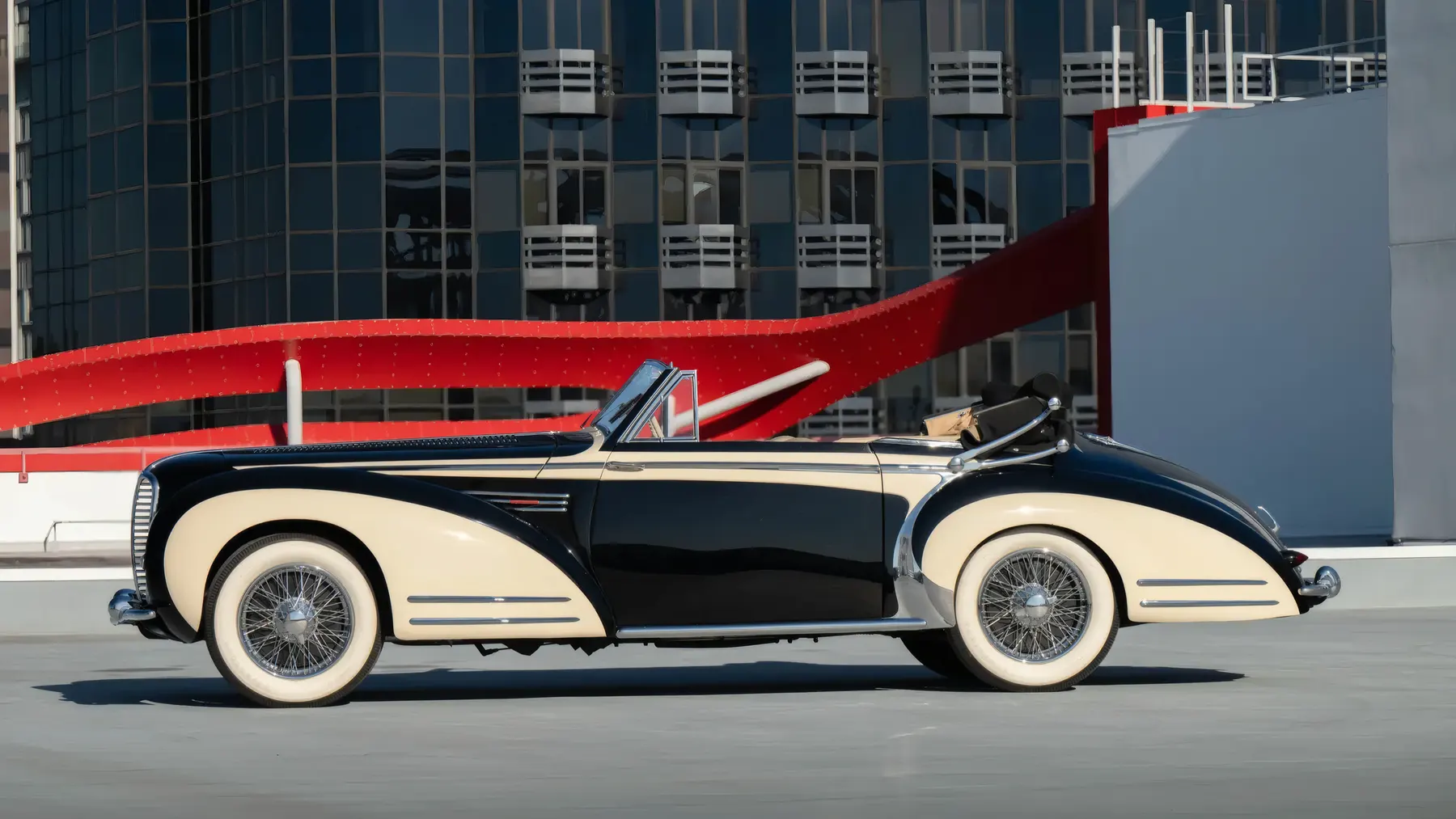
Henri Chapron was the natural interpreter for the 178 chassis. His Parisian atelier had established itself as one of the most accomplished coachbuilding houses in France, working in a tradition that required the same blend of technical rigour and artistic sensibility that characterised Delahaye’s own engineering culture. Chapron’s aesthetic was specifically and unmistakably French: he favoured long, unbroken hood lines, fenders that swept back smoothly into the body rather than standing architecturally proud of it, and a treatment of the belt-line that gave his cabriolets an almost horizontal elegance. Where contemporary Italian coachbuilders - Pininfarina, Ghia, Touring of Milan - were beginning to explore more sculptural and overtly dynamic forms, Chapron’s work remained committed to a prewar sense of refinement, of the motor car as an instrument of ceremony rather than a declaration of velocity.
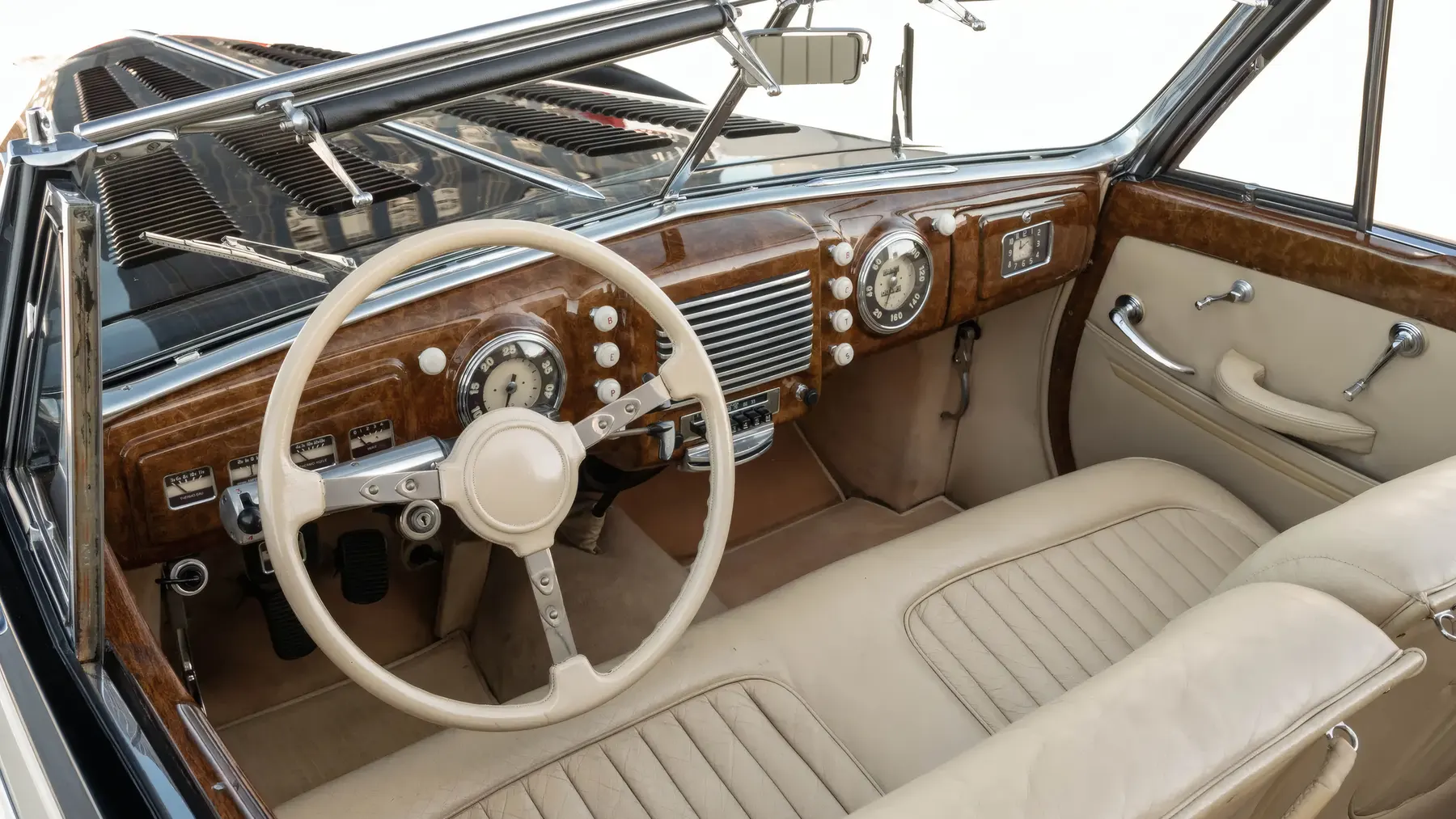
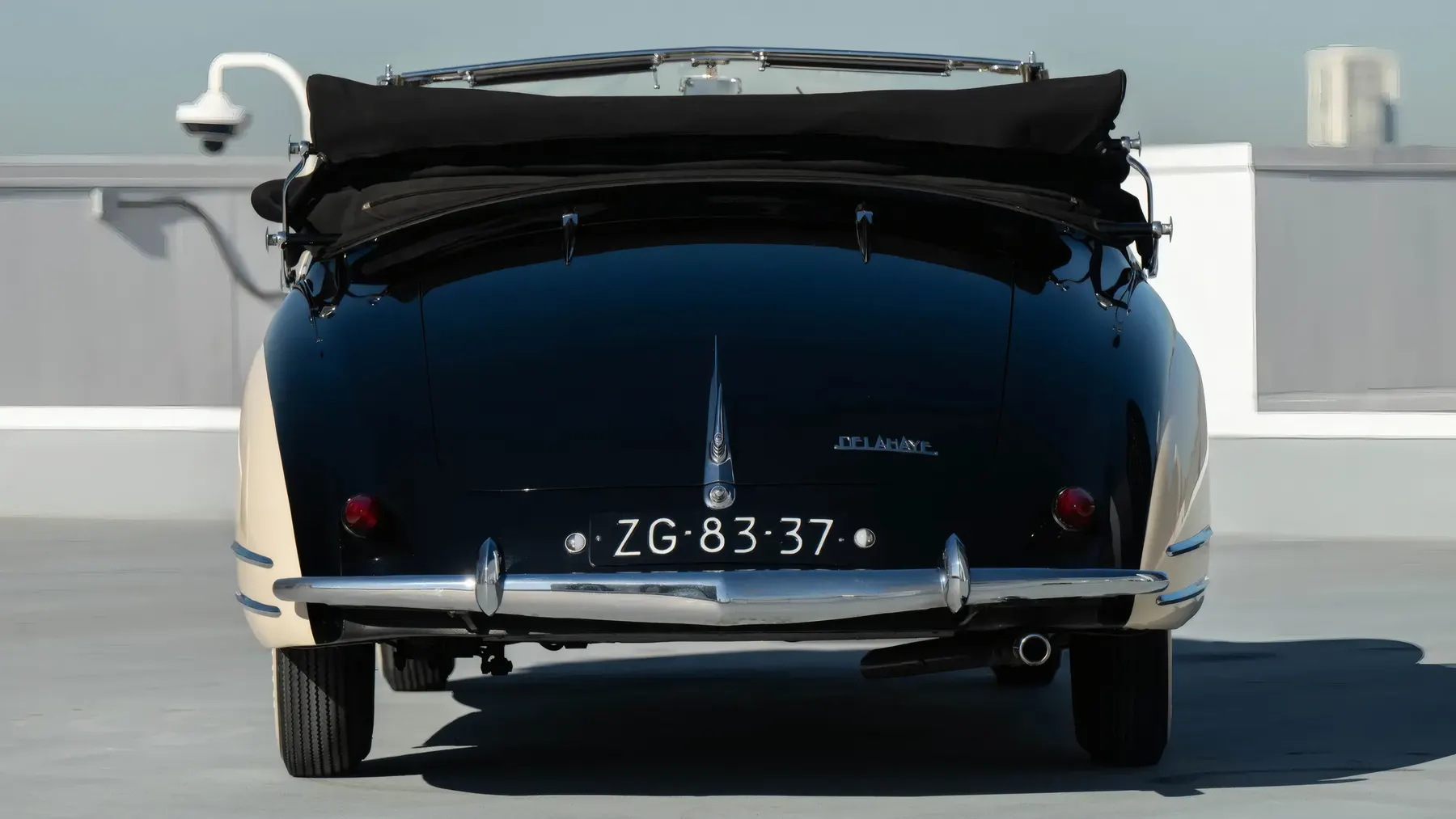
The 178 Cabriolet from Chapron’s workshops was, by almost any aesthetic measure, a beautiful machine. The coachwork was executed in aluminium over a traditional timber subframe, with fit and finish achieved by craftsmen working to individual commission rather than to production tolerances. When the hood was folded, it sat low and discreet behind the passengers, often concealed beneath a fitted cover that preserved the car’s clean horizontal line from front to rear. Chrome detailing was applied with the restraint that distinguished the finest French coachwork from its American contemporaries: bright work at the windscreen surround, door handles, bonnet louvres, perhaps the wheel arch lips - never so dense as to overwhelm the shape itself. Each interior was specified to individual order: matched leather hides, carefully chosen veneers, deep-pile carpeting in colours selected by the client in Chapron’s studio.
This bespoke quality was the source of both the 178 Cabriolet’s greatest appeal and its most significant structural limitation. The individualised nature of Chapron’s production meant that no two examples were precisely alike - a quality that gave each car its own particularity but that also kept numbers vanishingly small. Precise production figures for 178 chassis bodied by Chapron are not easily established, and the total was almost certainly measured in dozens rather than hundreds, possibly far fewer. For the original buyer, this exclusivity was entirely the point. For Delahaye as a commercial enterprise, it was a problem from which there was no practical escape: a model produced in such small quantities at such high cost could not sustain a manufacturer facing a rapidly modernising market.
The mechanical picture at the beginning of the 1950s was also less favourable than the beautiful Chapron bodywork suggested. The straight-six engine, however refined in its execution, was competing against American V8s that offered substantially more power with considerably less mechanical complexity and, crucially, at far lower running costs under France’s fiscal horsepower system. The Cotal gearbox, genuinely clever when new, became increasingly temperamental with age - the electromagnetic clutches required regular adjustment and periodic specialist attention, and a malfunctioning Cotal was not a problem that any general garage could readily resolve. The pool of mechanics who understood the system was small and shrinking. Beyond the gearbox, the chassis architecture produced a ride that was firm by luxury standards - the 178 was a heavy machine, and the weight of a fully trimmed Chapron cabriolet body, added to an already substantial rolling platform, meant that the performance available was modest relative to the car’s visual presence. The six-cylinder engine moved the 178 with composure but not urgency; this was a machine designed to arrive, not to hurry. In cabriolet form with the hood erected, rearward visibility was also limited in the manner characteristic of this body style and period - an inconvenience rather than a danger, but a reminder that elegance and practicality were never quite the same brief.
The fate of the 178 was ultimately inseparable from the fate of the world it had been built to serve. France’s luxury car market contracted sharply through the early 1950s. Talbot-Lago, which had produced magnificent coachbuilt machinery alongside Delahaye, survived only on the margins of the market and could not sustain full production. Delahaye itself merged with Hotchkiss in 1954, a transaction that ended both companies as meaningful passenger car manufacturers. The merged enterprise concentrated on trucks and military vehicles. The last coachbuilt Delahayes left the workshops of Chapron and a handful of surviving ateliers in the same years, and then they stopped altogether.
Chapron navigated the transition more successfully than most. When the Citroën DS appeared in 1955, he recognised its potential as a platform for open coachwork and pursued an arrangement with Citroën that would sustain his atelier through the 1960s and into the 1970s. The Chapron DS Décapotable became famous in its own right - a genuinely glamorous car that served heads of state and film stars and that demonstrated Chapron’s ability to carry his aesthetic principles onto a radically different kind of automotive architecture. The sensibility developed on cars like the 178 translated directly into that work: the low roofline, the clean horizontal belt-line, the disciplined restraint with brightwork. The skills were the same; only the platform had changed.
The Delahaye 178 Cabriolet by Chapron holds a precise and unambiguous position among French postwar cars. It lacks the prewar glamour of the Figoni-bodied 135s - those teardrop fantasies that remain the iconic image of French coachbuilding at its most exuberant. It lacks the motorsport credentials of the 135 MS in competition form. It carries no dramatic provenance attached to a single event, no race history or record. What it possesses instead is a more durable kind of integrity: the integrity of a thing made very well, at considerable expense, for a small number of people who understood precisely what they were commissioning. The craft in those aluminium panels, the elegance of that hood line, the careful ceremony of the Cotal gearbox - these qualities were not incidental to the car. They were, in the fullest sense, what the 178 was built to be.